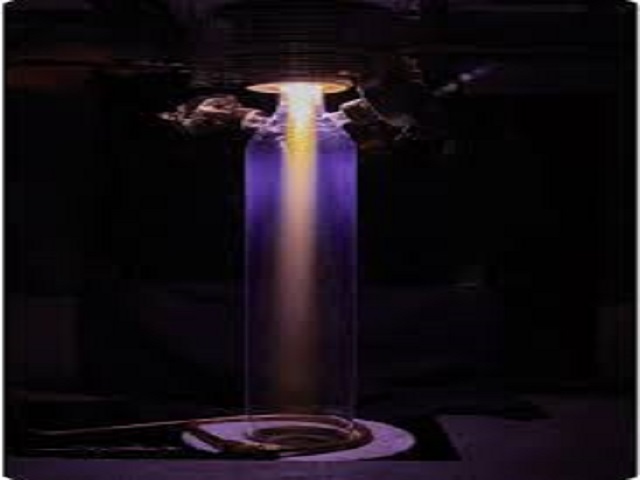
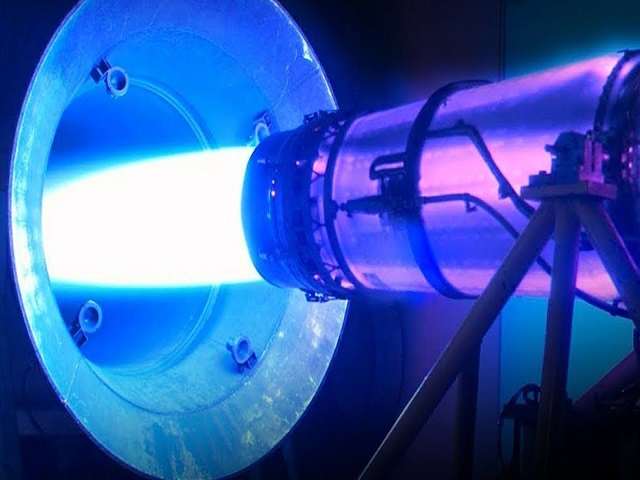
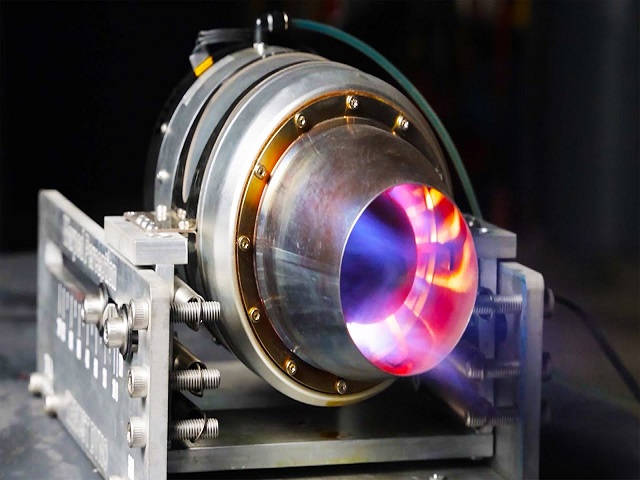
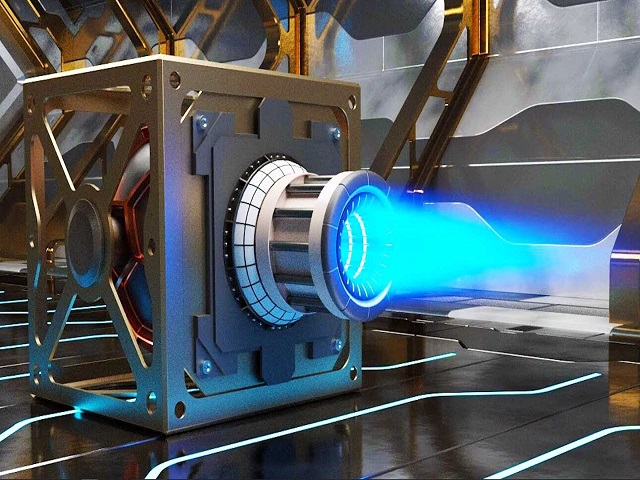
Microwave plasma technology refers to a method of creating and controlling plasma using microwave energy. Plasma is considered the fourth state of matter and is formed when a gas is heated to extremely high temperatures, causing the atoms to ionize and become electrically charged.
In traditional plasma systems, such as those used in fluorescent lights or plasma TVs, the plasma is generated through direct electrical discharge or radio frequency (RF) energy. Microwave plasma technology, on the other hand, utilizes microwaves to create and sustain the plasma.
The basic setup of a microwave plasma system involves a microwave generator, a waveguide, and a plasma chamber. The microwave generator produces high-power microwaves, typically at a frequency of 2.45 GHz, which are then guided into the plasma chamber through a waveguide. The microwaves excite the gas molecules in the chamber, causing them to collide and ionize, forming a plasma.
Why Choose Kerone Microwave Plasma Technology
Kerone is known for delivering highly efficient, reliable and fully customized Microwave Plasma Technology solutions engineered after a detailed analysis of material characteristics, process goals and expected output requirements.
Microwave plasma technology offers several advantages over other plasma generation methods. First, microwaves can penetrate deep into the plasma, allowing for efficient energy transfer and uniform heating. This characteristic is particularly useful in applications such as material processing, surface treatment, and plasma-enhanced chemical vapor deposition (PECVD).
Furthermore, microwave plasma systems can operate at atmospheric pressure, eliminating the need for vacuum chambers and associated equipment. This makes them more versatile and easier to integrate into various industrial processes. The ability to operate at higher pressures also enables better control over plasma chemistry and reaction kinetics.
Types and Features of Microwave Plasma Technology
Microwave plasma technology finds applications in various fields, including nanotechnology, semiconductor manufacturing, surface modification, waste treatment, and environmental remediation. It is employed for processes such as thin film deposition, plasma etching, plasma-enhanced atomic layer deposition (PEALD), and plasma-assisted combustion.
Features
Efficient Energy Transfer: Enables direct coupling of microwave energy into the plasma for high process efficiency.
Atmospheric Pressure Operation: Operates without the need for complex vacuum systems in many applications.
Precise Control: Allows accurate adjustment of plasma power, gas composition, and reaction conditions.
Versatility: Suitable for a wide range of industrial and research applications.
Scalability: Easily adaptable from laboratory-scale setups to large industrial systems.
Reduced Contamination: Minimizes electrode wear and material contamination during processing.
Safety: Designed with controlled operation and monitoring systems for safe industrial use.
These features contribute to the effectiveness and versatility of microwave plasma technology in various industrial processes. The efficient transfer of energy, precise control over plasma parameters, and operational flexibility make it a valuable tool for applications ranging from material processing and surface modification to waste treatment and environmental remediation.
Key Features
High thermal and processing efficiency
Low maintenance and easy operation
Suitable for heat-sensitive materials
Fully adjustable and customizable process parameters
Available in batch and continuous configurations
Uniform processing and consistent product quality
Powered by AI, ML & IoT
Future-Ready Engineering Driven by AI & IoT
Our advanced AI, ML, and IoT technologies, this solution delivers smarter automation, real-time insights, and predictive intelligence to enhance efficiency and drive future-ready growth.
Real-Time Monitoring & Control
Continuous tracking of process parameters with instant adjustments.
Predictive Maintenance
Intelligent fault detection to prevent failures before they occur.
Adaptive Process Optimization
Dynamic tuning of operations for maximum output and efficiency.
Cloud Dashboards & Analytics
Unified access to real-time insights and performance trends.
Energy & Resource Savings
Smarter utilization of energy to cut costs and reduce waste.
Secure IoT Connectivity
Encrypted data flow with seamless integration across plant systems.
Applications of Microwave Plasma Technology
Food industry processing systems
Chemical and polymer processing
Pharmaceutical ingredients and intermediates
Ready‑to‑eat (RTE) food production
Specialized heating, drying, or material transformation processes
Industrial material modification and thermal treatment
Kerone’s Microwave Plasma Technology solutions are engineered to deliver maximum efficiency, long-term reliability and excellent operational stability. Our focus on innovation and customization ensures superior industrial results.
Kerone, develops and manufactures advanced microwave plasma systems for various applications, including semiconductor processing, surface treatment, and research. Their product range includes microwave plasma sources, plasma etching systems, and plasma-enhanced chemical vapor deposition (PECVD) systems. Our systems are used for research and analysis in areas such as surface chemistry, materials science, and plasma diagnostics.
Seamless Export Connections Global & Local
Our Global Footprint in Industrial Excellence
Delivering world-class industrial and process solutions across countries with precision, innovation, and reliability.
Peru
Chile
Argentina
Mexico
Colombia
Brazil
USA
Canada
United Kingdom
France
Germany
Spain
Italy
Netherlands
Sweden
Switzerland
Poland
Portugal
Ireland
Czechia
Romania
Hungary
Austria
Greece
Kazakhstan
Uzbekistan
Turkmenistan
Algeria
Egypt
Nigeria
Kenya
South Africa
Saudi Arabia
UAE
Israel
Russia
India
China
Japan
South Korea
Thailand
Vietnam
Malaysia
Singapore
Indonesia
Philippines
Australia
New Zealand
Pan-India Presence. Local Expertise.
Raipur
Bilaspur
Panaji
Vasco da Gama
Gandhinagar
Ahmedabad
Surat
Chandigarh
Gurgaon
Shimla
Manali
Bengaluru
Mysore
Kochi
Pune
Mumbai
Thane
Navi Mumbai
Hyderabad
Chennai
Coimbatore
Kolkata
Lucknow
Jaipur
Udaipur
Jodhpur
Dehradun
Haridwar
Bhubaneswar
Product Gallery
Frequently Asked Questions (FAQ)
It is used for efficient processing, heating, drying or material transformation.
High efficiency, process reliability and complete customization.
Food, chemical, pharma, biomass, rubber, textile and more.
Kerone ensures high product quality through strict engineering standards, advanced testing procedures, and precision-controlled manufacturing systems.
Argon, nitrogen, oxygen, hydrogen, helium, air, and reactive gas mixtures can be used, with each producing different plasma characteristics and reactive species.
Yes, high-power microwave plasma systems operating at tens to hundreds of kilowatts are used for industrial-scale waste treatment, chemical synthesis, and materials processing.
Optical emission spectroscopy (OES) analyzes the light emitted by excited plasma species to determine plasma composition, temperature, and energy distribution in real time.
Microwave energy can sustain a stable plasma discharge at higher gas pressures than DC or many RF discharge methods because the rapidly oscillating electric field at 2.45 GHz efficiently transfers energy to electrons even when collision rates are higher at atmospheric pressure. Lower-frequency or DC plasma sources typically require reduced pressure to maintain the electron mean free path needed for sustained ionization. This atmospheric-pressure capability is what allows microwave plasma systems to be integrated into open production lines without the cost, complexity, and cycle-time penalty of vacuum chambers, while still delivering the high reactive-species density needed for effective surface treatment or material processing.
Plasma uniformity at lab scale is relatively easy to achieve in a small, well-characterized cavity, but scaling to industrial dimensions introduces challenges from standing wave patterns and uneven field distribution across a larger treatment area. Kerone addresses this through multi-applicator configurations, mode-stirring techniques, and careful waveguide design that distributes microwave energy evenly across the treatment zone. Substrate movement, such as conveyor-based scanning beneath a linear plasma source, also helps average out any residual non-uniformity by ensuring every point on the material passes through the same plasma exposure profile rather than relying on a single static, perfectly uniform field.
Thermal plasma exists in local thermodynamic equilibrium, where ions, electrons, and neutral gas molecules all reach similar high temperatures, making it suitable for applications like waste vitrification or high-temperature material synthesis that require intense, concentrated heat. Non-thermal (or non-equilibrium) plasma keeps electron temperature much higher than the surrounding gas temperature, generating highly reactive chemical species without significantly heating the bulk material. This distinction determines application fit: non-thermal plasma is preferred for treating heat-sensitive surfaces, polymers, or biological materials, while thermal plasma is selected when the process goal is bulk material transformation or destruction requiring substantial energy input.
In plasma-enhanced chemical vapor deposition, microwave-generated plasma provides the activation energy needed to decompose precursor gases at lower substrate temperatures than thermal CVD alone would require, which is essential for temperature-sensitive semiconductor substrates and multilayer structures. For plasma etching, the reactive ions and radicals generated by the microwave discharge selectively remove material from exposed surfaces with high directionality and minimal substrate damage when process parameters are properly tuned. Both applications depend on precise control over plasma density, gas chemistry, and substrate bias, which is why semiconductor-grade microwave plasma systems require tighter process control tolerances than general industrial surface treatment equipment.
Validation typically involves running multiple trial batches under nominally identical conditions and measuring the resulting surface or material properties to confirm tolerances are consistently met. Process parameters including microwave power, gas flow, pressure, and treatment time are logged for each trial run, allowing statistical analysis of variation sources before the recipe is locked for production. Optical emission spectroscopy is often used during this validation phase to confirm that plasma composition remains stable across repeated runs, since drift in reactive species concentration can indicate gas delivery or power supply issues that need correction before scale-up.
Microwave plasma is applied in waste gas treatment to break down volatile organic compounds and certain hazardous air pollutants into simpler, less harmful molecules through the reactive radical chemistry the plasma generates. It is also used in soil and water remediation contexts where contaminants need to be broken down without introducing additional chemical reagents. The non-thermal plasma variant is particularly useful here because it can drive oxidation reactions effectively without the high energy cost of heating the entire waste stream to combustion temperatures, making it a more energy-efficient option for treating dilute contaminant streams compared to thermal incineration.
Magnetron lifespan in continuous industrial duty typically ranges from several thousand to over ten thousand operating hours depending on power level, duty cycle, and cooling system performance, with solid-state generator alternatives generally offering longer service life at a higher upfront cost. Waveguide components and plasma chamber windows experience minimal wear under normal operation but should be inspected periodically for any coating deposition that could affect microwave transmission efficiency. Kerone provides expected service intervals for each major component as part of system documentation, allowing maintenance teams to plan replacement proactively rather than reactively after a failure interrupts production.
Kerone’s custom-designed heating and processing solutions are built to meet the demands of your growing operations. Whether you’re upgrading equipment, expanding production, or need a tailor-made solution


 Peru
Peru Chile
Chile Argentina
 Mexico
 Colombia
 Brazil
 USA
USA Canada
 United Kingdom
 France
 Germany
 Spain
Spain Italy
Italy Netherlands
 Sweden
 Switzerland
 Poland
 Portugal
 Ireland
 Czechia
 Romania
 Hungary
 Austria
 Greece
 Kazakhstan
 Uzbekistan
 Turkmenistan
 Algeria
 Egypt
Egypt Nigeria
 Kenya
Kenya South Africa
 Saudi Arabia
 UAE
UAE Israel
 Russia
 India
India China
China Japan
Japan South Korea
 Thailand
 Vietnam
 Malaysia
 Singapore
 Indonesia
 Philippines
 Australia
 New Zealand