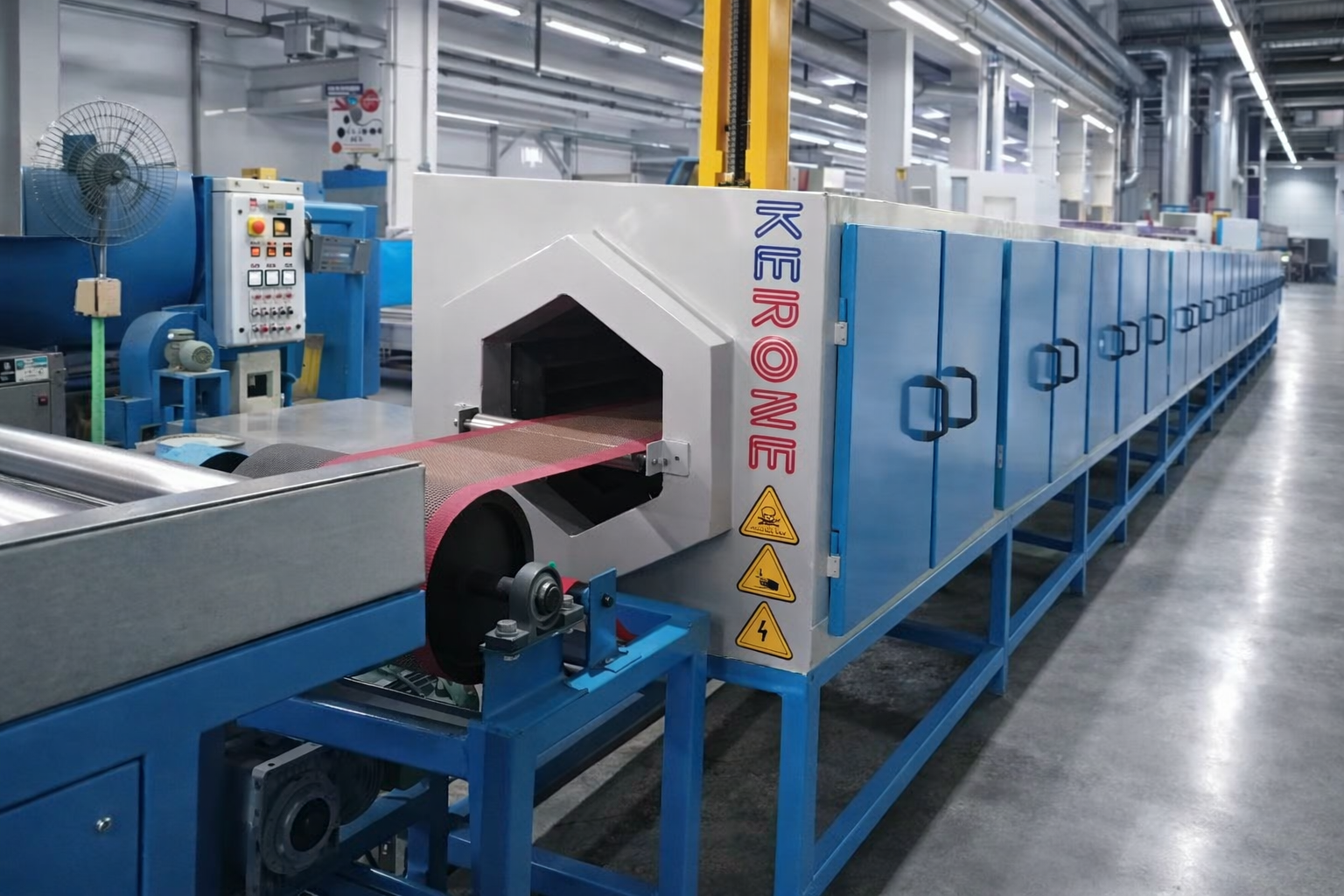
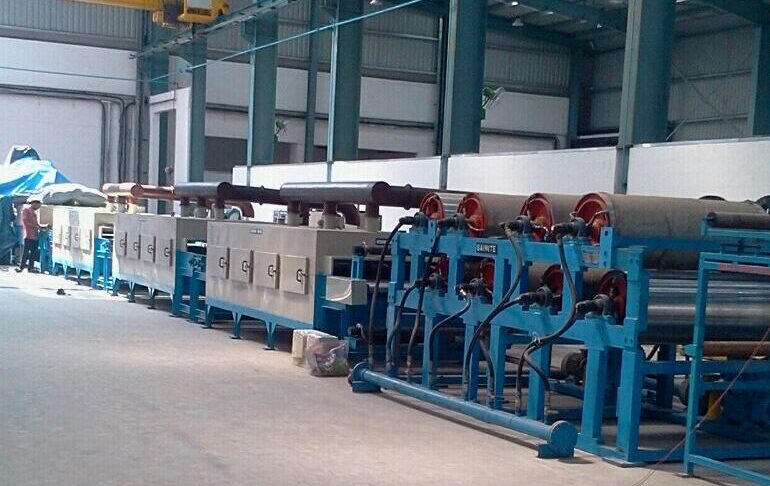
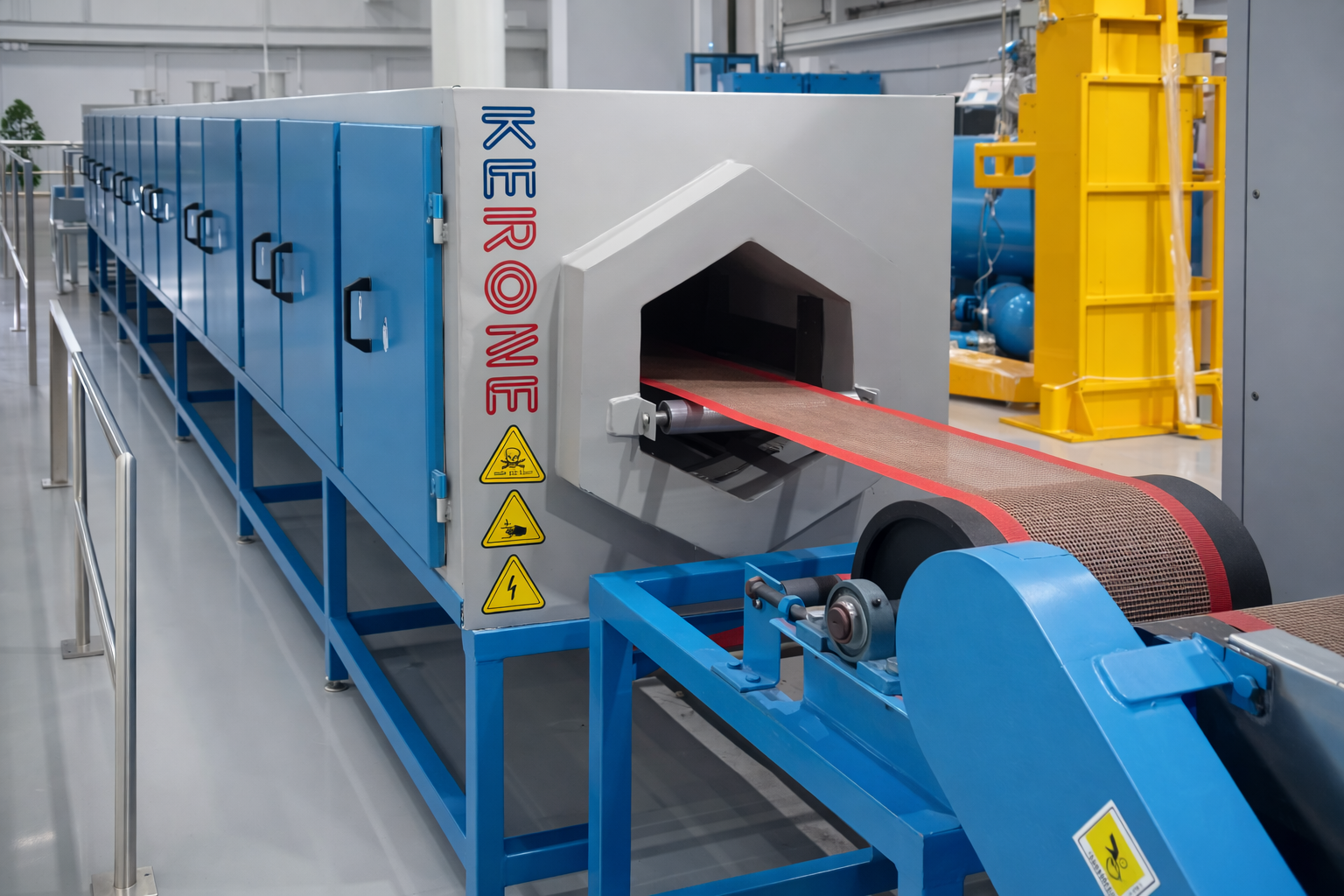
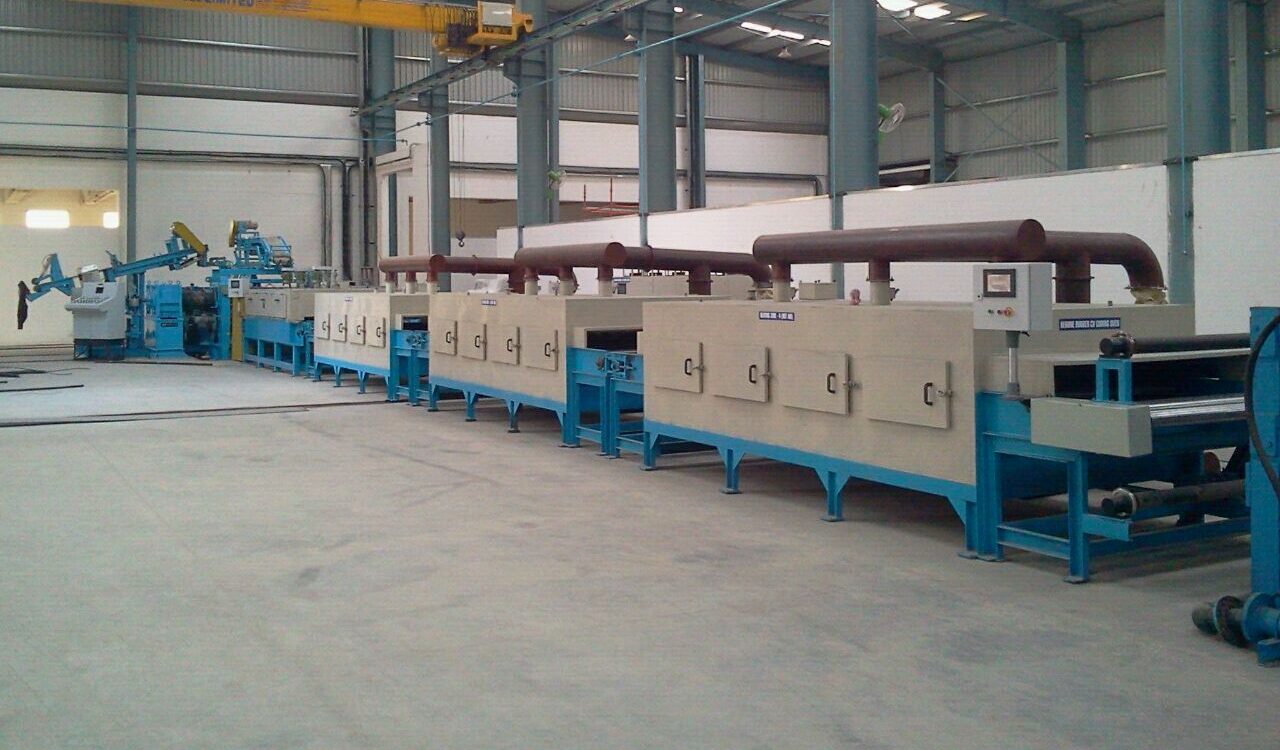
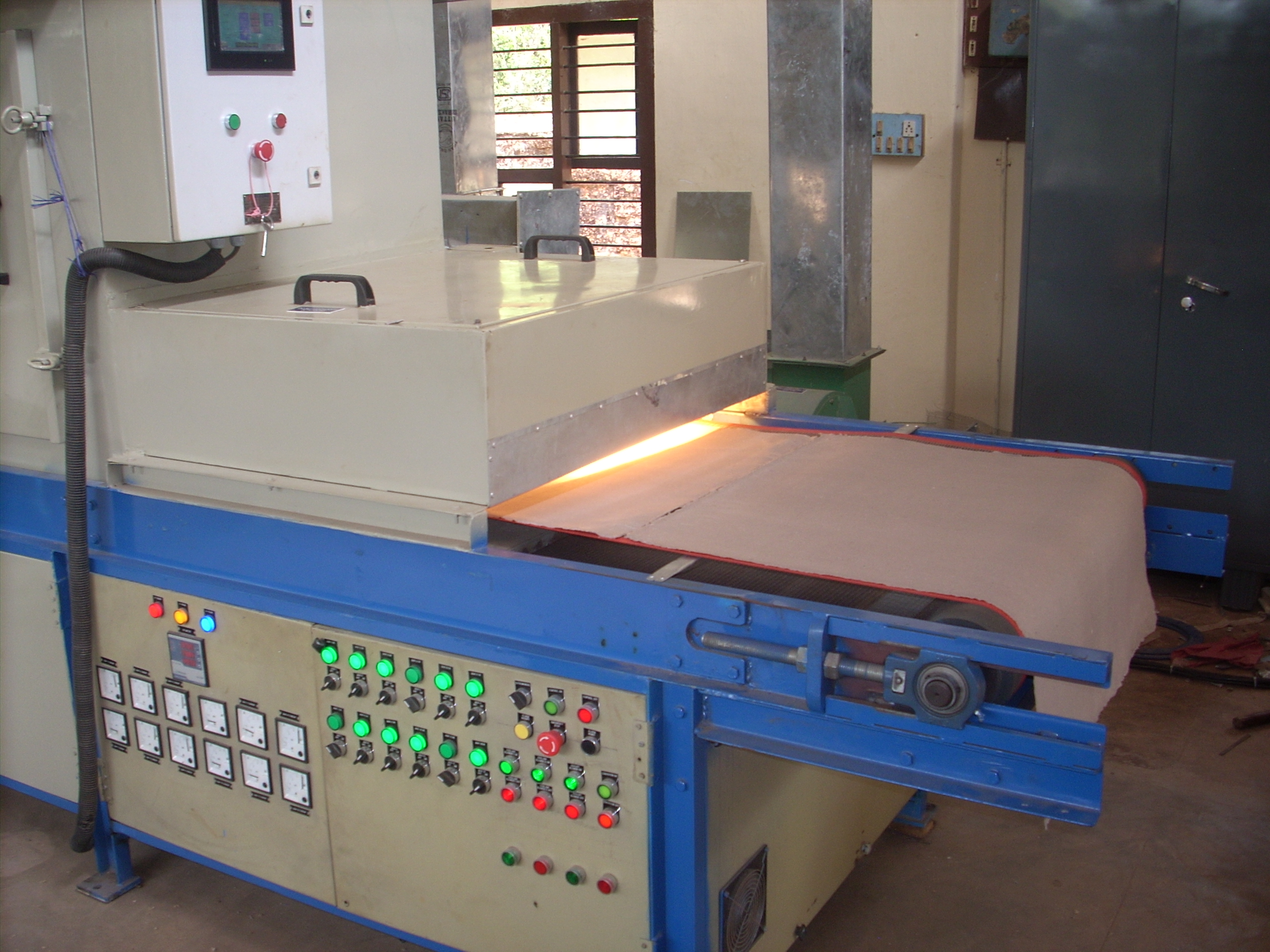
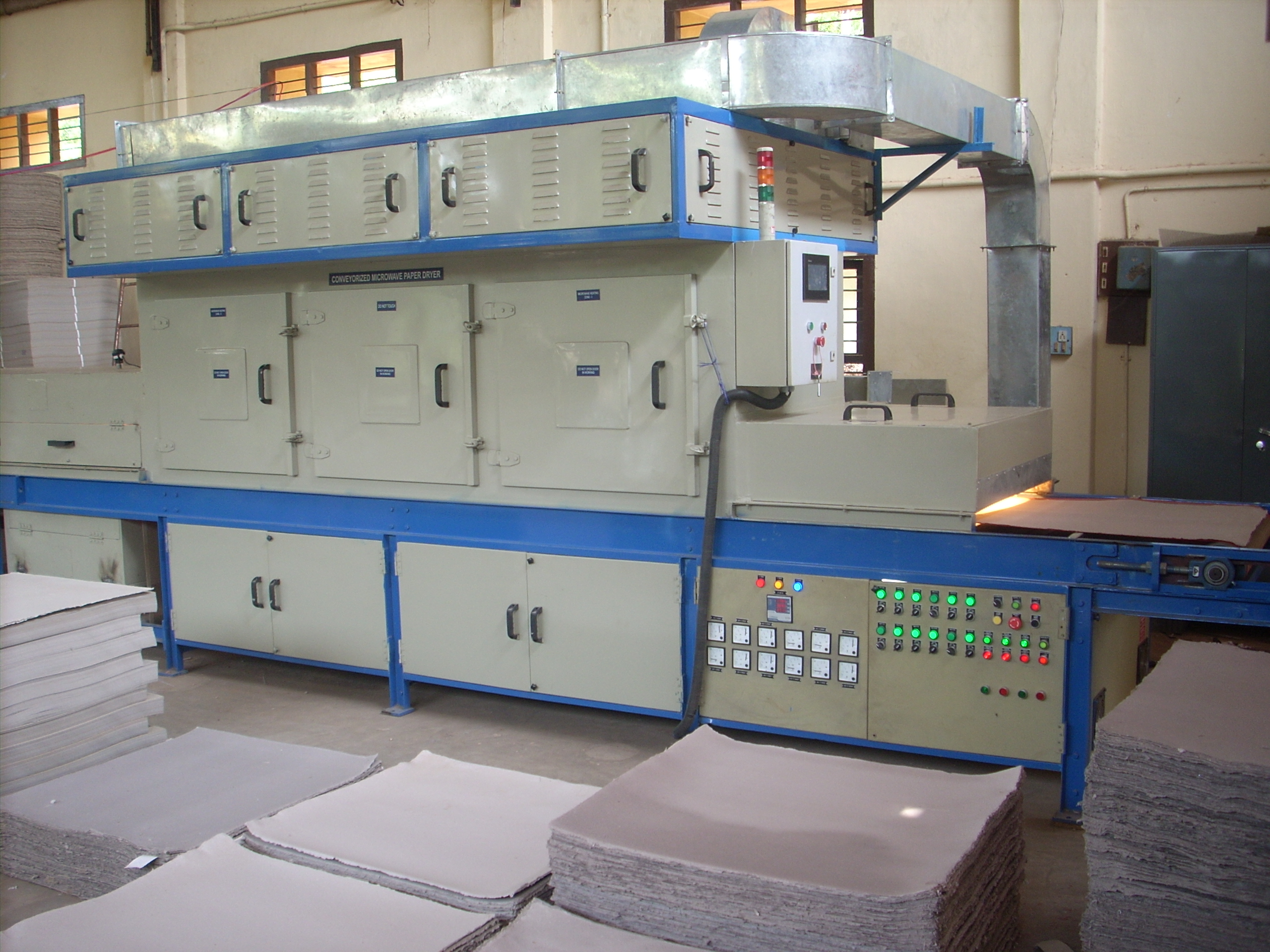
At Kerone, we are helping many rubber processing giants with its highly advanced and sophisticated microwave based heating solutions for vulcanization processing. Vulcanization is process under which the natural rubber or rubber polymer is converted into more durable and mechanically strengthen rubber. This process results in changing the cross-linking bonds within the natural rubber and making bonds more strong and non-sticky. Vulcanization curing is achieved by heating the natural rubber or rubber polymer at very high temperature along with sulphur or any other agent, such high level of temperature rise results into changing of bond within the rubber and resulting in non-sticky, maker it lesser deformable when heated, and removes the brittleness this helps rubber to achieve the desired level of elasticity.
Why Choose Kerone Microwave Heating For Rubber
Kerone is known for delivering highly efficient, reliable and fully customized Microwave Heating For Rubber solutions engineered after a detailed analysis of material characteristics, process goals and expected output requirements.
For rubber manufacturers vulcanization is very critical process as it gives the strength and durability that is required for any rubber to get moulded and utilise for any application. Heating plays very critical role in the process of vulcanization hence selection of proper heating solution is very critical. Kerone is technology partner for many rubber manufacturers with our technically advanced heating systems powered by microwave and electromagnetics.
Continuous microwave vulcanization curing plants designed by Kerone is very cost effective solution for the processers of rubber as our Continuous microwave vulcanization curing systems accelerator the process of vulcanization by putting rubber under high temperature and pressure, this results in high quality processed rubber.
Types and Features of Microwave Heating For Rubber
Kerone’s microwave-based vulcanization systems have proven to be superior to conventional hot air heating processes. In continuous vulcanization, when the curing package is placed inside microwave heaters, the microwave energy directly targets the internal moisture within the rubber. This results in faster and more uniform curing compared to hot air systems, which heat only from the surface.
Advantages of Microwave-Based Continuous Vulcanization
Better Heating Quality: Uniform heat distribution enhances product consistency.
Proper Compound Formation: Ensures correct chemical bonding during vulcanization.
Compact Equipment: Smaller footprint compared to conventional heaters.
No Energy Wastage: Direct heating minimizes heat loss.
Features of Kerone’s Microwave Vulcanization Systems
Longer working life than conventional heating systems
Quick and easy installation
Low maintenance requirements
Compact and condensed construction
Accurately designed and engineered
Hassle-free operation
Highly durable structure
Energy and cost efficient
Lower power consumption
Efficient and consistent performance
Cost-effective investment
Preheating of Rubber
Kerone supports rubber manufacturers with advanced microwave-based electromagnetic heating solutions. Microwaves penetrate deep into rubber material and energize internal moisture molecules, resulting in faster and higher-quality processing. Preheating reduces internal tension within rubber before molding and vulcanization, improving flow characteristics and reducing overall curing time by approximately 40%.
Features of Microwave Pre-Heaters:
Long functional life
Low and easy maintenance
Dense and rugged construction
Quick and easy installation
Precisely engineered design
Hassle-free functioning
High durability
Energy and cost efficient
Power saving
Efficient performance
Advantages of Microwave Pre-Heating Systems:
Fast and uniform heating
Selective heating capability
Direct utilization of large-sized feedstocks
Treatment of non-homogeneous materials
Waste reduction and material recovery
Improved production quality
Development of new materials and products
Energy efficiency
Overall cost savings
Improved process control
Operates from standard electrical sources
Extrusion Curing
With over 40 years of experience, Kerone provides advanced microwave-based rubber extrusion curing systems. Since rubber is a poor conductor of conventional heat, surface heating methods often fail to cure evenly. Microwave technology heats from within, ensuring consistent and efficient curing of extruded rubber products. Kerone also supplies complete extrusion lines with varying screw sizes to meet diverse production requirements.
Value Added by Kerone’s Rubber Extrusion Systems:
Increased production flexibility
Reduced processing time
Fewer processing steps
Higher quality finished products
Lower labor costs
Reduced floor space requirements
Safer working environment
Key Features
High thermal and processing efficiency
Low maintenance and easy operation
Suitable for heat-sensitive materials
Fully adjustable and customizable process parameters
Available in batch and continuous configurations
Uniform processing and consistent product quality
Powered by AI, ML & IoT
Future-Ready Engineering Driven by AI & IoT
Our advanced AI, ML, and IoT technologies, this solution delivers smarter automation, real-time insights, and predictive intelligence to enhance efficiency and drive future-ready growth.
Real-Time Monitoring & Control
Continuous tracking of process parameters with instant adjustments.
Predictive Maintenance
Intelligent fault detection to prevent failures before they occur.
Adaptive Process Optimization
Dynamic tuning of operations for maximum output and efficiency.
Cloud Dashboards & Analytics
Unified access to real-time insights and performance trends.
Energy & Resource Savings
Smarter utilization of energy to cut costs and reduce waste.
Secure IoT Connectivity
Encrypted data flow with seamless integration across plant systems.
Applications of Microwave Heating For Rubber
Some of the applications of Microwave Heating For Rubber:
Preheating of Rubber Profiles and Extrusions
Ensures uniform temperature before further processing such as curing or molding.
Continuous Vulcanization of Rubber
Used for rapid and uniform curing of rubber profiles, cables, seals, and hoses.
Rubber Sheet and Mat Processing
Provides even heating across thickness for consistent physical properties.
Drying of Rubber Compounds
Removes surface moisture from rubber mixes before shaping.
Devulcanization for Recycling
Helps break sulfur bonds in scrap rubber for reuse in new rubber products.
Bonding and Adhesive Activation
Activates bonding agents in rubber-to-metal or rubber-to-fabric applications.
Foam Rubber Expansion
Assists in controlled heating for sponge and foam rubber manufacturing.
Kerone’s Microwave Heating for Rubber solutions are engineered to deliver maximum efficiency, long-term reliability and excellent operational stability. Our focus on innovation and customization ensures superior industrial results.
Microwave technology plays an important role in rubber recycling and devulcanization. It helps selectively break sulfur cross-links in waste rubber, allowing the material to be reused in new products. This contributes to sustainability and cost savings in rubber manufacturing.
Overall, microwave heating offers advantages such as energy efficiency, faster production rates, precise temperature control, and improved product consistency, making it a valuable technology in modern rubber processing industries.
Seamless Export Connections Global & Local
Our Global Footprint in Industrial Excellence
Delivering world-class industrial and process solutions across countries with precision, innovation, and reliability.
Peru
Chile
Argentina
Mexico
Colombia
Brazil
USA
Canada
United Kingdom
France
Germany
Spain
Italy
Netherlands
Sweden
Switzerland
Poland
Portugal
Ireland
Czechia
Romania
Hungary
Austria
Greece
Kazakhstan
Uzbekistan
Turkmenistan
Algeria
Egypt
Nigeria
Kenya
South Africa
Saudi Arabia
UAE
Israel
Russia
India
China
Japan
South Korea
Thailand
Vietnam
Malaysia
Singapore
Indonesia
Philippines
Australia
New Zealand
Pan-India Presence. Local Expertise.
Raipur
Bilaspur
Panaji
Vasco da Gama
Gandhinagar
Ahmedabad
Surat
Chandigarh
Gurgaon
Shimla
Manali
Bengaluru
Mysore
Kochi
Pune
Mumbai
Thane
Navi Mumbai
Hyderabad
Chennai
Coimbatore
Kolkata
Lucknow
Jaipur
Udaipur
Jodhpur
Dehradun
Haridwar
Bhubaneswar
Product Gallery
Frequently Asked Questions (FAQ)
Microwave heating supports a broader range of rubber processing steps than curing alone, including drying of rubber compounds to remove surface moisture before shaping, devulcanization of scrap rubber for recycling by selectively breaking sulfur cross-links, activation of bonding agents in rubber-to-metal or rubber-to-fabric assemblies, and controlled heating for foam and sponge rubber expansion. Each application relies on the same core principle of direct energy coupling with moisture or polar compounds within the material, but the power levels, exposure times, and cavity designs differ significantly between, for example, gentle drying of compound stock and the higher-energy requirements of devulcanization. Manufacturers should clarify with their supplier which specific application their system needs to be optimized for, since a generic microwave heating unit configured for curing will not necessarily perform well for drying or devulcanization without adjustment.
Food, chemical, pharma, biomass, rubber, textile and more.
Kerone ensures high product quality through strict engineering standards, advanced testing procedures, and precision-controlled manufacturing systems.
Microwave heating is preferred because it generates heat internally within the rubber material rather than transferring heat from the surface inward like hot air systems. This results in faster and more uniform curing, especially for thick rubber profiles and complex shapes. It reduces processing time, improves cross-linking consistency, lowers energy consumption, and minimizes surface overheating or scorching. As a result, manufacturers achieve better product quality, higher production efficiency, and reduced operational costs.
Microwave heating for rubber and polymer processing enables rapid, uniform vulcanization, curing, and drying without the surface scorching or uneven heating associated with conventional ovens. Kerone's microwave curing systems for rubber use precisely controlled power density to achieve thorough cross-linking at lower temperatures, improving product consistency and reducing cycle times by up to 50%. For polymers, microwave systems accelerate drying of granules, pellets, and formed parts, improving production efficiency. Special applicators and microwave-transparent conveyors are used to handle various shapes and formulations.
Devulcanization uses microwave energy to selectively target and break the sulfur cross-links formed during the original vulcanization process, effectively reversing part of the chemical bonding that gives cured rubber its strength and elasticity, without degrading the base polymer chains. This allows scrap rubber, such as production waste or end-of-life tyre material, to be processed back into a usable feedstock that can be blended into new rubber compounds rather than sent to landfill. The resulting devulcanized rubber typically requires blending with virgin compound rather than being used at 100 percent recycled content, since some property loss compared to virgin rubber is expected, but this still represents meaningful material cost savings and waste reduction for manufacturers incorporating recycled content into their products.
Conventional hot air vulcanization systems lose substantial energy heating large volumes of air that surround the product rather than the rubber itself, and because heat must conduct inward from the surface, longer dwell times are needed to fully cure thick rubber sections. Microwave systems instead direct energy specifically into the rubber's internal moisture and polar content, achieving faster heat transfer with significantly less energy wasted on heating the surrounding environment. This translates into a smaller equipment footprint, since shorter dwell time requirements mean shorter curing tunnels, lower energy bills per unit of rubber processed, and faster overall production rates, all of which contribute to a lower total cost of ownership over the equipment's operating life compared to hot air alternatives.
Extruded rubber products with substantial cross-sectional thickness, such as hoses, profiles, and cable jacketing, benefit most from microwave-assisted curing because surface-heating methods alone struggle to cure these products evenly through their thickness within practical line speeds. Since rubber conducts heat poorly, a surface-only heating method applied to a thick extrusion either undercures the core or requires impractically slow line speeds to allow enough time for heat to conduct inward. Microwave curing heats the extrudate's full cross-section simultaneously, allowing faster line speeds while still achieving complete, uniform cure. Thin-walled extrusions with minimal cross-sectional thickness see less dramatic improvement, since surface heating methods can already cure thin sections reasonably well within standard line speeds.
Preheating with microwave energy before molding or vulcanization commonly reduces overall curing time by approximately 40 percent by bringing the rubber to a near-uniform elevated temperature before the press or curing stage begins, eliminating much of the heat-up time that would otherwise occur within the press itself. This reduction does vary by rubber type, since compounds differ in their dielectric loss factor, meaning how efficiently they absorb microwave energy, as well as in their thermal conductivity once heated. Compounds with higher polarity or moisture content typically respond fastest to microwave preheating, while less polar specialty elastomers may see a smaller percentage time reduction and require process trials to establish realistic expectations for that specific formulation.
New adopters should establish baseline testing comparing parts produced under previous heating methods against microwave-processed parts, examining hardness, compression set, tensile strength, and visual cure uniformity across cross-sections rather than relying on surface inspection alone. Process parameters such as power level, exposure time, and conveyor speed should be locked in through documented trial runs for each compound and part geometry, since microwave response varies by formulation. Ongoing quality control should include periodic destructive testing of cross-sections to verify the absence of undercured cores, particularly during the transition period as production staff become familiar with the new process parameters and equipment behavior.
Yes, Kerone designs microwave heating systems with adjustable power output and configurable cavity zones that can be set up to handle multiple process steps, such as drying rubber compound stock followed by curing within an integrated production line, though each application typically requires its own dedicated zone with parameters tuned specifically for that step. Combining functions on one line can improve overall floor space efficiency and reduce the number of separate material handling transfers between process steps. Manufacturers considering a multi-function configuration should discuss their full process sequence with the equipment supplier early in the specification stage, since cavity design and power distribution need to account for the different energy requirements of each application running in sequence.
A common misunderstanding is that carbon black or metal reinforcement within a rubber compound will cause dangerous arcing or uncontrolled heating in a microwave field, leading some processors to avoid the technology for filled or reinforced compounds unnecessarily. While metal components can interact with microwave fields and do require engineering consideration in cavity and process design, properly engineered systems account for this through cavity geometry, shielding, and power control rather than avoiding such compounds altogether. Carbon black itself, while it does absorb microwave energy differently than the rubber matrix, is commonly processed successfully in industrial microwave rubber curing systems when power levels and exposure times are calibrated for the specific filler loading in the formulation.
Microwave rubber heating systems with PLC-based control architecture generate continuous process data, including power levels, exposure duration, and temperature readings, that can feed into plant-wide manufacturing execution systems for real-time production tracking and quality traceability. Predictive maintenance algorithms can flag generator performance drift before failures occur, reducing unplanned downtime that disrupts production schedules. Cloud-connected dashboards allow process engineers to compare performance trends across multiple production lines or shifts, identifying optimization opportunities that would be difficult to spot from manual log review alone. For rubber processors integrating multiple production technologies into a unified digital manufacturing strategy, this data connectivity is often as valuable as the direct processing efficiency gains.
Budgeting should account for the upfront capital cost of the microwave system, which is typically higher than comparable conventional hot air equipment, against the operational savings expected from reduced energy consumption, shorter cycle times enabling higher throughput from the same floor space, and lower scrap rates from improved cure uniformity. A realistic payback analysis should incorporate the specific compound and part mix the facility runs, since the financial case is strongest for thick-section, high-volume products where conventional heating's limitations are most pronounced. Facilities should also factor in reduced floor space requirements if a shorter microwave curing tunnel replaces a longer conventional system, since this can free up production area for other use or avoid a costly facility expansion.
Kerone’s custom-designed heating and processing solutions are built to meet the demands of your growing operations. Whether you’re upgrading equipment, expanding production, or need a tailor-made solution


 Peru
Peru Chile
Chile Argentina
 Mexico
 Colombia
 Brazil
 USA
USA Canada
 United Kingdom
 France
 Germany
 Spain
Spain Italy
Italy Netherlands
 Sweden
 Switzerland
 Poland
 Portugal
 Ireland
 Czechia
 Romania
 Hungary
 Austria
 Greece
 Kazakhstan
 Uzbekistan
 Turkmenistan
 Algeria
 Egypt
Egypt Nigeria
 Kenya
Kenya South Africa
 Saudi Arabia
 UAE
UAE Israel
 Russia
 India
India China
China Japan
Japan South Korea
 Thailand
 Vietnam
 Malaysia
 Singapore
 Indonesia
 Philippines
 Australia
 New Zealand