We at Kerone have 50 years of experience. For research and commercial uses, such as the creation of biochar, waste management, and energy production, we design and produce microwave pyrolysis rotary ovens.
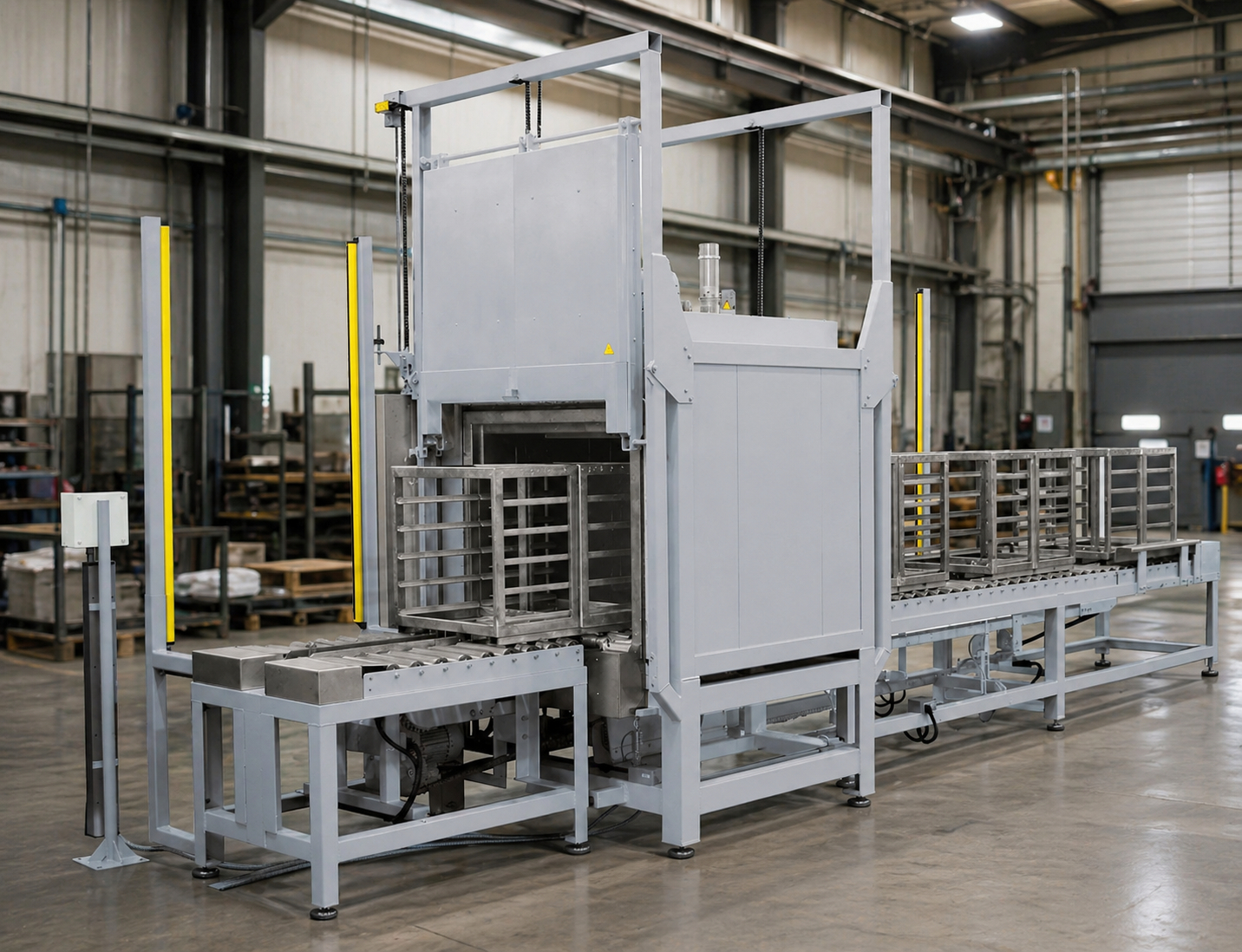
A microwave chamber furnace is a type of furnace that uses microwave radiation to heat materials in a vacuum or controlled atmosphere. This type of furnace is commonly used in materials science, semiconductor processing, and nanotechnology research.
The microwave chamber furnace consists of a chamber that is sealed and pressurized with a gas or vacuum, with a sample holder or crucible in the center of the chamber. Microwave energy is then applied to the sample through a waveguide, which generates an electromagnetic field that heats the sample rapidly and uniformly.
Why Choose Kerone Microwave Chamber Furnace
Kerone is known for delivering highly efficient, reliable and fully customized Microwave Chamber Furnace solutions engineered after a detailed analysis of material characteristics, process goals and expected output requirements.
One of the key advantages of using a microwave chamber furnace is its ability to heat materials rapidly and uniformly, which can lead to more efficient and consistent processing. Additionally, because the heating occurs in a vacuum or controlled atmosphere, the furnace can be used to process materials that are sensitive to oxidation or other atmospheric effects.
Kerone is a manufacturer of high-temperature furnaces, such as microwave chamber furnaces for sintering ceramics and cutting-edge materials. We assist the client in selection by comprehending the requirements for quality, size, form, and moisture content of the final product must be taken into consideration, as well as manufacturing setting, building materials most commonly stainless steel, and energy consumption pattern. The kind and volume of feeding material.
Types and Features of Microwave Chamber Furnace
The features and capabilities of a microwave chamber furnace can vary depending on the specific model and manufacturer, but some common features include:
Key Features
Temperature Control: A microwave chamber furnace typically offers precise temperature control, with the ability to reach and regulate temperatures up to several thousand degrees Celsius.
Gas Flow Control: The furnace may include control of gas flow and chamber pressure, which is essential for maintaining a specific atmosphere or vacuum during the heating process.
Sample Size and Capacity: Capacity varies by model, ranging from a few grams for laboratory applications to several kilograms for industrial processing.
Rapid Heating Rate: Microwave chamber furnaces are capable of very fast heating, often achieving temperature increases of several hundred degrees per minute.
Control and Monitoring: Advanced systems may include programmable temperature profiles, real-time temperature and pressure monitoring, and automated data logging for process optimization and quality control.
Key Features
High thermal and processing efficiency
Low maintenance and easy operation
Suitable for heat-sensitive materials
Fully adjustable and customizable process parameters
Available in batch and continuous configurations
Uniform processing and consistent product quality
Powered by AI, ML & IoT
Future-Ready Engineering Driven by AI & IoT
Our advanced AI, ML, and IoT technologies, this solution delivers smarter automation, real-time insights, and predictive intelligence to enhance efficiency and drive future-ready growth.
Real-Time Monitoring & Control
Continuous tracking of process parameters with instant adjustments.
Predictive Maintenance
Intelligent fault detection to prevent failures before they occur.
Adaptive Process Optimization
Dynamic tuning of operations for maximum output and efficiency.
Cloud Dashboards & Analytics
Unified access to real-time insights and performance trends.
Energy & Resource Savings
Smarter utilization of energy to cut costs and reduce waste.
Secure IoT Connectivity
Encrypted data flow with seamless integration across plant systems.
Applications of Microwave Chamber Furnace
Food industry processing systems
Chemical and polymer processing
Pharmaceutical ingredients and intermediates
Ready‑to‑eat (RTE) food production
Specialized heating, drying, or material transformation processes
Industrial material modification and thermal treatment
Kerone’s Microwave Chamber Furnace solutions are engineered to deliver maximum efficiency, long-term reliability and excellent operational stability. Our focus on innovation and customization ensures superior industrial results.
With Fricke and Mallah GMBH, Kerone is currently engaged in business cooperation and collaboration on application development, research, and sales of Microwave Chamber Furnace. And we manufacture other different types of microwave heating system like, Vacuum technology, Microwave Air Jet Plasma, Microwave Solid State Generators, Microwave Chemical Vapor Deposition System and other different types Microwave Technology.
Seamless Export Connections Global & Local
Our Global Footprint in Industrial Excellence
Delivering world-class industrial and process solutions across countries with precision, innovation, and reliability.
Peru
Chile
Argentina
Mexico
Colombia
Brazil
USA
Canada
United Kingdom
France
Germany
Spain
Italy
Netherlands
Sweden
Switzerland
Poland
Portugal
Ireland
Czechia
Romania
Hungary
Austria
Greece
Kazakhstan
Uzbekistan
Turkmenistan
Algeria
Egypt
Nigeria
Kenya
South Africa
Saudi Arabia
UAE
Israel
Russia
India
China
Japan
South Korea
Thailand
Vietnam
Malaysia
Singapore
Indonesia
Philippines
Australia
New Zealand
Pan-India Presence. Local Expertise.
Raipur
Bilaspur
Panaji
Vasco da Gama
Gandhinagar
Ahmedabad
Surat
Chandigarh
Gurgaon
Shimla
Manali
Bengaluru
Mysore
Kochi
Pune
Mumbai
Thane
Navi Mumbai
Hyderabad
Chennai
Coimbatore
Kolkata
Lucknow
Jaipur
Udaipur
Jodhpur
Dehradun
Haridwar
Bhubaneswar
Product Gallery
Frequently Asked Questions (FAQ)
Microwave heating efficiency depends on a material's dielectric properties, how readily it absorbs and converts electromagnetic energy into heat. Many ceramics, certain catalysts, polymers, and composite materials absorb microwave energy well and heat rapidly and uniformly as a result. Highly reflective metals in bulk form generally don't absorb microwave energy the same way and can instead reflect it or cause arcing, which is why metal processing in a microwave furnace usually involves composite or powdered forms rather than solid metal stock. Before specifying a microwave chamber furnace for a new material, Kerone typically recommends dielectric property testing or a pilot trial, since assuming a material will respond well based on general material class alone can lead to poor process results.
It is used for efficient processing, heating, drying or material transformation.
High efficiency, process reliability and complete customization.
Food, chemical, pharma, biomass, rubber, textile and more.
Kerone ensures high product quality through strict engineering standards, advanced testing procedures, and precision-controlled manufacturing systems.
Ceramics, metals, glass, catalysts, composites, polymers, and a wide range of inorganic materials can be processed depending on their microwave absorption characteristics.
Standard safety features include microwave leakage detection, interlocked door switches, overtemperature protection, emergency stop, and compliance with international electrical safety standards.
Yes, Kerone provides complete installation, commissioning, and operator training services, along with ongoing technical support and maintenance programs.
Many advanced materials, certain metal powders, specialty ceramics, and reactive compounds, degrade or form unwanted oxide layers when heated in ordinary air. By sealing the chamber and either pressurising it with an inert gas or pulling a vacuum before applying microwave energy, the furnace removes the oxygen exposure that would otherwise compromise the material during high-temperature processing. This is particularly important in materials science and semiconductor research applications, where surface purity directly affects the final product's electrical or mechanical performance. The combination of rapid, uniform microwave heating with atmospheric control is what makes these furnaces suitable for sintering and thermal treatment processes that ordinary furnaces operating in open air cannot handle without contamination risk.
Conventional resistance furnaces heat by conduction and radiation from heating elements to the material's surface, which is inherently slower since heat must transfer inward gradually. Microwave chamber furnaces generate heat directly within the material's volume through dielectric absorption, allowing temperature increases of several hundred degrees per minute in suitable materials, a rate conventional furnaces typically cannot match. This rapid heating reduces total cycle time significantly for sintering and thermal treatment processes, which translates into higher throughput per furnace per shift. The trade-off is that not every material responds to microwave energy the same way conventional furnaces respond to conducted heat, so the rate advantage applies specifically to materials with favourable dielectric absorption characteristics.
Capacity varies considerably by model, starting from a few grams suitable for laboratory research and materials characterisation work, scaling up to several kilograms per batch for industrial sintering and thermal processing applications. This range matters because research institutions and R&D departments often need small, precisely controlled batches to characterise a new material's behaviour before committing to industrial-scale processing, while production facilities need the throughput that larger chamber volumes provide. Kerone engineers each furnace configuration around the specific capacity, temperature range, and atmosphere control requirements the client specifies, rather than offering a single fixed-size unit, which allows research and production facilities to specify equipment matched precisely to their batch size needs.
Kerone's support extends beyond equipment delivery to include complete installation and commissioning at the client's facility, operator training on the control system and safety procedures, and ongoing technical support and maintenance programs for the life of the equipment. This is particularly important for microwave furnace technology, since operators unfamiliar with dielectric heating principles may not immediately recognise process anomalies that an experienced technician would catch early. Structured maintenance programs also help identify wear in safety-critical components, like door interlocks and leakage detection systems, before they become compliance issues. Buyers should clarify the specific scope of post-installation support, including response times and spare parts availability, as part of the procurement discussion rather than assuming a standard service level applies.
Kerone’s custom-designed heating and processing solutions are built to meet the demands of your growing operations. Whether you’re upgrading equipment, expanding production, or need a tailor-made solution


 Peru
Peru Chile
Chile Argentina
 Mexico
 Colombia
 Brazil
 USA
USA Canada
 United Kingdom
 France
 Germany
 Spain
Spain Italy
Italy Netherlands
 Sweden
 Switzerland
 Poland
 Portugal
 Ireland
 Czechia
 Romania
 Hungary
 Austria
 Greece
 Kazakhstan
 Uzbekistan
 Turkmenistan
 Algeria
 Egypt
Egypt Nigeria
 Kenya
Kenya South Africa
 Saudi Arabia
 UAE
UAE Israel
 Russia
 India
India China
China Japan
Japan South Korea
 Thailand
 Vietnam
 Malaysia
 Singapore
 Indonesia
 Philippines
 Australia
 New Zealand