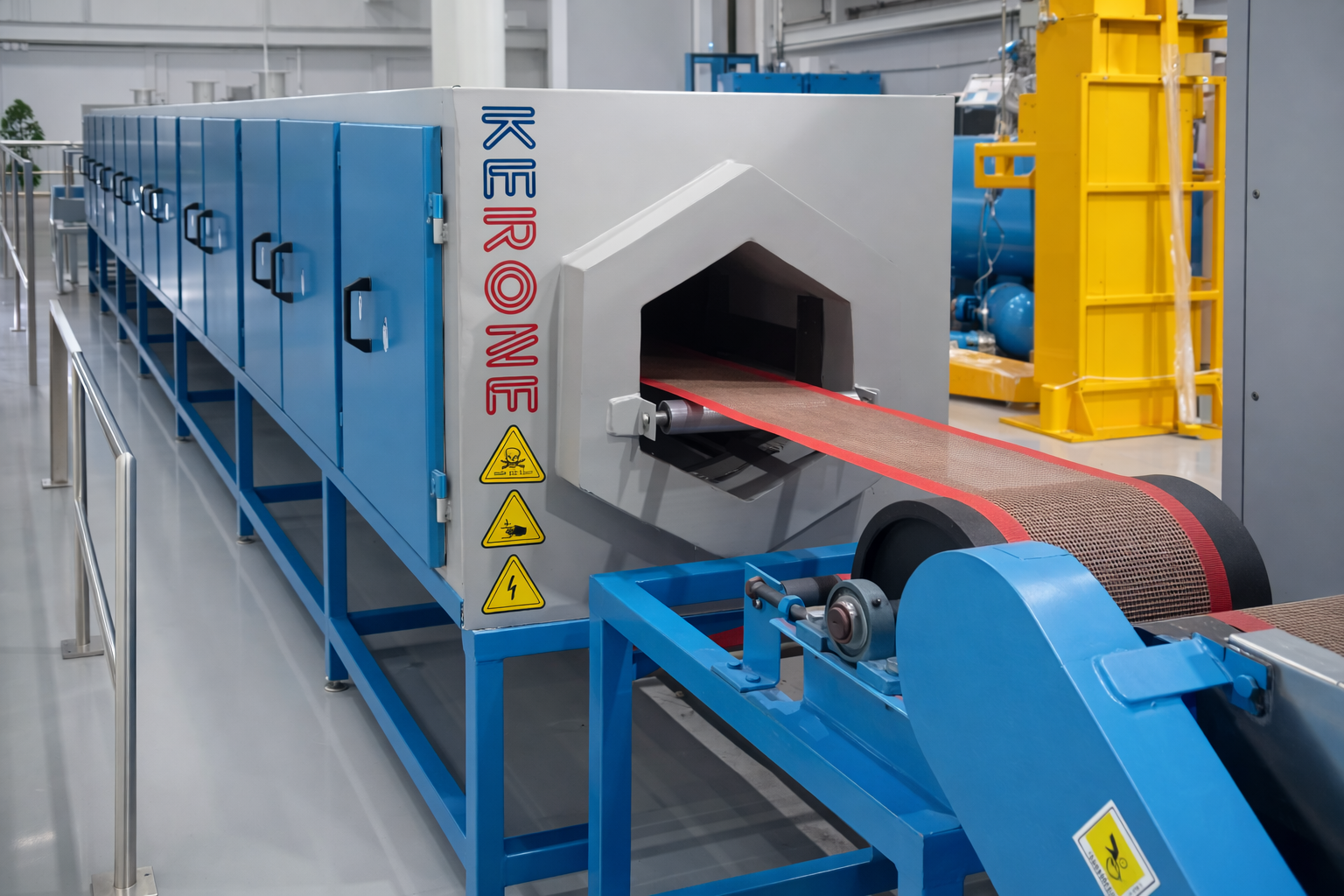
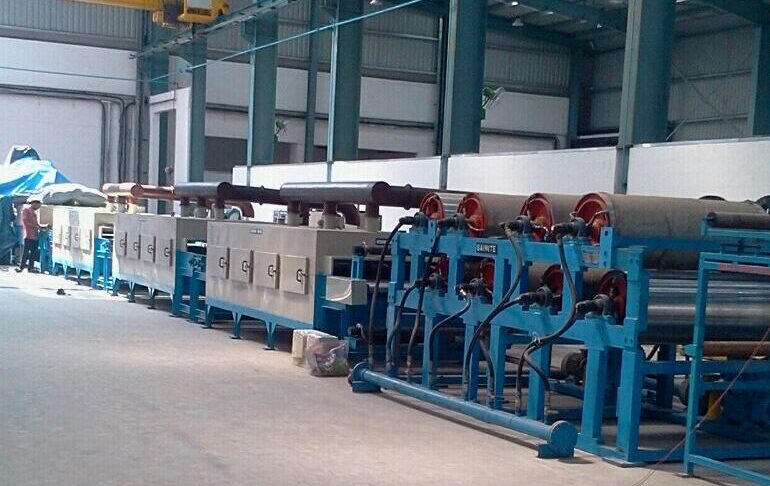
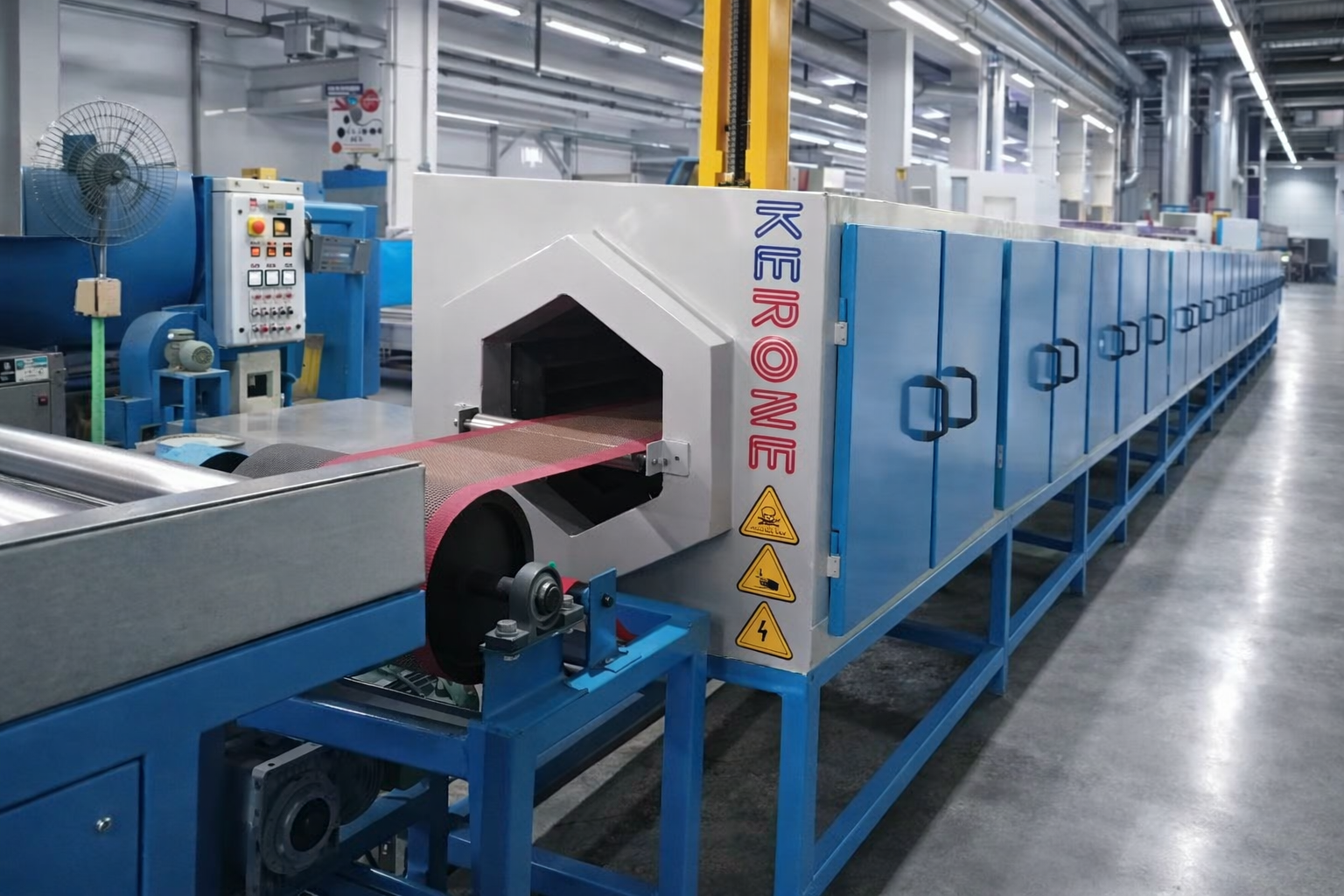
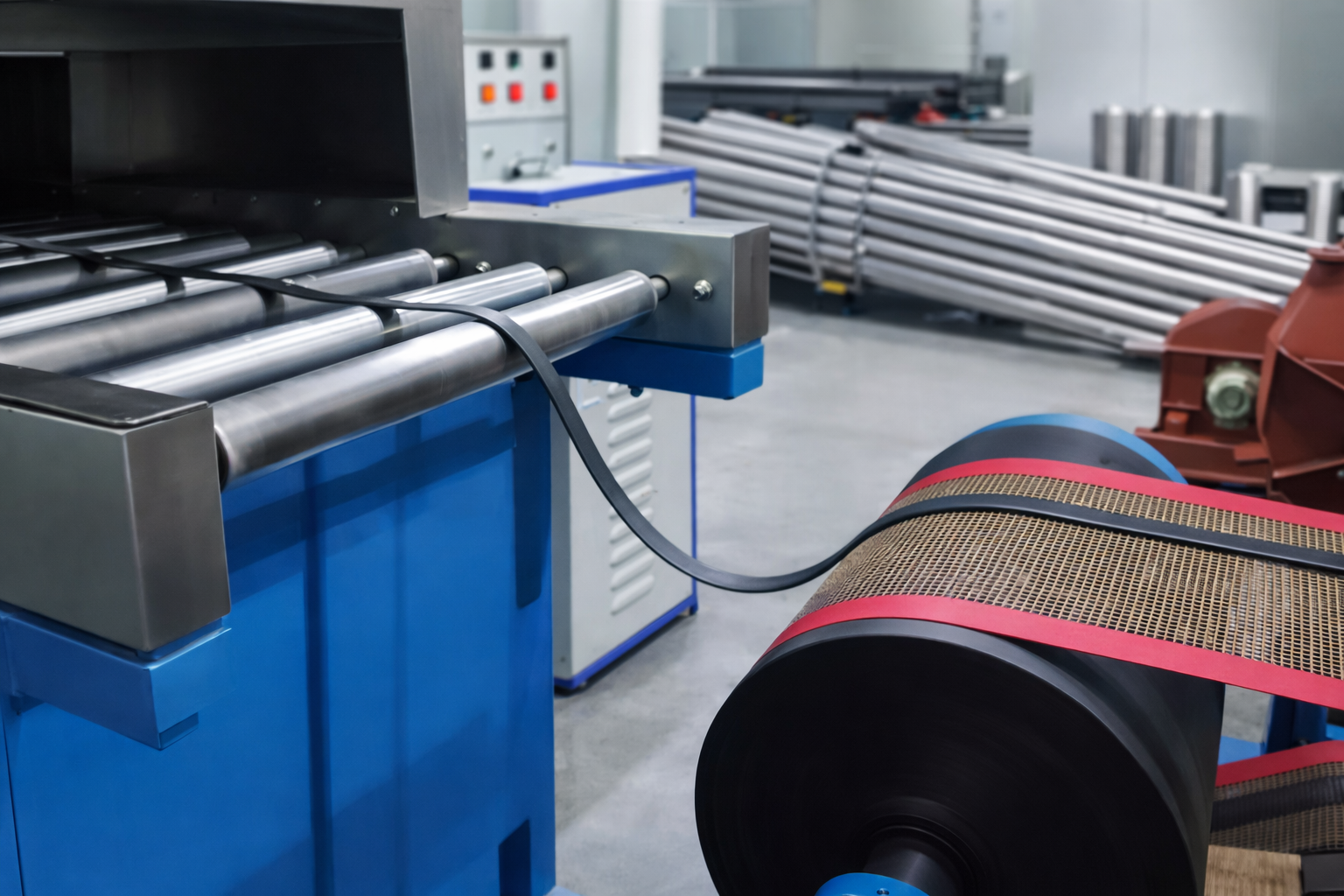
KERONE Engineering Solutions Ltd. is a pioneer in application and implementing engineering solutions with its vast experience and team of professionals. Since last 50 years, it has been into designing, manufacturing & installing of Industrial machinery for various processing needs.
The engineers & professionals at KERONE have in depth knowledge of different heating technologies and provide solutions applying them in a huge no. of Industrial machines.
Why Choose Kerone Microwave/Infrared Rubber Vulcanization Line
Kerone is known for delivering highly efficient, reliable and fully customized Microwave/Infrared Rubber Vulcanization Line solutions engineered after a detailed analysis of material characteristics, process goals and expected output requirements.
Rubber vulcanization has been a vastly popular application of Microwave Heating. While there are also types of cold vulcanization, microwave systems are always used for hot vulcanization. The continuous vulcanization of rubber profiles is the main application of microwave vulcanization systems. As the heat transfer in other heating systems only takes place through the surface of the product, the heating process is time consuming and can lead to negative effects like over-curing etc. In order to shorten down the vulcanization time and to avoid possible problems, these parts can be pre-heated using microwave ovens, as the radiation penetrates the rubber and heat the material from core to surface simultaneously and hence microwave curing is very fast.
Types and Features of Microwave/Infrared Rubber Vulcanization Line
Vulcanization is the process of converting natural rubber and similar elastic polymers into durable by cross-linking the polymer molecules, i.e. building additional bridges between them through the addition of sulfur or other equivalent “curatives.” Uncured natural rubber is sticky, deforms easily when warm, and is brittle when cold and hence is very poor in elasticity. Vulcanized materials are less sticky and have superior mechanical properties. The process is named after Vulcan, the Roman God of Fire. A vast array of products are made with vulcanized rubber including tires, sealings, shoe soles, hoses etc.
The process of rubber vulcanization can be carried out using the following two heating systems:
Infrared Heating System
Microwave Heating System
Infrared Heating System in Rubber Curing
Infrared rubber curing systems are highly efficient for the pre-vulcanization of rubber profiles and hoses. Positioned between the rubber extruder and the continuous vulcanization line, high-power infrared radiation pre-cures the surface of rubber products. This surface pre-curing improves dimensional stability and enhances surface finish quality.
Typically, infrared curing systems are approximately one meter in length and offer a heating capacity of around 30 kW. However, since rubber is a poor conductor of thermal energy, infrared systems mainly heat from the surface inward. This limitation has led to increased demand for microwave heating systems, which provide volumetric heating and ensure more uniform curing throughout the material.
Salient Features of the Rubber Vulcanization Lines
Throughput Capacity: 50 to 500 kg per hour.
Hot Air Circulation: 100 to 1000 CFM for efficient heat distribution.
Typical Cross Section: 250 mm (W) × 200 mm (H).
Maximum Process Temperature: 100°C to 400°C.
Hot Air Temperature Control: Adjustable between 200°C and 300°C.
Installed Microwave Power: 1.45 kW to 29 kW.
Step-less Power Control: Managed through a microcontroller module for precise adjustment.
Digital Display: Real-time display of power and temperature parameters.
Conveying System: Speed control ranging from 2 to 50 m/min.
Integrated Safety Interlocks: Advanced interlock system with remote control panel operation.
Key Features
High thermal and processing efficiency
Low maintenance and easy operation
Suitable for heat-sensitive materials
Fully adjustable and customizable process parameters
Available in batch and continuous configurations
Uniform processing and consistent product quality
Powered by AI, ML & IoT
Future-Ready Engineering Driven by AI & IoT
Our advanced AI, ML, and IoT technologies, this solution delivers smarter automation, real-time insights, and predictive intelligence to enhance efficiency and drive future-ready growth.
Real-Time Monitoring & Control
Continuous tracking of process parameters with instant adjustments.
Predictive Maintenance
Intelligent fault detection to prevent failures before they occur.
Adaptive Process Optimization
Dynamic tuning of operations for maximum output and efficiency.
Cloud Dashboards & Analytics
Unified access to real-time insights and performance trends.
Energy & Resource Savings
Smarter utilization of energy to cut costs and reduce waste.
Secure IoT Connectivity
Encrypted data flow with seamless integration across plant systems.
Applications of Microwave/Infrared Rubber Vulcanization Line
Automobile Industry
Chemical and polymer processing
Pharmaceutical ingredients and intermediates
Sports goods
General Rubber Industry
Industrial material modification
Kerone’s Microwave/Infrared Rubber Vulcanization Line solutions are engineered to deliver maximum efficiency, long-term reliability and excellent operational stability. Our focus on innovation and customization ensures superior industrial results.
Microwave/Infrared Rubber Vulcanization Lines represent a significant technological advancement over traditional hot air and salt bath continuous vulcanization systems, delivering superior temperature uniformity, higher production speeds, reduced energy consumption, and better product quality. The combination of microwave core heating with infrared surface heating addresses all the limitations of single-mechanism heating systems, creating the ideal conditions for consistent, high-quality rubber vulcanization. Kerone’s commitment to rubber processing excellence makes our vulcanization lines the preferred choice for automotive, industrial, and specialty rubber product manufacturers worldwide.
Seamless Export Connections Global & Local
Our Global Footprint in Industrial Excellence
Delivering world-class industrial and process solutions across countries with precision, innovation, and reliability.
Peru
Chile
Argentina
Mexico
Colombia
Brazil
USA
Canada
United Kingdom
France
Germany
Spain
Italy
Netherlands
Sweden
Switzerland
Poland
Portugal
Ireland
Czechia
Romania
Hungary
Austria
Greece
Kazakhstan
Uzbekistan
Turkmenistan
Algeria
Egypt
Nigeria
Kenya
South Africa
Saudi Arabia
UAE
Israel
Russia
India
China
Japan
South Korea
Thailand
Vietnam
Malaysia
Singapore
Indonesia
Philippines
Australia
New Zealand
Pan-India Presence. Local Expertise.
Raipur
Bilaspur
Panaji
Vasco da Gama
Gandhinagar
Ahmedabad
Surat
Chandigarh
Gurgaon
Shimla
Manali
Bengaluru
Mysore
Kochi
Pune
Mumbai
Thane
Navi Mumbai
Hyderabad
Chennai
Coimbatore
Kolkata
Lucknow
Jaipur
Udaipur
Jodhpur
Dehradun
Haridwar
Bhubaneswar
Product Gallery
Frequently Asked Questions (FAQ)
It is used for efficient processing, heating, drying or material transformation.
High efficiency, process reliability and complete customization.
Food, chemical, pharma, biomass, rubber, textile and more.
Kerone ensures high product quality through strict engineering standards, advanced testing procedures, and precision-controlled manufacturing systems.
EPDM, silicone, SBR, NBR, HNBR, CR, and most standard extruded rubber compounds can be vulcanized on Kerone's microwave/infrared lines.
Microwave/infrared vulcanization eliminates the need for hazardous salt handling, provides superior heating uniformity, requires no post-processing washing, and is more energy efficient.
Product samples are tested for hardness, compression set, tensile properties, and cross-link density following standard rubber test methods (ISO, ASTM).
Microwave energy heats rubber volumetrically from the core outward, which is ideal for curing the bulk of an extruded profile, but it does not always deliver an optimal surface finish on its own. Infrared heating, positioned between the extruder and the main vulcanization tunnel, pre-cures the outer skin of the rubber profile quickly, improving dimensional stability and surface quality before the part enters the microwave section. The combination addresses the limitation of each technology used alone: infrared alone struggles with thick sections because rubber is a poor thermal conductor, while microwave alone can leave surface finish less refined than infrared pre-curing achieves. Running both in sequence produces a profile that is uniformly cured through its cross-section while maintaining the surface quality manufacturers expect from extruded rubber goods like hoses and seals.
Typical configurations handle throughput in the range of 50 to 500 kilograms per hour, with conveying speed adjustable between roughly 2 and 50 meters per minute depending on profile cross-section and cure requirements. Installed microwave power generally ranges from about 1.45 kW to 29 kW, scaled to match line speed and rubber compound. These figures vary significantly based on the cross-sectional area of the profile being cured, since thicker or denser profiles require longer residence time in the tunnel to achieve full cross-link density. Manufacturers should size their line based on the heaviest, slowest-curing profile in their product mix rather than an average across their full product range, since under-sizing for the most demanding product creates a bottleneck.
Cure quality is typically verified through standard rubber testing methods, including hardness measurement, compression set testing, tensile property evaluation, and cross-link density analysis, following recognized ISO or ASTM test protocols. Buyers evaluating a new line should request sample output from their own compound formulation rather than relying solely on generic reference material, since cure response varies by compound family and filler loading. It is also worth asking suppliers to demonstrate consistency across the full width or diameter of a profile, not just a single test point, since uneven cure across a cross-section is a common failure mode in continuous vulcanization that single-point testing can miss. A trial run with documented before-and-after test data gives the clearest picture of expected production quality.
Microwave and infrared vulcanization eliminate the hazardous handling, storage, and disposal concerns associated with molten salt baths, removes the need for post-cure washing to remove salt residue from finished profiles, and generally achieves more uniform heating throughout the cross-section. It is also more energy efficient since the system heats only the rubber and the immediate process zone rather than maintaining a large molten salt reservoir at temperature continuously. Salt bath systems may still be selected in operations already heavily invested in that infrastructure or for specific legacy product lines where switching technology would require extensive requalification. For most new installations or capacity expansions, however, the operational, safety, and environmental advantages of microwave/infrared systems make them the preferred choice.
EPDM, silicone, SBR, NBR, HNBR, and chloroprene rubber, along with most standard extruded rubber compounds, vulcanize effectively on microwave/infrared lines. The technology is particularly well suited to continuous profile products such as hoses, seals, gaskets, and weatherstripping where consistent cross-sectional cure and dimensional accuracy are critical. Compounds with very low polarity or minimal moisture content may require process adjustments or supplemental heating elements to achieve adequate energy coupling, which is why a compound-specific trial is recommended before full-scale commitment. Manufacturers running multiple compound types on the same line should expect to maintain a library of validated process parameters for each formulation rather than using a single universal setting.
Infrared pre-curing sections are typically compact, often around one meter in length, positioned directly after the extruder, while the microwave tunnel section is sized to match required residence time at the line's target speed. Compared to long salt bath tanks or extended hot-air curing tunnels that need significant linear floor space to achieve adequate dwell time, microwave-based curing tunnels are generally more compact for a given throughput because energy penetrates the material directly rather than relying on slow surface-to-core heat conduction. This compactness can be a meaningful advantage for manufacturers retrofitting curing technology into an existing building footprint where extending tunnel length is not feasible.
These lines incorporate integrated safety interlocks tied to a remote control panel, ensuring the microwave section cannot operate with access panels open or conveyor guarding removed. Step-less power control through a microcontroller module allows precise power adjustment rather than abrupt on/off switching, reducing the risk of power spikes. Digital displays provide real-time visibility into power and temperature parameters so operators can identify abnormal readings before they become safety issues. Microwave leakage containment is engineered into the tunnel design and verified against international electromagnetic safety standards, similar to the safety architecture used across Kerone's broader range of microwave processing equipment.
Kerone’s custom-designed heating and processing solutions are built to meet the demands of your growing operations. Whether you’re upgrading equipment, expanding production, or need a tailor-made solution
 Peru
Peru Chile
Chile Argentina
 Mexico
 Colombia
 Brazil
 USA
USA Canada
 United Kingdom
 France
 Germany
 Spain
Spain Italy
Italy Netherlands
 Sweden
 Switzerland
 Poland
 Portugal
 Ireland
 Czechia
 Romania
 Hungary
 Austria
 Greece
 Kazakhstan
 Uzbekistan
 Turkmenistan
 Algeria
 Egypt
Egypt Nigeria
 Kenya
Kenya South Africa
 Saudi Arabia
 UAE
UAE Israel
 Russia
 India
India China
China Japan
Japan South Korea
 Thailand
 Vietnam
 Malaysia
 Singapore
 Indonesia
 Philippines
 Australia
 New Zealand