Kerone brings over 50 years of experience in designing high-performance tray dryers for a wide range of industrial and commercial applications. Built with advanced heat transfer mechanisms and automated controls, Kerone’s tray dryers are engineered to deliver optimal drying performance while maintaining product integrity.
Vacuum Dryers are among the most important and versatile pieces of process equipment in modern manufacturing, enabling industries from pharmaceuticals to electronics to safely and efficiently dry their most sensitive and valuable products. The ability to dry at low temperatures under controlled atmospheric conditions without oxygen exposure provides product quality and safety benefits that no other drying technology can fully replicate. Kerone’s comprehensive range of vacuum drying solutions, encompassing all major vacuum dryer configurations and scales, positions the company as a one-stop source for vacuum drying expertise and equipment.
Why Choose Kerone Tray Dryers
Kerone’s tray dryers are known for their quality, durability, and energy optimization. Each unit is engineered to meet specific process needs, ensuring reduced drying times, higher throughput, and superior quality output. The systems integrate innovative heating technologies, allowing maximum efficiency with minimal energy loss.
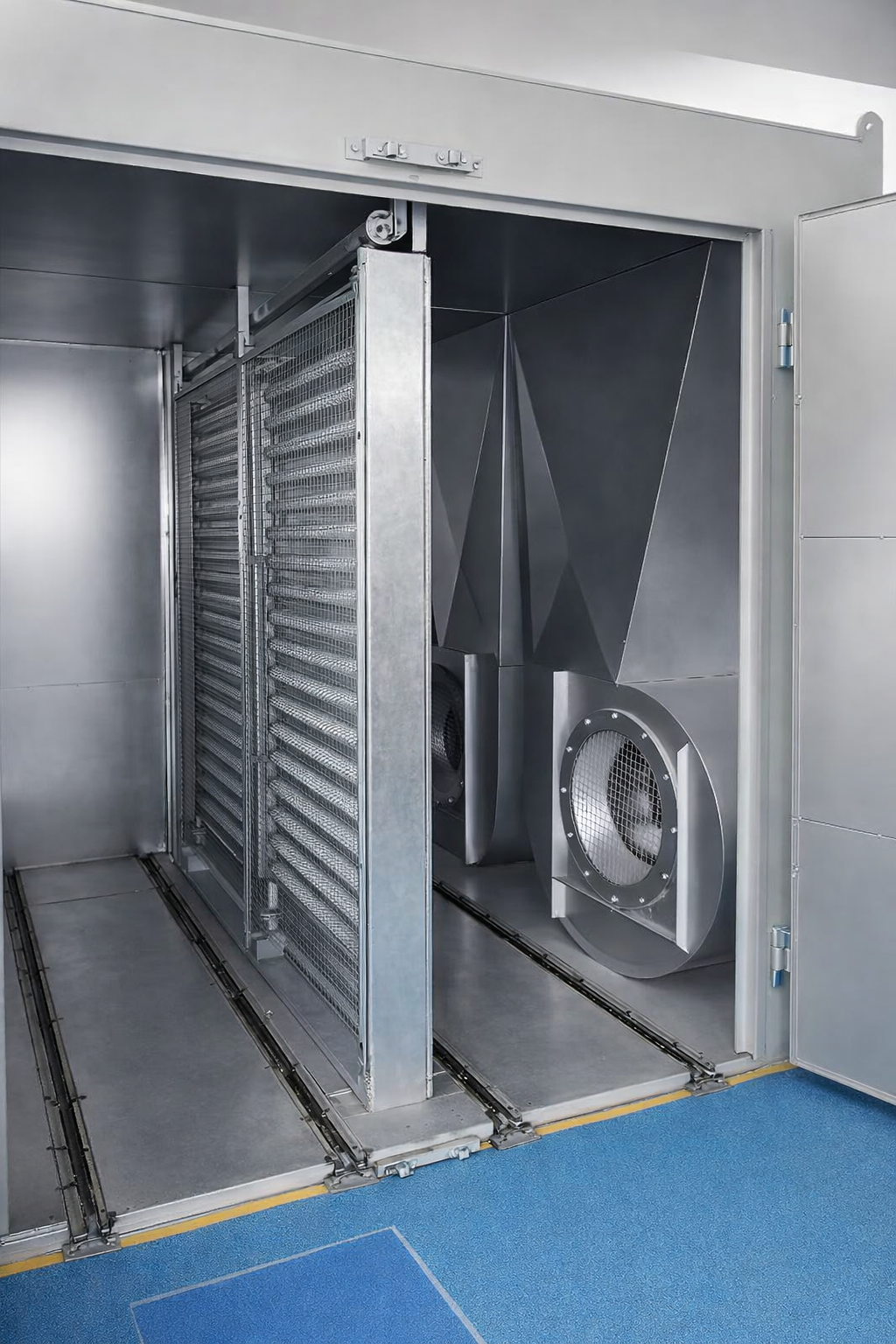
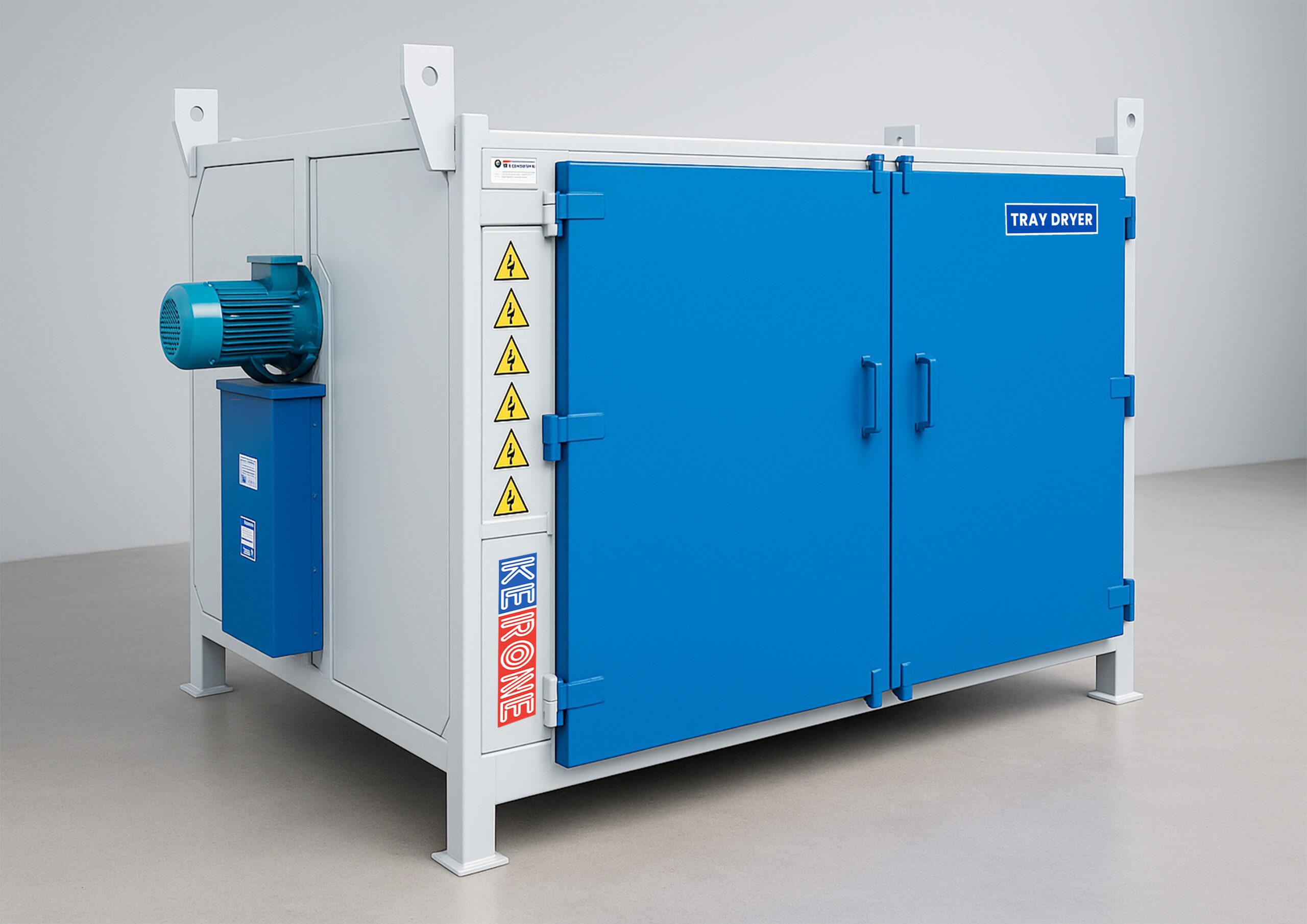
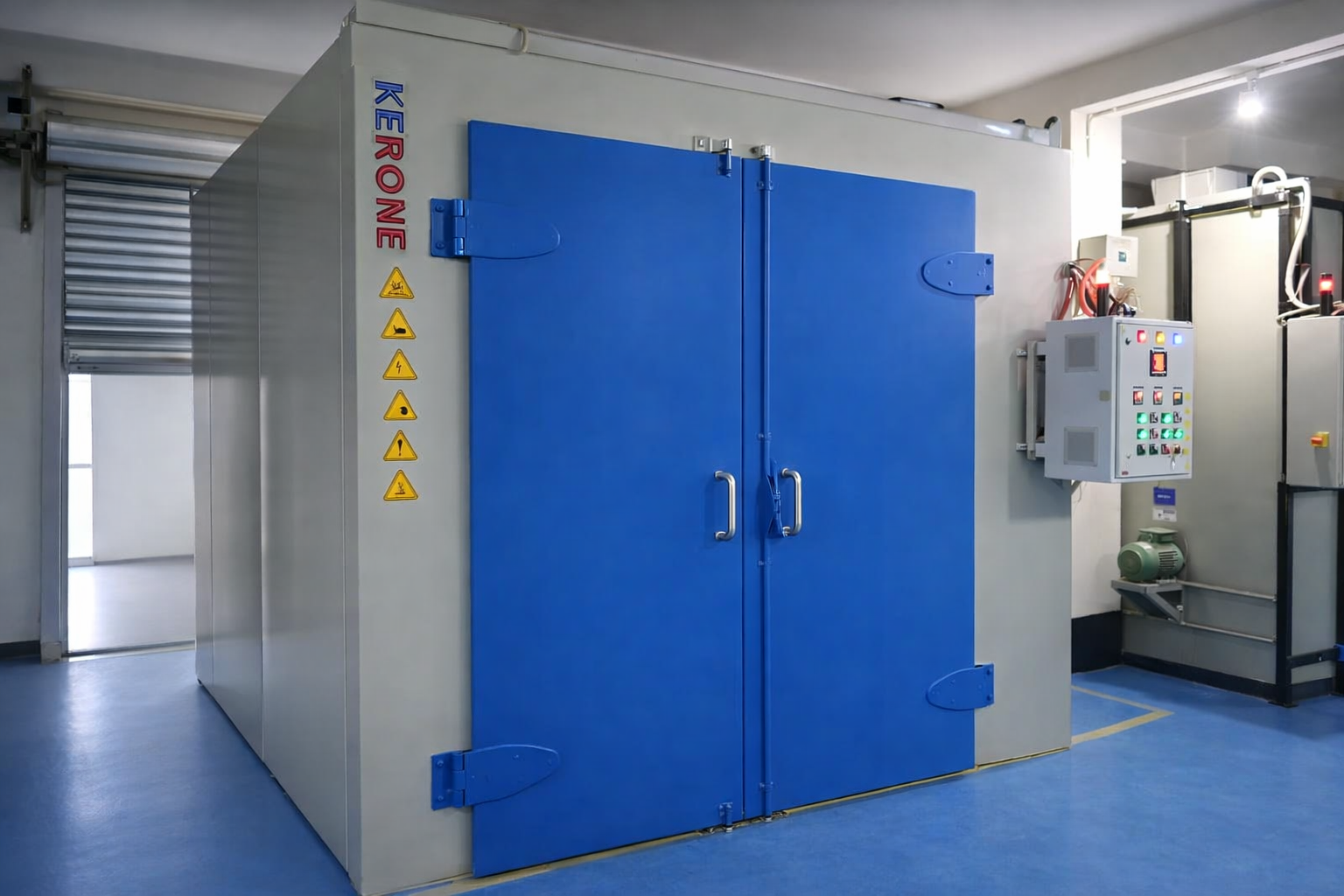
Tray Dryers are used for drying in conventional process and delivers the best result. It is constructed as double walled cabinet having one to two doors. High density fiber glass wool insulating material is filled between the gaps of two walls to avoid heat transfer. The doors are provided with gasket and the stainless steel trays are placed on the movable trolleys.
Types and Features of Tray Dryers
Kerone offers multiple models and configurations of tray dryers, such as batch, continuous, and hybrid types. Depending on material and industry requirements, the dryers are designed with advanced temperature control systems, airflow regulation, and automated safety features.
They can handle a wide range of materials, from agricultural produce and chemicals to pharmaceuticals and industrial powders, offering flexible performance under varying process conditions.
Air Circulation System
The air circulation is provided by dynamically placed axial flow type blower fans
inside the drying chamber during the process. The special blower design maintains homogeneous air circulation to ensure uniform air current over the entire charge
loaded in the trolley inside the dryer.
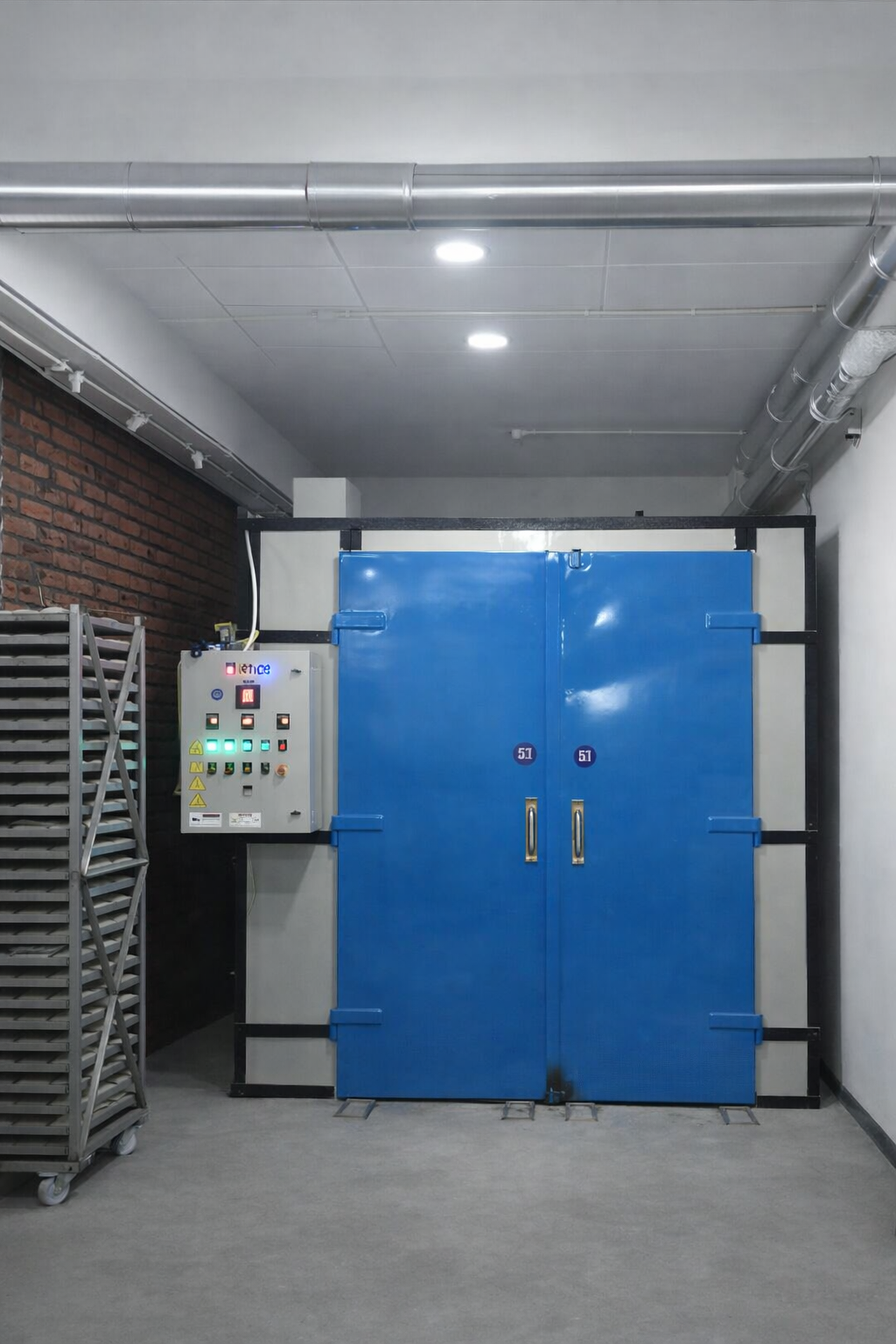
The working of the motor is indicated by indicator lamps provided on the control panel.
Constructed using MS angle frame with double wall structure.
Standard and GMP models available.
Internal and external finish options: SS 304 / SS 316 / MS.
Capacity Options
6 Trays
12 Trays
24 Trays
48 Trays
96 Trays
192 Trays
Tray Specifications
Manufactured from 1.6 mm SS 304 sheets.
Dimensions: 32″ x 16″ x 1¼”.
Rounded corners with mirror finish inside and outside.
SS 316 quality available on demand.
Racks and Trolleys
Racks provided inside the dryer for tray placement.
Fixed type racks for 12 & 24 trays models.
Movable racks with wheels for 48 & 96 trays models.
Racks slide smoothly in and out of the dryer.
Additional SS trolley for outside movement available on request.
Control Panel
The dryer is equipped with a pre-wired control panel consisting of:
Digital Temperature Indicator
Process Timer
Motor Connector
Over Current Relay
Fuses
Indicating Lamps
Push Buttons
Main Isolator Switch
A Circular Chart Recorder can be provided at an extra cost and upon request.
Air Circulation Advantage
The specially engineered blower system ensures uniform drying performance
by maintaining consistent airflow distribution across all trays, resulting in efficient
and reliable drying operations.
Key Features
Energy-efficient design with advanced heat management.
Uniform drying with consistent temperature distribution.
Customizable airflow and heating configurations.
Automatic control systems for precision and safety.
Robust construction ensuring long operational life.
Low maintenance with easy-to-clean components.
Ideal for both batch and continuous drying processes.
Optimized for sensitive and bulk materials alike.
Powered by AI, ML & IoT
Future-Ready Engineering Driven by AI & IoT
Our advanced AI, ML, and IoT technologies, this solution delivers smarter automation, real-time insights, and predictive intelligence to enhance efficiency and drive future-ready growth.
Real-Time Monitoring & Control
Continuous tracking of process parameters with instant adjustments.
Predictive Maintenance
Intelligent fault detection to prevent failures before they occur.
Adaptive Process Optimization
Dynamic tuning of operations for maximum output and efficiency.
Cloud Dashboards & Analytics
Unified access to real-time insights and performance trends.
Energy & Resource Savings
Smarter utilization of energy to cut costs and reduce waste.
Secure IoT Connectivity
Encrypted data flow with seamless integration across plant systems.
Applications of Tray Dryers
Kerone’s tray dryers find wide applications across industries, providing reliable drying solutions for varied materials. Common applications include:
Food & Beverage
Drying fruits, vegetables, meat, fish, and herbs.
Agriculture
Moisture removal from grains, seeds, and crops.
Pharmaceutical
Drying herbal extracts, granules, and powders.
Chemical & Mineral
Processing catalysts, pigments, and minerals.
Industrial
Drying of ceramics, coal, polymers, and composites.
Kerone’s tray dryers combine technological innovation with practical design. Built for reliability, scalability, and energy efficiency, they help industries achieve higher productivity with minimal operational costs. Through continuous research and development, Kerone continues to lead in industrial drying innovation, offering tailored solutions for global industries.
Tray Dryers continue to be one of the most practical and widely deployed drying solutions in global manufacturing, valued for their adaptability to diverse products, straightforward operation, and ease of cleaning and maintenance. For industries requiring batch-to-batch flexibility and the ability to dry multiple product types in the same equipment, tray dryers offer capabilities that more specialized continuous dryers cannot match. Kerone’s tray dryer range, built to food and pharmaceutical standards and backed by decades of application experience, provides manufacturers with reliable, flexible, and compliant drying solutions for the full range of industrial batch drying requirements.
Seamless Export Connections Global & Local
Our Global Footprint in Industrial Excellence
Delivering world-class industrial and process solutions across countries with precision, innovation, and reliability.
Peru
Chile
Argentina
Mexico
Colombia
Brazil
USA
Canada
United Kingdom
France
Germany
Spain
Italy
Netherlands
Sweden
Switzerland
Poland
Portugal
Ireland
Czechia
Romania
Hungary
Austria
Greece
Kazakhstan
Uzbekistan
Turkmenistan
Algeria
Egypt
Nigeria
Kenya
South Africa
Saudi Arabia
UAE
Israel
Russia
India
China
Japan
South Korea
Thailand
Vietnam
Malaysia
Singapore
Indonesia
Philippines
Australia
New Zealand
Pan-India Presence. Local Expertise.
Raipur
Bilaspur
Panaji
Vasco da Gama
Gandhinagar
Ahmedabad
Surat
Chandigarh
Gurgaon
Shimla
Manali
Bengaluru
Mysore
Kochi
Pune
Mumbai
Thane
Navi Mumbai
Hyderabad
Chennai
Coimbatore
Kolkata
Lucknow
Jaipur
Udaipur
Jodhpur
Dehradun
Haridwar
Bhubaneswar
Product Gallery
Frequently Asked Questions (FAQ)
A tray dryers is an industrial system that removes moisture from materials using controlled heat and airflow.
It operates by circulating hot air or transferring heat to evaporate moisture from products efficiently.
It ensures faster drying, energy efficiency, and product uniformity.
Industries like food, agriculture, pharmaceutical, and chemical commonly use these dryers.
Yes, Kerone designs every system according to specific industry and process needs.
Yes, precise temperature control ensures safe drying for sensitive materials.
Kerone’s designs optimize heat recovery and minimize energy consumption.
Regular inspection, cleaning, and calibration ensure optimal performance and longer lifespan.
The terms tray dryer and box dryer are sometimes used interchangeably, but in precise industrial usage a tray dryer refers specifically to a walk-in or cabinet dryer where product is loaded on individual removable trays placed on fixed shelves inside the chamber. A box dryer typically uses trolley-mounted tray frames that are wheeled in as a unit. Tray dryers are suited for smaller batch sizes, laboratory-scale operations, and applications where individual tray access is needed during the drying cycle. Box (trolley) dryers are more appropriate for heavy loads, large batch volumes, or operations where minimising door-open time (and heat loss) is important. Both share the same airflow principles but differ in loading mechanism and operational workflow.
Recommended bed depth varies with material particle size, density, and porosity. As a general guideline, free-flowing granular materials like pharmaceutical granules should not exceed 20–30 mm depth per tray. Dense materials like seeds or chemical cake can tolerate up to 50 mm in a well-designed high-velocity tray dryer. Exceeding the recommended depth creates a moisture gradient from the tray surface (dry) to the tray base (wet), resulting in a non-uniform batch. For regulated products, moisture mapping across tray positions and at different tray depths is part of the qualification process. Kerone specifies maximum product depth for each tray dryer configuration based on the specific material and required uniformity standard.
Kerone's industrial tray dryers are available across a wide operating temperature range, from ambient + 10°C up to approximately 300°C for high-temperature industrial applications such as ceramic curing or rubber vulcanisation. Heating sources include electric resistance elements, steam coil heat exchangers, hot water coils, gas-fired direct or indirect heaters, and thermal oil circuits. The choice of heating source is driven by the available utility at the plant, the required temperature, and the regulatory environment. Pharmaceutical applications almost always use steam or electric heating for clean, controllable heat. Chemical and industrial applications more commonly use gas-fired or thermal oil heating where high temperatures are required at lower utility cost.
In pharmaceutical manufacturing, tray dryers are used primarily for drying wet granules after granulation and for pre-drying API intermediates. GMP-compliant tray dryers must be constructed from pharmaceutical-grade stainless steel (SS 316L for product contact surfaces), have no dead legs or trapped sections where product residues can accumulate, be equipped with validated temperature sensors with calibration records, and have full surface finish documentation (Ra values for all contact surfaces). The drying chamber must be pressure-tight to support HVAC-controlled environments. Data acquisition systems must generate 21 CFR Part 11-compliant electronic records of time-temperature profiles for every batch. Kerone supplies tray dryers with full documentation packages (DQ/IQ/OQ) to support pharmaceutical qualification requirements.
Tray dryers operate with a recirculating air system that continuously circulates heated air across product trays. A portion of this air is exhausted and replaced with fresh make-up air to prevent the moisture content of the circulating air from reaching saturation at which point drying would stop. The ratio of exhaust air to recirculated air is controlled by adjustable dampers. Opening the exhaust damper too wide wastes energy by exhausting hot air before it has picked up its maximum moisture load. Closing it too much allows humidity to build up, slowing the drying rate. Automatic humidity control, using a humidity sensor in the recirculation duct connected to the exhaust damper actuator, maintains the optimal balance throughout the drying cycle.
Cycle time in a tray dryer is governed by the initial moisture content, the target outlet moisture, the product thickness and thermal conductivity, the tray bed depth, the air temperature, the airflow velocity, and the relative humidity of the circulating air. The most effective way to reduce cycle time without compromising quality is to increase airflow velocity, which reduces the mass transfer resistance at the product surface. Reducing tray bed depth also helps by shortening the moisture diffusion path. Increasing temperature can reduce cycle time but risks product quality in heat-sensitive materials. Pre-conditioning the product, for example, using centrifugal dewatering to reduce initial moisture load before tray drying significantly reduces the total drying duty and cycle time.
Kerone's tray dryers can be specified with PLC-based control systems ranging from simple single-loop temperature controllers to full SCADA-integrated systems. For Industry 4.0 readiness, the PLC communicates via Ethernet/IP, Modbus TCP, or OPC-UA to plant-level MES or ERP systems. Batch records including time-temperature profiles, alarms, operator interventions, and sensor readings are automatically logged to a centralised data historian. Remote access via secure VPN allows Kerone's service engineers to diagnose issues and update control parameters without on-site visits. Predictive maintenance modules monitor heater element resistance and fan bearing vibration, generating maintenance alerts before failures occur. For pharmaceutical applications, the system can be configured to meet 21 CFR Part 11 electronic records requirements.
Kerone’s custom-designed heating and processing solutions are built to meet the demands of your growing operations. Whether you’re upgrading equipment, expanding production, or need a tailor-made solution

 Peru
Peru Chile
Chile Argentina
 Mexico
 Colombia
 Brazil
 USA
USA Canada
 United Kingdom
 France
 Germany
 Spain
Spain Italy
Italy Netherlands
 Sweden
 Switzerland
 Poland
 Portugal
 Ireland
 Czechia
 Romania
 Hungary
 Austria
 Greece
 Kazakhstan
 Uzbekistan
 Turkmenistan
 Algeria
 Egypt
Egypt Nigeria
 Kenya
Kenya South Africa
 Saudi Arabia
 UAE
UAE Israel
 Russia
 India
India China
China Japan
Japan South Korea
 Thailand
 Vietnam
 Malaysia
 Singapore
 Indonesia
 Philippines
 Australia
 New Zealand