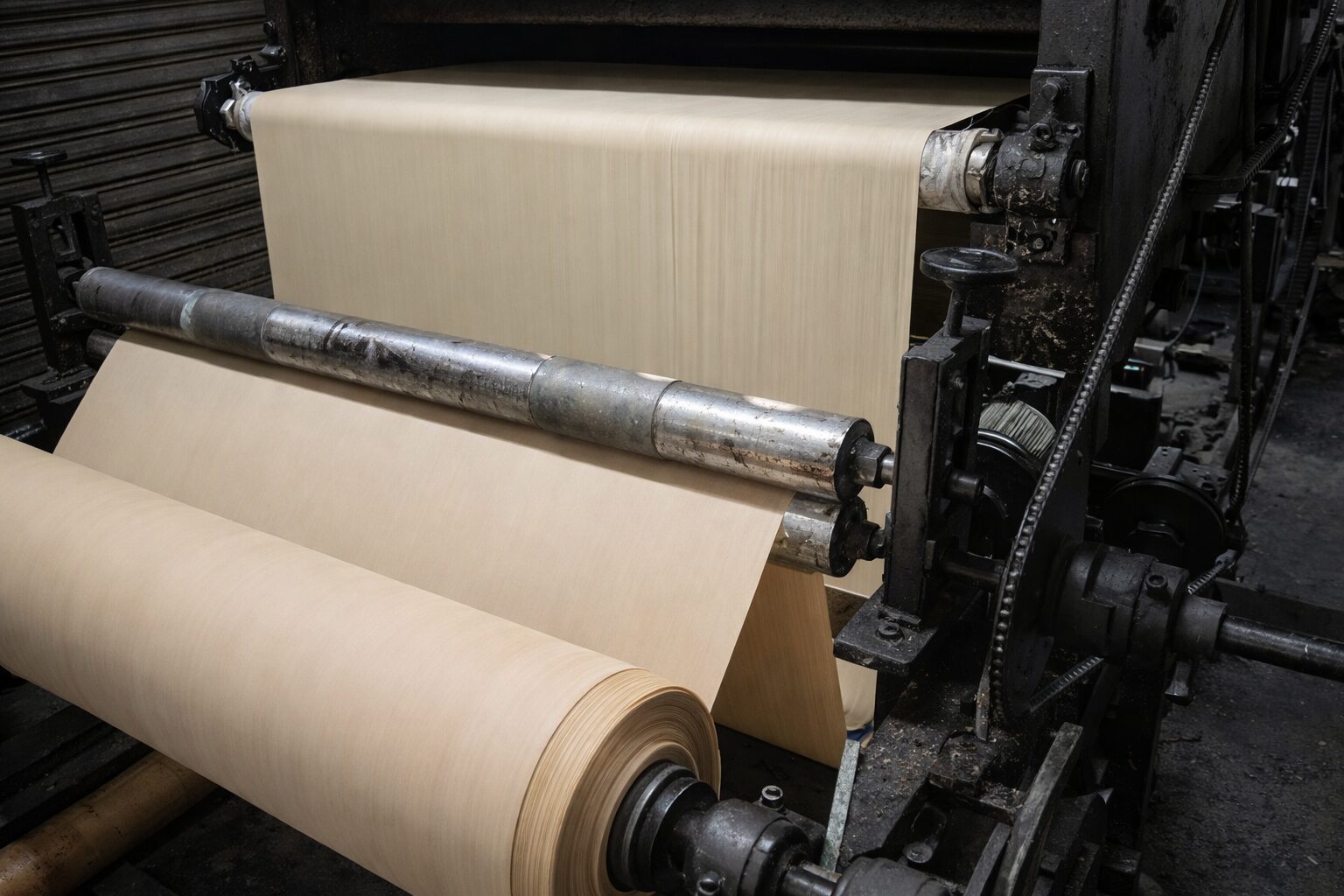
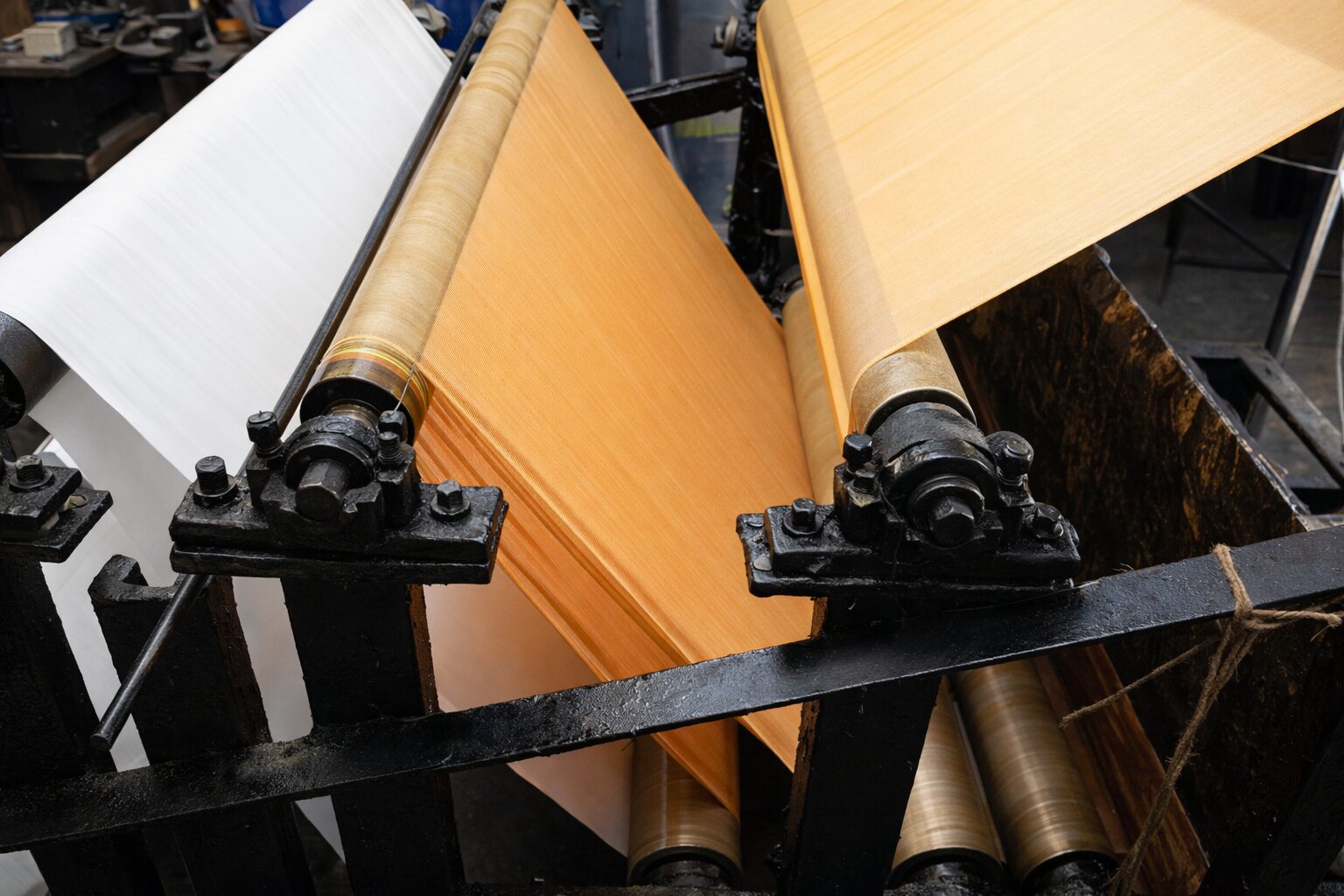
Infrared Paper Coating Dryers are advanced industrial drying systems specifically engineered to cure, dry, and set coatings applied on paper and paperboard substrates with exceptional precision and speed. Unlike conventional hot-air drying systems that rely on convective heat transfer, infrared (IR) dryers emit electromagnetic radiation in the near, mid, or far-infrared spectrum that is directly absorbed by the coating layer — converting radiant energy into heat at the molecular level. This targeted, non-contact heating mechanism results in dramatically faster drying rates, superior coating quality, and reduced energy consumption. Kerone’s Infrared Paper Coating Dryers are purpose-built for the paper and converting industry, capable of handling water-based, solvent-based, UV-curable, and specialty coatings across a broad range of paper grades — from lightweight tissue and newsprint to heavy coated boards used in packaging and publishing. These dryers integrate seamlessly into existing coating lines, delivering consistent, uniform drying that enhances the gloss, printability, and barrier performance of the final product.
Why Choose Kerone Infrared Paper Coating Dryers
We are specialized in manufacturing and designing of various kinds of customize coating machines like infrared paper coating dryers, since last 48 years we are helping our clients to answer their specialized need of coating or converting machines. Our technical expertise and immense experience in the field of coating and converting enables us to produce solution that are desired or required for various industrial applications. Customised coating line/plants provided are entirely based on your plant set up.
With the time process of paper manufacturing have faced tremendous changes both in terms of demand of market with more smoother and glossy paper as external market evolution and the manufacturing process demanded very efficient process economical tools and techniques, efficiency of process could not be calculated without considering the time for processing the paper from raw material to finished glossy coated paper, hence the demand of faster and better production machineries were required. One of the important factors among the Paper coating process it drying of paper coats as the conventional paper coat dryers takes longer time and the drying of paper were not used to be uniform, this demand of industry is answered by the way of Infrared dryers for the application of drying paper coats.
Types and Features of Infrared Paper Coating Dryers
Infrared (IR) dryers use electromagnetic radiating energy just above the visible spectrum to heat the surface of the material under the process, since the heat generated in Infrared (IR) dryers completely depends upon the radiation capacity of surface of material under the process hence the issue of overheating of paper under process gets eliminated unlike in conventional heaters. Infrared in paper coating drying process provides fast and compact solution to the drying process. The IR drying leads to rapid drying of the coating colour to the immobilization point resulting in a predictably uniform coating surface with typically excellent printing characteristics.
Salient features of IR dryers
Approved by various prestigious installations throughout India.
Indigenously designed to meet world standards.
World class, reputed quality infrared emitters are used.
Steel construction.
High intensity of IR radiation up to 600 KW / m2.
Gold or white coated reflectors.
Quartz built sheet cover which is transparent to infrared radiation protects the emitters from splashes and easily cleanable.
Air cooling enhances the life of the component.
Air impingement and exhaust of vapours for increased efficiency.
Compact, typically 0.5 m in the direction of sheet travel (inclusive of exhaust)
Immediate ‘on’ and ‘off’ switching of emitters or Thyristorized (SCR) power regulator for step less power variation.
Automatic safety interlocks against breakage in web, machine stoppage, blower failure etc.
Trained service engineers for service backup.
Readily available spares.
Advantages of Infrared drying
High quality of surface coating from quick coating immobilization.
Negative reduction of scale on initial dryers.
Simplified sheet movement due to compact infrared dryer.
Improved porosity.
Suitable for various requirements.
Better coverage or less fiber swelling and show through.
Allows for lower coat weight and more synthetic on the surface coating.
Decrease in restoration time from sheet breaks or stops.
More control over process due to fine tuning ability.
The possibility of web damage during emergency stop gets limited due to instant cooling down ability.
Quick response to product temperature, speed and moisture variation (if moisture sensor is available) results in enhanced production and invariant quality.
The waiting time and under processed products gets minimized due to instant ‘Switch On’.
Key Features
High-Intensity Infrared Emitters: Equipped with short-wave, medium-wave, or ceramic far-infrared emitters selectable based on coating type and substrate sensitivity, delivering peak wavelength outputs optimally matched to the absorption spectra of water-based and solvent-based coating systems.
Zone-by-Zone Power Control: Independent PLC-controlled power zones across the dryer width and length allow fine-tuned energy distribution, eliminating cross-machine moisture profiles and ensuring edge-to-edge uniformity across the paper web.
Rapid Response & Instant Start: Unlike steam or gas-heated systems, IR emitters reach operating temperature in seconds, enabling immediate production restarts after stoppages and reducing warm-up energy losses.
Web-Safe Shutter System: Integrated water-cooled or pneumatic shutters automatically close over the emitter array during web breaks or line stops, preventing substrate scorching and protecting both the paper and the emitters.
Powered by AI, ML & IoT
Future-Ready Engineering Driven by AI & IoT
Our advanced AI, ML, and IoT technologies, this solution delivers smarter automation, real-time insights, and predictive intelligence to enhance efficiency and drive future-ready growth.
Real-Time Monitoring & Control
Continuous tracking of process parameters with instant adjustments.
Predictive Maintenance
Intelligent fault detection to prevent failures before they occur.
Adaptive Process Optimization
Dynamic tuning of operations for maximum output and efficiency.
Cloud Dashboards & Analytics
Unified access to real-time insights and performance trends.
Energy & Resource Savings
Smarter utilization of energy to cut costs and reduce waste.
Secure IoT Connectivity
Encrypted data flow with seamless integration across plant systems.
Applications of Infrared Paper Coating Dryers
Kerone’s Infrared Paper Coating Dryers are extensively used across paper, packaging, and specialty converting industries worldwide. Typical applications include:
Coated Printing & Writing Paper: Rapid drying of pigment and latex coatings applied on blade or rod coaters producing high-gloss, high-brightness sheets for offset and digital printing applications.
Flexible Packaging Film & Paperboard: Curing of barrier coatings, PE extrusion tie layers, and functional coatings on folding carton boards and food-grade packaging substrates where precise heat control prevents substrate warping.
Specialty Release & Silicone-Coated Papers: Gentle, consistent infrared drying of release liner coatings and silicone layers for self-adhesive label stock and industrial release applications.
Tissue and Hygiene Product Coating: Controlled infrared drying of lotions, binders, and functional coatings on tissue webs at high machine speeds without compromising softness or sheet integrity.
Security & Banknote Paper Processing: Precision IR drying of specialty inks, varnishes, and security coatings on high-value security paper grades where absolute consistency and contamination-free processing are mandatory.
Corrugated Liner & Starch Coating Lines: Efficient drying of starch, sizing agents, and surface-applied chemicals on linerboard and fluting for corrugated packaging production.
In an era where paper manufacturers and converters are under constant pressure to improve coating quality, increase line speeds, and reduce energy expenditures, Kerone’s Infrared Paper Coating Dryers offer a compelling, proven solution. By harnessing the precision of directed infrared energy, these systems eliminate the inefficiencies of convective drying — delivering faster evaporation, better coating adhesion, and superior surface finish with a smaller thermal footprint. Whether you are upgrading an existing coating line, installing a new production facility, or troubleshooting moisture-uniformity issues, Kerone’s engineering team brings the process knowledge and product expertise to design the right infrared drying solution for your specific application. With a track record of successful installations across paper mills, converting plants, and specialty coaters globally, Kerone remains your most reliable partner in driving productivity, quality, and sustainability in paper coating operations.
Seamless Export Connections Global & Local
Our Global Footprint in Industrial Excellence
Delivering world-class industrial and process solutions across countries with precision, innovation, and reliability.
Peru
Chile
Argentina
Mexico
Colombia
Brazil
USA
Canada
United Kingdom
France
Germany
Spain
Italy
Netherlands
Sweden
Switzerland
Poland
Portugal
Ireland
Czechia
Romania
Hungary
Austria
Greece
Kazakhstan
Uzbekistan
Turkmenistan
Algeria
Egypt
Nigeria
Kenya
South Africa
Saudi Arabia
UAE
Israel
Russia
India
China
Japan
South Korea
Thailand
Vietnam
Malaysia
Singapore
Indonesia
Philippines
Australia
New Zealand
Pan-India Presence. Local Expertise.
Raipur
Bilaspur
Panaji
Vasco da Gama
Gandhinagar
Ahmedabad
Surat
Chandigarh
Gurgaon
Shimla
Manali
Bengaluru
Mysore
Kochi
Pune
Mumbai
Thane
Navi Mumbai
Hyderabad
Chennai
Coimbatore
Kolkata
Lucknow
Jaipur
Udaipur
Jodhpur
Dehradun
Haridwar
Bhubaneswar
Product Gallery
Frequently Asked Questions (FAQ)
Kerone IR dryers are compatible with a wide range of coating chemistries including water-based pigment coatings (kaolin clay, calcium carbonate, latex binders), starch-based surface sizes, solvent-based coatings, UV-curable varnishes, silicone release coatings, and barrier functional coatings. The emitter type and wavelength are selected specifically to match the absorption characteristics of the coating formulation in use.
Conventional hot-air or steam-cylinder dryers transfer heat through convection or conduction, which first heats the air or substrate before reaching the coating — an inherently inefficient process. Infrared dryers emit electromagnetic radiation that is directly absorbed by water molecules and polymer binders in the coating layer, converting to heat instantly at the point of evaporation. This results in drying rates up to 3–5 times faster, 30–50% lower energy consumption, and superior coating uniformity compared to convective systems.
Yes. Kerone's Infrared Paper Coating Dryers are engineered for seamless integration into new and existing coating machine configurations — including blade coaters, rod metering coaters, curtain coaters, and size press lines. The modular, compact dryer housing fits within standard machine space allocations, and the control system interfaces directly with existing PLC or DCS platforms via standard industrial communication protocols (Profibus, Modbus, Ethernet/IP).
Kerone's IR dryers achieve significant energy savings primarily because infrared radiation delivers heat directly to the coating layer without wasteful air heating. Depending on the application and incumbent technology being replaced, customers typically report 30–50% reductions in specific energy consumption (kWh per tonne of water evaporated). Additionally, the near-instant start-up of IR emitters eliminates idle-state energy losses common in steam and gas systems.
Kerone designs comprehensive safety into every dryer. Key safety features include: pneumatic or water-cooled web-protection shutters that close automatically on web breaks or emergency stops; overtemperature cut-off sensors for each emitter zone; fire-rated stainless steel housing; interlock systems tied to line speed and web tension signals; and ATEX-rated enclosures available for solvent-coating environments where explosive atmosphere classifications apply.
For clay pigment coatings used in coated printing and writing paper grades, medium-wave ceramic infrared emitters are typically recommended. They provide effective penetration through the pigment layer to reach the water-bearing binder phase below the surface, ensuring through-drying without surface crusting. For high-speed, thin-coating applications, short-wave (near-IR) quartz emitters may be preferred due to their faster response times and higher power density.
Quartz and ceramic infrared emitters typically run for several thousand operating hours before output intensity degrades enough to affect drying consistency, though actual lifespan depends heavily on duty cycle, power setting, and how often the emitters cycle on and off. Emitters run continuously at moderate power generally outlast those subjected to frequent full-power starts and stops. Gradual output decline is the more common failure mode rather than sudden burnout, which is why monitoring actual coating moisture at the dryer exit, rather than just emitter age is the more reliable replacement trigger. Kerone designs emitter banks in independently replaceable zones, so a single degraded emitter can be swapped without shutting down the entire dryer section.
The most frequent mistake is sizing the dryer for average production conditions rather than worst-case coat weight and line speed combinations, leaving no margin when a heavier grade or slower-curing formulation runs through. Another common error is treating zone power settings as fixed values rather than adjusting them whenever coating formulation, basis weight, or moisture target changes, a setting tuned for one product often produces under- or over-dried output on another. Operators sometimes also overlook shutter and shielding maintenance, allowing emitter output to drift unnoticed because reflectors have become dirty or warped. Finally, running emitters at unnecessarily high power “for safety margin” wastes energy and shortens component life without measurably improving drying outcomes.
Infrared drying delivers energy directly to the coating layer rather than first heating the surrounding air or a steam cylinder, which cuts the total energy required to evaporate the same amount of water. Lower energy input per tonne of paper processed translates directly into a smaller carbon footprint, particularly where the electricity supply includes renewable generation. The instant on/off capability also eliminates the standby energy losses inherent in steam systems, which must stay heated even during line stoppages. For converters working toward sustainability targets or reporting emissions, switching a coating line’s drying stage from steam or gas to infrared is often one of the more measurable efficiency improvements available without a full line redesign.
Solvent-based coating lines introduce flammable vapor concerns that don’t apply to water-based systems, so the dryer’s electrical enclosures, emitter housings, and control panels typically need to meet hazardous area classification standards such as ATEX in regions that require it. Ventilation and exhaust capacity must also be engineered to keep solvent vapor concentration below explosive limits throughout the dryer zone, not just at the exhaust point. Kerone offers ATEX-rated enclosure options specifically for these installations, along with interlocks that tie dryer operation to confirmed exhaust airflow. Converters running solvent coatings should flag this requirement early in the specification process, since retrofitting hazardous-area compliance after installation is far more disruptive than specifying it upfront.
Each emitter zone can report real-time power draw, surface temperature feedback, and run-hour data to a central PLC or SCADA platform, giving plant managers a continuous record of drying performance rather than periodic spot checks. This data supports predictive maintenance by identifying gradually declining zones before they cause a visible quality defect, and it lets quality teams correlate specific dryer settings with finished roll quality metrics like gloss and moisture uniformity. Cloud dashboard access extends this visibility to engineering or corporate teams working remotely from the plant floor. For converters building toward Industry 4.0 maturity, the dryer section is often a practical starting point because infrared systems naturally generate granular, zone-level process data older convective dryers typically cannot provide.
Payback period depends on current energy costs, line utilization, and the scale of the energy reduction achieved, but converters typically see meaningful return within one to three years when replacing steam or gas convective drying with infrared. The savings come from three sources: lower specific energy consumption per tonne of water evaporated, reduced reject and rework rates from more consistent curing, and less idle-time energy loss because infrared emitters don’t require warm-up or standby heating. Lines running at high utilization with frequent stop-start cycles tend to see faster payback, since the instant-on characteristic of infrared eliminates a recurring energy penalty that convective systems incur every time production restarts.
Infrared’s rapid, uniform immobilization of the coating layer reduces fiber swelling and binder migration that typically cause uneven gloss and show-through in convectively dried coatings. Because the coating sets faster and more evenly, pigment particles stay better distributed at the surface, which directly improves print density and ink holdout on printing and writing grades. For barrier coatings, the faster cure reduces the window during which the coating can migrate or settle unevenly before setting, supporting more consistent film thickness and barrier integrity. These improvements are measurable through standard tests like gloss meters, ink holdout testing, and water vapor transmission rate, giving converters objective data to validate the switch from convective to infrared drying.
Yes, provided the zone power control architecture is designed for it. Because each zone’s output is independently adjustable through the PLC, switching between coating formulations or paper grades typically just requires loading a different recipe profile rather than physically reconfiguring the dryer. Kerone systems commonly store multiple validated power and zone profiles so operators can switch products with a controlled, repeatable setting change rather than manual trial-and-error retuning. The main exception is when a product change requires a different emitter wavelength type, for example, moving from a thin pigment coating to a thick silicone release coating, which may call for a different emitter configuration rather than just a power adjustment.
Infrared dryers scale primarily through zone addition rather than complete redesign, since each zone operates as an independent power and control unit. If line width increases, additional zones can usually be added across the web without disturbing existing zones. If throughput needs to increase at the same width, total installed power density can often be raised within the same physical footprint, since infrared systems are more compact than equivalent convective drying capacity. Kerone designs initial installations with this expansion path in mind when a converter indicates future growth plans, reserving control system capacity and physical space for additional zones so a future upgrade doesn’t require replacing the entire dryer section.
Kerone’s custom-designed heating and processing solutions are built to meet the demands of your growing operations. Whether you’re upgrading equipment, expanding production, or need a tailor-made solution
 Peru
Peru Chile
Chile Argentina
 Mexico
 Colombia
 Brazil
 USA
USA Canada
 United Kingdom
 France
 Germany
 Spain
Spain Italy
Italy Netherlands
 Sweden
 Switzerland
 Poland
 Portugal
 Ireland
 Czechia
 Romania
 Hungary
 Austria
 Greece
 Kazakhstan
 Uzbekistan
 Turkmenistan
 Algeria
 Egypt
Egypt Nigeria
 Kenya
Kenya South Africa
 Saudi Arabia
 UAE
UAE Israel
 Russia
 India
India China
China Japan
Japan South Korea
 Thailand
 Vietnam
 Malaysia
 Singapore
 Indonesia
 Philippines
 Australia
 New Zealand