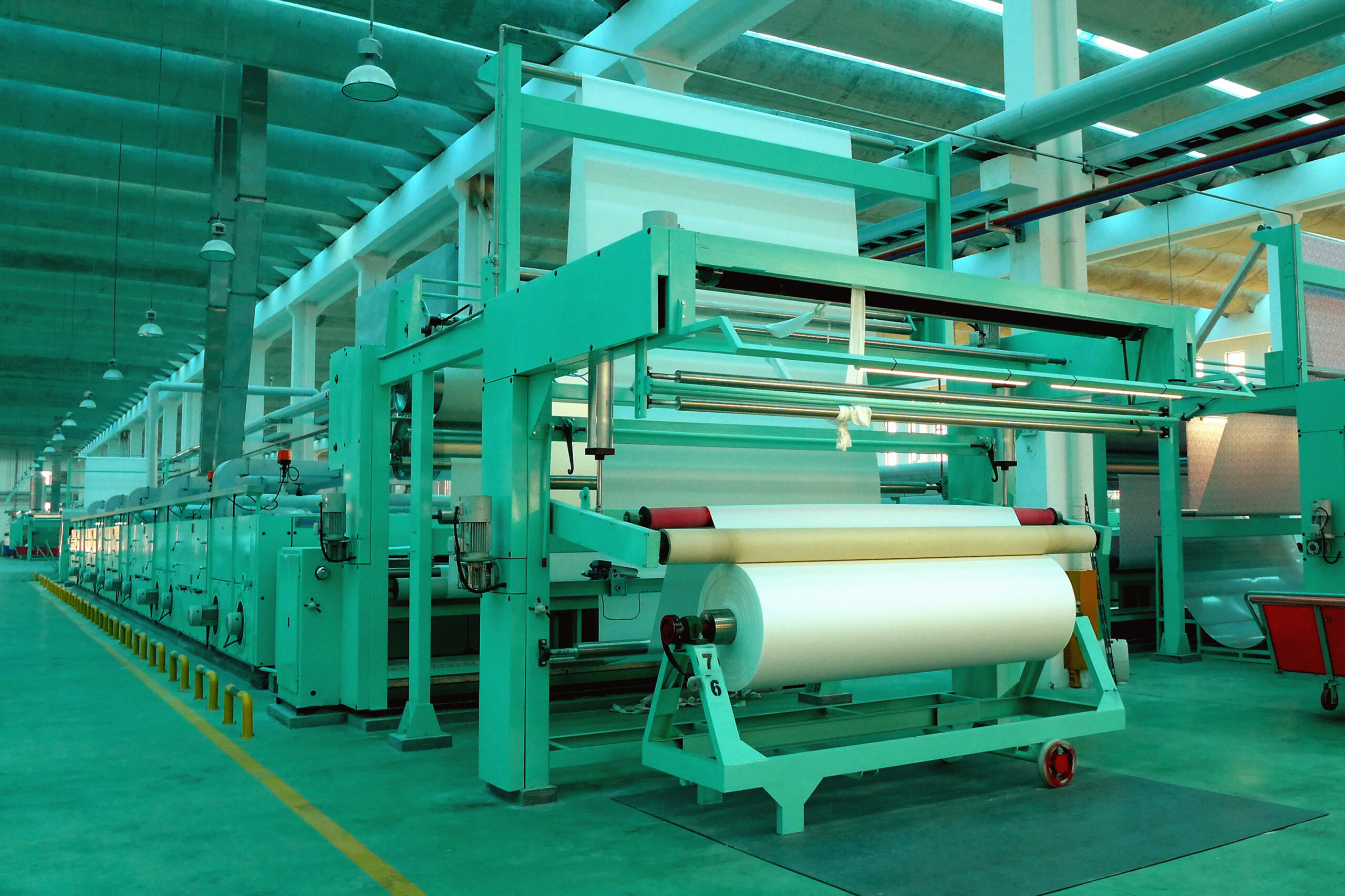
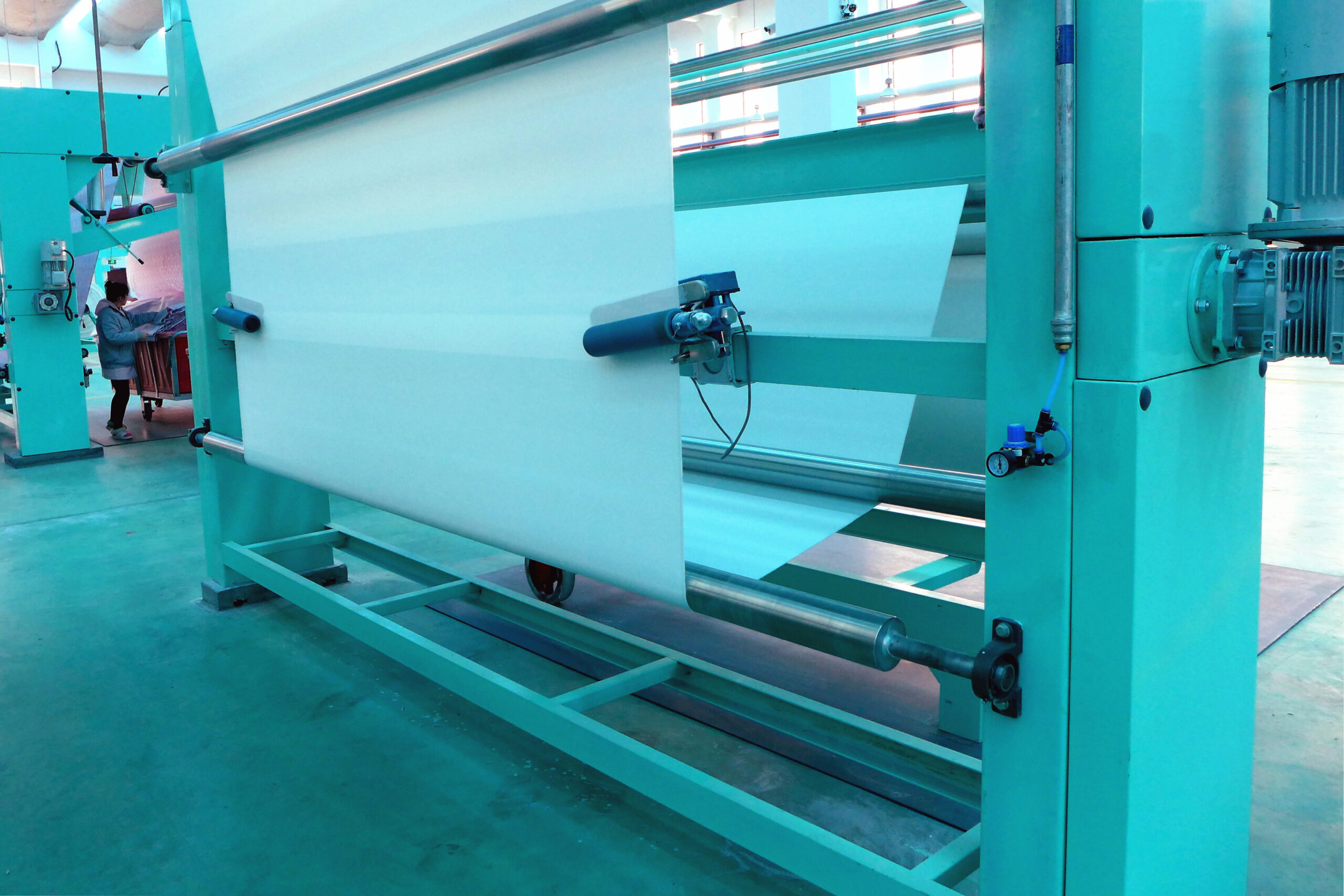
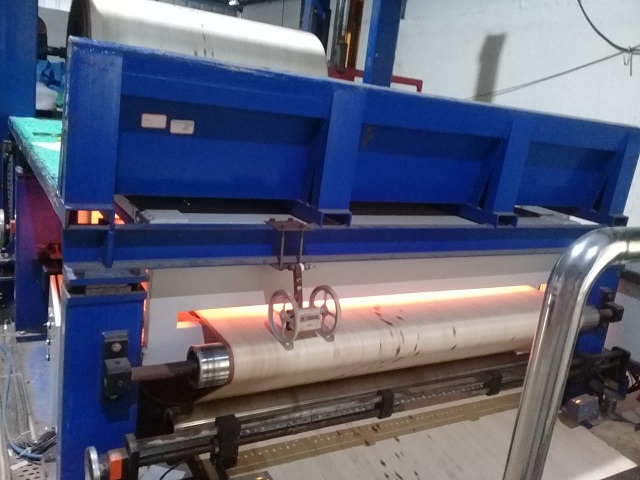
Kerone has been a trusted name in innovative industrial engineering for more than 50 years. Our Microwave Heating for Textile systems are designed to deliver high-efficiency processing, optimized performance, and consistent output across multiple industrial sectors.
Drying in inevitable process from textile industry as the textile process involves large amount of watering of material till final stage of processing, even we can say that the textile process is wet process, hence the dewatering (drying) is very much necessary for cotton, yarn, wool, fabric and polyesters.
Why Choose Kerone Microwave Heating for Textile
Kerone is known for delivering highly efficient, reliable and fully customized Microwave Heating for Textile solutions engineered after a detailed analysis of material characteristics, process goals and expected output requirements.
Microwave-based dryers have become one of the prime choices in the industry due to their ability to easily adapt to existing processing lines, requiring minimal or no modifications. With Kerone’s microwave-based systems, clients benefit from over 40 years of expertise in developing custom-built and specially engineered drying solutions tailored to their operational requirements.
Microwave-based textile drying offers several unique advantages over conventional drying systems:
Lesser Processing Time: Accelerates drying cycles and increases productivity.
Selective Heating or Drying: Targets moisture within the material without overheating surrounding areas.
Technically Superior: Advanced heating technology compared to conventional systems.
Lesser Power Consumption: Optimized energy usage reduces operational costs.
Easy Adaptability: Seamless integration into existing production lines.
No Pigmentation on Output: Maintains fabric color and quality.
No Residual Production: Clean process without harmful by-products.
Lesser Floor Area Required: Compact system design saves space.
Improved Reproducibility: Ensures consistent and uniform drying results.
Types and Features of Microwave Heating for Textile
Long Functional Life: Designed for extended operational durability.
Low and Easy Maintenance: Minimal servicing requirements reduce downtime.
Compact Assembly: Space-efficient and well-integrated construction.
Quick and Easy Installation: Enables smooth setup within existing production lines.
Accurately Designed and Engineered: Precision-built for reliable and consistent performance.
Hassle-Free Operation: User-friendly system for seamless functioning.
Extended Service Life: Built with high-quality components for longevity.
Rugged Construction: Strong structural design suitable for industrial environments.
High Toughness: Withstands demanding textile processing conditions.
Energy and Cost Efficient: Optimized for reduced operational expenses.
Power Saving: Efficient energy utilization for lower electricity consumption.
Competent Performance: Delivers stable and efficient drying output.
Key Features
High thermal and processing efficiency
Low maintenance and easy operation
Suitable for heat-sensitive materials
Fully adjustable and customizable process parameters
Available in batch and continuous configurations
Uniform processing and consistent product quality
Powered by AI, ML & IoT
Future-Ready Engineering Driven by AI & IoT
Our advanced AI, ML, and IoT technologies, this solution delivers smarter automation, real-time insights, and predictive intelligence to enhance efficiency and drive future-ready growth.
Real-Time Monitoring & Control
Continuous tracking of process parameters with instant adjustments.
Predictive Maintenance
Intelligent fault detection to prevent failures before they occur.
Adaptive Process Optimization
Dynamic tuning of operations for maximum output and efficiency.
Cloud Dashboards & Analytics
Unified access to real-time insights and performance trends.
Energy & Resource Savings
Smarter utilization of energy to cut costs and reduce waste.
Secure IoT Connectivity
Encrypted data flow with seamless integration across plant systems.
Applications of Microwave Heating for Textile
Food industry processing systems
Chemical and polymer processing
Pharmaceutical ingredients and intermediates
Ready‑to‑eat (RTE) food production
Specialized heating, drying, or material transformation processes
Industrial material modification and thermal treatment
Kerone’s Microwave Heating for Textile solutions are engineered to deliver maximum efficiency, long-term reliability and excellent operational stability. Our focus on innovation and customization ensures superior industrial results.
Seamless Export Connections Global & Local
Our Global Footprint in Industrial Excellence
Delivering world-class industrial and process solutions across countries with precision, innovation, and reliability.
Peru
Chile
Argentina
Mexico
Colombia
Brazil
USA
Canada
United Kingdom
France
Germany
Spain
Italy
Netherlands
Sweden
Switzerland
Poland
Portugal
Ireland
Czechia
Romania
Hungary
Austria
Greece
Kazakhstan
Uzbekistan
Turkmenistan
Algeria
Egypt
Nigeria
Kenya
South Africa
Saudi Arabia
UAE
Israel
Russia
India
China
Japan
South Korea
Thailand
Vietnam
Malaysia
Singapore
Indonesia
Philippines
Australia
New Zealand
Pan-India Presence. Local Expertise.
Raipur
Bilaspur
Panaji
Vasco da Gama
Gandhinagar
Ahmedabad
Surat
Chandigarh
Gurgaon
Shimla
Manali
Bengaluru
Mysore
Kochi
Pune
Mumbai
Thane
Navi Mumbai
Hyderabad
Chennai
Coimbatore
Kolkata
Lucknow
Jaipur
Udaipur
Jodhpur
Dehradun
Haridwar
Bhubaneswar
Product Gallery
Frequently Asked Questions (FAQ)
It is used for efficient processing, heating, drying or material transformation.
High efficiency, process reliability and complete customization.
Food, chemical, pharma, biomass, rubber, textile and more.
Kerone ensures high product quality through strict engineering standards, advanced testing procedures, and precision-controlled manufacturing systems.
It is commonly used for drying yarns and fabrics, curing coatings and finishes, dye fixation, and moisture control in textile production.
Yes, controlled microwave heating reduces overheating, minimizes fabric damage, and helps maintain color consistency and material strength.
Yes, microwave systems directly heat the material instead of the surrounding air, leading to lower energy loss and faster processing times.
Scaling is generally achieved by increasing cavity width to accommodate wider fabric, adding additional microwave generator modules to increase available power for higher line speeds, or extending the exposure zone length if floor space allows. Mills anticipating future capacity growth or a shift toward wider fabric formats should discuss these scalability options with their supplier during the initial specification process, including confirming that the chosen cavity design and electrical infrastructure can support planned expansion without requiring a complete system replacement. Planning for scalability upfront is generally more cost-effective than retrofitting wider capacity into a system originally designed for narrower fabric processing.
Microwave drying produces no combustion emissions since it operates on electrical power rather than burning natural gas or other fuels, which is increasingly relevant as textile manufacturers face stricter emissions reporting requirements and sustainability commitments from brand customers. The improved energy efficiency from direct moisture targeting, compared to heating large air volumes in conventional drying, also reduces the carbon footprint per unit of fabric processed when grid electricity includes a renewable component. Additionally, since microwave drying produces no residual chemical by-products and requires no exhaust scrubbing systems, mills can simplify their environmental permitting and reporting processes compared to combustion-based drying technology, which is a meaningful consideration for textile exporters facing buyer sustainability audits.
Because microwave energy heats the fabric directly rather than relying on extended dwell time within a heated air tunnel, microwave drying systems generally require a smaller footprint than equivalent-capacity conventional stenter frames or hot air drying tunnels, which need significant linear length to provide enough residence time for surface-based heat transfer to fully dry the fabric. This compact footprint is particularly valuable for textile mills operating in older facilities with constrained floor space or for manufacturers looking to add drying capacity without expanding their building footprint. The reduced space requirement can also simplify line reconfiguration when a mill needs to adjust its processing sequence for new fabric types or finishing requirements.
Microwave systems typically incorporate real-time moisture sensing that allows the control system to adjust power output dynamically as the fabric approaches target moisture content, rather than relying on a fixed time-and-temperature setting that may over-dry or under-dry depending on incoming moisture variability. This closed-loop control is particularly valuable for textile mills processing fabric with inconsistent incoming moisture from upstream wet processing steps, since the system compensates automatically rather than requiring manual adjustment for each batch. Traditional convection drying systems generally rely more heavily on fixed cycle parameters and operator monitoring, making it harder to achieve the same level of consistent moisture endpoint across variable fabric batches without overcorrecting in one direction or another.
Microwave-based textile dryers are generally designed to adapt to existing processing lines with minimal or no structural modification, since the technology can often be inserted as a finishing or intermediate drying stage without requiring the long tunnel lengths that conventional stenter or hot air drying systems need to achieve adequate dwell time. The main integration considerations are matching conveyor or fabric transport speed with the microwave cavity's required exposure time, ensuring adequate electrical supply capacity for the microwave generators, and confirming that fabric width capacity matches the existing line's processing width. Mills retrofitting microwave drying into a line originally designed around conventional drying technology should work closely with their supplier to confirm dimensional compatibility before installation.
Kerone’s custom-designed heating and processing solutions are built to meet the demands of your growing operations. Whether you’re upgrading equipment, expanding production, or need a tailor-made solution



 Peru
Peru Chile
Chile Argentina
 Mexico
 Colombia
 Brazil
 USA
USA Canada
 United Kingdom
 France
 Germany
 Spain
Spain Italy
Italy Netherlands
 Sweden
 Switzerland
 Poland
 Portugal
 Ireland
 Czechia
 Romania
 Hungary
 Austria
 Greece
 Kazakhstan
 Uzbekistan
 Turkmenistan
 Algeria
 Egypt
Egypt Nigeria
 Kenya
Kenya South Africa
 Saudi Arabia
 UAE
UAE Israel
 Russia
 India
India China
China Japan
Japan South Korea
 Thailand
 Vietnam
 Malaysia
 Singapore
 Indonesia
 Philippines
 Australia
 New Zealand