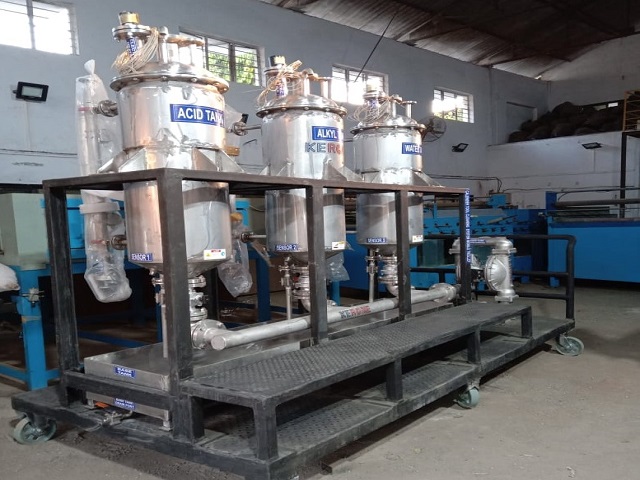
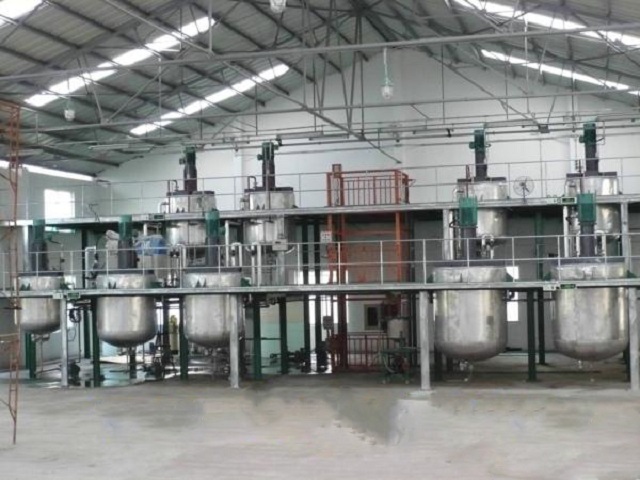
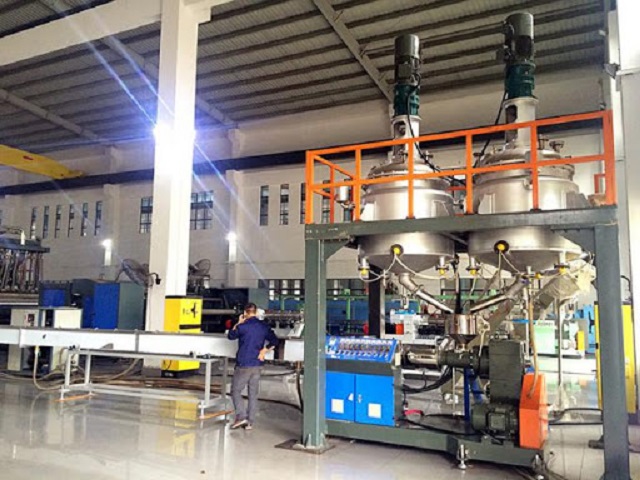
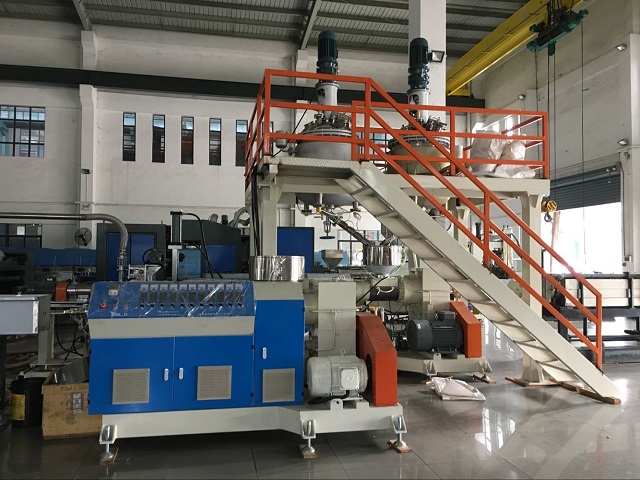
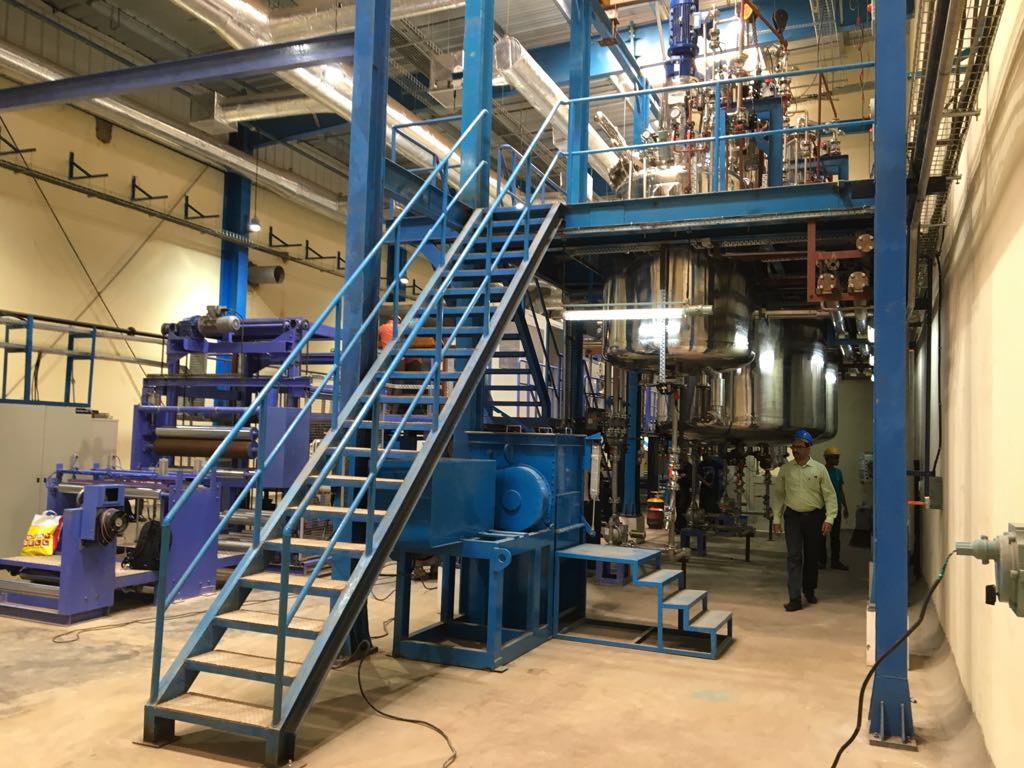
Kerone provides advanced pilot mixing plant for hot melt adhesive engineered to deliver high efficiency, precision, and industrial-grade reliability. With over 50 years of expertise across thermal, infrared, RF, microwave, and mechanical engineering, Kerone develops customized systems tailored to industry-specific requirements, ensuring maximum productivity and operational stability.
Kerone have experience with pilot plant design & construction across multiple industries. Kerone is a recognized world leader in the design of pilot plants, manufacture of a range of pilot plant. KERONE offer economical, energy efficient, advanced technology dryer that can fit in both budget and process of requirement of client.
Why Choose Kerone Pilot Mixing Plant For Hot Melt Adhesive
KERONE are having 50+years experience in designing and manufacturing Pilot mixing Plant for hot melt adhesive. Pilot mixing plant for hot melt adhesive is available with a wide choice of size configurations, designed to match your specific product mixing need.
Our systems are engineered with precision-controlled heating zones, variable speed mixing drives, and robust safety interlocks that ensure both operator safety and product consistency. Unlike generic mixing systems, Kerone’s pilot plants are specifically tailored for adhesive chemistry — handling high-viscosity, high-temperature melts with minimal degradation. Our in-house engineering team works closely with clients to customize tank capacities, mixing geometries, and temperature profiles to match their exact formulation requirements. With full technical support, detailed process documentation, and scalable designs, Kerone ensures a smooth transition from pilot trials to commercial production.
Types and Features of Pilot Mixing Plant For Hot Melt Adhesive
Kerone pilot plant is an engineered system designed to demonstrate the viability of a process technology without incurring the cost of a full production-level system.
Features:
Integrated Design-Build Facilities
Highly customizable
Modular Design and Fabrication
Unique Fast-Track Project Execution Methodology
Flexibility
Scale-Appropriate Solutions
Retained Knowledge and Skill
Safety
Quality Assurance
Key Features
High operational efficiency with uniform processing
Adjustable temperature, airflow, or RF/IR power settings
Batch and continuous configurations available
Low maintenance with long service life
Custom material flow and heating patterns
Safety interlocks and advanced control systems
Powered by AI, ML & IoT
Future-Ready Engineering Driven by AI & IoT
Our advanced AI, ML, and IoT technologies, this solution delivers smarter automation, real-time insights, and predictive intelligence to enhance efficiency and drive future-ready growth.
Real-Time Monitoring & Control
Continuous tracking of process parameters with instant adjustments.
Predictive Maintenance
Intelligent fault detection to prevent failures before they occur.
Adaptive Process Optimization
Dynamic tuning of operations for maximum output and efficiency.
Cloud Dashboards & Analytics
Unified access to real-time insights and performance trends.
Energy & Resource Savings
Smarter utilization of energy to cut costs and reduce waste.
Secure IoT Connectivity
Encrypted data flow with seamless integration across plant systems.
Applications of Pilot Mixing Plant For Hot Melt Adhesive
Food, chemical, pharmaceutical, and mineral industries
Biomass, renewable fuels, and environmental systems
Packaging, paper, and pulp processing
Industrial drying, heating, curing, and material transformation
High-temperature and precision-controlled processes
Smart manufacturing with automation and AI integration
Kerone’s pilot mixing plant for hot melt adhesive solutions deliver unmatched quality, safety, and operational performance. Each system is tailored to meet production targets while ensuring energy savings, reliability, and long-term industrial value.
Seamless Export Connections Global & Local
Our Global Footprint in Industrial Excellence
Delivering world-class industrial and process solutions across countries with precision, innovation, and reliability.
Peru
Chile
Argentina
Mexico
Colombia
Brazil
USA
Canada
United Kingdom
France
Germany
Spain
Italy
Netherlands
Sweden
Switzerland
Poland
Portugal
Ireland
Czechia
Romania
Hungary
Austria
Greece
Kazakhstan
Uzbekistan
Turkmenistan
Algeria
Egypt
Nigeria
Kenya
South Africa
Saudi Arabia
UAE
Israel
Russia
India
China
Japan
South Korea
Thailand
Vietnam
Malaysia
Singapore
Indonesia
Philippines
Australia
New Zealand
Pan-India Presence. Local Expertise.
Raipur
Bilaspur
Panaji
Vasco da Gama
Gandhinagar
Ahmedabad
Surat
Chandigarh
Gurgaon
Shimla
Manali
Bengaluru
Mysore
Kochi
Pune
Mumbai
Thane
Navi Mumbai
Hyderabad
Chennai
Coimbatore
Kolkata
Lucknow
Jaipur
Udaipur
Jodhpur
Dehradun
Haridwar
Bhubaneswar
Product Gallery
Frequently Asked Questions (FAQ)
Yes, the plant is specifically designed to serve dual purposes — supporting formulation research and development as well as small-scale or pilot-level production batches.
Absolutely. Kerone offers full engineering customization including tank geometry, agitator type, heating method, and control system configuration to suit specific adhesive chemistries and processing parameters.
The system is equipped with a PLC-based automated control panel featuring a touch screen HMI that allows real-time process monitoring, temperature profiling, speed control, and data logging for quality documentation.
Yes, Kerone offers fully customized engineering based on capacity, temperature, and industry needs.
PLC, SCADA, IoT, AI/ML predictive systems, and remote monitoring.
Yes, Kerone designs systems that significantly reduce operational energy consumption.
Manufacturing, food, chemicals, biomass, pharma, packaging, and advanced materials.
Yes, from installation to lifetime service support, Kerone provides complete assistance.
A pilot mixing plant exists to answer questions that lab beakers can’t: how a hot melt adhesive formulation behaves under real mixing shear, extended heat exposure, and material handling at a meaningful batch size. Formulations that look stable in a small lab sample sometimes show viscosity drift, phase separation, or thermal degradation when processed in larger volumes over longer mixing cycles. Running the formulation through a pilot plant surfaces these issues while the cost of a failed batch is still measured in kilograms rather than tonnes. It also generates the process data, mixing time, temperature profile, torque curves that engineering teams need to properly size and specify the eventual production-scale plant, rather than guessing at scale-up ratios.
The plant is designed to handle the full range of hot melt adhesive base components EVA, polyolefin, polyamide, and styrenic block copolymer resins along with tackifiers, waxes, plasticizers, antioxidants, and fillers used to tune adhesion, open time, and viscosity. Because formulation viscosity can range from relatively fluid pressure-sensitive adhesives to thick, high-viscosity structural hot melts, the mixing geometry and heating zone configuration are selected based on the target formulation rather than offered as one fixed setup. This flexibility matters particularly at pilot scale, where R&D teams are often testing several formulation variants in sequence and need equipment that can accommodate each one without a major reconfiguration between trials.
Pilot mixing plants for hot melt adhesive almost always run in batch mode, and this is intentional rather than a limitation. Batch processing allows precise control over mixing time, temperature ramp, and ingredient addition sequence for each trial, and it lets formulators isolate the effect of a single variable change between batches, something continuous processing makes much harder to track cleanly. Continuous processing becomes relevant later, at production scale, once a formulation is finalized and the priority shifts from flexibility to throughput consistency. Running pilot trials in batch mode and validating the formulation before transitioning to a continuous production line is the more reliable development path than trying to optimize on continuous equipment from the start.
Hot melt adhesives are processed well above ambient temperature, often in a range where accidental contact causes serious burns, so the equipment needs robust thermal guarding around heated surfaces and piping. Pressure relief provisions matter too, since trapped molten material in a sealed section can build dangerous pressure if heated unevenly. Kerone’s pilot plants include safety interlocks that prevent mixing operation outside validated temperature ranges and emergency stop systems that can be triggered without requiring the operator to approach the heated vessel. For formulations sensitive to oxidation, nitrogen blanketing also reduces the risk of exothermic reactions at elevated temperatures. Process safety reviews for hot melt adhesive equipment typically require all of these as a baseline.
Because pilot plants are reconfigured frequently between formulation trials, seal integrity around the agitator shaft needs regular inspection, since repeated heating and cooling cycles stress these components more than continuous production operation would. Heating jackets and temperature sensors should be calibrated on a fixed schedule rather than only when a reading looks suspicious, since a drifted sensor can quietly produce misleading trial data long before triggering an alarm. Discharge valves and any sampling ports need thorough cleaning between formulation changes to prevent cross-contamination, which is particularly important when testing additive packages at low concentration. Kerone designs its pilot vessels with accessible cleanout geometry specifically to make this changeover cleaning fast and reliable.
Hot melt adhesive formulation work spans packaging, bookbinding, nonwovens and hygiene products, automotive assembly, woodworking, and electronics, and each sector pushes formulations toward different performance priorities, fast set time for packaging lines, flexibility for nonwovens, or high heat resistance for automotive applications. A pilot plant serving formulators across these markets needs broad flexibility in mixing intensity, temperature range, and batch size rather than being optimized for one adhesive type. This is why Kerone configures pilot units with adjustable agitator speed, modular heating zones, and a wide serviceable viscosity range, since R&D teams developing adhesives for multiple end markets need one piece of equipment that can credibly support all of them.
Kerone’s custom-designed heating and processing solutions are built to meet the demands of your growing operations. Whether you’re upgrading equipment, expanding production, or need a tailor-made solution



 Peru
Peru Chile
Chile Argentina
 Mexico
 Colombia
 Brazil
 USA
USA Canada
 United Kingdom
 France
 Germany
 Spain
Spain Italy
Italy Netherlands
 Sweden
 Switzerland
 Poland
 Portugal
 Ireland
 Czechia
 Romania
 Hungary
 Austria
 Greece
 Kazakhstan
 Uzbekistan
 Turkmenistan
 Algeria
 Egypt
Egypt Nigeria
 Kenya
Kenya South Africa
 Saudi Arabia
 UAE
UAE Israel
 Russia
 India
India China
China Japan
Japan South Korea
 Thailand
 Vietnam
 Malaysia
 Singapore
 Indonesia
 Philippines
 Australia
 New Zealand