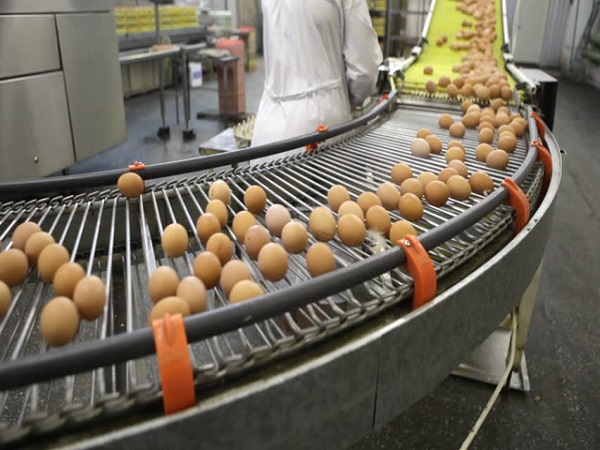
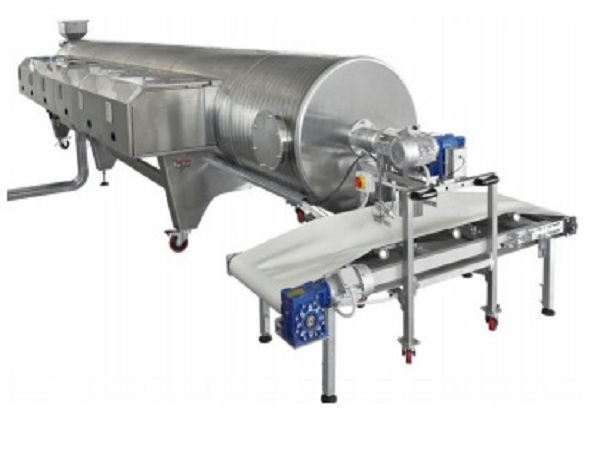
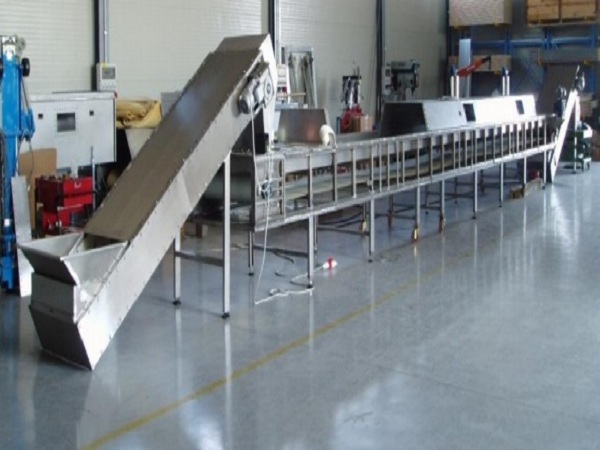
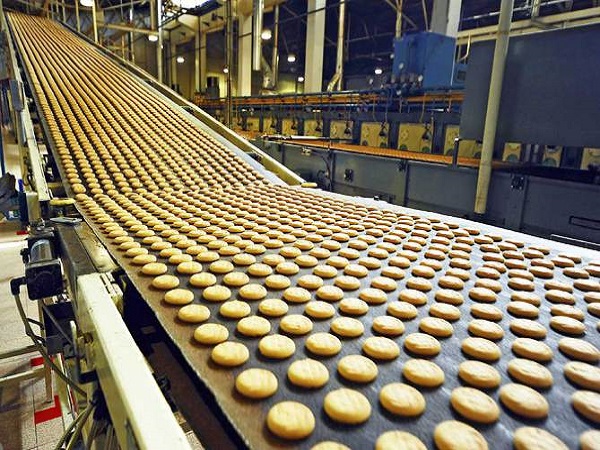
Kerone’s Infrared Food Processing / Production Line represents the cutting edge of modern thermal food processing technology, harnessing the power of infrared (IR) radiation to deliver fast, energy-efficient, and highly controllable heating for a broad spectrum of food applications. Unlike conventional convective or conductive heating methods, infrared processing directly penetrates food surfaces, enabling rapid and uniform heat transfer that significantly reduces processing times, energy consumption, and moisture loss. Kerone designs and manufactures infrared production lines for applications including drying and dehydration of fruits, vegetables, grains, and spices; surface pasteurization and pathogen reduction; roasting of nuts, seeds, and coffee; baking and browning of bakery products; and blanching of vegetables, all with outstanding precision, product quality, and throughput efficiency.
Why Choose Kerone Infrared Food Processing / Production Line
Kerone is a recognized pioneer in infrared thermal processing technology for the food industry, backed by an extensive portfolio of successful installations across bakery, snack food, spice, grain, and fresh produce processing sectors. What sets Kerone apart is our deep technical expertise in infrared emitter selection, wavelength optimization (near-infrared vs. medium-wave vs. far-infrared), and conveyor system design, ensuring that the IR energy delivered is perfectly matched to the specific thermal response characteristics of each food product. Kerone’s infrared lines deliver up to 50% energy savings compared to conventional hot air dryers and ovens, while achieving superior product color, texture, and flavor retention. Our in-house testing facility allows clients to validate IR processing parameters on their actual products before committing to full-scale plant investment, and our engineering team provides complete turnkey solutions from design and fabrication to installation, commissioning, and technical support.
Types and Features of Infrared Food Processing / Production Line
IR Heating Depends On:
Surface property of material
Type of radiation
Shape of emitter and receiver
Infrared heating technology is suitable for various food processing techniques such as drying, baking and roasting, blanching, pasteurization and sterilization.
Infrared Food Drying:
Application of infrared has become popular in food drying due to its distinctive surface heating capability. Food dried using IR has better rehydration properties compared to conventional drying systems.
Reduced drying time
Alternate energy source
Increased energy efficiency
Constant temperature during drying
Better-quality finished products
Reduced airflow requirement
High degree of process control
Space saving and clean working environment
Though infrared offers various advantages over conventional drying processes, it is not a universal remedy. Based on drying requirements, customized IR radiator selection or hybrid systems (IR combined with conventional heating) can be designed for optimal performance.
Infrared Baking and Roasting:
IR baking and roasting are more efficient and instantaneous compared to conventional ovens. High heat transfer rates can be achieved without heating the oven surroundings, reducing total energy consumption.
Short baking times
High thermal efficiency
Good control over baking conditions
Rapid start-up without heating oven air
IR baking enables quick crust formation and selective area baking. Carefully selected IR boosters help achieve desired color and thickness without losing nutritional content.
Infrared (IR) Blanching:
IR blanching is suitable for enzyme inactivation while maintaining nutritional quality. It prevents undesirable sensory and nutritional changes in fruits and vegetables.
Short processing time
More energy efficient
Enhanced production quality
Lower floor space requirement
Infrared (IR) Pasteurisation:
Pasteurisation removes pathogenic bacteria to prevent spoilage and disease. IR pasteurisation increases surface temperature sufficiently to reduce microorganisms without significantly raising internal temperature.
Controlled processing time
Efficient energy utilisation
Enhanced production quality
Lower floor space required
Direct transfer to packaging after processing
Infrared Sterilization:
Sterilisation involves heating food at high temperature for sufficient time to destroy microorganisms such as fungi, bacteria, viruses and prions. IR based sterilization units are available in both batch and continuous types. Far-IR radiators penetrate food surfaces quickly, killing microorganisms without affecting natural properties.
Selective heat treatment
Very low floor space (approximately ¼ compared to conventional systems)
Easy control with start and stop emitters
Lower maintenance
High energy transfer efficiency
No combustion products
No air circulator required
Key Features
Multi-zone infrared emitter arrays (near, medium, and far-wave) with zone-by-zone power adjustment for precise heat profile customization.
Up to 50% energy savings compared to conventional hot-air drying and convective oven technologies due to direct radiant heat transfer.
Rapid heat-up response (seconds vs. minutes) enabling instant production starts, minimal warm-up energy waste, and fast product changeovers.
Superior product quality outcomes enhanced color, natural flavor retention, improved texture, and reduced case hardening compared to hot-air processing.
Infrared pasteurization capability achieving 5-log pathogen reduction on grain, spice, and seed surfaces without chemical treatments or excessive moisture addition.
Stainless steel hygienic construction with easy-clean designs, CIP-compatible belt systems, and compliance with food-grade material standards.
Variable conveyor belt speeds with independent zone power controls enabling flexible processing recipes for diverse food products on a single line.
Compact footprint compared to equivalent-capacity conventional dryers and ovens, reducing facility space requirements and capital civil costs.
Powered by AI, ML & IoT
Future-Ready Engineering Driven by AI & IoT
Our advanced AI, ML, and IoT technologies, this solution delivers smarter automation, real-time insights, and predictive intelligence to enhance efficiency and drive future-ready growth.
Real-Time Monitoring & Control
Continuous tracking of process parameters with instant adjustments.
Predictive Maintenance
Intelligent fault detection to prevent failures before they occur.
Adaptive Process Optimization
Dynamic tuning of operations for maximum output and efficiency.
Cloud Dashboards & Analytics
Unified access to real-time insights and performance trends.
Energy & Resource Savings
Smarter utilization of energy to cut costs and reduce waste.
Secure IoT Connectivity
Encrypted data flow with seamless integration across plant systems.
Applications of Infrared Food Processing / Production Line
Kerone’s Infrared Food Processing / Production Lines are extensively used across bakery, snack food, spice, grain, dairy, and fresh produce processing industries.
Typical applications include:
Drying and dehydration of fruits, vegetables, herbs, and spices with superior color retention and minimal volatile aroma loss compared to hot-air drying.
Surface pasteurization and decontamination of whole and ground spices, seeds, nuts, and grains achieving regulatory-compliant pathogen reduction without chemical additives.
Roasting of coffee beans, peanuts, sesame, sunflower seeds, and hazelnuts with controlled Maillard browning for premium flavour development.
Baking, browning, and crust formation for biscuits, crackers, flatbreads, pizza bases, and extruded snack products requiring precise surface colour control.
Grain surface treatment for improving flour functionality, reducing mycotoxin levels, and enhancing the baking performance of wheat, corn, and barley.
Pre-drying and post-baking moisture equalization in continuous bakery and snack production lines for consistent product quality and extended shelf life.
Kerone’s infrared food processing / production line solutions are engineered to deliver high productivity, operational reliability, and superior output quality. By combining innovation with customization, Kerone supports industries in achieving streamlined workflows, reduced energy consumption, and improved product consistency.
Seamless Export Connections Global & Local
Our Global Footprint in Industrial Excellence
Delivering world-class industrial and process solutions across countries with precision, innovation, and reliability.
Peru
Chile
Argentina
Mexico
Colombia
Brazil
USA
Canada
United Kingdom
France
Germany
Spain
Italy
Netherlands
Sweden
Switzerland
Poland
Portugal
Ireland
Czechia
Romania
Hungary
Austria
Greece
Kazakhstan
Uzbekistan
Turkmenistan
Algeria
Egypt
Nigeria
Kenya
South Africa
Saudi Arabia
UAE
Israel
Russia
India
China
Japan
South Korea
Thailand
Vietnam
Malaysia
Singapore
Indonesia
Philippines
Australia
New Zealand
Pan-India Presence. Local Expertise.
Raipur
Bilaspur
Panaji
Vasco da Gama
Gandhinagar
Ahmedabad
Surat
Chandigarh
Gurgaon
Shimla
Manali
Bengaluru
Mysore
Kochi
Pune
Mumbai
Thane
Navi Mumbai
Hyderabad
Chennai
Coimbatore
Kolkata
Lucknow
Jaipur
Udaipur
Jodhpur
Dehradun
Haridwar
Bhubaneswar
Product Gallery
Frequently Asked Questions (FAQ)
Near-infrared (NIR, 0.75–1.4 µm) is ideal for deep penetration and rapid surface browning in baking. Medium-wave infrared (MIR, 1.4–3 µm) is best suited for drying and moisture removal. Far-infrared (FIR, 3–1000 µm) is used for gentle surface heating, pasteurization, and decontamination of low-moisture food products.
Depending on the application and product type, Kerone's infrared systems typically achieve 30 to 50% energy savings compared to equivalent-capacity hot-air convective dryers and ovens, due to the higher efficiency of direct radiant heat transfer and the elimination of air heating losses.
Industries such as food, chemical, pharmaceutical, and polymer processing widely rely on these systems.
Yes, Kerone designs fully customized systems based on raw materials, capacity, temperature, and process requirements.
High efficiency, consistent output, energy savings, and process flexibility.
Yes, Kerone offers specialized low‑temperature and controlled‑heating systems.
Infrared food processing uses electromagnetic radiation in the infrared spectrum to directly heat food surfaces and near-surface layers through radiant energy transfer, eliminating the need for a hot air medium. This results in faster heating rates, lower energy consumption, and superior product quality compared to convective hot-air systems.
Infrared radiation transfers energy through electromagnetic waves that are absorbed primarily by the outer layers of most food products, since the radiation's penetration depth is limited by the material's optical and moisture properties. This surface-concentrated heating is precisely what makes infrared effective for blanching, surface pasteurization, and crust formation in baking, where the goal is rapid surface temperature rise without driving heat deep into the product core. For applications requiring uniform heating throughout a thick or dense product, infrared is often combined with other heating modes such as microwave or hot air rather than relied on alone, since its surface-limited penetration is a characteristic to be engineered around rather than a limitation to overcome.
Steam and hot water blanching transfer heat by convection across the entire product surface for an extended dwell time, which causes water-soluble vitamins and minerals to leach into the blanching medium, particularly with cut or sliced produce with high surface-area-to-volume ratio. Infrared blanching achieves the same enzyme-deactivation temperature at the surface in a shorter exposure window because radiant energy transfers more directly without an intermediate heat-carrying medium, reducing both leaching losses and overall processing time. The shorter exposure also reduces texture softening that's common with prolonged water blanching, which matters for products like vegetable chips where crispness after drying depends on minimizing pre-drying tissue damage.
Near-infrared (shorter wavelength, roughly 0.78 to 1.4 micrometers) penetrates slightly deeper and is often selected for applications needing some sub-surface heating effect, such as certain drying processes. Mid and far-infrared (longer wavelengths) are absorbed more strongly at the immediate surface and suit applications like surface pasteurization, browning, and crust development where deep penetration isn't desired. The selection depends on the food's optical absorption characteristics, which vary by moisture content, color, and surface texture, so equipment suppliers typically test wavelength response on the actual product rather than applying a generic wavelength choice across different food categories.
Scorching risk is managed primarily through precise control of emitter-to-product distance, exposure time, and emitter power modulation rather than relying on a single fixed intensity setting. Multi-zone infrared systems allow power to be reduced as the product approaches target temperature, avoiding the overshoot that occurs with constant-intensity exposure. Pulsed or cycled infrared operation, where emitters switch on and off rather than running continuously, gives the product surface time to redistribute absorbed heat between pulses, reducing localized hot spots. For delicate or high-sugar-content products prone to scorching, combining infrared with a moderate airflow across the product surface also helps dissipate excess surface heat without sacrificing the speed advantage infrared offers.
Infrared emitters gradually lose output efficiency as reflective surfaces behind ceramic or quartz elements accumulate residue from food particulates and moisture, so periodic cleaning of reflector surfaces is the most common maintenance task. Emitter elements themselves have a finite service life, typically ranging from several thousand to tens of thousands of operating hours depending on whether they're ceramic, quartz, or metal sheathed, and gradual output decline should be monitored with periodic radiometric checks rather than waiting for visible failure. Replacing emitters in matched sets rather than individually helps maintain even heat distribution across a processing zone, since mismatched emitter ages can create inconsistent heating patterns across the product width.
Convective hot air drying spends a significant portion of input energy heating the air itself, much of which is then lost as exhaust rather than transferring into the product. Infrared drying transfers radiant energy more directly to the product surface with less energy spent heating the surrounding air mass, which generally improves overall thermal efficiency for surface-moisture-dominant drying applications. The energy savings are most pronounced in early-stage drying where surface moisture removal dominates; as drying progresses and internal moisture diffusion becomes the limiting factor, the efficiency advantage narrows, which is why many systems combine infrared with convective airflow rather than using infrared exclusively through the full drying cycle.
Infrared pasteurization targets reduction of pathogenic and spoilage microorganisms to extend shelf life and improve safety while leaving some heat-resistant organisms and spores intact, which is acceptable for products that will be refrigerated or consumed relatively soon after processing. Infrared sterilization aims for a much higher degree of microbial lethality, including spore-forming organisms, to achieve commercial sterility suitable for shelf-stable, ambient-temperature storage. Because infrared's surface-concentrated heating profile makes it less suited to penetrating deep into thick products to achieve full sterilization, sterilization applications using infrared are typically limited to thin products or surfaces, with thicker or denser products requiring combination processing or alternative sterilization methods to reach the necessary lethality throughout the product.
Infrared emitter modules can often be retrofitted into existing conveyorized oven or dryer tunnels as a supplementary heat source, particularly when the goal is to add surface browning, faster initial moisture removal, or pasteurization capability without rebuilding the entire line. Retrofitting requires confirming that the existing conveyor speed range, tunnel clearance, and electrical supply can accommodate the added infrared load, and that control systems can coordinate the new zone with existing temperature and airflow controls. For applications needing infrared as the primary and only heat source rather than a supplement, a dedicated line designed around infrared's specific clearance and reflectivity requirements typically performs more consistently than a retrofit.
Kerone’s custom-designed heating and processing solutions are built to meet the demands of your growing operations. Whether you’re upgrading equipment, expanding production, or need a tailor-made solution

 Peru
Peru Chile
Chile Argentina
 Mexico
 Colombia
 Brazil
 USA
USA Canada
 United Kingdom
 France
 Germany
 Spain
Spain Italy
Italy Netherlands
 Sweden
 Switzerland
 Poland
 Portugal
 Ireland
 Czechia
 Romania
 Hungary
 Austria
 Greece
 Kazakhstan
 Uzbekistan
 Turkmenistan
 Algeria
 Egypt
Egypt Nigeria
 Kenya
Kenya South Africa
 Saudi Arabia
 UAE
UAE Israel
 Russia
 India
India China
China Japan
Japan South Korea
 Thailand
 Vietnam
 Malaysia
 Singapore
 Indonesia
 Philippines
 Australia
 New Zealand