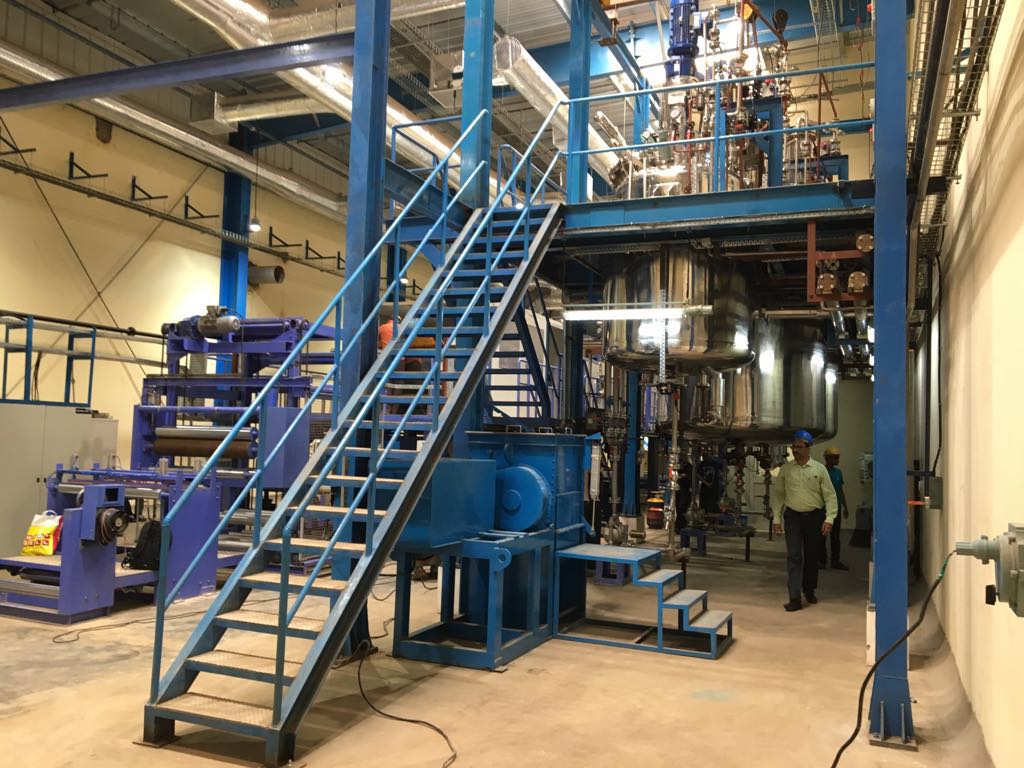
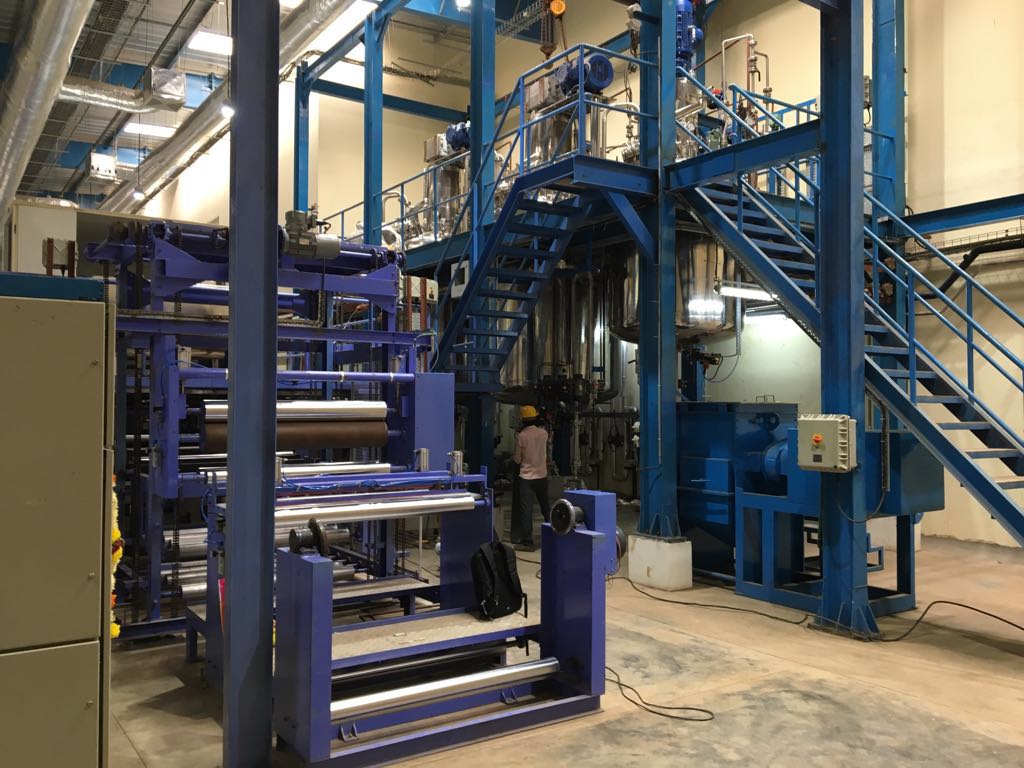
Kerone’s Polyethylene Wax Processing Plant is a complete integrated production system designed for the efficient thermal processing, refining, and packaging of polyethylene wax, a high-value specialty chemical derived from polyethylene polymer through thermal cracking or direct synthesis processes. These plants are engineered to handle the complete production chain from raw material feed through melting, separation, purification, and packaging of polyethylene wax in various product forms including flakes, pellets, micropowder, and liquid for diverse industrial applications. Kerone’s Polyethylene Wax Processing Plants incorporate advanced thermal management, efficient heat exchange, and precision processing control technology to ensure consistent product quality, maximum yield, and energy-efficient operation throughout the production process. With customizable configurations to match raw material specifications and target product requirements, Kerone delivers turnkey polyethylene wax plants tailored to each customer’s specific production objectives.
Kerone’s Polyethylene Wax Processing Plants are the result of extensive engineering experience in polymer thermal processing combined with deep knowledge of polyethylene wax chemistry and product quality requirements. Kerone designs each plant with a focus on maximizing yield from the raw material, minimizing energy consumption through efficient heat integration, and ensuring consistent product quality through precise temperature, residence time, and separation control. Unlike standardized equipment packages, Kerone’s engineering team customizes each plant’s design to match the specific feedstock characteristics, desired product grades, and production capacity of each customer. With comprehensive process guarantees, complete commissioning support, and long-term technical partnership, Kerone is the preferred choice for investors and manufacturers seeking reliable, efficient, and profitable polyethylene wax production operations.
Types and Features of Polyethylene Wax Processing Plant
Kerone’s Polyethylene Wax Processing Plants are configured based on the production route (thermal cracking of polyethylene waste or direct polymerization-derived wax refining) and desired product forms. Key processing sections include feed pre-treatment and melting systems, cracking or fractionation reactors, condenser and separation systems, filtration and purification stages, and finishing equipment including flakers, pelletizers, and micropowder mills. Key features include robust, thermally insulated reactor and piping systems for safe high-temperature operation, precision temperature and residence time control for consistent product specification, energy-efficient heat recovery systems, inert gas blanketing for oxidation prevention, automated PLC-based process control, and flexible product form packaging lines for flakes, pellets, and powder grades.
Key Features
Complete turnkey plant design from raw material intake to finished polyethylene wax product in desired form
Precise thermal processing control ensuring consistent product viscosity, molecular weight, and melting point
Energy-efficient heat integration with recovery systems minimizing thermal energy consumption per ton produced
Robust high-temperature reactor and processing systems with inert gas protection for safe, stable operation
Customizable plant capacity from pilot scale to full commercial production to match investment requirements
Flexible product finishing with options for flaking, pelletizing, and micropowder milling to diverse specifications
Powered by AI, ML & IoT
Future-Ready Engineering Driven by AI & IoT
Our advanced AI, ML, and IoT technologies, this solution delivers smarter automation, real-time insights, and predictive intelligence to enhance efficiency and drive future-ready growth.
Real-Time Monitoring & Control
Continuous tracking of process parameters with instant adjustments.
Predictive Maintenance
Intelligent fault detection to prevent failures before they occur.
Adaptive Process Optimization
Dynamic tuning of operations for maximum output and efficiency.
Cloud Dashboards & Analytics
Unified access to real-time insights and performance trends.
Energy & Resource Savings
Smarter utilization of energy to cut costs and reduce waste.
Secure IoT Connectivity
Encrypted data flow with seamless integration across plant systems.
Applications of Polyethylene Wax Processing Plant
Kerone’s Polyethylene Wax Processing Plant are extensively used in industries. Kerone’s Polyethylene Wax Processing Plants are extensively used by manufacturers producing polyethylene wax for use in diverse industrial and consumer product applications.
Typical applications include
Plastics additives manufacturing: production of polyethylene wax as a processing aid, lubricant, and mould release for thermoplastics
Coating and ink industry: supply of refined polyethylene wax as a matting agent, mar resistance additive, and flow modifier
Rubber and tire manufacturing: polyethylene wax as a processing lubricant, antiozonant carrier, and surface protective agent
Candle and cosmetics manufacturing: refined polyethylene wax as a hardener and blending component in candles and cosmetic formulations
Adhesives and sealants: polyethylene wax as a viscosity modifier, release agent, and formulation component in hot melt adhesives
Paper and packaging coatings: polyethylene wax as a water resistance, gloss, and abrasion resistance additive in paper coatings
Kerone’s polyethylene wax processing plant solutions are engineered to deliver high productivity, operational reliability, and superior output quality. By combining innovation with customization, Kerone supports industries in achieving streamlined workflows, reduced energy consumption, and improved product consistency.
Seamless Export Connections Global & Local
Our Global Footprint in Industrial Excellence
Delivering world-class industrial and process solutions across countries with precision, innovation, and reliability.
Peru
Chile
Argentina
Mexico
Colombia
Brazil
USA
Canada
United Kingdom
France
Germany
Spain
Italy
Netherlands
Sweden
Switzerland
Poland
Portugal
Ireland
Czechia
Romania
Hungary
Austria
Greece
Kazakhstan
Uzbekistan
Turkmenistan
Algeria
Egypt
Nigeria
Kenya
South Africa
Saudi Arabia
UAE
Israel
Russia
India
China
Japan
South Korea
Thailand
Vietnam
Malaysia
Singapore
Indonesia
Philippines
Australia
New Zealand
Pan-India Presence. Local Expertise.
Raipur
Bilaspur
Panaji
Vasco da Gama
Gandhinagar
Ahmedabad
Surat
Chandigarh
Gurgaon
Shimla
Manali
Bengaluru
Mysore
Kochi
Pune
Mumbai
Thane
Navi Mumbai
Hyderabad
Chennai
Coimbatore
Kolkata
Lucknow
Jaipur
Udaipur
Jodhpur
Dehradun
Haridwar
Bhubaneswar
Product Gallery
Frequently Asked Questions (FAQ)
Kerone's plants produce polyethylene wax in multiple forms including flakes, micropowder, prills, pellets, and liquid grades, depending on customer requirements and end-use applications.
Thermal cracking breaks down higher molecular weight polyethylene often recycled or waste polyethylene into lower molecular weight wax fractions through controlled high-temperature degradation, making it a route that can also serve plastic waste valorization. Direct polymerization-derived wax refining instead starts from polyethylene wax already produced as a byproduct of virgin polyethylene polymerization, requiring purification and fractionation rather than molecular breakdown. The cracking route generally requires more robust, higher-temperature reactor systems and more intensive process control to manage degradation consistency, while refining-based processes focus more on separation and purification equipment. Kerone configures plant design specifically around which production route a customer is pursuing, since reactor, condenser, and separation system requirements differ substantially between the two approaches.
Industries such as food, chemical, pharmaceutical, and polymer processing widely rely on these systems.
Yes, Kerone offers specialized low‑temperature and controlled‑heating systems.
Feedstock options include virgin polyethylene byproduct streams from polymerization facilities, off-grade or rejected polyethylene resin, and increasingly, recycled or waste polyethylene from post-industrial or post-consumer sources for cracking-based wax production. Feedstock consistency matters significantly for process control, since variable contamination levels, additive content, or molecular weight distribution in recycled feedstock streams require more robust filtration and purification stages than processing consistent virgin material. Plants designed to handle variable-quality recycled feedstock typically need more flexible process control and additional purification capacity compared to plants running a single consistent virgin feedstock. Kerone evaluates intended feedstock quality and consistency during plant design, since underestimating feedstock variability is one of the more common causes of inconsistent finished wax quality.
Commercial-scale polyethylene wax processing plants generally run continuously, since thermal cracking and fractionation processes achieve more stable, predictable product quality when fed a steady material flow rather than cycled in batches, and continuous operation is significantly more energy-efficient at production scale because reactor and heat exchanger systems can be sized for steady-state operation rather than repeated heat-up and cool-down cycles. Batch processing is sometimes used at pilot or small specialty production scale, particularly when testing different feedstock sources or target product specifications before committing to continuous production parameters. For established commercial production with a defined feedstock and product specification, continuous operation is the standard approach due to both process stability and energy efficiency advantages.
High-temperature thermal cracking reactors need robust pressure relief systems, since uncontrolled pressure buildup from polymer degradation byproducts represents one of the more serious failure modes in this type of processing. Inert gas blanketing systems require reliable gas supply monitoring and backup, since a loss of inert atmosphere during high-temperature processing creates immediate oxidation and fire risk. Thermally insulated reactor and piping systems protect personnel from contact burns, but they also need temperature monitoring at multiple points to catch localized hot spots that could indicate developing equipment failure before it becomes a safety event. Automated emergency shutdown systems that can safely de-energize heating and isolate the reactor without requiring operator approach to high-temperature equipment are a baseline requirement rather than an optional safety enhancement.
Reactor and piping interior surfaces need periodic inspection for fouling or carbon deposit buildup from thermal degradation byproducts, since accumulated deposits reduce heat transfer efficiency and can eventually affect product quality consistency if left unaddressed. Condenser and separation system performance should be tracked against baseline data, since gradual efficiency decline in these stages often shows up first as subtle product specification drift rather than an obvious equipment fault. Filtration and purification stage components need scheduled replacement or cleaning based on actual feedstock contamination levels rather than a fixed generic interval, particularly when processing variable-quality recycled feedstock. Kerone designs accessible inspection points into reactor and separation systems specifically because catching fouling or wear early prevents costlier unplanned downtime later.
Heat integration between the hot product stream leaving the reactor and the cooler incoming feedstock significantly reduces total energy input needed, since recovering heat from the outgoing process stream to pre-heat incoming material reduces the load on primary heating systems. Insulation quality on reactors and high-temperature piping directly affects ongoing energy loss, and this matters more in continuous thermal processing than in batch operations because heat loss accumulates continuously rather than only during heat-up phases. Optimizing residence time to the minimum needed for the target product specification, rather than running longer than necessary as a quality safety margin, also reduces overall energy consumption per tonne of wax produced. Kerone designs heat recovery and insulation as core engineering decisions rather than after-thought efficiency add-ons.
Processing waste or recycled polyethylene into wax through thermal cracking provides a productive use for polyethylene material that would otherwise go to landfill or incineration, supporting circular economy objectives for plastic waste streams that are otherwise difficult to recycle conventionally. This recycling route can reduce the demand for virgin polyethylene feedstock in wax production, lowering the overall carbon footprint compared to wax derived entirely from newly polymerized material. Energy recovery systems within the plant further reduce the net environmental impact per tonne of wax produced by minimizing fossil fuel or electricity consumption relative to less efficient processing configurations. Companies positioning their wax products toward sustainability-conscious end markets often specifically value this recycled-feedstock production route as a marketable differentiator.
A frequent misunderstanding is assuming that equipment designed for general plastic extrusion or mechanical recycling can be adapted for polyethylene wax production with minor modification. In reality, wax processing, particularly thermal cracking involves molecular breakdown chemistry, precise temperature and residence time control for target molecular weight, and fractionation or separation systems that general extrusion equipment simply doesn't include. Mechanical recycling equipment processes plastic without breaking it down chemically, which is fundamentally different from the thermal degradation process needed to convert higher molecular weight polyethylene into wax-range molecular weight product. Buyers should recognize that wax processing requires purpose-built reactor, condenser, and separation technology rather than treating it as a variant of conventional plastics processing or recycling equipment.
These properties are governed primarily by reactor temperature profile and residence time, since both directly affect how much molecular weight reduction occurs during thermal cracking or how thoroughly separation and purification proceed in refining-based processes. Precise, stable temperature control throughout the reactor and consistent feedstock flow rate are essential, since variation in either introduces batch-to-batch or even within-batch variation in finished wax properties. Inline or frequent offline testing of key parameters, typically viscosity and drop melting point which allows process adjustments to be made before an entire production run drifts out of specification rather than discovering the deviation only after a large quantity of off-spec material has already been produced. Kerone designs process control systems specifically to maintain tight temperature and flow stability.
Reactor heat transfer area needs careful re-engineering at larger scale, since commercial-scale vessels have a less favorable surface-area-to-volume ratio than pilot equipment, which can limit achievable heating and cooling rates unless heat exchanger capacity is properly scaled rather than simply enlarged proportionally. Separation and purification system capacity needs to scale in proportion to throughput while maintaining the same separation efficiency, which sometimes requires a different separation technology altogether rather than a larger version of the pilot equipment. Feedstock supply chain reliability becomes a more significant planning factor at commercial volume, particularly for recycled feedstock routes where consistent supply at the required quality and volume is less certain than for virgin material. Engaging equipment engineering expertise during the scale-up planning phase helps avoid under-sizing critical systems.
Kerone’s custom-designed heating and processing solutions are built to meet the demands of your growing operations. Whether you’re upgrading equipment, expanding production, or need a tailor-made solution

 Peru
Peru Chile
Chile Argentina
 Mexico
 Colombia
 Brazil
 USA
USA Canada
 United Kingdom
 France
 Germany
 Spain
Spain Italy
Italy Netherlands
 Sweden
 Switzerland
 Poland
 Portugal
 Ireland
 Czechia
 Romania
 Hungary
 Austria
 Greece
 Kazakhstan
 Uzbekistan
 Turkmenistan
 Algeria
 Egypt
Egypt Nigeria
 Kenya
Kenya South Africa
 Saudi Arabia
 UAE
UAE Israel
 Russia
 India
India China
China Japan
Japan South Korea
 Thailand
 Vietnam
 Malaysia
 Singapore
 Indonesia
 Philippines
 Australia
 New Zealand