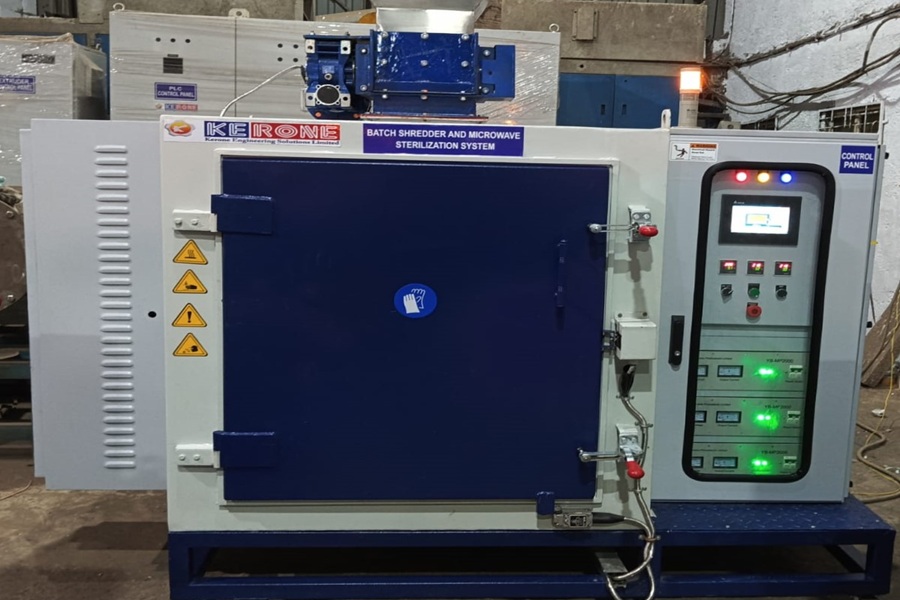
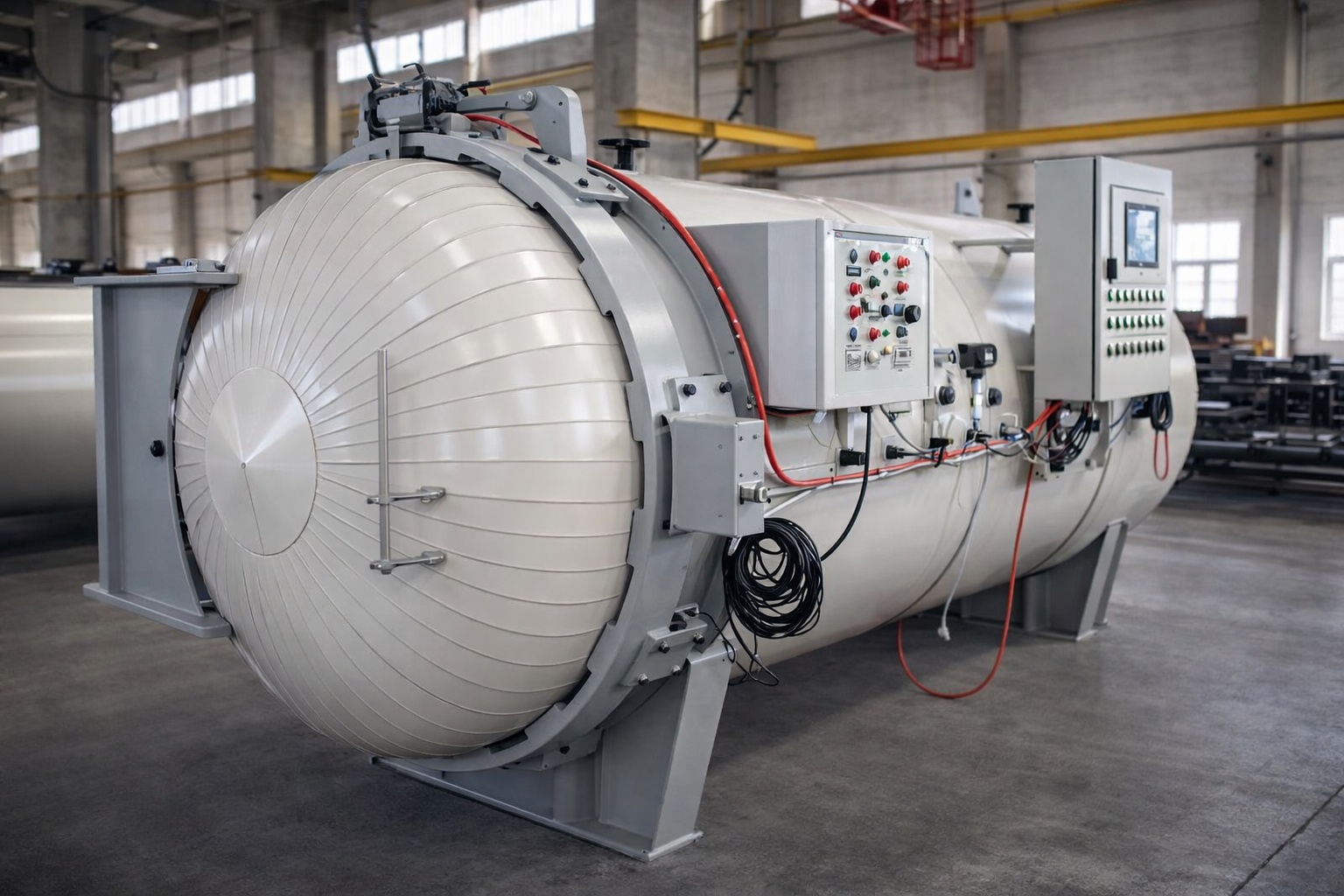
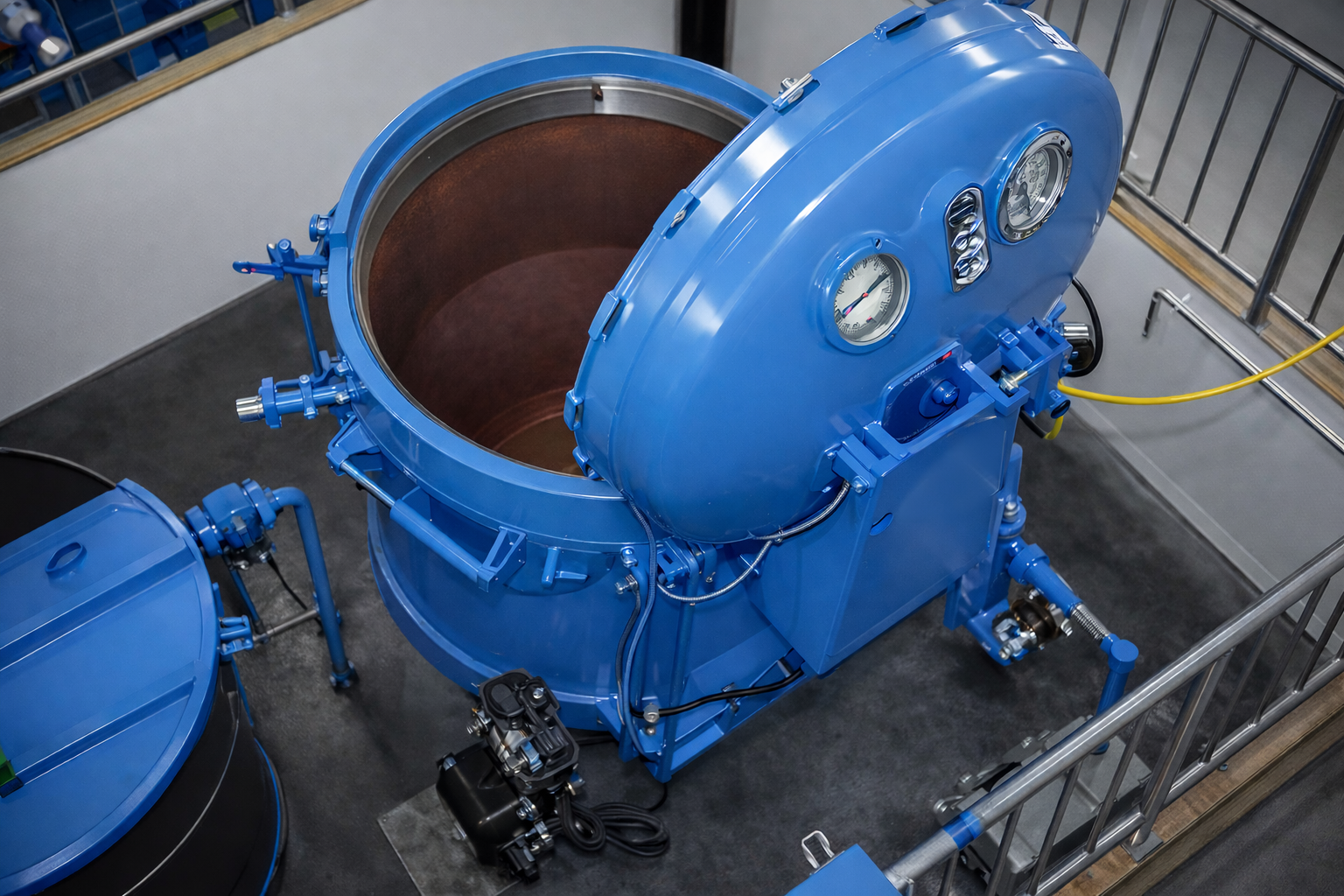
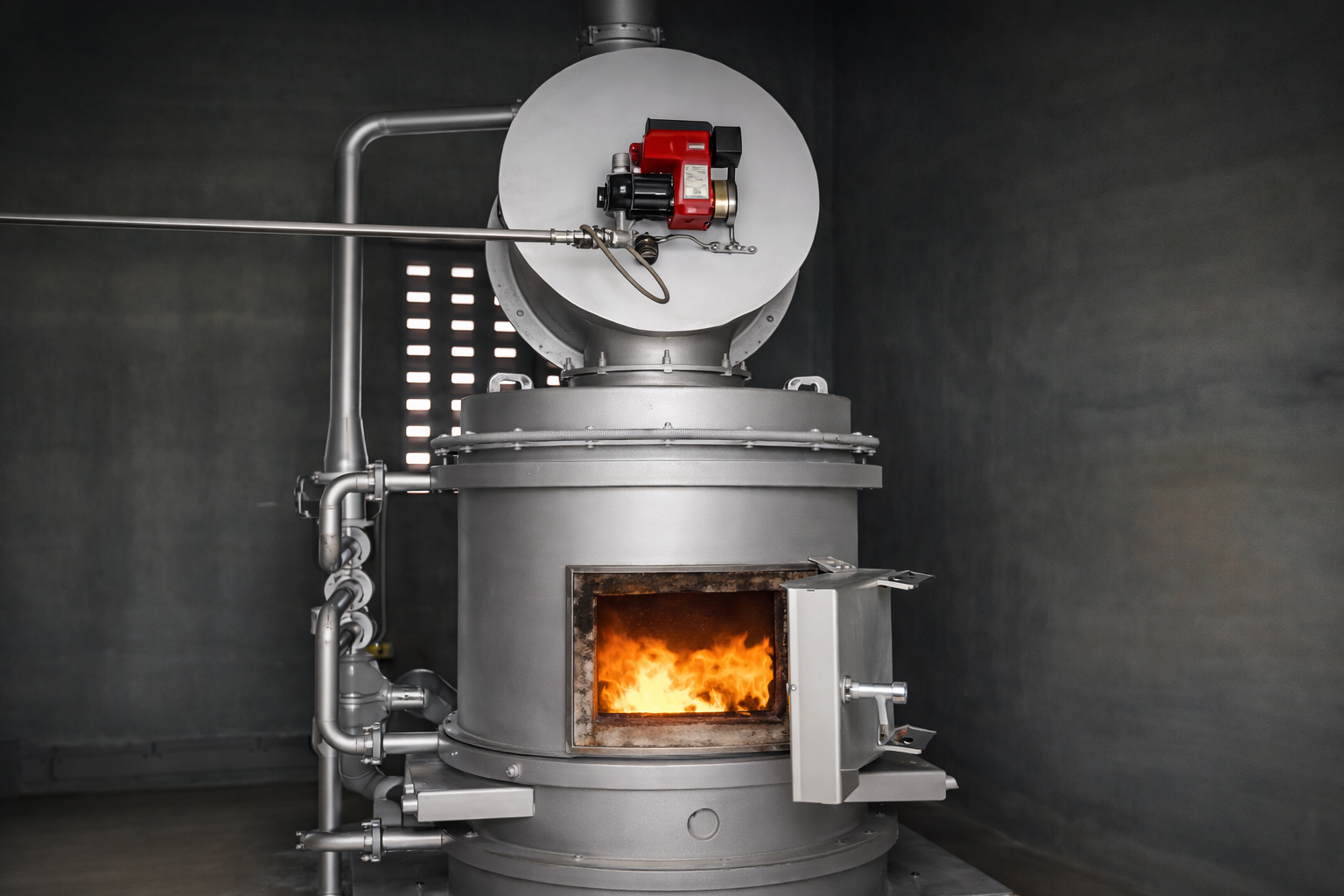
We at Kerone are having more than 5 decades of experience in helping society with best possible technology of heat treatment. Microwave based systems designed and manufactured by us comply to international standards for safety and treatment. Kerone’s microwave systems combines with various other processes such as grinding or crushing or any other processing need combine it makes to compact and automated system. Machineries are designed to align with the local municipal and/or governing bodies rules and regulations.
Why Choose Kerone Microwave Medical Waste Treatment
Hospitals and other medical facilities generate huge amount of waste those cannot be disposed directly as these waste might contain hazardous chemicals, or infected tissues, cloths or other used medical devices and apparatus. Direct disposal of it can lead to some other kind of disease spread to community. To avoid any disease spreading and contamination of other kind its required to reduce the direct disposal. Reuse and Recycle of can also be possible option to reduce the waste disposal as Incinerating also results in polluting environment.
One of the potential solution is to disinfect and try to reuse or recycle all possible medical equipment. Microwave can be one of the potential and environment friendly solution for medical waste treatment and disinfestation. Almost all type of microorganisms gets destroyed by application of microwave frequency of about 2450 MHz. Water contained are rapidly heated and results in destroying of the infectious components and compounds.
Types and Features of Microwave Medical Waste Treatment
Microwave medical waste treatment systems are designed to safely disinfect and reduce hazardous healthcare waste using controlled microwave energy. The main types include batch-type systems, continuous conveyor-based systems, and integrated shredding-microwave units that combine size reduction with simultaneous disinfection. These systems are equipped with automatic feeding mechanisms, high-efficiency microwave generators, temperature and moisture control sensors, and PLC-based control panels for precise operation. Key features include uniform internal heating for effective pathogen destruction, reduced emission levels compared to incineration, energy efficiency, compact design, and low operational costs. Microwave medical waste treatment units are suitable for hospitals, laboratories, clinics, and pharmaceutical facilities, ensuring environmentally friendly and compliant waste disposal.
Features of Kerone’s Microwave Based Heat Treatment Systems
Advantages of Microwave in Medical/Bio-Waste Treatment
Working life is more than conventional heating systems
Lower processing time
Quick and easy installation
Fast and uniform heating
Lesser maintenance
Selective heating/drying
Condensed construction
Direct utilization of large-sized feedstocks
Accurately designed and engineered
Better production quality
Hassle-free operation
Development of new materials and products
Highly durable
Improved process control
Energy and cost efficient
Ability to operate from an electrical source
Consumes lesser power
Lower energy consumption
Efficient performance
Clean process with no emission of gases or residuals
Fit to pocket (Cost-effective)
Highly controllable
Fully automated machine with PLC control panel and online printer
Compact in size
Operating temperature can be raised within seconds
–
Automatic door operating mechanism
–
State-of-the-art material handling systems
–
High temperature resilient silicon gasket
–
Key Features
High thermal and processing efficiency
Low maintenance and easy operation
Suitable for heat-sensitive materials
Fully adjustable and customizable process parameters
Available in batch and continuous configurations
Uniform processing and consistent product quality
Powered by AI, ML & IoT
Future-Ready Engineering Driven by AI & IoT
Our advanced AI, ML, and IoT technologies, this solution delivers smarter automation, real-time insights, and predictive intelligence to enhance efficiency and drive future-ready growth.
Real-Time Monitoring & Control
Continuous tracking of process parameters with instant adjustments.
Predictive Maintenance
Intelligent fault detection to prevent failures before they occur.
Adaptive Process Optimization
Dynamic tuning of operations for maximum output and efficiency.
Cloud Dashboards & Analytics
Unified access to real-time insights and performance trends.
Energy & Resource Savings
Smarter utilization of energy to cut costs and reduce waste.
Secure IoT Connectivity
Encrypted data flow with seamless integration across plant systems.
Applications of Microwave Medical Waste Treatment
Kerone’s Microwave Medical Waste Treatment systems are extensively used in healthcare and waste management sectors. Typical applications include:
Hospital and clinic infectious waste treatment including sharps, dressings, and laboratory waste
Pharmaceutical manufacturing waste decontamination including culture media and contaminated materials
Veterinary clinic and animal research facility infectious waste treatment
Centralized medical waste processing facilities serving multiple healthcare institutions
Blood bank and transfusion service waste treatment
Kerone’s Microwave Medical Waste Treatment solutions are engineered to deliver maximum efficiency, long-term reliability and excellent operational stability. Our focus on innovation and customization ensures superior industrial results.
Microwave Medical Waste Treatment systems provide healthcare facilities and waste management organizations with a safe, effective, and environmentally responsible solution for managing infectious medical waste. By replacing hazardous incineration with validated microwave treatment, facilities can eliminate toxic emissions, reduce regulatory compliance burden, and protect both operators and the wider community from infectious waste hazards. Kerone’s commitment to regulatory compliance, engineering quality, and comprehensive customer support makes our medical waste treatment systems the trusted choice for healthcare institutions worldwide.
Seamless Export Connections Global & Local
Our Global Footprint in Industrial Excellence
Delivering world-class industrial and process solutions across countries with precision, innovation, and reliability.
Peru
Chile
Argentina
Mexico
Colombia
Brazil
USA
Canada
United Kingdom
France
Germany
Spain
Italy
Netherlands
Sweden
Switzerland
Poland
Portugal
Ireland
Czechia
Romania
Hungary
Austria
Greece
Kazakhstan
Uzbekistan
Turkmenistan
Algeria
Egypt
Nigeria
Kenya
South Africa
Saudi Arabia
UAE
Israel
Russia
India
China
Japan
South Korea
Thailand
Vietnam
Malaysia
Singapore
Indonesia
Philippines
Australia
New Zealand
Pan-India Presence. Local Expertise.
Raipur
Bilaspur
Panaji
Vasco da Gama
Gandhinagar
Ahmedabad
Surat
Chandigarh
Gurgaon
Shimla
Manali
Bengaluru
Mysore
Kochi
Pune
Mumbai
Thane
Navi Mumbai
Hyderabad
Chennai
Coimbatore
Kolkata
Lucknow
Jaipur
Udaipur
Jodhpur
Dehradun
Haridwar
Bhubaneswar
Product Gallery
Frequently Asked Questions (FAQ)
It is used for efficient processing, heating, drying or material transformation.
High efficiency, process reliability and complete customization.
Food, chemical, pharma, biomass, rubber, textile and more.
Infectious waste including bandages, gloves, lab materials, culture media, and small sharps containers can be treated. Radioactive waste, cytotoxic waste, and large metal sharps require alternative treatment.
Properly treated and validated medical waste is classified as non-infectious general municipal solid waste in most jurisdictions and can be disposed of in regular landfill facilities.
Kerone's systems include HEPA filtration of exhaust air, activated carbon odour treatment, and condensate collection to ensure no infectious aerosols or odours are released.
Kerone provides complete validation protocols, biological indicator test procedures, process documentation, and technical support for obtaining regulatory certification in the client's jurisdiction.
Microwave medical waste treatment works by generating electromagnetic energy at around 2450 MHz that excites water molecules inside the waste stream. This rapid molecular agitation generates heat directly within the material, not just on its surface, raising the waste to disinfection temperature within minutes. Because moisture is present in almost all infectious waste, including soiled dressings, lab cultures, and biological fluids, microwave energy couples efficiently into the load and achieves consistent core-to-surface heating. Validated cycles routinely meet or exceed the log-reduction levels required by autoclaving standards, and many regulatory bodies treat microwave disinfection as an equivalent alternative technology. The key difference from autoclaving is that there is no need for high-pressure steam generation, which simplifies plant utilities and reduces water consumption.
Microwave treatment is designed for infectious and biohazardous waste such as soiled dressings, gloves, tubing, culture media, and most laboratory plastics. It is not suitable for radioactive waste, cytotoxic or chemotherapy waste, mercury-containing items, or large metallic sharps, since these materials either do not respond to dielectric heating or pose separate hazard classes that require dedicated handling. Pharmaceutical waste with controlled substances typically needs separate destruction protocols as well. Buyers should segregate waste streams at the point of generation and confirm with their equipment supplier which categories are validated for their specific facility's waste profile, since hospital waste composition varies significantly by department and case mix.
Microwave-based medical waste treatment generally lowers operating costs in three areas: fuel, emissions compliance, and waste transport. Unlike incineration, which consumes diesel or gas continuously to maintain combustion temperatures, microwave systems draw power only during the active heating cycle and run on standard electrical infrastructure. There is no flue gas scrubbing system to maintain, no ash disposal cost, and no requirement for continuous emissions monitoring equipment. Treated waste is also typically lighter and more compact after shredding, reducing landfill transport frequency. The main costs to budget for are electricity consumption per cycle, magnetron or generator replacement over the equipment's service life, and routine filter and gasket maintenance, all of which are lower than the fuel and compliance burden of thermal incineration.
Once medical waste completes a validated microwave disinfection cycle and passes biological indicator testing, most regulatory frameworks reclassify it as non-hazardous general waste. This means it no longer requires special biohazard labeling, dedicated transport manifests, or hazardous waste disposal contracts in most jurisdictions. Facilities should retain cycle records and validation logs as proof of treatment for compliance audits, since regulators may request documentation showing the waste met required temperature and exposure-time parameters. This single classification change is often the biggest operational win for hospitals switching from incineration, as it removes ongoing hazardous waste manifesting and reduces dependence on specialized waste haulers.
Capacity sizing starts with measuring the facility's average daily waste generation in kilograms, then factoring in peak load periods such as surgical days or outbreak situations. Batch systems suit smaller hospitals and clinics generating limited daily volumes, while continuous conveyor-based systems with integrated shredding are better suited to centralized treatment facilities serving multiple healthcare institutions. Sizing also depends on waste density and moisture content, since denser, wetter loads take longer to reach disinfection temperature than light, dry waste. A proper capacity assessment includes a site waste audit, projected growth over the next five to ten years, and consideration of redundancy if the facility cannot tolerate downtime for waste accumulation.
Modern microwave medical waste systems minimize manual handling through automatic feed mechanisms, interlocked loading doors, and PLC-controlled cycle sequencing that prevents the chamber from opening until the disinfection cycle and cooling period are complete. Integrated shredding before or after microwave exposure further reduces the risk of needle-stick or sharps injury during handling. Sensors monitor internal temperature and moisture throughout the cycle, automatically extending treatment time if target parameters are not reached, rather than relying on operator judgment. This level of automated processing is particularly valuable in high-throughput centralized facilities where staff handle waste from multiple source hospitals and consistency between batches is critical for compliance.
With proper maintenance, the structural components of a microwave medical waste treatment system, including the chamber, conveyor, and shredding unit, typically remain serviceable for fifteen to twenty years. The microwave generators themselves have a finite operating life measured in hours of active use, and these are designed as replaceable modules rather than requiring full system replacement. Decisions to replace equipment usually stem from a change in regulatory disinfection standards, a significant increase in waste volume beyond the system's rated capacity, or repeated control system failures as electronics age. Facilities planning for a ten-year-plus horizon should ask suppliers about generator replacement intervals and spare parts availability before purchase.
Kerone’s custom-designed heating and processing solutions are built to meet the demands of your growing operations. Whether you’re upgrading equipment, expanding production, or need a tailor-made solution


 Peru
Peru Chile
Chile Argentina
 Mexico
 Colombia
 Brazil
 USA
USA Canada
 United Kingdom
 France
 Germany
 Spain
Spain Italy
Italy Netherlands
 Sweden
 Switzerland
 Poland
 Portugal
 Ireland
 Czechia
 Romania
 Hungary
 Austria
 Greece
 Kazakhstan
 Uzbekistan
 Turkmenistan
 Algeria
 Egypt
Egypt Nigeria
 Kenya
Kenya South Africa
 Saudi Arabia
 UAE
UAE Israel
 Russia
 India
India China
China Japan
Japan South Korea
 Thailand
 Vietnam
 Malaysia
 Singapore
 Indonesia
 Philippines
 Australia
 New Zealand