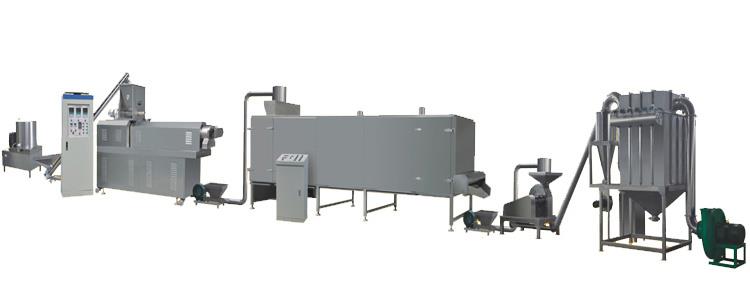
Kerone offers advanced baby food production plant solutions engineered for efficiency, precision, and reliability. With decades of expertise in industrial heating, processing, and automation, Kerone designs fully customized systems tailored to material characteristics, production capacity, and industry specifications. Our plants ensure seamless operations, energy efficiency, and consistent product quality across diverse applications.
A baby food production plant is a facility that specializes in the manufacturing and processing of food products specifically designed for infants and young children. The production process involves sourcing high-quality ingredients, processing them in a way that preserves their nutritional value, and packaging the final product in a safe and hygienic manner. The products produced by a baby food production plant may include pureed fruits and vegetables, cereals, and other nutritious food items that are formulated to meet the unique nutritional needs of infants and young children. These products are often sold in jars, pouches, or other types of packaging that are easy to transport and use. Setting up a baby food production plant requires compliance with strict hygiene and safety regulations, as well as adherence to food labelling and packaging guidelines. To ensure the safety and quality of the final products, careful attention is given to sourcing high-quality ingredients, processing them in a way that preserves their nutritional value, and testing the final products to ensure they meet all necessary nutritional and safety standards.
Why Choose Kerone Baby Food Production Plant
Kerone is a global provider of process technology and equipment, including baby food production lines. Their production lines are designed to meet the highest hygiene and safety standards and to produce high-quality baby food products with consistent taste, texture, and nutritional value. Baby food production machines are specialized equipment that is designed to produce baby food products on a large scale.
The production line may include various machines and equipment such as mixers, grinders, blenders, pasteurizers, filling and packaging machines, and quality control systems. The raw materials used in the production of baby food are carefully selected and sourced to ensure they are safe and of high quality. A baby food production line/plant is a complex and highly specialized manufacturing facility that plays a crucial role in providing safe, nutritious, and convenient food products for infants and young children. Their production lines are designed to produce safe, nutritious, and high-quality baby food products with high efficiency and minimal waste.
Types and Features of Baby Food Production Plant
Kerone designs Baby Food Production Plants in configurations matched to specific product types and production scales. Spray Drying Lines are used for producing powdered infant formulas and cereal blends, delivering free-flowing, easily reconstitute powders with precise moisture content control. Retort Processing Lines handle ready-to-eat purees and sterilized jarred baby foods, ensuring long shelf life without preservatives. Extrusion-based lines produce puffed, expanded baby snacks and cereal puffs enriched with fortified nutrients. Multi-stage blending and fortification systems ensure uniform distribution of vitamins, minerals, and probiotics in every batch. Features include hygienic design with crevice-free internal surfaces, automated dosing and batching for recipe accuracy, in-line metal detection and contaminant rejection systems, nitrogen flushing and vacuum sealing for extended shelf life, and real-time quality monitoring with traceability systems for full batch records.
Features of Baby Food Production Plant:
Well equipped
Easier installation
Longer serving life
Key Features
Hygienic stainless steel plant construction with CIP (Clean-In-Place) and SIP (Sterilize-In-Place) systems ensuring contamination-free production.
Gentle thermal processing — low-temperature drying and HTST pasteurization — preserving critical vitamins, minerals, and probiotics.
Spray drying technology for producing fine, easily reconstitutable powdered infant formulas with precise particle size and moisture control.
Automated nutrient fortification and dosing systems for accurate addition of vitamins, minerals, and DHA/ARA fatty acids.
Retort sterilization systems for ready-to-eat baby food pouches and jars ensuring shelf-stable, preservative-free products.
In-line metal detection, X-ray inspection, and contaminant rejection systems meeting the highest infant food safety standards.
Full product traceability with batch recording, allergen management, and compliance documentation for HACCP and regulatory audits.
Flexible production lines capable of handling cereal-based foods, fruit and vegetable purees, dairy-based formulas, and fortified blends.
Powered by AI, ML & IoT
Future-Ready Engineering Driven by AI & IoT
Our advanced AI, ML, and IoT technologies, this solution delivers smarter automation, real-time insights, and predictive intelligence to enhance efficiency and drive future-ready growth.
Real-Time Monitoring & Control
Continuous tracking of process parameters with instant adjustments.
Predictive Maintenance
Intelligent fault detection to prevent failures before they occur.
Adaptive Process Optimization
Dynamic tuning of operations for maximum output and efficiency.
Cloud Dashboards & Analytics
Unified access to real-time insights and performance trends.
Energy & Resource Savings
Smarter utilization of energy to cut costs and reduce waste.
Secure IoT Connectivity
Encrypted data flow with seamless integration across plant systems.
Applications of Baby Food Production Plant
Kerone’s Baby Food Production Plants are extensively used by infant nutrition manufacturers, dairy companies, and food conglomerates worldwide.
Typical applications include:
Food industry processing systems
Chemical and polymer processing
Processing of fruit and vegetable purees for ready-to-eat baby food pouches and glass jars with retort sterilization.
Ready‑to‑eat (RTE) food production
Contract manufacturing of private-label baby food products for retail brands, hospital nutrition programs, and export markets.
Production of powdered infant formula and follow-on formula complying with Codex Alimentarius and country-specific regulations.
Kerone’s baby food production plant solutions are engineered to deliver high productivity, operational reliability, and superior output quality. By combining innovation with customization, Kerone supports industries in achieving streamlined workflows, reduced energy consumption, and improved product consistency.
Seamless Export Connections Global & Local
Our Global Footprint in Industrial Excellence
Delivering world-class industrial and process solutions across countries with precision, innovation, and reliability.
Peru
Chile
Argentina
Mexico
Colombia
Brazil
USA
Canada
United Kingdom
France
Germany
Spain
Italy
Netherlands
Sweden
Switzerland
Poland
Portugal
Ireland
Czechia
Romania
Hungary
Austria
Greece
Kazakhstan
Uzbekistan
Turkmenistan
Algeria
Egypt
Nigeria
Kenya
South Africa
Saudi Arabia
UAE
Israel
Russia
India
China
Japan
South Korea
Thailand
Vietnam
Malaysia
Singapore
Indonesia
Philippines
Australia
New Zealand
Pan-India Presence. Local Expertise.
Raipur
Bilaspur
Panaji
Vasco da Gama
Gandhinagar
Ahmedabad
Surat
Chandigarh
Gurgaon
Shimla
Manali
Bengaluru
Mysore
Kochi
Pune
Mumbai
Thane
Navi Mumbai
Hyderabad
Chennai
Coimbatore
Kolkata
Lucknow
Jaipur
Udaipur
Jodhpur
Dehradun
Haridwar
Bhubaneswar
Product Gallery
Frequently Asked Questions (FAQ)
Kerone's plants are designed to comply with HACCP, FDA 21 CFR, EU Regulation No. 609/2013, Codex Alimentarius standards for infant formula, and applicable national food safety regulations in the target market.
Kerone uses gentle processing technologies including low-temperature drying, HTST pasteurization, and vacuum evaporation to minimize heat-induced nutrient degradation, combined with post-drying fortification for precise vitamin and mineral dosing.
Yes. Kerone designs dedicated allergen-managed production lines with full physical separation, validated cleaning procedures, and allergen traceability documentation to enable safe manufacture of products containing or excluding common allergens.
Industries such as food, chemical, pharmaceutical, and polymer processing widely rely on these systems.
Yes, Kerone designs fully customized systems based on raw materials, capacity, temperature, and process requirements.
High efficiency, consistent output, energy savings, and process flexibility.
Yes, Kerone offers specialized low‑temperature and controlled‑heating systems.
PLC‑based intelligent automation, SCADA monitoring, and real‑time process optimization.
Infant nutrition products carry stricter requirements for retaining heat-sensitive vitamins, probiotics, and bioactive compounds compared with general food manufacturing, since regulatory bodies set minimum nutrient content thresholds that must be met at the point of consumption, not just at production. Gentle processing methods such as low-temperature drying, HTST (High Temperature Short Time) pasteurization, and vacuum evaporation reduce thermal exposure time while still achieving microbial safety targets. Conventional high-temperature, longer-duration processing common in general food manufacturing would degrade these sensitive compounds beyond acceptable limits for infant formula and follow-on formula. This is why baby food plants typically specify different thermal profiles stage by stage compared with adult food processing equipment, even when producing visually similar purees or powders.
Particle size distribution and final moisture content are the two parameters that most affect whether a powdered formula reconstitutes smoothly without clumping. Spray drying systems control these through inlet air temperature, atomizer speed, and feed concentration, with infant formula typically targeting a narrower particle size band than industrial food powders to ensure consistent wettability and dispersion in water. Moisture content is usually held below 3 to 4 percent to prevent caking during storage and shipping, particularly for export markets with longer supply chains. Buyers should request particle size distribution data and reconstitution test results from equipment suppliers rather than relying solely on throughput specifications, since two systems with identical capacity can produce powders with very different end-user usability.
Facilities running both allergen-containing and allergen-free baby food products typically rely on a combination of physical segregation, scheduling controls, and validated cleaning protocols rather than any single safeguard. Physical separation of product contact zones limits the risk of airborne or surface cross-contact, while production scheduling that runs allergen-free products first after a full clean-down reduces residual risk further. Validated Clean-in-Place procedures with documented allergen swab testing confirm that equipment surfaces meet acceptable residue thresholds before the next run begins. For infant nutrition specifically, the acceptable residue thresholds are generally stricter than general food manufacturing because of the vulnerability of the consumer population, so cleaning validation studies need to reflect that lower tolerance.
Most shelf-stable baby food pouches and jars rely on retort sterilization combined with hermetic sealing rather than chemical preservatives, since the heat treatment achieves commercial sterility while the airtight seal prevents recontamination during storage. Nitrogen flushing before sealing displaces residual oxygen in the headspace, which slows oxidative degradation of fats and vitamins without adding any preservative compound. Vacuum sealing offers a similar oxygen-exclusion benefit for some pouch formats. The combination of validated thermal sterilization and oxygen exclusion is what allows preservative-free baby food to achieve shelf lives of 12 to 24 months at ambient temperature, which is a common requirement for both retail and export markets.
Scaling usually happens in stages rather than a single capacity jump, starting with adding parallel processing lines for the highest-volume SKU before expanding the full product range. Spray drying and retort systems are generally modular enough to add a second unit alongside the first without redesigning the entire plant, provided utilities such as steam capacity and effluent treatment were sized with future growth in mind at the original design stage. Brands moving from regional to national distribution also typically need to validate that quality consistency holds at higher throughput, since faster line speeds can affect particle size in spray drying or fill weight accuracy in packaging if not recalibrated. Planning utility and floor space headroom during the first installation phase avoids costly retrofits later.
Infant formula manufacturing typically requires more granular batch traceability than general food products because regulatory frameworks such as Codex Alimentarius and country-specific infant nutrition regulations mandate documentation linking each batch back to specific raw material lots, processing parameters, and quality test results. This includes recording fortification dosing accuracy for each batch, since vitamin and mineral content must fall within tighter tolerance bands than general fortified foods. Many markets also require retained samples for extended periods beyond the product's shelf life in case of later recall investigation. Manufacturers should build batch recording into the PLC and SCADA system from commissioning rather than relying on manual logs, since manual systems are more prone to gaps that surface during regulatory audits.
Inconsistent texture usually traces back to variation in raw material ripeness or fiber content, inadequate homogenization, or temperature fluctuation during cooking that affects starch gelatinization. Multi-stage blending systems with controlled shear rates produce more uniform particle size than single-pass blending, which matters for both mouthfeel and choking-hazard safety in infant purees. Maintaining consistent cook temperature and time across batches, rather than allowing operators to adjust by feel, reduces batch-to-batch texture variation significantly. Manufacturers sourcing seasonal produce should also expect to recalibrate blending parameters when fruit or vegetable ripeness shifts across a harvest season, since riper produce generally requires less mechanical processing to reach target consistency.
Kerone’s custom-designed heating and processing solutions are built to meet the demands of your growing operations. Whether you’re upgrading equipment, expanding production, or need a tailor-made solution

 Peru
Peru Chile
Chile Argentina
 Mexico
 Colombia
 Brazil
 USA
USA Canada
 United Kingdom
 France
 Germany
 Spain
Spain Italy
Italy Netherlands
 Sweden
 Switzerland
 Poland
 Portugal
 Ireland
 Czechia
 Romania
 Hungary
 Austria
 Greece
 Kazakhstan
 Uzbekistan
 Turkmenistan
 Algeria
 Egypt
Egypt Nigeria
 Kenya
Kenya South Africa
 Saudi Arabia
 UAE
UAE Israel
 Russia
 India
India China
China Japan
Japan South Korea
 Thailand
 Vietnam
 Malaysia
 Singapore
 Indonesia
 Philippines
 Australia
 New Zealand