White tea represents the most minimally processed category in the tea spectrum, with production typically limited to two steps, fresh leaf harvesting (restricted to buds and young leaves) and withering-drying, without any rolling, fixation, or fermentation. This simplicity is deceptive: the drying of white tea is arguably the most demanding thermal processing challenge in all tea categories because the product’s exceptional premium value rests entirely on preserving the dense coating of fine white trichome hairs on the bud surface (which gives the tea its name and visual identity), the delicate floral and honeyed aromatic profile, and the high concentration of polyphenols, catechins, and methylxanthines that contribute to white tea’s growing health-positioning in premium markets. White tea is also the tea type most sensitive to excessive heat, as the unprotected bud trichomes, thin leaf lamina, and unmodified enzyme activity all respond to temperature with rapid colour change, aroma loss, and structure degradation. Kerone Engineering Solutions designs white tea drying systems that treat this supremely delicate product with the engineering care its value demands.
Why Choose Kerone White Tea Drying Systems
Kerone Engineering Solutions has developed a distinctive capability in white tea drying system design that reflects an understanding of white tea’s exceptional sensitivity and premium value positioning. The company’s approach to white tea drying begins with the proposition that every degree of unnecessary temperature elevation is a quality and commercial risk, and designs drying systems accordingly, using heat pump dryer technology as the primary production method for premium white teas, complemented by solar-assisted or low-temperature infrared finishing stages for specific traditional styles. Heat pump dryers for white tea deliver continuous drying at 35–48°C, a temperature range in which all the volatile esters responsible for white tea’s characteristic melon, honeysuckle, and vanilla aromatic notes remain intact, the trichome hairs maintain their silver-white colour and physical structure, and polyphenol concentrations are preserved to the maximum extent achievable in any drying system. The resulting white tea consistently achieves top grades at speciality tea auctions and in the international premium tea retail market.
Types and Features of White Tea Drying Systems
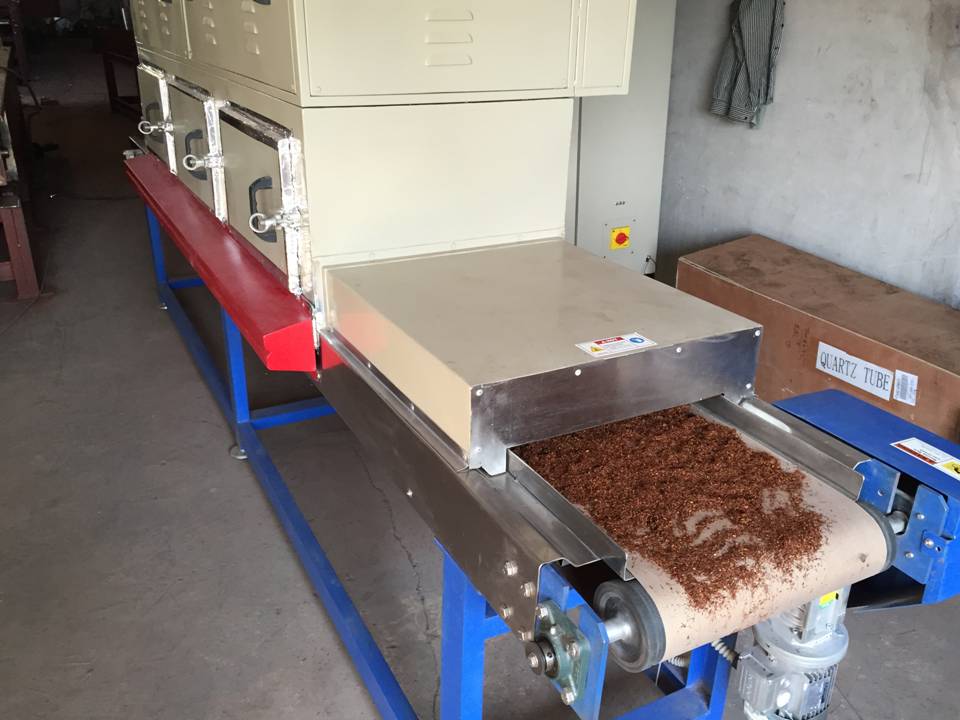
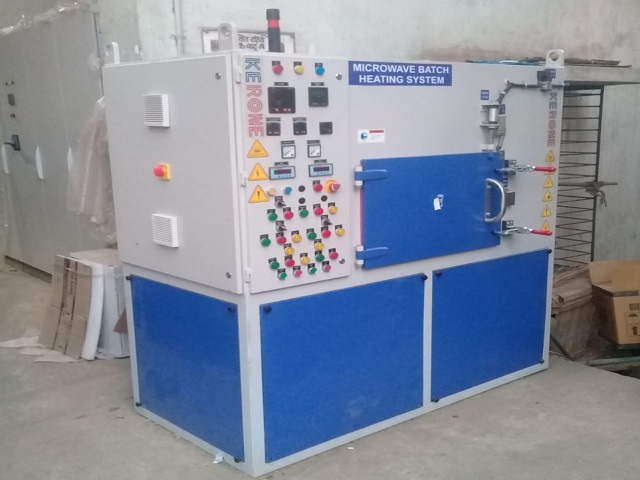
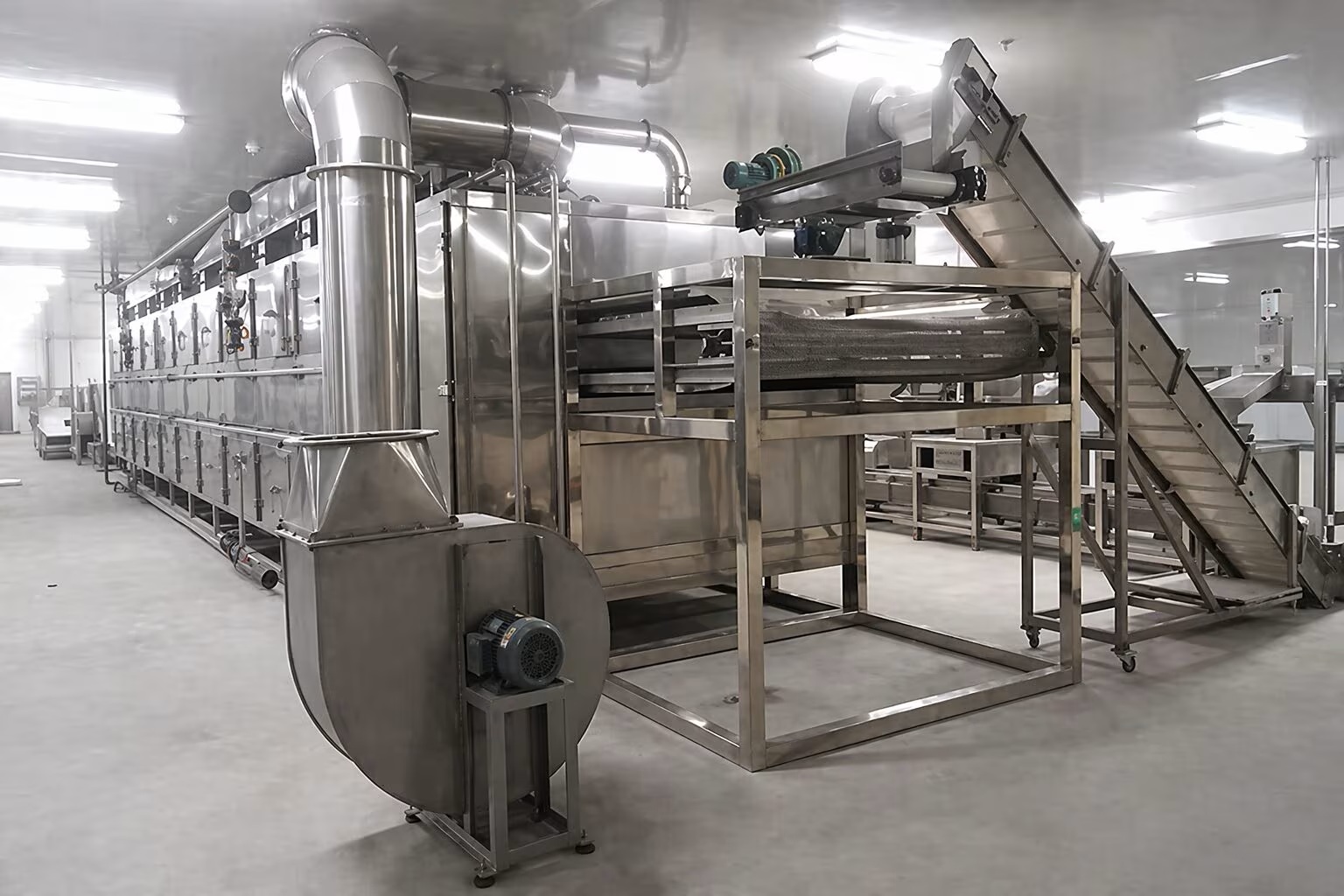
White tea drying at Kerone uses heat pump dryer systems as the primary technology for premium production, configured with multiple drying trays or continuous belt conveyors within a closed-loop dehumidified drying chamber. For traditional Chinese-style white tea production (Silver Needle, White Peony) which historically relied on solar withering and natural air drying, Offers solar-assisted drying systems that harness ambient solar radiation and low-temperature supplementary heating to replicate and enhance traditional natural-drying outcomes with improved moisture consistency and production scheduling independence from weather. For industrial-scale premium white tea production, Continuous heat pump belt dryers provide throughputs of 50–500 kg/hr of finished white tea with temperature uniformity of ±2°C across the full belt width and automatic humidity management that adjusts drying airflow based on real-time moisture measurement.
Key Features
Heat pump dryer operation at 35–48°C for maximum preservation of white tea's trichome structure, silver-white colour, and delicate aromatic compounds
Ultra-low air velocity design (0.3–0.8 m/s over the tea bed) to prevent physical disturbance of fine bud trichome hairs
Continuous belt or tray-rack configuration with adjustable loading depth from 20–50mm for whole bud or leaf-and-bud material
Solar-assisted drying option integrating solar air heaters with heat pump backup for traditional-style white tea production
Closed-loop drying chamber with dehumidified recirculated air and precise humidity set-point control for moisture uniformity
Food-grade stainless steel frame and belt with HEPA-filtered air supply to prevent dust or particulate contamination of delicate white tea surface
Non-contact product handling throughout no mechanical agitation, vibration, or high-velocity pneumatic transfer that would damage bud integrity
Automated moisture monitoring and drying recipe management for consistent final moisture of 5–8% across all production batches
Powered by AI, ML & IoT
Future-Ready Engineering Driven by AI & IoT
Our advanced AI, ML, and IoT technologies, this solution delivers smarter automation, real-time insights, and predictive intelligence to enhance efficiency and drive future-ready growth.
Real-Time Monitoring & Control
Continuous tracking of process parameters with instant adjustments.
Predictive Maintenance
Intelligent fault detection to prevent failures before they occur.
Adaptive Process Optimization
Dynamic tuning of operations for maximum output and efficiency.
Cloud Dashboards & Analytics
Unified access to real-time insights and performance trends.
Energy & Resource Savings
Smarter utilization of energy to cut costs and reduce waste.
Secure IoT Connectivity
Encrypted data flow with seamless integration across plant systems.
Applications of White Tea Drying Systems
Kerone’s White Tea Drying Systems are extensively used in premium tea estates, specialty white tea manufacturers, and health-positioned tea brands globally. Typical applications include:
Silver Needle (Bai Hao Yin Zhen) white tea drying preserving the dense silver trichome coating and delicate sweet-floral aroma of Fujian bud-only white tea
White Peony (Bai Mu Dan) production drying with mixed bud-and-leaf material requiring even moisture removal across different leaf thicknesses
Darjeeling and Nilgiri estate white tea production for premium export and health food segment markets
Organic certified white tea drying for natural health, functional beverage, and premium hospitality market brands
White tea ingredient drying for cosmetic, nutraceutical, and functional food extract applications where maximum polyphenol preservation is required
Aged white tea base production with controlled low-temperature drying that accelerates natural post-fermentation while preserving base quality for long-term ageing
White tea sits at the pinnacle of the tea quality and price spectrum, and the drying system that handles it must match its extraordinary delicacy and commercial value with an equivalent level of engineering precision and care.
Seamless Export Connections Global & Local
Our Global Footprint in Industrial Excellence
Delivering world-class industrial and process solutions across countries with precision, innovation, and reliability.
Peru
Chile
Argentina
Mexico
Colombia
Brazil
USA
Canada
United Kingdom
France
Germany
Spain
Italy
Netherlands
Sweden
Switzerland
Poland
Portugal
Ireland
Czechia
Romania
Hungary
Austria
Greece
Kazakhstan
Uzbekistan
Turkmenistan
Algeria
Egypt
Nigeria
Kenya
South Africa
Saudi Arabia
UAE
Israel
Russia
India
China
Japan
South Korea
Thailand
Vietnam
Malaysia
Singapore
Indonesia
Philippines
Australia
New Zealand
Pan-India Presence. Local Expertise.
Raipur
Bilaspur
Panaji
Vasco da Gama
Gandhinagar
Ahmedabad
Surat
Chandigarh
Gurgaon
Shimla
Manali
Bengaluru
Mysore
Kochi
Pune
Mumbai
Thane
Navi Mumbai
Hyderabad
Chennai
Coimbatore
Kolkata
Lucknow
Jaipur
Udaipur
Jodhpur
Dehradun
Haridwar
Bhubaneswar
Product Gallery
Frequently Asked Questions (FAQ)
White tea's delicate trichome structure, volatile aromatic compounds, and unprotected polyphenols begin to degrade above approximately 50°C. Heat pump dryers operate at 35–48°C, well below this threshold, preserving the silver-white appearance, honeyed aroma, and high polyphenol content that define premium white tea value.
Finished white tea is typically dried to 5–8% moisture. Moisture above 8% risks mould growth during storage; moisture below 4% can cause trichome shedding from buds and brittle leaf breakage. Kerone's closed-loop humidity control targets the optimal range consistently.
Excessive air velocity physically dislodges the fine silver trichome hairs from the bud surface, reducing the visual quality (silver appearance) and marketable grade of the finished white tea. Kerone designs white tea dryers with air velocities limited to 0.3–0.8 m/s over the tea bed.
Solar-assisted drying uses solar air collectors to heat ambient air for the drying airstream, reducing electrical or fuel energy consumption while maintaining the gentle temperature profile appropriate for white tea. It is most suitable in sun-rich locations and for producers wishing to maintain natural-process positioning in their marketing.
White tea dryers and green tea dryers share some design principles (low temperature, gentle handling), but white tea requires even lower air velocities and more careful handling to protect bud trichome integrity. Kerone can design flexible equipment that handles both products with adjustable parameter settings and appropriate cleaning protocols.
White tea drying in a heat pump dryer at 40–48°C typically requires 14–24 hours for whole bud Silver Needle grades due to the low temperature differential and dense bud structure. White Peony grades with mixed bud-and-leaf dry somewhat faster at 10–18 hours depending on bed depth and loading.
Kerone's heat pump dryer systems for white tea typically consume 0.8–1.5 kWh of electrical energy per kg of evaporated moisture (depending on operating temperature and ambient conditions), representing a significant energy cost advantage versus resistance-heated or conventionally fuelled low-temperature drying alternatives.
Yes significantly. Key bioactive compounds in white tea including EGCG, L-theanine, and other polyphenols are temperature-sensitive. Drying above 60°C product temperature causes accelerating degradation of these compounds. Kerone's heat pump drying systems are specifically designed to maximise retention of these health-active constituents.
Kerone's white tea dryers use tray-rack loading for small batches or continuous belt conveyors with manual or gravity loading and non-contact discharge, completely avoiding mechanical agitation, vibration conveyors, and pneumatic transfers that would physically stress the delicate bud and trichome structure.
Yellow tea drying uses a specific smothering (men huang) process followed by low-temperature drying that shares some characteristics with white tea drying. Kerone can adapt heat pump dryer configurations for yellow tea production with appropriate modifications to the drying chamber air circulation pattern.
Kerone's white tea dryers are compatible with Rainforest Alliance, UTZ, FSSC 22000, EU Organic, USDA Organic, and ISO 22000 certification requirements, with food-grade construction, traceable material documentation, and cleanable design as standard features.
High relative humidity in the drying chamber slows moisture removal and can cause uneven drying with surface moisture condensation. Very low humidity causes rapid surface drying with case-hardening, trapping internal moisture. Kerone's closed-loop humidity management maintains optimal drying conditions throughout the cycle.
Re-drying of aged white tea for moisture correction or aromatic refreshment requires particularly careful handling. Kerone offers ultra-low-temperature heat pump settings (35–40°C) for aged white tea re-processing, minimising any thermal impact on the aged polyphenol profile that constitutes the product's commercial value.
Kerone supplies white tea heat pump dryers from small artisan-scale 10 kg/batch tray units through to continuous belt systems handling 200+ kg/hr of fresh leaf equivalent, ensuring appropriate technology availability for producers at every production scale.
Traditional sun-drying produces white tea with natural UV exposure characteristics and specific aromatic profiles associated with solar oxidation, but is unpredictable, weather-dependent, and inconsistent. Kerone's heat pump dryers provide the consistency, scheduling reliability, and product quality control that commercial production demands, while matching or exceeding the aromatic preservation of sun-drying at its best.
Kerone’s custom-designed heating and processing solutions are built to meet the demands of your growing operations. Whether you’re upgrading equipment, expanding production, or need a tailor-made solution


 Peru
Peru Chile
Chile Argentina
 Mexico
 Colombia
 Brazil
 USA
USA Canada
 United Kingdom
 France
 Germany
 Spain
Spain Italy
Italy Netherlands
 Sweden
 Switzerland
 Poland
 Portugal
 Ireland
 Czechia
 Romania
 Hungary
 Austria
 Greece
 Kazakhstan
 Uzbekistan
 Turkmenistan
 Algeria
 Egypt
Egypt Nigeria
 Kenya
Kenya South Africa
 Saudi Arabia
 UAE
UAE Israel
 Russia
 India
India China
China Japan
Japan South Korea
 Thailand
 Vietnam
 Malaysia
 Singapore
 Indonesia
 Philippines
 Australia
 New Zealand