Coconut biomass encompassing coconut shell, coconut husk, coir pith, shell charcoal, and mixed processing residues represents one of the most energy-dense and abundantly available renewable biomass resources in tropical coconut-producing regions. With a lower heating value of 3,500–4,500 kcal/kg for dry coconut shell and 3,200–4,000 kcal/kg for dry husk, these materials are competitive alternatives to coal and fossil fuels in industrial boiler, gasifier, and co-firing applications. However, as-received coconut biomass commonly contains 25–50% moisture, which severely reduces its effective calorific value, causes combustion instability, increases flue gas volumes, and leads to equipment corrosion from condensed acids in flue ducts. Drying coconut biomass to below 15% moisture is the single most impactful intervention to improve combustion efficiency, reduce carbon emissions per unit of energy generated, and meet the moisture specifications required by biomass energy buyers, power plant operators, and certification schemes such as REC (Renewable Energy Certificates) and biomass fuel quality standards. Kerone Engineering Solutions designs and manufactures industrial coconut biomass fuel drying systems optimized for the physical characteristics, scale, and energy integration requirements of coconut fuel producers.
Why Choose Kerone Coconut Biomass Fuel Drying Systems
Biomass fuel drying occupies a unique economic position within the value chain: the energy invested in drying must be recovered through improved combustion efficiency and higher fuel selling price. Biomass dryer engineering approach explicitly addresses this economic equation, designing systems that use the cheapest available heat source, typically waste heat from biomass boilers, flue gases from the combustion of low-value fine residues, or heat recovered from adjacent industrial processes to dry the higher-value biomass fuel. Our self-sustaining drying concept, where a portion of the lowest-grade coconut biomass (fine dust, wet coir pith, or effluent sludge) is combusted to generate drying heat for the main fuel stream, creates a closed energy loop that eliminates external fuel cost for the drying operation while simultaneously disposing of low-value residues. This approach, which Kerone has successfully implemented in multiple coconut processing and biomass fuel production facilities, typically reduces the overall energy cost of dried fuel production by 30–45% compared to conventional gas-fired drying. Our rotary drum dryer designs for biomass service incorporate heavy-duty construction, abrasion-resistant internals, and combustion systems tolerant of the variable heat content and moisture content of coconut biomass fuels.
Types and Features of Coconut Biomass Fuel Drying Systems
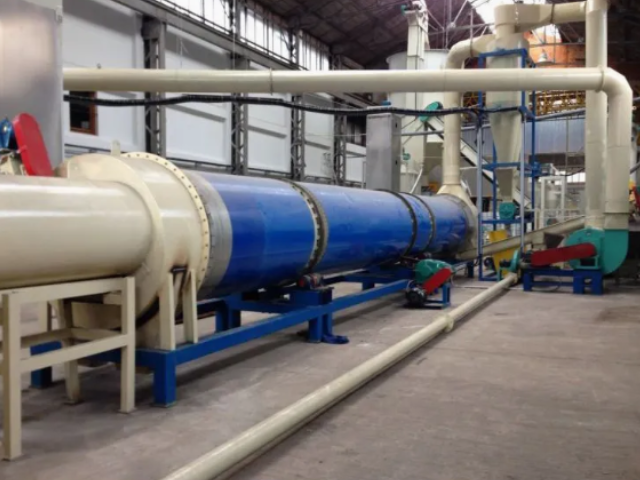
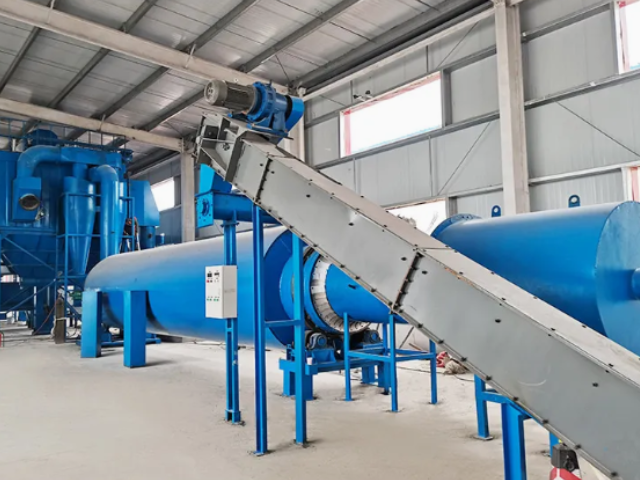
For bulk coconut biomass fuel drying at industrial scale, Kerone’s direct-fired rotary drum dryers are the primary technology, available in single-pass, double-pass, and triple-pass configurations with throughputs from 1,000 kg/hr to 20,000 kg/hr of wet biomass. The dryer combustion system accepts coconut shell, husk, coir dust, or mixed biomass as fuel, fired in a dedicated biomass combustion chamber that generates hot gases at 400–700°C before being tempered with recirculated exhaust gas to achieve a safe drum inlet temperature of 250–400°C. This co-current arrangement maximizes evaporation rate at the wet feed end while protecting the dried product from overheating at the discharge. For smaller producers and facilities where product quality (colour, appearance) is important for premium biomass fuel markets, belt dryers using recycled exhaust air and heat exchangers provide gentle, low-temperature drying that preserves the appearance and chemical integrity of coconut shell and husk materials. We also offers mobile biomass drying units mounted on trailers for seasonal or distributed biomass procurement operations where central fixed-plant drying is not practical.
Key Features
Self-sustaining biomass combustion chambers designed to fire coconut shell, husk, and mixed residue fuels, eliminating external fuel cost for the drying operation
Triple-pass rotary drum configurations achieving evaporative capacities of 2,000–15,000 kg/hr of water removal in a compact, low-civil-cost installation
Heavy-duty construction with 6–10 mm carbon steel drum shells, cast iron riding rings, and forged steel trunnion rolls for continuous operation in abrasive biomass service
Integrated exhaust gas recirculation systems tempering hot combustion gases to safe drum inlet temperatures and improving overall thermal efficiency
Automated moisture monitoring at the dryer discharge with closed-loop fuel feed control maintaining final moisture within ±1.5% of target
Cyclone and multi-cyclone exhaust gas treatment systems recovering entrained biomass fines for return to the combustion system or product stream
Mobile trailer-mounted configurations available for seasonal biomass procurement and distributed drying operations in coconut plantation environments
Complete system safety package including temperature high-high shutdowns, conveyor jam protection, fire detection, and explosion relief on all enclosed vessels
Powered by AI, ML & IoT
Future-Ready Engineering Driven by AI & IoT
Our advanced AI, ML, and IoT technologies, this solution delivers smarter automation, real-time insights, and predictive intelligence to enhance efficiency and drive future-ready growth.
Real-Time Monitoring & Control
Continuous tracking of process parameters with instant adjustments.
Predictive Maintenance
Intelligent fault detection to prevent failures before they occur.
Adaptive Process Optimization
Dynamic tuning of operations for maximum output and efficiency.
Cloud Dashboards & Analytics
Unified access to real-time insights and performance trends.
Energy & Resource Savings
Smarter utilization of energy to cut costs and reduce waste.
Secure IoT Connectivity
Encrypted data flow with seamless integration across plant systems.
Applications of Coconut Biomass Fuel Drying Systems
Kerone’s Coconut Biomass Fuel Drying Systems are extensively used in biomass fuel trading companies, renewable energy plants, coconut processing industries, and co-generation facilities. Typical applications include:
Drying of coconut shell and husk for sale to industrial boiler operators, requiring below 15% moisture to meet boiler fuel specifications and maximize delivered calorific value
Biomass fuel pre-drying for coconut shell gasifier installations, where moisture below 12% is essential for stable producer gas quality and tar-free gasifier operation
Coconut shell and husk drying for biomass co-firing in coal power plants, where fuel moisture below 20% is required to maintain co-firing ratio and boiler efficiency
Production of certified biomass fuel pellets and briquettes from dried coconut shell and husk, meeting EN ISO 17225 and equivalent quality standards
Drying of harvested coconut fronds and trunk chips for biomass energy applications in plantation cogeneration and rural electrification projects
Conditioning of coconut charcoal (shell char) to consistent moisture for hookah charcoal, barbecue charcoal, and industrial carbon substitute product manufacturing
Kerone Engineering Solutions provides coconut biomass fuel drying systems that deliver measurable improvements in fuel energy content, combustion stability, and commercial value for biomass fuel producers across the coconut value chain. Our engineering approach, which emphasizes energy self-sufficiency through self-fueling combustion systems, closed-loop heat recovery, and waste heat integration, ensures that the drying operation contributes to rather than detracts from the economics of biomass fuel production. From small-scale cooperatives preparing coconut shell fuel for local industrial buyers to large biomass fuel trading companies exporting certified product to power generation utilities, our biomass drying systems are scaled, configured, and engineered to serve every segment of the growing coconut biomass energy market with industrial reliability and proven performance.
Seamless Export Connections Global & Local
Our Global Footprint in Industrial Excellence
Delivering world-class industrial and process solutions across countries with precision, innovation, and reliability.
Peru
Chile
Argentina
Mexico
Colombia
Brazil
USA
Canada
United Kingdom
France
Germany
Spain
Italy
Netherlands
Sweden
Switzerland
Poland
Portugal
Ireland
Czechia
Romania
Hungary
Austria
Greece
Kazakhstan
Uzbekistan
Turkmenistan
Algeria
Egypt
Nigeria
Kenya
South Africa
Saudi Arabia
UAE
Israel
Russia
India
China
Japan
South Korea
Thailand
Vietnam
Malaysia
Singapore
Indonesia
Philippines
Australia
New Zealand
Pan-India Presence. Local Expertise.
Raipur
Bilaspur
Panaji
Vasco da Gama
Gandhinagar
Ahmedabad
Surat
Chandigarh
Gurgaon
Shimla
Manali
Bengaluru
Mysore
Kochi
Pune
Mumbai
Thane
Navi Mumbai
Hyderabad
Chennai
Coimbatore
Kolkata
Lucknow
Jaipur
Udaipur
Jodhpur
Dehradun
Haridwar
Bhubaneswar
Product Gallery
Frequently Asked Questions (FAQ)
Industrial boiler operators typically specify coconut shell fuel at below 15% moisture for reliable combustion and acceptable boiler efficiency. Premium specifications for stoker boilers and gasifiers may require below 12%. Undried shell at 30–50% moisture delivers significantly less usable heat per tonne and causes combustion instability.
Drying coconut shell from 40% moisture to 12% moisture increases its net calorific value from approximately 2,400 kcal/kg to approximately 3,800 kcal/kg, an improvement of nearly 60% in energy content per tonne of fuel delivered. This improvement more than justifies the energy and capital cost of drying at current biomass fuel prices.
Yes. Kerone's combustion chambers are designed for wet biomass fuels with initial moisture content up to 50%. A portion of the wet husk feed is diverted to the combustion chamber, where its moisture is evaporated during ignition using a small amount of dried material or auxiliary fuel, after which the combustion becomes self-sustaining.
A triple-pass rotary drum dryer system handling 10,000 kg/hr of wet coconut shell (40% moisture) with integrated combustion chamber, cyclone, and fan would typically occupy a footprint of approximately 20m × 8m, plus a 10m stack. Detailed site layout drawings are provided during the project engineering phase.
Final moisture control is achieved through a closed-loop system combining outlet moisture measurement (microwave or NIR sensor), PLC-based combustion control adjusting fuel feed rate to the combustion chamber, and drum speed control adjusting material residence time. This system maintains final moisture within ±1.5% of the target specification automatically.
Requirements vary by country and jurisdiction, but typically include an air quality permit covering particulate matter and CO emissions from the combustion chamber, a construction permit for the stack, and in some jurisdictions, a noise and odour assessment. Kerone provides emission data and technical support for permit applications.
Yes, provided the chip size is within the gasifier's design range (typically 20–50mm for downdraft units). Kerone's drying systems can be integrated with chip screening equipment to ensure consistent chip size entering the gasifier, maximizing producer gas quality and gasifier availability.
Thermal efficiency, defined as the energy used for moisture evaporation relative to total fuel energy input, is typically 55–72% for single-pass direct-fired rotary dryers and 65–80% for triple-pass configurations. Heat recovery from exhaust gases can push overall system efficiency above 80%.
Dried biomass at low moisture content is at higher fire risk due to dust generation and self-heating. Kerone's systems include cooler belt conveyors to reduce product temperature below 50°C before storage, and storage bin designs with temperature monitoring and CO detection for early fire warning.
Mobile drying units are economically viable for plantation operations collecting coconut shell and husk from dispersed collection points, avoiding transport costs of wet biomass (which is ~40% water by weight). Mobile units can be relocated seasonally following harvest patterns, amortizing the equipment cost across higher total biomass volumes.
Trunnion rolls and riding rings require inspection every 3 months and re-greasing monthly. Drive gear lubrication is performed weekly. Drum lift flights are inspected annually for wear. Combustion chamber refractory lining is inspected annually and typically replaced every 3–5 years depending on fuel quality and operating hours.
Yes. Kerone provides integrated systems including front-end biomass reception and weighing, pre-screening, chipper or shredder integration, dryer with combustion system, product screening, and automated bagging or bulk loading. This complete supply chain approach minimizes manual handling and optimizes throughput.
Kerone manufactures standalone biomass dryers from 500 kg/hr wet feed capacity. Below this threshold, the capital cost per tonne of dried product becomes uneconomic for most applications, and batch-type solar or tray drying may be more appropriate for very small-scale operations.
Yes. Kerone can provide system documentation and process control features to support EN ISO 17225 (solid biofuels) and ASTM E1137 compliance for moisture measurement, including calibrated online moisture sensors with data logging for quality audit purposes.
Retrofit is possible in many cases, depending on the existing dryer's construction, size, and combustion system. Kerone performs a technical assessment of the existing equipment and designs modifications to internals, feed systems, combustion, and controls to adapt it for coconut biomass service, often at significantly lower cost than new equipment procurement.
Kerone’s custom-designed heating and processing solutions are built to meet the demands of your growing operations. Whether you’re upgrading equipment, expanding production, or need a tailor-made solution


 Peru
Peru Chile
Chile Argentina
 Mexico
 Colombia
 Brazil
 USA
USA Canada
 United Kingdom
 France
 Germany
 Spain
Spain Italy
Italy Netherlands
 Sweden
 Switzerland
 Poland
 Portugal
 Ireland
 Czechia
 Romania
 Hungary
 Austria
 Greece
 Kazakhstan
 Uzbekistan
 Turkmenistan
 Algeria
 Egypt
Egypt Nigeria
 Kenya
Kenya South Africa
 Saudi Arabia
 UAE
UAE Israel
 Russia
 India
India China
China Japan
Japan South Korea
 Thailand
 Vietnam
 Malaysia
 Singapore
 Indonesia
 Philippines
 Australia
 New Zealand