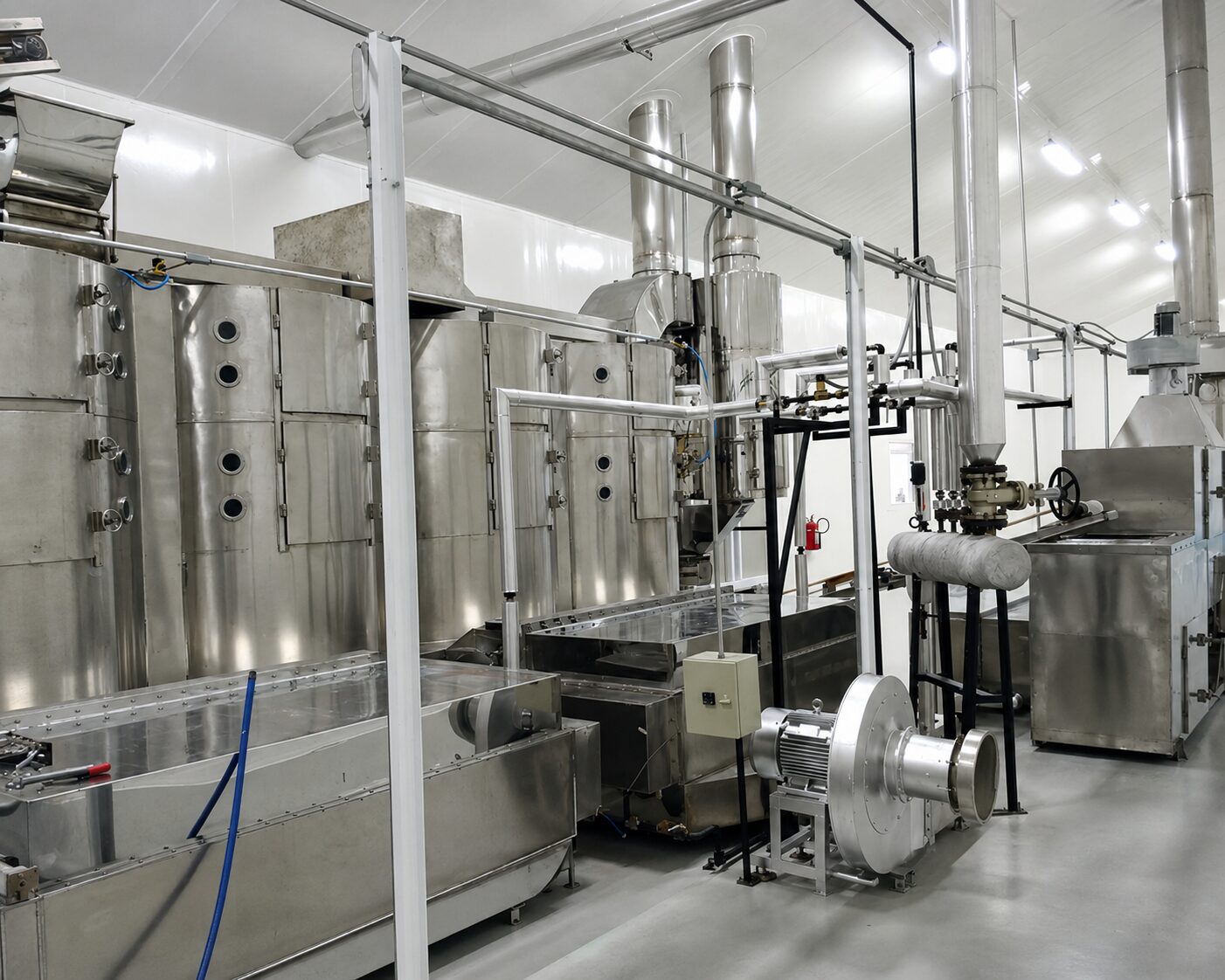
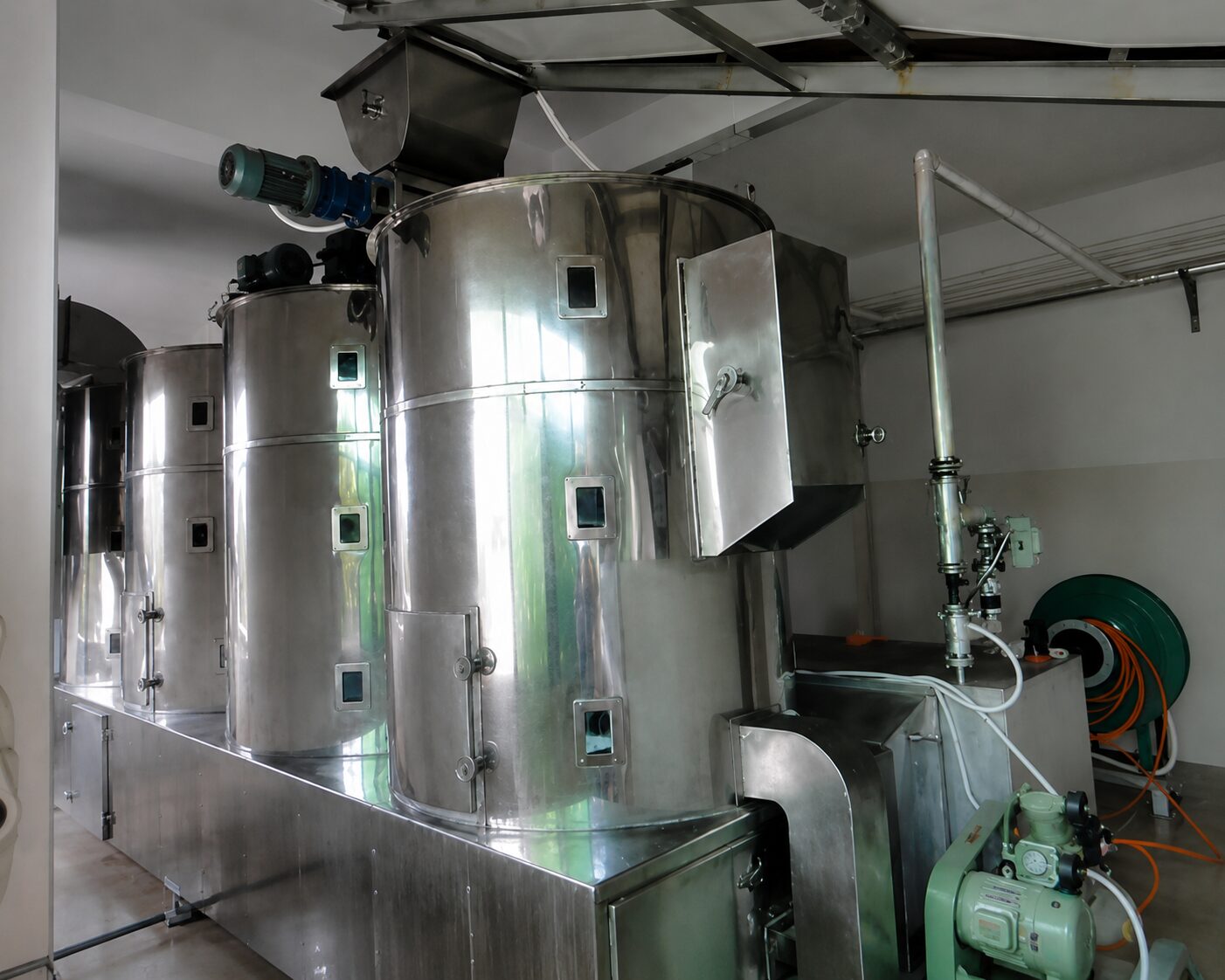
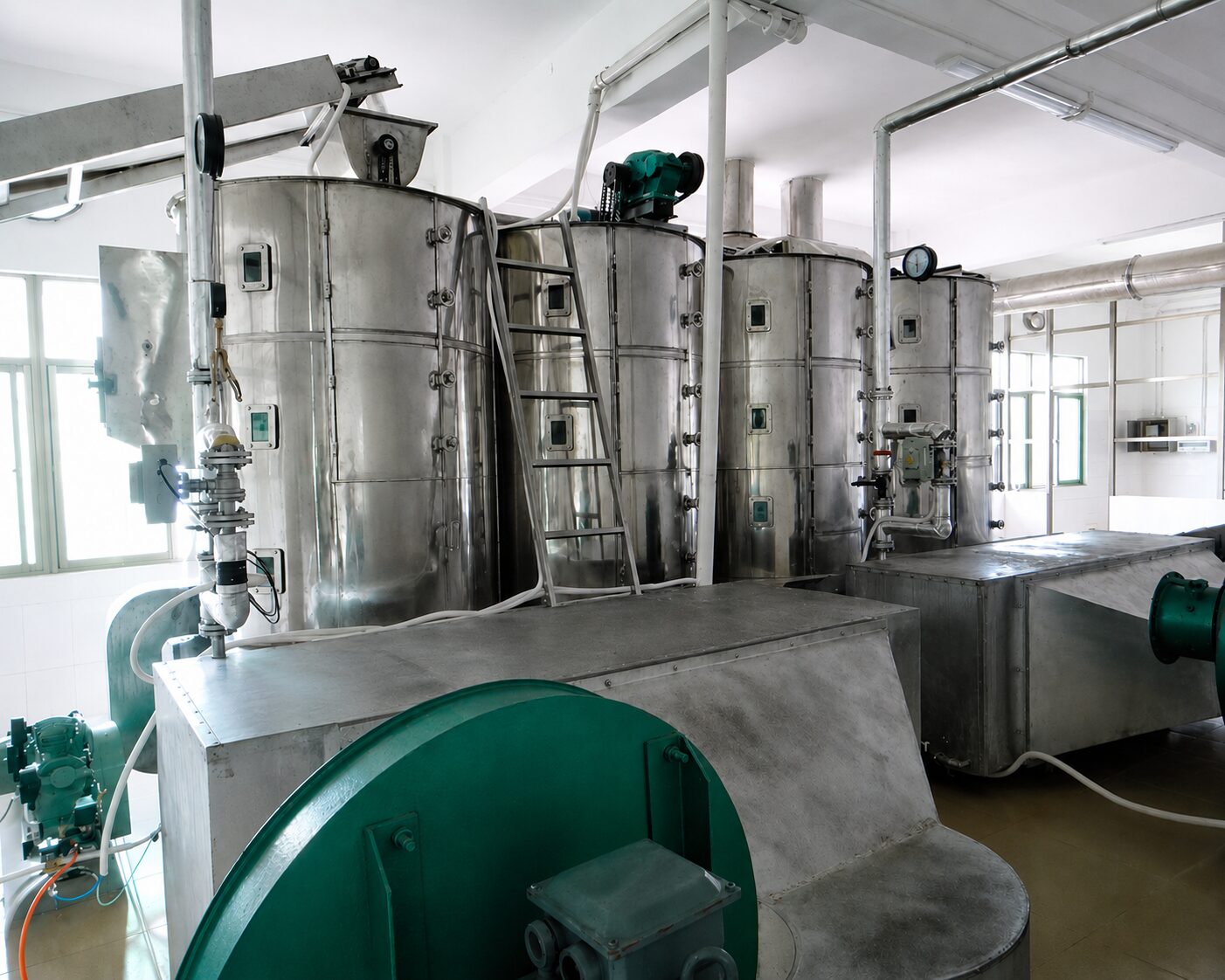
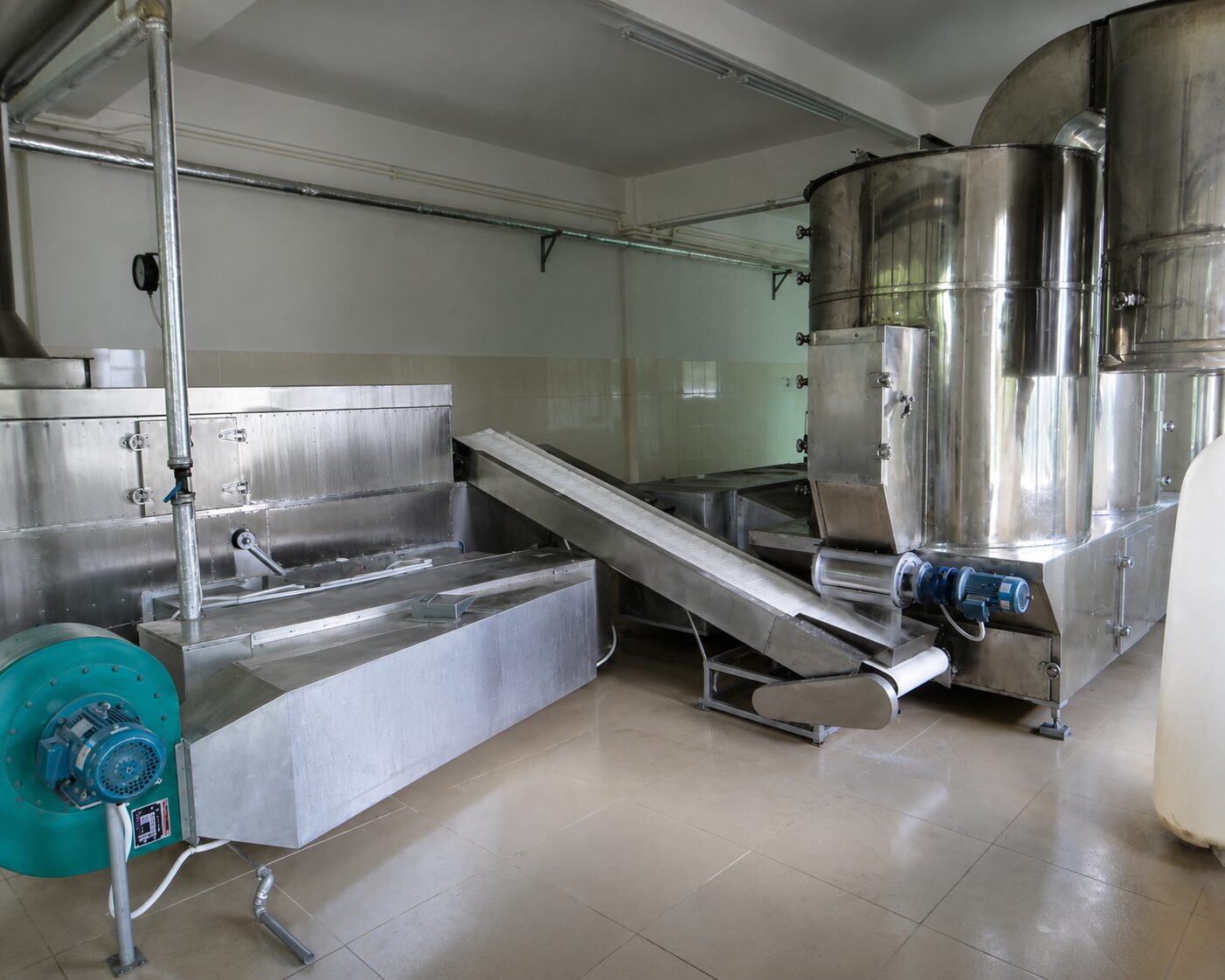
Desiccated coconut is among the oldest and most commercially established coconut-derived food ingredients, with a global trade history spanning over a century and continuing strong demand across bakery, confectionery, cereal, chocolate, and retail consumer sectors. Defined as the dried and shredded or granulated kernel of mature coconut, desiccated coconut is produced to rigorously standardized international quality parameters (CODEX STAN 177-1991) specifying maximum 3% moisture content, minimum 60% fat content, and strict microbiological and physicochemical limits. Kerone Engineering Solutions manufactures industrial desiccated coconut drying systems that meet the technical requirements for certified CODEX-compliant production, offering both the process engineering precision and food safety design standards that global food ingredient buyers and export certification bodies demand from their desiccated coconut production partners.
Why Choose Kerone Desiccated Coconut Drying Systems
Kerone Engineering Solutions has supplied industrial drying systems to desiccated coconut processors across key producing regions, building a comprehensive understanding of the raw material variability, seasonal processing challenges, and buyer specification diversity that characterize this established but demanding industry. Kerone’s desiccated coconut dryers are engineered with detailed knowledge of the fat crystal behaviour of coconut during drying — a critical factor because the transition between liquid and solid fat phases in the coconut kernel at different temperatures directly influences moisture migration rates and can cause surface oil exudation that affects color and packaging performance if drying temperatures are not precisely managed. Kerone’s application knowledge in this area is a genuine and significant differentiator from general-purpose industrial dryer suppliers.
Types and Features of Desiccated Coconut Drying Systems
The standard industrial technology for desiccated coconut drying is the multi-pass belt conveyor dryer, and Kerone has developed highly optimized configurations for this application featuring wider-than-standard belts (1.5 m–2.5 m) to maximize throughput in a compact building footprint, through-circulation vertical airflow to ensure even drying across the full shred depth, and four to six independently controlled temperature and humidity zones that follow a carefully defined drying profile. The drying profile begins at moderate temperatures (65°C–75°C) in the inlet zones where bulk moisture is rapidly removed, transitions through progressive temperature reduction in the middle zones where bound moisture is extracted, and concludes with a low-humidity finishing zone (55°C–60°C) where final moisture equilibration brings the product to the CODEX specification. Kerone’s belt dryers for desiccated coconut are routinely validated against CODEX 177-1991 and export buyer specifications as part of the commissioning program.
Key Features
Multi-pass through-circulation belt conveyor dryer validated against CODEX STAN 177-1991 moisture specification
4–6 independent temperature and humidity zones following scientifically validated desiccated coconut drying profile
Wide-belt configurations (1.5–2.5 m) maximizing throughput per unit floor area for industrial production
Hot air supply using steam, hot water, or gas heat exchangers with HEPA-grade supply air filtration
Stainless steel SS 304 full construction with hygienic design for FSSC 22000 and BRCGS compliance
Inline NIR moisture measurement at discharge with automatic zone temperature feedback control
Dedicated allergen-segregated production line design for top-8 allergen-free production certification
Final moisture capability of 2–3% with uniformity <0.5% standard deviation across the product stream
Powered by AI, ML & IoT
Future-Ready Engineering Driven by AI & IoT
Our advanced AI, ML, and IoT technologies, this solution delivers smarter automation, real-time insights, and predictive intelligence to enhance efficiency and drive future-ready growth.
Real-Time Monitoring & Control
Continuous tracking of process parameters with instant adjustments.
Predictive Maintenance
Intelligent fault detection to prevent failures before they occur.
Adaptive Process Optimization
Dynamic tuning of operations for maximum output and efficiency.
Cloud Dashboards & Analytics
Unified access to real-time insights and performance trends.
Energy & Resource Savings
Smarter utilization of energy to cut costs and reduce waste.
Secure IoT Connectivity
Encrypted data flow with seamless integration across plant systems.
Applications of Desiccated Coconut Drying Systems
Kerone’s Desiccated Coconut Drying Systems are extensively used in integrated coconut processing plants and dedicated desiccated coconut factories.
Typical applications include:
High-volume production of standard-grade desiccated coconut (fine, medium, coarse) for food ingredient export
Drying of premium-grade desiccated coconut for confectionery, chocolate, and premium bakery applications
Processing of sulfite-free organic desiccated coconut for certified organic and clean-label food markets
Production of toasted desiccated coconut for cereal, muesli, and granola ingredient supply
Drying of lightly sweetened or flavored desiccated coconut for specialty consumer food applications
Continuous industrial desiccated coconut production for large-volume bakery, biscuit, and confectionery manufacturers
Kerone Engineering Solutions delivers desiccated coconut drying systems that combine industrial-grade reliability, CODEX-compliant process design, and food-grade manufacturing standards to serve the demanding requirements of desiccated coconut processors and exporters. With deep application expertise, proven equipment quality, and comprehensive commercial and technical support services, Kerone is the partner of choice for businesses seeking to build or expand dedicated desiccated coconut production capacity with confidence.
Seamless Export Connections Global & Local
Our Global Footprint in Industrial Excellence
Delivering world-class industrial and process solutions across countries with precision, innovation, and reliability.
Peru
Chile
Argentina
Mexico
Colombia
Brazil
USA
Canada
United Kingdom
France
Germany
Spain
Italy
Netherlands
Sweden
Switzerland
Poland
Portugal
Ireland
Czechia
Romania
Hungary
Austria
Greece
Kazakhstan
Uzbekistan
Turkmenistan
Algeria
Egypt
Nigeria
Kenya
South Africa
Saudi Arabia
UAE
Israel
Russia
India
China
Japan
South Korea
Thailand
Vietnam
Malaysia
Singapore
Indonesia
Philippines
Australia
New Zealand
Pan-India Presence. Local Expertise.
Raipur
Bilaspur
Panaji
Vasco da Gama
Gandhinagar
Ahmedabad
Surat
Chandigarh
Gurgaon
Shimla
Manali
Bengaluru
Mysore
Kochi
Pune
Mumbai
Thane
Navi Mumbai
Hyderabad
Chennai
Coimbatore
Kolkata
Lucknow
Jaipur
Udaipur
Jodhpur
Dehradun
Haridwar
Bhubaneswar
Product Gallery
Frequently Asked Questions (FAQ)
CODEX STAN 177-1991 specifies maximum 3% moisture, minimum 60% fat, and microbiological limits for desiccated coconut. Kerone designs dryers with validated drying profiles and inline moisture monitoring that consistently achieve ≤3% moisture output.
High fat content (60–70%) in mature coconut creates an oil film on the drying surface that can impede moisture evaporation and cause surface oil exudation if temperatures exceed the coconut oil melting point during drying. Kerone's profile controls this risk.
Raw shredded coconut from freshly dehusked mature coconut kernels typically contains 45–55% moisture. Post-blanched or pre-dried material may enter at 20–35%. Kerone designs dryers for the full range of inlet moisture conditions.
Kerone's standard desiccated coconut belt dryers have 4–6 independently controlled temperature and humidity zones, providing the progressive moisture removal profile required to achieve CODEX moisture specification uniformly across the product stream.
Kerone's desiccated coconut belt dryers range from 500 kg/hr for medium-scale processors to 6,000 kg/hr for large integrated coconut mills, with modular expansion options for future capacity growth.
Colour uniformity is achieved through precise temperature control below the Maillard browning threshold (limiting peak temperatures to ≤80°C in hot zones), combined with uniform belt loading and airflow ensuring no hot spots across the belt width.
Key certifications for desiccated coconut export include FSSC 22000, BRCGS, ISO 22000, Halal, Kosher, organic (USDA/EU), and specific importing country food safety approvals. Kerone's dryer design supports all these certification frameworks.
Kerone can validate that its drying profile achieves a minimum 5-log reduction in Salmonella based on validated time-temperature conditions, providing the process lethality validation data required by FSSC 22000 and buyer food safety specifications.
Kerone uses 304 stainless steel woven mesh belts with mesh aperture between 1 mm and 3 mm depending on the minimum shred size being processed, balancing particle retention with airflow penetration.
Kerone recommends daily hot water belt washing using integrated CIP spray bars, and a full deep-clean every 3–5 days depending on production volume and product allergen status, following a validated SSOP cleaning program.
Kerone's exhaust air recuperative heat exchangers recover 25–40% of the energy in the dryer exhaust stream, translating to 1,500–3,000 kCal/hr per tonne of desiccated coconut produced, depending on ambient air temperature and inlet moisture.
Yes. Kerone offers both direct-fired hot air and steam/hot water heated air configurations for desiccated coconut dryers, with the choice based on site energy infrastructure, safety requirements, and customer preference.
Kerone's dryers include feedforward moisture control that uses inlet NIR measurement to pre-adjust zone temperatures and belt speed when inlet moisture deviates from the design basis, compensating for seasonal and geographic raw material variation.
Kerone's belt dryers are designed for 15–20 year operational life with regular maintenance. Belt replacement is the primary wear item, with Kerone supplying replacement belts and wear parts on rapid delivery from domestic and import sources.
Yes. Kerone integrates loadcell-based batch weighing at dryer discharge, automatic moisture sampling conveyors, and data logging systems that generate batch-level moisture certificates supporting export document requirements.
Kerone’s custom-designed heating and processing solutions are built to meet the demands of your growing operations. Whether you’re upgrading equipment, expanding production, or need a tailor-made solution


 Peru
Peru Chile
Chile Argentina
 Mexico
 Colombia
 Brazil
 USA
USA Canada
 United Kingdom
 France
 Germany
 Spain
Spain Italy
Italy Netherlands
 Sweden
 Switzerland
 Poland
 Portugal
 Ireland
 Czechia
 Romania
 Hungary
 Austria
 Greece
 Kazakhstan
 Uzbekistan
 Turkmenistan
 Algeria
 Egypt
Egypt Nigeria
 Kenya
Kenya South Africa
 Saudi Arabia
 UAE
UAE Israel
 Russia
 India
India China
China Japan
Japan South Korea
 Thailand
 Vietnam
 Malaysia
 Singapore
 Indonesia
 Philippines
 Australia
 New Zealand