Larvae drying systems encompass the thermal dehydration equipment and process engineering required to convert live or pre-treated insect larvae, predominantly Black Soldier Fly Larvae (BSFL), mealworms (Tenebrio molitor), house crickets (Acheta domesticus), and lesser mealworms (Alphitobius diaperinus) from their high-moisture biological state at harvest into a stable, dry material that can be stored, transported, and further processed without quality deterioration or microbial spoilage. While the drying technology principles are related to those applied in food and biomass drying, larvae drying has several distinct engineering requirements that differentiate it from these adjacent applications: larvae are living or recently blanched organisms with complex internal moisture distribution; their fat content is both high and commercially valuable, requiring temperature management to prevent oxidative damage; and regulatory compliance requirements for thermal pathogen reduction are mandatory, not optional, in virtually all commercial markets for insect-derived products. Kerone Engineering Solutions provides larvae drying systems that address all three of these distinctive requirements within a robust, food-grade, industrially reliable equipment platform.
Why Choose Kerone Larvae Drying Systems
Kerone’s position in the larvae drying market is grounded in its experience across multiple insect species and production scales, from 200 kg/h farm-scale installations to 3,000+ kg/h industrial facilities. This breadth of experience has enabled Kerone’s engineering team to develop detailed process knowledge of the differences in drying behaviour between species, BSFL’s high fat content and chitin cuticle thickness, mealworm larvae’s different internal moisture distribution, cricket’s fragile exoskeleton requiring gentle handling and to configure its larvae drying systems accordingly rather than applying a single generic configuration across all species. Kerone also brings to larvae drying its broader expertise in food-grade equipment construction, hygienic design, and regulatory compliance documentation, which are increasingly important as insect protein markets mature and regulatory oversight intensifies.
Types and Features of Larvae Drying Systems
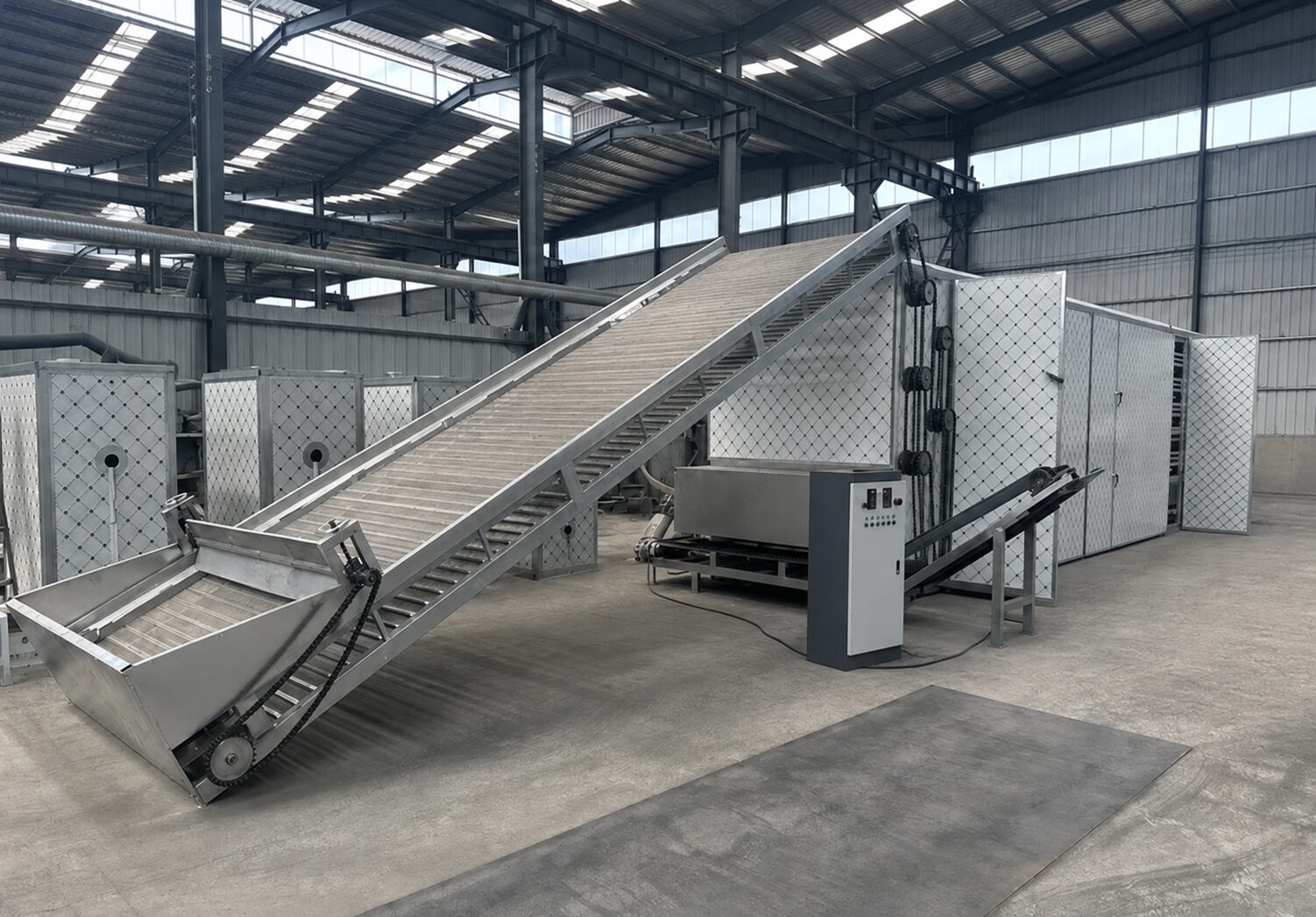
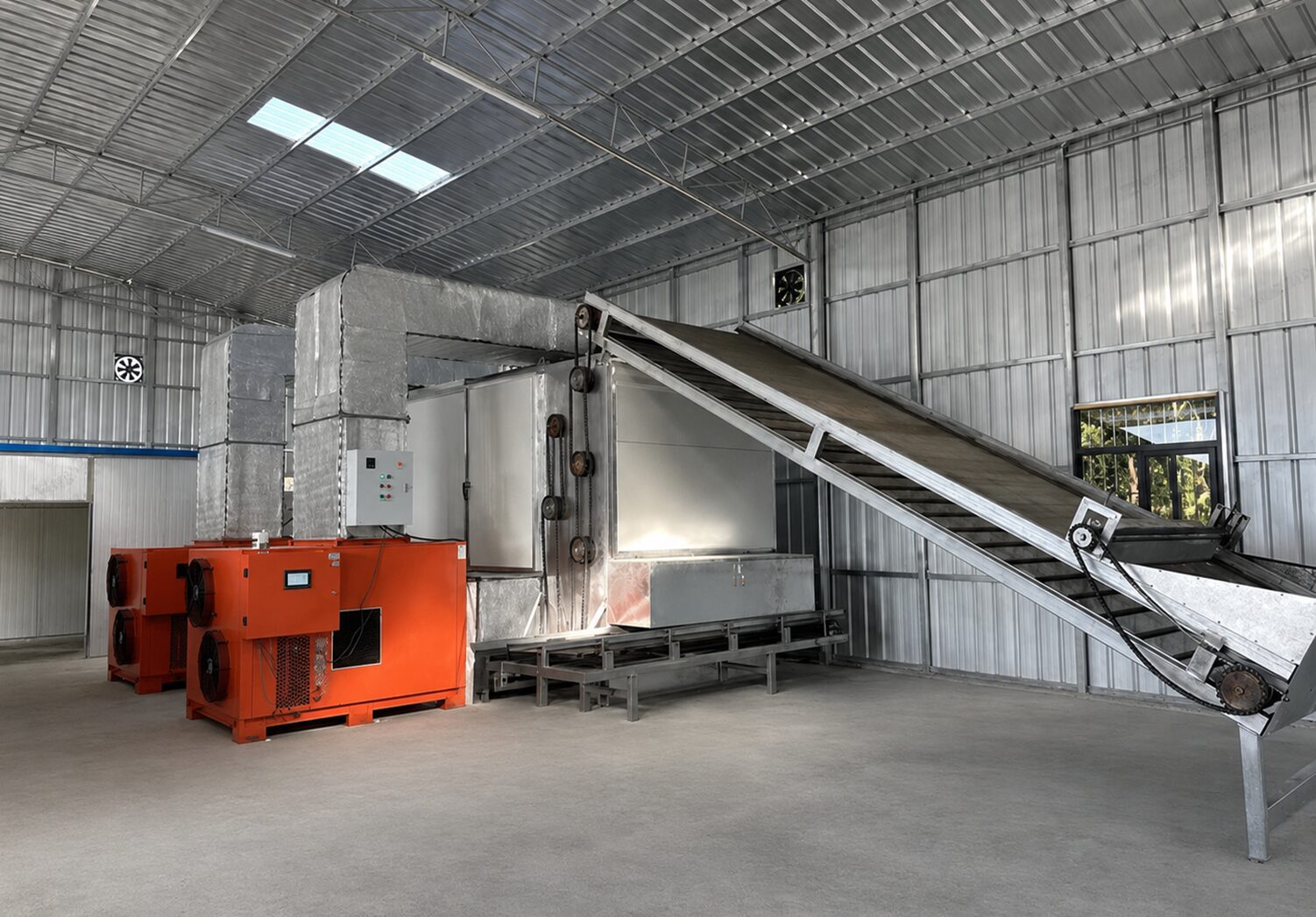
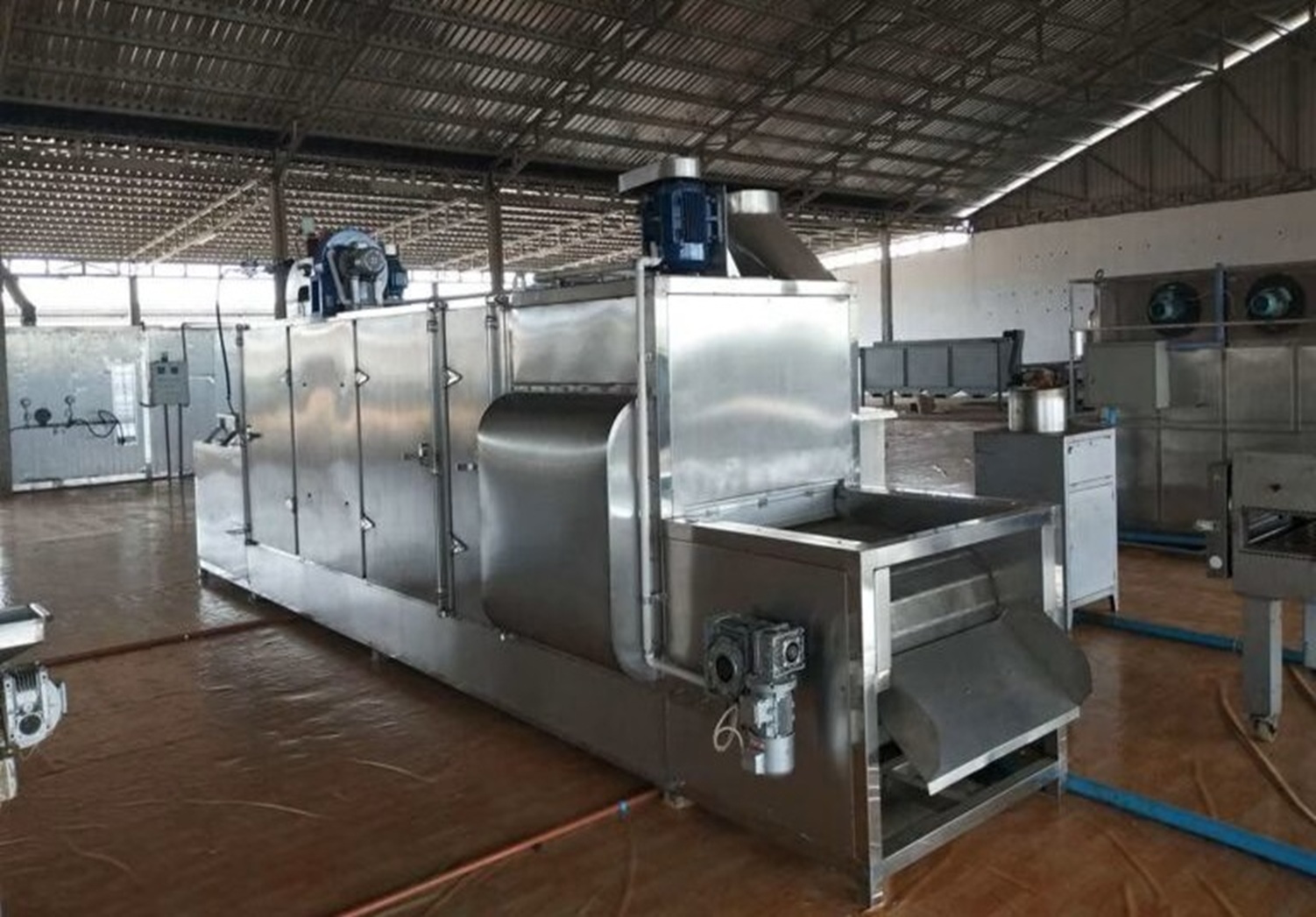
Kerone’s larvae drying system range is centred on continuous belt dryers in single-band, double-band, and triple-band configurations, matched to the specific throughput requirements and product handling characteristics of each insect species. Single-band systems are suitable for fragile cricket and mealworm larvae where the mechanical handling of multi-band transfer would cause excessive product damage. Double and triple-band configurations are preferred for BSFL, where the cascading transfer between belts provides beneficial tumbling that exposes fresh moisture-bearing surfaces without physical damage to the robust larval cuticle. All Kerone larvae drying systems incorporate the blanching or steam pre-treatment stage upstream of the drying belt, providing pathogen reduction validation within the same process train rather than requiring a separate equipment stage.
Key Features
Species-specific configuration with single-band (fragile species: cricket, mealworm) and multi-band (robust species: BSFL) belt options, preventing physical damage while maximising moisture removal efficiency
Integrated blanching or steam pre-treatment stage upstream of the drying belt, achieving regulatory thermal pre-treatment within the same equipment train and eliminating additional handling steps
Low-temperature drying capability at 55–80°C limiting lipid oxidation and protein denaturation in the drying process, preserving the nutritional quality and commercial value of the dried larval product
Validated thermal treatment documentation with batch-linked time-temperature records satisfying EU Regulation 142/2011 processed animal protein requirements and equivalent international standards
Enclosed system design with odour exhaust deodorisation, managing the volatile fatty acid and sulphur compound emissions inherent in larvae thermal processing
Variable belt speed and adjustable loading depth enabling throughput adaptation to accommodate the biological size variation in larvae batches from different rearing compartment ages
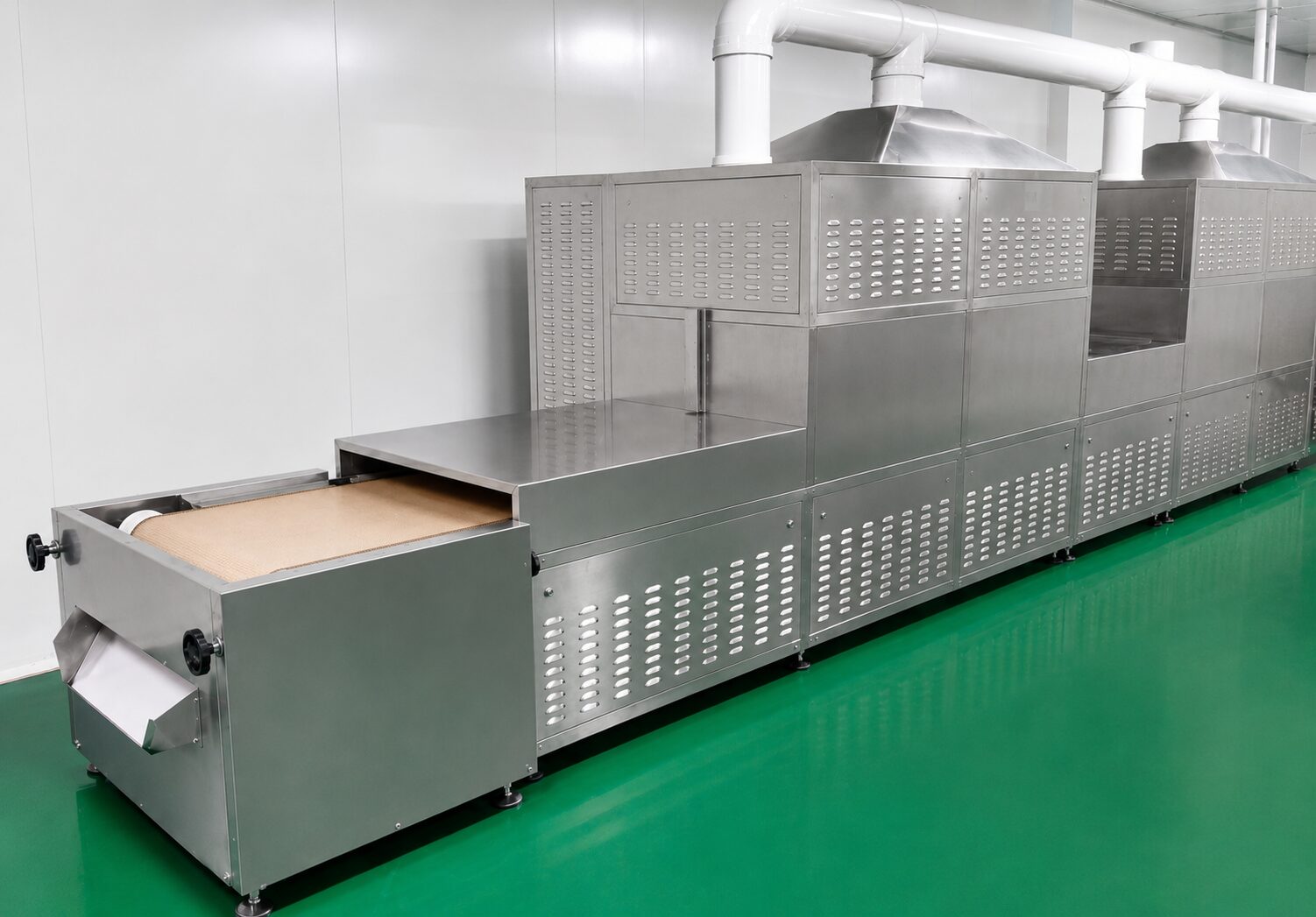
Food-grade stainless steel construction throughout with hygienic weld quality, eliminating crevices where larvae residues and fat deposits could accumulate and harbour microbial growth
Post-drying cooling section integrated into the equipment train, reducing product temperature to below 40°C before discharge to packaging or downstream processing to prevent moisture re-absorption
Powered by AI, ML & IoT
Future-Ready Engineering Driven by AI & IoT
Our advanced AI, ML, and IoT technologies, this solution delivers smarter automation, real-time insights, and predictive intelligence to enhance efficiency and drive future-ready growth.
Real-Time Monitoring & Control
Continuous tracking of process parameters with instant adjustments.
Predictive Maintenance
Intelligent fault detection to prevent failures before they occur.
Adaptive Process Optimization
Dynamic tuning of operations for maximum output and efficiency.
Cloud Dashboards & Analytics
Unified access to real-time insights and performance trends.
Energy & Resource Savings
Smarter utilization of energy to cut costs and reduce waste.
Secure IoT Connectivity
Encrypted data flow with seamless integration across plant systems.
Applications of Larvae Drying Systems
Kerone’s Larvae Drying Systems are extensively used across commercial insect farming, sustainable protein production, and specialty animal nutrition sectors. Typical applications include:
BSFL farm post-harvest processing for production of dried whole larvae for aquafeed, poultry feed, pet food, and reptile/amphibian specialist nutrition markets
Mealworm larvae drying for production of dried Tenebrio molitor meal and oil, authorised under EU Regulation 2021/1372 as feed for non-ruminant farmed animals and approved for specific human food applications
House cricket drying for production of whole dried crickets and cricket powder for premium pet food, human snack, and protein supplement products requiring hypoallergenic insect protein sources
Speciality insect larvae drying for exotic pet food markets (reptile, bird, fish) where live or dried larvae are sold as premium nutritional products through veterinary and specialist pet retail channels
Research and pilot facilities developing larvae drying processes for new insect species entering commercial production, requiring flexible, adjustable drying systems for process characterisation work
Vertical farming and urban insect production facilities co-located with food processing operations, requiring compact, enclosed larvae drying systems with minimal odour footprint for urban operating environments
Kerone Engineering Solutions’ larvae drying systems represent the result of focused application engineering for one of the most technically specific drying applications in the modern food and feed industry. By combining multi-species experience, food-grade equipment construction, regulatory compliance capability, and process engineering precision in moisture uniformity and thermal treatment validation, Kerone delivers larvae drying systems that produce consistently high-quality dried insect products at commercial scale, with the regulatory documentation and quality systems that professional insect protein markets increasingly require.
Seamless Export Connections Global & Local
Our Global Footprint in Industrial Excellence
Delivering world-class industrial and process solutions across countries with precision, innovation, and reliability.
Peru
Chile
Argentina
Mexico
Colombia
Brazil
USA
Canada
United Kingdom
France
Germany
Spain
Italy
Netherlands
Sweden
Switzerland
Poland
Portugal
Ireland
Czechia
Romania
Hungary
Austria
Greece
Kazakhstan
Uzbekistan
Turkmenistan
Algeria
Egypt
Nigeria
Kenya
South Africa
Saudi Arabia
UAE
Israel
Russia
India
China
Japan
South Korea
Thailand
Vietnam
Malaysia
Singapore
Indonesia
Philippines
Australia
New Zealand
Pan-India Presence. Local Expertise.
Raipur
Bilaspur
Panaji
Vasco da Gama
Gandhinagar
Ahmedabad
Surat
Chandigarh
Gurgaon
Shimla
Manali
Bengaluru
Mysore
Kochi
Pune
Mumbai
Thane
Navi Mumbai
Hyderabad
Chennai
Coimbatore
Kolkata
Lucknow
Jaipur
Udaipur
Jodhpur
Dehradun
Haridwar
Bhubaneswar
Product Gallery
Frequently Asked Questions (FAQ)
Freshly harvested BSFL typically contain 60–70% moisture. Mealworm larvae range from 55–65% moisture. Cricket larvae are in the range of 65–75%. All species require drying to below 10% moisture for commercial stability.
Kerone's belt dryers are designed with adjustable bed depth and belt speed, allowing operators to compensate for size variation by adjusting residence time. Larger larvae require longer drying time for moisture to migrate from core to surface.
Pre-blanching before drying is strongly recommended for both quality and regulatory reasons. Blanching inactivates autolytic enzymes, reduces initial microbial load, and contributes to total thermal treatment accumulation required for PAP compliance. Direct live larvae drying produces lower quality dried product.
Larvae drying emits trimethylamine, dimethyl sulphide, volatile fatty acids, and ammonia. Kerone's enclosed, negative-pressure system routes all exhaust through a biofilter or thermal oxidiser, reducing emissions to levels acceptable under standard industrial facility air discharge permits.
The chitin cuticle creates a moisture barrier that slows internal moisture migration to the surface. This means even moisture distribution across the product bed is critical, areas of thin bed depth dry faster than thick areas, requiring cross-flow air distribution to compensate.
For markets where whole dried insects are approved for human food use, Kerone's food-grade construction, validated thermal treatment, and hygiene design meet the standard required. Applicable novel food approvals in the target market must be confirmed independently.
Minor lipid loss occurs as surface fat drips from larvae during heating, typically 2–5% of total fat content. Kerone designs drip collection trays beneath the inlet drying zone to recover this fat fraction for separate processing.
Co-drying of different species is not recommended in facilities producing certified single-species products, as species identity may be required for regulatory labelling compliance. Kerone designs facilities for either single-species dedicated lines or multi-species sequential operation with appropriate changeover cleaning.
Kerone's largest standard larvae drying systems process up to 3,000 kg/h of fresh larvae. Larger capacities can be achieved through parallel operation of multiple lines. Modular expansion units can be added to existing installations.
Post-drying cooling in an enclosed tunnel reduces product temperature to below 35°C before discharge. Packaging in moisture-barrier bags or containers with nitrogen purge immediately after cooling prevents moisture re-absorption during packaging and storage.
Human food-grade larvae drying requires higher hygiene construction standards (food contact material compliance, electropolished surfaces), stricter microbiological process management, and more comprehensive quality documentation. Animal feed grade requires regulatory thermal treatment validation and ATEX consideration where applicable.
Kerone recommends daily dry cleaning of accessible surfaces and weekly CIP cleaning of the full drying system for continuous production operations. The frequency may increase for operations processing moist or high-fat larvae that deposit more residue on belt and dryer surfaces.
Yes. Kerone can design larvae drying systems that operate on diesel generator power or solar-diesel hybrid power systems for installations in regions without reliable grid electricity supply, specifying appropriate electrical components for the available power quality.
Drying BSFL from 65% to 8% moisture achieves a weight reduction of approximately 65–70% — meaning 3 kg of fresh larvae produces approximately 1 kg of dried product. Moisture reduction from higher or lower inlet values changes this ratio proportionally.
Yes. Kerone provides on-site commissioning including process optimisation runs with the client's larvae, operator training covering normal operation, cleaning procedures, maintenance tasks, troubleshooting, and safety procedures. Ongoing support is available through Kerone's after-sales service programme.
Kerone’s custom-designed heating and processing solutions are built to meet the demands of your growing operations. Whether you’re upgrading equipment, expanding production, or need a tailor-made solution


 Peru
Peru Chile
Chile Argentina
 Mexico
 Colombia
 Brazil
 USA
USA Canada
 United Kingdom
 France
 Germany
 Spain
Spain Italy
Italy Netherlands
 Sweden
 Switzerland
 Poland
 Portugal
 Ireland
 Czechia
 Romania
 Hungary
 Austria
 Greece
 Kazakhstan
 Uzbekistan
 Turkmenistan
 Algeria
 Egypt
Egypt Nigeria
 Kenya
Kenya South Africa
 Saudi Arabia
 UAE
UAE Israel
 Russia
 India
India China
China Japan
Japan South Korea
 Thailand
 Vietnam
 Malaysia
 Singapore
 Indonesia
 Philippines
 Australia
 New Zealand