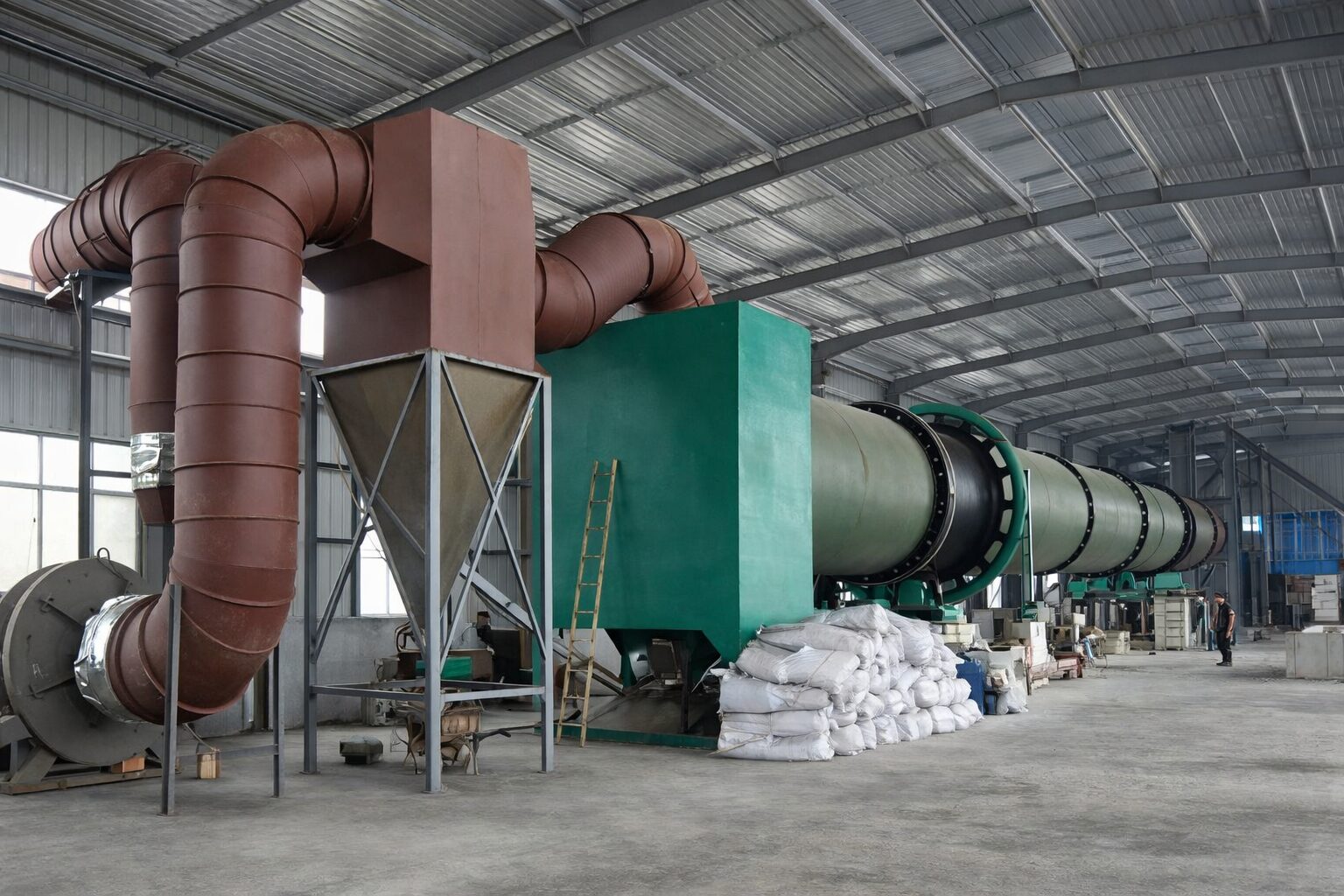
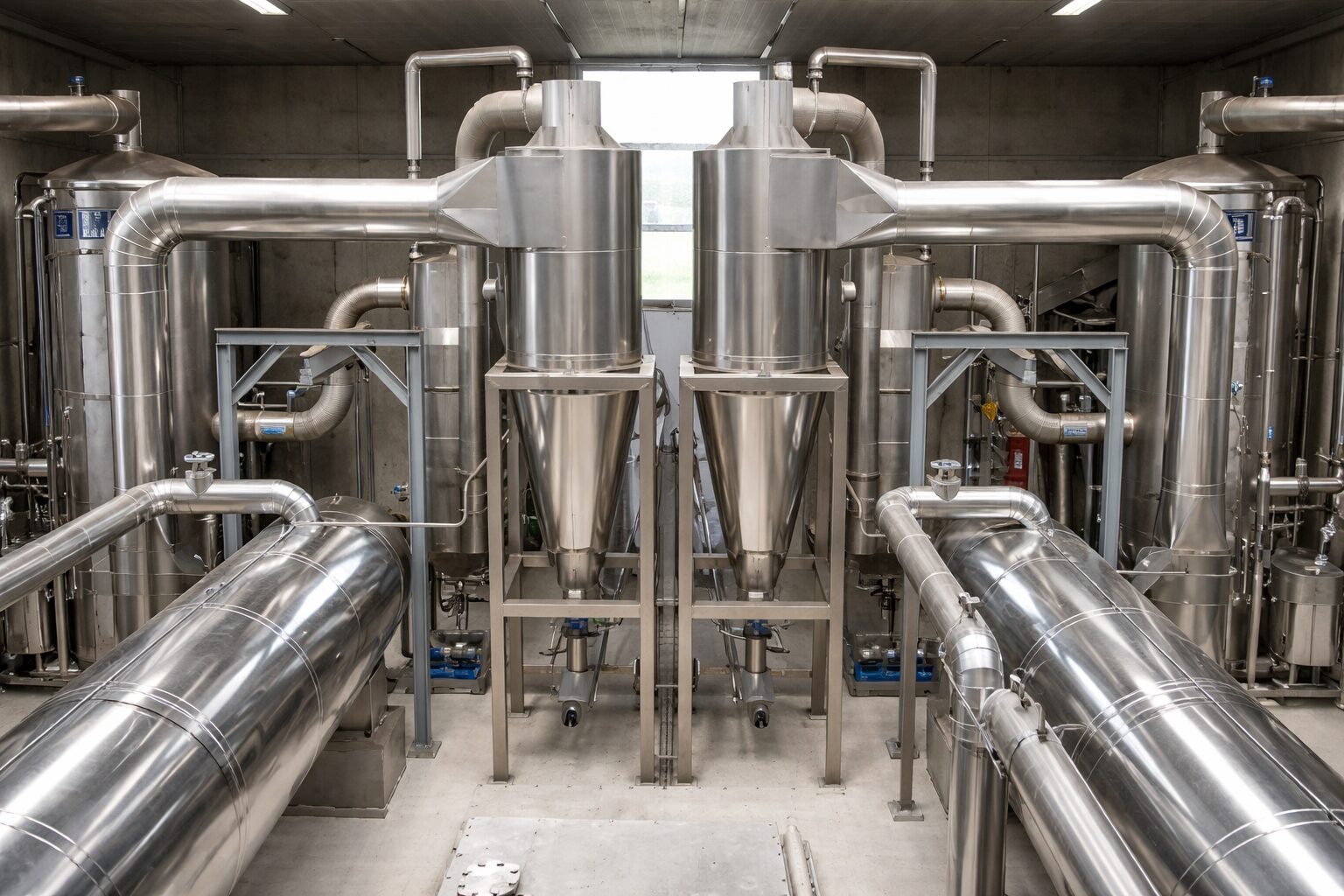
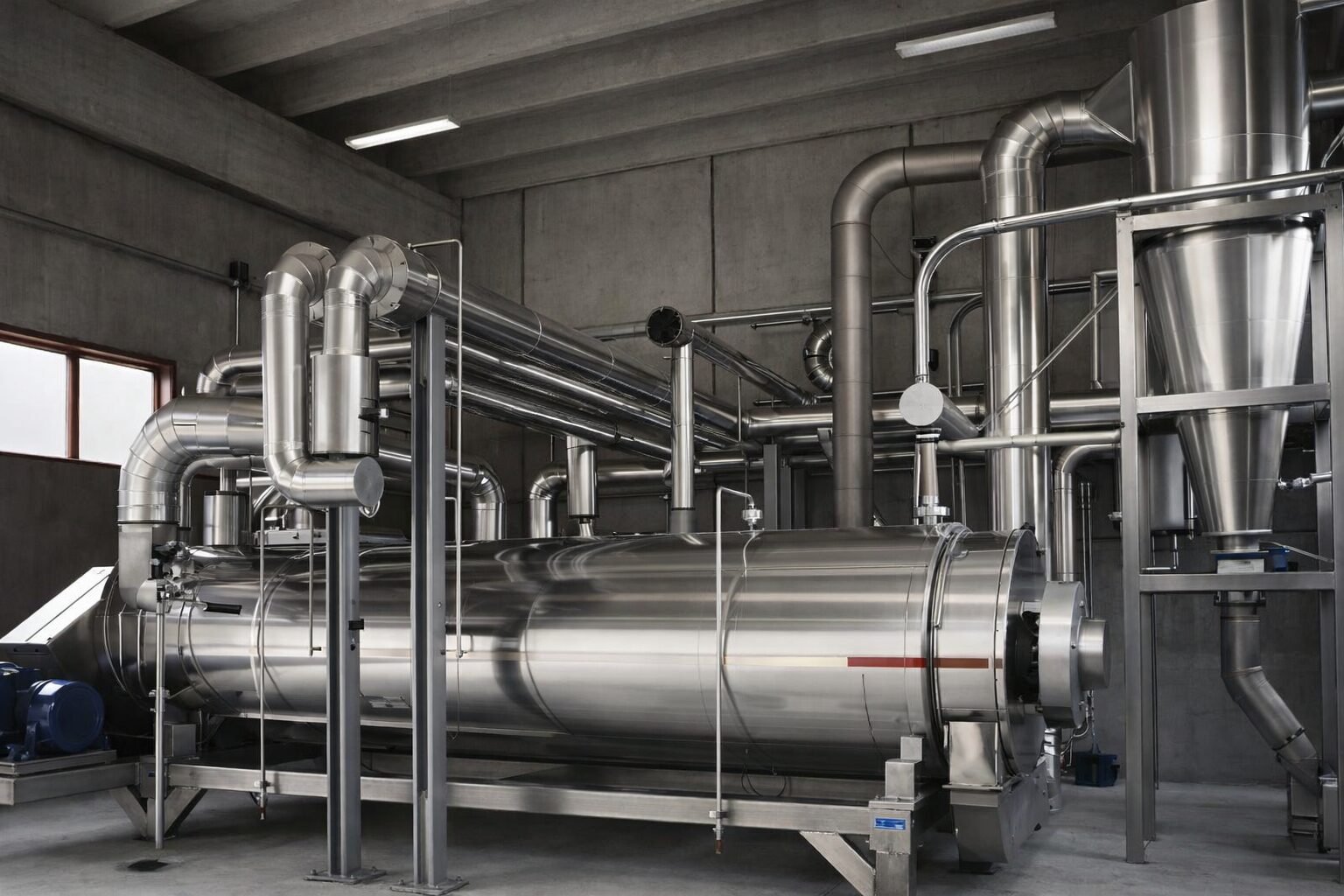
Municipal sludge, the semi-solid residue generated by wastewater treatment plants processing domestic sewage represents one of the largest volume waste streams produced by modern urban infrastructure. With population growth driving expansion of wastewater treatment capacity globally, the volume of dewatered sludge cake requiring final disposal continues to increase at a rate that is outpacing available landfill capacity and agricultural land application options. Municipal sludge drying provides the most effective pathway for volume reduction, pathogen destruction, and conversion of this residue into a stable, handleable product with potential reuse value. Kerone Engineering Solutions designs and supplies municipal sludge dryers that are engineered for the specific characteristics of wastewater treatment plant sludge including primary, secondary, and digested sludge cake compositions and are optimized for the energy, operational, and regulatory context of municipal utility operation. Our dryers integrate energy-efficient drying technologies, automation for minimal operator intervention, and emission control systems that ensure clean, compliant operation within or adjacent to populated urban environments.
Why Choose Kerone Municipal Sludge Dryers
Municipal utilities and private operators managing wastewater treatment plants require industrial drying systems that combine high reliability with low operational complexity, given the 24/7 continuous operation demands of a wastewater treatment facility and the limited specialized technical staff typically available for dryer operation and maintenance. Kerone Engineering Solutions designs municipal sludge dryers specifically for this operational context with simplified control interfaces, robust mechanical construction to minimize unplanned downtime, and remote monitoring capability that allows our support team to assist with troubleshooting and optimization without necessarily requiring on-site presence. our municipal sludge dryer designs incorporate proven mechanical configurations that have been refined over multiple installations, ensuring that the systems delivered to municipal clients are mature, reliable, and free from the process reliability issues that frequently affect first-of-type installations. Our energy-efficient drying approach drawing on heat pump dryer technology for applicable scale and climate conditions, and waste heat integration where available, allows municipalities to manage the high energy cost of sludge drying within constrained operational budgets.
Types and Features of Municipal Sludge Dryers
Municipal sludge dryers offered by Kerone include belt dryers, rotary drum dryers, disc dryers, and solar-assisted dryer systems, with each technology platform optimized for different scales, climatic conditions, and final product objectives. Belt dryers are favored for medium-to-large municipal installations due to their continuous operation capability, relatively low maintenance requirements, and ability to produce a granular or crumbled dried product that is suitable for bagging and use as a soil conditioner or fertilizer. Rotary drum dryers with direct or indirect heating are used where high throughput is required and heat integration with a nearby source (such as biogas from anaerobic digestion) makes direct-fired heating economically attractive. For smaller municipal installations or in regions with favourable solar irradiation, solar-assisted drying combined with heat pump dryer backup provides a cost-effective, low-energy approach that minimizes operational expenses while producing a stable, pathogen-reduced product. All Kerone municipal sludge dryers are designed with odour containment and biofilter interface provisions, recognizing the sensitivity of urban and peri-urban installation environments to odour impacts.
Key Features
Engineered for 24/7 continuous operation with automated start-stop, fault detection, and remote SCADA monitoring to minimize operator burden
Multi-technology platform spanning belt dryers, rotary drums, disc dryers, and solar-assisted drying matched to scale and site conditions
Heat pump dryer integration and biogas heat recovery provisions to minimize net thermal energy consumption per tonne of wet sludge processed
Pathogen destruction validation through controlled time-temperature profiles meeting applicable biosolids standards for agricultural reuse
Odour containment as a standard design feature, with integrated condenser systems and biofilter interface to control odour impacts in urban settings
Robust mechanical design with easily accessible wear parts and simplified maintenance procedures appropriate for municipal utility operating environments
Automated moisture control with online NIR or microwave moisture sensors ensuring consistent dried product quality without constant operator adjustment
Modular expansion capability allowing initial installation to be scaled up in line with future sludge volume growth at the treatment facility
Powered by AI, ML & IoT
Future-Ready Engineering Driven by AI & IoT
Our advanced AI, ML, and IoT technologies, this solution delivers smarter automation, real-time insights, and predictive intelligence to enhance efficiency and drive future-ready growth.
Real-Time Monitoring & Control
Continuous tracking of process parameters with instant adjustments.
Predictive Maintenance
Intelligent fault detection to prevent failures before they occur.
Adaptive Process Optimization
Dynamic tuning of operations for maximum output and efficiency.
Cloud Dashboards & Analytics
Unified access to real-time insights and performance trends.
Energy & Resource Savings
Smarter utilization of energy to cut costs and reduce waste.
Secure IoT Connectivity
Encrypted data flow with seamless integration across plant systems.
Applications of Municipal Sludge Dryers
Kerone’s Municipal Sludge Dryers are extensively used by municipal wastewater utilities, private operators, and public-private partnerships managing sewage treatment plant residuals. Typical applications include:
Urban and peri-urban sewage treatment plants generating dewatered sludge cake for volume reduction and safe landfill or agricultural disposal
Combined primary and secondary sludge drying at large metropolitan wastewater treatment facilities serving populations above 100,000
Digested sludge drying where anaerobic digestion biogas is available as a supplementary heat source, reducing net energy cost of drying
Production of Class A biosolids (US EPA 503 standards equivalent) or equivalent EC standards for unrestricted agricultural land application
Co-incineration feed preparation for cement kilns or dedicated sludge-to-energy plants requiring a dried, granulated sludge feed
Decentralized sludge treatment at smaller municipal facilities (secondary towns and industrial estates) where centralized sludge transport is uneconomic
Seamless Export Connections Global & Local
Our Global Footprint in Industrial Excellence
Delivering world-class industrial and process solutions across countries with precision, innovation, and reliability.
Peru
Chile
Argentina
Mexico
Colombia
Brazil
USA
Canada
United Kingdom
France
Germany
Spain
Italy
Netherlands
Sweden
Switzerland
Poland
Portugal
Ireland
Czechia
Romania
Hungary
Austria
Greece
Kazakhstan
Uzbekistan
Turkmenistan
Algeria
Egypt
Nigeria
Kenya
South Africa
Saudi Arabia
UAE
Israel
Russia
India
China
Japan
South Korea
Thailand
Vietnam
Malaysia
Singapore
Indonesia
Philippines
Australia
New Zealand
Pan-India Presence. Local Expertise.
Raipur
Bilaspur
Panaji
Vasco da Gama
Gandhinagar
Ahmedabad
Surat
Chandigarh
Gurgaon
Shimla
Manali
Bengaluru
Mysore
Kochi
Pune
Mumbai
Thane
Navi Mumbai
Hyderabad
Chennai
Coimbatore
Kolkata
Lucknow
Jaipur
Udaipur
Jodhpur
Dehradun
Haridwar
Bhubaneswar
Product Gallery
Frequently Asked Questions (FAQ)
Primary sludge from initial settling has higher organic content and greasiness, making it stickier during drying. Secondary (biological) sludge from activated sludge processes is more fibrous and lighter in bulk density. Digested sludge has lower volatile content, reduced odor, and improved dewaterability compared to undigested feed. Each type has distinct rheological behavior that influences dryer configuration selection.
Kerone's municipal sludge dryers can achieve final moisture contents from 10% down to below 5% depending on the application. For agricultural biosolids, a moisture content of 10–20% is typically targeted. For co-incineration, 10–15% is standard. For monofire incineration, sub-10% may be required to achieve autothermal combustion.
Pathogen reduction in thermal sludge dryers is achieved through exposure of all sludge material to temperatures above 70°C for defined time durations, or above 55°C for extended periods, depending on the applicable biosolids standard. Kerone designs the dryer retention time and temperature profile to ensure all particles are exposed to pathogen-reducing conditions, with temperature profile documentation for regulatory submissions.
Where anaerobic digestion is part of the wastewater treatment process, biogas can be used as a primary or supplementary fuel source for the sludge dryer. Kerone designs dryer systems with biogas burners, biogas pre-treatment provisions (desulfurization, moisture removal), and heat integration arrangements that maximize the displacement of purchased fuel by available biogas.
A heat pump dryer recirculates drying air within a closed or semi-closed loop, extracting moisture through refrigerant-based condensation and returning dehumidified air to the drying chamber. This significantly reduces energy input compared to open-loop convective drying, with COP values that result in energy costs 30–50% lower than conventional thermal drying at comparable throughput levels.
Kerone designs municipal sludge dryers with fully enclosed drying chambers operating under slight underpressure to prevent odor leakage. Exhaust vapor is routed through condenser systems to recover moisture and reduce volume before passing through biofilter units or chemical scrubbers that remove hydrogen sulfide and other odorous compounds to acceptable emission levels.
Dried municipal sludge that meets applicable heavy metal concentration limits and pathogen reduction standards (such as EPA 503 Class A biosolids or equivalent national standards) can be marketed as an organic soil conditioner or fertilizer. The economic value of the dried product as a marketed commodity can offset a portion of the drying operational cost.
Energy consumption for direct thermal sludge dryers is typically 800–1000 kcal per kg of water evaporated. Heat pump-based municipal sludge dryers operating in closed loop configurations consume 250–400 kcal equivalent per kg of water evaporated, representing a substantial energy saving. Solar-assisted systems can further reduce energy consumption in favourable climatic conditions.
Mechanical installation and commissioning of a municipal sludge dryer typically requires 4–12 weeks on site after equipment delivery, depending on the scale and complexity of the installation. Kerone provides commissioning engineers who remain on site through initial performance testing and operator familiarization to ensure a smooth operational handover.
Kerone provides a recommended critical spare parts list with each installation, typically covering wear items such as conveyor belt sections, belt clips, bearing sets, paddle or disc tip wear inserts, seal kits, and key instrumentation components. Maintaining this inventory ensures that planned maintenance outages are short and unplanned downtime risks are minimized.
Yes. Kerone equips all modern municipal sludge dryer installations with PLC and SCADA control systems with remote access capability. Operational parameters, alarm status, and performance data can be accessed by the plant operator and by Kerone's service team remotely, enabling early detection of performance deviations and rapid remote troubleshooting support.
Kerone's dryers are designed with automatic standby modes for feed interruptions, including controlled temperature reduction and sludge purge cycles that prevent burned or overheated product from forming inside the dryer during feed-off periods. Automatic restart sequences allow the dryer to return to full production when feed resumes without operator intervention.
Yes. Kerone designs municipal sludge dryer installations with expansion in mind, including oversized structural provisions, utility connection stubs, and control system architectures that can accommodate additional drying modules or increased capacity equipment without requiring a complete system redesign.
Municipal sludge dryer project costs vary substantially with capacity, technology type, site complexity, and scope of supply. Indicative capital costs range from approximately ₹2–5 crore for smaller single-module installations (processing 2–5 TPD wet sludge) to ₹15 crore and above for large multi-module systems at major metropolitan treatment plants. Detailed cost estimates are provided following process design review.
Kerone provides engineering documentation, emission data, and process descriptions that support the customer's application for environmental clearances and equipment operating consents from applicable state and central pollution control authorities. While regulatory approvals are the responsibility of the plant operator, Kerone's documentation package is designed to facilitate the approval process.
Kerone’s custom-designed heating and processing solutions are built to meet the demands of your growing operations. Whether you’re upgrading equipment, expanding production, or need a tailor-made solution

 Peru
Peru Chile
Chile Argentina
 Mexico
 Colombia
 Brazil
 USA
USA Canada
 United Kingdom
 France
 Germany
 Spain
Spain Italy
Italy Netherlands
 Sweden
 Switzerland
 Poland
 Portugal
 Ireland
 Czechia
 Romania
 Hungary
 Austria
 Greece
 Kazakhstan
 Uzbekistan
 Turkmenistan
 Algeria
 Egypt
Egypt Nigeria
 Kenya
Kenya South Africa
 Saudi Arabia
 UAE
UAE Israel
 Russia
 India
India China
China Japan
Japan South Korea
 Thailand
 Vietnam
 Malaysia
 Singapore
 Indonesia
 Philippines
 Australia
 New Zealand