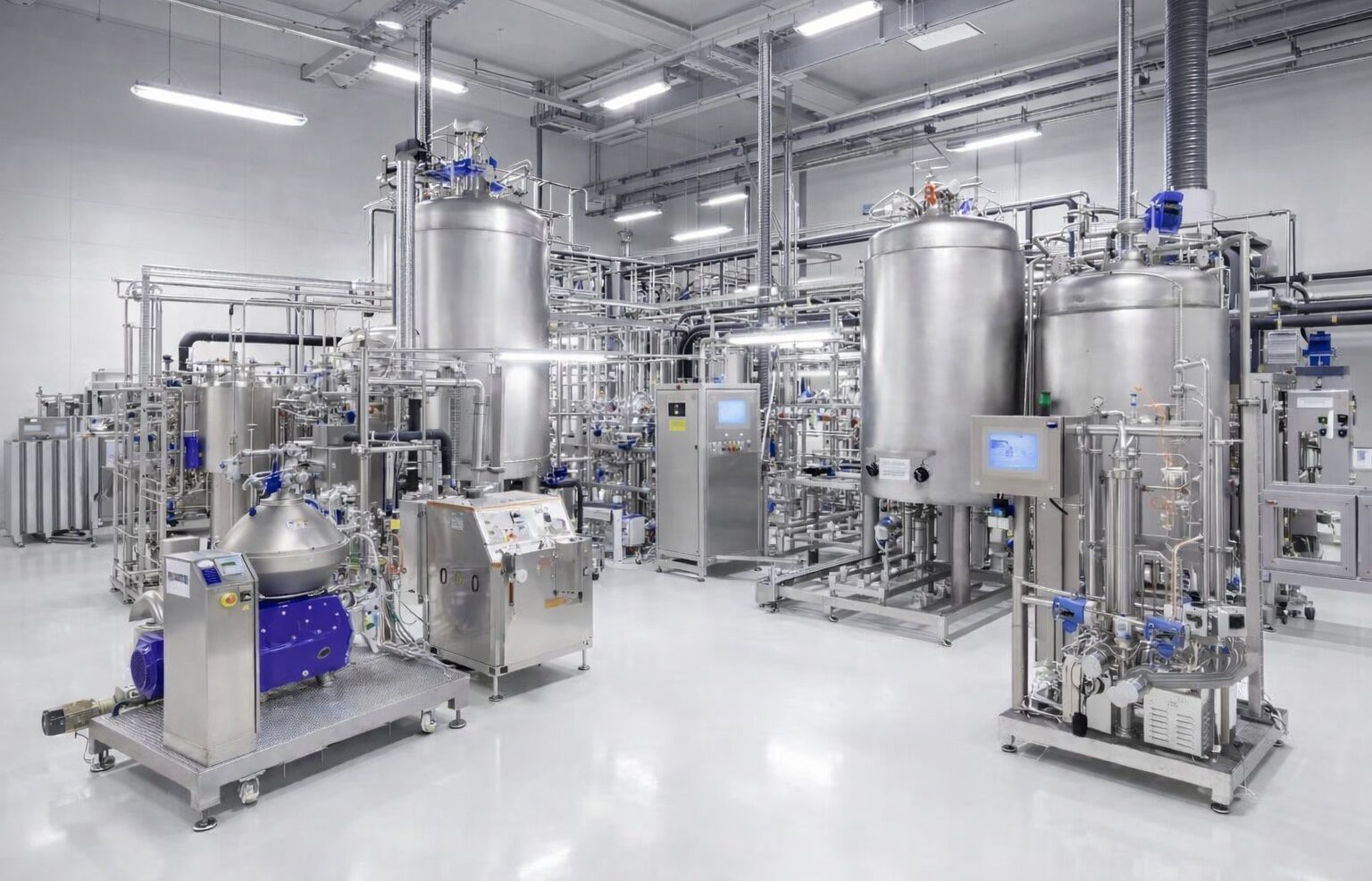
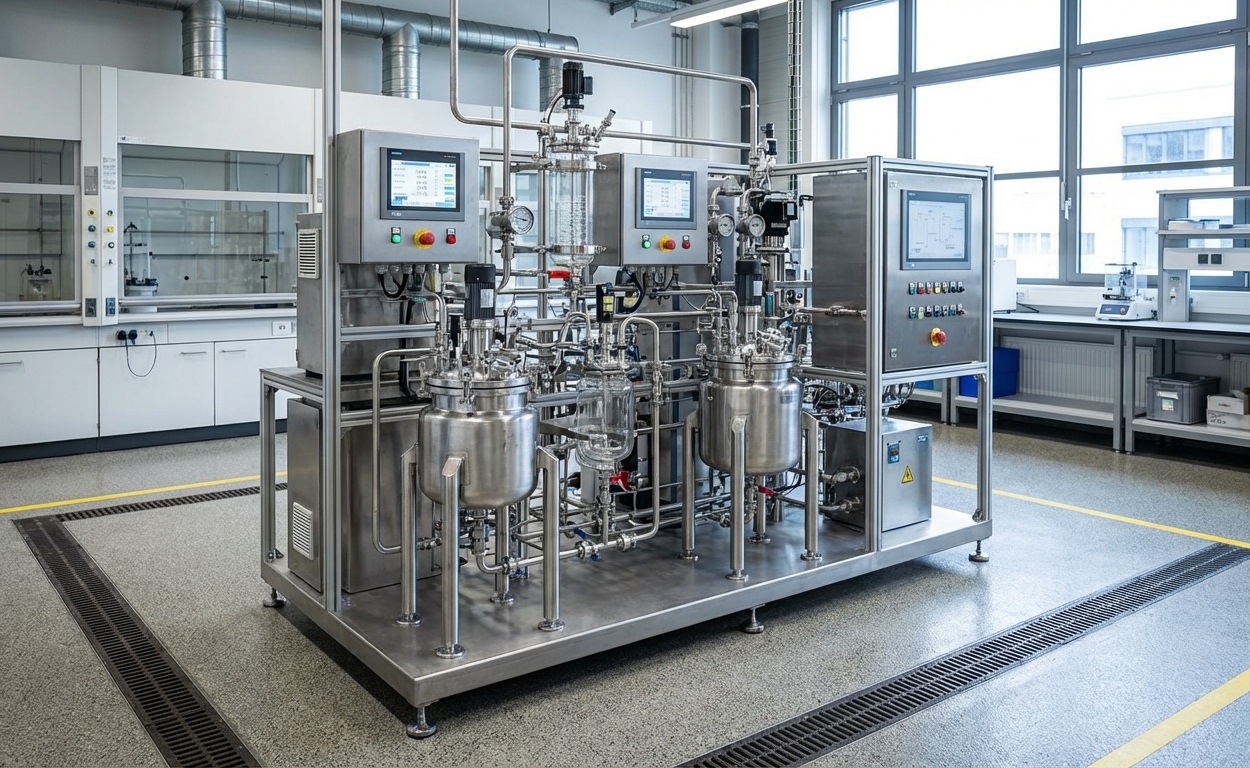
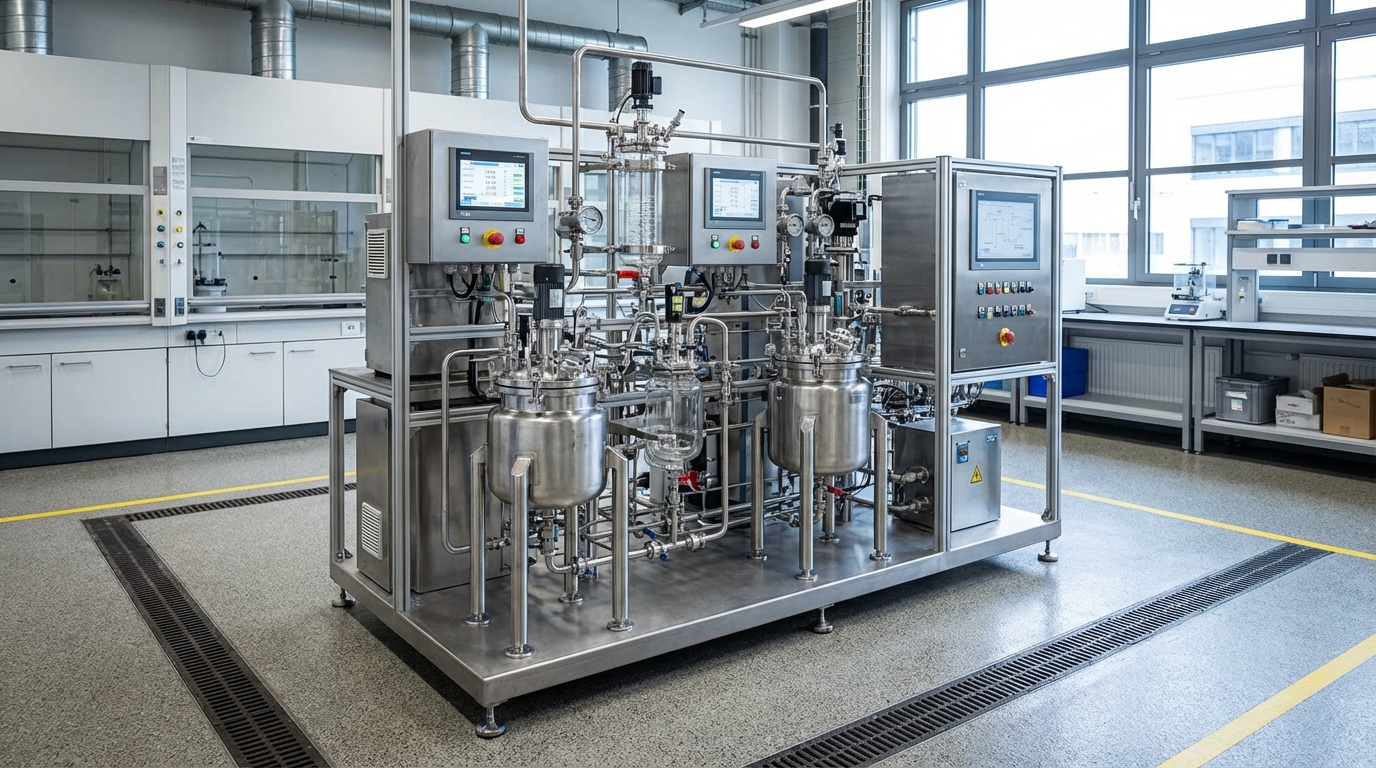
Kerone’s Pilot Plants, Lab-Scale & R&D Units provide the essential bridge between laboratory-scale discovery and full-scale commercial production. These compact, flexible, and precisely instrumented systems allow researchers, process engineers, and product developers to validate process parameters, test new formulations, and optimize production recipes before committing to large-scale capital investment. Kerone designs its pilot and R&D units to be functionally equivalent to their industrial-scale counterparts, ensuring that results obtained at pilot scale are reliably scalable. With modular construction and comprehensive data acquisition systems, these units accelerate product development cycles and reduce scale-up risk across all industries.
Why Choose Kerone Pilot Plants, Lab-Scale & R&D Units
Kerone’s Pilot Plants and R&D Units are built with the same engineering precision and material quality as their full-scale industrial systems, ensuring meaningful and reliable process data that translates directly to commercial scale. Kerone’s units are designed with exceptional flexibility—allowing changes in process configuration, parameter ranges, and measurement points—to accommodate the iterative nature of research and development. Comprehensive data logging, visualization, and analysis tools are integrated into every unit, enabling research teams to extract maximum insight from every trial run. Kerone also offers rental and shared facility options for companies that need pilot testing without a capital purchase.
Types and Features of Pilot Plants, Lab-Scale & R&D Units
Kerone’s R&D and pilot offerings include mini spray dryers, lab fluid bed processors, bench-top microwave and RF dryers, small-scale pyrolysis reactors, pilot heat exchangers, mini evaporators, lab coating chambers, mini extruders, and pilot-scale chemical reactors. All units feature full PLC control, high-resolution data acquisition, easy disassembly for cleaning, and GLP/GMP compatibility. Units are available in tabletop, mobile skid, and small room configurations with capacities from grams per hour to several kilograms per hour.
Key Features
Functionally equivalent design to full-scale systems for reliable scale-up correlation
High-resolution data acquisition and process visualization for detailed experimental analysis
Flexible and reconfigurable process configurations to support diverse experimental programs
GLP/GMP compliant construction for pharmaceutical and food R&D applications
Compact footprint for lab and pilot facility integration without major civil works
Safe operation with comprehensive interlock systems and operator protection measures
Wide range of process parameter control including temperature, pressure, flow, and composition
Easy cleaning and changeover design to support multi-product and multi-formulation testing
Powered by AI, ML & IoT
Future-Ready Engineering Driven by AI & IoT
Our advanced AI, ML, and IoT technologies, this solution delivers smarter automation, real-time insights, and predictive intelligence to enhance efficiency and drive future-ready growth.
Real-Time Monitoring & Control
Continuous tracking of process parameters with instant adjustments.
Predictive Maintenance
Intelligent fault detection to prevent failures before they occur.
Adaptive Process Optimization
Dynamic tuning of operations for maximum output and efficiency.
Cloud Dashboards & Analytics
Unified access to real-time insights and performance trends.
Energy & Resource Savings
Smarter utilization of energy to cut costs and reduce waste.
Secure IoT Connectivity
Encrypted data flow with seamless integration across plant systems.
Applications of Pilot Plants, Lab-Scale & R&D Units
Kerone’s Pilot Plants, Lab-Scale & R&D Units are extensively used in pharmaceutical research, food product development, chemical process engineering, and advanced materials research.
Typical applications include:
Pharmaceutical API and formulation process development and optimization studies
Food ingredient processing trials for new product development and shelf-life validation
Chemical reaction kinetics studies and catalyst screening using bench-top reactors
Biochar and biomass conversion process optimization at pilot scale
Coating and surface treatment process parameter development for new substrates
Drying and thermal processing development for novel materials with unknown properties
Kerone’s Pilot Plants, Lab-Scale & R&D Units are indispensable tools for organizations committed to innovation, quality, and process excellence. By providing reliable, scalable, and precisely instrumented development platforms, Kerone enables its clients to move from idea to commercial production with confidence, speed, and cost efficiency.
Seamless Export Connections Global & Local
Our Global Footprint in Industrial Excellence
Delivering world-class industrial and process solutions across countries with precision, innovation, and reliability.
Peru
Chile
Argentina
Mexico
Colombia
Brazil
USA
Canada
United Kingdom
France
Germany
Spain
Italy
Netherlands
Sweden
Switzerland
Poland
Portugal
Ireland
Czechia
Romania
Hungary
Austria
Greece
Kazakhstan
Uzbekistan
Turkmenistan
Algeria
Egypt
Nigeria
Kenya
South Africa
Saudi Arabia
UAE
Israel
Russia
India
China
Japan
South Korea
Thailand
Vietnam
Malaysia
Singapore
Indonesia
Philippines
Australia
New Zealand
Pan-India Presence. Local Expertise.
Raipur
Bilaspur
Panaji
Vasco da Gama
Gandhinagar
Ahmedabad
Surat
Chandigarh
Gurgaon
Shimla
Manali
Bengaluru
Mysore
Kochi
Pune
Mumbai
Thane
Navi Mumbai
Hyderabad
Chennai
Coimbatore
Kolkata
Lucknow
Jaipur
Udaipur
Jodhpur
Dehradun
Haridwar
Bhubaneswar
Product Gallery
Frequently Asked Questions (FAQ)
Beyond pharmaceutical and food product development, pilot and R&D units are widely used in chemical process engineering for reaction kinetics studies and catalyst screening, biochar and biomass conversion research for optimizing pyrolysis and carbonization parameters before full-scale plant investment, coating and surface treatment development when qualifying new substrate-coating combinations, and advanced materials research where novel formulations need controlled small-scale validation before scale-up. Renewable energy technology developers use pilot gasification and biomass conversion units to validate feedstock behavior before committing to commercial-scale system design. Specialty chemical and polymer producers use pilot reactors to optimize new formulations under realistic process conditions. Any industry developing a new thermal, chemical, or biological process benefits from pilot-scale validation, since the cost of discovering a process limitation at pilot scale is a small fraction of discovering it after full-scale commissioning.
Kerone typically provides operator training covering equipment operation, safety interlocks, and data acquisition system use, along with process development support to help the research team establish baseline operating parameters for their specific application. Documentation includes equipment manuals, P&ID drawings, and calibration certificates for installed instrumentation. For GMP-compliant units, IQ/OQ/PQ validation support helps the client's quality team establish the documentation trail required for regulatory submissions. Ongoing technical support is available for troubleshooting process issues that arise during the experimental phase, since pilot work often surfaces questions that weren't anticipated during initial commissioning. Kerone's own R&D center also offers contract pilot trial services for companies that want to validate a process before committing to purchasing dedicated pilot equipment of their own.
Kerone's pilot and lab units are built with modular process sections and reconfigurable parameter ranges specifically so a single piece of equipment can support testing across different formulations, feedstocks, or product variants without requiring separate dedicated equipment for each. Removable process modules, adjustable temperature and pressure ranges, and flexible material handling fixtures allow the same core unit to run trials on, for example, multiple powder formulations or biomass feedstock types in sequence. Validated cleaning protocols between trials prevent cross-contamination when switching between formulations, which is particularly important for pharmaceutical and food-grade applications. This flexibility is valuable for research organizations running a continuous pipeline of different product trials, since it avoids the capital cost of separate equipment for every formulation under development while still generating scale-up-relevant data for each.
Scale-up typically follows a staged approach: pilot data establishes the validated process window, including optimal temperature, residence time, and other critical parameters, after which the commercial equipment is designed to replicate the same dimensionless relationships at full throughput. Kerone's engineering team uses the pilot data to size heat exchangers, reactor volumes, and material handling capacity for the commercial system, validating that scale-up correlations hold before finalizing the full design. A demonstration or pre-commercial run at an intermediate scale is sometimes warranted for processes with significant scale-sensitive behavior, particularly in solids handling or mixing-dependent reactions. Throughout this process, retaining the original pilot equipment for ongoing formulation development and troubleshooting after commercial launch is common practice, since production-scale equipment isn't well suited for the frequent reconfiguration that ongoing R&D requires.
Building in-house pilot capability makes sense for organizations running continuous, high-frequency R&D programs where dedicated equipment availability and confidentiality outweigh the capital cost of ownership. Partnering with an external provider's pilot facility, such as Kerone's own R&D center, suits companies running occasional trials, validating a single new process before a capital decision, or lacking the technical staff to operate specialized pilot equipment safely and effectively. External partnership also provides access to a broader range of process technologies than most companies would justify purchasing for occasional use. Many organizations use a hybrid approach, maintaining basic lab-scale equipment in-house for routine formulation work while using external pilot facilities for less frequent, larger-scale validation trials that would otherwise sit idle most of the year if purchased outright.
Pilot-scale data is reliable for scale-up prediction only when the pilot unit preserves the key dimensionless ratios and process dynamics that govern the specific process, such as residence time distribution, heat and mass transfer coefficients, and mixing patterns relevant to the application. Kerone designs pilot units to be functionally and geometrically representative of the full-scale equivalent rather than simply a smaller version with different proportions, which is what makes the resulting data trustworthy for scale-up decisions. A common misconception is that any reduction in scale preserves these relationships automatically, when in practice naive scale-down can distort critical parameters like surface-area-to-volume ratio in ways that make the data misleading. Buyers should ask specifically how scale-up correlation has been validated for their process type before relying on pilot results for capital investment decisions.
A frequent mistake is selecting a pilot unit that is too small or too simplified relative to the intended full-scale process, which produces data that does not scale reliably because key geometric or flow ratios differ between the pilot and the eventual commercial system. Companies sometimes skip pilot trials entirely under time pressure and move straight to a full commercial build, only to discover process issues at a much higher cost once production scale equipment is already installed. Another common error is underestimating the instrumentation needed to capture useful data, building a pilot unit with manual controls and minimal logging that cannot generate the statistically meaningful dataset required for confident scale-up decisions. Engaging a partner experienced in scale-up correlation, rather than treating the pilot unit as a smaller, cheaper version of the final system, avoids most of these issues.
Kerone's pilot units range from lab-scale units processing grams per hour up to pilot-scale systems handling several hundred kilograms per hour, depending on the process type.
Yes, Kerone designs pilot systems with dimensionally equivalent geometry and process dynamics to ensure that scale-up correlations are reliable and valid.
Yes, Kerone offers GMP-compliant pilot plants with full documentation, material certification, IQ/OQ/PQ validation support, and audit trail capabilities.
Many Kerone pilot units feature modular process sections that can be rearranged or replaced to accommodate different process configurations and experimental programs.
Yes, Kerone provides pilot testing services at its own facilities and also offers rental options for clients who need temporary access to specific processing technologies.
Kerone integrates multi-channel data loggers, real-time visualization dashboards, and exportable data formats including CSV and OPC-UA for process analysis.
Delivery time for custom pilot plants typically ranges from 6 to 14 weeks depending on complexity, customization requirements, and component availability.
Yes, Kerone designs pilot units in both batch and continuous configurations, and some units support switchable operation between both modes for maximum experimental flexibility.
Kerone’s custom-designed heating and processing solutions are built to meet the demands of your growing operations. Whether you’re upgrading equipment, expanding production, or need a tailor-made solution


 Peru
Peru Chile
Chile Argentina
 Mexico
 Colombia
 Brazil
 USA
USA Canada
 United Kingdom
 France
 Germany
 Spain
Spain Italy
Italy Netherlands
 Sweden
 Switzerland
 Poland
 Portugal
 Ireland
 Czechia
 Romania
 Hungary
 Austria
 Greece
 Kazakhstan
 Uzbekistan
 Turkmenistan
 Algeria
 Egypt
Egypt Nigeria
 Kenya
Kenya South Africa
 Saudi Arabia
 UAE
UAE Israel
 Russia
 India
India China
China Japan
Japan South Korea
 Thailand
 Vietnam
 Malaysia
 Singapore
 Indonesia
 Philippines
 Australia
 New Zealand