Oolong tea occupies a unique and highly valued position in the tea world as a partially oxidised product that straddles the sensory and chemical space between green and black tea. The degree of oxidation in oolong teas ranges from 15% (lightly oxidised, jade or green oolong) through to 70–80% (heavily oxidised, amber or dark oolong), with each oxidation level requiring a distinct drying protocol to arrest oxidation at precisely the desired point, fix the characteristic aromatic profile, and reduce moisture to storage-stable levels. Oolong drying is further complicated by the traditional requirement for repeated baking or roasting cycles applied to certain oolong styles, most notably Wuyi rock oolongs and traditional Taiwan-style dong ding, where controlled thermal treatment at temperatures of 80–120°C over extended periods is used to develop complex roasted, caramelised, woody, and mineral aromatic profiles that are the hallmark of aged and heavily roasted oolongs.
Why Choose Kerone Oolong Tea Drying Systems
Kerone Engineering Solutions has developed oolong tea drying expertise through project engagement with tea manufacturers in Taiwan, Fujian Province, Guangdong, and emerging oolong producers in India and Vietnam, building application knowledge across the diverse oolong tea styles and their distinct drying process requirements. The company understands that oolong tea drying is not a single operation but a multi-stage thermal process that begins with primary high-temperature drying to arrest oxidation (similar in principle to black tea firing), continues through a resting or conditioning stage, and may culminate in one or more roasting or baking cycles that complete the aromatic development of the finished product. Kerone’s engineering team designs each stage of the oolong drying sequence with appropriate equipment selection, temperature precision, and airflow management to produce oolongs with the aromatic complexity, colour consistency, and moisture specification that international buyers and specialty tea markets demand.
Types and Features of Oolong Tea Drying Systems
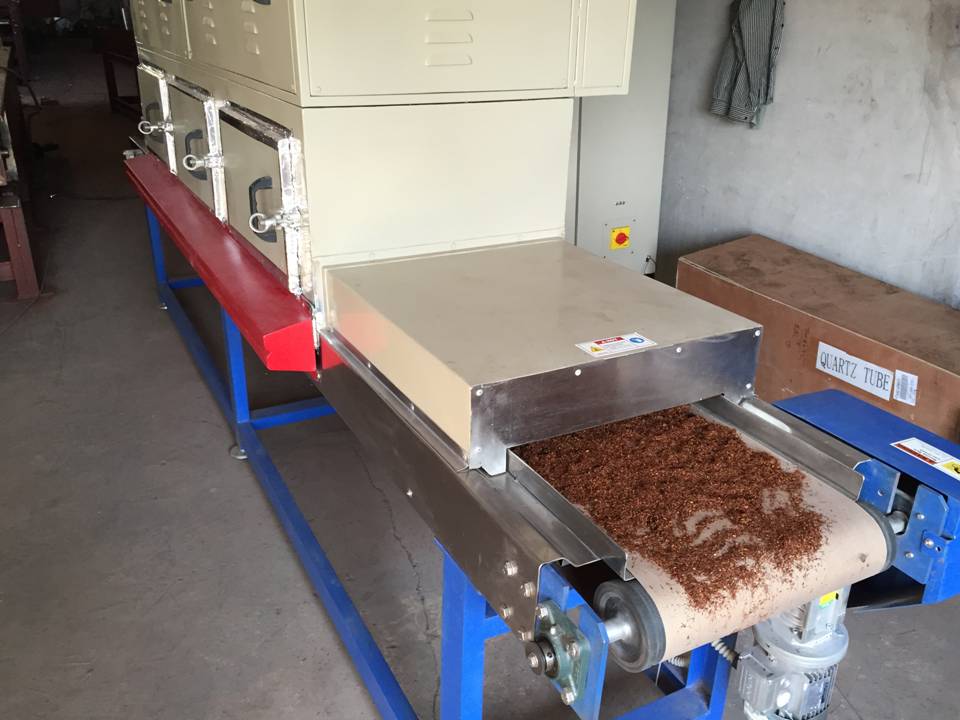
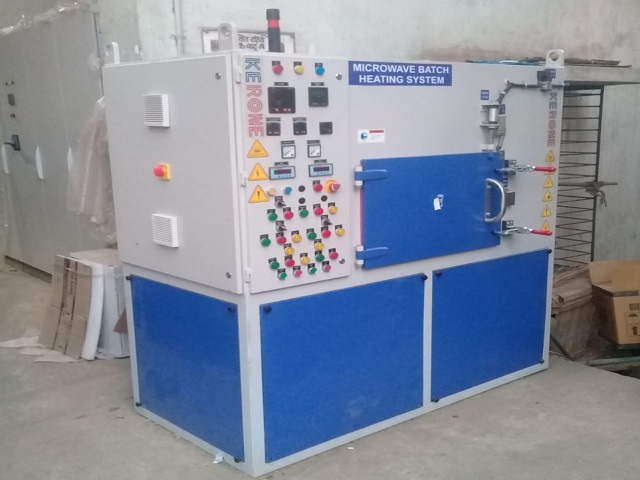
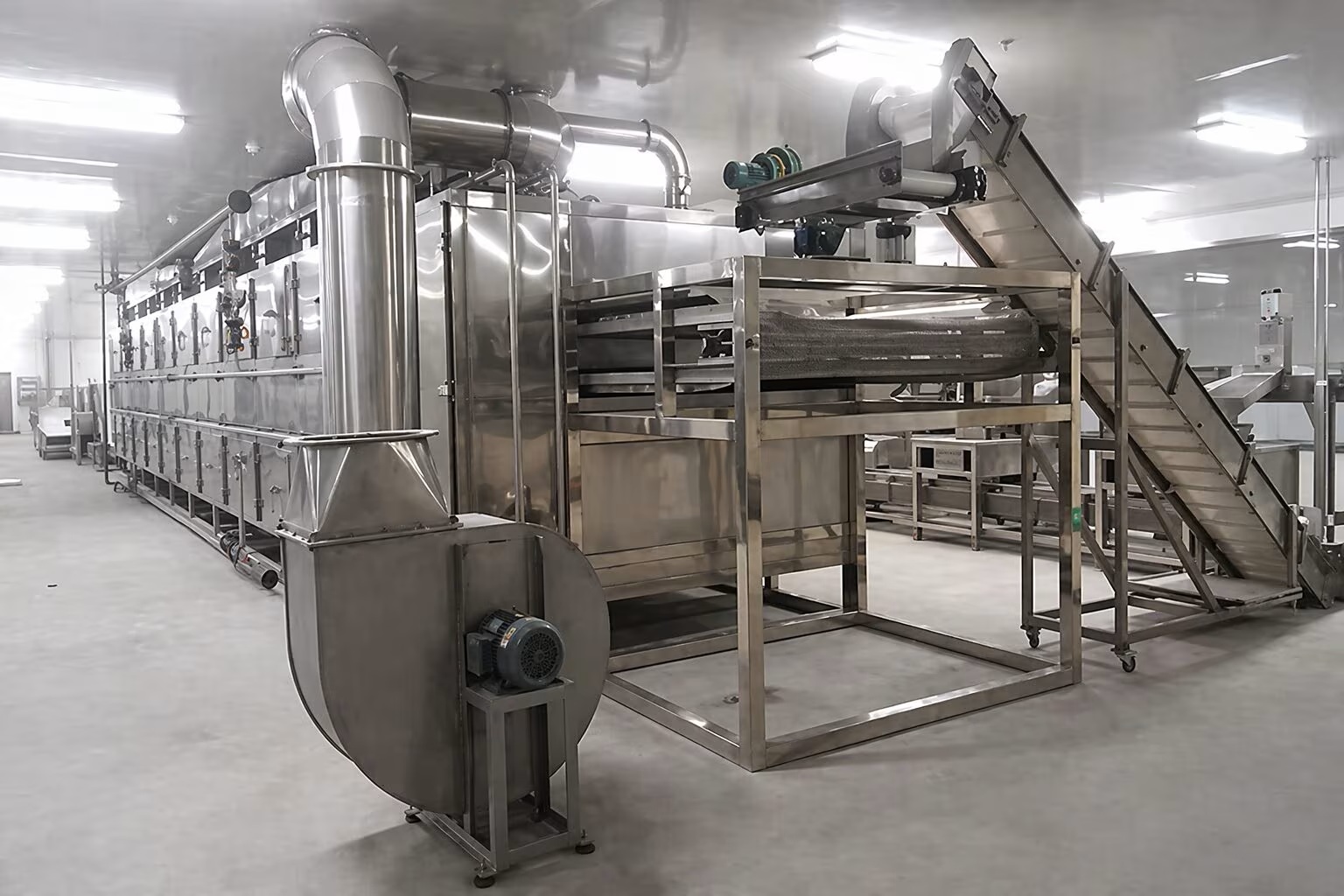
Oolong tea drying at Kerone uses a staged system approach. Primary drying (withering and initial moisture reduction) uses multi-pass belt dryers or heated tumbling dryers that gently reduce moisture while maintaining leaf suppleness for the rolling step. Intermediate drying after each rolling cycle uses short-residence conveyor dryers or infrared-assisted dryers for rapid surface drying between rolling passes. Final primary drying for moisture reduction uses high-temperature belt or ECP-style dryers at 90–110°C. Roasting stages, which define the most value-differentiated oolong profiles, are conducted in oolong roasting-drying ovens, horizontal or vertical mesh conveyor roasters with individually controlled temperature zones from 80–160°C and controlled airflow timing to develop roasted, floral, fruity, or mineral aroma characteristics typical of premium oolong grades.
Key Features
Multi-stage drying system design covering primary drying, inter-roll drying, final firing, and optional roasting stages in a single integrated line
Dedicated oolong roasting-drying oven with temperature zones from 80–160°C for development of roasted and caramelised aromatic profiles
Precision temperature control within ±3°C across each roasting zone for reproducible aroma profile development
Gentle handling design with tumbling drums or low-velocity belt advancement to maintain oolong leaf's characteristic ball or semi-ball shape
Adjustable dwell time across each roasting zone for customisation of roast depth and aromatic character for different oolong grades
Indirect heat option for premium oolong roasting to prevent direct flame impact on leaf surface and avoid carbon taint in finished tea
Cool-down section integrated at dryer exit to reduce product temperature before packaging, preventing moisture condensation
PLC-based roasting recipe management with stored profiles for different oolong grades and roast levels
Powered by AI, ML & IoT
Future-Ready Engineering Driven by AI & IoT
Our advanced AI, ML, and IoT technologies, this solution delivers smarter automation, real-time insights, and predictive intelligence to enhance efficiency and drive future-ready growth.
Real-Time Monitoring & Control
Continuous tracking of process parameters with instant adjustments.
Predictive Maintenance
Intelligent fault detection to prevent failures before they occur.
Adaptive Process Optimization
Dynamic tuning of operations for maximum output and efficiency.
Cloud Dashboards & Analytics
Unified access to real-time insights and performance trends.
Energy & Resource Savings
Smarter utilization of energy to cut costs and reduce waste.
Secure IoT Connectivity
Encrypted data flow with seamless integration across plant systems.
Applications of Oolong Tea Drying Systems
Kerone’s Oolong Tea Drying Systems are extensively used in traditional oolong tea processing factories, specialty tea manufacturers, and innovative oolong producers across Asia and emerging global markets. Typical applications include:
Light oxidation jade oolong (Li Shan, High Mountain Alishan style) drying and finishing for premium Taiwan export markets
Medium oxidation dong ding and traditional ball-rolled oolong primary drying and repeated roasting cycles
Heavily roasted Wuyi Rock Oolong (Da Hong Pao, Rou Gui) multi-stage roasting in precision temperature-controlled ovens
Fujian Tieguanyin oolong production with multi-pass inter-rolling drying and final roasting
Indian and Vietnamese market oolong tea production adapting traditional processing to local green leaf characteristics
Aged oolong tea re-roasting operations for vintage tea restoration and aromatic profile renewal
Oolong tea drying represents some of the most nuanced thermal processing in the entire tea industry, demanding equipment that can handle both the rapid primary drying requirements of partially oxidised leaf and the delicate, multi-cycle roasting operations that create the complex aromatic signatures of premium oolong grades.
Seamless Export Connections Global & Local
Our Global Footprint in Industrial Excellence
Delivering world-class industrial and process solutions across countries with precision, innovation, and reliability.
Peru
Chile
Argentina
Mexico
Colombia
Brazil
USA
Canada
United Kingdom
France
Germany
Spain
Italy
Netherlands
Sweden
Switzerland
Poland
Portugal
Ireland
Czechia
Romania
Hungary
Austria
Greece
Kazakhstan
Uzbekistan
Turkmenistan
Algeria
Egypt
Nigeria
Kenya
South Africa
Saudi Arabia
UAE
Israel
Russia
India
China
Japan
South Korea
Thailand
Vietnam
Malaysia
Singapore
Indonesia
Philippines
Australia
New Zealand
Pan-India Presence. Local Expertise.
Raipur
Bilaspur
Panaji
Vasco da Gama
Gandhinagar
Ahmedabad
Surat
Chandigarh
Gurgaon
Shimla
Manali
Bengaluru
Mysore
Kochi
Pune
Mumbai
Thane
Navi Mumbai
Hyderabad
Chennai
Coimbatore
Kolkata
Lucknow
Jaipur
Udaipur
Jodhpur
Dehradun
Haridwar
Bhubaneswar
Product Gallery
Frequently Asked Questions (FAQ)
Oolong drying is a multi-stage process including primary post-oxidation firing, inter-rolling intermediate drying, and optional repeated roasting cycles. Black tea drying is a simpler two-stage (primary and secondary) operation without roasting. The drying parameters, equipment types, and aromatic development targets differ significantly.
Primary oolong drying uses inlet air temperatures of 90–110°C to arrest oxidation and reduce initial moisture. Roasting stages use lower temperatures of 80–160°C for extended periods ranging from 1–8 hours depending on the roast depth and style being produced.
Premium oolong styles like dong ding and Wuyi rock oolongs undergo sequential roasting cycles with rest periods between each stage to allow aromatic compounds to redistribute through the tea and moisture to equilibrate before the next roasting. Multiple cycles develop complexity and depth of aroma not achievable in a single roasting step.
Kerone's roasting ovens use indirect heat distribution with precisely controlled air temperature below the carbonisation threshold, combined with continuous gentle leaf movement to ensure uniform exposure and prevent any individual leaves from sustaining excessive localised heat.
Light oolongs (jade/green styles) require drying temperatures similar to green tea to preserve floral and fresh aromatic character, while dark, heavily roasted oolongs require extended high-temperature roasting to develop the desired woody, nutty, and caramelised profiles.
Yes. Kerone's oolong roasting systems are suitable for the re-roasting of aged or improperly stored oolongs to restore aromatic profile and reduce off-notes, a common practice among premium oolong traders and collectors.
After primary drying, oolong is typically reduced to 10–15% moisture. After inter-rolling drying passes, moisture is progressively reduced between each rolling cycle. Final moisture after roasting is typically 2–4%, with roasting also further reducing moisture from the pre-roast level.
Ball-rolled oolong requires gentle handling to maintain the characteristic tight ball form. Kerone uses slow-speed tumbling drum dryers or vibro-conveyor systems with minimal impact transfers that preserve ball shape integrity through the drying process.
Roasting temperature and time control the Maillard reaction and sugar caramelisation rates that produce different aroma profiles: lower temperatures (80–100°C) develop floral and fruity notes, while higher temperatures (120–160°C) develop roasted, nutty, woody, and mineral character.
Yes. Kerone's PLC control systems with recipe management can automate the sequence of drying and roasting stages, including hold and rest periods, temperature ramp rates, and stage transition logic, enabling consistent production of specific oolong grades with reduced manual operator intervention.
Traditional oolong roasting in Fujian and Taiwan has historically used charcoal, which imparts specific mineral and smoky notes valued in some grades. Modern commercial production uses gas or electricity for consistency and controllability, with charcoal-roasted grades commanding premium prices as specialty products.
Kerone can design indirect heated roasting systems with specific far-infrared heat flux characteristics that approximate the radiant heat profile of traditional charcoal roasting, providing more consistent and controllable results while targeting similar aromatic development outcomes.
PLC recipe management with locked parameter sets and calibrated temperature sensors across all roasting zones ensures that every batch of a given oolong grade is processed under identical thermal conditions, producing consistent aromatic profiles and quality scores.
PLC recipe management with locked parameter sets and calibrated temperature sensors across all roasting zones ensures that every batch of a given oolong grade is processed under identical thermal conditions, producing consistent aromatic profiles and quality scores.
Kerone’s custom-designed heating and processing solutions are built to meet the demands of your growing operations. Whether you’re upgrading equipment, expanding production, or need a tailor-made solution

 Peru
Peru Chile
Chile Argentina
 Mexico
 Colombia
 Brazil
 USA
USA Canada
 United Kingdom
 France
 Germany
 Spain
Spain Italy
Italy Netherlands
 Sweden
 Switzerland
 Poland
 Portugal
 Ireland
 Czechia
 Romania
 Hungary
 Austria
 Greece
 Kazakhstan
 Uzbekistan
 Turkmenistan
 Algeria
 Egypt
Egypt Nigeria
 Kenya
Kenya South Africa
 Saudi Arabia
 UAE
UAE Israel
 Russia
 India
India China
China Japan
Japan South Korea
 Thailand
 Vietnam
 Malaysia
 Singapore
 Indonesia
 Philippines
 Australia
 New Zealand