Vegetable dehydration is one of the largest segments of the global food dehydration industry, supplying dried vegetable ingredients to soup, seasoning, instant meal, ready-to-eat food, snack, baby food, pet food, and functional food manufacturing operations worldwide. Industrial vegetable dehydration must achieve far more than simple moisture removal, it must preserve the characteristic colour of each vegetable (from the deep green of spinach to the vivid orange of carrot), maintain the rehydration characteristics required by downstream food processors, meet the strict microbiological specifications demanded by food manufacturers for ingredients, and comply with the pesticide residue, sulphite, and contaminant standards enforced by destination market food safety authorities. Kerone Engineering Solutions’ vegetable dehydration systems are engineered to deliver all of these quality dimensions simultaneously, at throughput rates appropriate for commercial vegetable processing operations ranging from regional processors to global ingredient manufacturers.
Why Choose Kerone Vegetable Dehydration Systems
Kerone’s vegetable dehydration systems are product-matched to the specific drying behaviour of each vegetable type, which varies dramatically from high-water, low-sugar vegetables such as cucumber and zucchini that dry readily but are prone to case hardening if early zones are too hot, to high-starch root vegetables such as potato and parsnip that require careful early-stage moisture extraction to prevent surface gelatinisation, to leafy green vegetables such as spinach and parsley where chlorophyll degradation from excessive heat results in a yellowed, commercially unacceptable product. By designing the temperature profile, belt speed, zone humidity, and airflow velocity specifically for each vegetable type rather than applying a single generic drying program, Kerone enables its clients to achieve consistent, premium-grade dehydrated vegetable products that command the price premiums available in food ingredient markets.
Types and Features of Vegetable Dehydration Systems
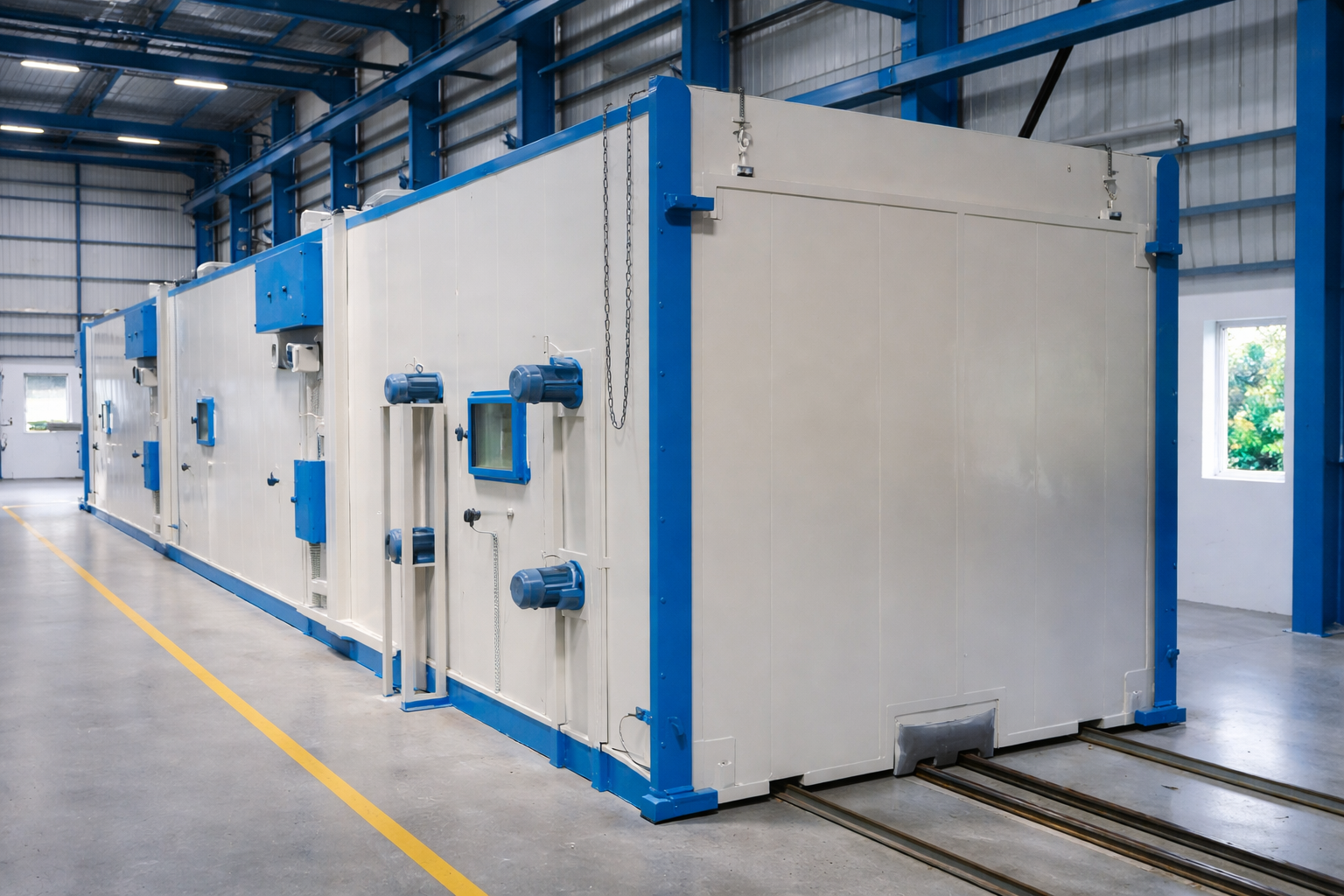
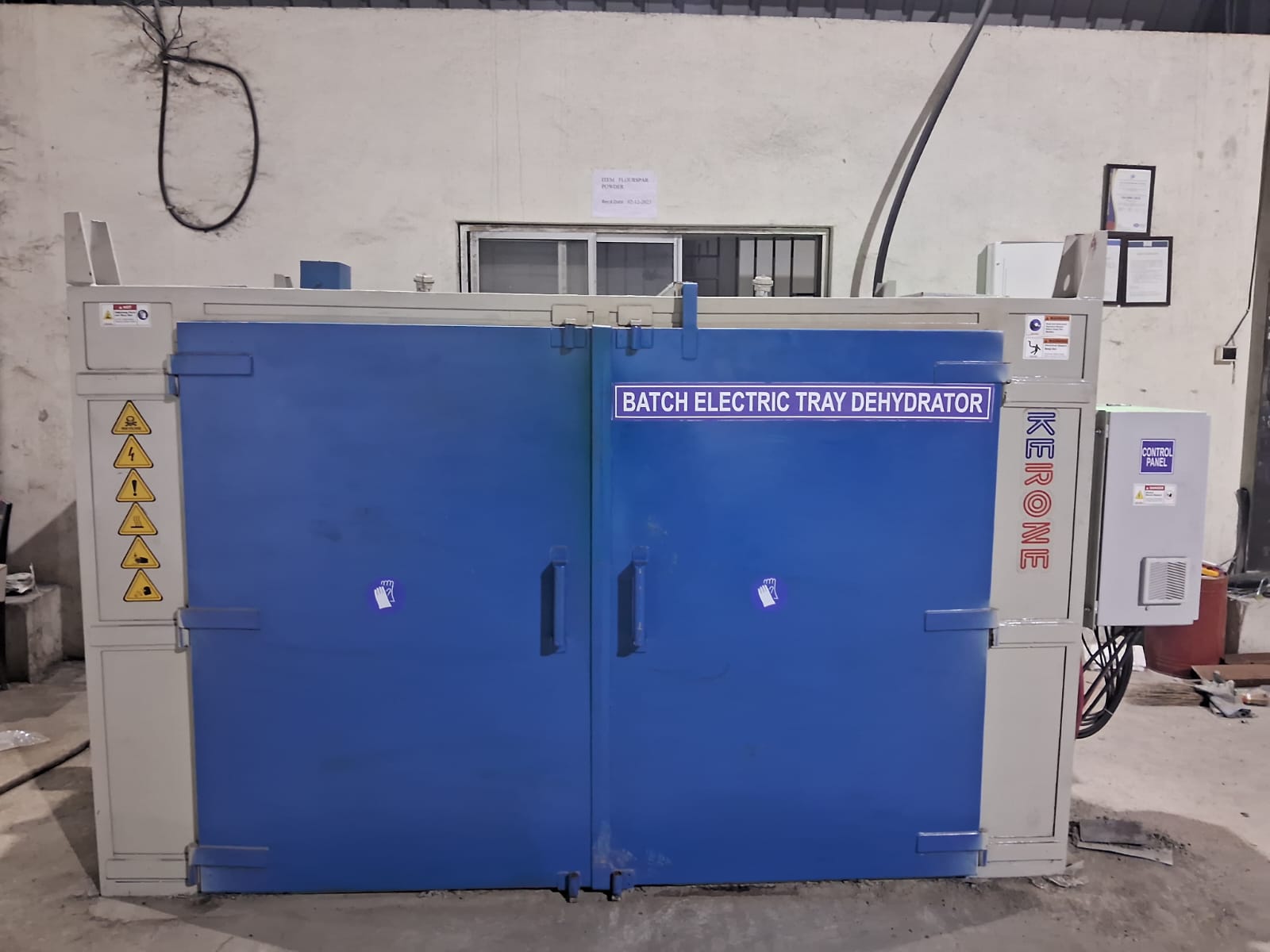
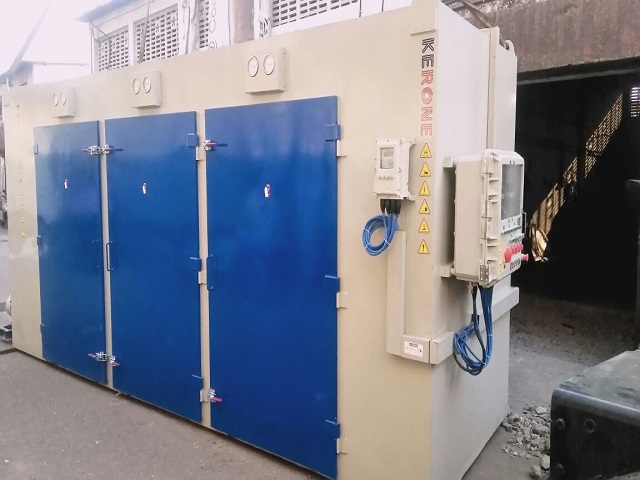
Kerone’s vegetable dehydration equipment portfolio includes three-band multi-zone belt dryers for large-volume vegetable processing, heat pump belt dryers for colour-sensitive leafy and brassica vegetables, infrared pre-drying systems for surface moisture reduction before main belt drying, rotary drum pre-dryers for coarse-chopped root vegetable bulk processing, and vacuum belt dryers for premium-grade dehydrated vegetables requiring minimum thermal exposure. For high-throughput operations processing multiple vegetable types, Kerone designs multi-line facilities where common services (steam, hot water, cooling water, compressed air) are shared while each drying line operates with its own optimised control parameters for the specific vegetable being processed on that line.
Key Features
Three-band belt design with cascading product transfer between upper and lower belts, providing gentle tumbling action that refreshes the product surface for improved drying uniformity without mechanical damage
Independent temperature and airflow control in minimum six drying zones, enabling precise moisture profile management from high-moisture inlet to dry, stable discharge
Heat pump dehydration option (45–65°C) for colour-critical leafy vegetables and herbs, preserving chlorophyll content and reducing colour degradation by 60–70% versus conventional 70–80°C hot air drying
Pre-treatment integration compatibility including blanching (hot water or steam), sulphite dipping, calcium chloride treatment, and osmotic treatment upstream of the dehydration stage
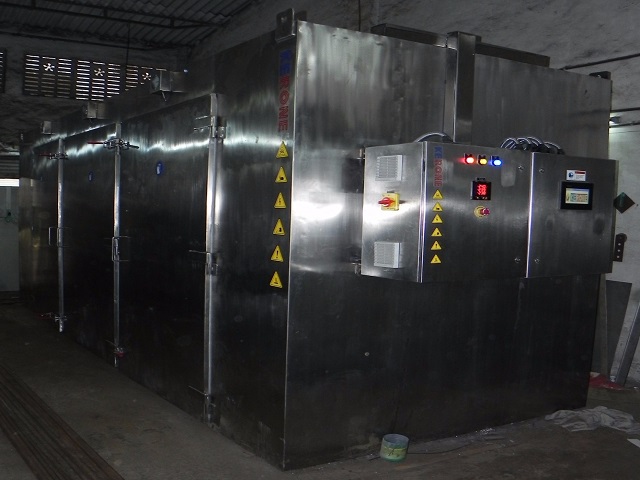
Stainless steel 304 food-grade construction with EHEDG-compliant design principles, eliminating dead zones where vegetable residues can harbour microbial growth between production campaigns
Inline moisture profiling at zone transitions with automated belt speed control maintaining discharge moisture within ±0.5% of specification across seasonal vegetable moisture variations
Rapid product changeover capability with quick-release belt sections, removable drip trays, and documented 2-hour changeover cleaning protocol validated for allergen and residue elimination
Integrated cooling conveyor maintaining product below 35°C before packaging, preventing moisture re-absorption from atmospheric humidity and ensuring packaging seal integrity
Powered by AI, ML & IoT
Future-Ready Engineering Driven by AI & IoT
Our advanced AI, ML, and IoT technologies, this solution delivers smarter automation, real-time insights, and predictive intelligence to enhance efficiency and drive future-ready growth.
Real-Time Monitoring & Control
Continuous tracking of process parameters with instant adjustments.
Predictive Maintenance
Intelligent fault detection to prevent failures before they occur.
Adaptive Process Optimization
Dynamic tuning of operations for maximum output and efficiency.
Cloud Dashboards & Analytics
Unified access to real-time insights and performance trends.
Energy & Resource Savings
Smarter utilization of energy to cut costs and reduce waste.
Secure IoT Connectivity
Encrypted data flow with seamless integration across plant systems.
Applications of Vegetable Dehydration Systems
Kerone’s Vegetable Dehydration Systems are extensively used across food ingredient manufacturing, ready meal production, and agricultural processing globally. Typical applications include:
Root vegetable dehydration producing dried carrot flakes, dices, and slices; potato flakes, granules, and slices; beetroot powder; and parsnip pieces for soup, seasoning, and instant meal applications
Allium vegetable processing producing dried onion flakes, granules, and powder; dried garlic flakes and granules; and dried leek pieces for seasoning, snack, and food manufacturing ingredient supply
Leafy and brassica vegetable dehydration producing dried spinach, kale, broccoli, cabbage, and pea flakes for baby food, functional food, and soup ingredient markets where colour and nutritional retention are primary quality requirements
Capsicum and tomato processing for dried bell pepper, chilli flake, sun-dried tomato, and tomato powder production for seasoning, pizza topping, and sauce ingredient applications
Mushroom and edible fungi dehydration for shiitake, oyster, porcini, and enoki mushroom ingredients used in Asian cuisine, umami seasoning, and functional food manufacturing
Vegetable powder and flake production for pet food ingredient supply where consistently low moisture, high digestibility, and freedom from mycotoxins are the critical quality requirements
Kerone Engineering Solutions’ vegetable dehydration systems are the result of decades of applied experience in food processing equipment engineering, combined with a genuine technical understanding of vegetable biochemistry and the quality parameters that determine commercial success in food ingredient markets.
Seamless Export Connections Global & Local
Our Global Footprint in Industrial Excellence
Delivering world-class industrial and process solutions across countries with precision, innovation, and reliability.
Peru
Chile
Argentina
Mexico
Colombia
Brazil
USA
Canada
United Kingdom
France
Germany
Spain
Italy
Netherlands
Sweden
Switzerland
Poland
Portugal
Ireland
Czechia
Romania
Hungary
Austria
Greece
Kazakhstan
Uzbekistan
Turkmenistan
Algeria
Egypt
Nigeria
Kenya
South Africa
Saudi Arabia
UAE
Israel
Russia
India
China
Japan
South Korea
Thailand
Vietnam
Malaysia
Singapore
Indonesia
Philippines
Australia
New Zealand
Pan-India Presence. Local Expertise.
Raipur
Bilaspur
Panaji
Vasco da Gama
Gandhinagar
Ahmedabad
Surat
Chandigarh
Gurgaon
Shimla
Manali
Bengaluru
Mysore
Kochi
Pune
Mumbai
Thane
Navi Mumbai
Hyderabad
Chennai
Coimbatore
Kolkata
Lucknow
Jaipur
Udaipur
Jodhpur
Dehradun
Haridwar
Bhubaneswar
Product Gallery
Frequently Asked Questions (FAQ)
Most dehydrated vegetable ingredients are specified at 5–8% moisture, corresponding to water activity below 0.6 which prevents microbial growth during normal ambient storage. Some premium powder grades require below 5% moisture.
Blanching inactivates peroxidase and polyphenol oxidase enzymes that cause browning and off-flavour development during storage of dried vegetables. It also reduces microbial load, improves rehydration rate, and helps preserve colour compounds.
Chlorophyll degradation in green vegetables occurs above 65°C and accelerates in acidic conditions. Kerone's heat pump dehydration at 45–60°C, combined with pre-treatment blanching and neutral pH management, preserves chlorophyll content above 80% of fresh material.
Well-engineered dehydrated vegetables from Kerone's systems achieve rehydration ratios of 6:1 to 10:1 (reconstituted weight to dry weight), matching or exceeding the ratios achievable from traditionally dried products while providing much greater consistency.
Yes. High-water vegetables (90–95% moisture) require careful early-zone temperature management to prevent case hardening. Kerone's multi-zone systems manage initial relative humidity at 35–50% in the early drying zones to achieve even moisture reduction from surface to core.
Kerone's pre-treatment systems handle sulphite dipping at concentrations specified for the vegetable type and destination market requirements. All contact surfaces are sulphite-resistant stainless steel, and exhaust air treatment handles SO₂ off-gassing.
Yes. Kerone's dehydration systems use no chemical processing aids on the product. CIP cleaning chemicals are specifiable from approved organic-compatible ranges, and cleaning records support organic certification body audits.
Belt drying to 4–6% moisture is typically followed by hammer or pin milling to produce vegetable powder. Kerone can supply the complete line from washing through belt drying to milling, classification, and packaging.
Kerone's vegetable belt dryers range from 500 kg/h (fresh product basis) for small operations to 5,000+ kg/h for large-scale dehydration plants processing multiple tonnes of fresh vegetable per hour.
For mixed vegetable products, Kerone recommends drying each vegetable type separately to its optimum specification, then blending in post-drying mixing systems. Processing mixed vegetables together leads to over-drying of fast-drying types while slow-drying types remain too moist.
HACCP prerequisite programme requirements, BRC Global Standard for Equipment, EC Food Contact Materials Regulation (EC) No 1935/2004, and ISO 22000 equipment hygiene requirements all apply. Kerone provides compliance documentation for all relevant standards.
Yes. Vegetable dehydration is often seasonal, and Kerone designs systems with reduced-throughput operation modes, appropriate corrosion protection for idle periods, and rapid recommissioning procedures to minimise downtime at the start of each season.
Tomato slices and paste for sundried tomato products are dehydrated at 65–75°C. Tomato powder production from tomato paste concentrate requires spray drying at 150–180°C inlet with careful anti-sticking measures due to tomato's very high hygroscopicity.
Sizing is based on fresh vegetable throughput target, inlet moisture, target final moisture, and seasonal operation hours. Kerone conducts detailed process calculations including evaporation load, airflow, and energy balance to determine dryer dimensions and heat source capacity.
Yes. Kerone maintains spare parts inventory for all standard components, provides preventive maintenance visit services, and offers remote diagnostic support for control system issues. Service contracts covering scheduled maintenance are available for continuous production facilities.
Kerone’s custom-designed heating and processing solutions are built to meet the demands of your growing operations. Whether you’re upgrading equipment, expanding production, or need a tailor-made solution


 Peru
Peru Chile
Chile Argentina
 Mexico
 Colombia
 Brazil
 USA
USA Canada
 United Kingdom
 France
 Germany
 Spain
Spain Italy
Italy Netherlands
 Sweden
 Switzerland
 Poland
 Portugal
 Ireland
 Czechia
 Romania
 Hungary
 Austria
 Greece
 Kazakhstan
 Uzbekistan
 Turkmenistan
 Algeria
 Egypt
Egypt Nigeria
 Kenya
Kenya South Africa
 Saudi Arabia
 UAE
UAE Israel
 Russia
 India
India China
China Japan
Japan South Korea
 Thailand
 Vietnam
 Malaysia
 Singapore
 Indonesia
 Philippines
 Australia
 New Zealand