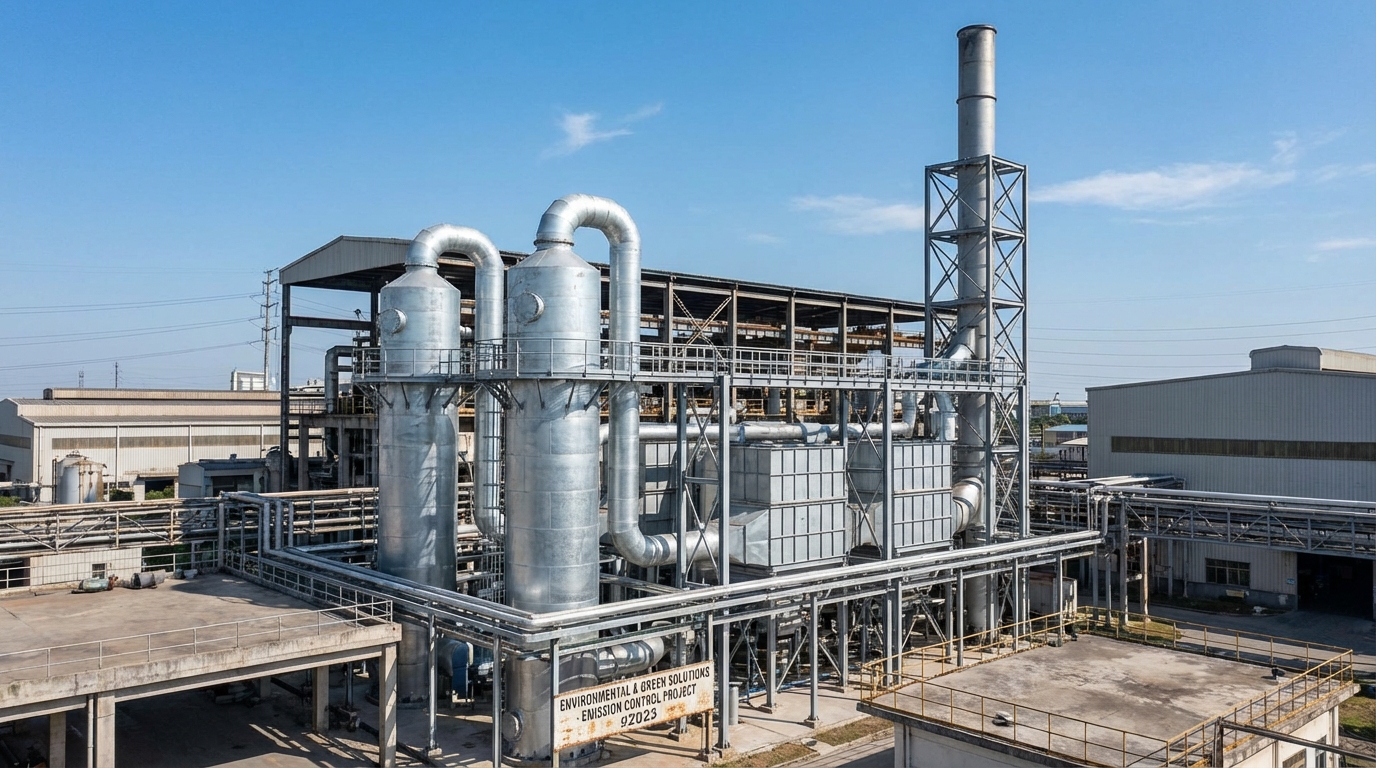
Kerone’s Environmental & Green Solutions encompass a comprehensive range of technologies and systems designed to minimize the environmental impact of industrial operations, convert waste into resources, and support the transition to a sustainable, circular economy. From industrial effluent treatment and zero liquid discharge systems to waste heat recovery, air pollution control, and renewable energy integration, Kerone brings proven engineering solutions to the challenge of making industry cleaner, greener, and more resource-efficient. Each solution is designed with life-cycle environmental impact in mind, ensuring that environmental performance improvements also translate into long-term economic benefits for clients.
Why Choose Kerone Environmental & Green Solutions
Kerone’s Environmental & Green Solutions are chosen by forward-thinking industries because they deliver measurable, verified environmental performance improvements while also reducing operating costs through resource recovery and energy efficiency. Kerone’s environmental engineering team has deep expertise in applicable regulations including CPCB, EU IED, EPA, and ISO 14001, ensuring that all solutions not only meet but often exceed regulatory requirements. Kerone’s integrated approach—combining process engineering, pollution control, and resource recovery in a single project scope—eliminates the need for multiple specialist contractors and ensures that environmental systems work in harmony with core production processes.
Types and Features of Environmental & Green Solutions
Kerone’s environmental portfolio includes effluent treatment plants (ETP), zero liquid discharge (ZLD) systems, air pollution control systems (bag filters, scrubbers, electrostatic precipitators), waste heat recovery boilers and economizers, solvent recovery and recycling systems, composting and biogas plants for organic waste, and green energy integration systems including solar thermal and biomass boilers. Features include automated chemical dosing, remote monitoring, online effluent quality analyzers, CEMS (Continuous Emission Monitoring Systems), and detailed environmental compliance reporting.
Key Features
Zero Liquid Discharge (ZLD) systems for complete wastewater elimination and water recovery
High-efficiency air pollution control with bag filters, wet scrubbers, and electrostatic precipitators
Waste heat recovery systems for converting exhaust heat into usable energy
Solvent recovery units for reclaiming and reusing process solvents to reduce emissions and costs
Automated online monitoring with CEMS for real-time emission compliance verification
Biogas and composting plants for organic waste valorization and renewable energy generation
ISO 14001 and regulatory compliance support including environmental impact assessments
Life-cycle cost analysis and carbon footprint reduction reporting for sustainability programs
Powered by AI, ML & IoT
Future-Ready Engineering Driven by AI & IoT
Our advanced AI, ML, and IoT technologies, this solution delivers smarter automation, real-time insights, and predictive intelligence to enhance efficiency and drive future-ready growth.
Real-Time Monitoring & Control
Continuous tracking of process parameters with instant adjustments.
Predictive Maintenance
Intelligent fault detection to prevent failures before they occur.
Adaptive Process Optimization
Dynamic tuning of operations for maximum output and efficiency.
Cloud Dashboards & Analytics
Unified access to real-time insights and performance trends.
Energy & Resource Savings
Smarter utilization of energy to cut costs and reduce waste.
Secure IoT Connectivity
Encrypted data flow with seamless integration across plant systems.
Applications of Environmental & Green Solutions
Kerone’s Environmental & Green Solutions are extensively used in chemical industries, textile mills, pharmaceutical plants, food processing facilities, power stations, and municipal infrastructure.
Typical applications include:
Industrial effluent treatment and zero liquid discharge for textile, chemical, and pharma industries
Air pollution control for cement, steel, power, and chemical manufacturing operations
Waste heat recovery from industrial furnaces, kilns, and boilers for energy cost reduction
Solvent recovery and recycling in pharmaceutical and specialty chemical manufacturing
Organic waste to biogas conversion for food processing and municipal waste facilities
Rainwater harvesting, water recycling, and water footprint reduction for manufacturing sites
Kerone’s Environmental & Green Solutions offer industries a pathway to responsible, sustainable operations that protect the environment, comply with regulations, and create lasting economic value through resource efficiency. By partnering with Kerone, organizations can achieve their sustainability targets while building the reputation, resilience, and regulatory assurance needed to thrive in an increasingly environmentally conscious global market.
Seamless Export Connections Global & Local
Our Global Footprint in Industrial Excellence
Delivering world-class industrial and process solutions across countries with precision, innovation, and reliability.
Peru
Chile
Argentina
Mexico
Colombia
Brazil
USA
Canada
United Kingdom
France
Germany
Spain
Italy
Netherlands
Sweden
Switzerland
Poland
Portugal
Ireland
Czechia
Romania
Hungary
Austria
Greece
Kazakhstan
Uzbekistan
Turkmenistan
Algeria
Egypt
Nigeria
Kenya
South Africa
Saudi Arabia
UAE
Israel
Russia
India
China
Japan
South Korea
Thailand
Vietnam
Malaysia
Singapore
Indonesia
Philippines
Australia
New Zealand
Pan-India Presence. Local Expertise.
Raipur
Bilaspur
Panaji
Vasco da Gama
Gandhinagar
Ahmedabad
Surat
Chandigarh
Gurgaon
Shimla
Manali
Bengaluru
Mysore
Kochi
Pune
Mumbai
Thane
Navi Mumbai
Hyderabad
Chennai
Coimbatore
Kolkata
Lucknow
Jaipur
Udaipur
Jodhpur
Dehradun
Haridwar
Bhubaneswar
Frequently Asked Questions (FAQ)
ZLD is an advanced wastewater treatment approach where all industrial effluent is processed to recover clean water and solid salts with zero discharge to the environment. Kerone designs complete ZLD systems tailored to specific industry effluent characteristics.
Kerone's APC systems handle particulate matter, SO2, NOx, HCl, ammonia, VOCs, and heavy metals through technologies including bag filters, wet scrubbers, catalytic converters, and activated carbon filters.
Yes, Kerone's waste heat recovery systems can recover 60–80% of exhaust heat from furnaces, kilns, and boilers, converting it to steam, hot water, or electricity to significantly reduce energy costs.
Kerone designs systems compliant with CPCB (India), EPA (US), EU Industrial Emissions Directive (IED), WHO, and other applicable local and international environmental standards.
Yes, Kerone provides CEMS (Continuous Emission Monitoring Systems) and online effluent quality analyzers with automated reporting and alarm systems for regulatory compliance.
Yes, Kerone designs anaerobic digestion (biogas) and composting systems that convert food waste, agricultural residues, and sewage sludge into renewable energy and soil amendment products.
Return on investment for Kerone's environmental systems typically ranges from 2 to 5 years, driven by energy savings, water recovery, reduced disposal costs, and avoidance of regulatory penalties.
Effluent treatment plants need regular cleaning of clarifiers and filtration media, periodic replacement of membrane elements in advanced systems like reverse osmosis used in ZLD configurations, and calibration of online dosing pumps and quality analyzers. Air pollution control systems require bag filter replacement on a schedule determined by particulate loading, scrubber liquid chemistry monitoring and replenishment, and electrostatic precipitator electrode cleaning to maintain collection efficiency. Sludge and sediment removal from treatment tanks is an ongoing operational task rather than a periodic maintenance item. Kerone designs systems with accessible service points for filter and membrane replacement specifically because these consumables have shorter life cycles than the structural equipment, and a maintenance plan that anticipates this difference keeps compliance monitoring continuous rather than interrupted by unplanned service stoppages.
Structural components of effluent treatment plants and air pollution control systems, including tanks, ductwork, and precipitator housings, are typically engineered for 20 to 25 years of service with proper maintenance. Membrane elements in reverse osmosis or ultrafiltration systems used in advanced wastewater treatment have a shorter functional life, generally 3 to 7 years depending on feed water quality and fouling rates, and represent the main recurring capital cost over the system's lifetime. Bag filters and scrubber internals also need periodic replacement well before the overall system reaches end of life. Corrosion-resistant materials of construction, appropriate to the specific effluent or flue gas chemistry, significantly affect actual service life, which is why Kerone selects materials based on the specific chemical environment rather than applying a generic specification across all projects.
Yes, Kerone integrates solar thermal, biomass boilers, and biogas systems into industrial facilities to reduce dependence on fossil fuels and lower the overall carbon footprint of operations.
A common mistake is sizing the system for current production volume without margin for growth, which forces costly capacity upgrades within a few years of installation. Companies sometimes select treatment technology based on lowest initial capital cost without accounting for higher operating costs from energy-intensive processes or expensive consumables like membrane replacements, resulting in a higher total cost of ownership than a more capital-intensive but operationally efficient alternative. Another frequent error is failing to characterize effluent or emission streams thoroughly before specifying treatment technology, leading to systems that struggle with seasonal variation in waste stream composition. Skipping pilot testing on actual plant effluent before finalizing a treatment process design, particularly for unusual or variable waste streams, often results in underperformance once the system is operating at full scale.
Kerone integrates environmental systems as parallel processes that treat waste streams generated by production rather than systems that interrupt the production line itself, so core manufacturing operations continue uninterrupted during normal environmental system operation. Installation and commissioning are typically phased around planned maintenance windows to avoid unplanned production stoppages. Redundancy in critical components, such as backup pumps or parallel treatment trains, allows maintenance on one unit while the system continues operating. For retrofits into existing facilities, Kerone plans tie-in points and piping routes to minimize the duration of any required production pause during installation. The goal throughout is treating environmental compliance as an operational addition to the existing plant rather than a disruption requiring production downtime, since most environmental investments are driven by regulatory deadlines that don't allow for extended shutdowns.
A common misconception is that ZLD systems are prohibitively expensive and only justified by regulatory mandate, when in practice water recovery from ZLD can offset a meaningful portion of operating costs in water-scarce regions or industries with high freshwater procurement costs. Another misconception is that effluent treatment systems require constant manual oversight, when modern systems with automated dosing, online quality analyzers, and remote monitoring need far less hands-on operator time than older manual treatment plants. Some buyers assume all effluent treatment technologies are interchangeable, when the appropriate technology depends heavily on the specific pollutant load, whether biological, chemical, or physical treatment dominates the required process. Understanding that effluent characteristics, not generic industry category, should drive technology selection helps avoid both over-engineering and underperforming system designs.
Beyond compliance-driven effluent treatment, Kerone designs rainwater harvesting systems that capture and store roof and surface runoff for non-potable industrial use, condensate recovery systems that reclaim water from cooling towers and process steam, and greywater recycling systems that treat lightly contaminated water from washing or rinsing operations for reuse in non-critical applications. These systems reduce a facility's freshwater procurement volume and wastewater discharge volume simultaneously, which is particularly valuable in water-stressed regions facing tightening municipal water allocation or rising water tariffs. Combined with ZLD or partial water recovery from the main effluent treatment system, these supplementary measures can substantially reduce a facility's net water footprint. Kerone typically evaluates a facility's complete water balance, not just its discharge stream, when designing a comprehensive water management strategy.
Yes, Kerone designs effluent treatment and air pollution control systems with modular treatment trains and expansion-ready civil and piping layouts, so additional treatment capacity can be added as production volume grows without redesigning the entire system from scratch. Membrane-based systems scale relatively easily by adding parallel membrane skids, while biological treatment systems require more careful expansion planning since biological process capacity doesn't scale linearly with simple equipment addition. Air pollution control systems can often accommodate increased flow by adding parallel filter or scrubber modules rather than replacing the entire system. Planning for this scalability at the initial design stage, including reserving space and utility capacity for future expansion, is significantly cheaper than retrofitting expansion capability into a system that wasn't designed with growth in mind.
Kerone’s custom-designed heating and processing solutions are built to meet the demands of your growing operations. Whether you’re upgrading equipment, expanding production, or need a tailor-made solution
 Peru
Peru Chile
Chile Argentina
 Mexico
 Colombia
 Brazil
 USA
USA Canada
 United Kingdom
 France
 Germany
 Spain
Spain Italy
Italy Netherlands
 Sweden
 Switzerland
 Poland
 Portugal
 Ireland
 Czechia
 Romania
 Hungary
 Austria
 Greece
 Kazakhstan
 Uzbekistan
 Turkmenistan
 Algeria
 Egypt
Egypt Nigeria
 Kenya
Kenya South Africa
 Saudi Arabia
 UAE
UAE Israel
 Russia
 India
India China
China Japan
Japan South Korea
 Thailand
 Vietnam
 Malaysia
 Singapore
 Indonesia
 Philippines
 Australia
 New Zealand