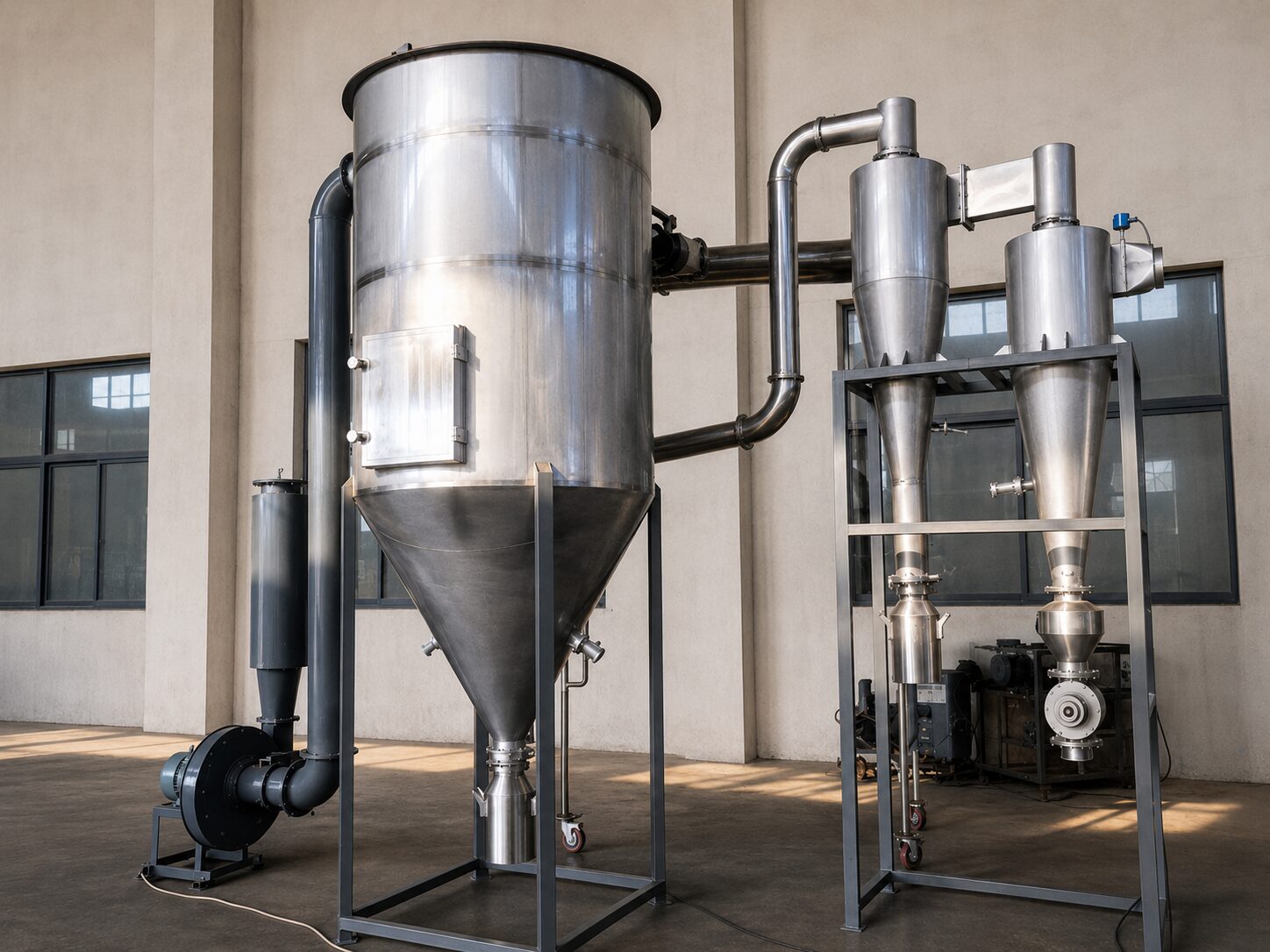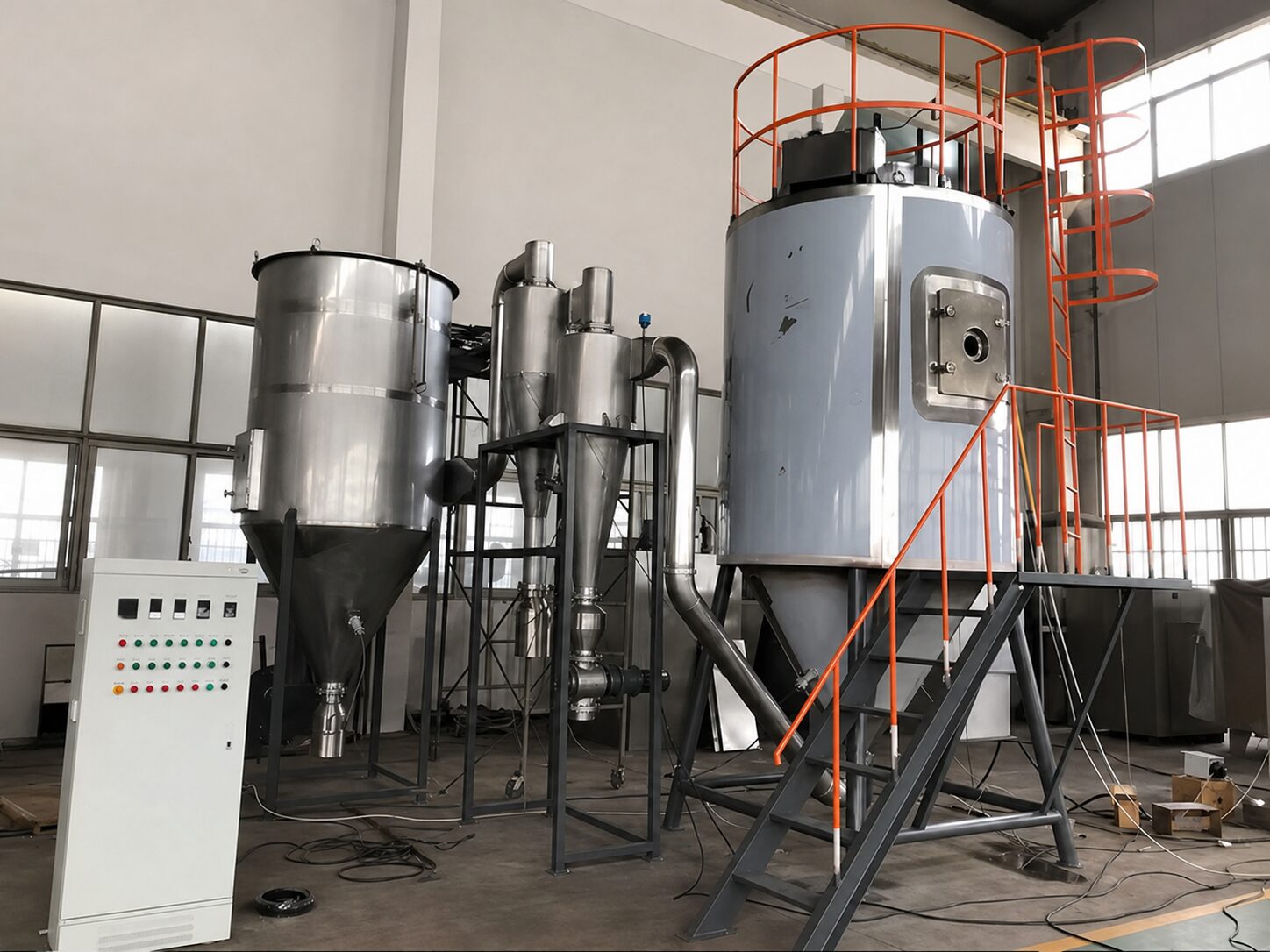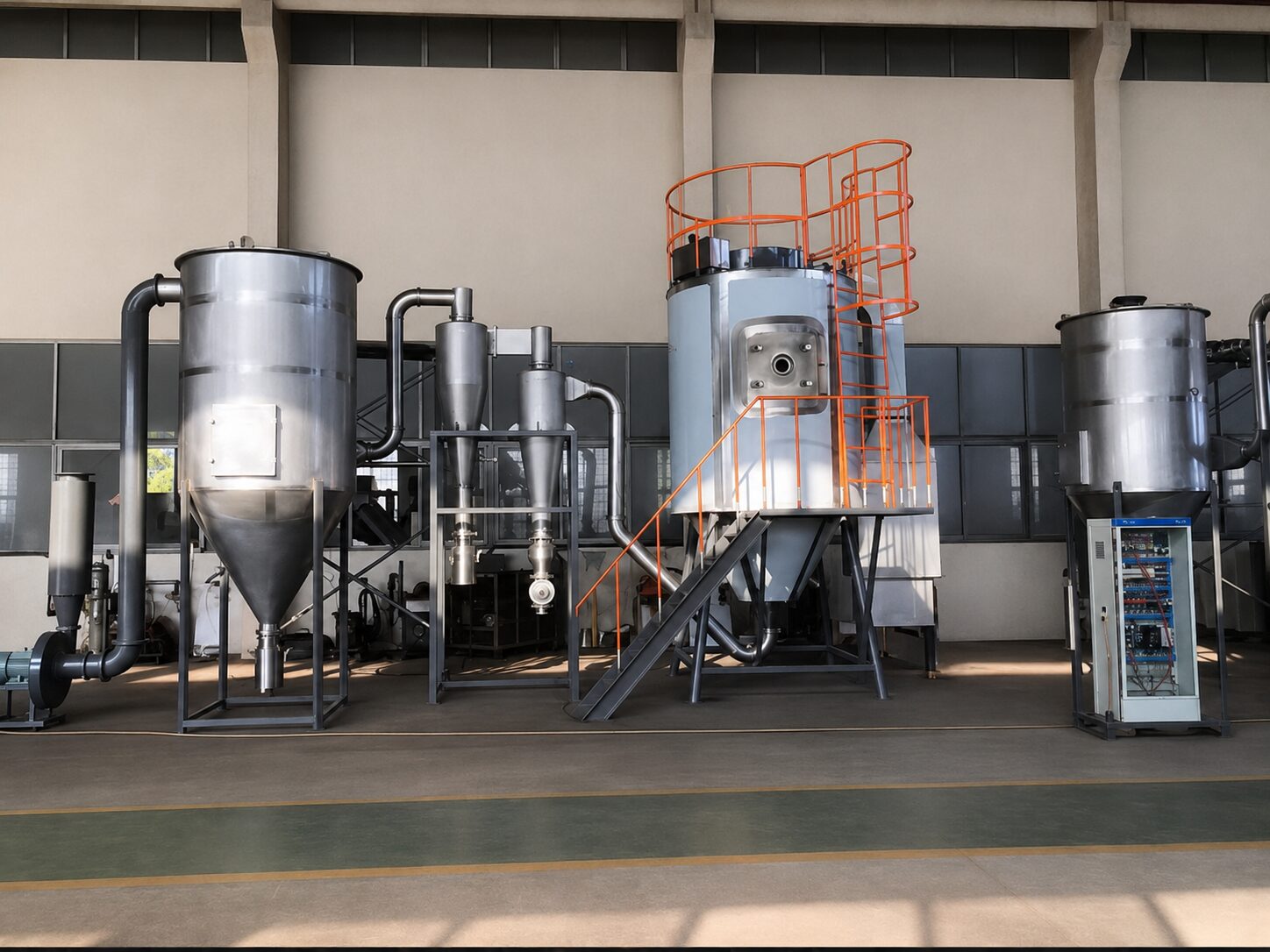
Synthetic resins phenolic, melamine-formaldehyde, urea-formaldehyde, epoxy, polyester, and alkyd resins, represent critical intermediates in the adhesive, coatings, composites, and wood panel manufacturing industries. Resin drying occupies an essential position in the production process, whether the objective is to remove water or organic solvent from a freshly synthesised liquid resin to produce a solid or high-solids product, to dry impregnated paper or fabric sheets in continuous impregnation lines, or to pre-dry particleboard and fibreboard resin-coated wood furnish before hot pressing. Each of these drying contexts differs fundamentally in the physical state of the resin being processed, the temperature constraints imposed by resin chemistry, and the productivity requirements of the downstream manufacturing operation.

Why Choose Kerone Resin Drying Systems
Kerone has developed resin drying application knowledge through partnerships with India’s wood panel, laminates, and adhesive manufacturing industries, which together represent one of the most demanding user communities for resin drying technology. Panel board plants using urea-formaldehyde (UF) resin require precise moisture control of resin-coated furnish immediately before the hot press too much moisture causes press blow, and too little causes insufficient steam generation for the thermal activation of the UF resin bond. Laminate plants require impregnation dryers that cure the paper substrate to a precise B-stage condition partially cured but not fully crosslinked at a defined volatile content, a process that requires tightly controlled dwell time and temperature profiles along the dryer length. Kerone engineers each resin drying system from a detailed process understanding of the downstream application, designing the dryer to deliver exactly the resin condition the downstream process requires.
Types and Features of Resin Drying Systems
Kerone manufactures continuous belt impregnation dryers for thermosetting resin-impregnated paper and textile substrates, which are the backbone of decorative laminate and circuit board manufacturing; spray dryers for solid powder resin production from aqueous resin solutions; drum and belt dryers for resin-blended wood fibre and particle furnish in MDF and particleboard production lines; and agitated vacuum dryers for high-molecular-weight solid epoxy and phenolic resin production where solvent removal at low temperature is required to prevent premature crosslinking during the drying step.
Types and Features of Resin Drying Systems
Continuous belt impregnation dryer with independently controlled temperature zones for precise B-stage curing
Volatile content control (typically 6–8% for melamine overlay paper) via automatic belt speed adjustment
Spray dryer for UF, PF, and MF resin powder production with controlled mean particle size and flow properties
Anti-adhesion surface coatings (PTFE or silicone) on belt and interior surfaces for tacky thermoset resin applications
Formaldehyde emission control: scrubber and carbon adsorber on exhaust air for environmental compliance
Low-temperature operation for thermosetting resins: temperature management to prevent premature gelation
Separate zone temperature and humidity control for B-stage curing precision in laminate dryer applications
Paper web tracking and tension control in continuous impregnation dryers for consistent laminate quality
Powered by AI, ML & IoT
Future-Ready Engineering Driven by AI & IoT
Our advanced AI, ML, and IoT technologies, this solution delivers smarter automation, real-time insights, and predictive intelligence to enhance efficiency and drive future-ready growth.
Real-Time Monitoring & Control
Continuous tracking of process parameters with instant adjustments.
Predictive Maintenance
Intelligent fault detection to prevent failures before they occur.
Adaptive Process Optimization
Dynamic tuning of operations for maximum output and efficiency.
Cloud Dashboards & Analytics
Unified access to real-time insights and performance trends.
Energy & Resource Savings
Smarter utilization of energy to cut costs and reduce waste.
Secure IoT Connectivity
Encrypted data flow with seamless integration across plant systems.
Applications of Resin Drying Systems
Kerone’s Resin Drying Systems are extensively used in laminates, wood panel, adhesive, and specialty chemical manufacturing.
Typical applications include:
Decorative melamine and phenolic impregnated paper drying to B-stage in laminate and flooring manufacturing
UF and MF resin powder production via spray drying for adhesive and moulding compound markets
Resin-coated wood fibre drying before hot press in MDF and HDF manufacturing lines
Epoxy and polyester powder coating resin drying after extrusion and milling in powder coatings manufacture
Alkyd and polyester varnish resin solvent removal at reduced pressure in agitated vacuum dryers
Electrical insulation impregnated paper and mica tape drying for transformer and motor winding applications
Resin drying precision determines the quality of every product the resin goes into the delamination resistance of a high-pressure laminate floor, the bond strength of a particleboard panel, the surface quality of a powder-coated component. Kerone Engineering Solutions provides resin drying systems that are engineered from an understanding of resin chemistry and downstream process requirements, not simply as generic conveyor or spray systems. This application-specific design approach delivers drying systems that contribute measurably to product quality, press or lamination cycle efficiency, and the commercial competitiveness of resin-based manufacturing operations.
Seamless Export Connections Global & Local
Our Global Footprint in Industrial Excellence
Delivering world-class industrial and process solutions across countries with precision, innovation, and reliability.
Peru
Chile
Argentina
Mexico
Colombia
Brazil
USA
Canada
United Kingdom
France
Germany
Spain
Italy
Netherlands
Sweden
Switzerland
Poland
Portugal
Ireland
Czechia
Romania
Hungary
Austria
Greece
Kazakhstan
Uzbekistan
Turkmenistan
Algeria
Egypt
Nigeria
Kenya
South Africa
Saudi Arabia
UAE
Israel
Russia
India
China
Japan
South Korea
Thailand
Vietnam
Malaysia
Singapore
Indonesia
Philippines
Australia
New Zealand
Pan-India Presence. Local Expertise.
Raipur
Bilaspur
Panaji
Vasco da Gama
Gandhinagar
Ahmedabad
Surat
Chandigarh
Gurgaon
Shimla
Manali
Bengaluru
Mysore
Kochi
Pune
Mumbai
Thane
Navi Mumbai
Hyderabad
Chennai
Coimbatore
Kolkata
Lucknow
Jaipur
Udaipur
Jodhpur
Dehradun
Haridwar
Bhubaneswar
Product Gallery
Frequently Asked Questions (FAQ)
B-stage curing is the partial crosslinking of a thermosetting resin to a solid but not fully cured state. Kerone's impregnation dryers achieve this through precise time-at-temperature control: temperature zones are calibrated to advance the cure reaction to the target volatile content without progressing to full gelation.
Kerone's belt impregnation dryers achieve volatile content within ±0.5% of target, typically 6–8% for melamine overlay paper, through automatic belt speed adjustment based on outlet volatile measurement.
Kerone's resin dryer exhaust air systems include scrubbers or activated carbon adsorbers to remove formaldehyde and other volatile organic compounds before discharge, meeting environmental emission standards for UF and MF resin processing.
Yes. Kerone designs temperature zone profiles that maintain product temperature below the gel point identified for each specific resin formulation, with emergency belt speed increase automated as a response to high product temperature detection.
Kerone's belt impregnation dryers operate at paper web speeds of 10–60 m/min depending on paper basis weight, resin pickup percentage, and required volatile content, with variable speed drives enabling fine tuning.
Yes. Kerone's spray dryers convert aqueous UF, MF, and blended resin solutions to free-flowing powder with controlled mean particle diameter, bulk density, and flow properties for adhesive and moulding compound markets.
Kerone designs drum and belt dryers for resin-blended furnish with anti-adhesion coatings on contact surfaces, low-friction conveying, and carefully controlled maximum temperature to prevent resin activation and deposit formation.
Epoxy resin solvent removal by vacuum drying typically operates at 60–100°C under 0.01–0.1 bar absolute, where reduced pressure allows solvent evaporation below the thermal degradation or pre-gelation temperature of the resin.
Kerone's impregnation dryers include motorised tension rolls with closed-loop tension control at the dryer entry and exit, maintaining consistent web tension as paper web dimensions change with moisture loss during drying.
PTFE-coated or silicone-coated belt and guide surfaces are used in impregnation dryers for tacky B-stage resin, preventing substrate adhesion to conveyor components and ensuring clean release at the dryer exit.
Yes. Kerone's precision belt impregnation dryers are used for transformer insulation paper impregnated with phenolic or epoxy resin, with tight temperature and volatile content control for electrical insulation performance compliance.
Kerone's drum dryers for MDF furnish are available from 5 TPH to 50 TPH capacity, matching the output of modern fibre refiner systems at MDF plant scale.
Kerone incorporates swept wall nozzle systems, wall coolers, and anti-adhesion chamber coatings in spray dryers for high-solids or sticky resin feeds, combined with regular automated chamber cleaning cycles.
Kerone provides 12-month warranty, commissioning and operator training, annual preventive maintenance visits, online diagnostic support, and a spare parts programme covering all wear items and control system components.
Yes. Kerone designs dryers for both aqueous resin drying (standard stainless steel construction) and solvent-based systems (ATEX-rated equipment with solvent recovery condensers and explosion protection measures).
Kerone’s custom-designed heating and processing solutions are built to meet the demands of your growing operations. Whether you’re upgrading equipment, expanding production, or need a tailor-made solution