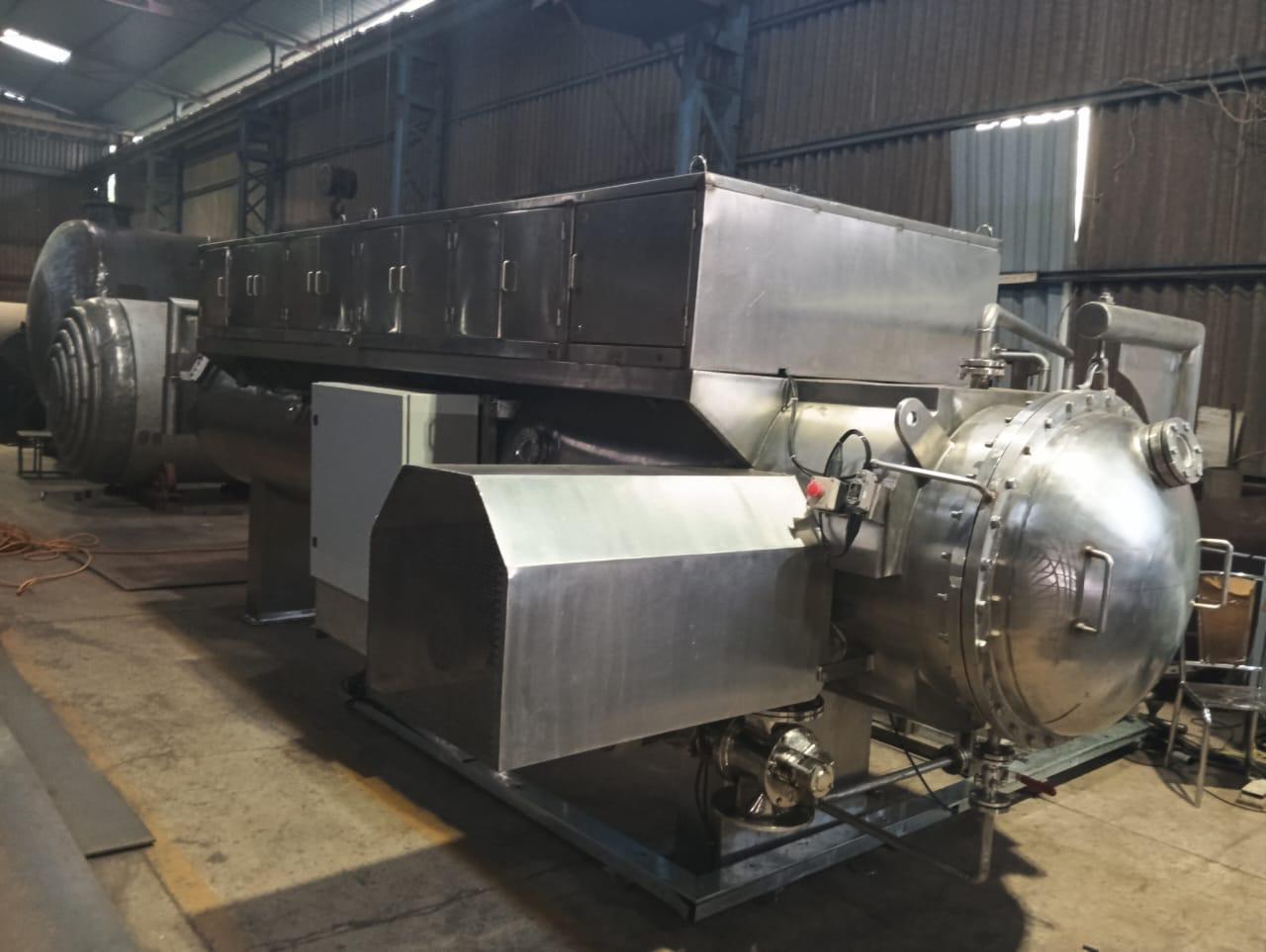
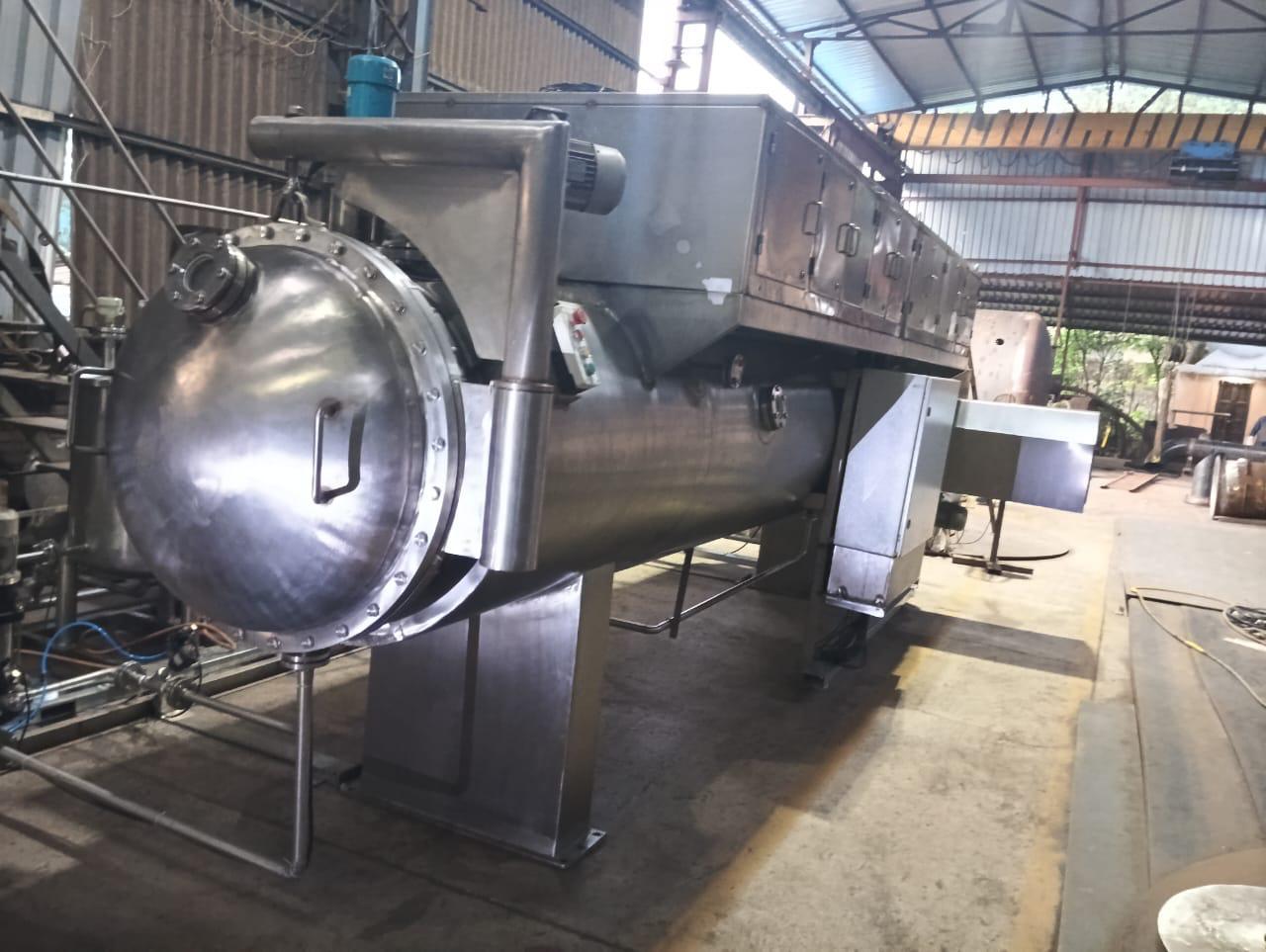
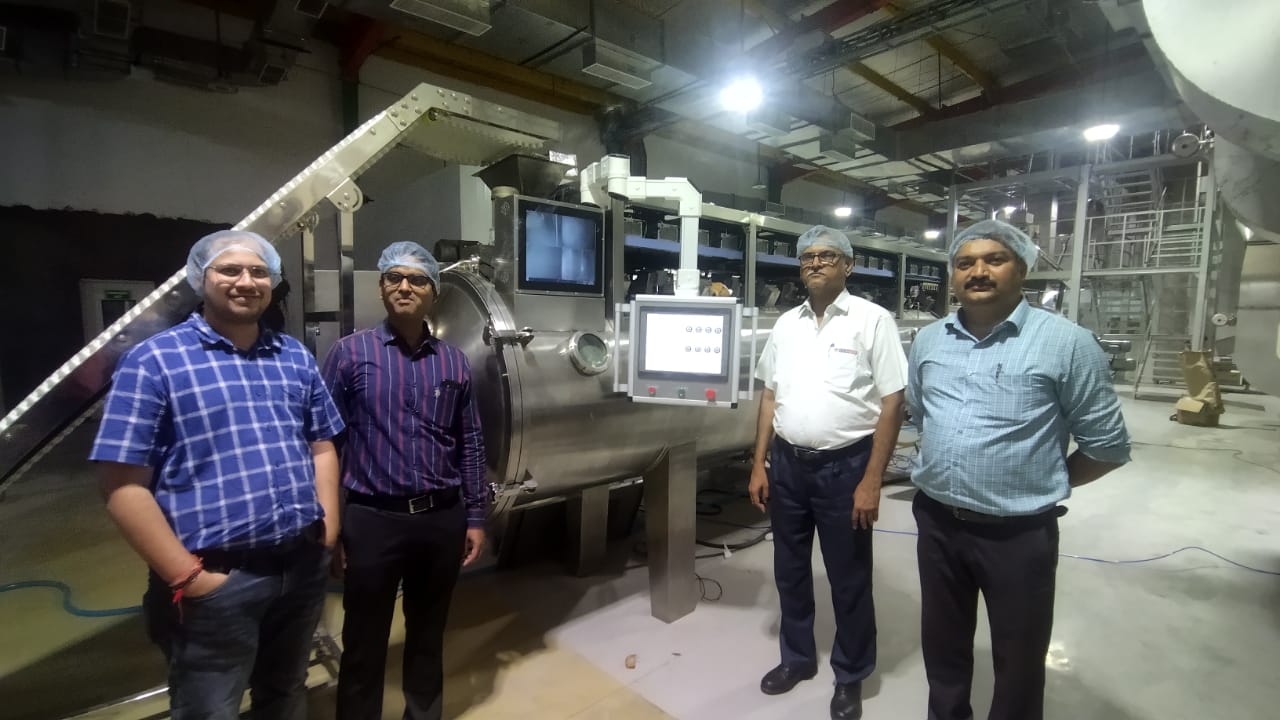
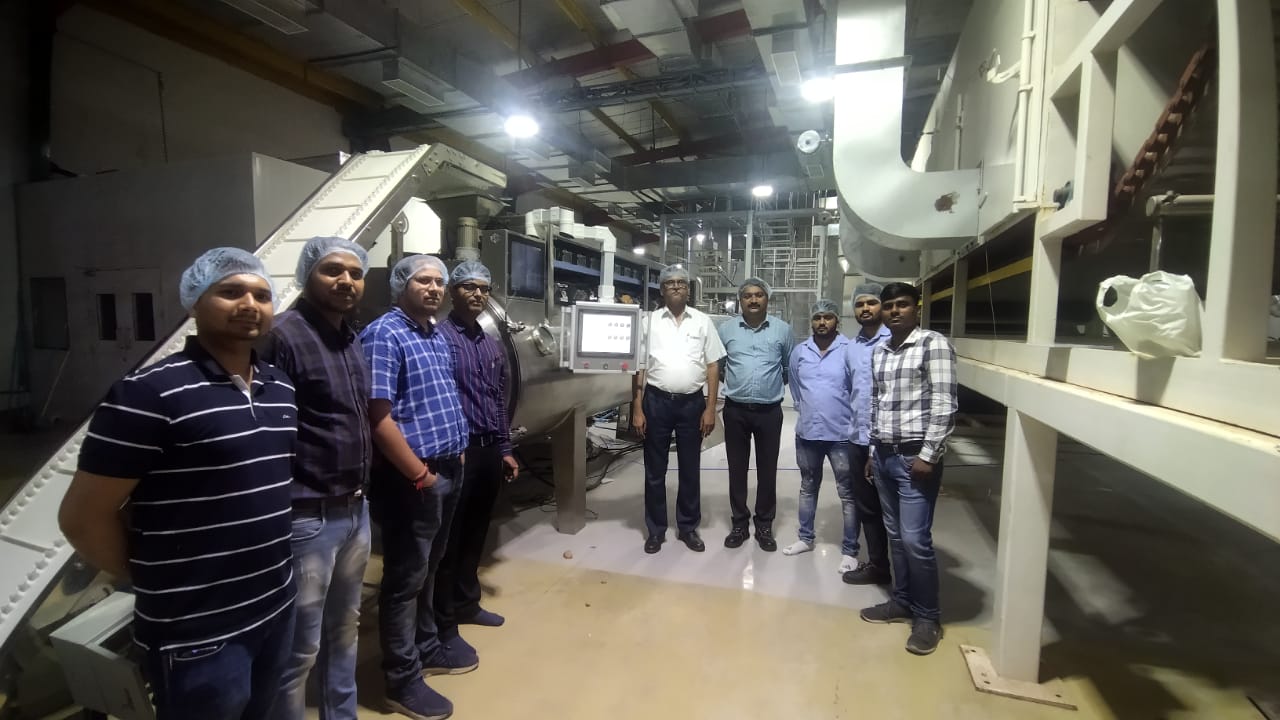
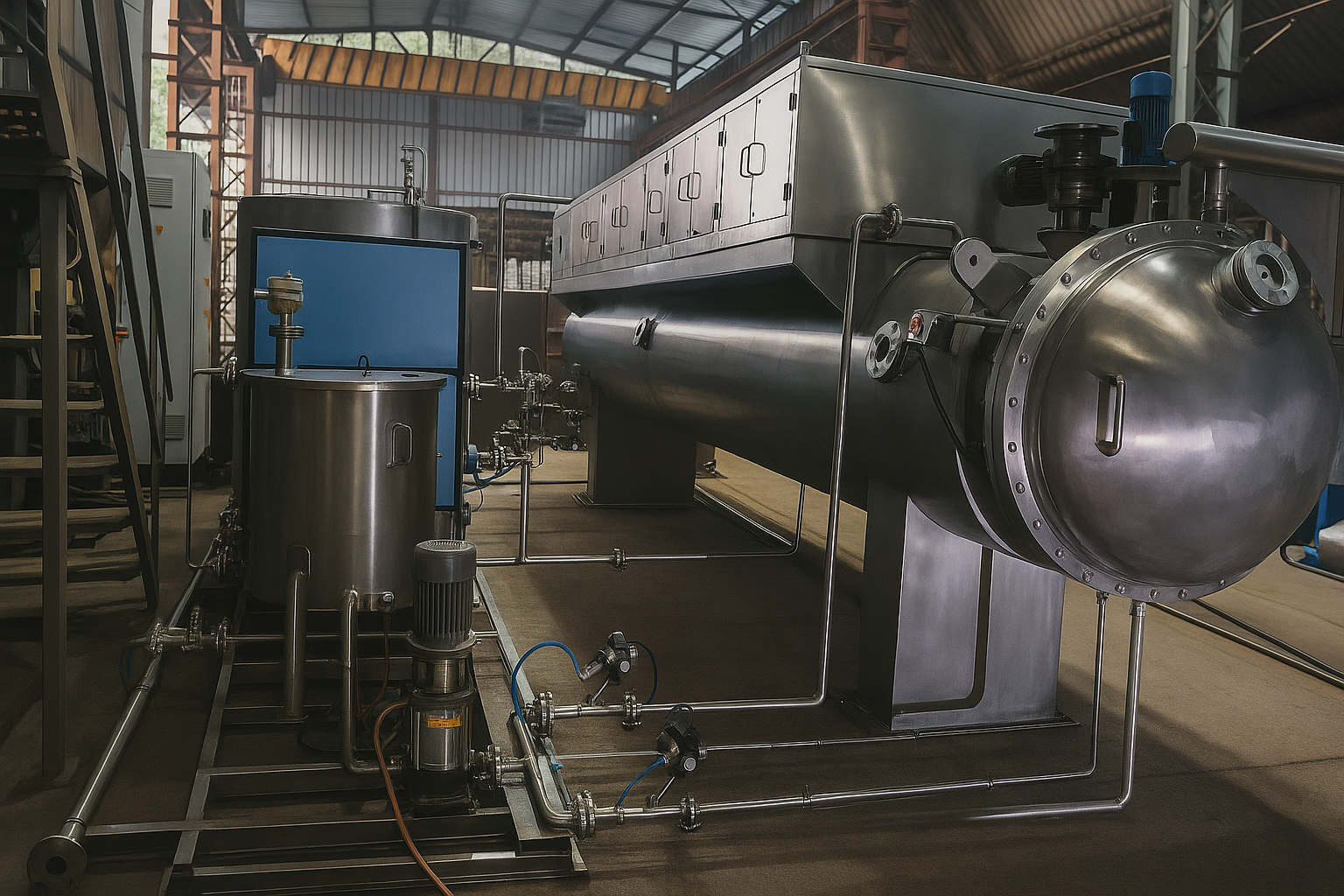
The Solid-State Microwave Assisted Vacuum Dryer from Kerone is a pioneering industrial drying system that integrates next-generation solid-state microwave technology with the power of vacuum processing. Unlike conventional magnetron-based microwave dryers, solid-state microwave generators use semiconductor power amplifiers to produce highly controllable, frequency-agile microwave energy — delivering unprecedented precision in volumetric heating. When combined with a vacuum environment, which significantly lowers the boiling point of water, this system achieves rapid, uniform moisture removal at temperatures that traditional dryers simply cannot match without causing thermal damage. The result is a drying solution that preserves color, aroma, biological activity, and structural integrity in even the most delicate of materials — making it the preferred choice for high-value pharmaceutical, nutraceutical, and specialty food applications.
Kerone is one of the few manufacturers in the world to offer a commercially mature Solid-State Microwave Assisted Vacuum Dryer, and the choice is grounded in both technological leadership and application-specific expertise. Kerone’s engineering team has invested significantly in understanding the dielectric properties of diverse industrial materials, enabling the design of drying recipes that maximize energy transfer efficiency while protecting product integrity. The solid-state microwave source offers exceptional operational stability, longer service life compared to magnetron sources, and the ability to precisely tune frequency for different product loads — a capability that directly translates to higher product quality and lower rejection rates. With Kerone’s dedicated process development labs, customers receive validated drying protocols before equipment commissioning, significantly reducing scale-up risk and time to market.
Types and Features of Solid-State Microwave Assisted Vacuum Dryer
Kerone’s Solid-State Microwave Assisted Vacuum Dryer is available in bench-scale research units for R&D applications, pilot-scale systems for process development and small-batch production, and full industrial-scale continuous or batch units for high-volume manufacturing. The vacuum chamber is constructed from 316L pharmaceutical-grade stainless steel with electro-polished interior surfaces. Microwave power outputs range from 1 kW in research models to over 100 kW in industrial configurations, with operating frequencies typically at 915 MHz or 2.45 GHz. The vacuum system achieves pressures as low as 1 mbar, and integrated condenser systems capture evaporated solvents for recovery or safe disposal. Multi-zone heating and real-time moisture sensors are standard on production models.
Key Features
Solid-state microwave generator providing superior frequency control, stability, and longer operational lifespan vs. magnetrons
Vacuum operation at pressures as low as 1 mbar enabling low-temperature drying that protects bioactive compounds and heat-sensitive ingredients
Volumetric internal heating mechanism ensuring uniform energy distribution across the entire product mass
Real-time dielectric moisture sensing with closed-loop microwave power adjustment for precise endpoint control
316L stainless steel vacuum chamber with electro-polished surfaces for CIP/SIP and GMP regulatory compliance
Integrated solvent recovery condensers for safe processing of organic solvent-based materials
Scalable microwave power from 1 kW to 100+ kW to support R&D through full-scale industrial production
Multi-zone heating configurations with independent power control for heterogeneous or layered product loads
Powered by AI, ML & IoT
Future-Ready Engineering Driven by AI & IoT
Our advanced AI, ML, and IoT technologies, this solution delivers smarter automation, real-time insights, and predictive intelligence to enhance efficiency and drive future-ready growth.
Real-Time Monitoring & Control
Continuous tracking of process parameters with instant adjustments.
Predictive Maintenance
Intelligent fault detection to prevent failures before they occur.
Adaptive Process Optimization
Dynamic tuning of operations for maximum output and efficiency.
Cloud Dashboards & Analytics
Unified access to real-time insights and performance trends.
Energy & Resource Savings
Smarter utilization of energy to cut costs and reduce waste.
Secure IoT Connectivity
Encrypted data flow with seamless integration across plant systems.
Applications of Solid-State Microwave Assisted Vacuum Dryer
Kerone’s Solid-State Microwave Assisted Vacuum Dryers are extensively used in high-value processing industries where product quality, bioactivity retention, and rapid throughput are paramount.
Typical applications include:
Pharmaceutical manufacturing: drying of APIs, lyophilized formulations, and moisture-sensitive drug intermediates
Nutraceutical production: preserving potency of probiotics, enzymes, vitamins, and botanical extracts during drying
Specialty food processing: drying premium ingredients such as truffle, saffron, and marine bioactives with full sensory retention
Advanced materials processing: drying nano-materials, aerogels, and specialty coatings without structural collapse
Cannabis and botanical extraction: rapid solvent removal from extracts while preserving terpene and cannabinoid profiles
Biotechnology: processing fermentation-derived products, cell cultures, and protein powders under sterile vacuum conditions
The Solid-State Microwave Assisted Vacuum Dryer from Kerone represents the convergence of two powerful drying technologies into a single high-performance industrial system. By combining the volumetric heating precision of solid-state microwaves with the low-temperature efficiency of vacuum processing, Kerone delivers a dryer that is simply without peer for high-value, quality-critical applications. Whether you are developing a new pharmaceutical formulation, scaling up a nutraceutical production line, or seeking to differentiate your premium food product through superior quality preservation, Kerone’s engineering expertise and after-sales support ensure that this technology performs reliably from day one. Reach out to Kerone today for a process feasibility study tailored to your product.
Seamless Export Connections Global & Local
Our Global Footprint in Industrial Excellence
Delivering world-class industrial and process solutions across countries with precision, innovation, and reliability.
Peru
Chile
Argentina
Mexico
Colombia
Brazil
USA
Canada
United Kingdom
France
Germany
Spain
Italy
Netherlands
Sweden
Switzerland
Poland
Portugal
Ireland
Czechia
Romania
Hungary
Austria
Greece
Kazakhstan
Uzbekistan
Turkmenistan
Algeria
Egypt
Nigeria
Kenya
South Africa
Saudi Arabia
UAE
Israel
Russia
India
China
Japan
South Korea
Thailand
Vietnam
Malaysia
Singapore
Indonesia
Philippines
Australia
New Zealand
Pan-India Presence. Local Expertise.
Raipur
Bilaspur
Panaji
Vasco da Gama
Gandhinagar
Ahmedabad
Surat
Chandigarh
Gurgaon
Shimla
Manali
Bengaluru
Mysore
Kochi
Pune
Mumbai
Thane
Navi Mumbai
Hyderabad
Chennai
Coimbatore
Kolkata
Lucknow
Jaipur
Udaipur
Jodhpur
Dehradun
Haridwar
Bhubaneswar
Product Gallery
Frequently Asked Questions (FAQ)
Magnetron-based systems generate microwave energy through vacuum tubes with limited frequency tunability and shorter lifespans. Solid-state systems use semiconductor amplifiers to produce precisely controlled, frequency-agile microwave energy with greater stability, longer service life, and superior process repeatability.
Vacuum reduces the atmospheric pressure inside the drying chamber, lowering the boiling point of water. This allows moisture to evaporate at much lower temperatures (as low as 15–20°C under deep vacuum), preventing thermal degradation of heat-sensitive compounds.
Yes. Kerone integrates explosion-proof electrical components and solvent recovery condensers into the system design, enabling safe processing of materials containing flammable organic solvents under vacuum.
Solid-state microwave generators allow frequency tuning and multi-mode cavity design, which distributes microwave energy uniformly throughout the product. Combined with product rotation or mixing mechanisms, this eliminates hot spots and ensures consistent moisture removal.
The system handles liquids, slurries, granules, powders, sheets, and solid cakes. Product trays, rotary drums, and continuous belt configurations are available depending on product form and batch requirements.
Yes. Kerone's pharmaceutical configuration includes 316L SS construction, CIP/SIP capability, 21 CFR Part 11 compliant data systems, and full IQ/OQ/PQ validation support.
Power levels range from 1 kW (lab scale) to over 100 kW (industrial scale). Selection is based on product load, moisture content, thermal sensitivity, and required throughput — all determined during Kerone's application engineering phase.
Solid-State Microwave Vacuum Drying is significantly faster than lyophilisation, reducing drying cycles from 24–72 hours to 1–4 hours in many applications, while achieving comparable or superior product quality at substantially lower capital and operating costs.
The system processes liquids, slurries, granules, powders, sheets, and solid cakes, with configuration adjusted through product trays for static loads, rotary drums for materials needing continuous mixing during drying, or continuous belt systems for high-throughput operations. Applications span pharmaceutical API and lyophilized formulation drying, nutraceutical production preserving probiotic and enzyme potency, specialty food processing for premium ingredients like saffron and marine bioactives, advanced materials processing for nanomaterials and aerogels, cannabis and botanical extraction requiring rapid solvent removal, and biotechnology applications involving fermentation-derived products and protein powders. The common thread across these diverse applications is a need for precise, low-temperature moisture or solvent removal where product quality justifies investment in more sophisticated drying technology than conventional alternatives offer.
Pharmaceutical configurations should include 316L stainless steel construction with electro-polished interior surfaces meeting CIP and SIP cleaning validation requirements, 21 CFR Part 11 compliant data systems for electronic record integrity, and full IQ, OQ, and PQ validation support to satisfy installation, operational, and performance qualification requirements regulators expect during facility audits. Buyers should request documentation packages covering material certifications for product-contact surfaces, validated cleaning protocols, and data logging capability that captures process parameters for each batch in a format suitable for regulatory submission. Since GMP compliance requirements vary somewhat by region and specific regulatory body, it is worth confirming with the supplier early in the specification process that documentation will meet the standards of the buyer's specific regulatory jurisdiction rather than a generic international baseline.
Reducing atmospheric pressure inside the drying chamber lowers the boiling point of water significantly, allowing moisture to evaporate at temperatures as low as 15 to 20°C under deep vacuum conditions rather than the 80 to 100°C typically needed at atmospheric pressure. This is critical for pharmaceutical actives, probiotics, enzymes, and botanical extracts that degrade or lose bioactivity when exposed to elevated temperatures for extended periods. Combining this low-temperature vacuum environment with solid-state microwave's precise volumetric heating means moisture can be removed quickly throughout the product mass without the thermal stress that either atmospheric-pressure drying or less controllable heating methods would introduce, preserving potency and structural integrity in materials where quality degradation directly impacts product value.
Because the system is available across bench-scale research units, pilot-scale process development systems, and full industrial-scale configurations sharing the same underlying solid-state microwave and vacuum technology, companies can develop a new formulation on a small research unit and scale findings through pilot trials to full production with greater confidence that the fundamental drying mechanism will behave consistently across scales. This is particularly valuable for pharmaceutical and nutraceutical companies with active development pipelines, where today's R&D project becomes tomorrow's commercial product requiring rapid scale-up. Multi-zone heating configurations with independent power control also allow a single industrial unit to handle heterogeneous or layered product loads, supporting manufacturing flexibility as a company's product portfolio diversifies beyond its original target application.
A frequent misconception is assuming that drying parameters validated on a 1 kW bench-scale research unit will transfer directly and proportionally to a full industrial-scale system simply by increasing power output. In practice, scale-up involves additional engineering considerations around multi-zone heating configuration, product load distribution within a larger chamber, and maintaining the same uniform volumetric heating and vacuum conditions across a much larger product mass that the bench unit achieves easily with its small load. Kerone's approach of validating drying protocols through dedicated process development labs before equipment commissioning exists specifically to address this scale-up risk, and buyers moving from R&D to production volume should expect a structured pilot-scale intermediate step rather than jumping directly from lab trials to full industrial deployment.
Processing organic solvent-based materials requires explosion-proof electrical components rated for the specific solvent classification being handled, combined with integrated solvent recovery condensers that capture evaporated solvent vapor for recovery or safe disposal rather than allowing it to accumulate within the vacuum chamber or escape into the facility environment. This dual approach of hazard-rated electrical design and active vapor capture allows safe processing of materials such as cannabis and botanical extracts where solvent removal is a core part of the manufacturing process. Buyers working with specific solvent classes should confirm with their supplier that the electrical classification and condenser recovery capacity match their particular solvent's volatility and flammability characteristics, since requirements differ between, for example, ethanol-based extracts and other organic solvent systems.
Kerone’s custom-designed heating and processing solutions are built to meet the demands of your growing operations. Whether you’re upgrading equipment, expanding production, or need a tailor-made solution


 Peru
Peru Chile
Chile Argentina
 Mexico
 Colombia
 Brazil
 USA
USA Canada
 United Kingdom
 France
 Germany
 Spain
Spain Italy
Italy Netherlands
 Sweden
 Switzerland
 Poland
 Portugal
 Ireland
 Czechia
 Romania
 Hungary
 Austria
 Greece
 Kazakhstan
 Uzbekistan
 Turkmenistan
 Algeria
 Egypt
Egypt Nigeria
 Kenya
Kenya South Africa
 Saudi Arabia
 UAE
UAE Israel
 Russia
 India
India China
China Japan
Japan South Korea
 Thailand
 Vietnam
 Malaysia
 Singapore
 Indonesia
 Philippines
 Australia
 New Zealand