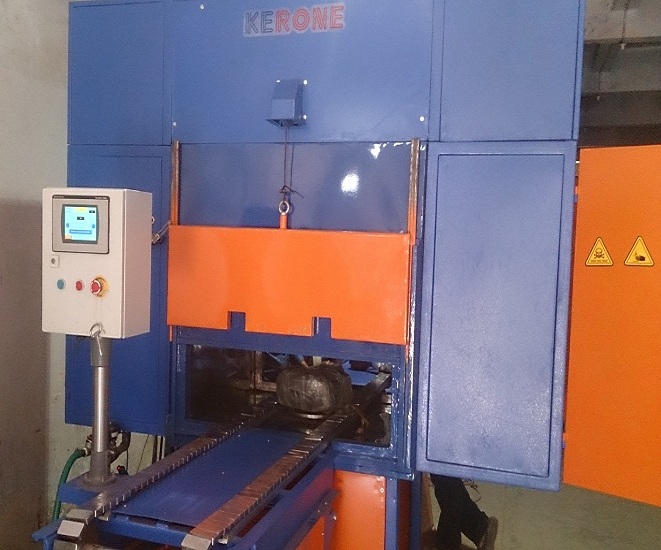
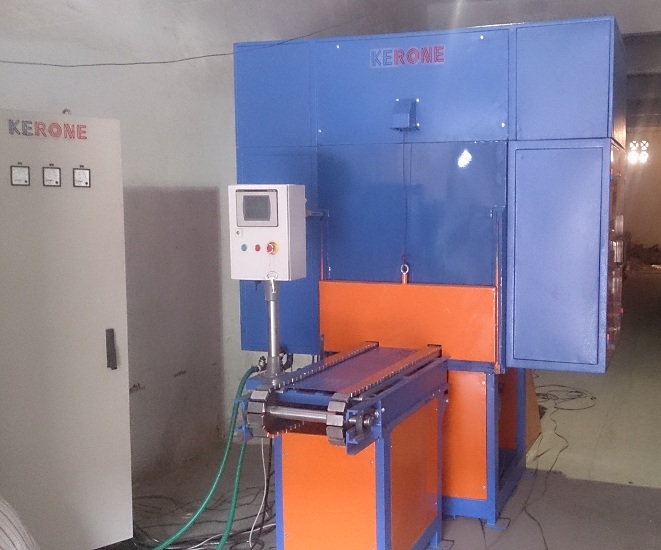
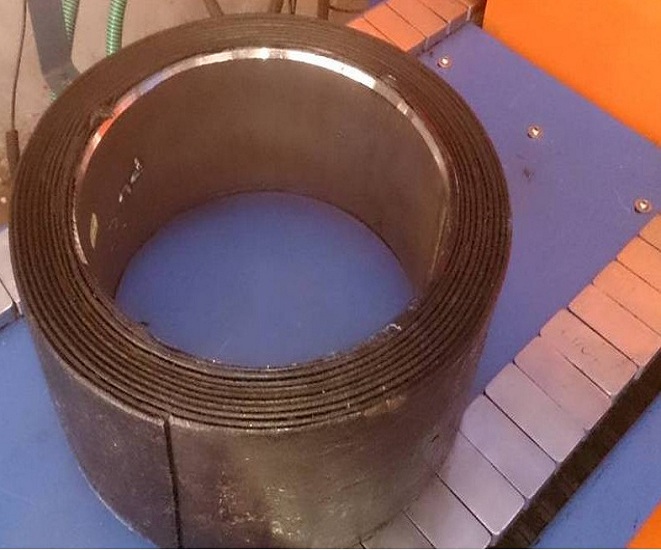
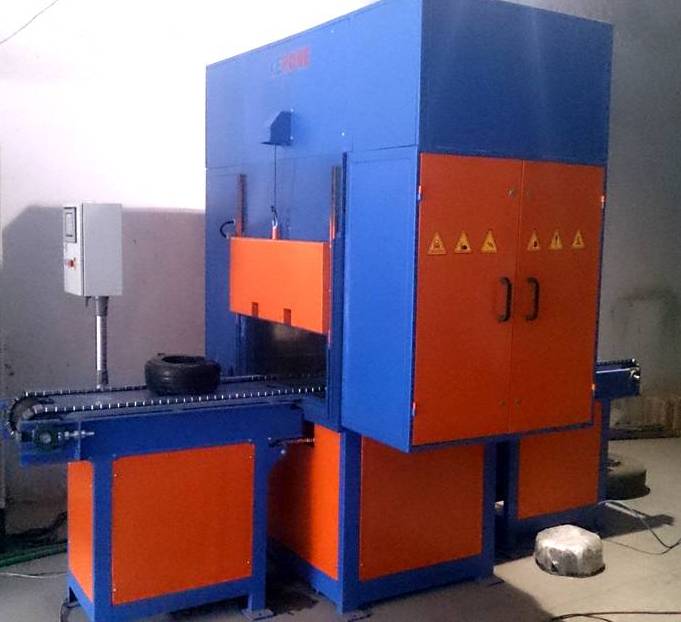
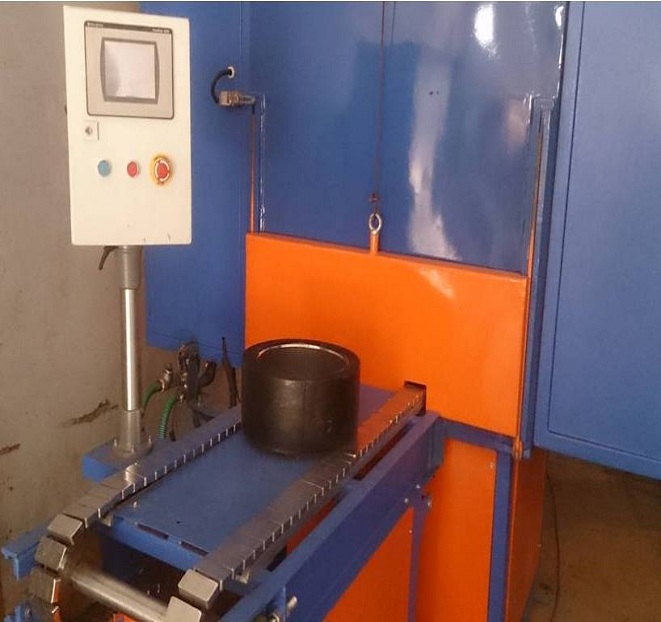
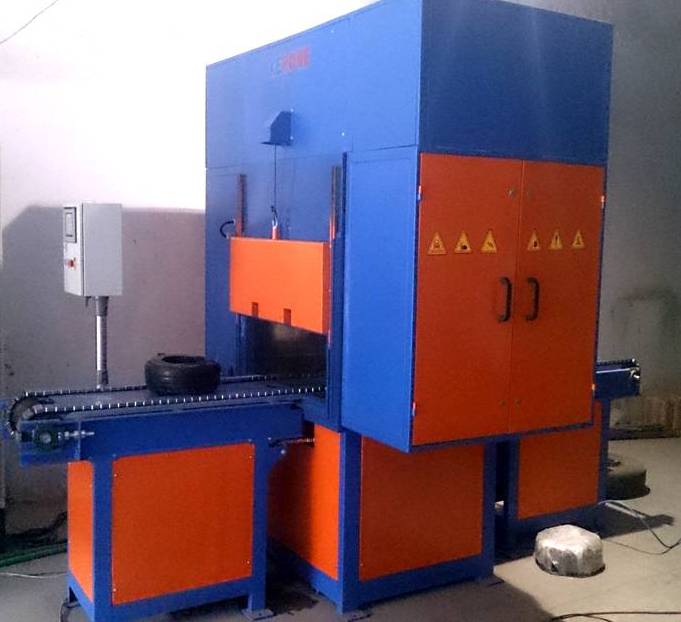
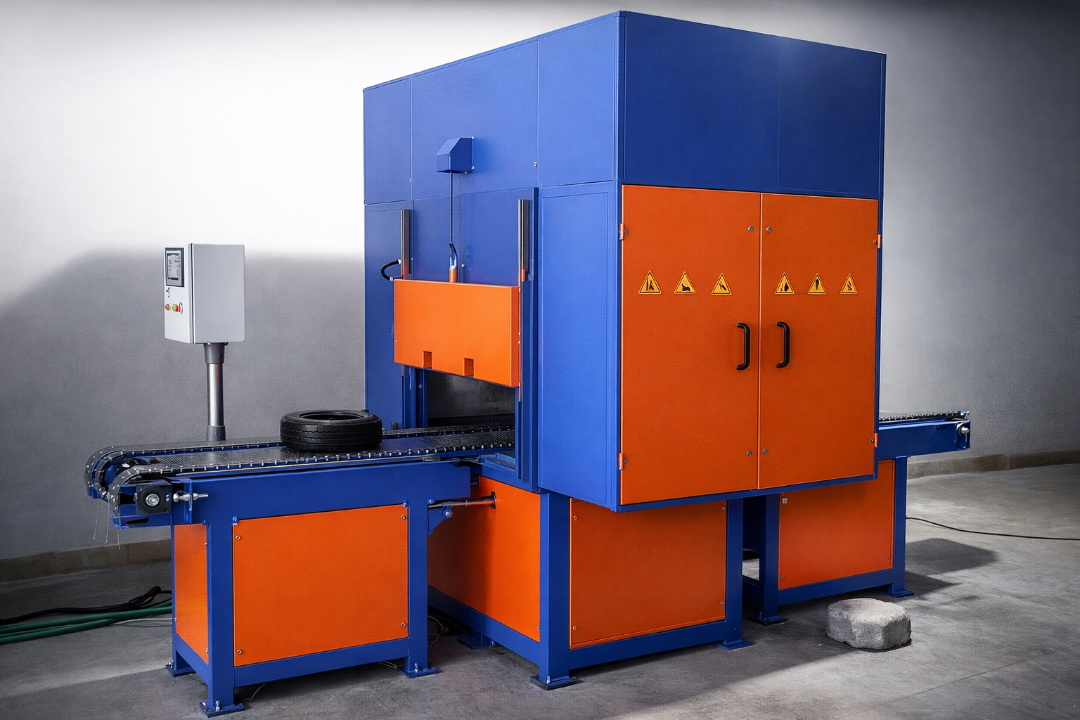
KERONE is India’s premier organization and amongst the early adopter of microwave technology, and understood its importance in the industrial heating, pre-heating and drying need, this gave us upper hand over other when it comes designing and manufacturing heating or drying solution that adopts Microwaves radiators as source of heat. Till now we have manufactured various microwave heater for the various applications and with different specifications, this huge experience enabled to have expertise to design and manufacture any type customized heating solution that uses microwave heaters alone or combination of microwave and convection heats if needed.
Why Choose Kerone Microwave Solid Tyre Preheating Systems
We have worked with multiple rubber processing plants which had made us very acquainted with the need and future demand of the rubber and tyre processing industries. The new era of higher quality product in lesser time does not fits the conventional preheating and heating system that these industries are using at present hence to equip the industry with best of machinery to complete the process, we adopted the Microwave technology this made the total process of heating and drying very quick and efficient. We are providing solution that can be used for rubber mixing, extrusion, milling and curing machinery to tire and rubber producers worldwide.
Whether you want to add rubber machinery to an existing line, or install a complete line, we are at your disposal for any of your technical queries you have. We would be glad to share our experience in rubber processing solutions and to provide you full technical support and equipment supply to fulfill your needs.
Types and Features of Microwave Solid Tyre Preheating Systems
Microwave Solid Tyre Preheating Systems are designed to provide fast, uniform, and energy-efficient heating of solid tyres before further processing such as pressing or bonding. These systems are available in different configurations including batch type, conveyorized, and fully automated continuous models to suit various production capacities. Key features include precise temperature control, uniform volumetric heating, reduced preheating time, low energy consumption, minimal surface overheating, and easy integration into existing production lines. Their robust design, digital control panels, and customizable power settings ensure consistent performance, improved productivity, and enhanced product quality.
General Features
Advantages of Microwave in Solid Tyre Pre-Heating
Longer functional life
Fast and uniform heating
Low and easy maintenance
Selective heating
Dense construction
Direct utilization of large-sized feedstocks
Quick and easy installation
Treatment of non-homogeneous wastes
Precisely designed and engineered
Waste reduction and material recovery
Hassle-free functioning
Better production quality
Longer service life
New materials and products
Rugged construction
Energy efficiency
High durability
Overall cost effectiveness / savings
Energy and cost efficient
Improved process control
Power saving
Ability to operate from an electrical source
Key Features
High thermal and processing efficiency
Low maintenance and easy operation
Suitable for heat-sensitive materials
Fully adjustable and customizable process parameters
Available in batch and continuous configurations
Uniform processing and consistent product quality
Powered by AI, ML & IoT
Future-Ready Engineering Driven by AI & IoT
Our advanced AI, ML, and IoT technologies, this solution delivers smarter automation, real-time insights, and predictive intelligence to enhance efficiency and drive future-ready growth.
Real-Time Monitoring & Control
Continuous tracking of process parameters with instant adjustments.
Predictive Maintenance
Intelligent fault detection to prevent failures before they occur.
Adaptive Process Optimization
Dynamic tuning of operations for maximum output and efficiency.
Cloud Dashboards & Analytics
Unified access to real-time insights and performance trends.
Energy & Resource Savings
Smarter utilization of energy to cut costs and reduce waste.
Secure IoT Connectivity
Encrypted data flow with seamless integration across plant systems.
Applications of Microwave Solid Tyre Preheating Systems
Kerone’s Microwave Solid Tyre Preheating Systems are extensively used in tyre manufacturing and retreading industries. Typical applications include:
Preheating solid rubber tyres for forklift and industrial vehicle applications
OTR (Off-The-Road) solid tyre preheating for mining and heavy equipment
Solid press-on tyre preheating for warehousing and material handling equipment
Retreading operations requiring fast and uniform tyre preheating before bonding
Aircraft solid rubber component preheating for aerospace maintenance
Custom rubber moulding preheating for thick rubber profile components
Kerone’s Microwave Solid Tyre Preheating Systems deliver a decisive competitive advantage to tyre manufacturers and retreaders by dramatically reducing preheating cycle times, improving temperature uniformity, and lowering energy consumption. The superior temperature distribution achieved by microwave preheating translates directly into better vulcanization quality, reduced press cycle times, and lower scrap rates. Kerone’s application expertise and commitment to engineering excellence ensure that our clients receive preheating solutions precisely matched to their tyre types, production volumes, and facility layouts.
Seamless Export Connections Global & Local
Our Global Footprint in Industrial Excellence
Delivering world-class industrial and process solutions across countries with precision, innovation, and reliability.
Peru
Chile
Argentina
Mexico
Colombia
Brazil
USA
Canada
United Kingdom
France
Germany
Spain
Italy
Netherlands
Sweden
Switzerland
Poland
Portugal
Ireland
Czechia
Romania
Hungary
Austria
Greece
Kazakhstan
Uzbekistan
Turkmenistan
Algeria
Egypt
Nigeria
Kenya
South Africa
Saudi Arabia
UAE
Israel
Russia
India
China
Japan
South Korea
Thailand
Vietnam
Malaysia
Singapore
Indonesia
Philippines
Australia
New Zealand
Pan-India Presence. Local Expertise.
Raipur
Bilaspur
Panaji
Vasco da Gama
Gandhinagar
Ahmedabad
Surat
Chandigarh
Gurgaon
Shimla
Manali
Bengaluru
Mysore
Kochi
Pune
Mumbai
Thane
Navi Mumbai
Hyderabad
Chennai
Coimbatore
Kolkata
Lucknow
Jaipur
Udaipur
Jodhpur
Dehradun
Haridwar
Bhubaneswar
Product Gallery
Frequently Asked Questions (FAQ)
It is used for efficient processing, heating, drying or material transformation.
Solid and off-the-road tyres are thick, dense rubber masses where conventional convection ovens struggle to deliver uniform heat through the full cross-section within a reasonable time, often leaving the core significantly cooler than the surface when the tyre reaches the press. Microwave energy penetrates the rubber volumetrically, heating from the inside as well as the outside simultaneously, which produces a far more uniform temperature profile through thick tyre sections before vulcanization begins. This uniformity translates directly into more consistent cross-link density throughout the tyre during pressing, reducing the internal cure variation that contributes to premature failure, uneven wear, or delamination in solid tyre applications subjected to heavy industrial loads.
High efficiency, process reliability and complete customization.
Food, chemical, pharma, biomass, rubber, textile and more.
Kerone ensures high product quality through strict engineering standards, advanced testing procedures, and precision-controlled manufacturing systems.
Rotating turntable mechanisms continuously reposition the tyre relative to the microwave field, combined with optimized cavity design, ensures uniform temperature distribution throughout the rubber mass.
The preheated tyre is immediately transferred to the vulcanization press while temperature is maintained, ensuring optimal vulcanization conditions with reduced press cycle time.
Yes, all Kerone microwave systems comply with international microwave safety standards, with interlocked access panels, leakage detection, and automatic shutdown on fault conditions.
Once a tyre reaches target preheat temperature, it is transferred immediately to the vulcanization press while temperature is actively maintained, ensuring the rubber enters the press at optimal condition for curing rather than cooling during transfer and losing the benefit of preheating. This requires tight coordination between the preheater's cycle completion and press availability, often managed through PLC-based scheduling that signals press readiness before the preheat cycle finishes. Minimizing the physical distance and transfer time between preheater and press, along with insulated transfer mechanisms where transfer time is unavoidable, helps preserve the temperature uniformity achieved during preheating so the press cycle benefits fully from the reduced ramp-up time.
Scrap and rework in solid tyre production frequently trace back to uneven vulcanization caused by temperature gradients within the rubber mass at the start of the press cycle. When a tyre enters the press with cooler internal sections, those areas cure more slowly and can end up undercured relative to the surface, creating internal weaknesses that may not be visible until the tyre is in service and fails prematurely under load. By delivering a uniform starting temperature throughout the tyre's cross-section, microwave preheating reduces this gradient-driven cure inconsistency, which directly lowers the rate of tyres rejected during quality inspection or returned due to in-service failure. Manufacturers typically track this improvement through reduced scrap percentage and warranty claim rates after switching from conventional to microwave preheating.
Cycle time depends heavily on tyre mass, cross-sectional thickness, and target preheat temperature, but microwave preheating consistently achieves shorter cycle times than convection ovens for equivalent thick-section tyres because energy is delivered directly into the rubber mass rather than relying on slow conduction from a heated air environment. Convection ovens preheating large OTR tyres can require extended dwell times measured in hours to achieve adequate core temperature, while microwave systems typically reduce this substantially due to volumetric heating. Exact cycle time figures should be established through supplier trials using the specific tyre size and compound in question, since published general figures can vary widely based on tyre geometry and target temperature.
The evaluation should start with quantifying current scrap rates, press cycle times, and energy costs associated with existing preheating methods, then comparing these against the typical improvements microwave preheating delivers, including reduced press cycle time, improved temperature uniformity, and lower energy consumption per tyre processed. Facilities running high volumes of thick-section solid or OTR tyres, where temperature gradient problems are most pronounced, typically see the fastest return on investment. Smaller operations or those producing thinner-walled tyres where conventional preheating already performs adequately may see a longer payback period. Requesting a trial run with the manufacturer's actual tyre sizes and compounds provides the most reliable basis for this investment decision rather than relying on generic industry figures.
Capacity can be scaled by adding parallel preheating units to handle increased throughput, by specifying a larger cavity and higher-power generator configuration from the outset to accommodate anticipated growth, or by upgrading conveyor and turntable mechanisms to increase cycle frequency. Manufacturers expecting volume growth within a few years of initial installation should discuss modular expansion options with their supplier during the specification phase, including electrical infrastructure capacity for additional generators, since retrofitting power capacity after installation is typically more expensive and disruptive than planning for it during the initial facility design and electrical layout.
Kerone’s custom-designed heating and processing solutions are built to meet the demands of your growing operations. Whether you’re upgrading equipment, expanding production, or need a tailor-made solution


 Peru
Peru Chile
Chile Argentina
 Mexico
 Colombia
 Brazil
 USA
USA Canada
 United Kingdom
 France
 Germany
 Spain
Spain Italy
Italy Netherlands
 Sweden
 Switzerland
 Poland
 Portugal
 Ireland
 Czechia
 Romania
 Hungary
 Austria
 Greece
 Kazakhstan
 Uzbekistan
 Turkmenistan
 Algeria
 Egypt
Egypt Nigeria
 Kenya
Kenya South Africa
 Saudi Arabia
 UAE
UAE Israel
 Russia
 India
India China
China Japan
Japan South Korea
 Thailand
 Vietnam
 Malaysia
 Singapore
 Indonesia
 Philippines
 Australia
 New Zealand