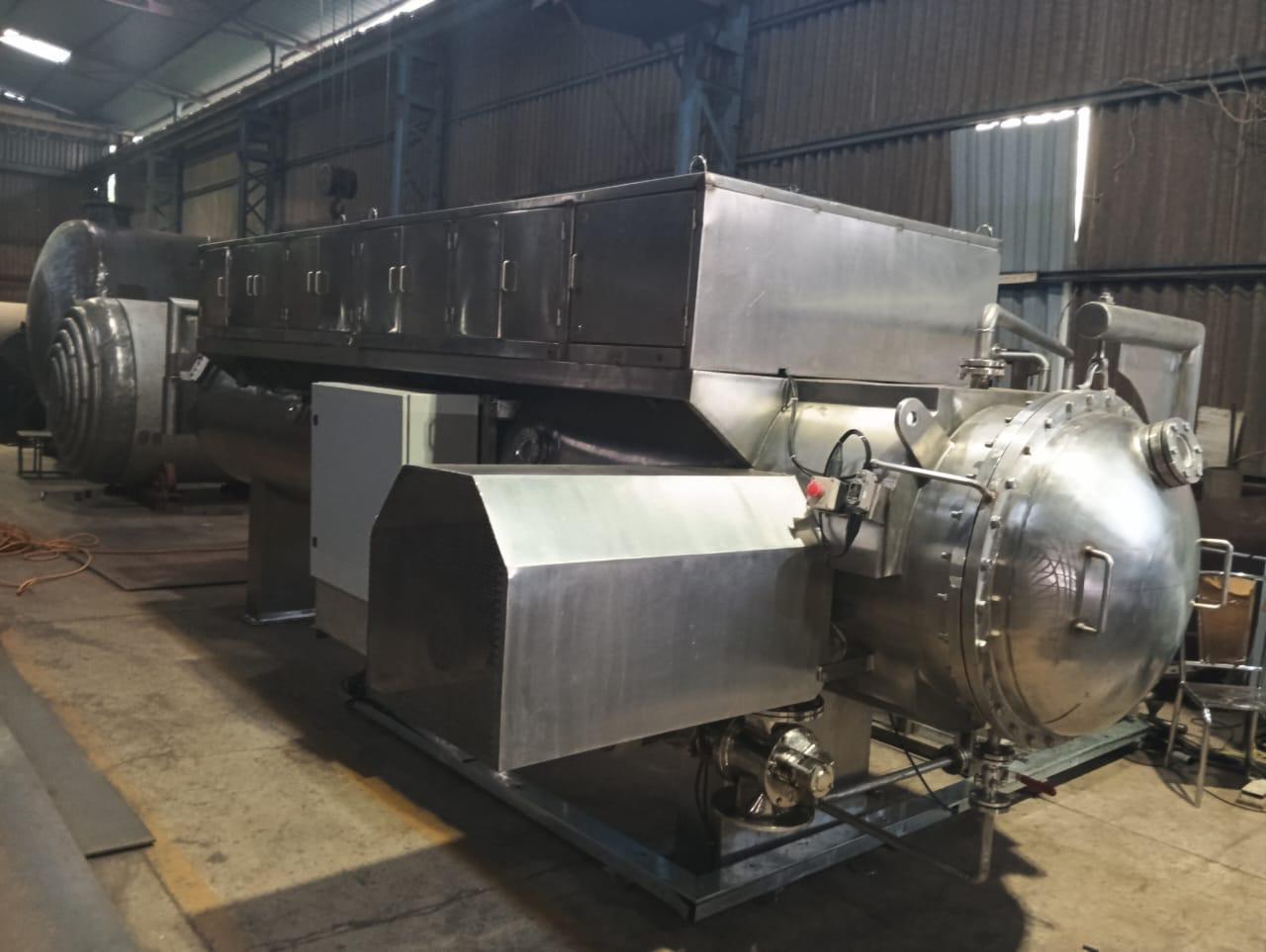
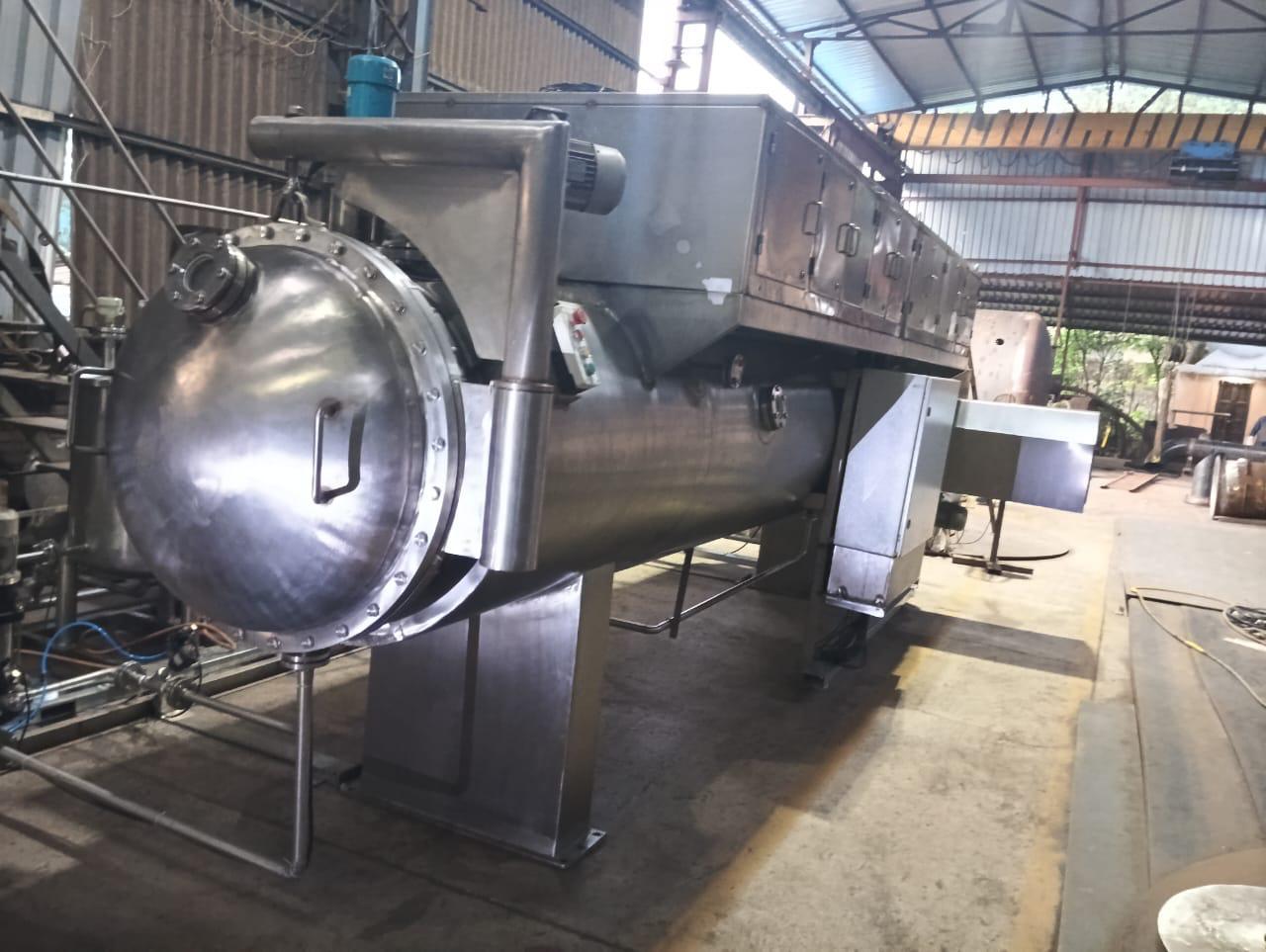
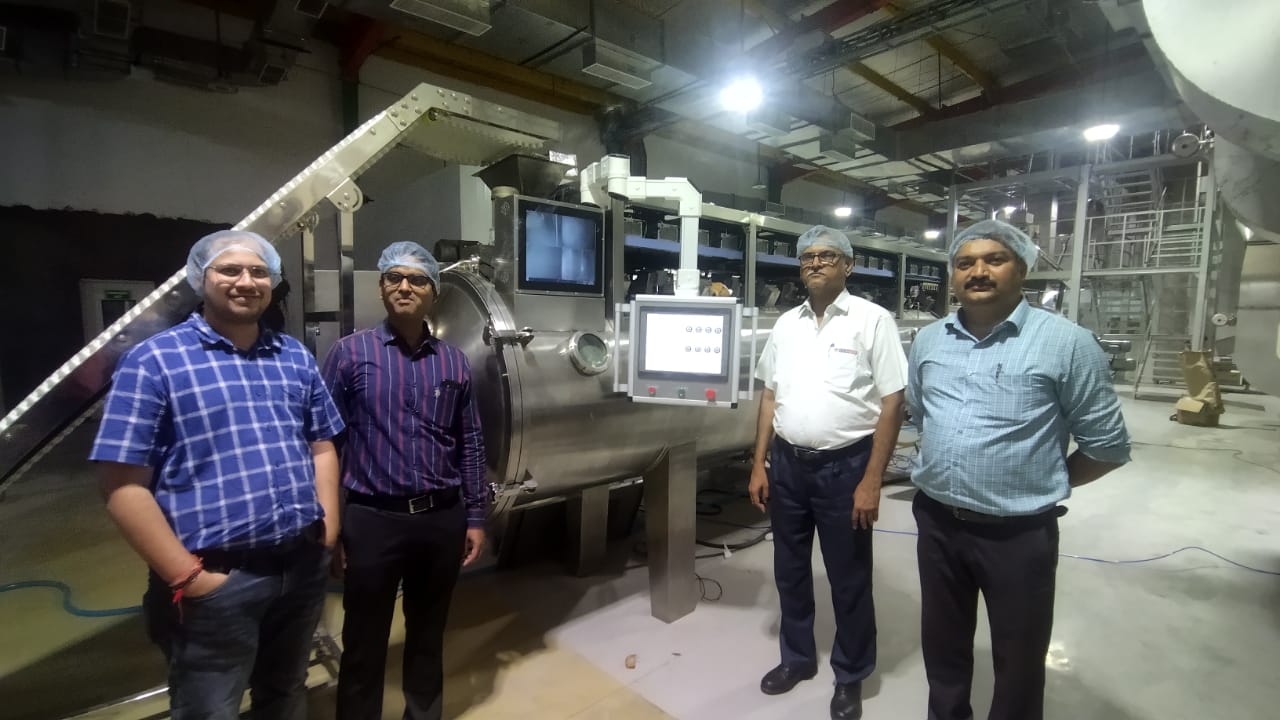
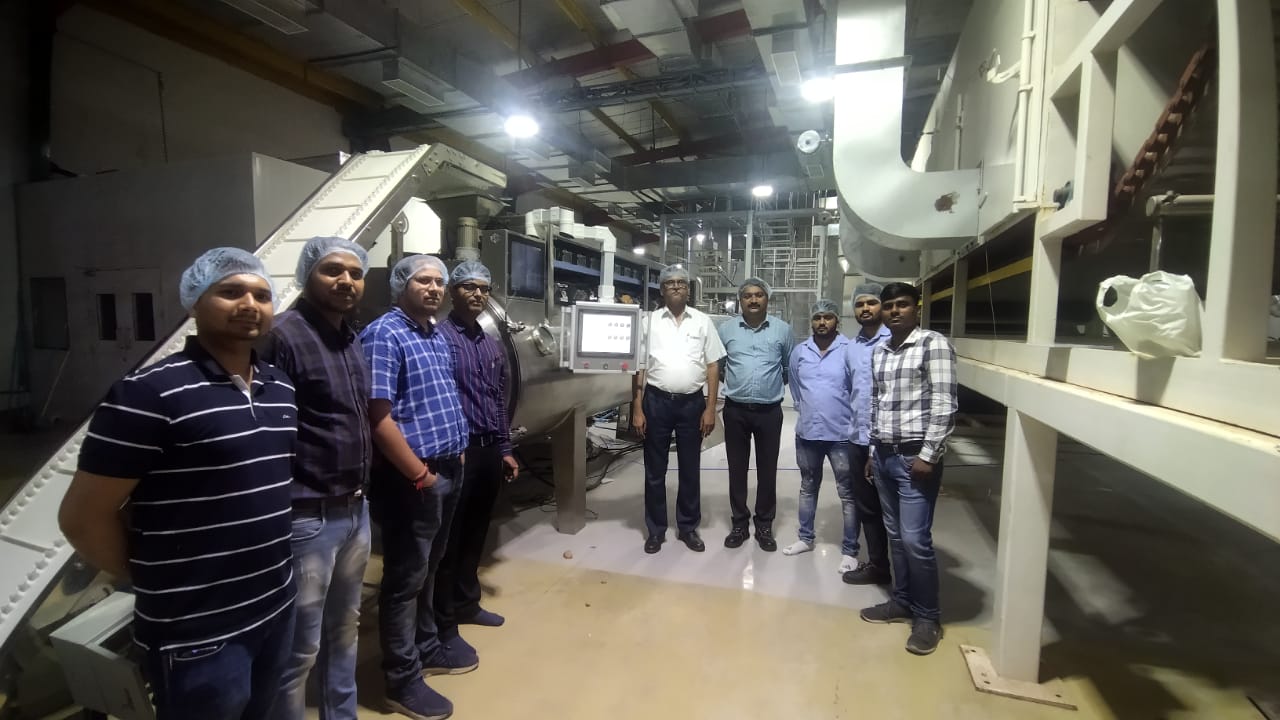
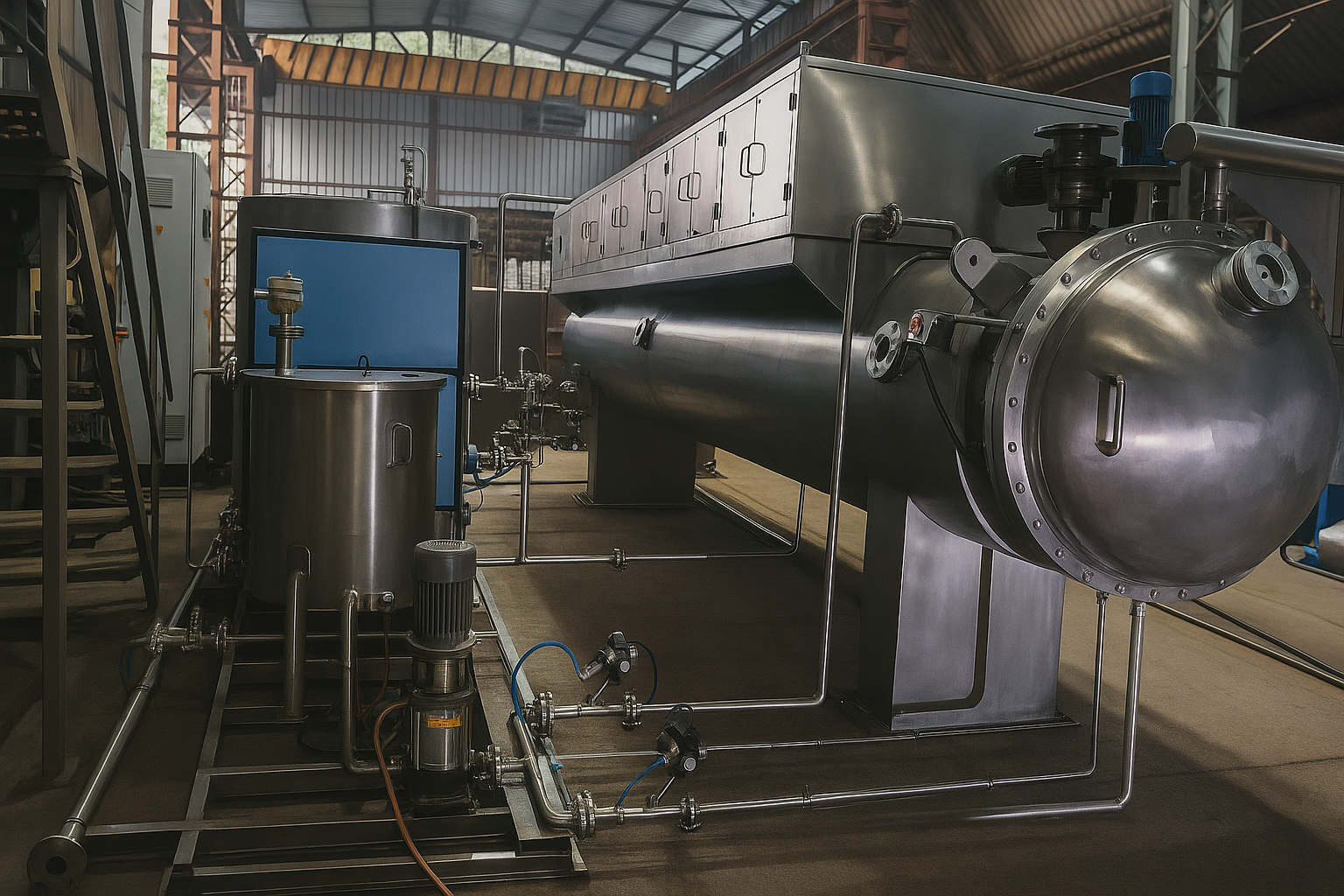
Kerone’s Microwave Assisted Vacuum Dryer (MAVD) combines the penetrating volumetric heating power of microwave energy with the low-pressure, low-temperature benefits of vacuum processing to create one of the most effective drying solutions available to modern industry. At its core, the technology leverages the ability of microwave radiation to excite water molecules at the molecular level throughout the entire product mass simultaneously — in contrast to conventional surface-based heating methods that are inherently limited by conduction. The vacuum environment lowers the boiling point of water to well below 100°C, enabling moisture evaporation at temperatures that are entirely safe for delicate biological, chemical, and food-grade materials. Together, these two mechanisms produce a dryer that is faster, gentler, and more energy-efficient than virtually any conventional alternative, making Kerone’s MAVD a transformative asset for quality-driven manufacturing operations.
Why Choose Kerone Microwave Assisted Vacuum Dryer
Kerone’s Microwave Assisted Vacuum Dryer stands apart from generic industrial drying equipment because of the depth of process engineering expertise embedded in every system. Kerone’s team of thermal processing specialists conducts comprehensive material characterization before designing each MAVD installation, accounting for variables such as dielectric constant, thermal sensitivity, particle size distribution, and desired final moisture content. This process-first approach ensures that each system is configured with the right cavity geometry, microwave frequency, power modulation strategy, and vacuum level to deliver optimal results for your specific product. Kerone’s proprietary control software allows users to create, store, and recall multi-step drying programs — enabling consistent, validated batch outcomes that satisfy both quality and regulatory requirements. Long-term customer relationships backed by dedicated technical support teams complete the Kerone value proposition.
Types and Features of Microwave Assisted Vacuum Dryer
Kerone’s Microwave Assisted Vacuum Dryer product line encompasses batch tray-type systems for small and medium-scale operations, rotary drum configurations for free-flowing granular materials, and continuous belt designs for automated high-throughput processing. Microwave generators are available at 2.45 GHz and 915 MHz frequencies, with the 915 MHz variant offering better penetration depth for thicker product loads. Vacuum levels range from atmospheric down to 10 mbar, with precision vacuum control through PID-regulated valves. The systems are available in compact laboratory configurations as well as large-scale production units capable of processing hundreds of kilograms per hour. All wetted parts are manufactured from food and pharmaceutical grade stainless steel, with ceramic microwave entry ports ensuring both operational safety and long service intervals.
Key Features
Simultaneous microwave volumetric heating and vacuum moisture removal for drying speeds up to 10x faster than conventional tray drying
Adjustable vacuum levels from 1,013 mbar (atmospheric) down to 10 mbar enabling customized low-temperature processing
Choice of 2.45 GHz or 915 MHz microwave frequency to optimize energy penetration depth for different product geometries
Multi-step programmable drying cycles with automatic power and vacuum level transitions for complex drying profiles
Full stainless-steel construction with GMP-compliant smooth internal surfaces for easy cleaning and validation
Built-in microwave power monitoring and reflected power protection ensuring operational safety and generator longevity
Compact, space-efficient footprint with front-loading design for ergonomic product loading and unloading
Optional inline NIR or microwave resonance moisture sensors for real-time endpoint determination and quality assurance
Powered by AI, ML & IoT
Future-Ready Engineering Driven by AI & IoT
Our advanced AI, ML, and IoT technologies, this solution delivers smarter automation, real-time insights, and predictive intelligence to enhance efficiency and drive future-ready growth.
Real-Time Monitoring & Control
Continuous tracking of process parameters with instant adjustments.
Predictive Maintenance
Intelligent fault detection to prevent failures before they occur.
Adaptive Process Optimization
Dynamic tuning of operations for maximum output and efficiency.
Cloud Dashboards & Analytics
Unified access to real-time insights and performance trends.
Energy & Resource Savings
Smarter utilization of energy to cut costs and reduce waste.
Secure IoT Connectivity
Encrypted data flow with seamless integration across plant systems.
Applications of Microwave Assisted Vacuum Dryer
Kerone’s Microwave Assisted Vacuum Dryers are extensively used in industries that require rapid, gentle, and energy-efficient drying of moisture-sensitive or high-value products.
Typical applications include:
Herbal and botanical extract drying: preserving phytochemical potency, essential oils, and natural colors in plant-based materials
Food ingredient manufacturing: drying dairy powders, honey, fruit concentrates, and flavor compounds with full organoleptic retention
Chemical and polymer processing: drying hygroscopic specialty chemicals, resins, and polymer granules without oxidation
Agrochemical formulation: drying pesticide granules, water-dispersible powders, and microencapsulated active ingredients
Research and development: laboratory-scale process development and small-batch production of novel specialty materials
Kerone’s Microwave Assisted Vacuum Dryer delivers a compelling combination of speed, gentleness, and energy efficiency that traditional drying technologies simply cannot replicate. For manufacturers seeking to shorten production cycles, reduce energy costs, and elevate product quality in temperature-sensitive applications, this system represents a decisive competitive advantage. Kerone’s end-to-end service model — from process feasibility studies and equipment design through installation, validation, and long-term support — ensures that your MAVD investment delivers maximum value throughout its operational life. To discover how the Microwave Assisted Vacuum Dryer can transform your drying process, connect with Kerone’s application engineering team today.
Seamless Export Connections Global & Local
Our Global Footprint in Industrial Excellence
Delivering world-class industrial and process solutions across countries with precision, innovation, and reliability.
Peru
Chile
Argentina
Mexico
Colombia
Brazil
USA
Canada
United Kingdom
France
Germany
Spain
Italy
Netherlands
Sweden
Switzerland
Poland
Portugal
Ireland
Czechia
Romania
Hungary
Austria
Greece
Kazakhstan
Uzbekistan
Turkmenistan
Algeria
Egypt
Nigeria
Kenya
South Africa
Saudi Arabia
UAE
Israel
Russia
India
China
Japan
South Korea
Thailand
Vietnam
Malaysia
Singapore
Indonesia
Philippines
Australia
New Zealand
Pan-India Presence. Local Expertise.
Raipur
Bilaspur
Panaji
Vasco da Gama
Gandhinagar
Ahmedabad
Surat
Chandigarh
Gurgaon
Shimla
Manali
Bengaluru
Mysore
Kochi
Pune
Mumbai
Thane
Navi Mumbai
Hyderabad
Chennai
Coimbatore
Kolkata
Lucknow
Jaipur
Udaipur
Jodhpur
Dehradun
Haridwar
Bhubaneswar
Product Gallery
Frequently Asked Questions (FAQ)
Microwave energy penetrates the product and directly excites water molecules throughout the entire mass simultaneously, generating heat from within. This eliminates the surface-crust formation that impedes moisture migration in hot air drying, resulting in 5–10x faster and more uniform drying.
Materials that are heat-sensitive, high-value, or difficult to dry uniformly benefit most — including botanical extracts, pharmaceutical intermediates, food ingredients with high sugar content, and hygroscopic specialty chemicals.
The combined efficiency of microwave volumetric heating and vacuum moisture removal typically results in 40–70% lower energy consumption per kilogram of water removed compared to conventional hot air tray dryers.
Yes. Kerone offers rotary drum and agitated tray MAVD configurations specifically designed for processing liquid feeds, slurries, and paste-form materials into dried granules or powders.
Standard safety features include microwave leakage detection, reflected power shutdown, vacuum over-pressure relief valves, thermal runaway protection, interlocked door safety systems, and electrical surge protection.
The drying endpoint is determined by weight loss measurement, inline moisture sensors (NIR or microwave resonance), or time-based programs validated during Kerone's initial process development phase. Automated shutdown at target moisture content is standard.
Routine maintenance includes magnetron inspection every 2,000–5,000 hours, vacuum pump oil changes every 1,000 hours, door seal inspections quarterly, and annual full-system calibration, all supported by Kerone's service contracts.
Yes. Kerone offers ATEX-rated MAVD configurations with explosion-proof electrical enclosures, nitrogen-purged microwave entry systems, and integrated solvent recovery condensers for processing flammable or explosive materials.
Vacuum level selection is governed by the maximum temperature the product can tolerate without degrading, since lowering chamber pressure reduces water's boiling point and allows moisture to evaporate at a correspondingly lower temperature. A material that begins to degrade above 40°C, for example, would require a vacuum level deep enough to bring water's boiling point below that threshold, which typically means operating well below atmospheric pressure rather than at a shallow vacuum. Kerone's MAVD systems offer adjustable vacuum control down to 10 mbar specifically to accommodate this range of thermal sensitivity, with the exact operating point determined through process trials on the actual material.
Two main approaches are available: weight-loss monitoring, which tracks cumulative moisture removal against the batch's known starting weight, and spectroscopic moisture sensing using near-infrared (NIR) or microwave resonance technology, which measures moisture content directly without needing to interrupt the drying cycle. NIR sensing works well for materials with consistent optical properties, while microwave resonance sensing can be advantageous because it uses the same underlying physics as the drying process itself. Many production systems combine both approaches, using weight loss as a primary trend indicator and spectroscopic sensing to confirm the precise endpoint before automatically triggering cycle completion.
Freeze-drying achieves excellent product quality preservation but requires long cycle times, often spanning many hours to days, along with energy-intensive refrigeration to maintain the frozen state throughout primary and secondary drying. Microwave vacuum drying can achieve comparably low processing temperatures without the freezing step, often completing in a fraction of the time freeze-drying requires, which translates into significantly higher throughput per unit of equipment and lower energy cost per batch. The trade-off is that not every product responds identically to the two methods, so materials with very specific structural requirements, such as certain biologics needing the exact cellular matrix preservation freeze-drying provides, may still require freeze-drying despite the speed advantage of microwave vacuum processing.
Ongoing costs break down into electricity consumption for the microwave generators and vacuum pumps, scheduled maintenance covering magnetron and pump servicing, and consumables such as vacuum pump oil and door seal replacement. Because microwave vacuum drying typically reduces energy consumption substantially compared to conventional hot air drying for the same moisture removal task, the electricity line item is often lower than facilities initially expect when transitioning from older drying technology. Maintenance costs are relatively predictable since they follow defined service intervals rather than unplanned breakdowns, making total operating cost reasonably straightforward to forecast once a facility has baseline throughput and utility rate data.
ATEX-rated configurations address flammability risk through several integrated design elements: explosion-proof electrical enclosures prevent ignition sources from contacting flammable vapors, nitrogen purging of the microwave entry points displaces oxygen in zones where sparking could otherwise occur, and integrated condensers recover evaporated solvent rather than allowing it to accumulate as vapor within the drying chamber. Vacuum operation itself also reduces fire risk somewhat by limiting available oxygen, though this alone is not sufficient without the additional explosion-proofing measures. Facilities processing solvent-containing materials should specify ATEX requirements at the outset, since retrofitting explosion protection onto a standard system afterward is far more costly than building it in from the start.
Because microwave vacuum drying removes moisture quickly at low temperature, it tends to better preserve the cellular structure of the original material compared to slow, high-temperature drying methods that can cause cell wall collapse and case hardening. This structural preservation often translates into improved rehydration characteristics, since a less collapsed internal structure rehydrates more readily and completely than a densely shrunken one. For botanical extracts specifically, the lower processing temperature and shorter exposure time also help retain volatile aromatic compounds and heat-sensitive phytochemicals that would otherwise degrade or evaporate under prolonged conventional drying conditions.
Kerone’s custom-designed heating and processing solutions are built to meet the demands of your growing operations. Whether you’re upgrading equipment, expanding production, or need a tailor-made solution


 Peru
Peru Chile
Chile Argentina
 Mexico
 Colombia
 Brazil
 USA
USA Canada
 United Kingdom
 France
 Germany
 Spain
Spain Italy
Italy Netherlands
 Sweden
 Switzerland
 Poland
 Portugal
 Ireland
 Czechia
 Romania
 Hungary
 Austria
 Greece
 Kazakhstan
 Uzbekistan
 Turkmenistan
 Algeria
 Egypt
Egypt Nigeria
 Kenya
Kenya South Africa
 Saudi Arabia
 UAE
UAE Israel
 Russia
 India
India China
China Japan
Japan South Korea
 Thailand
 Vietnam
 Malaysia
 Singapore
 Indonesia
 Philippines
 Australia
 New Zealand