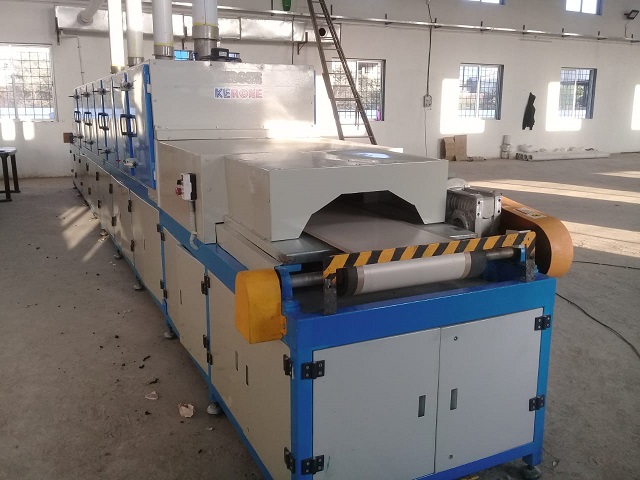
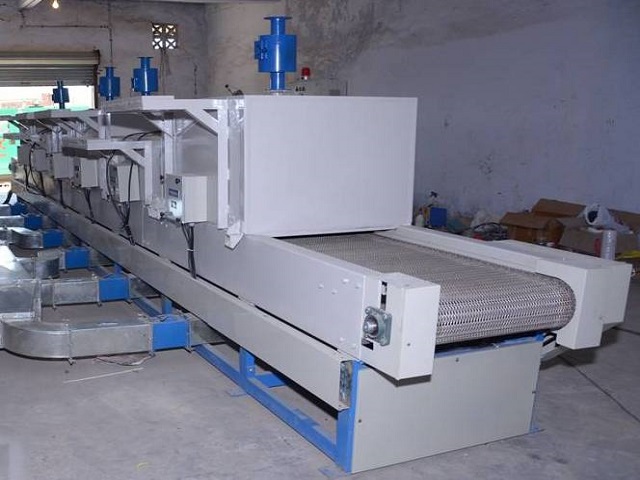
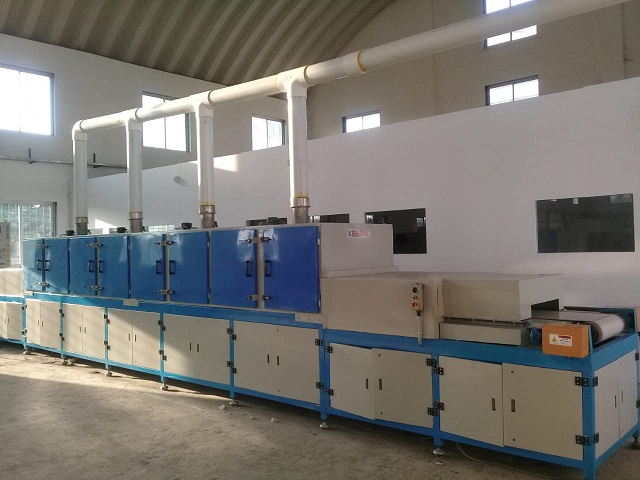
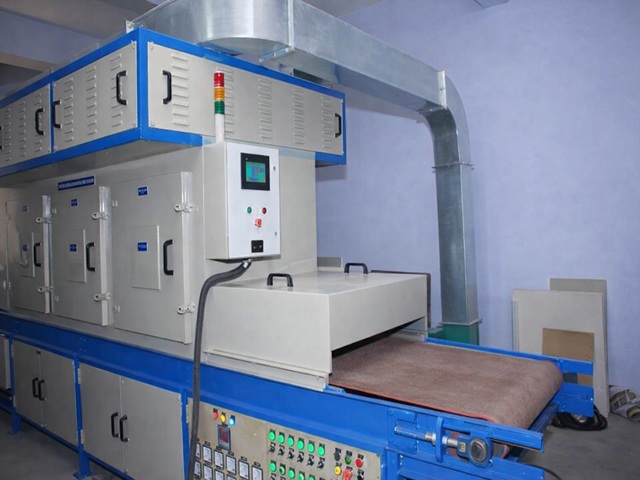
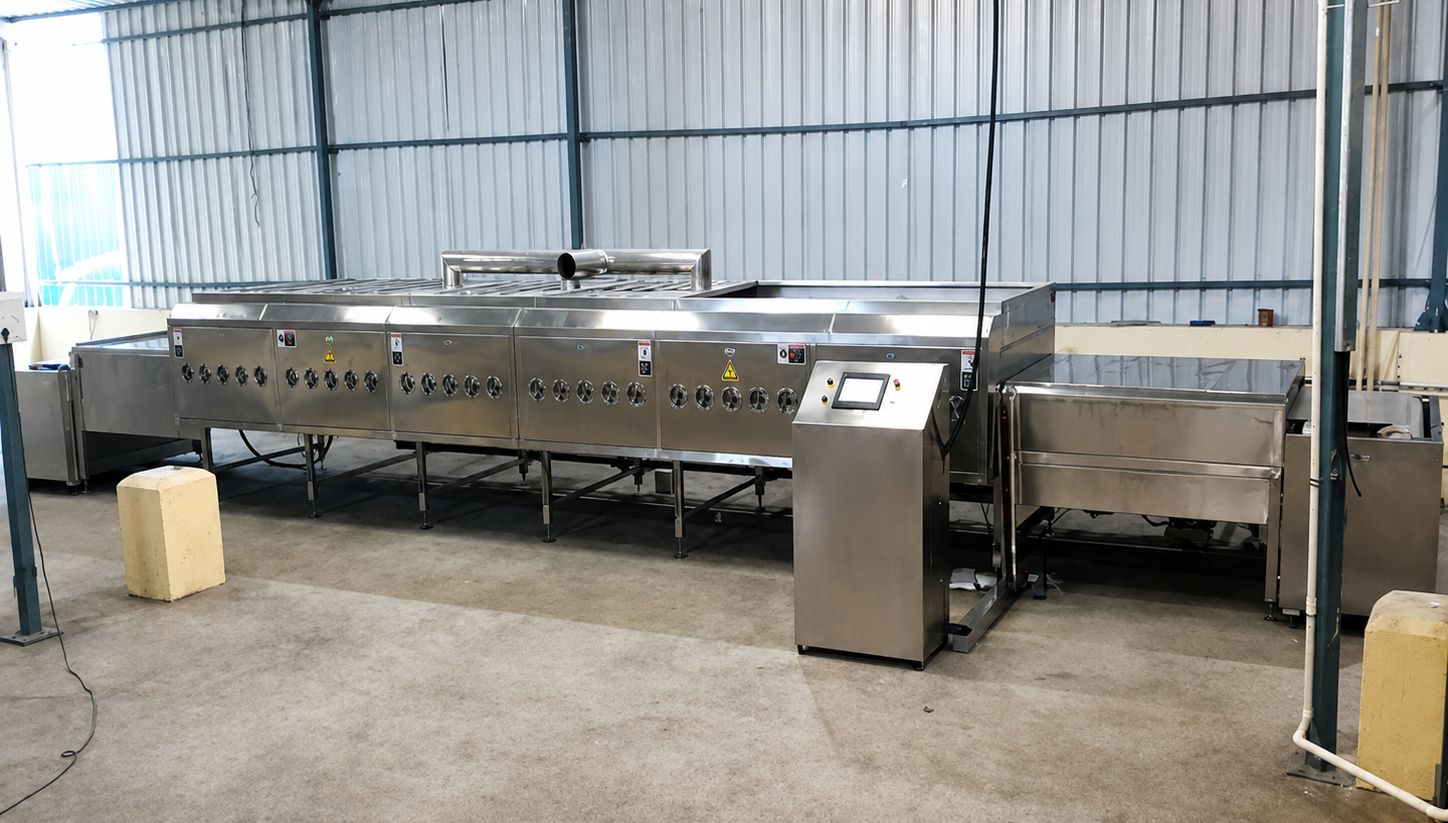
Kerone has been a trusted name in innovative industrial engineering for more than 50 years. Our Microwave Dryer for Chemical Powder systems are designed to deliver high-efficiency processing, optimized performance, and consistent output across multiple industrial sectors.
Microwave drying is based on a unique volumetric heating mode facilitated by electromagnetic radiation at 915 or 2,450 MHz. The unique properties and superiority of microwaves over conventional sources of energy have generated immense interest in its use for industrial processing. Microwave technology has been widely embraced in the chemical industry for various applications such as organic syntheses of chemical compounds, material synthesis, sample analysis,drying of pharmaceutical powders and granules, material modification as well as dosage form design.The responses of a lossy powder product to dielectric heating result in rapid energy coupling into the moisture and lead to fast heating and drying.
Why Choose Kerone Microwave Dryer for Chemical Powder
Kerone is known for delivering highly efficient, reliable and fully customized Microwave Dryer for Chemical Powder solutions engineered after a detailed analysis of material characteristics, process goals and expected output requirements.
ChemicalPowder Drying is a mass transfer process consisting of the removal of water or another solvent by evaporation from a solid, semi-solid or liquid product. This process is often used as a final production step before selling or packaging products. Most of chemicalpowders are temperature sensitive, hence it required to dry at lower temperature to avoid degradation. Our microwave drying systemhelps to overcome this problem by reducing the moisture content at lower temperature (80-90°C)without harming any product quality.A significant reduction in drying time in microwave drying is often accompanied by an improvement in product quality, making it a promising drying technology.
Types and Features of Microwave Dryer for Chemical Powder
Microwave technology works effectively as a partner process for drying powder slurry with maximum moisture content. It serves as a highly efficient supplement to conventional drying systems. A hybrid system utilizing a traditional convection oven along with microwave technology can capitalize on the advantages of both methods, ensuring faster, uniform, and energy-efficient drying.
Three hybrid combinations that are the most common include:
1. Preheating
In the preheating stage, microwave energy is applied first to drive internal moisture toward the surface of the material. The material is then transferred to a conventional gas- or oil-heated air dryer or oven, which rapidly removes the surface moisture.
The conventional dryer performs three main functions:
Removing residual moisture
Preheating moisture to the evaporative temperature
Equalizing the moisture level of the product before final drying
2. Continuous Hybrid Drying
In a continuous or batch microwave-assisted hot air drying system, the material is dried from maximum to minimum moisture content in a single operation. Hot air reduces surface moisture, while microwave energy removes moisture from the core and bottom layers, pushing it to the surface for evaporation.
3. Booster Drying
Booster drying introduces microwave energy after surface moisture has already been removed and the drying rate of conventional systems begins to slow down—typically around two-thirds of the drying process. Microwave energy accelerates the removal of remaining internal moisture by driving it to the surface.
4. Finish Drying
In finish drying, microwave energy is applied at the final stage of the drying process as the material exits the conventional oven. At this stage, conventional drying efficiency decreases, while microwave efficiency is at its peak.
Finish drying is the most widely used hybrid approach. A key advantage is material sanitization—when operated at appropriate temperatures, the final product is not only thoroughly dried but also sterilized.
Features:
Controls can be custom-built specific to your environment and target substances.
User-friendly operation panel for ease of use.
Design ensures safe and easy operation and maintenance.
Minimized radio field leakage, built according to international standards.
Pre-programmable timer on the display to prevent overheating and avoid losses due to excess heating.
Key Features
High thermal and processing efficiency
Low maintenance and easy operation
Suitable for heat-sensitive materials
Fully adjustable and customizable process parameters
Available in batch and continuous configurations
Uniform processing and consistent product quality
Powered by AI, ML & IoT
Future-Ready Engineering Driven by AI & IoT
Our advanced AI, ML, and IoT technologies, this solution delivers smarter automation, real-time insights, and predictive intelligence to enhance efficiency and drive future-ready growth.
Real-Time Monitoring & Control
Continuous tracking of process parameters with instant adjustments.
Predictive Maintenance
Intelligent fault detection to prevent failures before they occur.
Adaptive Process Optimization
Dynamic tuning of operations for maximum output and efficiency.
Cloud Dashboards & Analytics
Unified access to real-time insights and performance trends.
Energy & Resource Savings
Smarter utilization of energy to cut costs and reduce waste.
Secure IoT Connectivity
Encrypted data flow with seamless integration across plant systems.
Applications of Microwave Dryer for Chemical Powder
Microwave heating is a clean process that produces no emissions, gases, or residual by-products, making it environmentally friendly and safe for various industrial applications. The heat penetrates both the surface and the internal structure of the material being treated, ensuring uniform and efficient processing. Due to its high heating speed, the overall processing time is significantly reduced, improving productivity. The process is highly controllable, allowing precise adjustment of temperature and energy levels for consistent results. Microwave dryers also require minimal workspace compared to conventional systems. Since heating occurs from within the material, superior drying results are achieved with better moisture removal. Additionally, the cost of production using microwave dryers is generally lower than that of air flow or direct heat transfer–based dryers.
Food industry processing systems
Chemical and polymer processing
Pharmaceutical ingredients and intermediates
Ready‑to‑eat (RTE) food production
Specialized heating, drying, or material transformation processes
Industrial material modification and thermal treatment
Kerone’s Microwave Dryer for Chemical Powder solutions are engineered to deliver maximum efficiency, long-term reliability and excellent operational stability. Our focus on innovation and customization ensures superior industrial results.
Seamless Export Connections Global & Local
Our Global Footprint in Industrial Excellence
Delivering world-class industrial and process solutions across countries with precision, innovation, and reliability.
Peru
Chile
Argentina
Mexico
Colombia
Brazil
USA
Canada
United Kingdom
France
Germany
Spain
Italy
Netherlands
Sweden
Switzerland
Poland
Portugal
Ireland
Czechia
Romania
Hungary
Austria
Greece
Kazakhstan
Uzbekistan
Turkmenistan
Algeria
Egypt
Nigeria
Kenya
South Africa
Saudi Arabia
UAE
Israel
Russia
India
China
Japan
South Korea
Thailand
Vietnam
Malaysia
Singapore
Indonesia
Philippines
Australia
New Zealand
Pan-India Presence. Local Expertise.
Raipur
Bilaspur
Panaji
Vasco da Gama
Gandhinagar
Ahmedabad
Surat
Chandigarh
Gurgaon
Shimla
Manali
Bengaluru
Mysore
Kochi
Pune
Mumbai
Thane
Navi Mumbai
Hyderabad
Chennai
Coimbatore
Kolkata
Lucknow
Jaipur
Udaipur
Jodhpur
Dehradun
Haridwar
Bhubaneswar
Product Gallery
Frequently Asked Questions (FAQ)
It is used for efficient processing, heating, drying or material transformation.
High efficiency, process reliability and complete customization.
Food, chemical, pharma, biomass, rubber, textile and more.
Kerone ensures high product quality through strict engineering standards, advanced testing procedures, and precision-controlled manufacturing systems.
The microwave dryer works by generating high-frequency electromagnetic waves that penetrate the chemical powder and excite water molecules inside the material. This internal heating process evaporates moisture evenly throughout the powder, reducing drying time and preventing surface overheating. The system typically includes a microwave generator, drying chamber, conveyor or tray system, temperature controls, and safety shielding for industrial operation.
Microwave dryers offer several benefits, including rapid drying time, uniform moisture removal, improved product quality, and lower energy consumption compared to traditional drying methods. They help maintain chemical properties, reduce agglomeration, and minimize contamination risks. Additionally, microwave drying systems can be customized for continuous or batch processing applications.
Before purchasing a microwave dryer, consider factors such as drying capacity, moisture content, particle size, power consumption, automation level, safety features, and compliance with industry standards. It is also important to evaluate installation space, maintenance requirements, and after-sales support from the manufacturer to ensure long-term operational efficiency.
These three configurations describe where microwave energy is introduced relative to a conventional convection drying stage. Preheating applies microwave energy first to drive internal moisture to the surface before conventional hot air removes it, useful when the product enters wet and dense. Booster drying introduces microwave energy partway through the cycle, typically once conventional drying slows down around two-thirds completion, to accelerate the removal of stubborn internal moisture. Finish drying applies microwave energy at the very end of the cycle when conventional efficiency has dropped off, and it doubles as a sanitization step since the final moisture pockets reach disinfection-level temperatures. Most chemical powder applications use finish drying because it captures the biggest efficiency gain at the stage where conventional dryers struggle most.
The suitability of a chemical powder for microwave drying depends on its dielectric properties, meaning how readily the material absorbs microwave energy through its moisture content. Powders with measurable water or polar solvent content respond well, since the energy couples directly into these molecules. Very low-moisture or non-polar powders may show minimal heating response and are better suited to other drying technologies. Particle size and bulk density also matter, since very fine powders can pack tightly and restrict vapor escape, while overly coarse material may dry unevenly. A reliable way to confirm suitability before committing to a full-scale purchase is a small batch trial on your actual product, since dielectric behavior varies even within similar chemical families.
Because microwave energy heats the product directly rather than relying on circulated hot air, there is less airflow movement across the powder bed, which reduces the risk of cross-contamination from recirculated air carrying particulates between batches. The enclosed chamber design also limits dust generation compared to fluid bed or rotary dryers that rely on mechanical agitation or high air velocity. Additionally, since drying times are shorter, the powder spends less time in a wet, agglomeration-prone state, which reduces clumping and the associated risk of trapped moisture pockets that can harbor microbial growth in sensitive formulations. These factors make microwave drying a preferred choice for chemical powders destined for pharmaceutical or food-grade applications where particulate control matters.
Standard configurations include a user-friendly control panel with pre-programmable timers that prevent overheating, automated power cutoff on fault conditions, and microwave leakage shielding built to international safety standards. Temperature sensors track the product throughout the drying chamber, allowing the system to hold or adjust power based on real-time readings rather than relying solely on fixed time settings. For continuous configurations, conveyor speed and microwave power can be synchronized to maintain consistent residence time as throughput changes. Buyers running multiple chemical formulations benefit from recipe-based controls, where drying parameters for each product are stored and recalled rather than manually re-entered for every batch changeover.
Batch microwave dryers suit lower-volume or multi-product operations where formulations change frequently, since the chamber can be cleaned and reconfigured between runs without disrupting a continuous line. Continuous systems are better suited to high-volume, single-product manufacturing where consistent throughput justifies a dedicated line, since they eliminate the load and unload downtime inherent to batch cycles. The economic trade-off centers on utilization: a continuous system sitting idle between product changeovers wastes capital, while a batch system run at high volume incurs more labor cost per unit of output due to repeated loading cycles. Most chemical powder producers evaluating this decision should map their actual production schedule against both models before committing to one configuration.
Electricity consumption is the primary ongoing cost driver, and this is determined by the moisture load to be removed, the dielectric loss factor of the specific chemical, and how efficiently the cavity design couples energy into the product rather than losing it as stray radiation. Maintenance costs are comparatively low since microwave generators have fewer moving parts than combustion-based heating systems, but magnetron or generator life should be factored into total cost of ownership over a multi-year horizon. Floor space savings compared to long convection tunnel dryers also translate into lower facility overhead per unit of installed drying capacity. Buyers should request energy consumption figures per kilogram of moisture removed when comparing supplier quotes, since this is a more meaningful cost metric than rated power alone.
Before finalizing a purchase, confirm the dryer has been trial-tested on your specific chemical formulation rather than a generic reference material, since dielectric response varies widely between chemical compounds. Verify the moisture content range the system is rated for, since some chemical powders arrive from upstream processes with highly variable starting moisture that can affect cycle consistency. Check automation level against your staffing model, confirm compliance documentation for microwave leakage and electrical safety standards relevant to your region, and clarify installation footprint and utility requirements such as power supply capacity and ventilation. Finally, ask about after-sales support response time, since downtime on a drying step can halt an entire production schedule.
Kerone’s custom-designed heating and processing solutions are built to meet the demands of your growing operations. Whether you’re upgrading equipment, expanding production, or need a tailor-made solution


 Peru
Peru Chile
Chile Argentina
 Mexico
 Colombia
 Brazil
 USA
USA Canada
 United Kingdom
 France
 Germany
 Spain
Spain Italy
Italy Netherlands
 Sweden
 Switzerland
 Poland
 Portugal
 Ireland
 Czechia
 Romania
 Hungary
 Austria
 Greece
 Kazakhstan
 Uzbekistan
 Turkmenistan
 Algeria
 Egypt
Egypt Nigeria
 Kenya
Kenya South Africa
 Saudi Arabia
 UAE
UAE Israel
 Russia
 India
India China
China Japan
Japan South Korea
 Thailand
 Vietnam
 Malaysia
 Singapore
 Indonesia
 Philippines
 Australia
 New Zealand