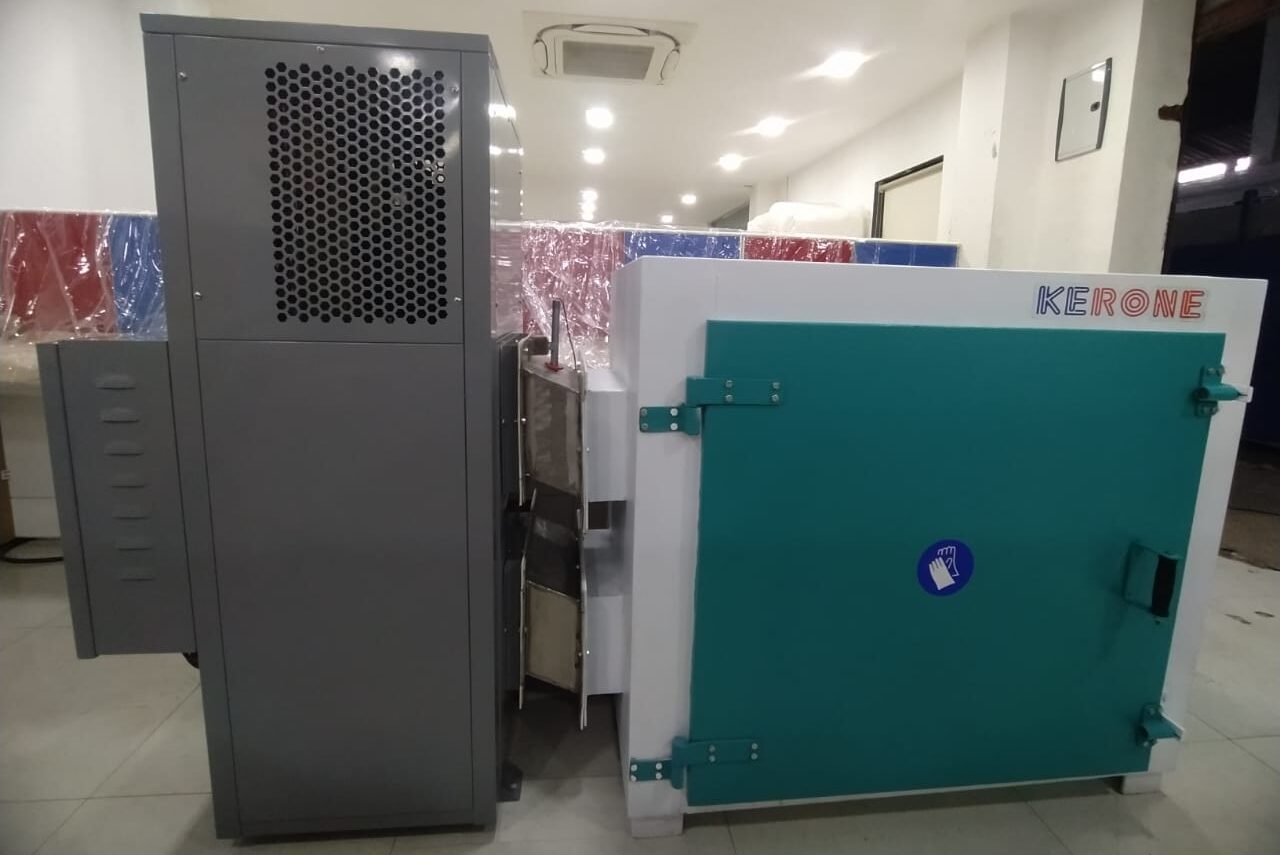
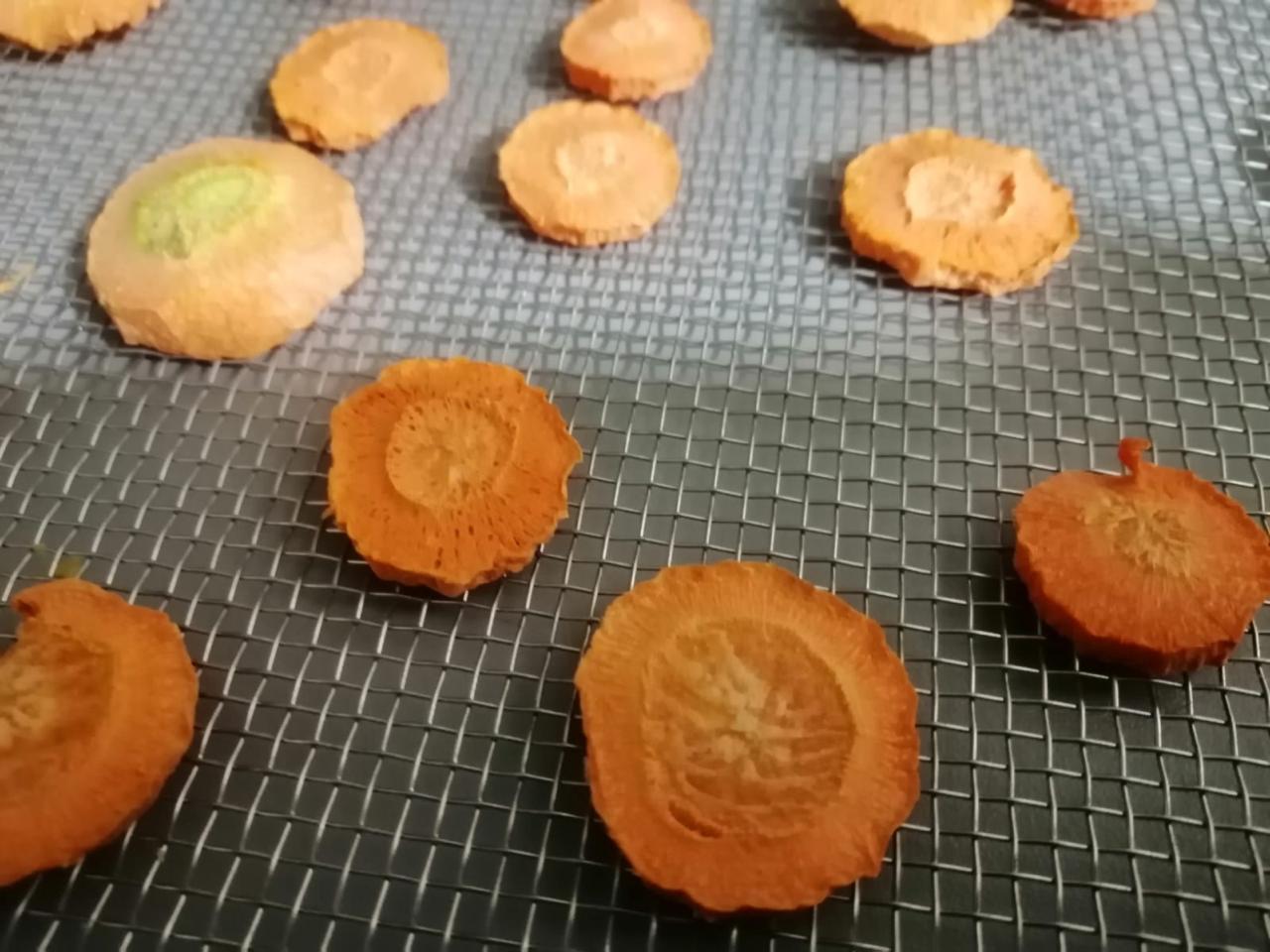
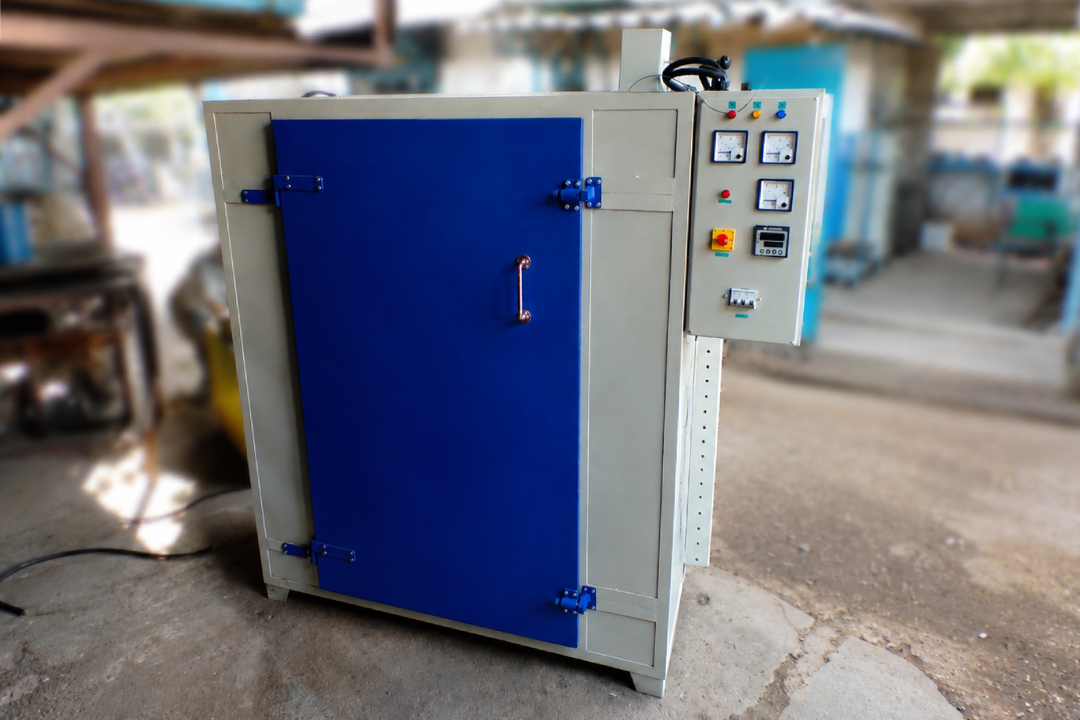
The Vegetable Heat Pump Dryer from Kerone Engineering Solutions is an industrially engineered dehydration system designed around the specific physical, chemical, and sensory characteristics of fresh vegetables, a product category that encompasses a vast range of cellular structures, moisture contents, sugar and starch compositions, and thermal sensitivity levels, from the delicate cell walls of leafy greens to the dense parenchyma tissue of root vegetables and the complex architecture of brassica florets. Unlike fruit drying, which is primarily concerned with sugar-driven stickiness and browning, vegetable drying presents a different primary challenge: the preservation of colour (particularly green chlorophyll and orange carotenoid pigments), crisp texture after rehydration, and volatile aroma compounds that define the culinary identity of each vegetable variety. Kerone addresses these vegetable-specific quality requirements through precise control of the drying temperature, humidity, and air velocity in the heat pump dryer environment, ensuring that enzymatic browning is inhibited, oxidative chlorophyll destruction is minimised, and the cellular structure of the dried vegetable product is preserved sufficiently to deliver excellent rehydration properties. Pre-treatment processes including blanching, citric acid dipping, and osmotic pre-dehydration are integrated into Kerone’s application guidance to further improve drying efficiency and final product quality.
Why Choose Kerone Vegetable Heat Pump Dryer
Kerone’s vegetable drying expertise spans the full breadth of commercial dehydrated vegetable manufacturing, from bulk commodity production of dehydrated onion flakes and garlic powder feedstock to premium value-added production of freeze-dried-quality dehydrated vegetable ingredients using heat pump technology at a fraction of the cost of actual freeze drying. Our application engineers have established drying parameters for over 40 vegetable varieties through systematic trial programmes, including onion, garlic, tomato, carrot, green peas, leafy spinach, cabbage, beetroot, capsicum, bitter gourd, drumstick, and moringa leaf, a knowledge base that allows us to specify and commission Vegetable Heat Pump Dryers with confidence in the outcome. Kerone also partners with food technologists to optimise blanching protocols that, when combined with heat pump drying, can deliver rehydration ratios and colour scores comparable to much more expensive freeze-drying technology for selected vegetable products.
Types and Features of Vegetable Heat Pump Dryer
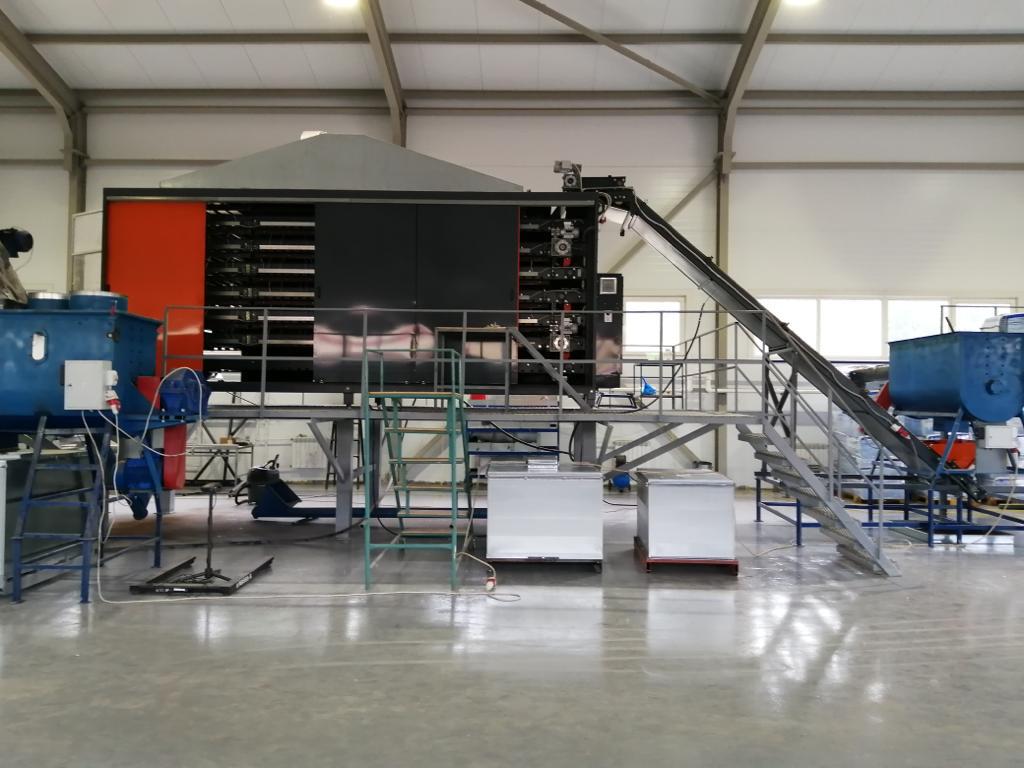
Kerone’s Vegetable Heat Pump Dryers span from small batch tray systems for specialty producers and R&D applications to large-scale continuous multi-layer belt and conveyor systems for industrial dehydrated vegetable manufacturing supplying food service, retail, and industrial food ingredient markets. Capacity ranges from 100 kg/hr wet feed for small operations to over 5,000 kg/hr for industrial-scale dehydrated vegetable plants. Multi-zone tunnel designs allow different temperature and humidity profiles to be applied across the drying process, addressing the distinct drying kinetics of the constant-rate and falling-rate periods specific to each vegetable variety.
Key Features
Temperature range of 40°C to 75°C covering the full spectrum of vegetable drying requirements from leafy greens to dense root vegetables
Blanching-compatible process design: dryer infeed can receive pre-blanched vegetables directly from blanching and dewatering equipment on the same production line
Independent zone temperature and humidity control in multi-zone continuous designs to match vegetable-specific drying curve profiles
SS-304 and SS-316 construction with food-grade surface finishes, full-draining floor design, and HEPA air filtration for compliance with international food safety standards
Anti-stick belt surface options including PTFE mesh and silicone-coated bands for leafy and sticky vegetable varieties
In-line moisture measurement at dryer outlet using microwave or NIR sensors for continuous final moisture control and automatic conveyor speed adjustment
Colour retention optimisation through precise temperature and humidity management, preserving chlorophyll in green vegetables and carotenoids in orange-pigmented vegetables
Energy efficiency of 0.28 to 0.50 kWh per kg of water removed, representing 50–65% energy saving versus conventional hot-air vegetable dehydrators
Powered by AI, ML & IoT
Future-Ready Engineering Driven by AI & IoT
Our advanced AI, ML, and IoT technologies, this solution delivers smarter automation, real-time insights, and predictive intelligence to enhance efficiency and drive future-ready growth.
Real-Time Monitoring & Control
Continuous tracking of process parameters with instant adjustments.
Predictive Maintenance
Intelligent fault detection to prevent failures before they occur.
Adaptive Process Optimization
Dynamic tuning of operations for maximum output and efficiency.
Cloud Dashboards & Analytics
Unified access to real-time insights and performance trends.
Energy & Resource Savings
Smarter utilization of energy to cut costs and reduce waste.
Secure IoT Connectivity
Encrypted data flow with seamless integration across plant systems.
Applications of Vegetable Heat Pump Dryer
Kerone’s Vegetable Heat Pump Dryers are extensively used across the dehydrated vegetable industry serving food service, retail, and ingredient supply markets.
Typical applications include:
Industrial dehydrated onion and garlic production for export markets and domestic food processing industries requiring flakes, granules, or powder feedstock
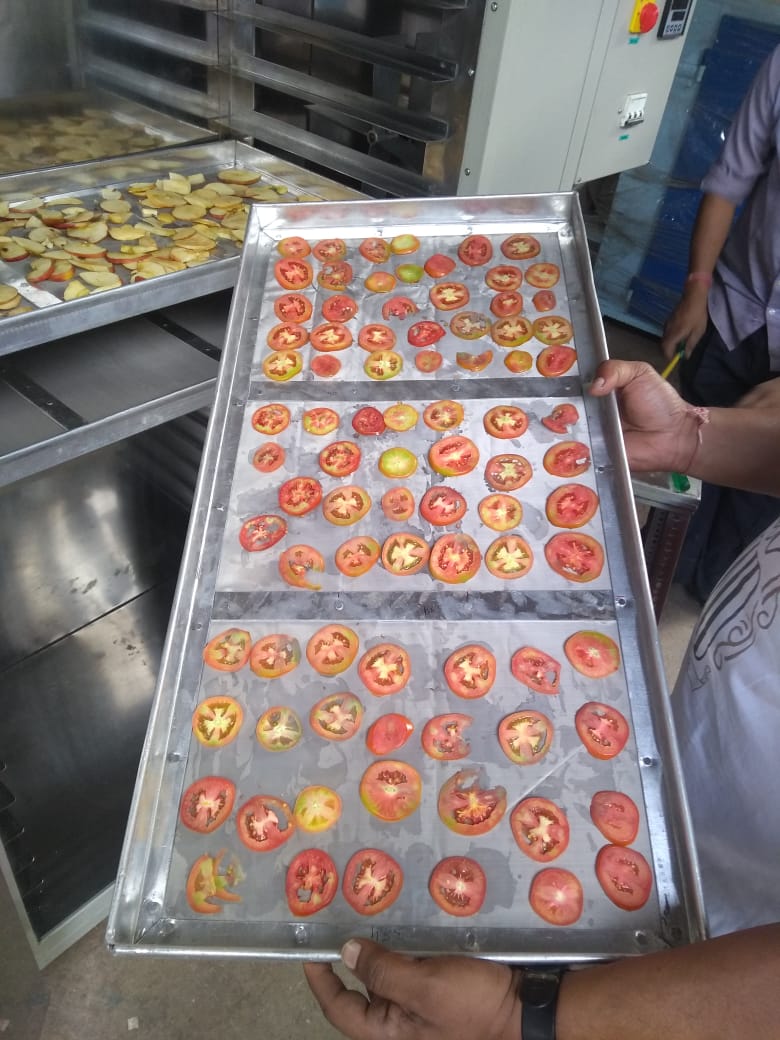
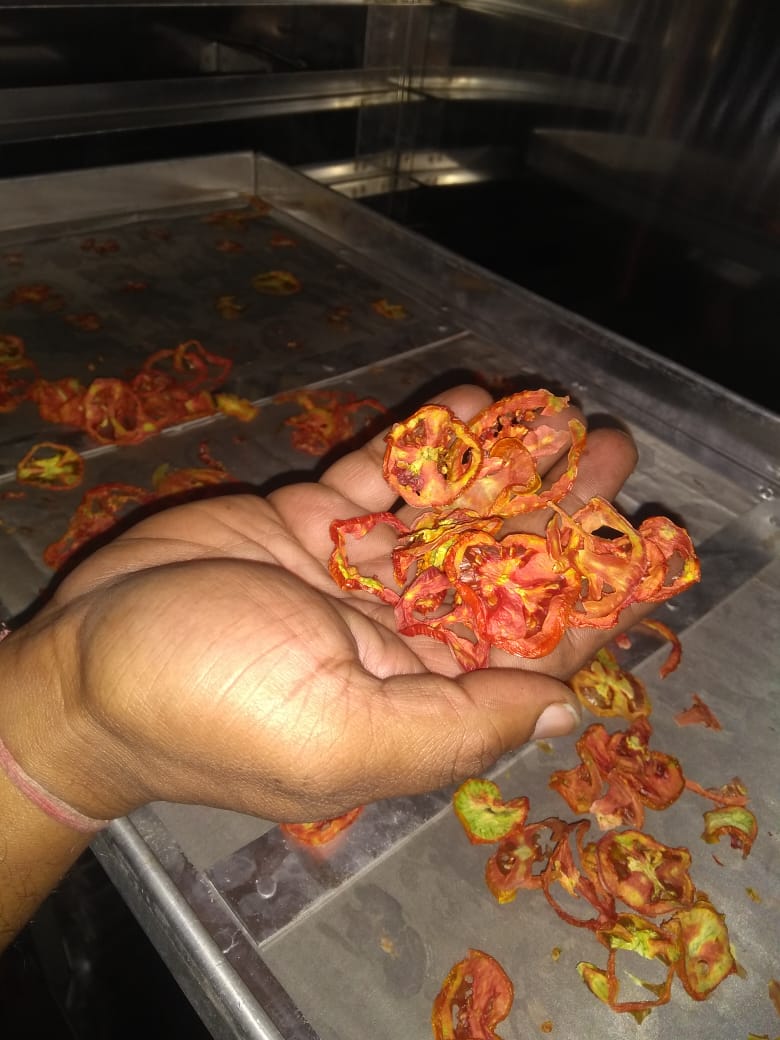
Tomato drying and semi-drying for sun-dried tomato analogues, tomato powder, and dehydrated tomato ingredient production for the food service industry
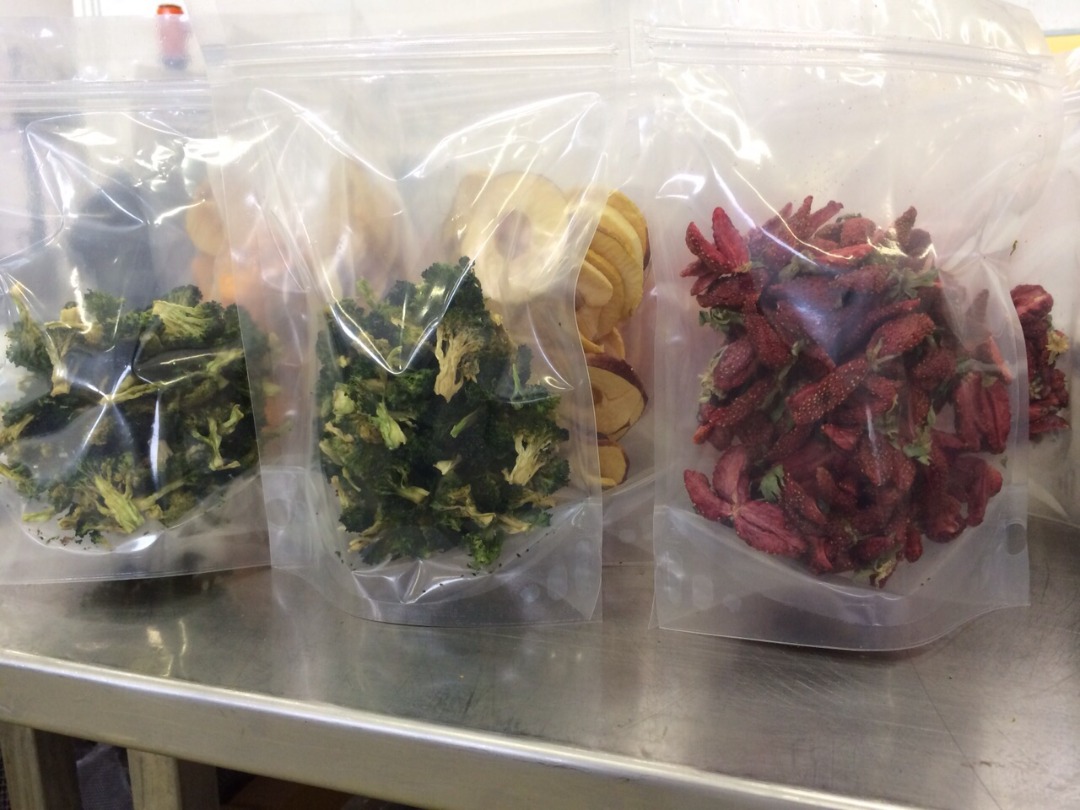
Green vegetable drying including spinach, fenugreek, curry leaf, and peas for dehydrated vegetable mix packs, soup ingredients, and instant food components
Carrot, beetroot, and mixed root vegetable drying for dehydrated vegetable supply to instant noodle, soup, and ready-meal manufacturers
Moringa leaf and powder production drying for nutraceutical and superfood ingredient manufacturers where nutrient density and colour are premium quality markers
Drying of IQF-grade blanched and diced mixed vegetables for institutional catering, military ration, and emergency food supply applications
Kerone Engineering Solutions’ Vegetable Heat Pump Dryer is the industrially proven, commercially validated solution for dehydrated vegetable manufacturers who demand the best combination of product quality, energy efficiency, and food safety compliance from their drying infrastructure. The application-specific knowledge embedded in every Kerone vegetable dryer, from zone temperature profiles to anti-stick belt selection and pre-treatment recommendations, delivers a product that produces premium quality dehydrated vegetables capable of meeting the colour, rehydration, and sensory specifications of the most demanding food industry customers. As the global demand for dehydrated and processed vegetable ingredients continues to grow, Kerone’s Vegetable Heat Pump Dryers are the production technology that enables Indian and international dehydrated vegetable manufacturers to compete on quality while maintaining a sustainable cost structure.
Seamless Export Connections Global & Local
Our Global Footprint in Industrial Excellence
Delivering world-class industrial and process solutions across countries with precision, innovation, and reliability.
Peru
Chile
Argentina
Mexico
Colombia
Brazil
USA
Canada
United Kingdom
France
Germany
Spain
Italy
Netherlands
Sweden
Switzerland
Poland
Portugal
Ireland
Czechia
Romania
Hungary
Austria
Greece
Kazakhstan
Uzbekistan
Turkmenistan
Algeria
Egypt
Nigeria
Kenya
South Africa
Saudi Arabia
UAE
Israel
Russia
India
China
Japan
South Korea
Thailand
Vietnam
Malaysia
Singapore
Indonesia
Philippines
Australia
New Zealand
Pan-India Presence. Local Expertise.
Raipur
Bilaspur
Panaji
Vasco da Gama
Gandhinagar
Ahmedabad
Surat
Chandigarh
Gurgaon
Shimla
Manali
Bengaluru
Mysore
Kochi
Pune
Mumbai
Thane
Navi Mumbai
Hyderabad
Chennai
Coimbatore
Kolkata
Lucknow
Jaipur
Udaipur
Jodhpur
Dehradun
Haridwar
Bhubaneswar
Product Gallery
Frequently Asked Questions (FAQ)
The most common applications include onion, garlic, tomato, carrot, peas, spinach, fenugreek, capsicum, ginger, moringa, and mixed vegetable blends. Kerone has established drying parameters for over 40 vegetable varieties and can advise on specific products on request.
Blanching is strongly recommended for most vegetables as it inactivates peroxidase and lipoxygenase enzymes that cause colour and flavour degradation during drying and storage. Blanching also softens the tissue and improves moisture migration rates, often reducing drying time by 15–30%.
Most dried vegetables require a final moisture content of 4–8% to achieve water activity levels below 0.60, which prevents mould growth and enzymatic activity during ambient temperature storage. Root vegetables like onion and garlic may require moisture contents as low as 5–6%.
Yes, with recipe changes and appropriate cleaning between product runs. Kerone's recipe management system stores distinct drying profiles for each vegetable type, and the modular tray and belt systems can be adapted between product changeovers.
Freeze drying produces superior rehydration and texture preservation, particularly for high-value products. Heat pump drying at optimised low-to-medium temperatures, combined with blanching, can achieve 80–90% of freeze-dried quality at a fraction of the capital and operating cost, making it the appropriate technology for most commercial dehydrated vegetable applications.
A commercial-scale dehydrated vegetable operation typically requires drying capacity of 500 to 2,000 kg/hr of wet feed, depending on product mix, target markets, and seasonal production volumes. Kerone provides detailed capacity and energy studies to assist project planning.
Kerone installs lint screens and cyclone pre-separators in the air recirculation circuit to capture vegetable dust and fines that become airborne during drying. Regular cleaning of these components is recommended as part of the standard maintenance schedule.
Yes. Kerone can supply complete dehydrated vegetable processing lines including washing, cutting, blanching, dewatering, and the heat pump dryer, along with downstream grinding, sieving, and packaging equipment integration, providing turnkey project capability for greenfield and expansion projects.
For green leafy vegetables such as spinach, fenugreek, and curry leaf, blanching at 90–95°C for 60–90 seconds followed by rapid cold-water quench is the optimal combination. Longer blanching times cause cell wall softening and pigment leaching; shorter times may leave peroxidase partially active. Kerone's application team advises on blanch time-temperature for each specific vegetable variety.
Maillard browning in vegetables such as onion and carrot is controlled by avoiding drying temperatures above 65°C at high moisture contents, and by using a two-stage drying approach: first stage at 60°C to remove bulk moisture, second stage at 50°C for final moisture reduction. Kerone programmes multi-stage temperature profiles for browning-susceptible vegetables in the standard recipe library.
Kerone heat pump-dried vegetables typically achieve rehydration ratios of 1:5 to 1:8 (dried to rehydrated weight) for most vegetables, comparable to commercially freeze-dried product and significantly superior to sun-dried vegetables, which typically achieve 1:3 to 1:5 due to irreversible cell wall collapse during uncontrolled drying.
Yes. Kerone installs activated carbon exhaust filters and sealed chamber designs for garlic and onion dryers to prevent sulfur compound odour release into the production facility. The closed-loop air recirculation system contains the sulfur vapours within the machine, and the carbon filter treats the small exhaust air stream during chamber venting operations.
Kerone recommends a moisture mapping exercise at commissioning and during periodic quality audits: samples are taken from defined positions across the belt width and along the dryer length, and moisture content is analysed by oven method. The resulting moisture map confirms that no position exceeds the specification limit of ±0.5% around the target.
Dehydrated onion production requires removal of approximately 850 kg of water per 100 kg of finished product (from ~85% to ~5% moisture basis). Kerone's vegetable heat pump dryer achieves this at approximately 280–380 kWh per tonne of finished dried onion, compared to 600–900 kWh/tonne for conventional hot-air onion dryers, delivering savings of 40–55%.
Yes. Kerone can integrate colour sorting cameras, vibrating screen graders, and airflow classifiers after the dryer discharge to separate dried vegetable by colour grade, piece size, and moisture-related density into separate product streams suitable for different market grades and pricing tiers.
Kerone’s custom-designed heating and processing solutions are built to meet the demands of your growing operations. Whether you’re upgrading equipment, expanding production, or need a tailor-made solution


 Peru
Peru Chile
Chile Argentina
 Mexico
 Colombia
 Brazil
 USA
USA Canada
 United Kingdom
 France
 Germany
 Spain
Spain Italy
Italy Netherlands
 Sweden
 Switzerland
 Poland
 Portugal
 Ireland
 Czechia
 Romania
 Hungary
 Austria
 Greece
 Kazakhstan
 Uzbekistan
 Turkmenistan
 Algeria
 Egypt
Egypt Nigeria
 Kenya
Kenya South Africa
 Saudi Arabia
 UAE
UAE Israel
 Russia
 India
India China
China Japan
Japan South Korea
 Thailand
 Vietnam
 Malaysia
 Singapore
 Indonesia
 Philippines
 Australia
 New Zealand