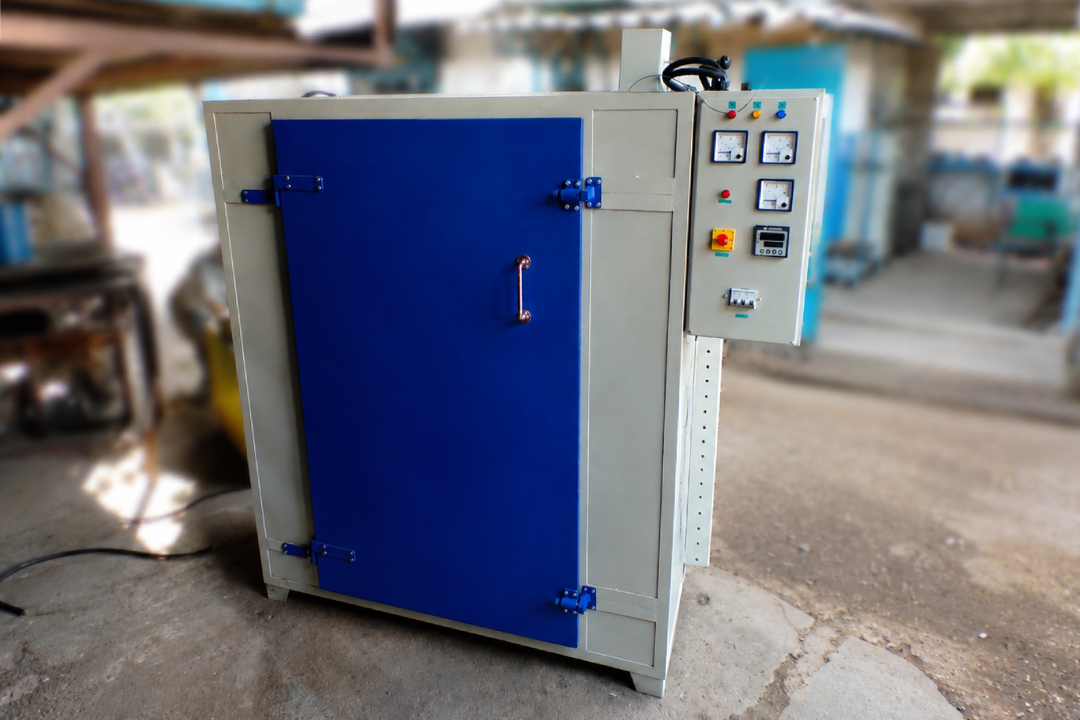
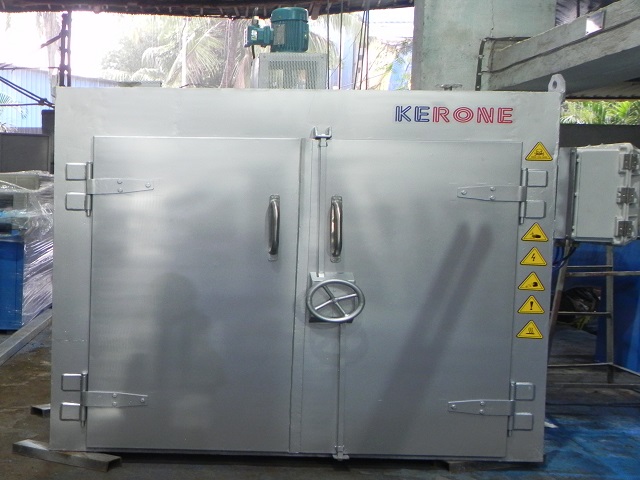
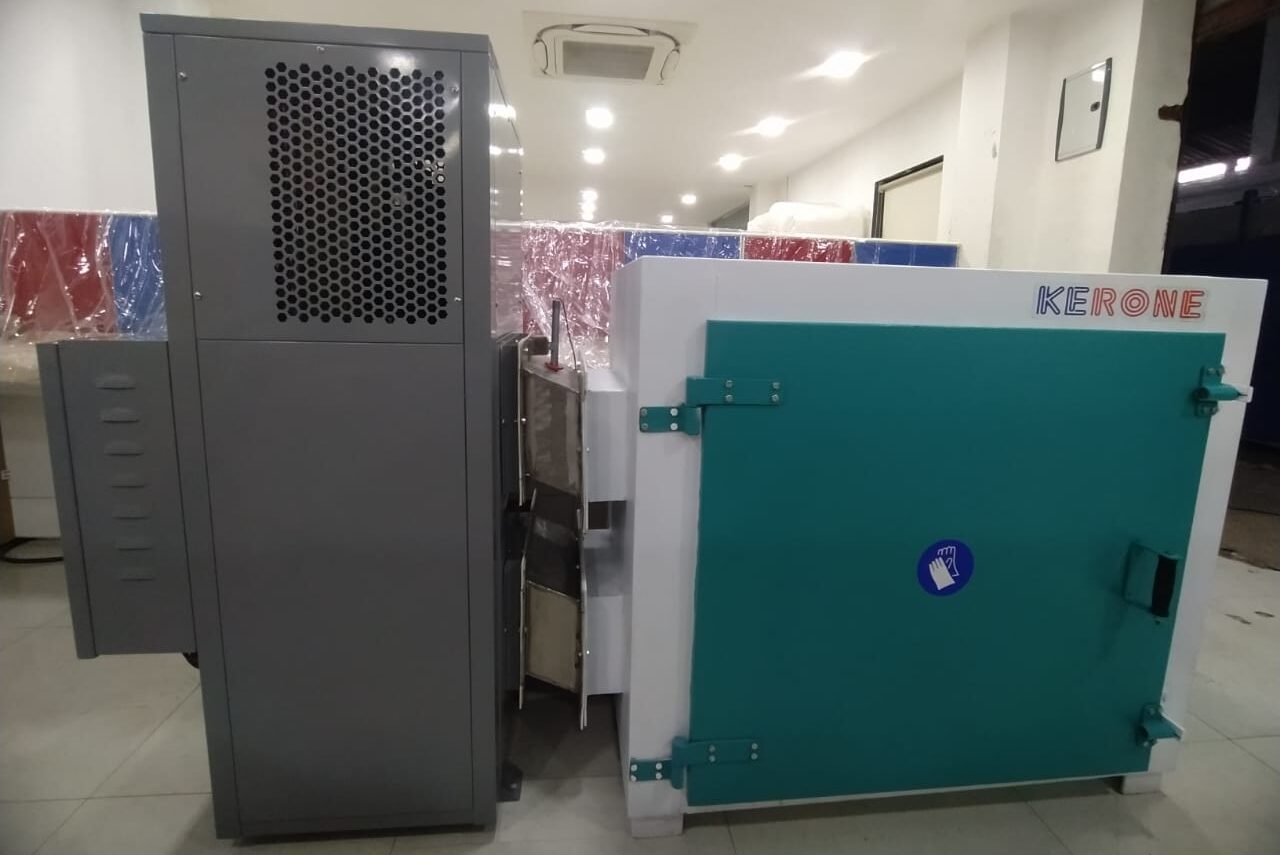
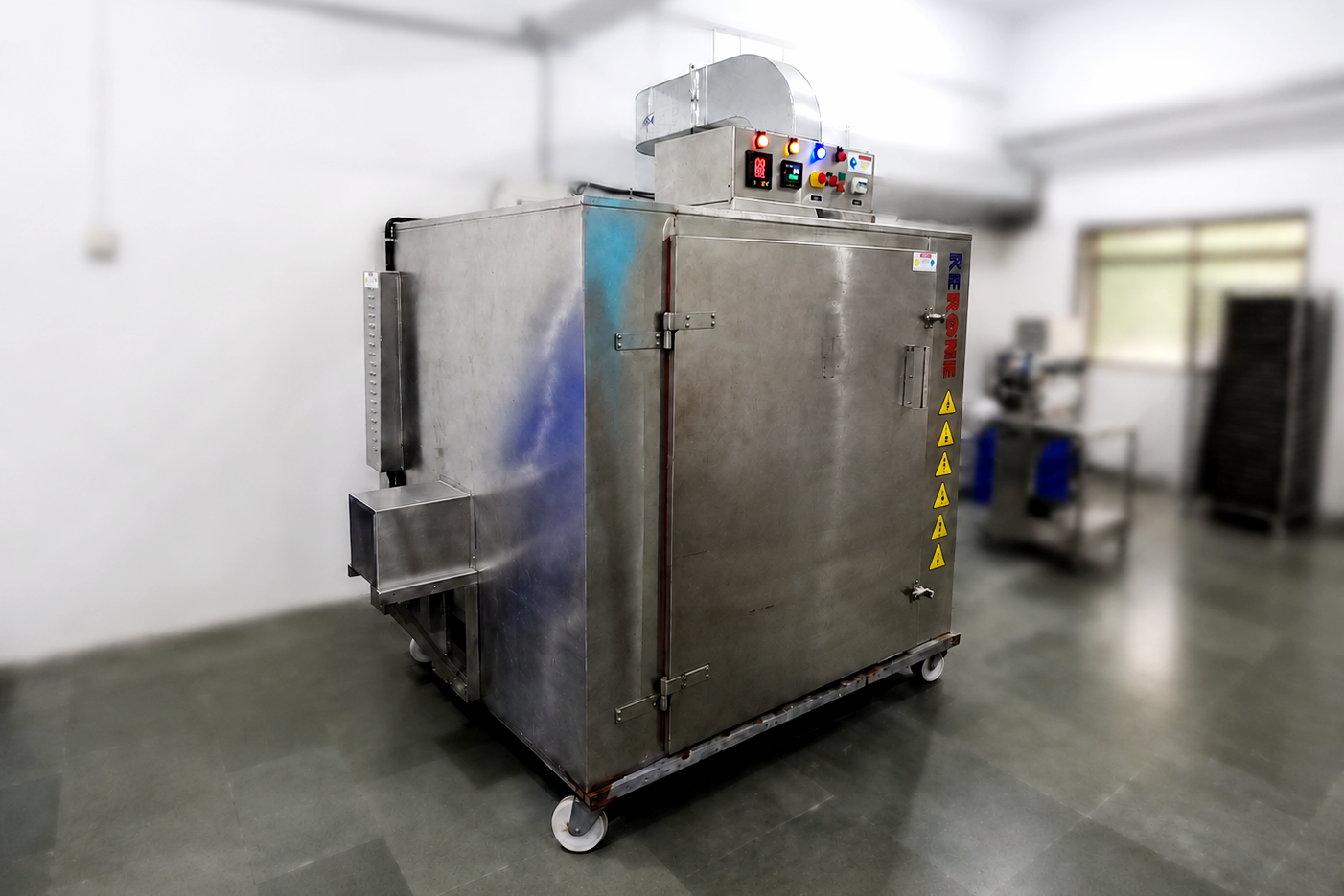
The Low Temperature Heat Pump Dryer is specifically engineered to dry thermally sensitive materials at operating temperatures ranging from 25°C to 55°C, a thermal window that is simply unachievable with conventional hot-air dryers without significant product degradation, aroma loss, or colour change. Kerone Engineering Solutions designs these systems around a high-efficiency refrigeration circuit that dehumidifies the recirculating drying air at temperatures below the product’s thermal degradation threshold, while simultaneously recovering the heat released during condensation and returning it to the drying chamber. This allows the drying driving force, the vapour pressure differential between the product surface and the surrounding air, to be maintained purely through the moisture content reduction of the circulating air, rather than by elevating temperature. The result is drying that preserves volatile aromatic compounds, bioactive peptides, enzymes, probiotics, and heat-labile pigments that would otherwise be destroyed or significantly diminished by conventional drying at 60°C and above. Kerone’s low temperature dryers are the equipment of choice for premium food ingredient manufacturers, pharmaceutical biotechnology companies, and nutraceutical producers where the biochemical integrity of the dried product is the primary quality criterion.
Why Choose Kerone Low Temperature Heat Pump Dryer
Kerone’s expertise in low temperature drying originates from years of working with food technologists and pharmaceutical scientists to solve the specific challenge of drying bioactive materials without destroying their functionality. Our design team applies a deep understanding of water activity science and product-specific degradation kinetics to correctly select the drying temperature, humidity setpoints, and air velocity for each application. Unlike generic low temperature dryers that simply operate at reduced setpoints, Kerone’s systems are engineered with precisely sized heat pump capacities to maintain target humidity levels even when moisture evaporation rates are slow, a critical distinction that prevents the common failure mode of rising chamber humidity stalling the drying process. The result is reliable, repeatable low temperature drying that meets the tight moisture specifications required by premium product manufacturing.
Types and Features of Low Temperature Heat Pump Dryer
Kerone supplies Low temperature Heat Pump Dryers in batch tray, batch cabinet, and continuous belt configurations, allowing food, pharmaceutical, and nutraceutical manufacturers to select the appropriate format for their production volume and product handling requirements. The refrigeration compressor is selected for efficient operation at low condensing temperatures to maximise COP at the operating point, and the evaporator design prioritises low frosting tendency to minimise defrost cycle frequency and maintain continuous dehumidification capacity.
Key Features
Operating temperature range of 25°C to 55°C preserving heat-labile compounds including enzymes, probiotics, flavour volatiles, and vitamins
Chamber relative humidity can be controlled down to 10–15% RH to maintain maximum drying driving force at low temperatures
Ultra-high COP of 4.0 to 6.5 at low operating temperatures due to minimised temperature lift in the refrigeration circuit
Hermetically sealed drying chamber prevents ambient humidity ingress which would interfere with the low-humidity drying environment
Low-noise compressor and fan design, suitable for installation within production buildings without acoustic isolation requirements
Precise temperature uniformity of ±1°C throughout the drying chamber volume, ensuring consistent product quality across all loading positions
Optional UV sterilisation or HEPA filtration of circulating air for pharmaceutical-grade or microbiologically sensitive drying applications
Automated end-of-cycle humidity target detection enabling unattended operation with alarm notification on cycle completion
Powered by AI, ML & IoT
Future-Ready Engineering Driven by AI & IoT
Our advanced AI, ML, and IoT technologies, this solution delivers smarter automation, real-time insights, and predictive intelligence to enhance efficiency and drive future-ready growth.
Real-Time Monitoring & Control
Continuous tracking of process parameters with instant adjustments.
Predictive Maintenance
Intelligent fault detection to prevent failures before they occur.
Adaptive Process Optimization
Dynamic tuning of operations for maximum output and efficiency.
Cloud Dashboards & Analytics
Unified access to real-time insights and performance trends.
Energy & Resource Savings
Smarter utilization of energy to cut costs and reduce waste.
Secure IoT Connectivity
Encrypted data flow with seamless integration across plant systems.
Applications of Low Temperature Heat Pump Dryer
Kerone’s Low temperature Heat Pump Dryers are extensively used by manufacturers of high-value, thermally sensitive products where preserving biological activity and sensory quality is essential.
Typical applications include:
Probiotic culture and live bacterial biomass drying for nutraceutical and functional food manufacturing where cell viability must be maintained
Drying of flavour powders, essential oil encapsulates, and spray-dried aroma carriers where volatile retention is a primary quality metric
Enzyme preparation drying for industrial biotechnology and food ingredient industries where enzymatic activity specification must be met
Low temperature drying of marine and plant-based omega-3 and phytochemical extracts to prevent lipid oxidation and bioactive degradation
Drying of high-value pharmaceutical biologics, vaccines, and protein-based API intermediates at sub-ambient or low temperature conditions
Drying of heritage and archival materials, artwork, textiles, and moisture-damaged documents in conservation and restoration applications
Kerone Engineering Solutions’ Low temperature Heat Pump Dryer is the enabling technology for manufacturers who understand that the value of their product lies not just in its moisture content at discharge, but in the complete preservation of its biological activity, sensory character, and nutritional profile. By engineering a drying environment that removes moisture gently and efficiently at temperatures that protect the product’s most valuable attributes, Kerone delivers systems that justify a premium over conventional dryers through improved product quality, reduced waste, and enhanced market positioning of the dried product. For premium food, nutraceutical, and pharmaceutical manufacturers, this is the dryer that protects the investment in upstream processing and raw material quality.
Seamless Export Connections Global & Local
Our Global Footprint in Industrial Excellence
Delivering world-class industrial and process solutions across countries with precision, innovation, and reliability.
Peru
Chile
Argentina
Mexico
Colombia
Brazil
USA
Canada
United Kingdom
France
Germany
Spain
Italy
Netherlands
Sweden
Switzerland
Poland
Portugal
Ireland
Czechia
Romania
Hungary
Austria
Greece
Kazakhstan
Uzbekistan
Turkmenistan
Algeria
Egypt
Nigeria
Kenya
South Africa
Saudi Arabia
UAE
Israel
Russia
India
China
Japan
South Korea
Thailand
Vietnam
Malaysia
Singapore
Indonesia
Philippines
Australia
New Zealand
Pan-India Presence. Local Expertise.
Raipur
Bilaspur
Panaji
Vasco da Gama
Gandhinagar
Ahmedabad
Surat
Chandigarh
Gurgaon
Shimla
Manali
Bengaluru
Mysore
Kochi
Pune
Mumbai
Thane
Navi Mumbai
Hyderabad
Chennai
Coimbatore
Kolkata
Lucknow
Jaipur
Udaipur
Jodhpur
Dehradun
Haridwar
Bhubaneswar
Product Gallery
Frequently Asked Questions (FAQ)
At temperatures above 55–60°C, many enzymes denature, volatile aromatic compounds evaporate or decompose, heat-sensitive vitamins degrade, and Maillard browning reactions occur. Low temperature drying removes moisture while staying below these degradation thresholds, preserving the biological and sensory integrity of the product.
Yes, drying rates at 30–50°C are lower than at 70–90°C due to the reduced vapour pressure driving force. However, Kerone compensates by reducing chamber humidity to very low levels, which maintains an adequate drying gradient, and by optimising air velocity to maximise moisture transfer from the product surface.
Kerone's standard low temperature dryers operate down to approximately 25°C chamber temperature. For sub-ambient or cryogenic-range drying, specialised systems using cascade refrigeration or combined freeze-drying approaches are required, which Kerone can discuss on a case-by-case basis.
Yes, provided appropriate hygienic construction standards are applied. Kerone offers models with full stainless steel interior, HEPA-filtered air supply, and validated cleaning protocols suitable for both food-grade and pharmaceutical-grade applications.
Kerone equips its low temperature dryers with return air humidity monitoring, product weight monitoring (optional in-chamber load cell), and programmed humidity decay rate analysis to detect when the evaporation rate has fallen to the target level, signalling that the moisture specification has been met.
Because the heat pump COP is highest at low temperature differentials, low temperature heat pump dryers can achieve COPs of 5.0 to 6.5, consuming as little as 0.18–0.30 kWh per kg of water evaporated, significantly less than any other low temperature drying technology including freeze-drying.
Yes. For omega-3 extracts, unstable pharmaceuticals, and other oxygen-sensitive products, Kerone can supply a nitrogen-blanketed recirculation system that maintains oxygen levels below 2% within the drying chamber throughout the cycle.
Kerone recommends quarterly checks on refrigeration circuit pressure, coil cleanliness, and compressor oil level; six-monthly inspection of fan bearings and belt drives; and annual full refrigerant charge verification. Preventive maintenance contracts are available from Kerone's service team.
Water activity (Aw) measures the availability of water for microbial growth and chemical reactions, and is a more reliable stability indicator than moisture content percentage alone. Kerone's low temperature dryers can be programmed to target a specific Aw endpoint by correlating outlet air humidity with the product's moisture sorption isotherm, delivering a product that is stable at the specified storage conditions.
For many non-porous and moderate-density products, low temperature heat pump drying at 30–45°C can achieve quality outcomes - colour, aroma, bioactivity that approach freeze-dried quality at 10 to 20 times lower energy and capital cost. Kerone recommends a comparative trial for each product to determine whether heat pump drying meets the required quality specification before investing in freeze drying.
At very low ambient temperatures (below 10°C), the heat pump's evaporator performance may be affected if it uses ambient air as a secondary heat source. Kerone addresses this by using process-air-sourced heat pump configurations in cold climates, where the evaporator extracts heat from the warmer return air stream rather than cold ambient air.
Kerone installs high-accuracy capacitance-type humidity sensors with PT100 temperature elements at both the supply and return air positions. The PLC calculates absolute humidity, relative humidity, and dew point continuously, using this data to modulate compressor capacity and air bypass dampers to maintain the setpoint psychrometric conditions.
Yes. Many spray-dried powders require secondary drying to reduce residual moisture from 5–8% to below 3% for stability. Low temperature heat pump tray or fluid bed drying is an effective secondary drying stage that completes moisture removal gently without impacting powder morphology or flowability.
Kerone's PLC records time-stamped chamber temperature, humidity, compressor status, fan speed, and alarm events throughout every cycle. The system generates a batch record PDF automatically at cycle completion, which can be signed electronically and archived in a validated 21 CFR Part 11-compliant data management system.
Yes. Kerone offers low temperature heat pump dryers in cleanroom-compatible configurations with smooth external surfaces, minimal horizontal ledges, sealed cable entries, and HEPA-filtered supply air. Installation qualification in ISO Class 7 or 8 cleanrooms is supported with appropriate documentation.
Kerone’s custom-designed heating and processing solutions are built to meet the demands of your growing operations. Whether you’re upgrading equipment, expanding production, or need a tailor-made solution


 Peru
Peru Chile
Chile Argentina
 Mexico
 Colombia
 Brazil
 USA
USA Canada
 United Kingdom
 France
 Germany
 Spain
Spain Italy
Italy Netherlands
 Sweden
 Switzerland
 Poland
 Portugal
 Ireland
 Czechia
 Romania
 Hungary
 Austria
 Greece
 Kazakhstan
 Uzbekistan
 Turkmenistan
 Algeria
 Egypt
Egypt Nigeria
 Kenya
Kenya South Africa
 Saudi Arabia
 UAE
UAE Israel
 Russia
 India
India China
China Japan
Japan South Korea
 Thailand
 Vietnam
 Malaysia
 Singapore
 Indonesia
 Philippines
 Australia
 New Zealand