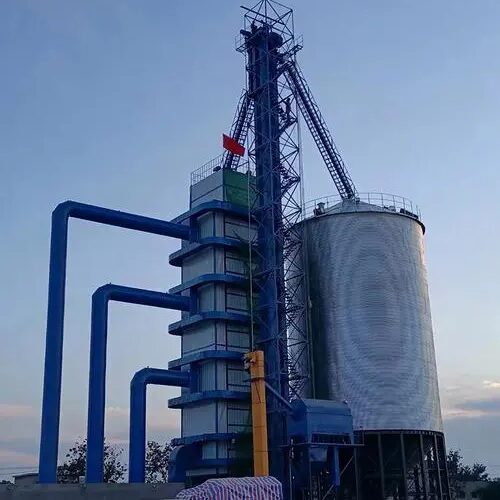
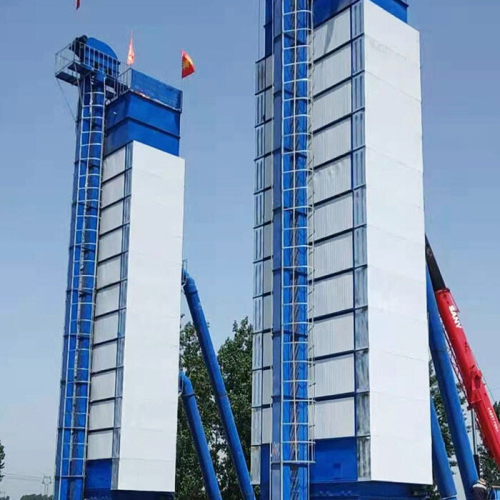
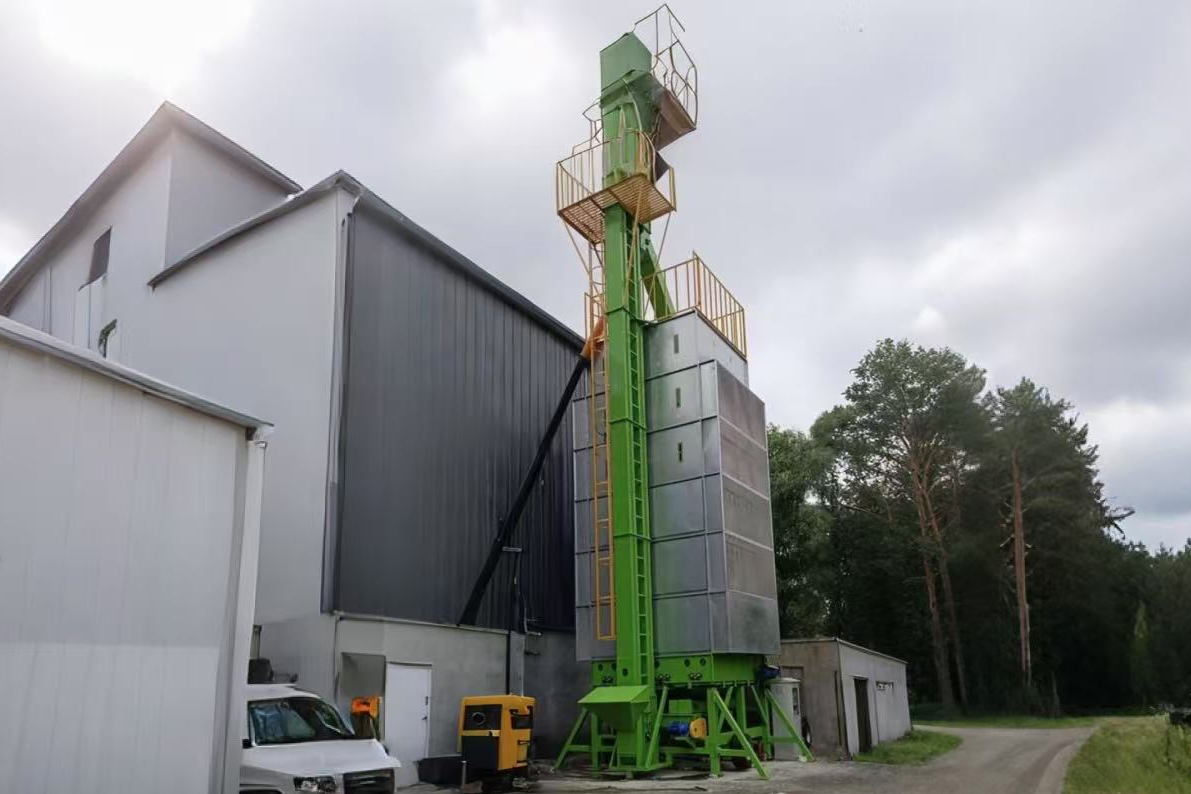
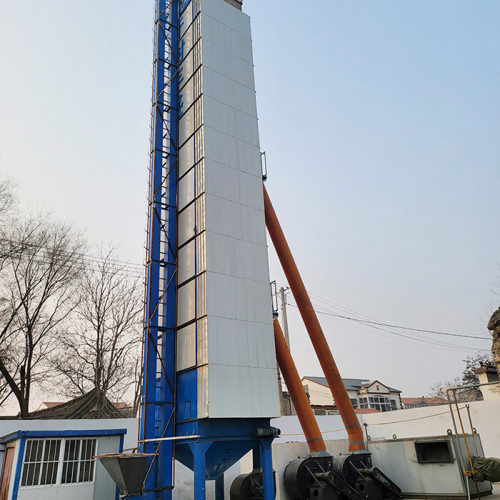
Kerone brings over 50 years of experience in designing high-performance tower dryers for a wide range of industrial and commercial applications. Built with advanced heat transfer mechanisms and automated controls, Kerone’s tower dryers are engineered to deliver optimal drying performance while maintaining product integrity.
Tower Dryers provide fast, efficient drying for large farm operations and commercial purposes. The tower dryer design utilizes industry proven drying principles along with many unique features to provide the commercial user with a simple, reliable, fuel efficient grain dryer.
Why Choose Kerone Tower Dryers
Kerone’s tower dryers are known for their quality, durability, and energy optimization. Each unit is engineered to meet specific process needs, ensuring reduced drying times, higher throughput, and superior quality output. The systems integrate innovative heating technologies, allowing maximum efficiency with minimal energy loss.
We at KERONE are having 50+ years experience in designing and manufacturing various types of specialized industrial machines for the processing need of our clients. We are having immense experience in providing customized machinery to suit various industrial requirements of our esteemed clients. We design the tower dryers as per the size and process need of the client. The dryers manufactured by KERONE are made with high quality internal and external material by taking discreet efforts for the perfect size and desired operations.
Types and Features of Tower Dryers
Kerone offers multiple models and configurations of tower dryers, such as batch, continuous, and hybrid types. Depending on material and industry requirements, the dryers are designed with advanced temperature control systems, airflow regulation, and automated safety features.
They can handle a wide range of materials from agricultural produce and chemicals to pharmaceuticals and industrial powders offering flexible performance under varying process conditions.
It is constructed to be assembled as a shell trunk drop dryer, run on propane-butane or CNG. Grain is dried within the shells between two aligned cylinder shells which drop the dried grain by means of gravity. Inside the shells are invertors that ensure mixing of dried material and simultaneously split the volume between drying and cooling section.
Features:
Easy start-up and operation
Simple and reliable construction
Stainless steel outer screens
Easy cleaning without restricting airflow
Maintains balanced heat and air distribution in the plenum
User-friendly menu-driven system
Around-the-clock monitoring
Computerized controls with self-diagnostics
Increases productivity and efficiency
Positive discharge system
Ensures steady unloading and prevents plugging
Cost-effective installation
Key Features
Energy-efficient design with advanced heat management.
Uniform drying with consistent temperature distribution.
Customizable airflow and heating configurations.
Automatic control systems for precision and safety.
Robust construction ensuring long operational life.
Low maintenance with easy-to-clean components.
Ideal for both batch and continuous drying processes.
Optimized for sensitive and bulk materials alike.
Powered by AI, ML & IoT
Future-Ready Engineering Driven by AI & IoT
Our advanced AI, ML, and IoT technologies, this solution delivers smarter automation, real-time insights, and predictive intelligence to enhance efficiency and drive future-ready growth.
Real-Time Monitoring & Control
Continuous tracking of process parameters with instant adjustments.
Predictive Maintenance
Intelligent fault detection to prevent failures before they occur.
Adaptive Process Optimization
Dynamic tuning of operations for maximum output and efficiency.
Cloud Dashboards & Analytics
Unified access to real-time insights and performance trends.
Energy & Resource Savings
Smarter utilization of energy to cut costs and reduce waste.
Secure IoT Connectivity
Encrypted data flow with seamless integration across plant systems.
Applications of Tower Dryers
Kerone’s tower dryers find wide applications across industries, providing reliable drying solutions for varied materials. Common applications include:
Food & Beverage
Drying fruits, vegetables, meat, fish, and herbs.
Agriculture
Moisture removal from grains, seeds, and crops.
Pharmaceutical
Drying herbal extracts, granules, and powders.
Chemical & Mineral
Processing catalysts, pigments, and minerals.
Industrial
Drying of ceramics, coal, polymers, and composites.
Kerone’s tower dryers combine technological innovation with practical design. Built for reliability, scalability, and energy efficiency, they help industries achieve higher productivity with minimal operational costs. Through continuous research and development, Kerone continues to lead in industrial drying innovation, offering tailored solutions for global industries.
Tower Dryers are the backbone of large-scale grain and seed drying operations worldwide, providing the throughput, efficiency, and reliability that modern agricultural processing requires. Their tall, multi-zone design efficiently handles the continuous flow of harvest material during peak harvest periods while maintaining product quality and energy efficiency. Kerone’s tower dryer solutions, built for agricultural durability and operational simplicity, provide grain operators with equipment that delivers dependable performance season after season with minimal maintenance requirements.
Seamless Export Connections Global & Local
Our Global Footprint in Industrial Excellence
Delivering world-class industrial and process solutions across countries with precision, innovation, and reliability.
Peru
Chile
Argentina
Mexico
Colombia
Brazil
USA
Canada
United Kingdom
France
Germany
Spain
Italy
Netherlands
Sweden
Switzerland
Poland
Portugal
Ireland
Czechia
Romania
Hungary
Austria
Greece
Kazakhstan
Uzbekistan
Turkmenistan
Algeria
Egypt
Nigeria
Kenya
South Africa
Saudi Arabia
UAE
Israel
Russia
India
China
Japan
South Korea
Thailand
Vietnam
Malaysia
Singapore
Indonesia
Philippines
Australia
New Zealand
Pan-India Presence. Local Expertise.
Raipur
Bilaspur
Panaji
Vasco da Gama
Gandhinagar
Ahmedabad
Surat
Chandigarh
Gurgaon
Shimla
Manali
Bengaluru
Mysore
Kochi
Pune
Mumbai
Thane
Navi Mumbai
Hyderabad
Chennai
Coimbatore
Kolkata
Lucknow
Jaipur
Udaipur
Jodhpur
Dehradun
Haridwar
Bhubaneswar
Product Gallery
Frequently Asked Questions (FAQ)
Tower dryers are designed for free-flowing granular materials that can be fed from the top, flow downward under gravity through drying and cooling sections, and discharge from the bottom without bridging. Grains (wheat, maize, rice, sorghum), oilseeds, animal feed pellets, plastic granules, fertiliser prills, and coal briquettes are common materials. The critical material property is flowability, materials prone to bridging, clumping, or sticking at elevated temperatures require special discharge mechanisms such as counter-rotating rollers or agitating louvers. Material bulk density also determines the cross-sectional area required for a given mass flow rate through the tower.
A tower dryers is an industrial system that removes moisture from materials using controlled heat and airflow.
It operates by circulating hot air or transferring heat to evaporate moisture from products efficiently.
It ensures faster drying, energy efficiency, and product uniformity.
Industries like food, agriculture, pharmaceutical, and chemical commonly use these dryers.
Yes, Kerone designs every system according to specific industry and process needs.
Yes, precise temperature control ensures safe drying for sensitive materials.
Kerone’s designs optimize heat recovery and minimize energy consumption.
Regular inspection, cleaning, and calibration ensure optimal performance and longer lifespan.
Throughput and residence time in a tower dryer are controlled by the discharge mechanism at the base of the tower, which governs how quickly material flows through the drying column. Common discharge mechanisms include metering rolls, vibrating distributors, and motorised screw conveyors whose speed is adjusted by the PLC. A slower discharge rate increases residence time, giving the material longer exposure to the drying air, while a faster rate reduces it. The inlet temperature and airflow volume are the primary parameters adjusted to hit a target outlet moisture content at a given throughput. Tower dryers designed for grain drying typically include online moisture measurement in the discharge stream to provide feedback for discharge rate and temperature control.
Freshly harvested grain can arrive at the dryer with moisture content that varies from 18% to 30% or more depending on harvest conditions and crop variety. A fixed operating parameter setting would over-dry low-moisture grain or under-dry high-moisture grain. Modern tower dryers handle this variability through an inlet moisture sensor that measures incoming moisture continuously and transmits the data to the PLC. The control system then automatically adjusts discharge speed (residence time), inlet temperature, or both to compensate. For dryers without automated control, an experienced operator uses the inlet and outlet moisture measurements to manually adjust operating parameters. Consistent outlet moisture, typically 13–14% for safe grains of storage is the key performance target.
Fire and explosion risk are real concerns in grain tower dryers because grain dust is combustible. Essential safety provisions include a grain temperature monitoring system that triggers an automatic shutdown if the grain temperature exceeds a safe threshold, typically 60–65°C to avoid germination damage and 80°C to avoid ignition risk. Over-temperature alarms on the heating air supply, fire detection sensors in the drying column, and emergency water quench provisions are additional requirements. The burner management system must comply with EN 746 or equivalent. Rotary spreaders at the grain inlet should be designed to prevent foreign object damage. Dust collection and control at the discharge end prevent accumulation of explosive dust concentrations.
Yes. Most grain tower dryers are designed with dedicated drying zones and a cooling zone as an integrated section at the base of the tower. In the cooling zone, ambient air (or chilled air for sensitive materials) is blown through the material column in the same counterflow direction, removing sensible heat before discharge. This is important because hot grain discharged directly into storage can develop condensation when it contacts cooler air in the silo, which promotes mould growth. The height ratio between drying and cooling sections is determined by the drying duty and the required cooling delta-T. Separating these functions with distinct air inlet and exhaust ports allows independent control of drying and cooling air conditions.
For large-volume grain drying, tower dryers typically have lower operating cost per tonne than rotary drum dryers. The primary reason is thermal efficiency: counterflow tower dryers extract more heat from the drying air before it exhausts, compared to the concurrent or cross-flow airflow in many rotary designs. Tower dryers also have fewer rotating parts — no drum to turn — which reduces mechanical wear and electrical consumption from drive motors. Maintenance requirements are generally lower because the discharge mechanism is the main moving component. The trade-off is higher capital cost and more complex civil work for the tall structure, which makes rotary dryers more economical at smaller capacities or where existing building structures cannot support a tower installation.
Tower dryers can be scaled in capacity by increasing the cross-sectional area (widening or extending the drying column) or by adding additional tower units in parallel. Modular tower dryer designs allow new sections to be flanged onto existing columns to increase drying zone height, extending residence time without changing the discharge mechanism or foundation significantly. For larger capacity jumps, a second parallel tower with shared control infrastructure is the common approach. Kerone advises customers who anticipate capacity growth within 5–10 years to design the initial foundation, electrical infrastructure, and ducting with future expansion in mind, as retrofitting these elements later is more costly than provisioning them upfront.
Kerone’s custom-designed heating and processing solutions are built to meet the demands of your growing operations. Whether you’re upgrading equipment, expanding production, or need a tailor-made solution

 Peru
Peru Chile
Chile Argentina
 Mexico
 Colombia
 Brazil
 USA
USA Canada
 United Kingdom
 France
 Germany
 Spain
Spain Italy
Italy Netherlands
 Sweden
 Switzerland
 Poland
 Portugal
 Ireland
 Czechia
 Romania
 Hungary
 Austria
 Greece
 Kazakhstan
 Uzbekistan
 Turkmenistan
 Algeria
 Egypt
Egypt Nigeria
 Kenya
Kenya South Africa
 Saudi Arabia
 UAE
UAE Israel
 Russia
 India
India China
China Japan
Japan South Korea
 Thailand
 Vietnam
 Malaysia
 Singapore
 Indonesia
 Philippines
 Australia
 New Zealand