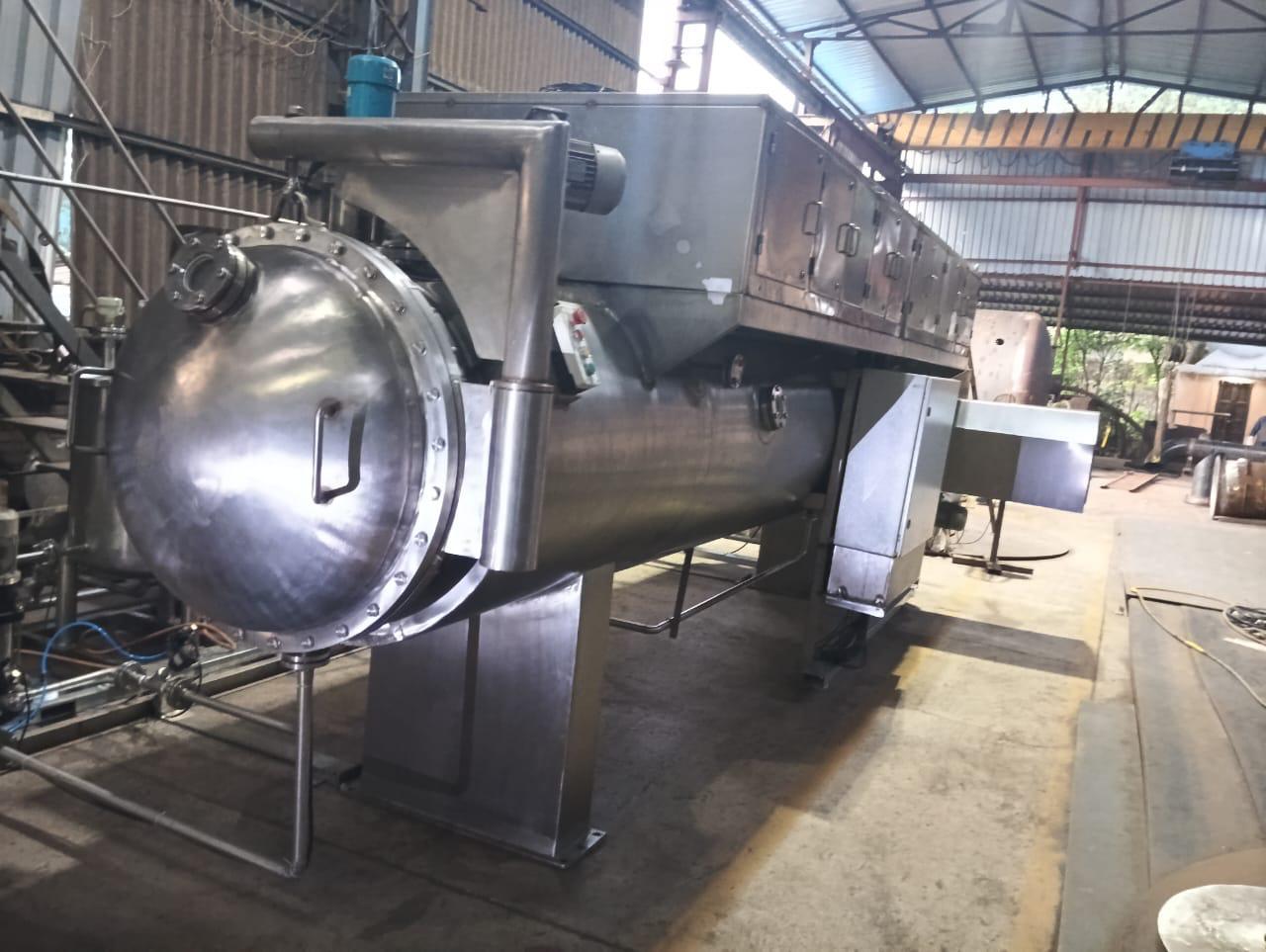
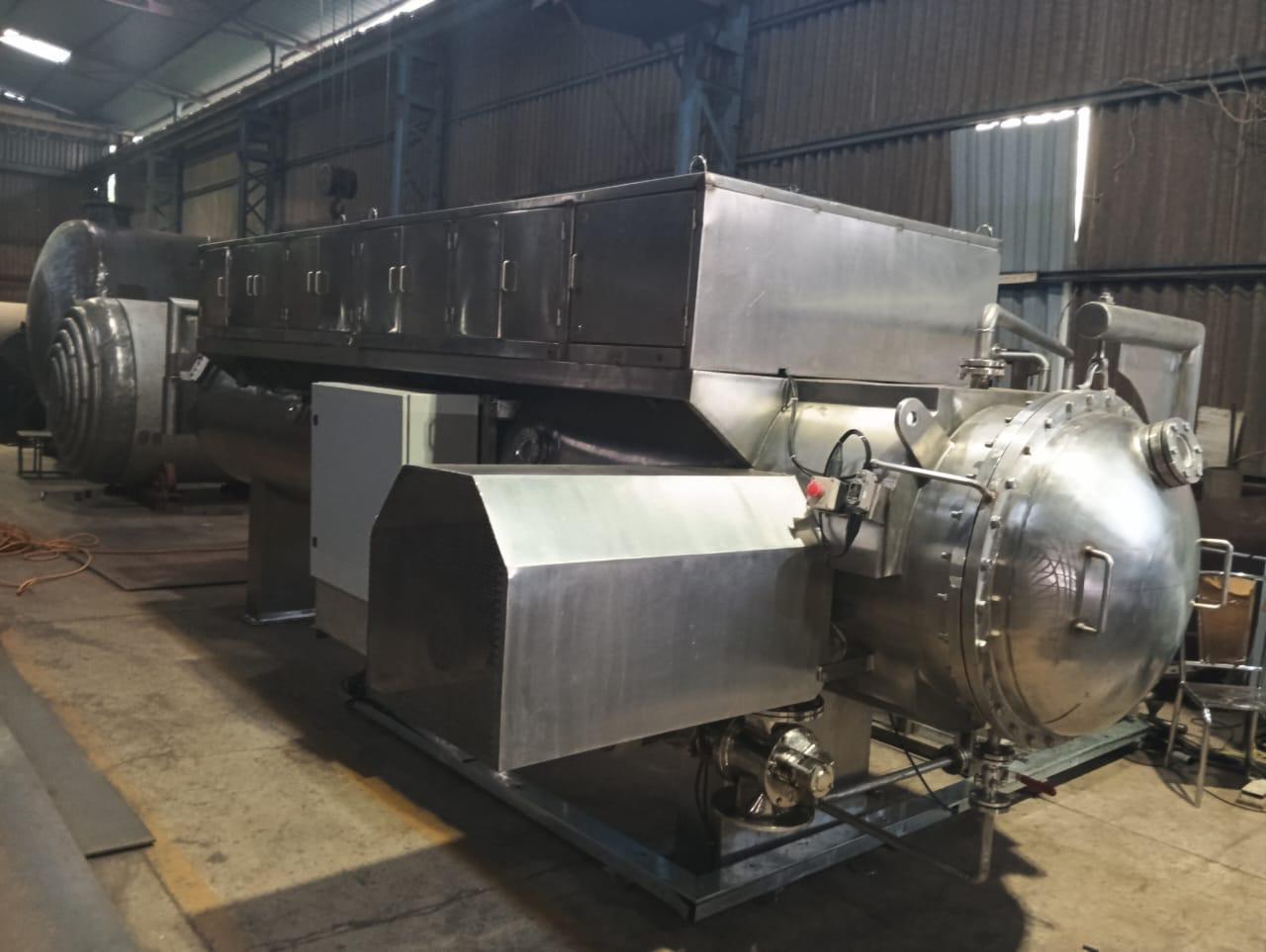
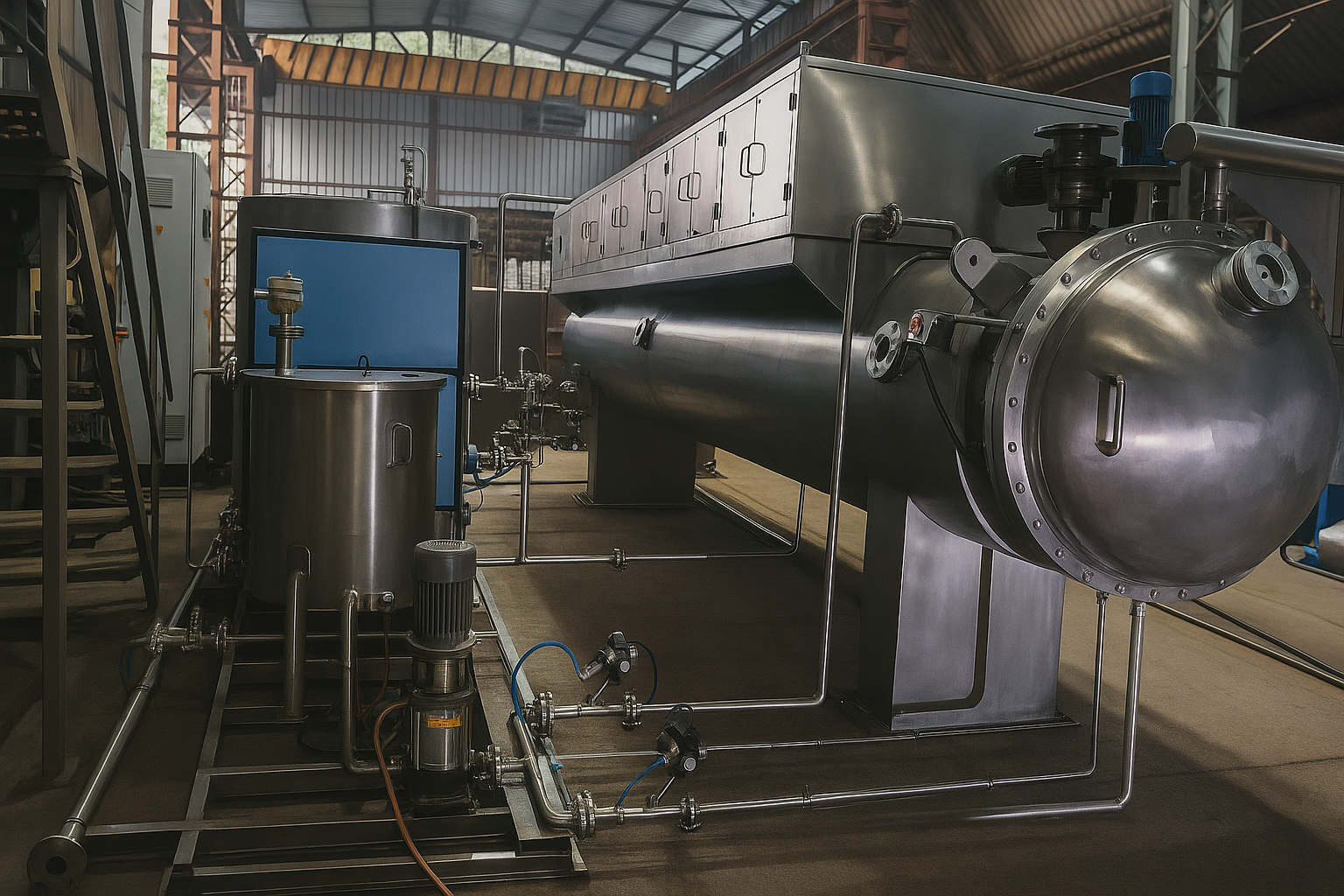
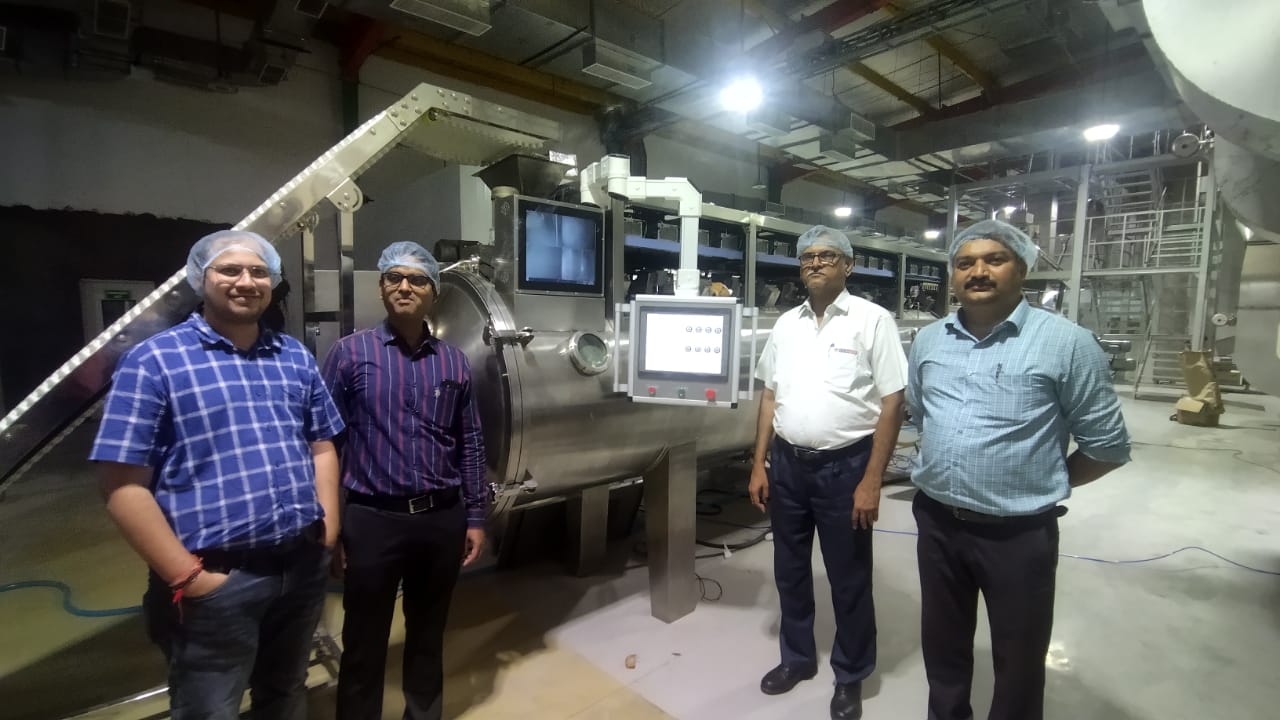
Kerone’s vacuum dryer are developed with over 50+ years of engineering excellence, providing advanced drying solutions tailored for pharmaceutical, chemical, and food industries. These dryers operate under vacuum conditions to enable low-temperature moisture removal, protecting material properties and improving drying efficiency. Each unit is designed for consistent performance, ensuring uniform drying, energy efficiency, and reduced processing time.
A Vacuum Dryer is a broad category of industrial drying equipment that operates under sub-atmospheric pressure to reduce the boiling point of moisture or solvents in the product, enabling effective drying at significantly lower temperatures than would be possible under atmospheric conditions. This fundamental principle makes vacuum dryers the equipment of choice for any product that would degrade, oxidize, discolor, lose potency, or undergo other unwanted changes if dried at the higher temperatures required under atmospheric pressure. Vacuum dryers are used across a vast range of industries including pharmaceutical manufacturing, food processing, fine chemical production, electronics, and research applications, in configurations ranging from small laboratory ovens to large production-scale vessels handling thousands of kilograms per batch.
Why Choose Kerone Vacuum Dryer
Kerone’s vacuum dryer are trusted for their exceptional quality, robust design, and adaptability to demanding industrial applications. Every dryer is designed after detailed analysis of product characteristics, thermal behavior, and moisture content. Our focus on automation, customization, and material integrity ensures maximum efficiency and superior results.
Vacuum Dryers represent the company’s broad capability in vacuum drying across multiple equipment configurations and scales, from laboratory-scale vacuum ovens to large production batch dryers. Kerone’s deep understanding of vacuum system engineering — encompassing vacuum pump selection, condenser design, leakage control, and instrumentation — ensures that the target vacuum is reliably achieved and maintained throughout the drying cycle, providing the low product temperatures and rapid solvent removal that are the key advantages of vacuum drying. Kerone selects the most appropriate vacuum dryer configuration for each application based on the product’s physical form, thermal sensitivity, solvent system, batch size, and regulatory requirements, ensuring that the delivered equipment is optimally suited to the customer’s specific process.
Types and Features of Vacuum Dryer
Kerone provides multiple configurations of vacuum dryer to cater to specific industrial processes. These include single-stage and multi-stage systems, batch and continuous operation, and customizable designs with advanced temperature and vacuum control mechanisms.
We manufactures a comprehensive range of vacuum drying equipment. Vacuum Tray Dryers use heated shelves in an evacuated chamber to dry product placed on trays; they are suitable for granules, powders, and lumpy materials in pharmaceutical and food applications. Vacuum Paddle Dryers use rotating paddle agitators in a jacketed vacuum vessel for pastes, wet cakes, and granules requiring mixing during drying. Vacuum Rotary Dryers use a rotating vessel shell under vacuum to tumble and mix product against the heated shell surface; they are suitable for fragile granules and crystals. Vacuum Spray Dryers atomize liquid feeds into a vacuum chamber for oxygen-free, low-temperature powder production. Double-Cone Vacuum Dryers rotate a double-cone shaped vessel under vacuum, providing gentle tumbling without a rotating agitator; they are ideal for fragile materials. Vacuum Belt Dryers continuously transport product through a vacuum chamber on permeable belts, combining the gentle handling of belt drying with the low-temperature advantage of vacuum operation.
Key Features
Operates under low temperature and high vacuum conditions for gentle drying.
Ensures high product quality with minimal degradation or oxidation.
Custom-built designs for specific industrial materials and moisture content.
Energy-efficient performance with integrated vacuum and heating systems.
Easy operation and maintenance with automation compatibility.
Uniform drying achieved through optimized heat transfer and vacuum levels.
Available in batch or continuous operation modes.
Durable construction with long service life and process reliability.
Powered by AI, ML & IoT
Future-Ready Engineering Driven by AI & IoT
Our advanced AI, ML, and IoT technologies, this solution delivers smarter automation, real-time insights, and predictive intelligence to enhance efficiency and drive future-ready growth.
Real-Time Monitoring & Control
Continuous tracking of process parameters with instant adjustments.
Predictive Maintenance
Intelligent fault detection to prevent failures before they occur.
Adaptive Process Optimization
Dynamic tuning of operations for maximum output and efficiency.
Cloud Dashboards & Analytics
Unified access to real-time insights and performance trends.
Energy & Resource Savings
Smarter utilization of energy to cut costs and reduce waste.
Secure IoT Connectivity
Encrypted data flow with seamless integration across plant systems.
Applications of Vacuum Dryer
Kerone’s vacuum dryer are widely used in pharmaceutical, chemical, and food industries for moisture reduction, solvent recovery, and controlled drying. Common applications include:
Pharmaceutical
Drying of heat-sensitive products, granules, and extracts.
Chemical
Processing of catalysts, pigments, resins, and solvents.
Food
Drying of flavoring agents, starch, and herbal extracts.
Industrial
Treatment of powders, slurries, and viscous materials.
Kerone’s vacuum dryer are built with precision and innovation to meet the drying challenges of modern industries. By integrating advanced heating systems, automation, and vacuum control, Kerone ensures superior drying performance, consistent output, and long-term reliability. Trusted by pharmaceutical, chemical, and food industries, these dryers represent the perfect blend of engineering excellence and industrial practicality.
Vacuum Dryers are among the most important and versatile pieces of process equipment in modern manufacturing, enabling industries from pharmaceuticals to electronics to safely and efficiently dry their most sensitive and valuable products. The ability to dry at low temperatures under controlled atmospheric conditions without oxygen exposure provides product quality and safety benefits that no other drying technology can fully replicate. Kerone’s comprehensive range of vacuum drying solutions, encompassing all major vacuum dryer configurations and scales, positions the company as a one-stop source for vacuum drying expertise and equipment.
Seamless Export Connections Global & Local
Our Global Footprint in Industrial Excellence
Delivering world-class industrial and process solutions across countries with precision, innovation, and reliability.
Peru
Chile
Argentina
Mexico
Colombia
Brazil
USA
Canada
United Kingdom
France
Germany
Spain
Italy
Netherlands
Sweden
Switzerland
Poland
Portugal
Ireland
Czechia
Romania
Hungary
Austria
Greece
Kazakhstan
Uzbekistan
Turkmenistan
Algeria
Egypt
Nigeria
Kenya
South Africa
Saudi Arabia
UAE
Israel
Russia
India
China
Japan
South Korea
Thailand
Vietnam
Malaysia
Singapore
Indonesia
Philippines
Australia
New Zealand
Pan-India Presence. Local Expertise.
Raipur
Bilaspur
Panaji
Vasco da Gama
Gandhinagar
Ahmedabad
Surat
Chandigarh
Gurgaon
Shimla
Manali
Bengaluru
Mysore
Kochi
Pune
Mumbai
Thane
Navi Mumbai
Hyderabad
Chennai
Coimbatore
Kolkata
Lucknow
Jaipur
Udaipur
Jodhpur
Dehradun
Haridwar
Bhubaneswar
Product Gallery
Frequently Asked Questions (FAQ)
The decision usually comes down to the product's physical form and how much mechanical handling it can tolerate. Free-flowing granules or powders that sit stably on a shelf suit vacuum tray dryer, which offer the gentlest handling but the longest cycle times since there is no agitation to promote heat transfer. Pastes, wet cakes, and materials that would otherwise form a crust on a static surface need the continuous mixing of a paddle dryer to expose fresh surface area to the heated wall. Fragile crystals or granules that would break under paddle agitation, but still benefit from gentle tumbling, are better suited to a rotary or double-cone vacuum dryer. Choosing based on a general category like pharmaceutical or chemical, without considering the specific physical form, is the most common specification error.
Deeper vacuum lowers the boiling point of the solvent or water further, which is valuable for genuinely heat-sensitive products, but it is not automatically better for every application. Achieving and holding very deep vacuum requires larger, more expensive vacuum pumps and tighter sealing, and very low pressure can sometimes cause excessive foaming or splashing in certain liquid or paste formulations. The right vacuum level is the shallowest one that achieves the target drying temperature for the specific product's thermal sensitivity, going deeper than necessary adds capital and operating cost without improving the result. Process trials during equipment specification are the most reliable way to identify this point rather than assuming maximum vacuum is always the goal.
A vacuum dryer is designed for efficient moisture removal under vacuum, ensuring gentle drying of heat-sensitive materials.
It operates by lowering the pressure to reduce the boiling point of moisture, enabling drying at lower temperatures.
It offers energy savings, uniform drying, and protection for temperature-sensitive materials.
Industries like pharmaceutical, chemical, and food industries rely on these dryers for critical processes.
Yes, Kerone provides fully customizable designs based on product and process parameters.
The use of vacuum technology significantly reduces drying time and energy consumption.
Yes, Kerone’s systems can be equipped with condensers for solvent recovery.
Kerone designs its dryers with robust materials ensuring longevity and consistent operation.
When the product being dried contains organic solvents rather than water, integrated condensers recover the vaporized solvent for reuse or proper disposal instead of releasing it to atmosphere, which is typically required by environmental regulation in addition to being a real cost-saving opportunity in solvent-intensive processes like pharmaceutical intermediate drying. The condenser and associated cold trap need to be sized for the actual solvent load and its specific condensation temperature, since under-sizing leads to incomplete recovery and potential venting violations. Buyers processing solvent-wet material should treat solvent recovery sizing as a core specification item, not an optional add-on priced separately after the main vacuum system is selected.
The most common cause is uneven heat transfer across the batch material near the heated surface or jacket, which dries faster than material in the center or top of a static bed, particularly in vacuum tray dryers where there is no mechanical mixing to even things out. This shows up as batches that test correctly on average moisture but contain pockets of under-dried material that cause stability or quality failures downstream. Paddle or rotary configurations largely solve this through continuous mixing, but for tray systems, the fix is usually reducing tray loading depth and tightening shelf temperature uniformity rather than simply extending cycle time, which often fails to resolve a fundamentally uneven heat distribution problem.
Batch vacuum drying remains the standard for pharmaceutical and specialty chemical production because it supports the cleaning validation and lot traceability that regulated industries require between different products or campaigns. Continuous vacuum belt drying becomes attractive once volume is high and consistent enough that changeover flexibility matters less than throughput and labor efficiency, common in larger-scale food or chemical intermediate production. Processors anticipating significant volume growth should evaluate at what throughput level the labour and cycle-time efficiency of continuous operation would outweigh the flexibility batch operation currently provides, rather than defaulting to batch indefinitely simply because that is the current method.
Vacuum integrity depends entirely on seal condition, and door gaskets, shaft seals on paddle or rotary units, and valve seats degrade gradually in ways that are not always obvious until vacuum pump run time and cycle duration start creeping upward. Routine vacuum leak-down testing, rather than waiting for a visible performance problem, catches seal degradation early enough to schedule replacement during planned downtime instead of an unplanned production stoppage. Vacuum pump oil condition and condenser fouling are the other two most common sources of gradually declining performance, and both benefit from a fixed inspection interval tied to operating hours rather than a calendar-based schedule alone.
Kerone’s custom-designed heating and processing solutions are built to meet the demands of your growing operations. Whether you’re upgrading equipment, expanding production, or need a tailor-made solution


 Peru
Peru Chile
Chile Argentina
 Mexico
 Colombia
 Brazil
 USA
USA Canada
 United Kingdom
 France
 Germany
 Spain
Spain Italy
Italy Netherlands
 Sweden
 Switzerland
 Poland
 Portugal
 Ireland
 Czechia
 Romania
 Hungary
 Austria
 Greece
 Kazakhstan
 Uzbekistan
 Turkmenistan
 Algeria
 Egypt
Egypt Nigeria
 Kenya
Kenya South Africa
 Saudi Arabia
 UAE
UAE Israel
 Russia
 India
India China
China Japan
Japan South Korea
 Thailand
 Vietnam
 Malaysia
 Singapore
 Indonesia
 Philippines
 Australia
 New Zealand