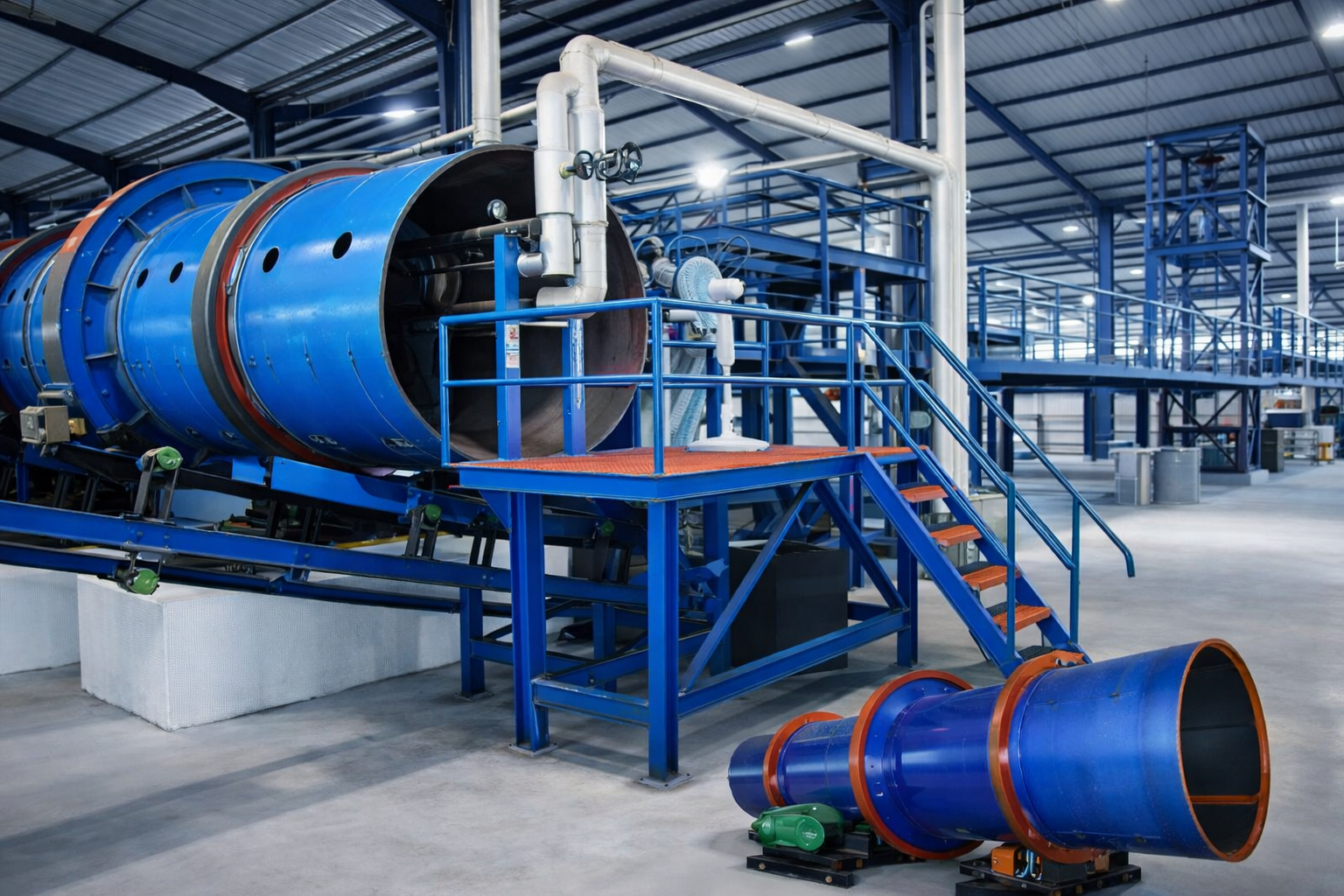
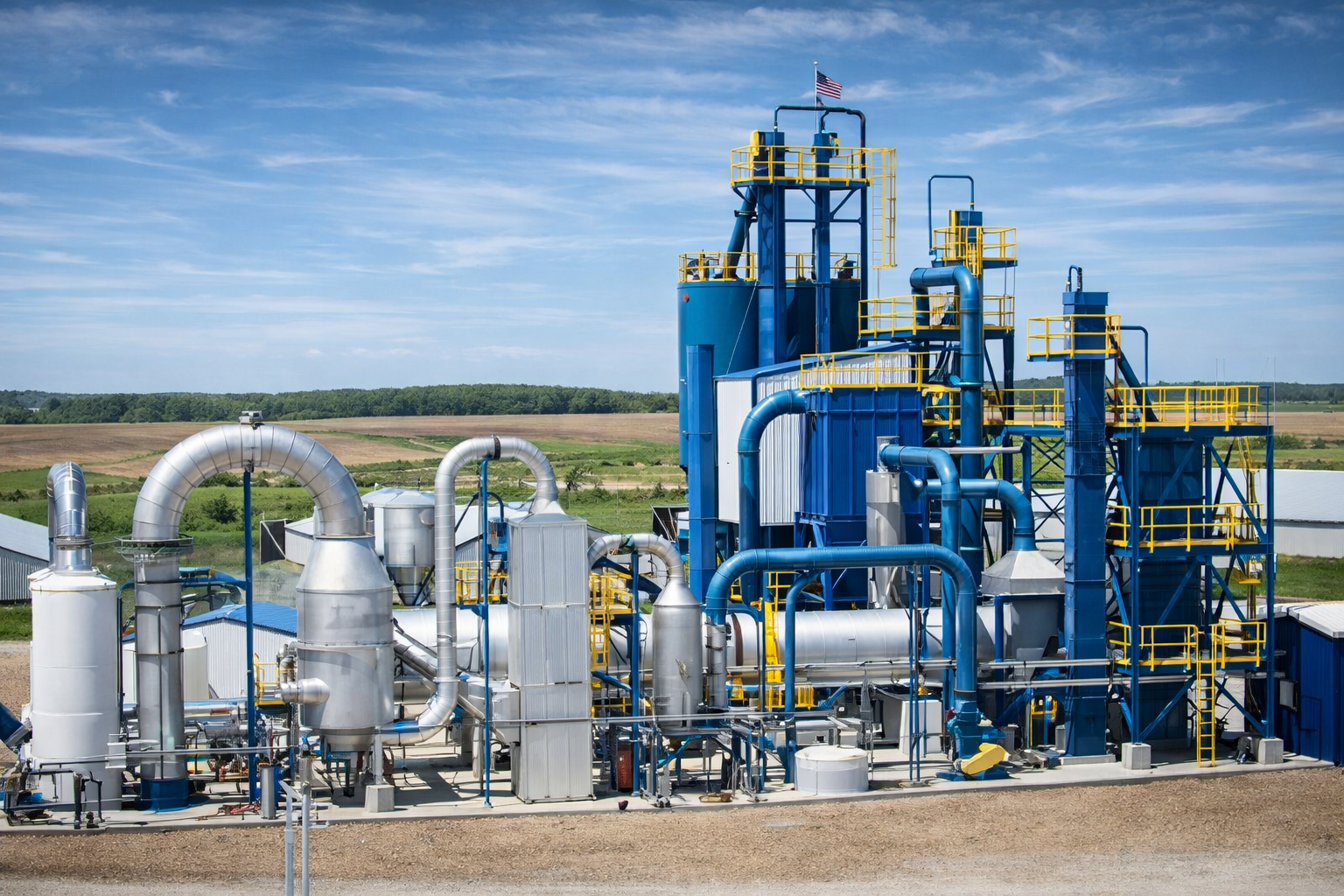
Organic Fertilizer Plant is engineered to provide optimal drying efficiency and material handling performance. It ensures reliability, uniform heat transfer, and minimal degradation for sensitive or bulk materials.
Kerone Engineering Solutions Ltd. is a leading company in the provision of advanced industrial heating, drying, and process solutions of engineering globally. Having more than 50 years of expertise, we are experts in designing, producing, and delivering custom-made, state-of-the-art systems to meet the ever-changing requirements of the industries across the globe.
Why Choose Kerone Organic Fertilizer Plant
Kerone’s Organic Fertilizer Plant integrates precision engineering, robust construction, and advanced control systems that ensure consistent output and long‑term durability across various industrial applications.
Industrial dryers produced by Kerone are efficient, effective and controllable with quick and controlled response time for removing of water/moisture .At Kerone we are having huge range of industrial dryers that can suit to various critical application across industries such are chemical, pharmaceutical, food, aviation, Oil & Gases, wood, paper production, ceramics and many more.
Types and Features of Organic Fertilizer Plant
The Organic Fertilizer Plant is available in multiple industrial configurations tailored for specific materials, production capacities, and environmental requirements, ensuring operational flexibility and efficiency.
As a fertilizer Dryer manufacturer with twenty years of expertise, KERONE will offer you with efficient and energy-saving organic fertilizer production lines. And utilizing our production line in your organic fertilizer plant, you’ll get high-quality organic fertilizer. Whether your organic fertilizer plant is large- scale or small-scale, we can offer you with a suitable production line. Therefore, in our company, you’ll choose a small production line with an annual output of 3,000 tons, and can choose a production line with an annual output of 100,000 tons. Additionally, we also give organic fertilizer production lines for processing chicken poop, cow dung, horse manure, and sheep manure so on.
Bio-friendly airflow drying suitable for organic nutrient retention
Odor-control and gas-purification system installed
Configurable capacity options for farm, MSME, or industrial scale
Anti-corrosive construction to handle compost acidity
Automated mixing and dosing for uniform nutrient content
Optional pelletizing module for consistent granule output
Low operating cost with optimized fermentation-to-drying flow
Powered by AI, ML & IoT
Future-Ready Engineering Driven by AI & IoT
Our advanced AI, ML, and IoT technologies, this solution delivers smarter automation, real-time insights, and predictive intelligence to enhance efficiency and drive future-ready growth.
Real-Time Monitoring & Control
Continuous tracking of process parameters with instant adjustments.
Predictive Maintenance
Intelligent fault detection to prevent failures before they occur.
Adaptive Process Optimization
Dynamic tuning of operations for maximum output and efficiency.
Cloud Dashboards & Analytics
Unified access to real-time insights and performance trends.
Energy & Resource Savings
Smarter utilization of energy to cut costs and reduce waste.
Secure IoT Connectivity
Encrypted data flow with seamless integration across plant systems.
Applications of Organic Fertilizer Plant
Kerone’s Organic Fertilizer Plant are extensively used in industries. Typical applications include:
Converting organic waste into high-quality fertilizers
Producing compost and bio-manure on a large scale
Processing agricultural residues for soil enrichment
Manufacturing nutrient-rich granules and powders
Supporting sustainable farming with organic inputs
Recycling biodegradable waste into useful products
The Organic Fertilizer Plant provides dependable, efficient, and customizable drying capabilities suitable for diverse industrial segments, ensuring productivity and consistent output quality.
An Organic Fertilizer Plant is widely used for converting agricultural waste, animal manure, municipal sludge, and biodegradable organic materials into nutrient-rich compost and granulated organic fertilizers. These plants are applied in sustainable farming, commercial agriculture, horticulture, landscaping, and soil improvement projects to enhance soil fertility, improve crop yield, and promote eco-friendly waste management. They also support large-scale organic fertilizer production for retail distribution and export markets.
Seamless Export Connections Global & Local
Our Global Footprint in Industrial Excellence
Delivering world-class industrial and process solutions across countries with precision, innovation, and reliability.
Peru
Chile
Argentina
Mexico
Colombia
Brazil
USA
Canada
United Kingdom
France
Germany
Spain
Italy
Netherlands
Sweden
Switzerland
Poland
Portugal
Ireland
Czechia
Romania
Hungary
Austria
Greece
Kazakhstan
Uzbekistan
Turkmenistan
Algeria
Egypt
Nigeria
Kenya
South Africa
Saudi Arabia
UAE
Israel
Russia
India
China
Japan
South Korea
Thailand
Vietnam
Malaysia
Singapore
Indonesia
Philippines
Australia
New Zealand
Pan-India Presence. Local Expertise.
Raipur
Bilaspur
Panaji
Vasco da Gama
Gandhinagar
Ahmedabad
Surat
Chandigarh
Gurgaon
Shimla
Manali
Bengaluru
Mysore
Kochi
Pune
Mumbai
Thane
Navi Mumbai
Hyderabad
Chennai
Coimbatore
Kolkata
Lucknow
Jaipur
Udaipur
Jodhpur
Dehradun
Haridwar
Bhubaneswar
Product Gallery
Frequently Asked Questions (FAQ)
It is designed for efficient industrial drying of material specific to its category.
Yes, it is engineered for uninterrupted workflow depending on model selection.
Routine inspection, lubrication, and cleaning based on material type.
Kerone provides multiple customization options for capacity, controls, and thermal systems.
Food, chemical, pharma, agriculture, and material‑processing sectors extensively use it.
The system is optimized to reduce energy use while maintaining high drying efficiency.
An organic fertilizer plant converts raw organic materials (animal manure, crop residues, food waste, sewage sludge) into value-added fertilizer products through a series of processing steps: collection and pre-treatment, composting or fermentation, drying, grinding, screening, blending, granulation, and packaging. The complete plant integrates all these unit operations in a coordinated production system to produce organic fertilizer meeting market specifications.
Rotary drum dryers are most commonly used for large-scale organic fertilizer drying due to their high capacity and ability to handle the fibrous, heterogeneous nature of composted organic materials. Paddle dryers (indirect) are used where direct flame contact with the product is undesirable (to preserve microbial inoculants or organic certifications). Belt dryers are used for shaped or granulated fertilizer products requiring gentle drying.
Granulation is typically performed before final drying. A rotary drum granulator or disc pelletizer forms granules from partially dried, comminuted organic material with controlled moisture content (25–35% for drum granulation). The granulated product then proceeds to a rotary dryer to reduce moisture to specification. This sequence produces hard, round granules with excellent flow properties, uniform size, and low dust content, preferred by farmers using bulk spreading equipment.
Odor control includes: enclosed receiving and processing facilities with negative pressure ventilation; biofilters treating exhaust air from the composting halls, dryers, and granulation sections; vapor-phase scrubbers for ammonia control; HEPA filtration for packaging areas; continuous odor monitoring at facility boundary; and maintaining appropriate processing conditions (moisture, temperature, C/N ratio) to minimize odorous compound generation during composting.
It's built to process animal manure (cow, poultry, horse, sheep), crop residues, food waste, and sewage sludge. so, if your feedstock is organic and biodegradable, it can generally be routed through the same core process.
Granulation happens first. Material is granulated at a controlled moisture content of around 25-35%, and the resulting granules then go through the rotary dryer to bring moisture down to final specification. This order gives harder, more uniform granules.
Yes. Kerone offers production lines from around 3,000 tonnes a year up to 100,000 tonnes annually, so the plant can be sized to your current volume with room to scale as demand grows.
Paddle dryers avoid direct flame contact with the product, which matters if you need to preserve microbial inoculants or maintain organic certification standards, rotary drum dryers are generally chosen instead for straightforward high-capacity drying.
Automated mixing and dosing is built into the line to keep nutrient content consistent across batches, reducing the manual oversight needed to maintain product quality.
Kerone’s custom-designed heating and processing solutions are built to meet the demands of your growing operations. Whether you’re upgrading equipment, expanding production, or need a tailor-made solution




 Peru
Peru Chile
Chile Argentina
 Mexico
 Colombia
 Brazil
 USA
USA Canada
 United Kingdom
 France
 Germany
 Spain
Spain Italy
Italy Netherlands
 Sweden
 Switzerland
 Poland
 Portugal
 Ireland
 Czechia
 Romania
 Hungary
 Austria
 Greece
 Kazakhstan
 Uzbekistan
 Turkmenistan
 Algeria
 Egypt
Egypt Nigeria
 Kenya
Kenya South Africa
 Saudi Arabia
 UAE
UAE Israel
 Russia
 India
India China
China Japan
Japan South Korea
 Thailand
 Vietnam
 Malaysia
 Singapore
 Indonesia
 Philippines
 Australia
 New Zealand