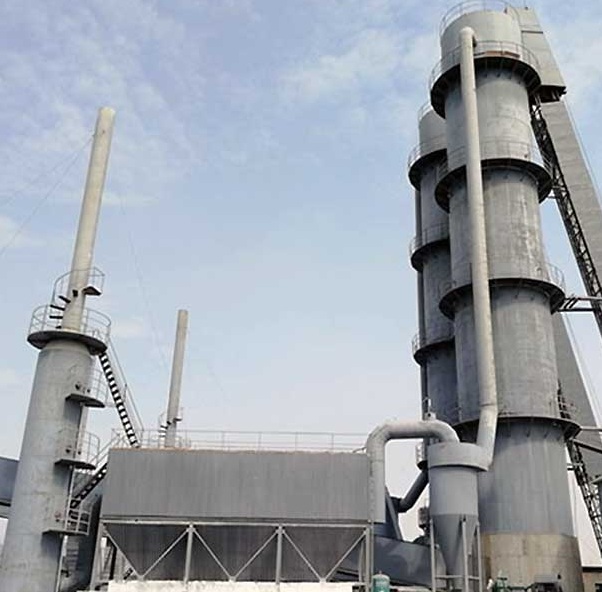
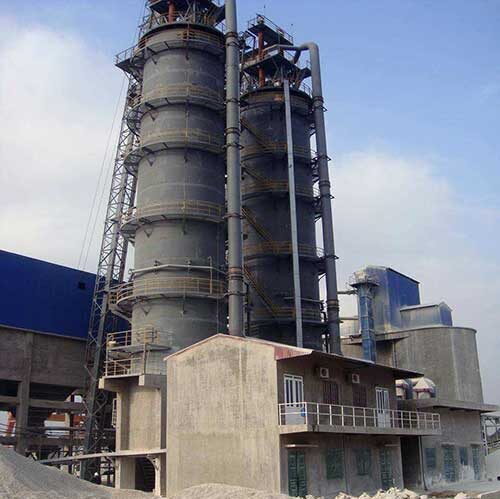
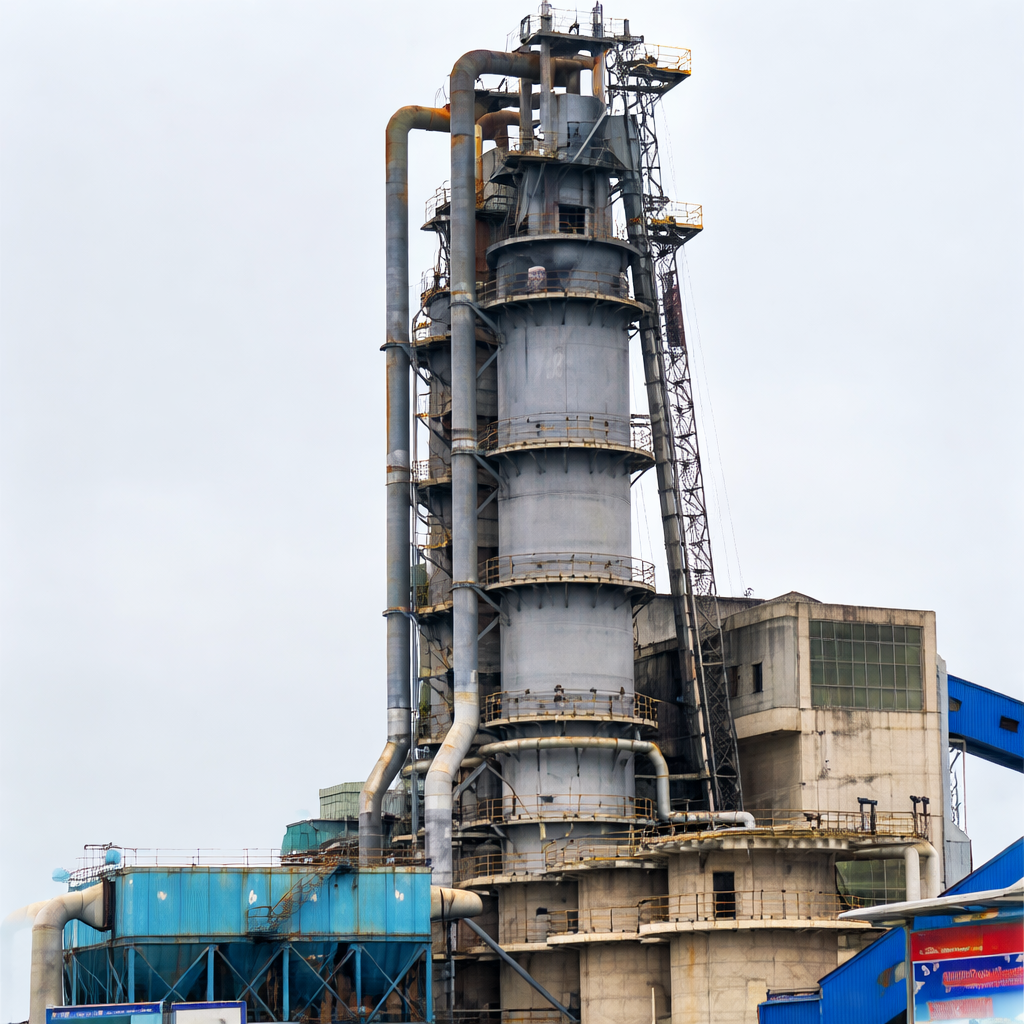
Kerone’s Vertical Shaft Kilns are specialized counter-current thermal processing units designed for the efficient calcination and thermal decomposition of sized solid materials, featuring a vertical cylindrical or rectangular shaft geometry through which the solid charge descends by gravity while hot gases rise upward in the opposite direction. Distinguished from standard Shaft Kilns by their optimized internal geometries, advanced gas distribution systems, and specialized combustion arrangements, Kerone’s Vertical Shaft Kilns are engineered for applications requiring high product quality uniformity, precise temperature profiles, and exceptional energy efficiency across a broad range of minerals, chemicals, and industrial materials. The vertical arrangement maximizes residence time utilization, minimizes heat losses, and provides natural burden compaction that aids in even gas distribution through the descending charge column.
Why Choose Kerone Vertical Shaft Kilns
Kerone’s extensive experience in vertical shaft kiln engineering for diverse mineral and chemical processing applications gives customers confidence that their specific process requirements will be met with engineered solutions rather than standard designs. Kerone’s process engineers conduct thorough feed material characterization, thermal analysis, and gas flow modeling to design shaft kilns that deliver the required product quality with minimum fuel consumption. Our kilns are built to the highest construction standards, using premium refractory materials proven in equivalent service environments to ensure long campaign life. Kerone’s integrated approach — encompassing process design, mechanical engineering, refractory specification, combustion system design, and control system integration — delivers complete shaft kiln systems that start up quickly, operate reliably, and achieve performance guarantees from initial commissioning.
Types and Features of Vertical Shaft Kilns
Kerone’s Vertical Shaft Kiln offerings include Single-Shaft Kilns for straightforward calcination; Twin or Multi-Shaft Kilns for parallel production to increase total output from a single facility; Annular Shaft Kilns with central combustion chambers for improved gas distribution uniformity; Internally Fired Shaft Kilns where solid fuel is co-charged with the feed material; and Externally Fired Shaft Kilns with burner arrangements through the kiln shell. Applications-specific variants include Bauxite Calcination Kilns, Phosphate Calcination Kilns, and Chemical Compound Thermal Decomposition Kilns. All models incorporate automated charge level measurement, temperature profiling, gas composition monitoring, and product extraction control systems.
Key Features
Optimized shaft geometry and internal obstacles for uniform gas distribution across the entire shaft cross-section
Counter-current gas-solid heat exchange maximizing thermal efficiency and minimizing specific fuel consumption
Robust gravity discharge system with adjustable extraction for production rate control
Advanced combustion or heat source arrangement for targeted thermal input to the calcination zone
Low dust generation compared to rotary kilns due to gentle, gravity-driven material movement
Flexibility in feed material characteristics with appropriate distributor designs
Comprehensive gas treatment systems for dust collection and emission compliance
Fully automated control system with adaptive process management for consistent product quality
Powered by AI, ML & IoT
Future-Ready Engineering Driven by AI & IoT
Our advanced AI, ML, and IoT technologies, this solution delivers smarter automation, real-time insights, and predictive intelligence to enhance efficiency and drive future-ready growth.
Real-Time Monitoring & Control
Continuous tracking of process parameters with instant adjustments.
Predictive Maintenance
Intelligent fault detection to prevent failures before they occur.
Adaptive Process Optimization
Dynamic tuning of operations for maximum output and efficiency.
Cloud Dashboards & Analytics
Unified access to real-time insights and performance trends.
Energy & Resource Savings
Smarter utilization of energy to cut costs and reduce waste.
Secure IoT Connectivity
Encrypted data flow with seamless integration across plant systems.
Applications of Vertical Shaft Kilns
Kerone’s Vertical Shaft Kilns are extensively used in industries requiring efficient, large-scale thermal treatment of mineral raw materials and chemical compounds.
Typical applications include:
Calcination of refractory-grade bauxite for production of high-alumina refractory materials
Thermal calcination of crude phosphate rock for wet process phosphoric acid production
Production of active coke and activated carbon from coal and coconut shell precursors
Calcination of zinc oxide, lead oxide, and other metallic oxide compounds for chemical use
Thermal treatment of kaolin, bentonite, and other industrial clays for ceramics and industrial minerals
Thermal decomposition of siderite and ankerite iron ores for metallurgical pre-treatment
Kerone’s Vertical Shaft Kilns represent a proven, energy-efficient thermal processing technology for mineral and chemical industries that require consistent product quality, high thermal efficiency, and reliable large-scale production. By combining deep process knowledge, precision mechanical engineering, and advanced control systems, Kerone delivers Vertical Shaft Kilns that perform to specification from day one and continue to deliver outstanding results throughout their operational life. Whether you are processing bauxite for refractory production, calcining phosphate ore, or activating carbon for industrial use, Kerone’s Vertical Shaft Kiln technology provides the efficiency, reliability, and product quality your production process demands.
Seamless Export Connections Global & Local
Our Global Footprint in Industrial Excellence
Delivering world-class industrial and process solutions across countries with precision, innovation, and reliability.
Peru
Chile
Argentina
Mexico
Colombia
Brazil
USA
Canada
United Kingdom
France
Germany
Spain
Italy
Netherlands
Sweden
Switzerland
Poland
Portugal
Ireland
Czechia
Romania
Hungary
Austria
Greece
Kazakhstan
Uzbekistan
Turkmenistan
Algeria
Egypt
Nigeria
Kenya
South Africa
Saudi Arabia
UAE
Israel
Russia
India
China
Japan
South Korea
Thailand
Vietnam
Malaysia
Singapore
Indonesia
Philippines
Australia
New Zealand
Pan-India Presence. Local Expertise.
Raipur
Bilaspur
Panaji
Vasco da Gama
Gandhinagar
Ahmedabad
Surat
Chandigarh
Gurgaon
Shimla
Manali
Bengaluru
Mysore
Kochi
Pune
Mumbai
Thane
Navi Mumbai
Hyderabad
Chennai
Coimbatore
Kolkata
Lucknow
Jaipur
Udaipur
Jodhpur
Dehradun
Haridwar
Bhubaneswar
Product Gallery
Frequently Asked Questions (FAQ)
Vertical Shaft Kilns typically achieve specific heat consumption of 850–1200 kcal/kg of product, compared to 1400–2000 kcal/kg for equivalent Rotary Kilns. This energy advantage is due to the efficient counter-current heat exchange and lower radiation losses of the compact vertical design.
Vertical Shaft Kilns require sized feed with a relatively narrow particle size distribution (typically 20–120 mm lumpy material) to maintain adequate gas permeability through the descending burden. Fine materials below 10 mm tend to pack densely, blocking gas flow and causing process problems.
Products include reactive and hydraulic lime, dolime, calcined bauxite, calcined phosphate, activated carbon, zinc oxide, calcined kaolin, and various specialty calcined minerals and chemical compounds. Each product requires specific design adaptations for the kiln internals, temperature profile, and gas management system.
Temperature uniformity across the shaft cross-section is ensured through optimal combustion burner placement, internal gas distribution devices (tuyeres, crosswalls, or gas injection lances), and careful feed distribution at the top to prevent channeling and segregation of the descending burden.
Vertical Shaft Kilns generate fine dust from material abrasion during descent. Kerone incorporates fabric filters or electrostatic precipitators for dust collection, as well as SO₂ scrubbing systems and other emission controls to meet applicable environmental regulations.
Generally, Vertical Shaft Kilns require dry or pre-dried feed material. Wet feed causes excessive steam generation in the upper kiln zone, can cause bridging and flow problems, and significantly increases specific fuel consumption. Kerone can design pre-drying systems to prepare wet feed before charging to the shaft kiln.
Single shaft kiln output ranges from 50 TPD (tons per day) for small, specialty product kilns to 800+ TPD for large lime or bauxite kilns. Multiple shaft kiln systems can aggregate output to several thousand TPD from a single facility.
Initial commissioning of a Vertical Shaft Kiln typically requires 4–8 weeks from first heat-up to stable production at design output. This period includes initial refractory cure, gradual temperature ramp-up, process parameter optimization, and control system tuning. Kerone's commissioning engineers are on-site throughout this period.
Vertical Shaft Kilns often use more advanced internal geometries, specialized gas distribution devices, and application-specific combustion arrangements, whereas a standard Shaft Kiln follows a more conventional single-shaft counter-current design for straightforward lime production.
Yes, rectangular or oval shaft geometries are used in some specialized designs where a wider single unit is preferred over building multiple circular shafts, though gas distribution needs extra attention in these shapes.
Segregation happens when coarser particles roll to the outer edges and finer ones concentrate in the centre during charging, which then causes uneven gas flow. Kerone designs the charging system to distribute feed evenly across the shaft cross-section.
Sampling ports at various shaft heights allow operators to check partially calcined material, giving insight into whether the temperature profile matches the intended reaction progress before the material reaches the discharge zone.
Internally fired kilns mix solid fuel directly with the feed material as it descends, while externally fired kilns introduce heat through burners mounted in the shaft wall, keeping fuel ash separate from the product.
Yes, twin-shaft or multi-shaft arrangements commonly share feed handling, gas cleaning, and utility systems, which is one reason they are chosen to expand output from a single facility rather than building entirely separate kiln lines.
The upper zone deals mostly with preheating and lower mechanical stress, while the lower calcining and cooling zones face higher temperatures and more abrasive material movement, so Kerone often specifies different refractory grades for each zone.
Kerone’s custom-designed heating and processing solutions are built to meet the demands of your growing operations. Whether you’re upgrading equipment, expanding production, or need a tailor-made solution



 Peru
Peru Chile
Chile Argentina
 Mexico
 Colombia
 Brazil
 USA
USA Canada
 United Kingdom
 France
 Germany
 Spain
Spain Italy
Italy Netherlands
 Sweden
 Switzerland
 Poland
 Portugal
 Ireland
 Czechia
 Romania
 Hungary
 Austria
 Greece
 Kazakhstan
 Uzbekistan
 Turkmenistan
 Algeria
 Egypt
Egypt Nigeria
 Kenya
Kenya South Africa
 Saudi Arabia
 UAE
UAE Israel
 Russia
 India
India China
China Japan
Japan South Korea
 Thailand
 Vietnam
 Malaysia
 Singapore
 Indonesia
 Philippines
 Australia
 New Zealand