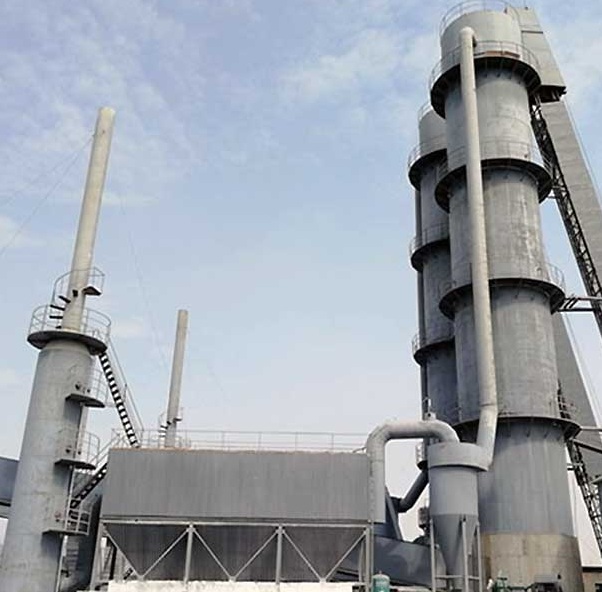
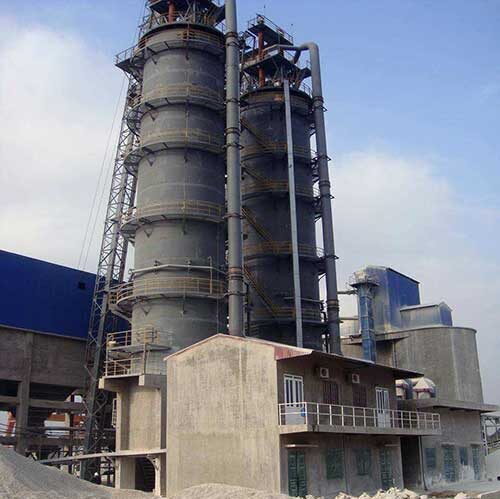
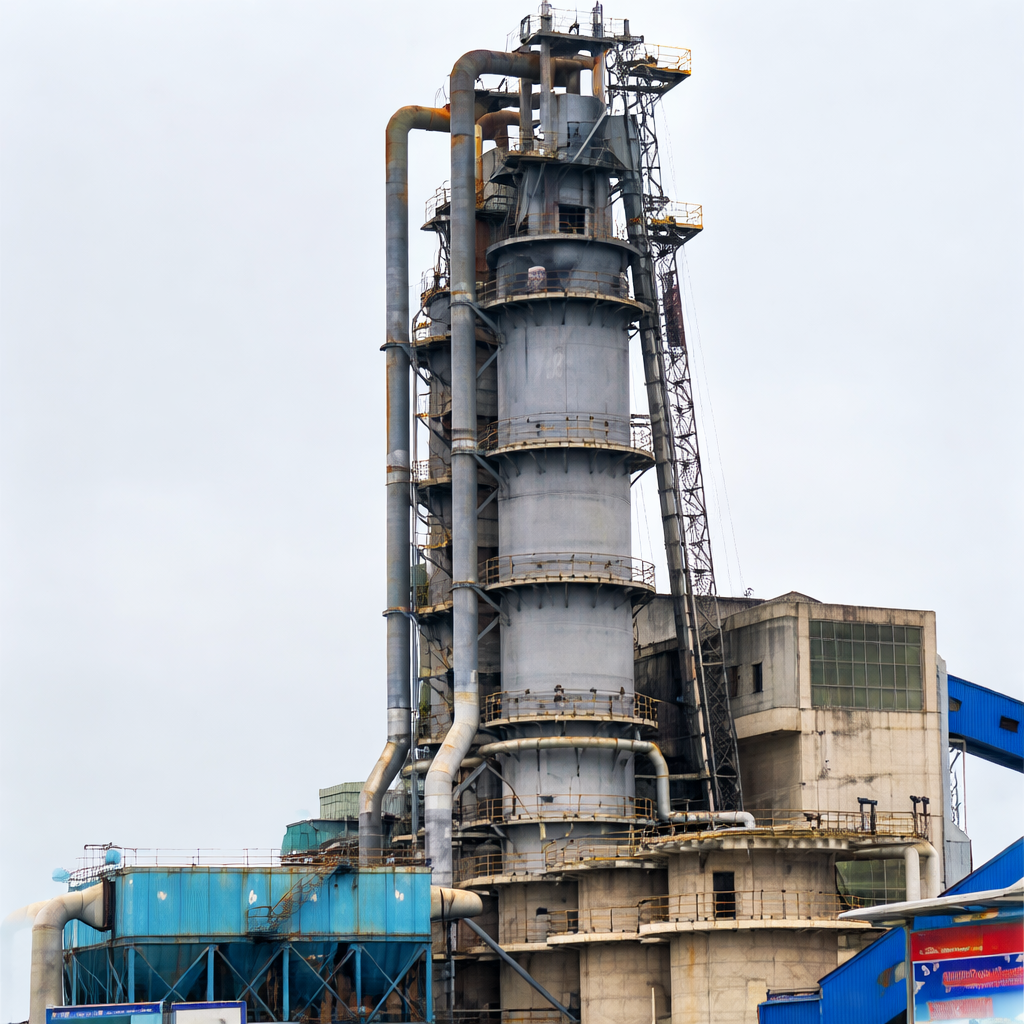
Kerone’s Shaft Kilns are vertical, counter-current thermal processing units in which raw feed material is charged from the top and progressively descends through preheating, calcining, and cooling zones while hot combustion gases or process gases rise upward in counter-current flow. This counter-current arrangement maximizes heat exchange efficiency between the ascending hot gases and the descending cool charge material, resulting in high thermal efficiency and low specific fuel consumption compared to rotary kilns and other horizontal thermal processing equipment. Kerone designs and manufactures Shaft Kilns for limestone and dolomite calcination, magnesia production, chalk calcination, and specialty mineral processing applications. The compact vertical footprint, simple mechanical design, and excellent specific fuel consumption make Shaft Kilns the preferred choice for medium to large-scale lime and mineral calcination projects.
Why Choose Kerone Shaft Kiln
Kerone’s Shaft Kilns are trusted by lime producers, chemical manufacturers, and mineral processors for their exceptional thermal efficiency, reliable operation, and low maintenance requirements. Kerone’s engineering team performs detailed process modelling for each project, optimizing kiln height, internal geometry, combustion zone design, and cooling air distribution to achieve the required lime reactivity, product size distribution, and specific energy consumption targets. Kerone’s kilns are constructed with high-quality refractory linings selected for resistance to alkali attack, thermal shock, and abrasion, ensuring long campaign life between major maintenance shutdowns. Our integrated control systems — covering combustion management, charge level control, and product extraction rate — enable consistent product quality with minimal operator intervention, reducing labor costs and human error in the production process.
Types and Features of Shaft Kiln
Kerone’s Shaft Kiln range includes Parallel Flow Regenerative (PFR) Shaft Kilns for high-efficiency lime calcination with outstanding product reactivity; Normal Shaft Kilns (NSK) for straightforward limestone calcination; Annular Shaft Kilns (ASK) for uniform calcination of mixed-size limestone feed; Mixed Feed Shaft Kilns for co-firing of limestone with solid fuel; Double Inclined Shaft Kilns (DISK) for premium-quality soft-burned lime; and Magnesium Oxide (MgO) Shaft Kilns for deadburned and caustic calcined magnesia production. All designs feature refractory-lined shafts, gravity discharge systems, cooling air injection, and automatic charge level control systems.
Key Features
Counter-current gas-solid heat exchange achieves very high thermal efficiency (up to 85%+)
Compact vertical footprint requires significantly less plot area than rotary kilns of equivalent capacity
Low specific heat consumption (850–1100 kcal/kg of lime) for economical production
Flexible fuel operation: natural gas, LPG, coal dust, or alternative solid/liquid fuels
Gravity-fed discharge system with adjustable extraction rate for production rate control
High product quality with uniform calcination and controllable lime reactivity
Simple mechanical design with minimal moving parts for low maintenance costs
Modular refractory design allowing targeted hot-face replacement without full relining
Powered by AI, ML & IoT
Future-Ready Engineering Driven by AI & IoT
Our advanced AI, ML, and IoT technologies, this solution delivers smarter automation, real-time insights, and predictive intelligence to enhance efficiency and drive future-ready growth.
Real-Time Monitoring & Control
Continuous tracking of process parameters with instant adjustments.
Predictive Maintenance
Intelligent fault detection to prevent failures before they occur.
Adaptive Process Optimization
Dynamic tuning of operations for maximum output and efficiency.
Cloud Dashboards & Analytics
Unified access to real-time insights and performance trends.
Energy & Resource Savings
Smarter utilization of energy to cut costs and reduce waste.
Secure IoT Connectivity
Encrypted data flow with seamless integration across plant systems.
Applications of Shaft Kiln
Kerone’s Shaft Kilns are extensively used in industries requiring efficient, large-scale calcination of limestone, dolomite, and other mineral raw materials.
Typical applications include:
High-reactivity quicklime production for steel desulfurization, water treatment, and flue gas desulfurization
Production of dolime (burned dolomite) for use in steel slag conditioning and refractories
Caustic calcined and deadburned magnesia production for refractories and chemical industries
Calcination of chalk and soft limestone for sugar refining and paper industry applications
Production of precipitated calcium carbonate (PCC) raw lime for paper and plastics industries
Calcination of specialty minerals including barite, fluorspar, and phosphate for chemical processing
Kerone’s Shaft Kilns deliver exceptional thermal efficiency, consistent product quality, and low maintenance costs for mineral calcination operations at a range of production scales. The proven counter-current design, combined with Kerone’s process engineering expertise and high-quality construction standards, ensures that every Shaft Kiln investment delivers reliable, long-term returns through low specific fuel consumption, high lime quality, and minimal unplanned downtime. Whether you are establishing a new lime production facility or upgrading an existing calcination operation, Kerone’s Shaft Kiln technology provides the performance, reliability, and efficiency that modern mineral processing industries demand.
Seamless Export Connections Global & Local
Our Global Footprint in Industrial Excellence
Delivering world-class industrial and process solutions across countries with precision, innovation, and reliability.
Peru
Chile
Argentina
Mexico
Colombia
Brazil
USA
Canada
United Kingdom
France
Germany
Spain
Italy
Netherlands
Sweden
Switzerland
Poland
Portugal
Ireland
Czechia
Romania
Hungary
Austria
Greece
Kazakhstan
Uzbekistan
Turkmenistan
Algeria
Egypt
Nigeria
Kenya
South Africa
Saudi Arabia
UAE
Israel
Russia
India
China
Japan
South Korea
Thailand
Vietnam
Malaysia
Singapore
Indonesia
Philippines
Australia
New Zealand
Pan-India Presence. Local Expertise.
Raipur
Bilaspur
Panaji
Vasco da Gama
Gandhinagar
Ahmedabad
Surat
Chandigarh
Gurgaon
Shimla
Manali
Bengaluru
Mysore
Kochi
Pune
Mumbai
Thane
Navi Mumbai
Hyderabad
Chennai
Coimbatore
Kolkata
Lucknow
Jaipur
Udaipur
Jodhpur
Dehradun
Haridwar
Bhubaneswar
Product Gallery
Frequently Asked Questions (FAQ)
A Shaft Kiln is a vertical, counter-current unit with a compact footprint and very high thermal efficiency (lower specific fuel consumption), while a Rotary Kiln is a horizontal rotating cylinder that handles a wider range of feed sizes and more complex processes. Shaft Kilns are preferred for high-quality, energy-efficient lime production from uniform-sized feed.
Shaft Kilns require relatively uniform feed stone sizes to maintain good gas distribution through the bed. Typical feed size ranges are 40–120 mm for large kilns and 20–80 mm for smaller designs. Very fine material (below 20 mm) tends to block gas flow and should be screened out.
Kerone's PFR and DISK Shaft Kilns can produce soft-burned, highly reactive lime with t₆₀ reactivity values below 2 minutes (per EN 459-2 standard), suitable for demanding steel desulfurization and gas cleaning applications. Hard-burned and medium-burned limes are also producible by adjusting calcining temperature and residence time.
Shaft Kiln exhaust gases contain 28–35% CO₂ by volume, making them suitable for CO₂ capture and utilization in food, beverage, pharmaceutical, and precipitated calcium carbonate production. Kerone can incorporate CO₂ capture provisions in the kiln design.
Depending on kiln design and limestone quality, Kerone's optimized Shaft Kilns achieve specific fuel consumption of 850–1100 kcal per kg of lime produced, significantly below the 1400–1800 kcal/kg typical of conventional rotary kilns.
Yes. Mixed Feed Shaft Kilns (also called internal combustion kilns) are designed to co-fire solid fuel (coke, anthracite, or coal) mixed with limestone in the feed. Kerone also designs kilns for gasified fuel injection and solid fuel lances for flexible fuel use.
Shaft Kilns have relatively simple maintenance schedules. Routine maintenance includes weekly inspection of discharge systems, monthly checks of cooling air fans and control instrumentation, and annual inspection of refractory lining with targeted hot-face repair. Major refractory relining campaigns are typically required every 5–10 years.
Production rate is controlled by adjusting the feed charge rate at the top, the fuel input rate to the combustion zone, and the product extraction rate at the bottom. Kerone's automated control systems coordinate all three parameters to maintain consistent kiln operation and product quality.
Gas needs to flow evenly upward through gaps between stones as they descend. If sizes vary too much, small stones fill the gaps between larger ones and block gas flow, leading to uneven calcination and hot or cold pockets in the kiln.
A low charge level can expose the upper zone to excess heat loss and disturb the counter-current gas flow pattern. Kerone fits automatic level sensors that trigger feed alarms so the shaft stays properly filled during operation.
Restart speed depends on how long the kiln was down and how much it cooled. A short stop allows a fairly quick restart, while an extended shutdown needs a slower reheat to avoid thermal shock to the refractory lining.
Bridging happens when material sticks together and stops descending smoothly, often due to fines, moisture, or chemical reactions in the feed. Kerone designs shaft geometry and vibrating or mechanical dischargers to keep material flowing steadily downward.
Soft-burned lime is calcined at lower temperature or shorter time, giving it high reactivity and a porous structure, while hard-burned lime is exposed to higher temperature or longer time, making it denser and less reactive. Kerone adjusts kiln operating parameters to target either outcome.
High impurity content can affect product quality and may cause more scaling or clinkering inside the shaft. Kerone reviews raw material chemistry upfront to flag any adjustments needed in kiln design or operating temperature.
Dust generation rises with excessive fines in the feed, rough handling during charging, or higher than needed gas velocities. Kerone recommends proper screening of feed stone to keep dust levels manageable.
Kerone’s custom-designed heating and processing solutions are built to meet the demands of your growing operations. Whether you’re upgrading equipment, expanding production, or need a tailor-made solution



 Peru
Peru Chile
Chile Argentina
 Mexico
 Colombia
 Brazil
 USA
USA Canada
 United Kingdom
 France
 Germany
 Spain
Spain Italy
Italy Netherlands
 Sweden
 Switzerland
 Poland
 Portugal
 Ireland
 Czechia
 Romania
 Hungary
 Austria
 Greece
 Kazakhstan
 Uzbekistan
 Turkmenistan
 Algeria
 Egypt
Egypt Nigeria
 Kenya
Kenya South Africa
 Saudi Arabia
 UAE
UAE Israel
 Russia
 India
India China
China Japan
Japan South Korea
 Thailand
 Vietnam
 Malaysia
 Singapore
 Indonesia
 Philippines
 Australia
 New Zealand