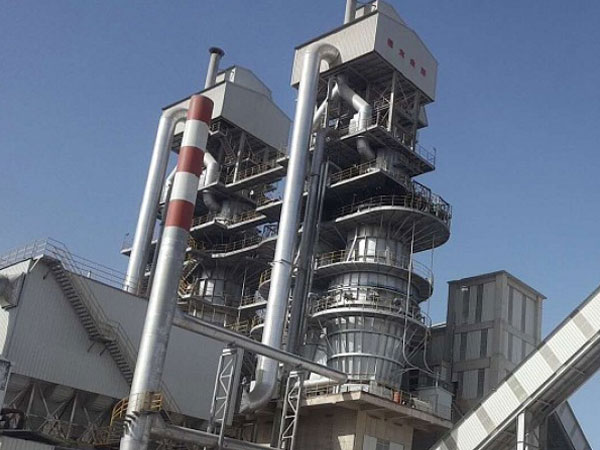
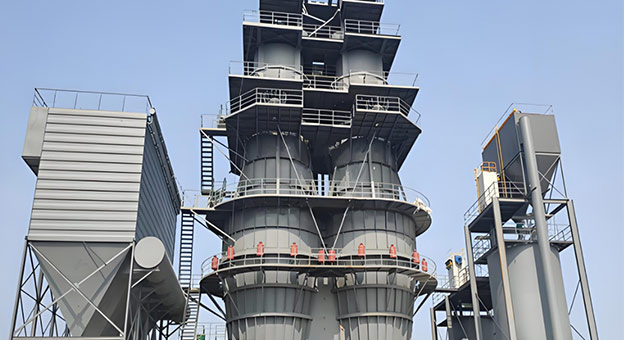
Kerone’s Double Body and Specialized Kilns represent a portfolio of custom-engineered, application-specific thermal processing solutions designed for processes that do not fit the standard categories of conventional kiln and furnace types. Double Body Kilns feature twin parallel kiln chambers that operate in a coordinated regenerative cycle, alternating hot and cold functions between the two shafts to maximize heat recovery and achieve exceptional thermal efficiency values not possible in single-shaft designs. The specialized kiln portfolio extends to highly customized designs for unique process requirements — including two-for-one firing kilns, annular ring kilns, hybrid kiln configurations, and purpose-built reactors for chemical, mineral, and advanced materials processing. Kerone applies its deep thermal engineering expertise and flexible manufacturing capabilities to design and build these specialized systems for customers with processes that require engineering innovation rather than catalogue selection.
Why Choose Kerone Double Body/Specialized Kilns
Kerone’s value in the Double Body and Specialized Kiln segment lies in our ability to engineer truly custom solutions for processes that push beyond the performance envelope of standard equipment. Our process engineers and mechanical designers collaborate with customers from concept through commissioning to translate unique process requirements into functional, reliable, and efficient kiln designs. Kerone’s in-house manufacturing capability — covering pressure vessel fabrication, refractory installation, precision mechanical assembly, and electrical/control panel building — ensures that even the most complex specialized kiln designs can be executed to the required quality standards within commercial timeframes. The Double Body Kiln design, in particular, represents Kerone’s capability to deliver lime and mineral calcination systems with specific fuel consumptions below 800 kcal/kg — performance levels that justify the additional engineering investment with dramatic reductions in operating costs.
Types and Features of Double Body/Specialized Kilns
Kerone’s specialized kiln portfolio includes Parallel Flow Regenerative Double Shaft Kilns (PFR kilns) for premium-quality, highly reactive soft-burned lime; Annular Ring Kilns for efficient medium-scale lime calcination; Two-For-One Kilns for combined production of different lime qualities from a single installation; Rotary-Shaft Hybrid Kilns for processing mixed particle sizes in a single unit; Muffle Rotary Kilns for atmosphere-controlled calcination in rotating systems; and fully bespoke reactors for specialty chemical, pharmaceutical, and advanced materials applications. Each design is developed through rigorous process modelling, custom refractory design, and engineering development programs with customer participation.
Key Features
Double shaft regenerative operation achieves specific fuel consumption below 800 kcal/kg of product
Superior product quality with tightly controlled calcination temperature and short residence time distribution
Flexible design philosophy accommodating unique process, feed, and product specifications
Custom refractory engineering for each application to maximize campaign life and thermal performance
Advanced combustion system design for precise heat delivery to the calcination zone
Fully automated process control with adaptive algorithms for consistent product quality
Engineered safety systems tailored to the specific hazards of each specialized process
Compact and efficient process layouts minimizing capital investment and operating costs
Powered by AI, ML & IoT
Future-Ready Engineering Driven by AI & IoT
Our advanced AI, ML, and IoT technologies, this solution delivers smarter automation, real-time insights, and predictive intelligence to enhance efficiency and drive future-ready growth.
Real-Time Monitoring & Control
Continuous tracking of process parameters with instant adjustments.
Predictive Maintenance
Intelligent fault detection to prevent failures before they occur.
Adaptive Process Optimization
Dynamic tuning of operations for maximum output and efficiency.
Cloud Dashboards & Analytics
Unified access to real-time insights and performance trends.
Energy & Resource Savings
Smarter utilization of energy to cut costs and reduce waste.
Secure IoT Connectivity
Encrypted data flow with seamless integration across plant systems.
Applications of Double Body/Specialized Kilns
Kerone’s Double Body and Specialized Kilns are extensively used in industries requiring advanced, high-efficiency thermal processing solutions beyond standard equipment capabilities.
Typical applications include:
Production of ultra-reactive soft-burned lime for steel desulfurization, water softening, and flue gas treatment
High-efficiency calcination of premium-quality dolomite for steel slag conditioning and refractory production
Specialty mineral calcination for advanced ceramic, pharmaceutical, and chemical industry raw materials
Custom thermal decomposition of proprietary chemical compounds in controlled reaction environments
Carbon activation and regeneration processes requiring precise temperature and atmosphere profiles
Advanced materials processing including rare earth calcination, lithium mineral conversion, and battery material precursors
Kerone’s Double Body and Specialized Kilns embody the full depth of Kerone’s thermal engineering capability — delivering custom-engineered solutions for processes that demand more than standard equipment can offer. Whether the requirement is the ultra-high thermal efficiency of a Parallel Flow Regenerative Double Shaft Kiln, the specialized process control of a custom chemical decomposition reactor, or a hybrid kiln design that solves a unique production challenge, Kerone has the engineering talent, manufacturing capability, and project execution expertise to deliver. For industries where standard solutions are insufficient, Kerone’s specialized kiln engineering capability is the partner of choice for transforming complex process challenges into operational realities.
Seamless Export Connections Global & Local
Our Global Footprint in Industrial Excellence
Delivering world-class industrial and process solutions across countries with precision, innovation, and reliability.
Peru
Chile
Argentina
Mexico
Colombia
Brazil
USA
Canada
United Kingdom
France
Germany
Spain
Italy
Netherlands
Sweden
Switzerland
Poland
Portugal
Ireland
Czechia
Romania
Hungary
Austria
Greece
Kazakhstan
Uzbekistan
Turkmenistan
Algeria
Egypt
Nigeria
Kenya
South Africa
Saudi Arabia
UAE
Israel
Russia
India
China
Japan
South Korea
Thailand
Vietnam
Malaysia
Singapore
Indonesia
Philippines
Australia
New Zealand
Pan-India Presence. Local Expertise.
Raipur
Bilaspur
Panaji
Vasco da Gama
Gandhinagar
Ahmedabad
Surat
Chandigarh
Gurgaon
Shimla
Manali
Bengaluru
Mysore
Kochi
Pune
Mumbai
Thane
Navi Mumbai
Hyderabad
Chennai
Coimbatore
Kolkata
Lucknow
Jaipur
Udaipur
Jodhpur
Dehradun
Haridwar
Bhubaneswar
Product Gallery
Frequently Asked Questions (FAQ)
In a Parallel Flow Regenerative (PFR) Kiln, two parallel vertical shafts operate alternately. When one shaft is firing (hot shaft), combustion gases and product gas flow downward through the burning zone in the same direction as the descending limestone — this parallel flow arrangement produces highly reactive soft-burned lime. The second shaft simultaneously acts as a regenerative heat exchanger, preheating incoming combustion air using the sensible heat of the hot waste gases from the first shaft. After each cycle (typically 10–15 minutes), the roles of the two shafts are reversed.
The regenerative heat exchange between the two shafts enables recovery of over 80% of the sensible heat in the waste gases, dramatically reducing the amount of fresh fuel required per kg of lime produced. Combined with the parallel flow arrangement that enables very precise temperature control in the calcination zone, PFR kilns achieve specific fuel consumption below 800 kcal/kg, compared to 900–1100 kcal/kg for conventional shaft kilns.
Kerone's specialized kiln portfolio includes Annular Shaft Kilns, Two-For-One Kilns, Muffle Rotary Kilns, Hybrid Shaft-Rotary Kilns, custom chemical reactors, and purpose-built calcination systems for rare earth, lithium minerals, and advanced material precursors. The common element is custom engineering tailored to a specific process requirement.
Kerone begins with a detailed process definition phase where feed material properties, required product specifications, production rate, energy targets, and site constraints are documented. Process modeling, thermal simulations, and bench-scale testing (where required) inform the preliminary design, which is then developed through detailed engineering with customer review at key milestones before fabrication.
Yes. PFR Double Shaft Kilns are widely used for high-efficiency dolomite calcination to produce dolime. The precise temperature control of the PFR design allows calcination of both calcium and magnesium carbonate components to the required degree, producing dolime with the specified CaO and MgO activity levels.
PFR Kilns are typically economical at production capacities above 100–150 TPD of lime. Below this capacity, the capital cost premium over conventional shaft kilns is harder to justify economically, and alternative designs (annular shaft kilns or standard NSK designs) may offer better capital efficiency.
The main maintenance activities for PFR Kilns include inspection and maintenance of the reversal gas distribution system (which is a critical component of the regenerative cycle), refractory hot-face inspection and repair, gas switching valve maintenance, product extraction system service, and regular calibration of process instruments. Kerone provides detailed maintenance protocols and AMC programs for all specialized kiln installations.
Yes. PFR Double Shaft Kilns are widely used for high-efficiency dolomite calcination to produce dolime. The precise temperature control of the PFR design allows calcination of both calcium and magnesium carbonate components to the required degree, producing dolime with the specified CaO and MgO activity levels.
A typical Parallel Flow Regenerative cycle runs for around 10 to 15 minutes before the hot and cold shaft roles reverse, though the exact timing is tuned during commissioning to match the specific limestone and production target.
During the switch, gas flow direction and burner firing are redirected using automated valves, and the transition is timed to be quick enough that product quality and thermal efficiency are not noticeably affected.
While the classic design uses two shafts working in alternating cycles, some specialized configurations extend the concept to additional shafts for even higher output, depending on site space and production targets.
Large automated dampers or rotary switching valves redirect combustion air, fuel, and exhaust gas paths between the two shafts on each cycle, and these components need regular maintenance since they operate constantly during production.
A Muffle Rotary Kiln is chosen when the process needs full separation from combustion gases while still rotating, such as when contamination-free atmosphere control matters more than the higher throughput of direct firing.
The choice depends on whether a single feed stream genuinely needs two different processing mechanisms in sequence, in which case a hybrid unit saves space and handling steps, versus needing entirely independent production lines for flexibility.
Kerone provides process design basis documents, thermal and mechanical calculations, general arrangement drawings, and operating procedures specific to the custom design, going well beyond standard catalogue documentation.
Kerone’s custom-designed heating and processing solutions are built to meet the demands of your growing operations. Whether you’re upgrading equipment, expanding production, or need a tailor-made solution

 Peru
Peru Chile
Chile Argentina
 Mexico
 Colombia
 Brazil
 USA
USA Canada
 United Kingdom
 France
 Germany
 Spain
Spain Italy
Italy Netherlands
 Sweden
 Switzerland
 Poland
 Portugal
 Ireland
 Czechia
 Romania
 Hungary
 Austria
 Greece
 Kazakhstan
 Uzbekistan
 Turkmenistan
 Algeria
 Egypt
Egypt Nigeria
 Kenya
Kenya South Africa
 Saudi Arabia
 UAE
UAE Israel
 Russia
 India
India China
China Japan
Japan South Korea
 Thailand
 Vietnam
 Malaysia
 Singapore
 Indonesia
 Philippines
 Australia
 New Zealand