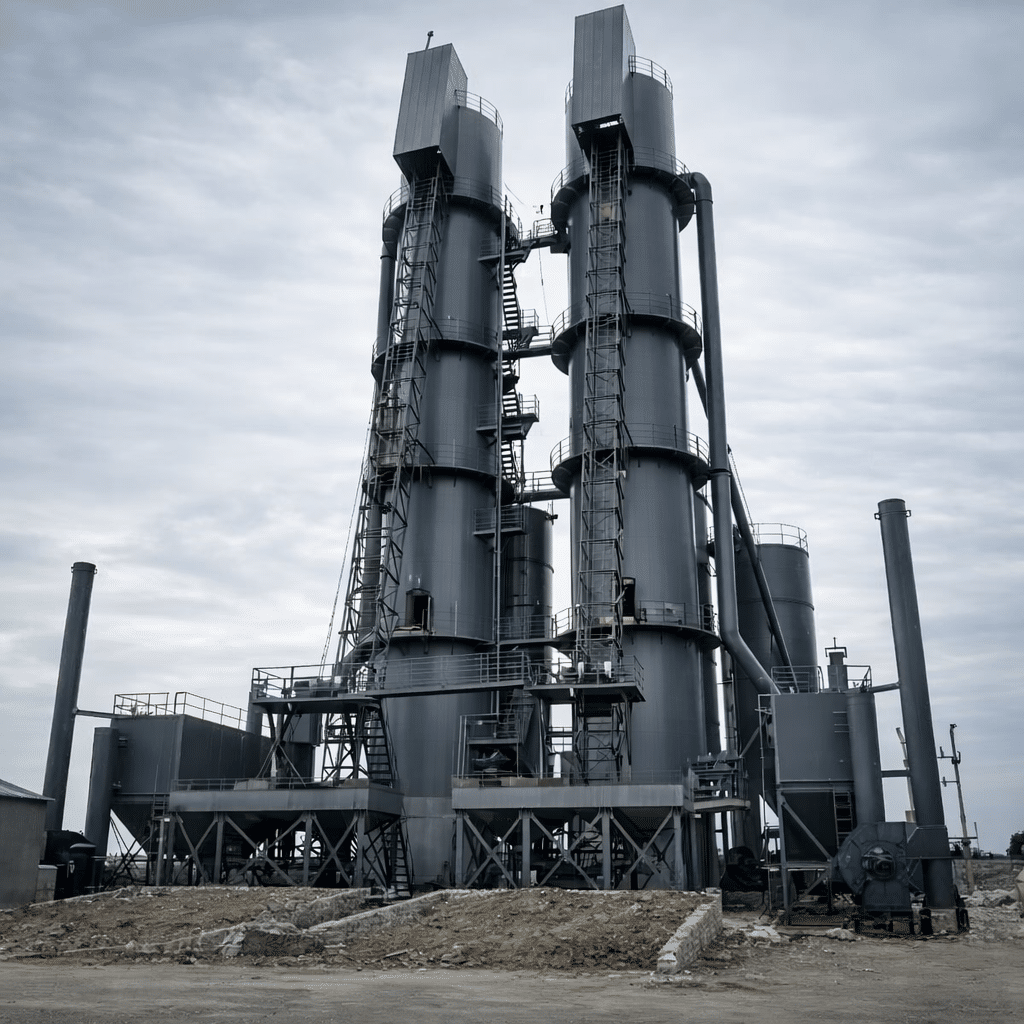
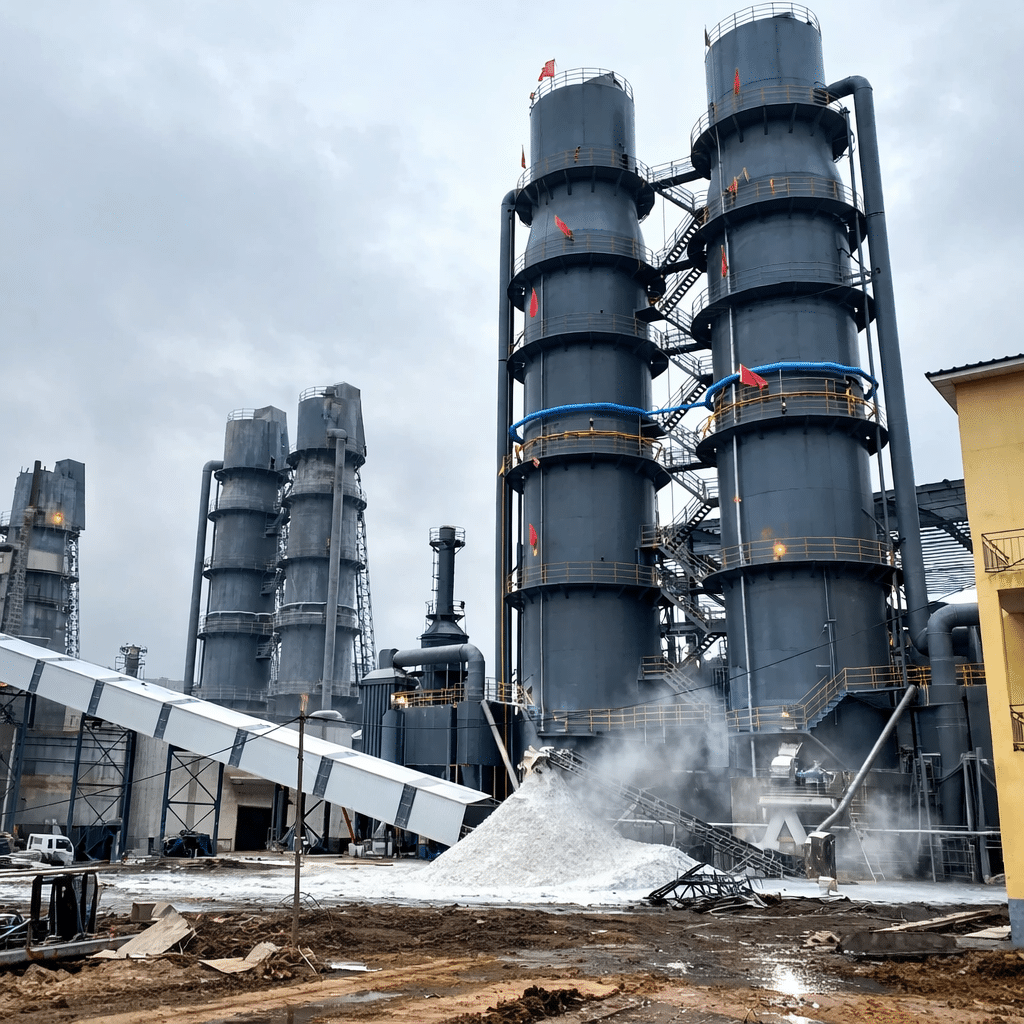
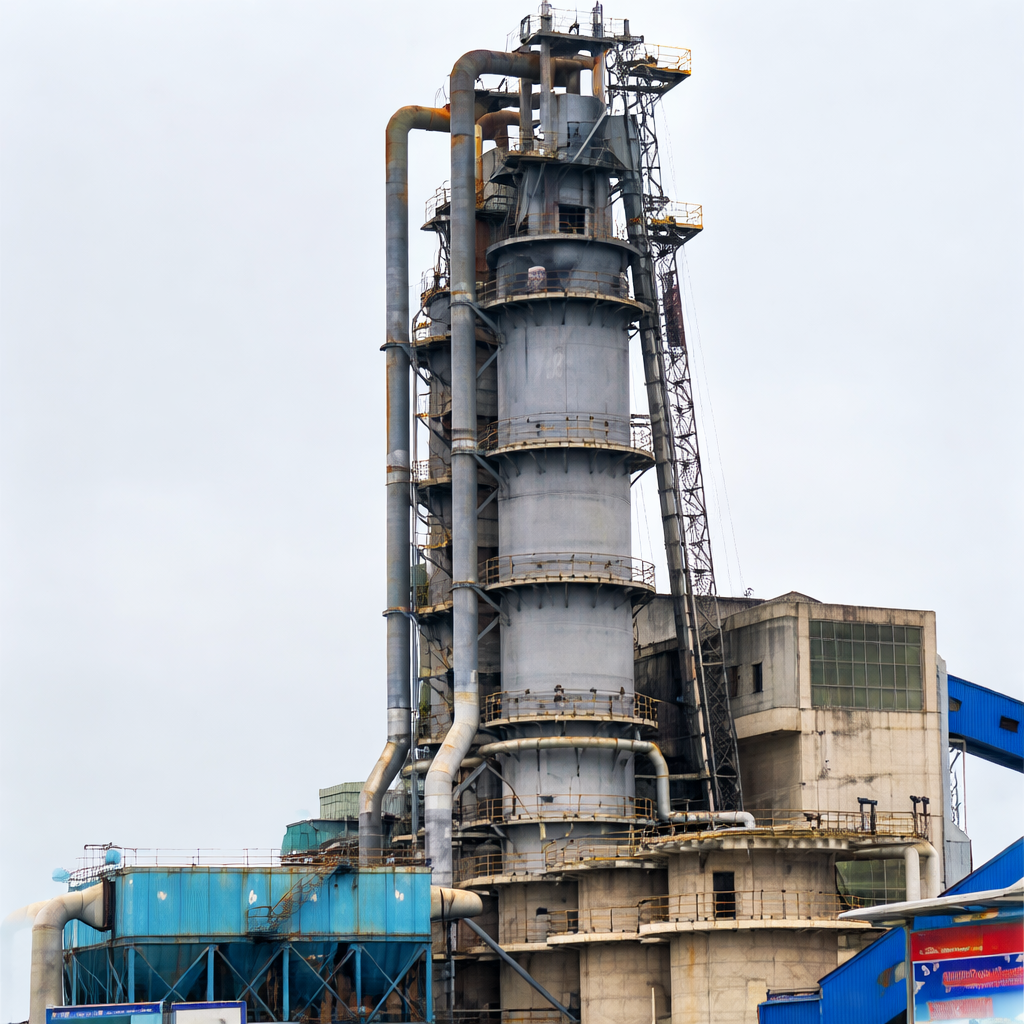
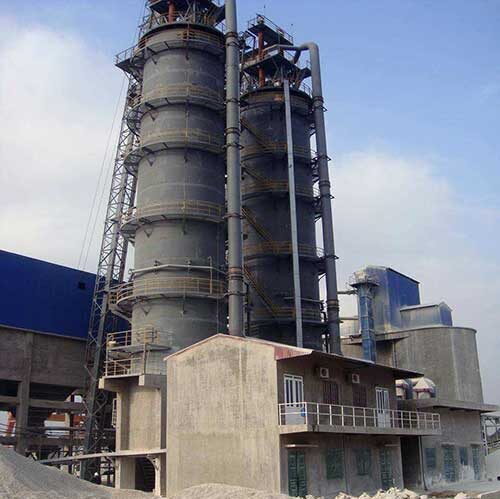
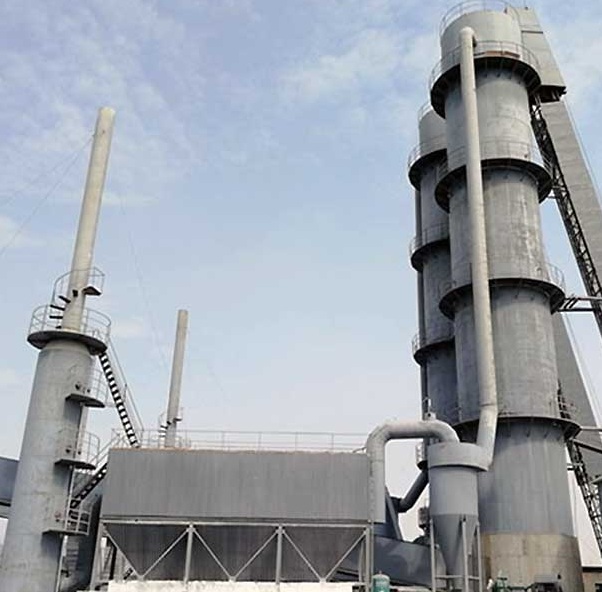
Kerone’s Calcination Equipment represents a sophisticated line of industrial thermal processing systems engineered specifically for the controlled high-temperature decomposition, dehydration, phase transformation, and purification of solid materials. Calcination is the process of heating a material to a high temperature below its melting point in controlled atmosphere conditions is a fundamental unit operation in mineral processing, catalyst manufacturing, advanced ceramics, pigment production, and chemical synthesis. Kerone’s calcination systems are designed to provide precise temperature control, uniform heat distribution, and optimized residence time across a wide range of operating temperatures (typically 300°C to 1400°C), ensuring that the desired physical, chemical, and crystallographic transformations in the product are consistently achieved. With extensive experience across a diverse range of calcination applications, Kerone delivers not just equipment but complete calcination process solutions.
Why Choose Kerone Calcination Equipment
Kerone’s expertise in calcination equipment design stems from a deep understanding of the thermal chemistry, kinetics, and heat transfer mechanisms that govern calcination reactions across different material systems. Where generic kiln suppliers offer standard products, Kerone engineers each calcination system around the specific material characteristics, reaction kinetics, and product quality targets of the individual customer. This application-specific engineering approach encompasses rotary kiln inclination and rotation speed optimization for proper material bed depth and residence time, atmosphere composition control for selective oxidation or reduction reactions, quench system design for controlling product crystallinity after calcination, and refractory selection for compatibility with corrosive process gases. Kerone’s track record in successfully commissioning calcination systems for globally operating companies in the mineral, chemical, and advanced materials industries is a testament to the quality of this application-driven engineering approach.
Types and Features of Calcination Equipment
Kerone’s Calcination Equipment portfolio includes rotary kilns as the primary workhorse for continuous calcination of bulk mineral and chemical materials, static kiln systems (box and tube configurations) for batch calcination of high-value specialty materials, fluidized bed calciners for achieving exceptional temperature uniformity in fine powder calcination, flash calciners for ultra-short residence time processing of reactive fine powders, and pusher-type continuous kilns for shaped refractory and ceramic products. Rotary kilns are available in direct-fired (gas or oil burner), indirectly heated (electric or external combustion), and atmosphere-controlled variants. Shell diameters range from 0.3m pilot scale to 3m+ industrial scale, with lengths designed to provide the required reaction time based on feed rate and reaction kinetics. Integrated feed systems, product cooling conveyors, dust collection, and exhaust gas treatment systems complete the calcination plant design.
Key Features
Operating temperature range from 300°C to 1400°C covering the full spectrum of mineral, chemical, and ceramic calcination reactions
Precisely controlled residence time through rotary drum inclination angle and variable-speed drive adjustment
Multi-zone temperature profiling with independent heating element or burner control for staged thermal treatment
Controlled atmosphere processing capability including oxidizing, reducing, and inert gas environments for selective phase transformation
Integrated feed rate control with gravimetric dosing systems ensuring consistent material throughput and product quality
High-efficiency refractory lining systems designed for the specific thermal, chemical, and mechanical demands of each application
Integrated product cooling systems — including indirect water-cooled shells and quench conveyors — for controlling post-calcination crystallography
Complete dust collection, off-gas treatment, and heat recovery systems for environmental compliance and energy efficiency
Powered by AI, ML & IoT
Future-Ready Engineering Driven by AI & IoT
Our advanced AI, ML, and IoT technologies, this solution delivers smarter automation, real-time insights, and predictive intelligence to enhance efficiency and drive future-ready growth.
Real-Time Monitoring & Control
Continuous tracking of process parameters with instant adjustments.
Predictive Maintenance
Intelligent fault detection to prevent failures before they occur.
Adaptive Process Optimization
Dynamic tuning of operations for maximum output and efficiency.
Cloud Dashboards & Analytics
Unified access to real-time insights and performance trends.
Energy & Resource Savings
Smarter utilization of energy to cut costs and reduce waste.
Secure IoT Connectivity
Encrypted data flow with seamless integration across plant systems.
Applications of Calcination Equipment
Kerone’s Calcination Equipment is extensively used in mineral processing, advanced materials, and chemical manufacturing industries where controlled thermal transformation of solid materials is a critical production step.
Typical applications include:
Mineral processing: calcination of limestone to quicklime (CaO), kaolin clay dehydroxylation for paper and ceramic applications, and alumina trihydrate decomposition
Catalyst manufacturing: activation of zeolite, metal oxide, and supported catalyst systems through controlled high-temperature treatment
Battery materials production: calcination of lithium iron phosphate (LFP), nickel manganese cobalt (NMC), and other cathode active materials
Pigment and dye industry: thermal transformation of iron oxide pigments, titanium dioxide, and chromium oxide colorants
Refractory manufacturing: calcination of bauxite, magnesite, dolomite, and chromite for high-performance refractory brick production
Advanced ceramics: calcination of alumina, zirconia, and barium titanate powders for particle size and phase control prior to sintering
Kerone’s Calcination Equipment combines deep thermal engineering expertise with application-specific process knowledge to deliver calcination systems that consistently produce materials meeting the most demanding quality specifications. From raw mineral transformation to advanced battery material synthesis, Kerone’s calcination solutions are trusted by leading manufacturers across the globe for their reliability, product quality consistency, and long operational life. As materials science continues to advance and the demand for high-purity, precisely characterized calcined products grows, Kerone remains committed to engineering innovation in calcination technology. Contact Kerone’s process engineering team today to discuss your calcination requirements and receive a custom system proposal.
Seamless Export Connections Global & Local
Our Global Footprint in Industrial Excellence
Delivering world-class industrial and process solutions across countries with precision, innovation, and reliability.
Peru
Chile
Argentina
Mexico
Colombia
Brazil
USA
Canada
United Kingdom
France
Germany
Spain
Italy
Netherlands
Sweden
Switzerland
Poland
Portugal
Ireland
Czechia
Romania
Hungary
Austria
Greece
Kazakhstan
Uzbekistan
Turkmenistan
Algeria
Egypt
Nigeria
Kenya
South Africa
Saudi Arabia
UAE
Israel
Russia
India
China
Japan
South Korea
Thailand
Vietnam
Malaysia
Singapore
Indonesia
Philippines
Australia
New Zealand
Pan-India Presence. Local Expertise.
Raipur
Bilaspur
Panaji
Vasco da Gama
Gandhinagar
Ahmedabad
Surat
Chandigarh
Gurgaon
Shimla
Manali
Bengaluru
Mysore
Kochi
Pune
Mumbai
Thane
Navi Mumbai
Hyderabad
Chennai
Coimbatore
Kolkata
Lucknow
Jaipur
Udaipur
Jodhpur
Dehradun
Haridwar
Bhubaneswar
Product Gallery
Frequently Asked Questions (FAQ)
Calcination involves heating a material to induce chemical decomposition, dehydration, or phase transformation without melting, typically to remove volatile components or change crystal structure. Sintering heats compacted powder particles to bond them together through solid-state diffusion without full melting, increasing density and strength.
Atmosphere control is achieved through sealed kiln shells, purge gas introduction systems with mass flow controllers, and exhaust gas management. This enables precise control of oxygen partial pressure for selective oxidation or reduction reactions.
Kerone's rotary calciner range spans from 50 kg/hour in pilot systems to over 10 tonnes/hour in large industrial installations, with custom sizing available for any production requirement.
Temperature uniformity is ensured through multi-zone burner or heater control, optimized flame/heat flux profiles, rotary drum speed control for proper material bed turnover, and thermal modeling during the design phase.
Yes. For processes generating corrosive gases such as SO₂, HCl, or HF, Kerone selects appropriate refractory materials and high-alloy steel shell materials, and provides dedicated acid-resistant gas treatment systems downstream.
Kerone provides complete downstream emission control packages including cyclone separators, bag filters, electrostatic precipitators (ESP), wet scrubbers, and thermal oxidizers for VOC destruction, designed to meet applicable environmental regulations.
Atmosphere control is achieved through sealed kiln shells, purge gas introduction systems with mass flow controllers, and exhaust gas management. This enables precise control of oxygen partial pressure for selective oxidation or reduction reactions.
Yes. Kerone's process development laboratory conducts material characterization, thermal analysis (TGA/DSC), pilot-scale calcination trials, and product quality assessment — providing the process data needed to design a production system with confidence.
The choice depends primarily on particle size, required residence time, and how sensitive the reaction is to temperature uniformity. Rotary kilns suit bulk mineral and chemical materials where moderate residence time and continuous high-volume throughput matter most, and they tolerate a range of particle sizes reasonably well. Fluidized bed calciners excel with fine powders where exceptional temperature uniformity is critical, since the fluidized state ensures every particle experiences nearly identical thermal exposure. Flash calciners are built for reactive fine powders needing only seconds of residence time, where prolonged heat exposure would actually degrade product quality rather than improve it. Selecting the wrong format for particle characteristics is a common and costly mistake, which is why Kerone conducts material characterization testing before recommending equipment type rather than defaulting to the most common configuration.
While peak temperature gets the most attention, residence time and atmosphere composition are equally critical to consistent calcination outcomes, and inconsistency in either often causes more quality variation than minor temperature fluctuation. In rotary kilns, residence time depends on drum rotation speed and inclination angle, which together control how long material stays in the heated zone, inconsistent feed rate disrupts this even if temperature stays perfectly stable. Atmosphere composition matters for reactions requiring selective oxidation or reduction, since drift in oxygen partial pressure can shift the reaction pathway even at constant temperature, producing a different crystal phase or purity level than intended. Kerone's process control systems monitor and adjust all three parameters together, since optimizing temperature alone while ignoring residence time and atmosphere consistency rarely produces the targeted product specification reliably.
Inconsistent feed rate is one of the most underappreciated causes of calcination quality variation, since it directly changes the material bed depth and effective residence time even when temperature setpoints remain constant. A sudden increase in feed rate reduces the time each particle spends in the reaction zone, potentially leaving material under-calcined, while a sudden decrease can cause over-processing or even sintering of material that's exposed to heat longer than intended. Gravimetric feed systems, which measure and control material flow by weight rather than volume, provide significantly more consistent dosing than volumetric feeders, particularly for materials with variable bulk density. Kerone integrates gravimetric dosing as standard on calcination systems where product consistency is a critical quality parameter, since the cost of feed rate instability typically exceeds the cost difference between feeder types.
Direct-fired kilns burn fuel inside the same chamber as the material being processed, offering high thermal efficiency but exposing the product to combustion gases, acceptable for many mineral processing applications but unsuitable where combustion byproducts would contaminate the product. Indirectly heated kilns separate the heat source from the process chamber, using an external heating jacket or radiant tubes, which keeps the product atmosphere clean but sacrifices some thermal efficiency compared to direct firing. Atmosphere-controlled kilns add sealed shell construction and purge gas systems on top of either heating method, allowing precise control of oxidizing, reducing, or inert conditions for reactions sensitive to ambient atmosphere exposure. The right configuration depends on whether your product tolerates combustion gas contact and whether the reaction itself requires a specific atmosphere, which Kerone determines through material and process review before recommending kiln type.
Whether cooling needs to be controlled rather than passive depends on whether the product's final crystallography or phase stability is sensitive to cooling rate. Some calcined materials are stable regardless of how quickly they cool after the reaction completes, making simple ambient cooling sufficient. Others, particularly certain battery cathode materials and specialty ceramics, can revert to an undesired phase or develop inconsistent particle structure if cooled too slowly or too quickly, making engineered quench systems — indirect water-cooled shells or controlled-rate quench conveyors — essential to locking in the desired product properties. This sensitivity is usually identified through thermal analysis techniques like TGA or DSC during process development, which is why Kerone's process development lab conducts this characterization before finalizing cooling system design rather than assuming standard cooling will suffice.
Calcination reactions themselves often release process-specific gases beyond typical combustion byproducts, limestone calcination releases CO2 directly from the chemical decomposition reaction itself, not just from fuel combustion, while certain mineral and chemical calcination processes release acid gases like SO2 or HCl depending on feedstock composition. This means emission control system design needs to account for both combustion-related emissions and reaction-specific off-gases, which can require different treatment technologies operating together. Dust generation is also typically more significant in calcination than in simple drying or curing processes, since the fine, often friable nature of calcined minerals and chemicals generates particulate matter that requires robust cyclone and bag filter systems. Kerone designs emission control packages around the specific chemistry of each calcination reaction rather than applying a generic combustion emissions package.
Kerone’s custom-designed heating and processing solutions are built to meet the demands of your growing operations. Whether you’re upgrading equipment, expanding production, or need a tailor-made solution
 Peru
Peru Chile
Chile Argentina
 Mexico
 Colombia
 Brazil
 USA
USA Canada
 United Kingdom
 France
 Germany
 Spain
Spain Italy
Italy Netherlands
 Sweden
 Switzerland
 Poland
 Portugal
 Ireland
 Czechia
 Romania
 Hungary
 Austria
 Greece
 Kazakhstan
 Uzbekistan
 Turkmenistan
 Algeria
 Egypt
Egypt Nigeria
 Kenya
Kenya South Africa
 Saudi Arabia
 UAE
UAE Israel
 Russia
 India
India China
China Japan
Japan South Korea
 Thailand
 Vietnam
 Malaysia
 Singapore
 Indonesia
 Philippines
 Australia
 New Zealand