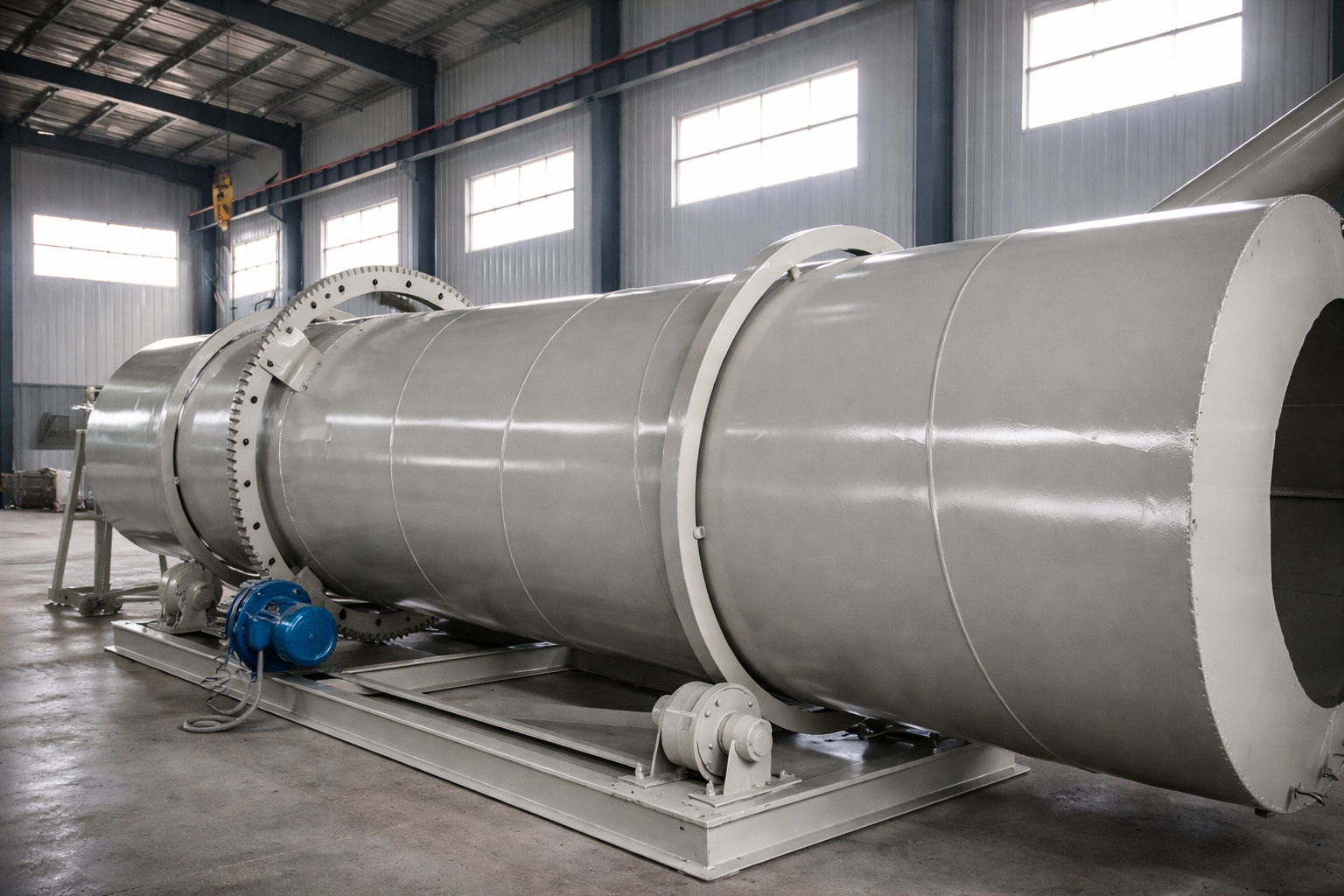
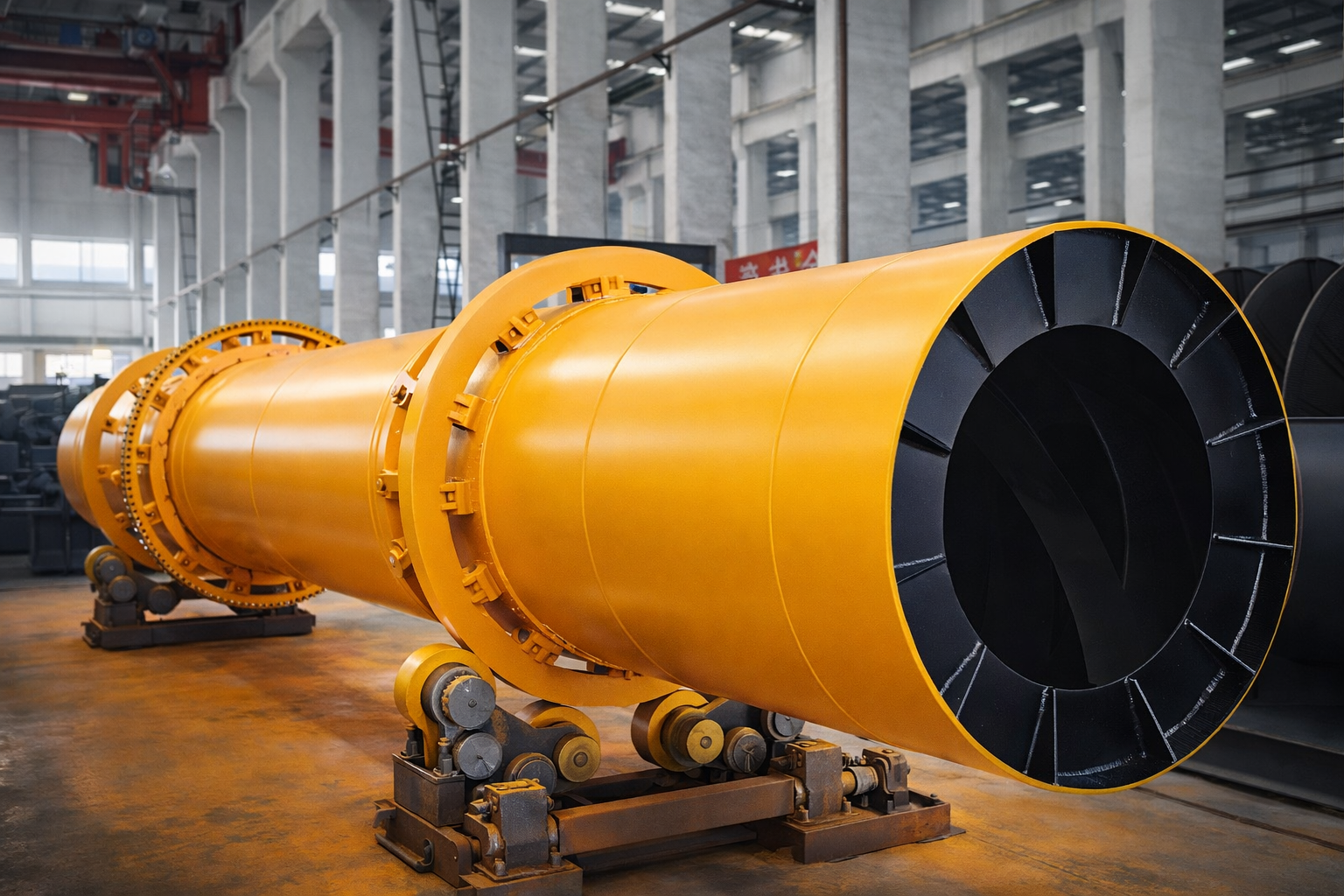
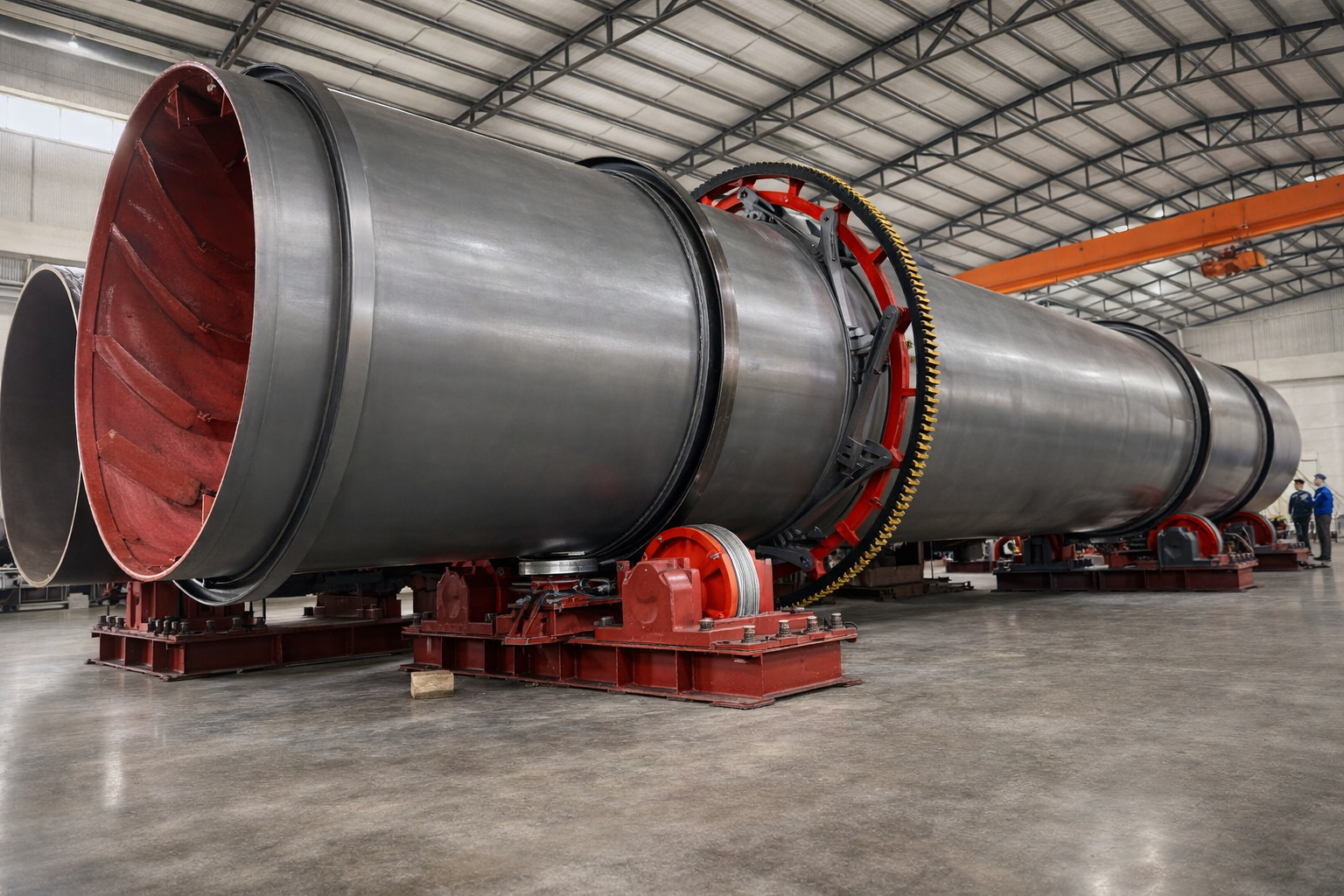
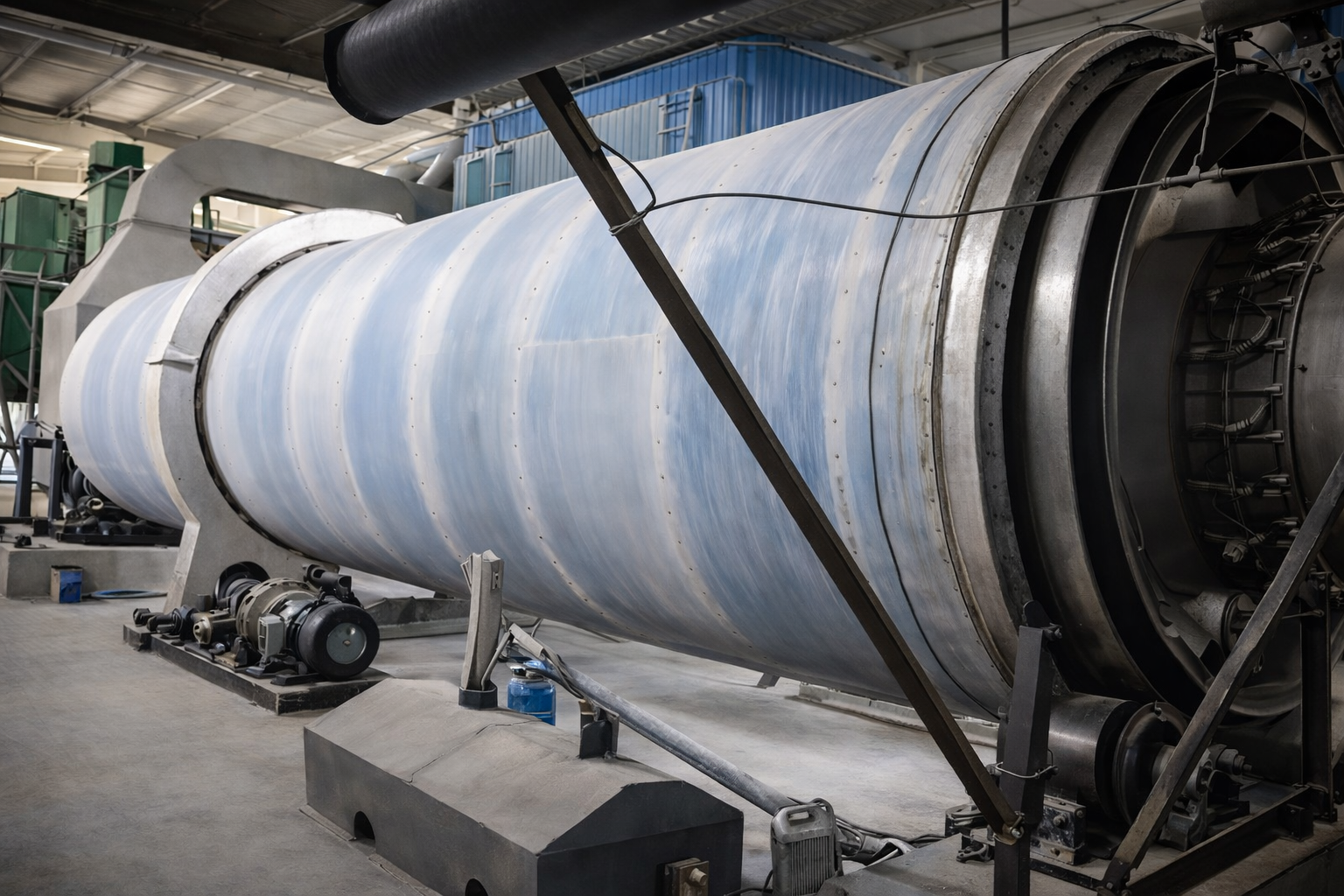
Kerone’s Rotary Kilns are continuous thermal processing machines consisting of a long, cylindrical, inclined refractory-lined rotating shell that enables the progressive thermal treatment of bulk granular, powder, or lumpy materials as they migrate through the kiln from the feed end to the discharge end under the influence of gravity and rotation. This continuous, counter-current or co-current design ensures that every particle of material receives uniform heat exposure, making Rotary Kilns the ideal solution for high-volume calcination, thermal decomposition, drying, reduction, and pyrolysis operations. Kerone engineers Rotary Kilns with precision-engineered tyre and riding ring systems, motorized drive units with variable speed control, and heavy-duty refractory linings that withstand the demanding mechanical and thermal stresses of continuous operation at temperatures up to 1600°C.
Why Choose Kerone Rotary Kiln
Kerone brings specialized rotary kiln engineering expertise to every project, from initial process design and thermal modelling to mechanical design, fabrication, installation, and commissioning. Our rotary kilns are designed with optimized length-to-diameter ratios, kiln inclination angles, and rotational speed ranges to achieve maximum process efficiency for your specific material and thermal requirements. Kerone’s kilns are built to heavy industrial standards with seamless rolled shell sections, precision-machined tyres and trunnion rollers, and robust drive systems capable of handling the torque demands of full production loads. Our experienced process engineers work with customers to optimize burner design, fuel efficiency, and heat recovery systems, delivering Rotary Kilns that reduce operating costs while maximizing product quality and consistency.
Types and Features of Rotary Kiln
Kerone’s Rotary Kiln range covers Direct-Fired Rotary Kilns where combustion gases contact the material directly for maximum thermal efficiency; Indirect-Fired Rotary Kilns where an external heating jacket isolates the material from combustion gases for contamination-sensitive or atmosphere-controlled processes; Lime Calcination Kilns with preheater cyclone systems for maximum energy efficiency; Cement Kilns for small and medium-scale clinker production; Pyrolysis Rotary Kilns for thermal decomposition of organic materials; and Specialty Kilns for spodumene processing, lithium minerals, rare earths, and advanced materials. Variable frequency drive systems, automatic process control, and online process monitoring are available across all configurations.
Key Features
Continuous rotary processing for uniform heat treatment of bulk granular and powder materials
Variable speed drive allowing precise control of material residence time in the hot zone
Heavy-duty seamless rolled steel shell with precision-machined tyre and trunnion systems
High-performance castable or brick refractory lining designed for extended campaign life
Counter-current or co-current firing configurations optimized for thermal efficiency
Seal systems at both feed and discharge ends to contain process gases and atmospheres
Integrated preheater and cooler systems for maximum energy recovery and efficiency
Fully automated control with online temperature monitoring, drive torque recording, and DCS integration
Powered by AI, ML & IoT
Future-Ready Engineering Driven by AI & IoT
Our advanced AI, ML, and IoT technologies, this solution delivers smarter automation, real-time insights, and predictive intelligence to enhance efficiency and drive future-ready growth.
Real-Time Monitoring & Control
Continuous tracking of process parameters with instant adjustments.
Predictive Maintenance
Intelligent fault detection to prevent failures before they occur.
Adaptive Process Optimization
Dynamic tuning of operations for maximum output and efficiency.
Cloud Dashboards & Analytics
Unified access to real-time insights and performance trends.
Energy & Resource Savings
Smarter utilization of energy to cut costs and reduce waste.
Secure IoT Connectivity
Encrypted data flow with seamless integration across plant systems.
Applications of Rotary Kiln
Kerone’s Rotary Kilns are extensively used in industries requiring continuous high-temperature processing of bulk solid materials.
Typical applications include:
Calcination of limestone and dolomite for lime and dolime production in steel and chemical industries
Calcination of aluminium hydroxide (gibbsite) to produce alumina for the aluminium smelting industry
Thermal processing and activation of carbon, chars, and activated carbon for water treatment
Pyrolysis and carbonization of organic feedstocks including biomass, waste rubber, and petroleum coke
Reduction and roasting of iron ore, laterite nickel ore, and metallic mineral concentrates
Sintering and calcination of chemical compounds, specialty oxides, and rare earth materials
Kerone’s Rotary Kilns deliver unmatched continuous thermal processing performance for bulk material industries. The combination of precise engineering, high-quality refractory systems, efficient fuel utilization, and robust mechanical components ensures that Kerone Rotary Kilns operate reliably and efficiently over extended campaigns with minimal downtime. Whether you are processing millions of tons of limestone annually or piloting a specialty rare earth calcination process, Kerone’s engineering team will design and deliver a Rotary Kiln solution that meets your production targets, quality standards, and energy efficiency goals. Choose Kerone for a rotary kiln that is built to last and engineered to perform.
Seamless Export Connections Global & Local
Our Global Footprint in Industrial Excellence
Delivering world-class industrial and process solutions across countries with precision, innovation, and reliability.
Peru
Chile
Argentina
Mexico
Colombia
Brazil
USA
Canada
United Kingdom
France
Germany
Spain
Italy
Netherlands
Sweden
Switzerland
Poland
Portugal
Ireland
Czechia
Romania
Hungary
Austria
Greece
Kazakhstan
Uzbekistan
Turkmenistan
Algeria
Egypt
Nigeria
Kenya
South Africa
Saudi Arabia
UAE
Israel
Russia
India
China
Japan
South Korea
Thailand
Vietnam
Malaysia
Singapore
Indonesia
Philippines
Australia
New Zealand
Pan-India Presence. Local Expertise.
Raipur
Bilaspur
Panaji
Vasco da Gama
Gandhinagar
Ahmedabad
Surat
Chandigarh
Gurgaon
Shimla
Manali
Bengaluru
Mysore
Kochi
Pune
Mumbai
Thane
Navi Mumbai
Hyderabad
Chennai
Coimbatore
Kolkata
Lucknow
Jaipur
Udaipur
Jodhpur
Dehradun
Haridwar
Bhubaneswar
Product Gallery
Frequently Asked Questions (FAQ)
Rotary Kilns can process a wide variety of bulk materials including limestone, dolomite, alumina trihydrate, iron ore, laterite, bauxite, activated carbon precursors, chemical compounds, rare earth minerals, phosphate rock, and various organic and inorganic materials requiring continuous thermal treatment.
The L/D ratio of Rotary Kilns typically ranges from 10:1 to 40:1, depending on the process. Short kilns (10-15 L/D) are used for fast reactions, while longer kilns (25-40 L/D) are used for processes requiring extended residence times or where high thermal efficiency is critical.
Material residence time is controlled by adjusting three parameters: kiln inclination angle (typically 1°–4°), rotational speed (0.2–10 rpm adjustable via VFD), and dam ring height at the discharge end. Kerone provides process modelling support to optimize these parameters for each application.
Refractory selection depends on process temperature and chemical environment. Typical linings include fireclay bricks for lower temperature zones, high-alumina bricks for hot zones, magnesia-chrome bricks for cement or high-alkali environments, and castable refractories for complex geometries.
Kerone designs Rotary Kilns for a wide range of fuels including natural gas, LPG, furnace oil, coal dust (pulverized coal), biomass, and alternative fuels such as waste-derived fuels. Multi-fuel burner designs are available for operational flexibility.
Kerone Rotary Kilns operate from 300°C (for drying and low-temperature decomposition) to 1600°C (for high-temperature calcination and sintering). The operating temperature range is determined by the specific thermal process and material being treated.
Product quality is monitored through online temperature measurement at multiple points along the kiln length, exhaust gas composition analysis (CO, CO₂, O₂), shell temperature scanning, and periodic laboratory analysis of product samples for conversion, reactivity, and phase composition.
Refractory campaign life depends on operating temperature, thermal cycling frequency, chemical attack from the process material, and mechanical stresses. Typical campaigns range from 2–5 years for high-temperature lime kilns to 8–12 years for lower temperature applications. Kerone provides refractory inspection and relining services.
Hot spots usually point to refractory wear, coating loss, or uneven material distribution inside the kiln. Kerone uses infrared shell scanning during operation so hot spots are caught early, before they damage the shell itself.
Rotary kilns can handle a drying zone followed by a calcining zone in one pass, but if feed moisture varies a lot from batch to batch, it affects fuel demand and residence time, so Kerone designs the drying zone length with some buffer for that variation.
A layer of process material can build up on the inner refractory surface, called coating, which actually protects the brick lining from direct heat and abrasion in many processes. Kerone monitors coating thickness so it stays in a healthy range rather than growing too thick or falling away.
The tyres are steel rings around the shell that rest on trunnion rollers, carrying the full weight of the kiln while letting it rotate smoothly. Proper alignment of these components prevents shell distortion and uneven wear over years of operation.
Yes, this is called counter-current flow, where hot gases move opposite to material movement for better heat exchange, while co-current flow moves gas and material the same direction, which suits processes needing gentler heat exposure at the start.
False air sneaking in through worn seals dilutes process gas and wastes fuel. Kerone uses spring-loaded or graphite seal systems designed to maintain contact as the shell expands and contracts with temperature changes.
Fine particles can get carried along with the exhaust gas stream, so Kerone fits dust collection systems such as cyclones, bag filters, or electrostatic precipitators sized for the expected dust load of your specific material.
Kerone’s custom-designed heating and processing solutions are built to meet the demands of your growing operations. Whether you’re upgrading equipment, expanding production, or need a tailor-made solution


 Peru
Peru Chile
Chile Argentina
 Mexico
 Colombia
 Brazil
 USA
USA Canada
 United Kingdom
 France
 Germany
 Spain
Spain Italy
Italy Netherlands
 Sweden
 Switzerland
 Poland
 Portugal
 Ireland
 Czechia
 Romania
 Hungary
 Austria
 Greece
 Kazakhstan
 Uzbekistan
 Turkmenistan
 Algeria
 Egypt
Egypt Nigeria
 Kenya
Kenya South Africa
 Saudi Arabia
 UAE
UAE Israel
 Russia
 India
India China
China Japan
Japan South Korea
 Thailand
 Vietnam
 Malaysia
 Singapore
 Indonesia
 Philippines
 Australia
 New Zealand