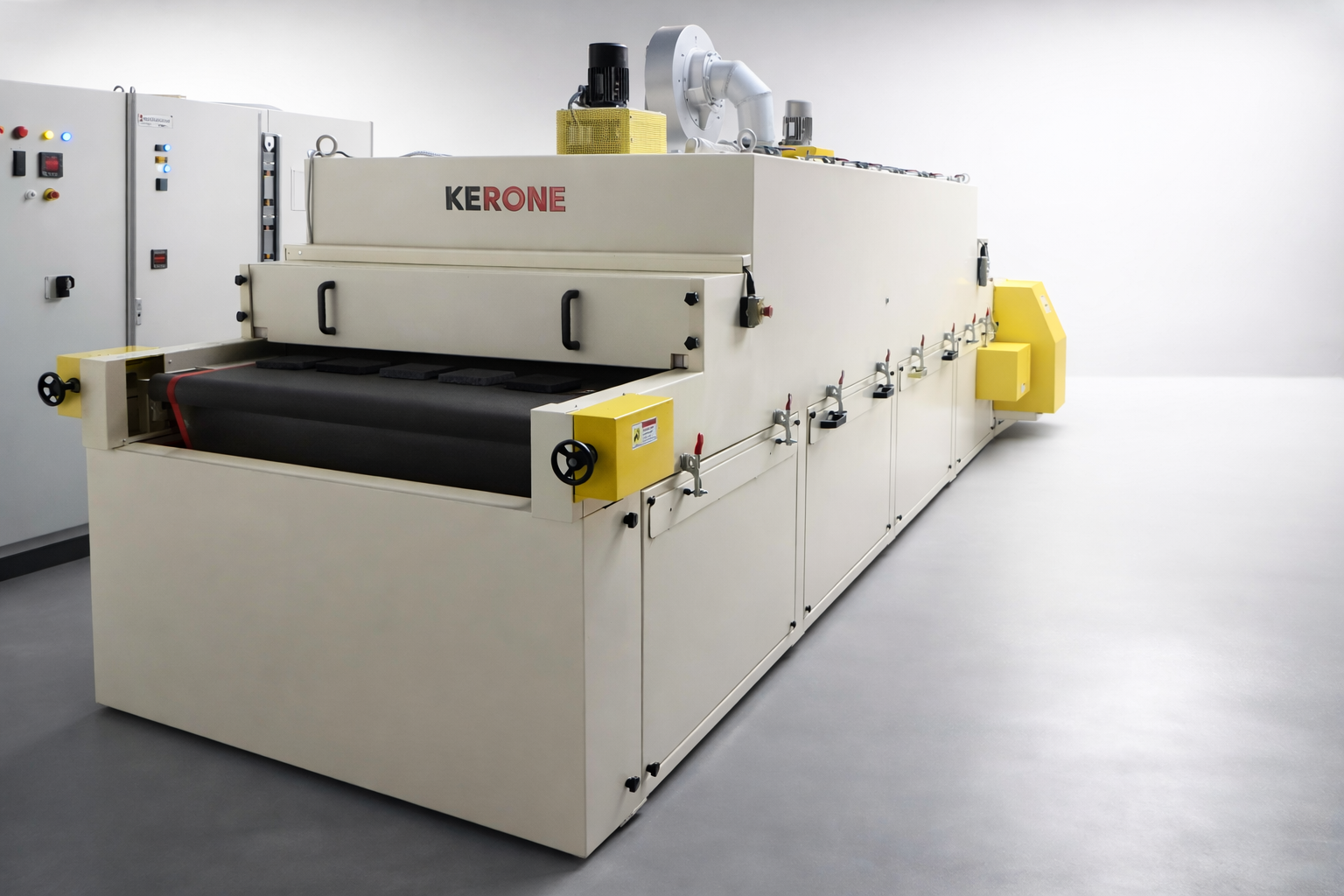
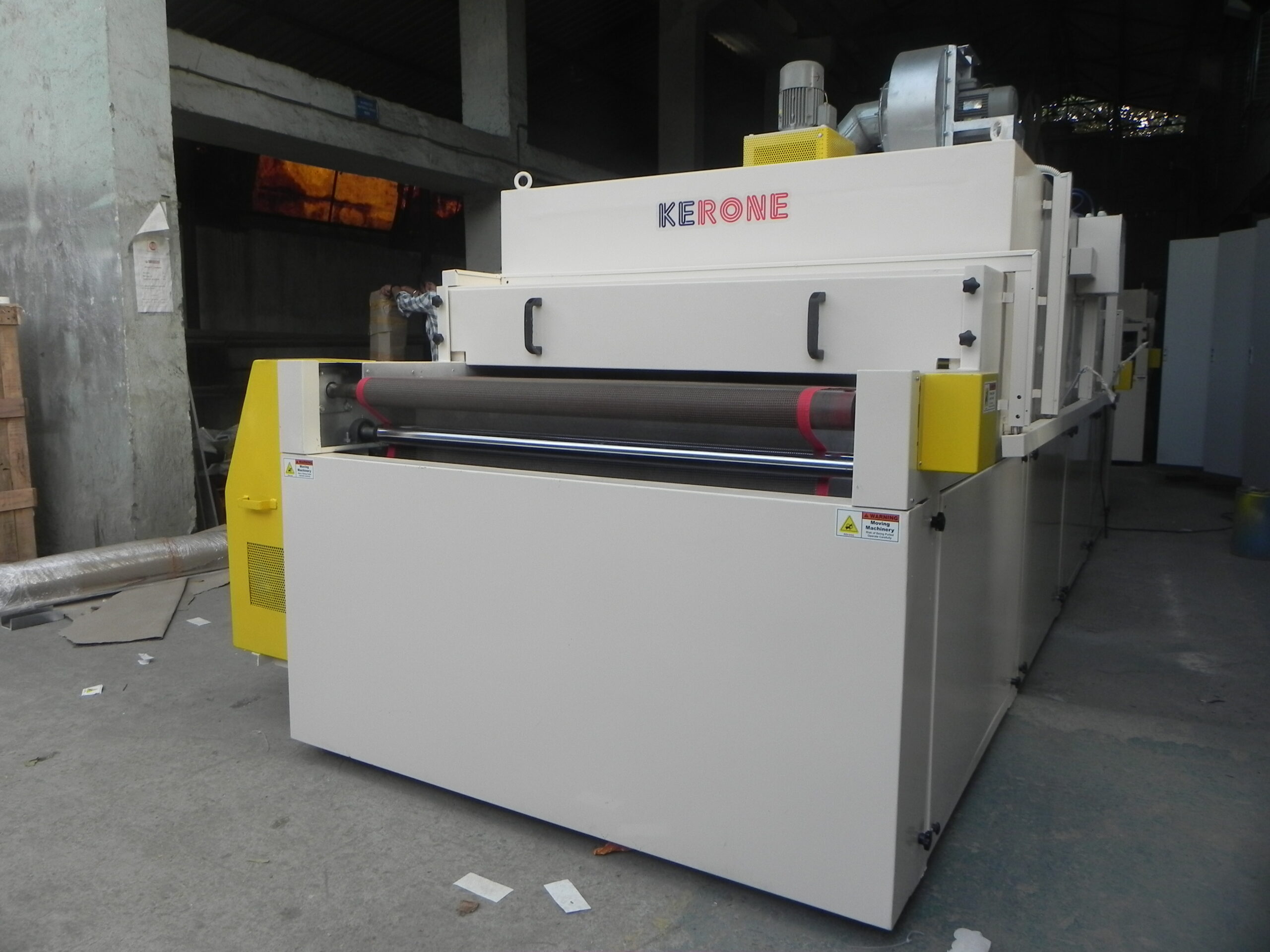
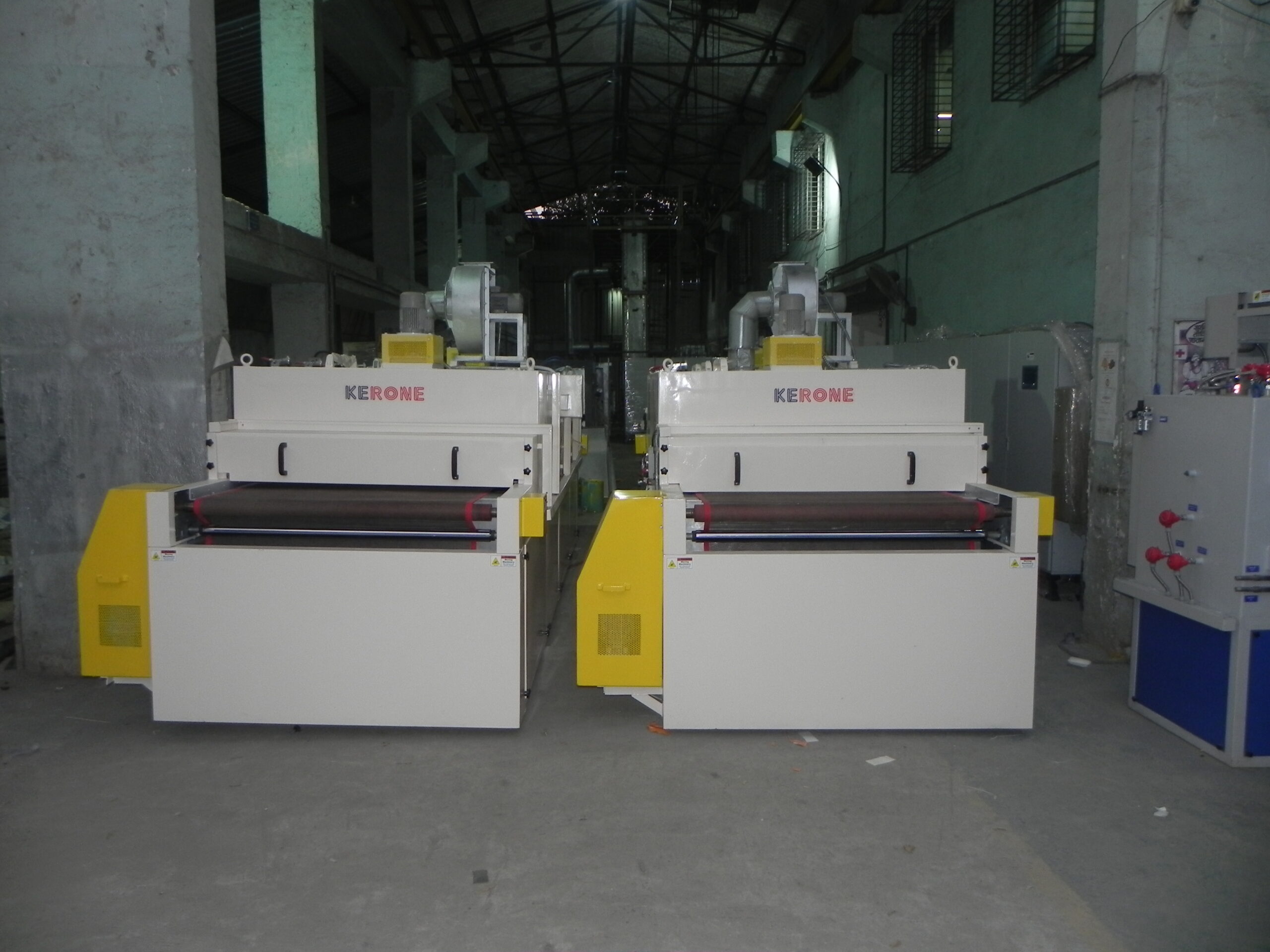
Kerone provides advanced gas fired conveyor ovens engineered to deliver precision, reliability, and high operational efficiency. With 50+ years of multidisciplinary engineering expertise, Kerone designs fully customized systems tailored to industrial heating, drying, thermal processing, and laboratory standards.
Gas heating offers significant energy cost advantages over electric heating in many regions, and combined with Kerone’s precision temperature control and conveyor transport systems, these ovens provide outstanding performance for curing, drying, pre-heating, and thermal treatment applications. Kerone’s Gas Fired Conveyor Ovens are designed for heavy industrial use, with robust construction and advanced combustion control for safe, reliable, and efficient operation.
Why Choose Kerone Gas Fired Conveyor Ovens
Kerone’s Gas Fired Conveyor Ovens are the economical choice for large-scale thermal processing operations where gas energy costs are lower than electricity. The use of high-efficiency gas burners with modulating combustion control allows the oven to maintain precise temperatures across wide production ranges without energy waste. Kerone’s engineers design the gas combustion and airflow systems together to achieve excellent temperature uniformity across the entire belt width, ensuring consistent product quality regardless of loading density or position.
Types and Features of Gas Fired Conveyor Ovens
These ovens are available in direct-fired and indirect-fired configurations, with direct-fired models offering maximum efficiency for applications where combustion products can contact the product, and indirect-fired models for applications requiring clean hot air free from combustion gases. Multi-zone temperature control allows independent management of different sections of the conveyor, and conveyor belts are available in wire mesh, stainless steel slat, or roller configurations for different product types.
Key Features
High-efficiency gas burners with modulating combustion control
Available in direct-fired and indirect-fired configurations
Multi-zone temperature control for complex heating profiles
Continuous conveyor transport for uninterrupted production
Flame failure detection and gas safety interlocks
Forced air recirculation for uniform temperature distribution
PLC-based control with data logging and remote monitoring
Heavy-duty construction for continuous industrial operation
Powered by AI, ML & IoT
Future-Ready Engineering Driven by AI & IoT
Our advanced AI, ML, and IoT technologies, this solution delivers smarter automation, real-time insights, and predictive intelligence to enhance efficiency and drive future-ready growth.
Real-Time Monitoring & Control
Continuous tracking of process parameters with instant adjustments.
Predictive Maintenance
Intelligent fault detection to prevent failures before they occur.
Adaptive Process Optimization
Dynamic tuning of operations for maximum output and efficiency.
Cloud Dashboards & Analytics
Unified access to real-time insights and performance trends.
Energy & Resource Savings
Smarter utilization of energy to cut costs and reduce waste.
Secure IoT Connectivity
Encrypted data flow with seamless integration across plant systems.
Applications of Gas Fired Conveyor Ovens
Kerone’s Gas Fired Conveyor Ovens are extensively used in metal finishing, automotive, glass, and general manufacturing industries. Typical applications include:
Curing of powder coatings and liquid paints on metal and glass products
Pre-heating of metal billets and stampings before forming or welding
Drying of ceramic and refractory products in continuous production
Thermal treatment of composite materials and carbon fibre components
Drying of wire and cable coatings in continuous processing lines
Brazing and soldering of metal assemblies with controlled atmosphere
Kerone’s Gas Fired Conveyor Ovens offer industrial manufacturers a cost-effective, high-throughput thermal processing solution that leverages the energy efficiency of gas combustion to reduce operating costs without compromising on quality or performance. The combination of precise multi-zone temperature control, robust conveyor systems, and comprehensive safety features makes these ovens the ideal choice for demanding production environments. Kerone’s proven track record in designing and installing gas-fired processing systems ensures reliable performance and rapid return on investment.
Seamless Export Connections Global & Local
Our Global Footprint in Industrial Excellence
Delivering world-class industrial and process solutions across countries with precision, innovation, and reliability.
Peru
Chile
Argentina
Mexico
Colombia
Brazil
USA
Canada
United Kingdom
France
Germany
Spain
Italy
Netherlands
Sweden
Switzerland
Poland
Portugal
Ireland
Czechia
Romania
Hungary
Austria
Greece
Kazakhstan
Uzbekistan
Turkmenistan
Algeria
Egypt
Nigeria
Kenya
South Africa
Saudi Arabia
UAE
Israel
Russia
India
China
Japan
South Korea
Thailand
Vietnam
Malaysia
Singapore
Indonesia
Philippines
Australia
New Zealand
Pan-India Presence. Local Expertise.
Raipur
Bilaspur
Panaji
Vasco da Gama
Gandhinagar
Ahmedabad
Surat
Chandigarh
Gurgaon
Shimla
Manali
Bengaluru
Mysore
Kochi
Pune
Mumbai
Thane
Navi Mumbai
Hyderabad
Chennai
Coimbatore
Kolkata
Lucknow
Jaipur
Udaipur
Jodhpur
Dehradun
Haridwar
Bhubaneswar
Product Gallery
Frequently Asked Questions (FAQ)
Continuous gas combustion in an industrial setting requires several layered safety systems working together, not just a single shutoff valve. Flame failure detection is the most critical, since it immediately cuts gas supply if the burner flame extinguishes unexpectedly, preventing unburned gas from accumulating in the combustion chamber. Gas pressure switches confirm supply is within safe operating range before ignition is permitted, and purge cycles clear any residual gas from the chamber before each startup. Explosion relief panels provide a controlled pressure release path in the rare event of an internal deflagration. Kerone builds these as standard interlocks on every gas-fired conveyor oven, and routine testing of each safety system — not just visual inspection — should be part of any preventive maintenance schedule.
The choice depends entirely on whether your product can tolerate contact with combustion gases. Direct-fired systems route combustion products directly into the process airflow, which is more thermally efficient since no heat is lost to a heat exchanger, but it's unsuitable for products sensitive to combustion byproducts like moisture, CO2, or trace contaminants, food products and some coatings fall into this category. Indirect-fired systems use a heat exchanger to deliver clean hot air while keeping combustion gases isolated, sacrificing some efficiency for process cleanliness. Buyers processing food, pharmaceutical, or contamination-sensitive materials should default to indirect-fired unless testing confirms direct-fired exposure doesn't affect product quality or regulatory compliance for their specific application.
Yes, Kerone engineers tailor each system to capacity, temperature range, and industry needs.
Multiple industries including pharma, chemical, food, biomass, and R&D labs.
Kerone designs solutions optimized for minimal power consumption.
Yes, complete installation, commissioning, and lifetime service support are available.
Gas fired conveyor ovens can achieve temperatures from ambient to 800°C or higher, depending on burner design and oven configuration.
Yes, Kerone provides independent temperature control zones as standard to allow customized heating profiles along the conveyor length.
Gas energy is typically 30-50% cheaper per unit of heat produced than electricity in most markets, offering significant operating cost savings.
Gas combustion typically costs less per unit of delivered heat than electricity in most industrial markets, and this gap compounds significantly over years of continuous high-temperature operation. For ovens running multiple shifts at elevated temperatures, the cumulative energy savings from gas heating can offset a meaningful portion of the equipment's purchase price within the first few years of operation, depending on local energy rates and run-time hours. The calculation isn't purely about energy cost, though gas infrastructure requires safety systems, periodic combustion tuning, and emissions considerations that electric systems don't, so the total cost of ownership comparison should include these factors rather than energy price alone. Kerone provides energy consumption estimates based on the specific process profile during the quotation stage so buyers can model their own payback timeline.
Burner efficiency degrades gradually if combustion isn't periodically retuned, since fuel-to-air ratio drift caused by nozzle wear, sensor drift, or changes in fuel composition increases fuel consumption without an obvious symptom until utility bills rise. Routine maintenance should include combustion analysis with a flue gas analyzer to confirm the air-fuel mixture remains within the optimal range, inspection and cleaning of burner nozzles and igniters, and verification that flame failure and pressure safety devices respond correctly. Heat exchangers in indirect-fired systems need periodic inspection for fouling or corrosion, since reduced heat transfer efficiency forces the burner to work harder to maintain setpoint temperature. Kerone recommends professional combustion tuning at least annually, more frequently for continuous multi-shift operation.
Conversion between fuel types, for example, from natural gas to LPG, or between different gas compositions is possible but requires burner and control system modifications rather than a simple settings change, since different fuels have different combustion characteristics, flame temperatures, and required air-fuel ratios. Some burner designs are built with dual-fuel capability from the outset, allowing operators to switch between fuel sources depending on availability or cost, which is worth specifying upfront if fuel supply uncertainty is a concern for your facility's location. Retrofitting a single-fuel burner to a different gas type after installation is a more involved project requiring engineering review, new burner components, and recommissioning. Buyers anticipating fuel flexibility needs should raise this during the initial specification conversation rather than after installation.
Single-zone gas ovens apply one uniform temperature across the entire conveyor length, which forces a compromise between the temperature needed for the early stage of a process and the temperature needed for the final stage often resulting in either under-processing at the start or over-processing by the end. Multi-zone control allows a true process profile: a gentler pre-heat zone to avoid thermal shock, a higher-temperature zone for the main curing or drying reaction, and a controlled cool-down zone to prevent rapid temperature change that can cause warping or cracking in some materials. This staged approach typically produces more consistent product quality and reduces defect rates compared to forcing a single-zone oven to approximate a multi-stage process through speed adjustments alone.
Kerone’s custom-designed heating and processing solutions are built to meet the demands of your growing operations. Whether you’re upgrading equipment, expanding production, or need a tailor-made solution




 Peru
Peru Chile
Chile Argentina
 Mexico
 Colombia
 Brazil
 USA
USA Canada
 United Kingdom
 France
 Germany
 Spain
Spain Italy
Italy Netherlands
 Sweden
 Switzerland
 Poland
 Portugal
 Ireland
 Czechia
 Romania
 Hungary
 Austria
 Greece
 Kazakhstan
 Uzbekistan
 Turkmenistan
 Algeria
 Egypt
Egypt Nigeria
 Kenya
Kenya South Africa
 Saudi Arabia
 UAE
UAE Israel
 Russia
 India
India China
China Japan
Japan South Korea
 Thailand
 Vietnam
 Malaysia
 Singapore
 Indonesia
 Philippines
 Australia
 New Zealand