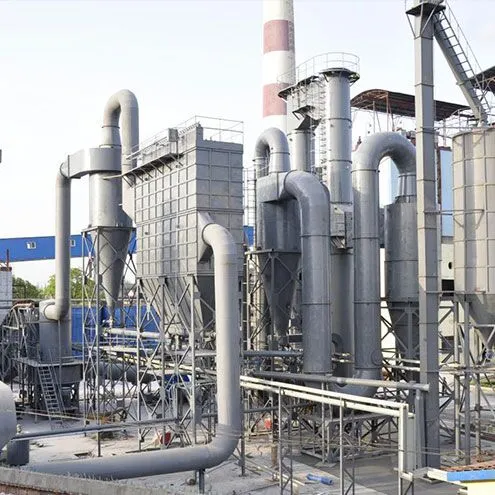
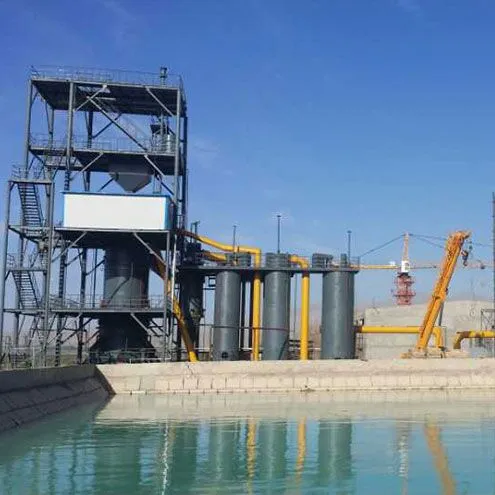
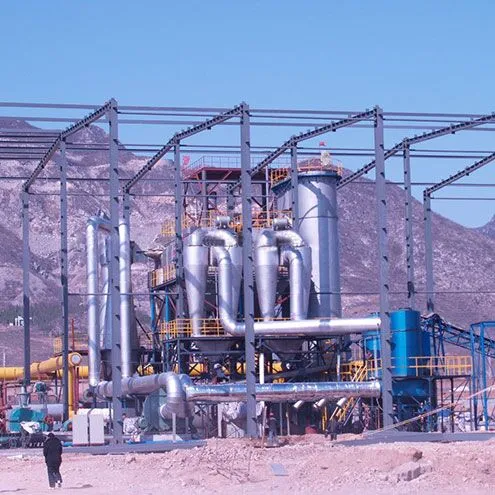
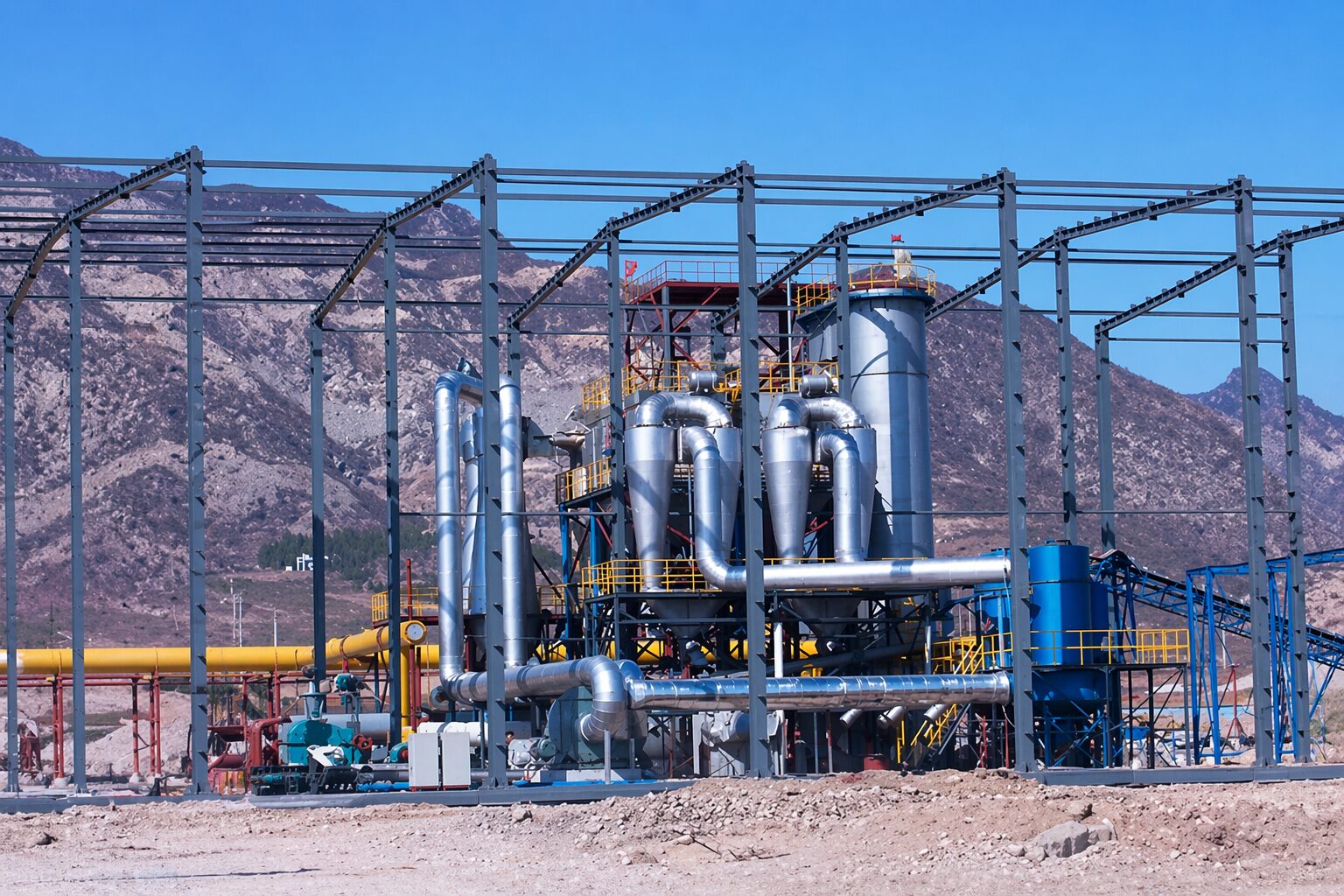
A Fluidized Bed Calciner is a high-efficiency thermal processing system engineered to convert raw materials into their calcined forms through carefully controlled high-temperature treatment in a suspended, fluidized state. In this advanced system, a bed of solid particles is suspended and agitated by an upward flow of hot gas, typically air or an inert gas, creating a dynamic fluid-like behaviour that ensures extraordinary heat and mass transfer between the gas and solid phases. KERONE’s Fluidized Bed Calciners are precision-built for continuous, high-throughput industrial operations where uniformity of product quality, energy efficiency, and process reliability are paramount.
The fluidization mechanism enables intimate contact between the calcination gas and every individual particle, guaranteeing uniform temperature distribution throughout the bed and eliminating the cold or hot spots that commonly plague rotary or shaft kiln-based calciners. These systems are widely deployed across industries such as alumina production, cement manufacturing, mineral processing, chemical synthesis, and environmental remediation, where thermal decomposition, dehydration, phase transformation, or oxidation of powders and granular materials is required at temperatures typically ranging from 400°C to 1100°C.
Why Choose Kerone Fluidized Bed Calciner
KERONE has established itself as a trusted leader in thermal processing equipment, with decades of engineering expertise in designing and manufacturing Fluidized Bed Calciners that meet the most demanding industrial requirements. What sets KERONE apart is its commitment to delivering turnkey solutions that are not merely functional but are optimized for each client’s specific raw material characteristics, throughput targets, and end-product specifications.
KERONE’s design philosophy integrates advanced computational fluid dynamics (CFD) modelling during the design phase, ensuring that the gas distributor plate, freeboard dimensions, cyclone separators, and heat exchanger configurations are perfectly matched to the process parameters. Each unit is fabricated using high-grade refractory-lined steel or high-temperature alloy construction, depending on the operating temperature range, and is equipped with precise temperature control systems, automated feed regulation, and real-time process monitoring instruments.
Furthermore, KERONE offers comprehensive after-sales support, including process optimization audits, preventive maintenance contracts, and spare parts availability, ensuring that clients achieve maximum uptime and return on investment throughout the operational life of the equipment.
Types and Features of Fluidized Bed Calciner
KERONE offers a comprehensive range of Fluidized Bed Calciners tailored to diverse processing requirements, including Bubbling Fluidized Bed Calciners (BFB), which are ideal for coarser particles requiring longer residence times; Circulating Fluidized Bed Calciners (CFB), which recirculate fine particles for enhanced efficiency and are widely used in alumina and cement industries; Flash Calciners, designed for ultra-short residence times and thermally sensitive materials; and Internally Circulating Fluidized Bed Calciners (ICFB), which offer superior temperature control through zonal separation within a single vessel.
Each type is engineered with critical features such as specially designed gas distributor plates for uniform fluidization, multi-zone heating systems for staged thermal treatment, integrated cyclone and bag filter systems for particle recovery and emission control, high-efficiency heat exchangers for gas-to-solid heat recovery, explosion-proof construction for processing combustible or reactive materials, advanced PLC-SCADA-based automation for process stability and remote monitoring, and modular designs that allow future capacity expansion with minimal modifications to the existing installation.
Key Features
Exceptional Heat Transfer Efficiency
Uniform Temperature Distribution
Precise Residence Time Control
Robust Continuous Operation
Integrated Emission Control Systems
Flexible Fuel and Heating Options
Advanced Automation and Control
Scalable and Modular Design
Powered by AI, ML & IoT
Future-Ready Engineering Driven by AI & IoT
Our advanced AI, ML, and IoT technologies, this solution delivers smarter automation, real-time insights, and predictive intelligence to enhance efficiency and drive future-ready growth.
Real-Time Monitoring & Control
Continuous tracking of process parameters with instant adjustments.
Predictive Maintenance
Intelligent fault detection to prevent failures before they occur.
Adaptive Process Optimization
Dynamic tuning of operations for maximum output and efficiency.
Cloud Dashboards & Analytics
Unified access to real-time insights and performance trends.
Energy & Resource Savings
Smarter utilization of energy to cut costs and reduce waste.
Secure IoT Connectivity
Encrypted data flow with seamless integration across plant systems.
Applications of Fluidized Bed Calciner
KERONE’s Fluidized Bed Calciners are extensively used in industries where precise high-temperature thermal treatment of powders, granules, and particulate solids is a core process requirement. Typical applications include:
Alumina Calcination
Cement and Clinker Pre-calcination
Mineral and Ore Processing
Chemical and Catalyst Regeneration
Phosphate Fertilizer Production
Environmental and Waste Treatment
KERONE’s Fluidized Bed Calciners represent the pinnacle of modern thermal processing technology, combining the fundamental thermodynamic advantages of fluidizations are superior heat transfer, isothermal operation, and scalability with KERONE’s decades of domain expertise and engineering precision. Whether you are establishing a new calcination plant, upgrading an existing rotary kiln system, or optimizing a specialty chemical processing line, KERONE’s engineering team works collaboratively with clients from concept to commissioning, ensuring the delivered system meets performance guarantees while minimizing operational costs. The company’s rigorous quality management systems, compliance with international safety standards, and commitment to sustainable manufacturing make KERONE the preferred partner for industries across Asia, the Middle East, Africa, and beyond. Investing in a KERONE Fluidized Bed Calciner means investing in long-term process reliability, energy efficiency, and product quality, the three pillars that define competitive advantage in today’s demanding industrial landscape. Contact KERONE today to discuss your calcination requirements and receive a customized technical and commercial proposal.
Seamless Export Connections Global & Local
Our Global Footprint in Industrial Excellence
Delivering world-class industrial and process solutions across countries with precision, innovation, and reliability.
Peru
Chile
Argentina
Mexico
Colombia
Brazil
USA
Canada
United Kingdom
France
Germany
Spain
Italy
Netherlands
Sweden
Switzerland
Poland
Portugal
Ireland
Czechia
Romania
Hungary
Austria
Greece
Kazakhstan
Uzbekistan
Turkmenistan
Algeria
Egypt
Nigeria
Kenya
South Africa
Saudi Arabia
UAE
Israel
Russia
India
China
Japan
South Korea
Thailand
Vietnam
Malaysia
Singapore
Indonesia
Philippines
Australia
New Zealand
Pan-India Presence. Local Expertise.
Raipur
Bilaspur
Panaji
Vasco da Gama
Gandhinagar
Ahmedabad
Surat
Chandigarh
Gurgaon
Shimla
Manali
Bengaluru
Mysore
Kochi
Pune
Mumbai
Thane
Navi Mumbai
Hyderabad
Chennai
Coimbatore
Kolkata
Lucknow
Jaipur
Udaipur
Jodhpur
Dehradun
Haridwar
Bhubaneswar
Product Gallery
Frequently Asked Questions (FAQ)
Fluidized Bed Calciners are suitable for processing a broad spectrum of powdery and granular materials, including aluminium hydroxide, limestone, kaolin, phosphate rock, titanium dioxide precursors, spent catalysts, lithium battery materials (LFP, NMC), metal carbonates and hydroxides, iron ore concentrates, cement raw meal, activated carbon, and various industrial mineral fillers. The key requirement is that the material must be capable of achieving a stable fluidized state, which is determined by particle size distribution, density, and the terminal settling velocity of the particles.
KERONE achieves uniform calcination through a combination of precision-engineered gas distributor plates that create a homogeneous upward gas flow across the entire bed cross-section, multi-zone heating systems that allow staged temperature profiles, and optimized bed geometry that prevents channeling or dead zones. The inherent mixing behavior of the fluidized bed ensures that each particle is continuously circulated through the hot gas environment, eliminating the temperature gradients that cause over-calcination or under-calcination observed in static or poorly mixed systems.
KERONE's Fluidized Bed Calciners incorporate several energy-saving technologies, including high-efficiency heat exchangers that recover thermal energy from the hot calcined product and flue gases to preheat incoming feed material and combustion air. The superior heat transfer coefficients in the fluidized bed reduce the temperature difference required between the heating medium and the process material, lowering fuel consumption.
Absolutely. KERONE specializes in engineered-to-order solutions and conducts detailed feasibility studies and lab-scale or pilot-scale trials before finalizing the design of each unit. Key parameters that are customized include bed diameter and height, gas velocity and distributor plate design, heating configuration (direct or indirect), material of construction (carbon steel, stainless steel, Inconel, or refractory-lined options), feeding and discharge systems, and integration with upstream and downstream process equipment. KERONE's engineering team collaborates closely with clients throughout the project lifecycle to ensure the final system meets all performance and quality targets.
KERONE integrates comprehensive emission control systems as a standard feature of its Fluidized Bed Calciners. These typically include primary cyclone separators for coarse particle recovery, secondary bag filters or cartridge filters for fine dust capture achieving emission levels below 10–20 mg/Nm³, scrubbers for acidic gas (SO₂, HCl, HF) control where required by the process chemistry, and continuous emissions monitoring systems (CEMS) for regulatory compliance reporting. All emission control designs are benchmarked against CPCB (India), EU Industrial Emissions Directive, and EPA standards, ensuring clients meet local and international environmental obligations.
Too low a velocity means particles never properly fluidize and the bed behaves like a static pile with poor heat transfer. Too high a velocity can carry particles out of the bed entirely. Kerone calculates the minimum and terminal velocity for your material to set the right operating range.
A moderate range of particle sizes can be handled, but a very wide spread causes fine particles to blow out while coarse ones sink and barely fluidize. Kerone reviews your particle size distribution during the design phase to confirm the bed will behave predictably.
Bed temperature is managed through a combination of fuel or power input control, feed rate adjustment, and sometimes cooling coils inside the bed itself. The large thermal mass of the fluidized bed also naturally smooths out short-term temperature swings.
Constant particle collisions during fluidization can wear down softer materials into fines over time. Kerone selects distributor plate design and gas velocity carefully to minimize unnecessary attrition while still maintaining good fluidization.
Start-up time depends on bed material and target temperature, but fluidized beds often reach stable operating conditions faster than rotary kilns because of their excellent heat transfer and smaller thermal mass in the bed itself.
Switching materials is possible with proper bed material replacement and system cleaning between runs, especially if the two materials have different densities or reactive properties that would otherwise contaminate each other.
The freeboard is the space above the bed surface where entrained fine particles slow down and fall back before reaching the gas outlet. A well-sized freeboard reduces the load on downstream cyclones and filters.
Loss of gas flow can cause the bed to collapse or overheat locally. Kerone includes interlocks that shut off fuel or power input automatically if gas flow drops below a safe threshold, protecting the distributor plate and bed material.
Yes, electrically heated fluidized bed systems are available for processes needing very clean atmospheres or where combustion gases would interfere with the product, though the choice depends on your required temperature and site utilities.
Regular checks include distributor plate condition, bed material makeup levels, cyclone and filter differential pressure, and gas flow meter calibration, all of which affect fluidization quality over time.
Kerone’s custom-designed heating and processing solutions are built to meet the demands of your growing operations. Whether you’re upgrading equipment, expanding production, or need a tailor-made solution

 Peru
Peru Chile
Chile Argentina
 Mexico
 Colombia
 Brazil
 USA
USA Canada
 United Kingdom
 France
 Germany
 Spain
Spain Italy
Italy Netherlands
 Sweden
 Switzerland
 Poland
 Portugal
 Ireland
 Czechia
 Romania
 Hungary
 Austria
 Greece
 Kazakhstan
 Uzbekistan
 Turkmenistan
 Algeria
 Egypt
Egypt Nigeria
 Kenya
Kenya South Africa
 Saudi Arabia
 UAE
UAE Israel
 Russia
 India
India China
China Japan
Japan South Korea
 Thailand
 Vietnam
 Malaysia
 Singapore
 Indonesia
 Philippines
 Australia
 New Zealand