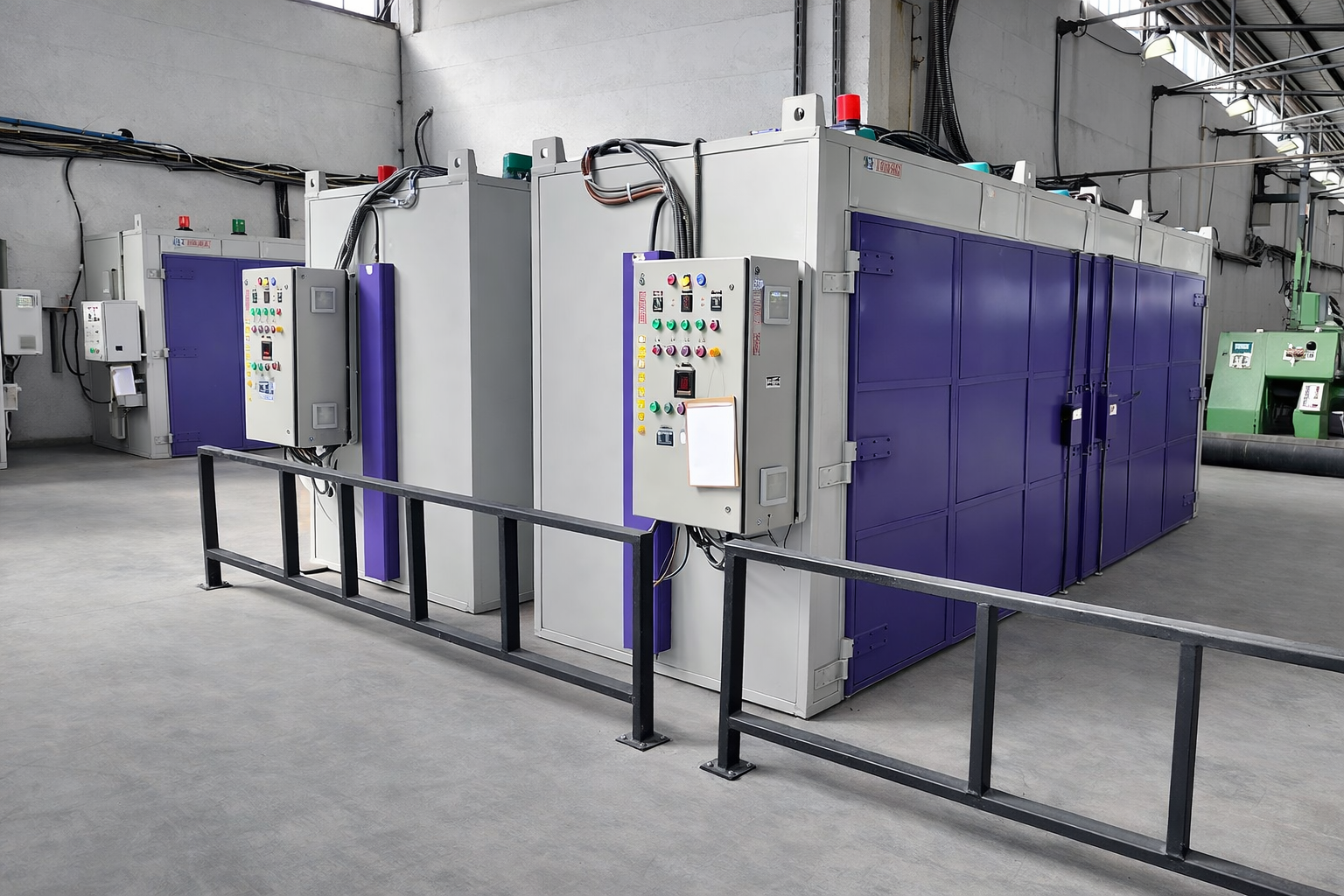
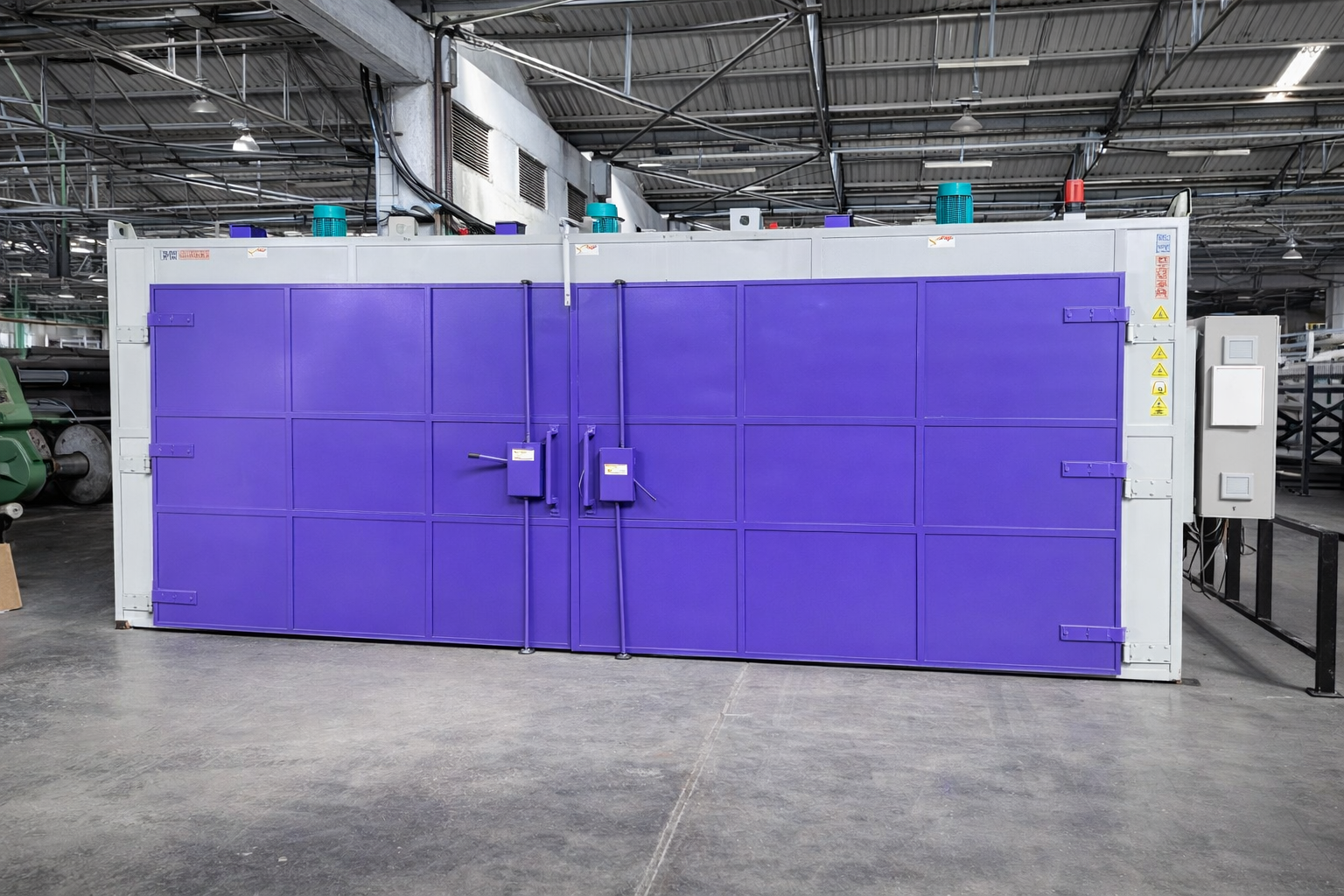
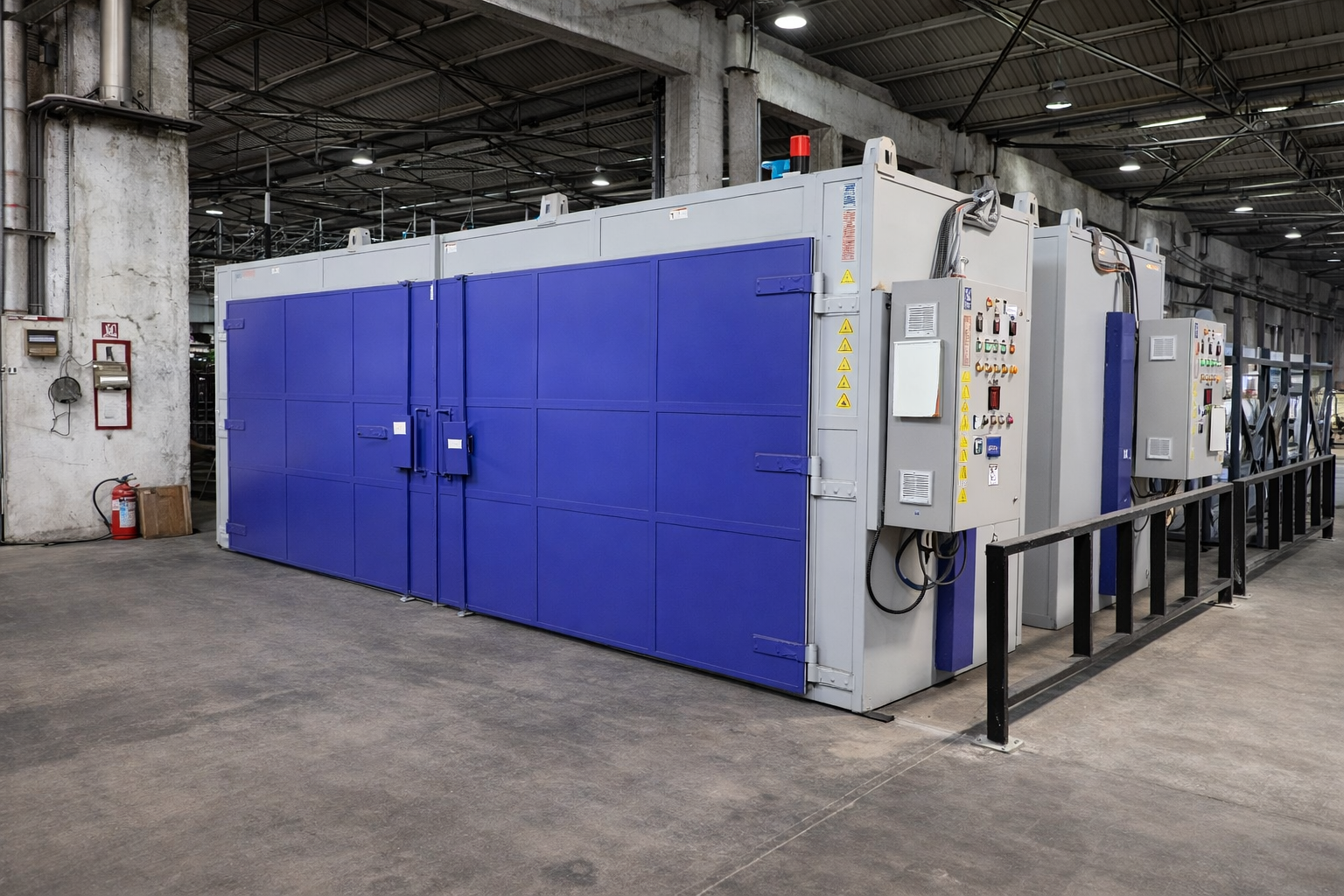
Kerone provides advanced lube oil blending drum oven engineered to deliver high efficiency, precision, and industrial-grade reliability.
Kerone’s Lube Oil Blending Drum Oven is a purpose-built industrial heating system designed to heat steel drums containing lubricating oils, base oils, and oil additives to the temperatures required for blending, pouring, and processing operations in lube oil manufacturing plants. Lubricating oils often have high viscosities at ambient temperature that make pumping and blending difficult or impossible; controlled heating reduces viscosity to the level required for effective blending. Kerone’s Drum Ovens are engineered for safe, efficient, and uniform heating of drums, with full compliance to fire safety and petroleum product handling standards.
Why Choose Kerone Lube Oil Blending Drum Oven
Kerone’s Lube Oil Blending Drum Ovens are specifically designed to handle the unique safety and operational requirements of heating flammable petroleum products. The ovens use indirect heating methods — hot air convection, steam, or electric heating elements with fully insulated designs — to ensure that no ignition source contacts the flammable product or any vapors. Temperature controls are designed to prevent overheating above the flash point of the oil, and all electrical components in or near the oven are rated for hazardous area use. Kerone’s experience in petroleum processing equipment ensures a safe and compliant installation.
Types and Features of Lube Oil Blending Drum Oven
Kerone manufactures drum ovens in multiple drum capacity configurations from single-drum units for laboratory and small-scale operations to large drum bays capable of heating hundreds of drums simultaneously. Heating can be by steam, hot air convection, or electric elements with explosion-proof ratings. Temperature control is designed to hold the oil at the optimal blending temperature without risk of overheating, and the oven structure is designed for easy drum handling with optional roller conveyors and drum turnover equipment.
Key Features
Safe indirect heating to prevent ignition of flammable oil vapours
Explosion-proof electrical components for hazardous area compliance
Precise temperature control to maintain oil below flash point
Available in single-drum to multi-drum bay configurations
Optional steam, hot air convection, or electric heating
Roller conveyor and drum handling systems for safe material flow
Insulated enclosure for energy-efficient drum heating
Safety thermostat and temperature alarm for overheating protection
Powered by AI, ML & IoT
Future-Ready Engineering Driven by AI & IoT
Our advanced AI, ML, and IoT technologies, this solution delivers smarter automation, real-time insights, and predictive intelligence to enhance efficiency and drive future-ready growth.
Real-Time Monitoring & Control
Continuous tracking of process parameters with instant adjustments.
Predictive Maintenance
Intelligent fault detection to prevent failures before they occur.
Adaptive Process Optimization
Dynamic tuning of operations for maximum output and efficiency.
Cloud Dashboards & Analytics
Unified access to real-time insights and performance trends.
Energy & Resource Savings
Smarter utilization of energy to cut costs and reduce waste.
Secure IoT Connectivity
Encrypted data flow with seamless integration across plant systems.
Applications of Lube Oil Blending Drum Oven
Kerone’s Lube Oil Blending Drum Ovens are extensively used in petroleum product manufacturing and handling facilities. Typical applications include:
Heating of base oil drums to reduce viscosity for blending operations
Warming of lubricant additive packages before addition to base stocks
Pre-heating of grease base stocks and thickeners for compounding
Heating of process oils for mixing with rubber compounds
Warming of specialty chemical drums for industrial processing
Pre-heating of wax and paraffin products before pouring and processing
Kerone’s lube oil blending drum oven solutions deliver unmatched quality, safety, and operational performance. Each system is tailored to meet production targets while ensuring energy savings, reliability, and long-term industrial value. The combination of indirect heating, explosion-proof design, and precise temperature control ensures that oils are brought to the optimal blending temperature without any risk to personnel, equipment, or product quality. Kerone’s experience in designing heating equipment for flammable product environments ensures that every installation meets the safety and operational standards required in petroleum processing facilities.
Seamless Export Connections Global & Local
Our Global Footprint in Industrial Excellence
Delivering world-class industrial and process solutions across countries with precision, innovation, and reliability.
Peru
Chile
Argentina
Mexico
Colombia
Brazil
USA
Canada
United Kingdom
France
Germany
Spain
Italy
Netherlands
Sweden
Switzerland
Poland
Portugal
Ireland
Czechia
Romania
Hungary
Austria
Greece
Kazakhstan
Uzbekistan
Turkmenistan
Algeria
Egypt
Nigeria
Kenya
South Africa
Saudi Arabia
UAE
Israel
Russia
India
China
Japan
South Korea
Thailand
Vietnam
Malaysia
Singapore
Indonesia
Philippines
Australia
New Zealand
Pan-India Presence. Local Expertise.
Raipur
Bilaspur
Panaji
Vasco da Gama
Gandhinagar
Ahmedabad
Surat
Chandigarh
Gurgaon
Shimla
Manali
Bengaluru
Mysore
Kochi
Pune
Mumbai
Thane
Navi Mumbai
Hyderabad
Chennai
Coimbatore
Kolkata
Lucknow
Jaipur
Udaipur
Jodhpur
Dehradun
Haridwar
Bhubaneswar
Product Gallery
Frequently Asked Questions (FAQ)
Lubricating base oils and additive packages exhibit higher viscosity at ambient temperature, which increases internal friction within the fluid and makes pumping, mixing, and accurate metering difficult or unreliable. Heating the oil reduces this viscosity by increasing molecular mobility within the fluid, allowing it to flow more freely through pumps, pipework, and blending vessels. Each oil grade has an optimal blending temperature range where viscosity is low enough for efficient processing but still well below the oil's flash point and any temperature that would degrade additive packages. Kerone's drum ovens are designed to bring oil to this target temperature uniformly across the entire drum, rather than only at the surface, ensuring the oil is ready for blending throughout its volume, not just where heat first penetrates.
Drum ovens used for flammable petroleum products typically need to meet hazardous area electrical standards such as ATEX or IECEx for installations outside India, and equivalent flameproof certification standards domestically, covering any electrical components located within or near the heating chamber. Beyond electrical certification, fire safety codes covering petroleum storage and handling facilities often specify requirements for ventilation, spacing from other equipment, and temperature limiting controls relative to the product's flash point. Kerone designs drum ovens to align with these requirements from the outset, including appropriate electrical component ratings and safety interlock systems, and works with clients to ensure documentation supports the specific regulatory framework applicable to their facility location and product classification.
Kerone's lube oil blending drum ovens are engineered with a safety margin between the maximum operating temperature and the flash point of the oil being heated, with temperature controllers set well below this threshold and independent high-limit thermostats providing a secondary cutoff. The exact margin depends on the specific oil grade and its documented flash point, which is why Kerone's engineers review product safety data sheets before finalizing control setpoints for a given installation. This layered approach, combining primary temperature control with an independent overheat protection circuit, ensures that even a control system fault cannot allow the oven to reach a temperature where vapor ignition risk becomes significant, maintaining a safe operating buffer at all times.
Open flame heating near petroleum drums introduces an unacceptable ignition risk and is prohibited in most regulated facilities, while electric blanket or strap heaters applied directly to the drum surface create localized hot spots that can exceed safe temperatures at the contact point even when the bulk oil remains cooler. An enclosed drum oven instead surrounds the entire drum in a controlled thermal environment using indirect heating methods, distributing heat evenly across the drum surface and avoiding any direct contact ignition source. This approach also allows simultaneous heating of multiple drums with consistent results, where blanket heaters require one unit per drum and produce more variable outcomes depending on installation quality and wrap coverage.
Maintenance priorities center on the systems that protect against overheating and ignition risk. Temperature controllers and high-limit safety thermostats should be calibrated against a certified reference on a fixed schedule, since drift in these systems directly affects safety margins. Explosion-proof electrical enclosures and cable glands need periodic inspection to confirm seals remain intact and certification is maintained. Insulation panels should be checked for damage that could create cold spots or, more critically, allow heat to migrate toward uncertified electrical areas. Drum rollers and handling equipment require routine lubrication to prevent drum damage during loading. Kerone provides maintenance schedules specific to each installation's heating method and hazardous area classification to support consistent, documented upkeep.
The decision depends primarily on daily drum throughput and batch blending schedules. Facilities processing a handful of drums per day, or running varied small-batch blends, are often better served by single or small multi-drum units that allow flexible scheduling without heating unused capacity. Larger blending plants with continuous or high-volume production typically benefit from multi-drum bay systems that heat dozens of drums simultaneously, reducing the per-drum energy and labor cost of the heating step. Buyers should also consider blending schedule variability: a bay sized for peak demand may run underutilized during slower periods, so right-sizing against average rather than peak throughput, with some buffer capacity, often delivers better lifetime economics.
Yes, Kerone offers fully customized engineering based on capacity, temperature, and industry needs.
PLC, SCADA, IoT, AI/ML predictive systems, and remote monitoring.
Yes, Kerone designs systems that significantly reduce operational energy consumption.
Manufacturing, food, chemicals, biomass, pharma, packaging, and advanced materials.
Yes, from installation to lifetime service support, Kerone provides complete assistance.
Yes, Kerone can supply drum ovens with ATEX or IECEx certified electrical components for use in Zone 1 and Zone 2 hazardous areas.
Drum rollers, floor-level ramps, and optional drum handling trolleys are supplied for safe and efficient drum movement.
Typically, 4 to 8 hours depending on oil viscosity, initial temperature, target temperature, and oven heating capacity.
Uncontrolled heating methods, such as leaving drums in heated storage rooms or using oversized blanket heaters without thermostatic control, waste energy by heating oil well beyond the temperature actually needed for blending, or by heating drums continuously regardless of production schedule. A properly controlled drum oven heats oil only to its specific target blending temperature and can be scheduled to match production timing, avoiding unnecessary energy use during idle periods. Insulated enclosure design further reduces heat loss compared to open storage area heating. While exact savings depend on facility-specific baseline practices, plants switching from uncontrolled to thermostatically controlled drum heating commonly report meaningful reductions in energy cost per drum processed.
Kerone’s custom-designed heating and processing solutions are built to meet the demands of your growing operations. Whether you’re upgrading equipment, expanding production, or need a tailor-made solution


 Peru
Peru Chile
Chile Argentina
 Mexico
 Colombia
 Brazil
 USA
USA Canada
 United Kingdom
 France
 Germany
 Spain
Spain Italy
Italy Netherlands
 Sweden
 Switzerland
 Poland
 Portugal
 Ireland
 Czechia
 Romania
 Hungary
 Austria
 Greece
 Kazakhstan
 Uzbekistan
 Turkmenistan
 Algeria
 Egypt
Egypt Nigeria
 Kenya
Kenya South Africa
 Saudi Arabia
 UAE
UAE Israel
 Russia
 India
India China
China Japan
Japan South Korea
 Thailand
 Vietnam
 Malaysia
 Singapore
 Indonesia
 Philippines
 Australia
 New Zealand