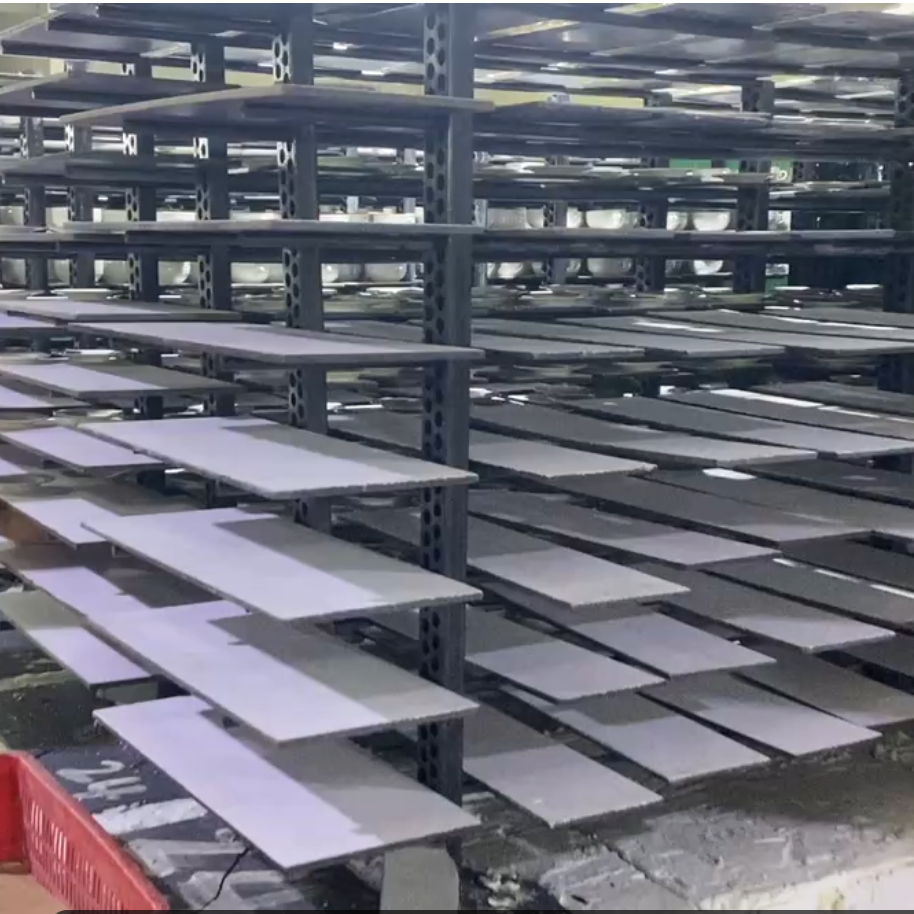
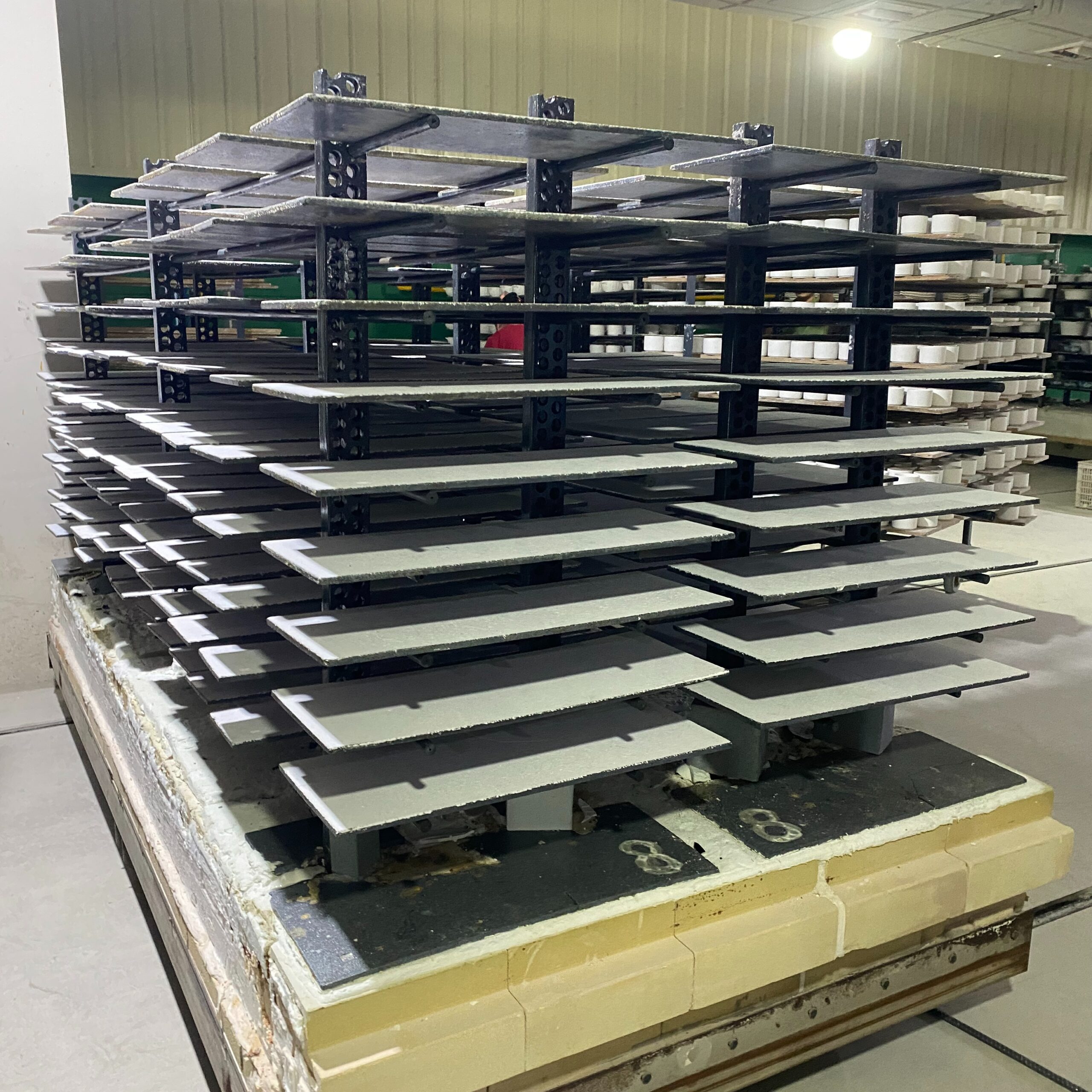
Kerone’s Tunnel Kilns are continuous, high-throughput thermal processing furnaces in which the material; loaded on kiln cars, trays, or conveyor belts – travels through a fixed, stationary thermal zone on a defined track from the cold feed end to the cooled discharge end. Unlike batch furnaces where the heating zone moves relative to a fixed workload, in a Tunnel Kiln the thermal zone is stationary and the product moves progressively through preheating, firing, and cooling zones in a highly controlled manner. This design delivers exceptional production consistency, outstanding energy efficiency through counterflow heat exchange between incoming cold cars and outgoing hot cars, and very low thermal mass cycling. Kerone’s Tunnel Kilns are engineered for precision temperature profiling, long campaign life, and maximum production throughput for ceramics, refractories, bricks, and advanced material industries.
Why Choose Kerone Tunnel Kiln
Kerone’s Tunnel Kilns are the preferred choice for manufacturers who need maximum production throughput with consistent product quality and minimum energy consumption. Our engineering team performs detailed heat balance calculations and thermal simulation to optimize the kiln length, firing zone dimensions, car design, and atmosphere profile for each specific product and production rate. Kerone’s kilns are built with high-quality refractory crowns, side walls, and hearth structures designed for extended campaign life, minimizing maintenance downtime. The advanced combustion systems — whether gas-fired with automatic combustion control or electric resistance heated — ensure precise temperature profiles that produce uniform, defect-free products. Kerone provides end-to-end project delivery including kiln car design, setting systems, atmosphere control, and complete plant commissioning.
Types and Features of Tunnel Kiln
Kerone’s Tunnel Kiln product range includes Traditional Brick and Tile Tunnel Kilns for building materials; Technical Ceramics Tunnel Kilns with precision atmosphere control for electronic components, substrates, and engineering ceramics; Refractory Tunnel Kilns for firing high-alumina, magnesia, and silicon carbide refractory products; Sanitaryware Tunnel Kilns for vitrification of bathroom fixtures; Porcelain Insulator Kilns for high-voltage electrical insulators; and Roller Hearth Tunnel Kilns where products travel on driven roller conveyor systems. Key differentiating features include variable zone length design, automatic car push/pull systems, thermal imaging monitoring, and full combustion management systems with programmable firing curves.
Key Features
Continuous production with stationary thermal zone for exceptional product consistency
Counter-current heat exchange between incoming and outgoing kiln cars for energy efficiency
Precise multi-zone temperature profiling from preheating through firing to controlled cooling
Low thermal mass cycling compared to batch kilns, significantly reducing energy consumption
Automated kiln car push systems with programmable cycle times and production rates
Advanced combustion management system with pulse firing for superior temperature uniformity
Optional controlled atmosphere capability for reducing, neutral, or oxidizing firing conditions
Long service life with modular refractory construction designed for targeted hot-face replacement
Powered by AI, ML & IoT
Future-Ready Engineering Driven by AI & IoT
Our advanced AI, ML, and IoT technologies, this solution delivers smarter automation, real-time insights, and predictive intelligence to enhance efficiency and drive future-ready growth.
Real-Time Monitoring & Control
Continuous tracking of process parameters with instant adjustments.
Predictive Maintenance
Intelligent fault detection to prevent failures before they occur.
Adaptive Process Optimization
Dynamic tuning of operations for maximum output and efficiency.
Cloud Dashboards & Analytics
Unified access to real-time insights and performance trends.
Energy & Resource Savings
Smarter utilization of energy to cut costs and reduce waste.
Secure IoT Connectivity
Encrypted data flow with seamless integration across plant systems.
Applications of Tunnel Kiln
Kerone’s Tunnel Kilns are extensively used in industries requiring continuous, high-volume firing and thermal processing of ceramic and refractory products.
Typical applications include:
Firing of structural clay products including bricks, blocks, roof tiles, and paving products
Sintering of advanced technical ceramics including alumina substrates, ferrites, and electronic components
Firing of high-grade sanitaryware, porcelain tiles, and decorative ceramic products
Calcination and sintering of refractory products including high-alumina, silica, and magnesia refractories
Firing of porcelain electrical insulators for high and medium voltage transmission equipment
Thermal processing and sintering of grinding wheels, abrasive products, and engineered ceramics
Kerone’s Tunnel Kilns offer the ultimate combination of production continuity, thermal efficiency, and product quality for ceramic and refractory manufacturers. The inherent advantages of a stationary thermal zone with moving product — consistent firing conditions, efficient heat recovery, and low specific energy consumption — make Tunnel Kilns the production workhorse of the ceramics industry. Kerone’s comprehensive engineering capability, from process design and refractory specification to mechanical design, control systems, and commissioning, ensures that your Tunnel Kiln investment delivers the production performance and product quality that your business requires, over a long and reliable service life.
Seamless Export Connections Global & Local
Our Global Footprint in Industrial Excellence
Delivering world-class industrial and process solutions across countries with precision, innovation, and reliability.
Peru
Chile
Argentina
Mexico
Colombia
Brazil
USA
Canada
United Kingdom
France
Germany
Spain
Italy
Netherlands
Sweden
Switzerland
Poland
Portugal
Ireland
Czechia
Romania
Hungary
Austria
Greece
Kazakhstan
Uzbekistan
Turkmenistan
Algeria
Egypt
Nigeria
Kenya
South Africa
Saudi Arabia
UAE
Israel
Russia
India
China
Japan
South Korea
Thailand
Vietnam
Malaysia
Singapore
Indonesia
Philippines
Australia
New Zealand
Pan-India Presence. Local Expertise.
Raipur
Bilaspur
Panaji
Vasco da Gama
Gandhinagar
Ahmedabad
Surat
Chandigarh
Gurgaon
Shimla
Manali
Bengaluru
Mysore
Kochi
Pune
Mumbai
Thane
Navi Mumbai
Hyderabad
Chennai
Coimbatore
Kolkata
Lucknow
Jaipur
Udaipur
Jodhpur
Dehradun
Haridwar
Bhubaneswar
Product Gallery
Frequently Asked Questions (FAQ)
In a Tunnel Kiln, the thermal zone (preheating, firing, and cooling) is stationary, and the product moves through it on kiln cars or a conveyor. This produces consistent product quality, enables continuous production, and allows efficient heat exchange between hot outgoing and cool incoming product streams, advantages not available with batch kilns.
Production rates depend on kiln dimensions and the product being fired. Brick tunnel kilns can produce hundreds of thousands of bricks per day, while technical ceramics kilns may process several tons per day. Kerone designs kilns to match your specific production target.
Kerone Tunnel Kilns can be designed for natural gas, LPG, furnace oil, or producer gas firing. Electric Tunnel Kilns using silicon carbide or molybdenum disilicide elements are also available for applications requiring clean, precisely controlled firing atmospheres.
Cooling zone length is typically 30–40% of total kiln length. The cooling zone is designed with rapid cooling fans, dilution air inlets, and heat recovery ducts to bring product to safe handling temperatures while recovering heat for preheating or other process uses.
Yes. Kerone designs Tunnel Kilns with sealed sections, atmosphere injection points, and monitoring systems for processes requiring reduced oxygen, inert gas, or controlled reducing atmospheres, such as for electronic ceramics, ferrites, and copper metallization.
The structural elements of a Tunnel Kiln can last 20–30 years with proper maintenance. Refractory hot-face lining in the peak firing zone typically requires periodic patching or partial replacement every 5–10 years depending on firing temperatures and product characteristics.
Kiln cars are custom-designed for each application, considering product dimensions, weight, firing temperature, and setting density. They feature kiln car frames of steel with kiln furniture (posts, shelves, cranks) of refractory material selected to suit the firing temperature and atmosphere conditions.
Kerone Tunnel Kilns incorporate combustion safety systems with flame detection and automatic gas shut-off, over-temperature alarms, kiln pressure monitoring, personnel access interlocks at the kiln entrances, and emergency ventilation systems for rapid kiln purging.
A stuck car disrupts the entire production line since all cars move together in sequence. Kerone designs push systems with overload sensors that stop the line and alert operators before damage occurs to the car or the product inside it.
Setting density and pattern on the car matter a lot, since overly tight packing blocks gas flow between pieces and causes uneven firing. Kerone provides setting guidelines specific to each product shape and size during the design phase.
Mixing products with different firing temperature needs in the same kiln run is generally not recommended, since the fixed temperature profile along the tunnel is set for one product type at a time.
Cracking or warping often comes from too fast a temperature change during preheating or cooling, uneven setting on the car, or inconsistent raw material moisture before firing. Kerone reviews the firing curve carefully to reduce thermal stress on the product.
Cooling air drawn from the discharge end zone is ducted back to preheat incoming cars and combustion air, recovering heat that would otherwise be wasted, which is one of the main reasons tunnel kilns are so fuel efficient.
A shuttle kiln is a batch kiln where the whole load sits still while temperature cycles up and down, whereas a tunnel kiln keeps a fixed thermal zone and moves the product through it continuously, giving steadier output and generally lower fuel use per unit.
Conversion is possible in many designs, though it usually requires changes to the firing zone structure and control system. Kerone can assess whether an existing tunnel kiln is a good candidate for this kind of retrofit.
Kerone’s custom-designed heating and processing solutions are built to meet the demands of your growing operations. Whether you’re upgrading equipment, expanding production, or need a tailor-made solution



 Peru
Peru Chile
Chile Argentina
 Mexico
 Colombia
 Brazil
 USA
USA Canada
 United Kingdom
 France
 Germany
 Spain
Spain Italy
Italy Netherlands
 Sweden
 Switzerland
 Poland
 Portugal
 Ireland
 Czechia
 Romania
 Hungary
 Austria
 Greece
 Kazakhstan
 Uzbekistan
 Turkmenistan
 Algeria
 Egypt
Egypt Nigeria
 Kenya
Kenya South Africa
 Saudi Arabia
 UAE
UAE Israel
 Russia
 India
India China
China Japan
Japan South Korea
 Thailand
 Vietnam
 Malaysia
 Singapore
 Indonesia
 Philippines
 Australia
 New Zealand