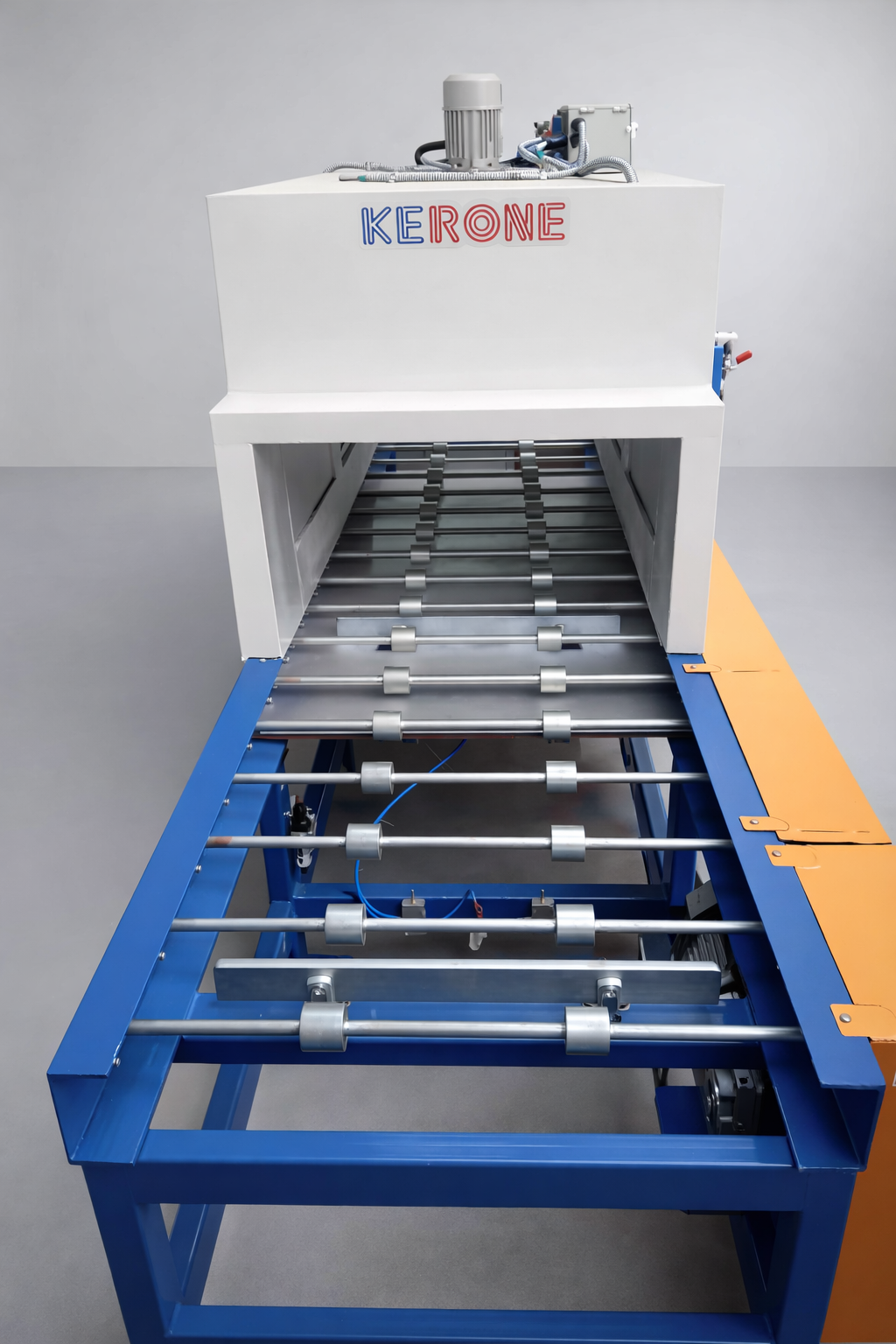
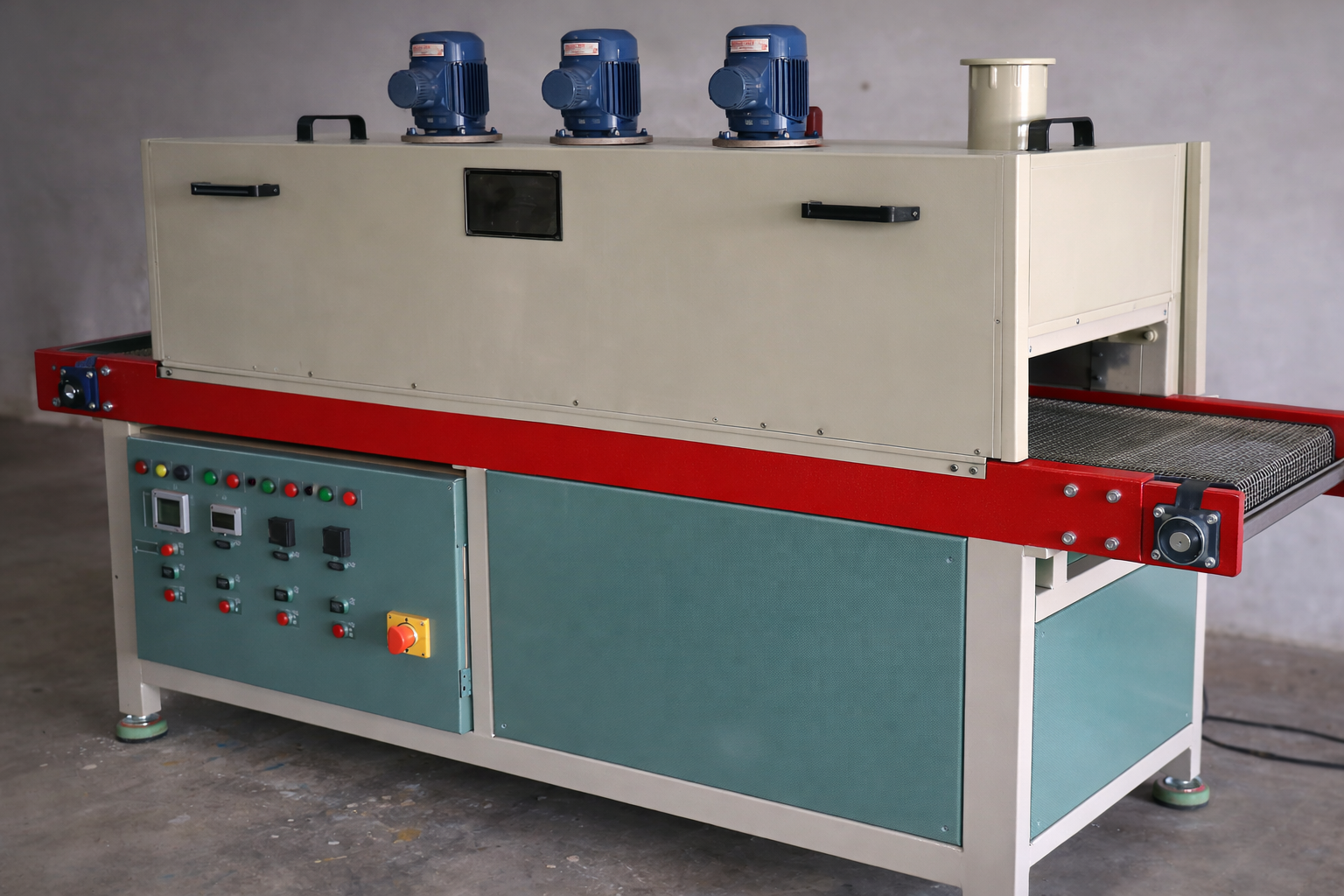
Kerone’s Tunnel Ovens are high-capacity, continuous thermal processing systems designed for the automated, uninterrupted heating, drying, curing, or heat treatment of products transported on a conveyor through a straight-through tunnel enclosure. The tunnel design provides a controlled and uniform thermal environment along the entire length of the conveyor path, making these ovens ideal for high-volume production applications where consistent, repeatable processing of large quantities of products is essential. Kerone engineers and manufactures Tunnel Ovens across a wide range of sizes, temperatures, and heating technologies to serve industries from automotive and aerospace to food processing and electronics.
Why Choose Kerone Tunnel Ovens
Kerone’s Tunnel Ovens are recognized for their superior engineering, exceptional temperature uniformity, and robust construction that delivers reliable performance over years of continuous operation. The company’s ability to design and build tunnel ovens with precise multi-zone temperature control, efficient insulation, and powerful yet energy-efficient heating systems ensures that each installation achieves the desired process quality at the lowest possible operating cost. Kerone’s project management team delivers each tunnel oven installation on time, managing site preparation, mechanical installation, commissioning, and operator training as a complete turnkey service.
Types and Features of Tunnel Ovens
Kerone’s Tunnel Ovens are available in single and multi-zone configurations with various heating technologies including electric resistance, gas-fired combustion, infrared, and steam. Conveyor systems include mesh belt, slat, roller hearth, and chain-on-edge types. The tunnel entrance and exit are designed with air sealing or chain curtains to maintain the internal temperature while allowing continuous product passage. Tunnel lengths range from 5 m for compact production lines to over 60 m for high-capacity industrial installations.
Key Features
High operational efficiency with uniform processing
Adjustable temperature, airflow, or RF/IR power settings
Batch and continuous configurations available
Low maintenance with long service life
Custom material flow and heating patterns
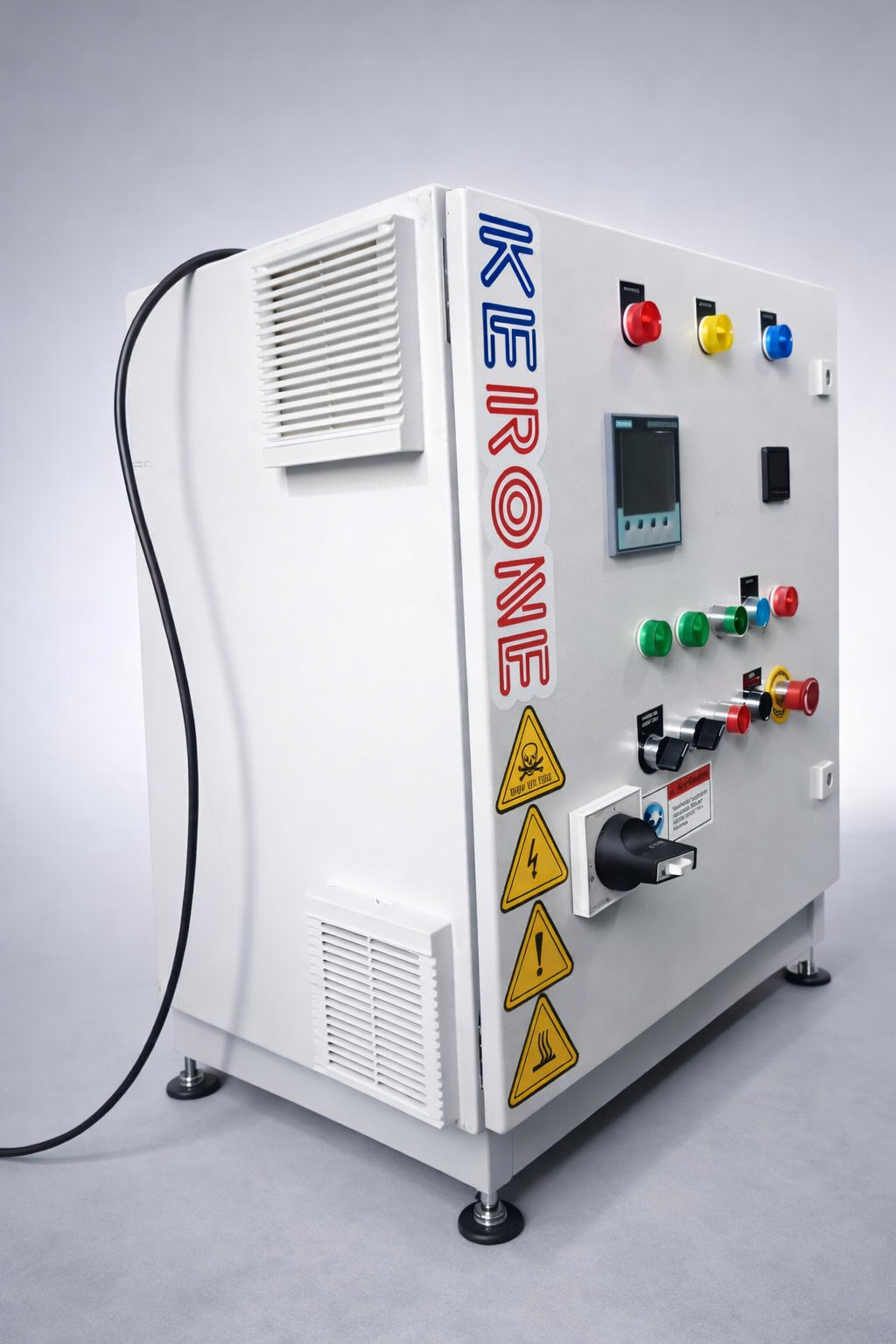
Safety interlocks and advanced control systems
Powered by AI, ML & IoT
Future-Ready Engineering Driven by AI & IoT
Our advanced AI, ML, and IoT technologies, this solution delivers smarter automation, real-time insights, and predictive intelligence to enhance efficiency and drive future-ready growth.
Real-Time Monitoring & Control
Continuous tracking of process parameters with instant adjustments.
Predictive Maintenance
Intelligent fault detection to prevent failures before they occur.
Adaptive Process Optimization
Dynamic tuning of operations for maximum output and efficiency.
Cloud Dashboards & Analytics
Unified access to real-time insights and performance trends.
Energy & Resource Savings
Smarter utilization of energy to cut costs and reduce waste.
Secure IoT Connectivity
Encrypted data flow with seamless integration across plant systems.
Applications of Tunnel Ovens
Kerone’s Tunnel Ovens are extensively used in high-volume manufacturing operations across many industries. Typical applications include:
Food, chemical, pharmaceutical, and mineral industries
Biomass, renewable fuels, and environmental systems
Packaging, paper, and pulp processing
Industrial drying, heating, curing, and material transformation
High-temperature and precision-controlled processes
Smart manufacturing with automation and AI integration
Kerone’s Tunnel Ovens are the definitive continuous thermal processing solution for manufacturers that require high throughput, consistent quality, and reliable long-term operation. The ability to custom-engineer each tunnel oven to the specific production requirements of the client, combined with Kerone’s comprehensive project delivery and after-sales support capabilities, makes the company the preferred partner for major industrial thermal processing projects worldwide. A Kerone Tunnel Oven is a long-term investment in production quality and efficiency.
Seamless Export Connections Global & Local
Our Global Footprint in Industrial Excellence
Delivering world-class industrial and process solutions across countries with precision, innovation, and reliability.
Peru
Chile
Argentina
Mexico
Colombia
Brazil
USA
Canada
United Kingdom
France
Germany
Spain
Italy
Netherlands
Sweden
Switzerland
Poland
Portugal
Ireland
Czechia
Romania
Hungary
Austria
Greece
Kazakhstan
Uzbekistan
Turkmenistan
Algeria
Egypt
Nigeria
Kenya
South Africa
Saudi Arabia
UAE
Israel
Russia
India
China
Japan
South Korea
Thailand
Vietnam
Malaysia
Singapore
Indonesia
Philippines
Australia
New Zealand
Pan-India Presence. Local Expertise.
Raipur
Bilaspur
Panaji
Vasco da Gama
Gandhinagar
Ahmedabad
Surat
Chandigarh
Gurgaon
Shimla
Manali
Bengaluru
Mysore
Kochi
Pune
Mumbai
Thane
Navi Mumbai
Hyderabad
Chennai
Coimbatore
Kolkata
Lucknow
Jaipur
Udaipur
Jodhpur
Dehradun
Haridwar
Bhubaneswar
Product Gallery
Frequently Asked Questions (FAQ)
A tunnel oven maintains process consistency by dividing the chamber into multiple independently controlled heating zones along its length, each with its own temperature sensors and heating elements, whether electric, gas-fired, infrared, or steam. As products move through on a conveyor at a fixed speed, they pass through a controlled thermal profile rather than a single fixed temperature, allowing pre-heat, process, and cool-down stages within one continuous structure. Recirculating airflow patterns and reflector or duct geometry are engineered to eliminate temperature gradients across the width of the conveyor, not just along its length. This zone-based, conveyor-synchronized approach is what allows a tunnel oven to process large volumes of product with the same thermal result, batch after batch.
Tunnel ovens are built specifically for continuous, high-volume processing, since the conveyor-through-tunnel design only delivers its full throughput advantage when products move continuously rather than being loaded and unloaded as discrete batches. For lower-volume or intermittent production, a batch oven is typically the better fit, as it avoids running a long tunnel chamber for small quantities. However, Kerone does offer hybrid approaches, including shorter tunnel lengths and variable conveyor speeds, that allow a tunnel oven to handle moderate production volumes more efficiently than a full-scale industrial line while still gaining the consistency benefits of continuous processing. The right choice depends on production volume, product changeover frequency, and available floor space.
Yes, Kerone offers fully customized engineering based on capacity, temperature, and industry needs.
Tunnel ovens handle a wide range of discrete, conveyable products including coated and painted metal or plastic components, packaged food items, printed substrates, electronic assemblies, pharmaceutical containers, and mineral or ceramic pieces. The conveyor type is matched to the product: mesh belts suit lightweight or perforated items, roller hearths suit rigid components, and chain-on-edge systems suit items that need to hang or stand during processing. Products that are heat-sensitive on one side but not the other, such as printed sheets, benefit from infrared or directional heating zones within the tunnel. Materials requiring multi-stage thermal profiles, such as curing followed by controlled cooling, are particularly well suited, since a tunnel oven can deliver each stage in a single pass.
PLC, SCADA, IoT, AI/ML predictive systems, and remote monitoring.
Yes, Kerone designs systems that significantly reduce operational energy consumption.
Manufacturing, food, chemicals, biomass, pharma, packaging, and advanced materials.
Because a tunnel oven eliminates the loading, unloading, and chamber recovery time inherent to batch ovens, throughput gains of several multiples are common when converting a batch line to continuous tunnel processing, with the exact figure depending on cycle time, product density on the conveyor, and tunnel length. Continuous processing also removes the temperature recovery dip that occurs every time a batch oven door opens, so each product unit experiences a more consistent thermal profile, which reduces rework and rejection rates. For high-volume manufacturers running multiple shifts, this combination of higher throughput and lower rejection translates into a meaningfully lower cost per unit processed compared with batch-based operations handling the same total volume.
Yes, from installation to lifetime service support, Kerone provides complete assistance.
Air curtain blowers, insulated baffle plates, and chain curtains are used at entry and exit points to minimize heat loss.
Mesh belt, solid stainless belt, slat conveyor, roller hearth, and chain-on-edge systems are available depending on product requirements.
Yes, Kerone designs tunnel ovens for installation in existing buildings with headroom constraints, including below-floor conveyor return systems.
Yes. Kerone's tunnel ovens support PLC and SCADA-based control as standard, with optional IoT sensors that continuously report zone temperatures, conveyor speed, and energy consumption to plant-wide monitoring systems. This data can feed predictive maintenance algorithms that flag heating element degradation before failure, and adaptive control logic that adjusts zone temperatures automatically in response to product loading variations. Digital communication protocols allow the oven to exchange data with upstream and downstream equipment, enabling synchronized line speed control and automated quality logging for every batch processed. For manufacturers building toward a connected factory, a tunnel oven becomes a data-generating node in the production line rather than an isolated piece of equipment.
The two variables that most affect tunnel oven performance are dwell time and available floor length. Buyers need to confirm the minimum dwell time their process requires at target temperature, then work backward to determine the combination of tunnel length and conveyor speed that delivers it without exceeding available plant footprint. Underestimating dwell time results in underprocessed product; oversizing the tunnel wastes both capital and floor space. Buyers should also factor in future production growth, since conveyor speed has more flexibility for later adjustment than physical tunnel length. Kerone's engineering team calculates these parameters from product thermal data and target throughput before finalizing a design, helping buyers avoid costly resizing after installation.
Tunnel ovens reduce energy waste compared to older convection systems mainly through insulated chamber construction, recirculating airflow that reuses heated air rather than venting it, and air-curtain or chain-curtain sealing at the entrance and exit that limits heat escape during continuous operation. Multi-zone control means energy is applied only where and when needed along the tunnel length, rather than heating the entire chamber to a single high temperature. For gas-fired models, modern burner technology improves combustion efficiency and reduces emissions per unit of product processed. Combined, these design features lower both operating cost and the carbon footprint per unit of throughput, which is increasingly relevant for manufacturers reporting on energy intensity and sustainability metrics.
Kerone’s custom-designed heating and processing solutions are built to meet the demands of your growing operations. Whether you’re upgrading equipment, expanding production, or need a tailor-made solution


 Peru
Peru Chile
Chile Argentina
 Mexico
 Colombia
 Brazil
 USA
USA Canada
 United Kingdom
 France
 Germany
 Spain
Spain Italy
Italy Netherlands
 Sweden
 Switzerland
 Poland
 Portugal
 Ireland
 Czechia
 Romania
 Hungary
 Austria
 Greece
 Kazakhstan
 Uzbekistan
 Turkmenistan
 Algeria
 Egypt
Egypt Nigeria
 Kenya
Kenya South Africa
 Saudi Arabia
 UAE
UAE Israel
 Russia
 India
India China
China Japan
Japan South Korea
 Thailand
 Vietnam
 Malaysia
 Singapore
 Indonesia
 Philippines
 Australia
 New Zealand