Cattle nutrition management at scale demands drying technologies that can process high volumes of compound feed, silage, forage, and pelletised dairy rations with consistent moisture precision and minimal energy waste. These industrial drying systems are capable of handling everything from raw forage and hay in a forage drying system configuration to finely formulated calf feed and compound dairy rations in a cattle pellet dryer setup. A well-dried cattle feed, whether a silage & forage dryer output or a finished compound pellet, directly impacts cattle health, feed storage duration, and mould prevention. Kerone’s platform covers the complete range of feed forms, including wet by-products such as distillers grains, beet pulp, and brewer’s yeast, which require robust mechanical pre-drying followed by controlled thermal drying. These systems are engineered for round-the-clock industrial operation with PLC automation, remote monitoring, and energy recovery options.
Why Choose Kerone Cattle Feed Dryers
Kerone Engineering Solutions has an established track record in designing large-capacity drying systems for the agro-industrial and animal nutrition sectors. For cattle feed manufacturers, this means access to engineering expertise that covers everything from dairy feed dryers processing wet dairy co-products to sophisticated silage drying system integrations for forage preservation. Kerone’s dairy cattle feed dryer and calf feed dryer solutions are designed with an understanding of the zootechnical standards that govern quality cattle nutrition including protein digestibility, starch availability, and mycotoxin risk management tied to moisture control. The company provides complete system design including mechanical pre-dewatering, primary drying, post-drying cooling, and pneumatic or mechanical conveying, all as an integrated industrial package. Kerone customises each system for the specific raw material profile, ambient climate, and target moisture specification of the customer, backed by experienced project engineers and a strong domestic service network.
Types and Features of Cattle Feed Dryers
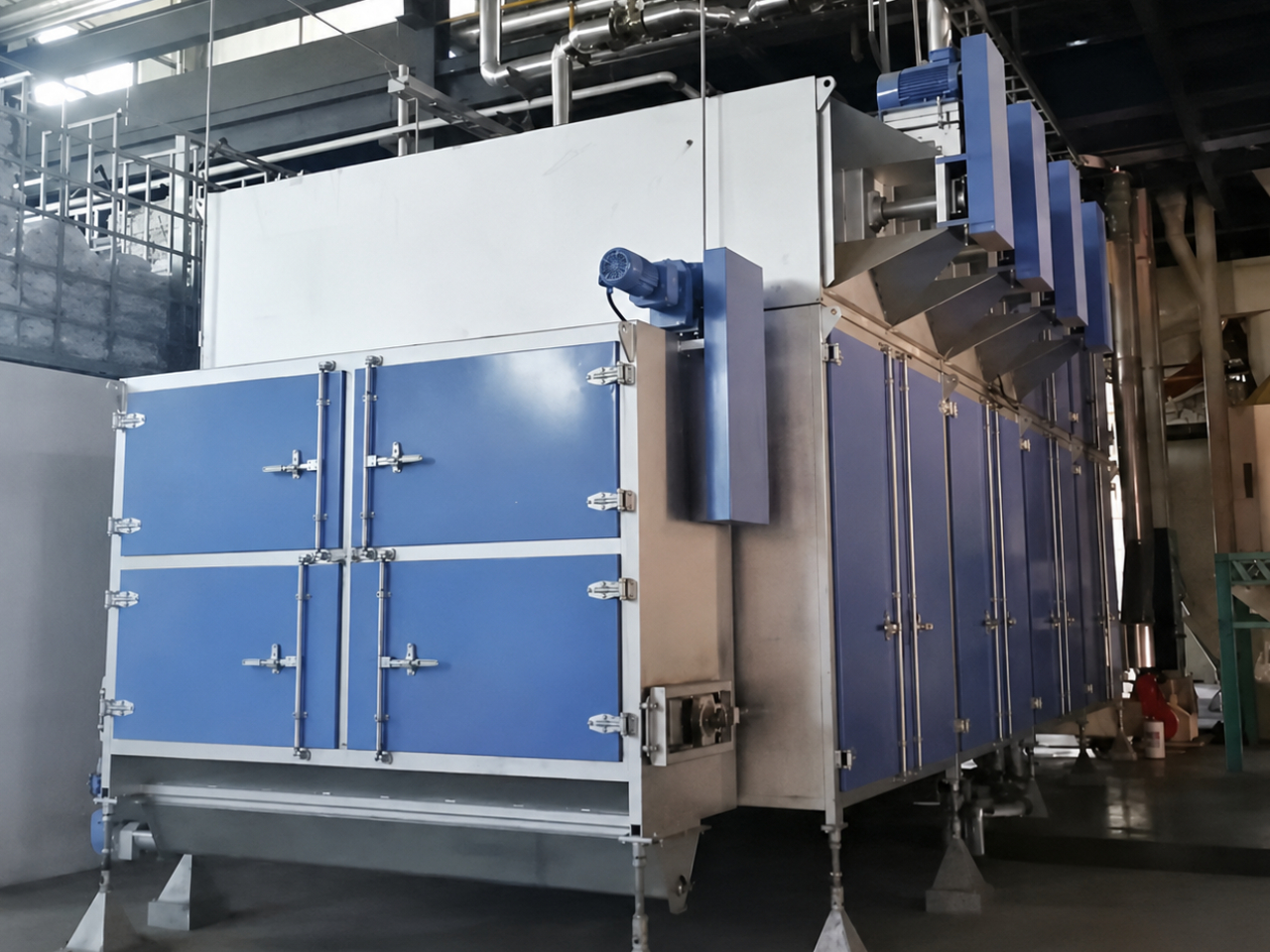
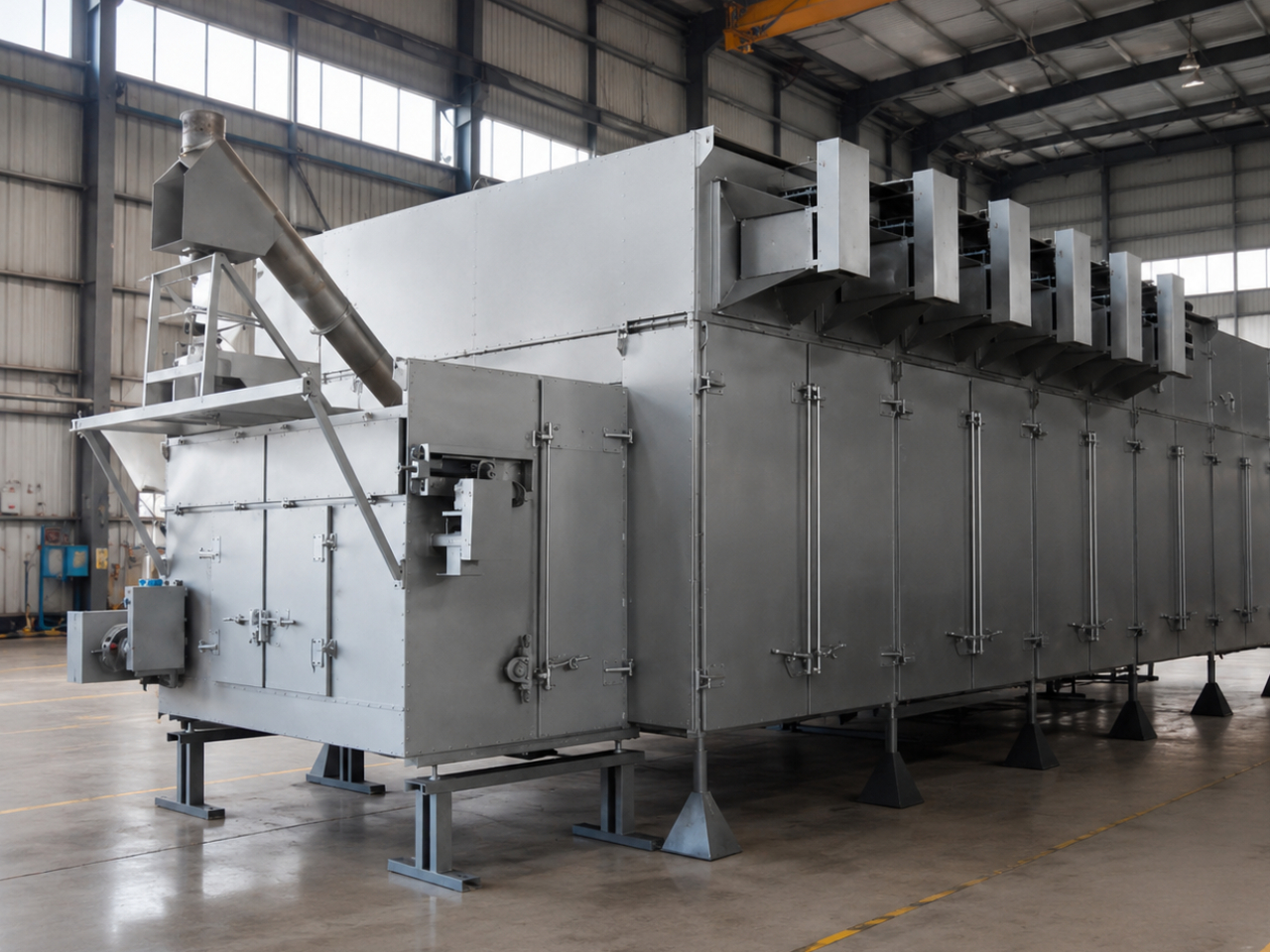
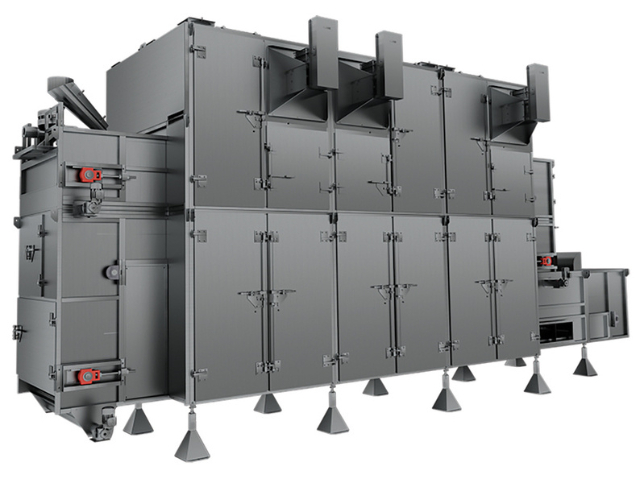
Kerone’s Cattle Feed Dryer range includes Rotary Drum Dryers for high-volume throughput of raw forage and by-products, Conveyor Belt Dryers for pelletised compound feed and calf starter rations, and Fluid Bed Dryers for uniformly granulated mineral and supplement mixes. The hay dryer and forage drying system configurations utilise high-airflow rotary or belt systems capable of handling bulky, fibrous materials that would block conventional dryer designs. Silage & forage dryer applications benefit from Kerone’s high-capacity drum dryer variant, which accepts partially dewatered silage and brings it to a stable dry matter percentage suitable for long-term storage or pelleting. For dairy pellet and calf feed applications, conveyor dryers with precise zonal temperature control ensure uniform moisture without over-cooking heat-sensitive amino acid and vitamin additives. All systems include inlet moisture measurement, outlet sampling ports, and automatic process adjustment to maintain consistent product quality.
Types and Features of Cattle Feed Dryers
High-capacity rotary drum dryer configurations capable of processing several tonnes of wet forage or cattle by-products per hour in continuous operation.
Multi-stage drying design with pre-drying, primary drying, and secondary conditioning zones to handle wide inlet moisture variations typical of dairy co-products.
Adjustable drum RPM and airflow velocity settings to optimise drying uniformity for fibrous forage, pelleted feed, and granulated mineral supplements.
Integrated hay dryer and silage drying system configurations with high-volume air handling for bulky, low-density fibrous materials.
Energy recovery systems including exhaust air heat exchangers and optional heat pump dryer modules to reduce thermal energy costs in large-scale operations.
Stainless steel or abrasion-resistant coated interior surfaces designed for long service life in high-throughput agricultural drying environments.
PLC automation with recipe management for multiple feed types, enabling rapid changeover between dairy feed, calf ration, and forage drying programmes.
Dust collection and emission control systems compliant with industrial environmental standards, preventing fine feed dust release into the processing facility.
Powered by AI, ML & IoT
Future-Ready Engineering Driven by AI & IoT
Our advanced AI, ML, and IoT technologies, this solution delivers smarter automation, real-time insights, and predictive intelligence to enhance efficiency and drive future-ready growth.
Real-Time Monitoring & Control
Continuous tracking of process parameters with instant adjustments.
Predictive Maintenance
Intelligent fault detection to prevent failures before they occur.
Adaptive Process Optimization
Dynamic tuning of operations for maximum output and efficiency.
Cloud Dashboards & Analytics
Unified access to real-time insights and performance trends.
Energy & Resource Savings
Smarter utilization of energy to cut costs and reduce waste.
Secure IoT Connectivity
Encrypted data flow with seamless integration across plant systems.
Applications of Cattle Feed Dryers
Kerone’s Cattle Feed Dryers are extensively used in compound feed manufacturing, dairy farm support facilities, and agro-industrial co-product processing plants.
Typical applications include:
Dairy cattle feed dryer applications processing wet distillers grains, beet pulp, and brewer’s yeast from dairy and food industry by-product streams.
Cattle pellet dryer operations for compound dairy rations, complete feed pellets, and mineral-enriched supplement blocks.
Hay dryer and forage drying system installations for large-scale preservation of cut grass, alfalfa, clover, and mixed pasture crops.
Calf feed dryer applications for starter and grower ration pellets requiring gentle low-temperature drying to protect enzyme and probiotic additives.
Silage & forage dryer processing of partially ensiled or mechanically dewatered silage materials for storage or pellet production.
Drying of agro-industrial by-products including oil-extracted cottonseed, soybean hulls, and dried tomato pomace used in cattle feed compounding.
The productivity of a cattle feed operation depends heavily on the consistency and reliability of its drying systems. Inadequate moisture control in cattle feed leads to mould growth, nutrient degradation, and rejection in quality-assured supply chains. Kerone Engineering Solutions provides Cattle Feed Dryers that bring industrial-grade reliability, process flexibility, and energy efficiency to feed manufacturers handling everything from raw forage to finished compound pellets.
Seamless Export Connections Global & Local
Our Global Footprint in Industrial Excellence
Delivering world-class industrial and process solutions across countries with precision, innovation, and reliability.
Peru
Chile
Argentina
Mexico
Colombia
Brazil
USA
Canada
United Kingdom
France
Germany
Spain
Italy
Netherlands
Sweden
Switzerland
Poland
Portugal
Ireland
Czechia
Romania
Hungary
Austria
Greece
Kazakhstan
Uzbekistan
Turkmenistan
Algeria
Egypt
Nigeria
Kenya
South Africa
Saudi Arabia
UAE
Israel
Russia
India
China
Japan
South Korea
Thailand
Vietnam
Malaysia
Singapore
Indonesia
Philippines
Australia
New Zealand
Pan-India Presence. Local Expertise.
Raipur
Bilaspur
Panaji
Vasco da Gama
Gandhinagar
Ahmedabad
Surat
Chandigarh
Gurgaon
Shimla
Manali
Bengaluru
Mysore
Kochi
Pune
Mumbai
Thane
Navi Mumbai
Hyderabad
Chennai
Coimbatore
Kolkata
Lucknow
Jaipur
Udaipur
Jodhpur
Dehradun
Haridwar
Bhubaneswar
Product Gallery
Frequently Asked Questions (FAQ)
Kerone's rotary drum systems can accept inlet moisture levels of up to 65–70% on a wet weight basis for certain dairy by-products such as wet distillers grains, reducing them to a stable 12–14% final moisture suitable for pelleting or bagging.
A silage drying system processes partially fermented, high-moisture forage to reduce moisture to storable levels, often using rotary drum dryers capable of handling semi-solid, sticky feed material. A hay dryer processes freshly cut dry-matter crops and typically uses belt or cross-flow air dryers suited for maintaining fibre structure.
Yes. Kerone provides integrated lines including mechanical screw press or centrifuge pre-dewatering, primary dryer, cooling conveyor, and product handling systems as a single engineered solution.
For heat-sensitive compound dairy feed, Kerone designs multi-zone conveyor dryers that keep product temperature below the threshold at which lysine, methionine, and fat-soluble vitamins begin to degrade, typically maintaining product temperature under 70°C throughout the drying cycle.
Kerone designs rotary drum dryers with internal lifting flights and anti-build-up coatings specifically for handling sticky, high-fat, or clay-like feed materials such as wet beet pulp and fermented grain residues.
Kerone offers exhaust heat recuperation, variable frequency drive (VFD) fans, and heat pump dryer integration as primary energy-saving measures. For very large operations, Kerone can design combined heat and power (CHP) integration for thermal energy supply.
Yes. Kerone's PLC-controlled systems support multiple drying recipes, allowing operators to switch between forage, compound pellets, calf rations, and mineral supplements with programmatic parameter changes.
Finished cattle feed pellets are typically dried to 10–13% moisture content, providing adequate free-flowing characteristics, preventing mould growth in storage, and maintaining pellet hardness during handling.
Kerone integrates bag filter or cyclone separator systems to capture fine feed dust and particulates, and designs exhaust air handling to meet applicable emission norms. Wet scrubbers can also be incorporated for facilities near populated areas.
Routine maintenance includes inspection and lubrication of trunnion bearings, drum seal replacement, combustion system servicing, and periodic inspection of lifting flights and interior drum surfaces. Kerone provides detailed maintenance schedules with every installation.
Yes. For calf feed dryer applications involving live probiotic cultures or thermolabile enzyme additives, Kerone recommends heat pump dryer systems operating below 45°C to preserve biological activity while achieving the required moisture content.
Drying mixed rations as a single product is technically feasible but requires careful design due to varying moisture levels and heat sensitivities of individual ingredients. Kerone evaluates mixed-ration compositions and recommends pre-drying individual components where necessary for optimal results.
Kerone's industrial dryers are fabricated with heavy-duty structural components and corrosion-resistant surfaces designed for a service life of 15–25 years with regular preventive maintenance.
Yes. Kerone's project engineering team provides plant layout drawings, utility requirement analysis, and installation supervision to facilitate smooth integration of drying systems into new or existing feed manufacturing facilities.
Selected TMR components such as dried beet pulp, distillers grains, and corn gluten feed can be individually dried and then blended into TMR. Kerone provides drying solutions for these individual components, which are then incorporated into the TMR mixing process.
Kerone’s custom-designed heating and processing solutions are built to meet the demands of your growing operations. Whether you’re upgrading equipment, expanding production, or need a tailor-made solution


 Peru
Peru Chile
Chile Argentina
 Mexico
 Colombia
 Brazil
 USA
USA Canada
 United Kingdom
 France
 Germany
 Spain
Spain Italy
Italy Netherlands
 Sweden
 Switzerland
 Poland
 Portugal
 Ireland
 Czechia
 Romania
 Hungary
 Austria
 Greece
 Kazakhstan
 Uzbekistan
 Turkmenistan
 Algeria
 Egypt
Egypt Nigeria
 Kenya
Kenya South Africa
 Saudi Arabia
 UAE
UAE Israel
 Russia
 India
India China
China Japan
Japan South Korea
 Thailand
 Vietnam
 Malaysia
 Singapore
 Indonesia
 Philippines
 Australia
 New Zealand