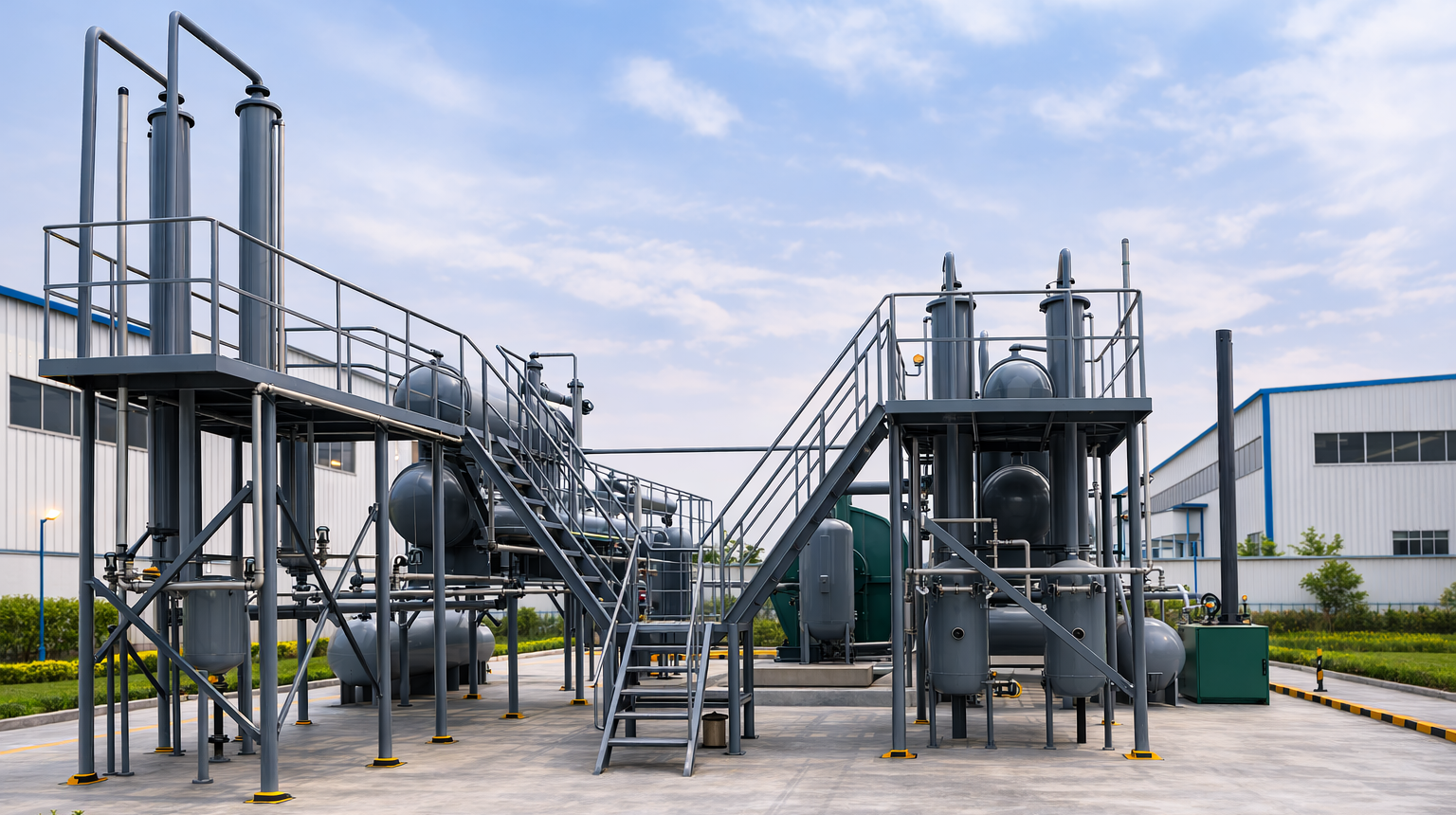
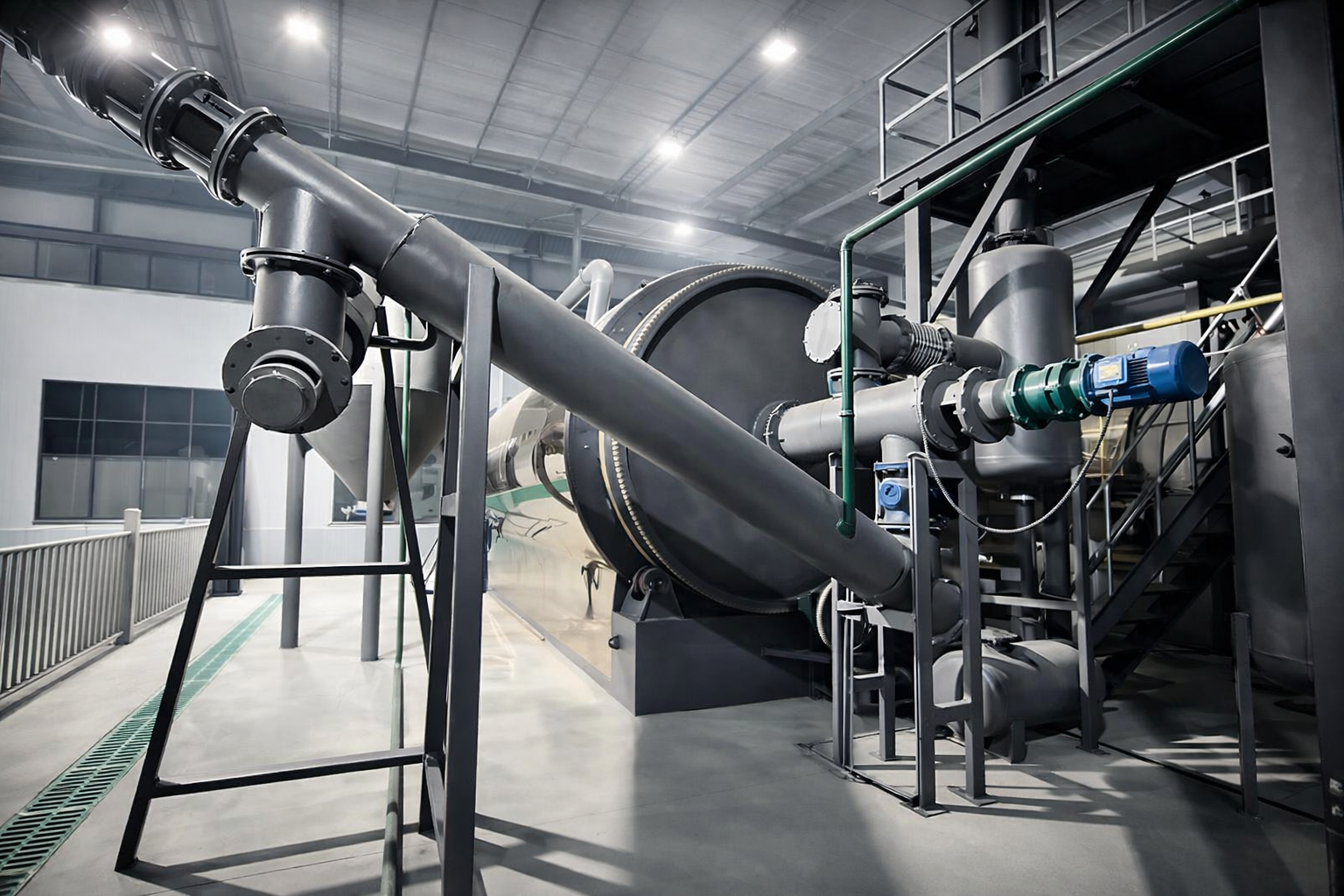
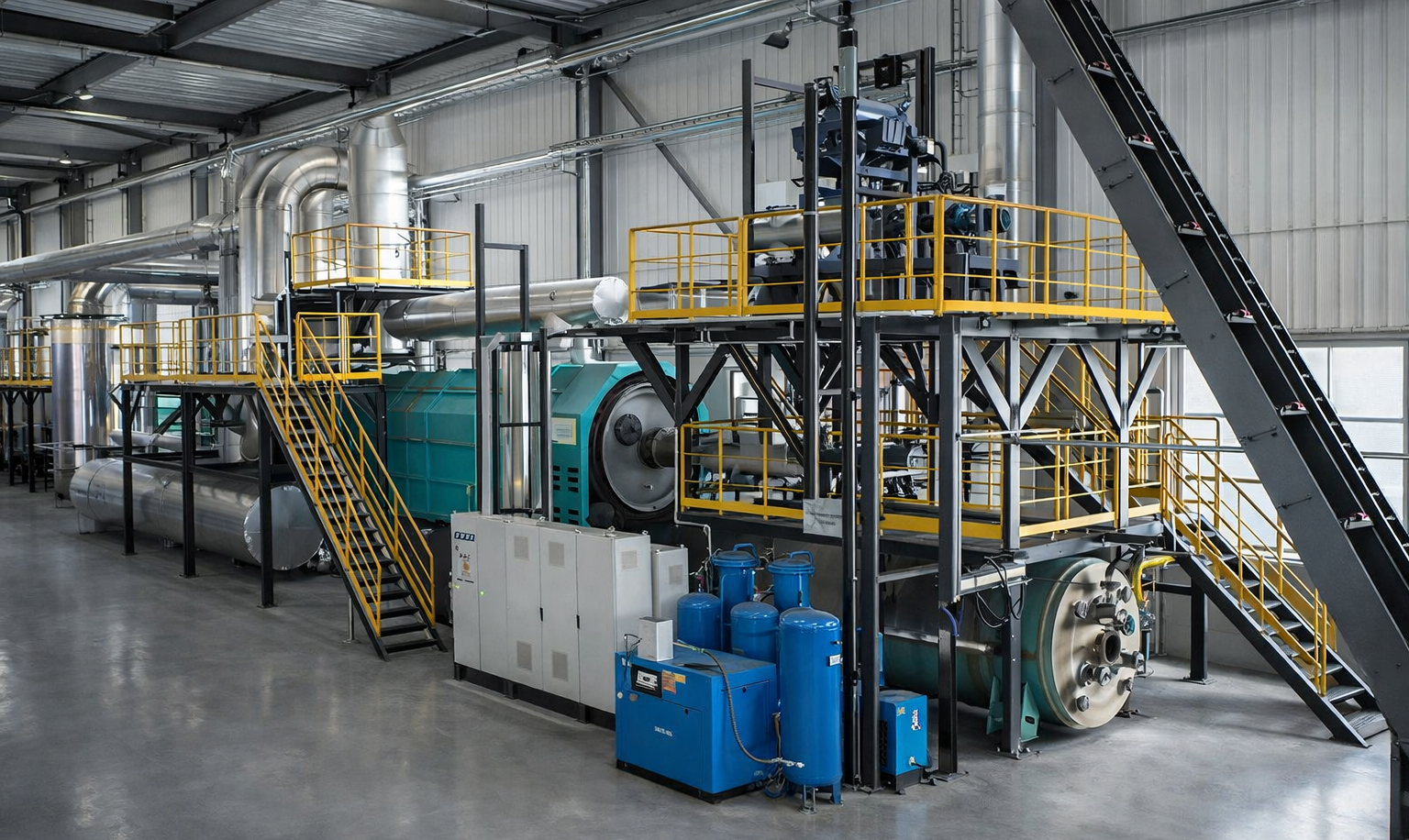
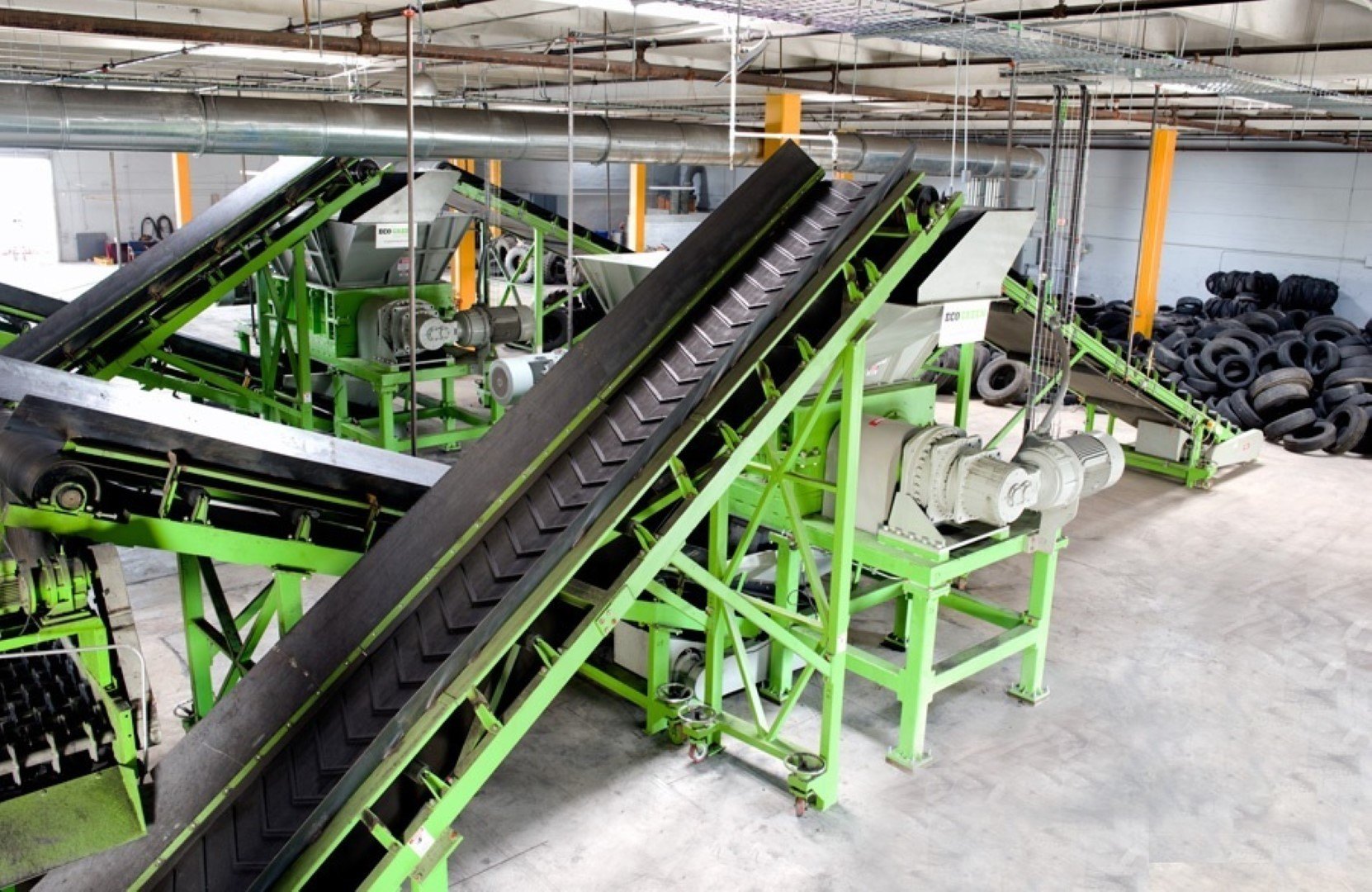
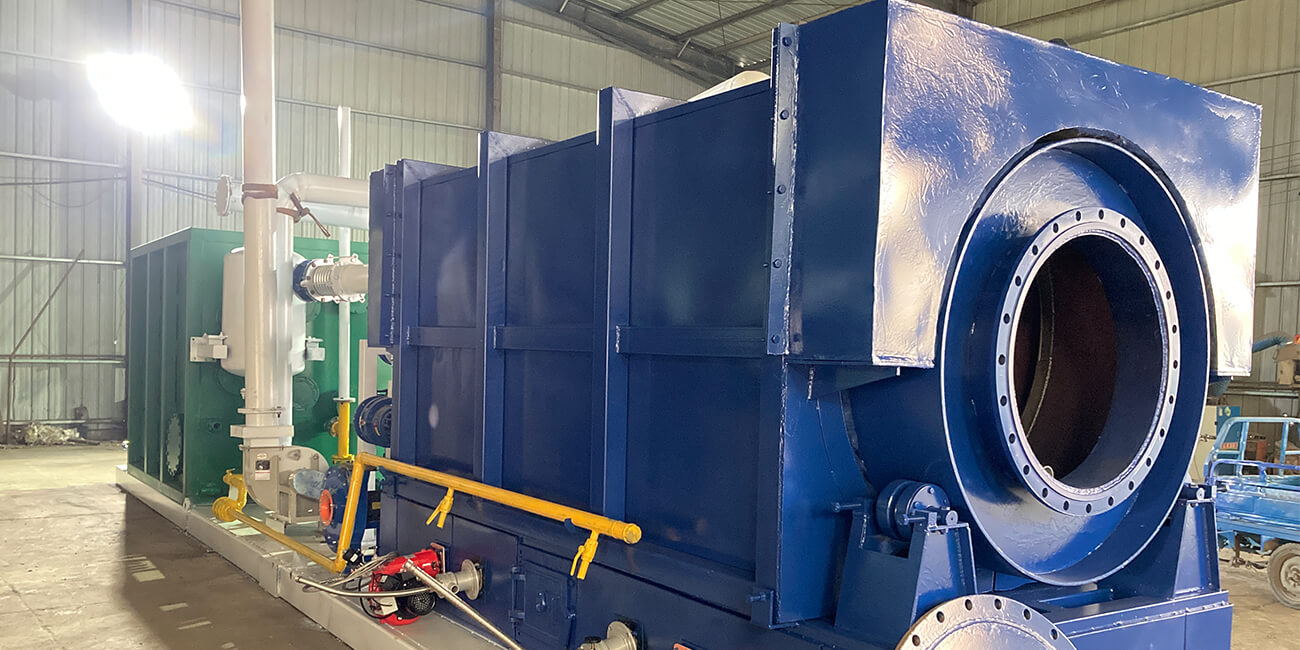
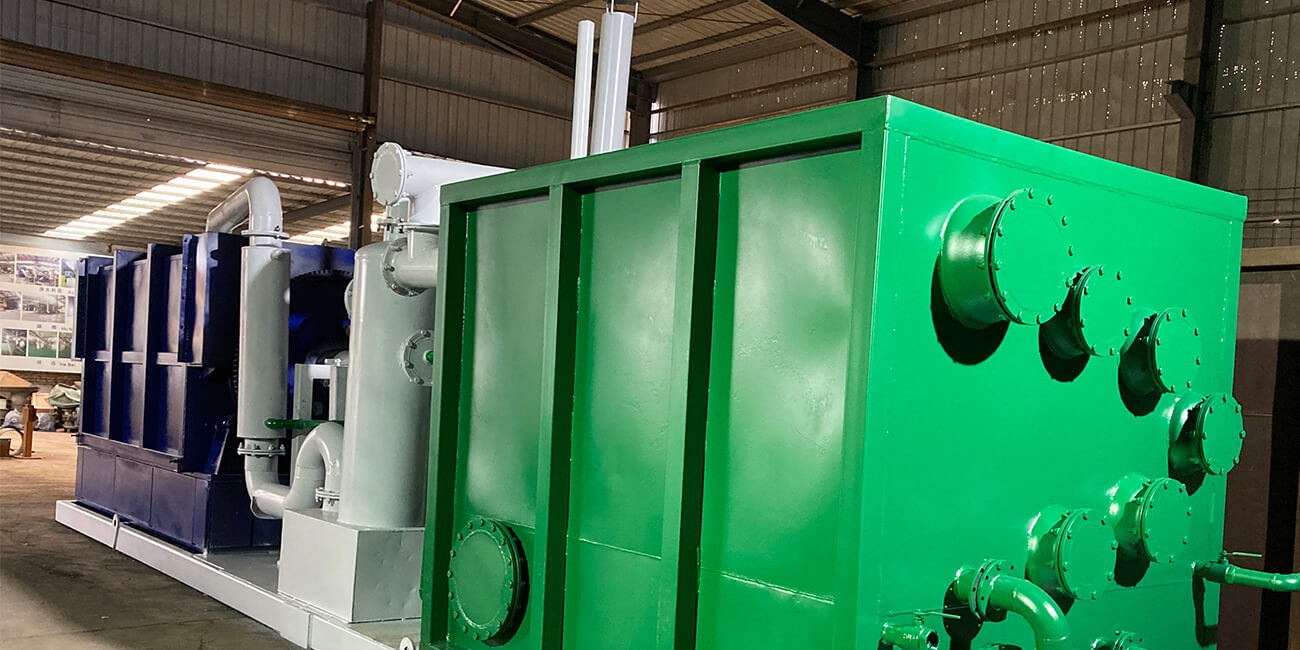
A pyrolysis plant is a high-technological thermal decomposition system, aimed at converting organic substances and waste products into useful resources with the help of a controlled heating process without the presence of oxygen. This is a new technology that is used in a high temperature usually ranging between 400C to 800C and it breaks down the complex chains of hydrocarbons into a simple molecule like bio-oil, syngas and char. Pyrolysis is a sustainable way of managing waste and recovering resources as the materials such as plastics, rubber, biomass and municipal solid waste are turned into energy rich products that may be utilized as fuels, chemical feedstocks or even amendments to the soil. Compared to the conventional techniques of incinerating the materials, which require them to burn in the presence of oxygen, the pyrolysis plants provide a cleaner and more effective alternative, which requires less harmful emissions and maximum recovery of valuable by-products. The technology has had a lot of international interest because industries and municipalities are looking into environmentally friendly ways of solving the ever-increasing waste problems and at the same time generate economic value through use of materials that would have otherwise gone to waste dumping. However, the pyrolysis plants in the modern world have advanced control systems, thermal recovery, and emission control measures in place to guarantee optimal functioning, safety, and environmental regulation policies.

Refined heat recovery mechanisms to capture and reuse thermal energy produced during the pyrolysis process thereby hugely saving fuel consumption and cut down the overall operational expenses and enhancing the effectiveness of the entire plant.
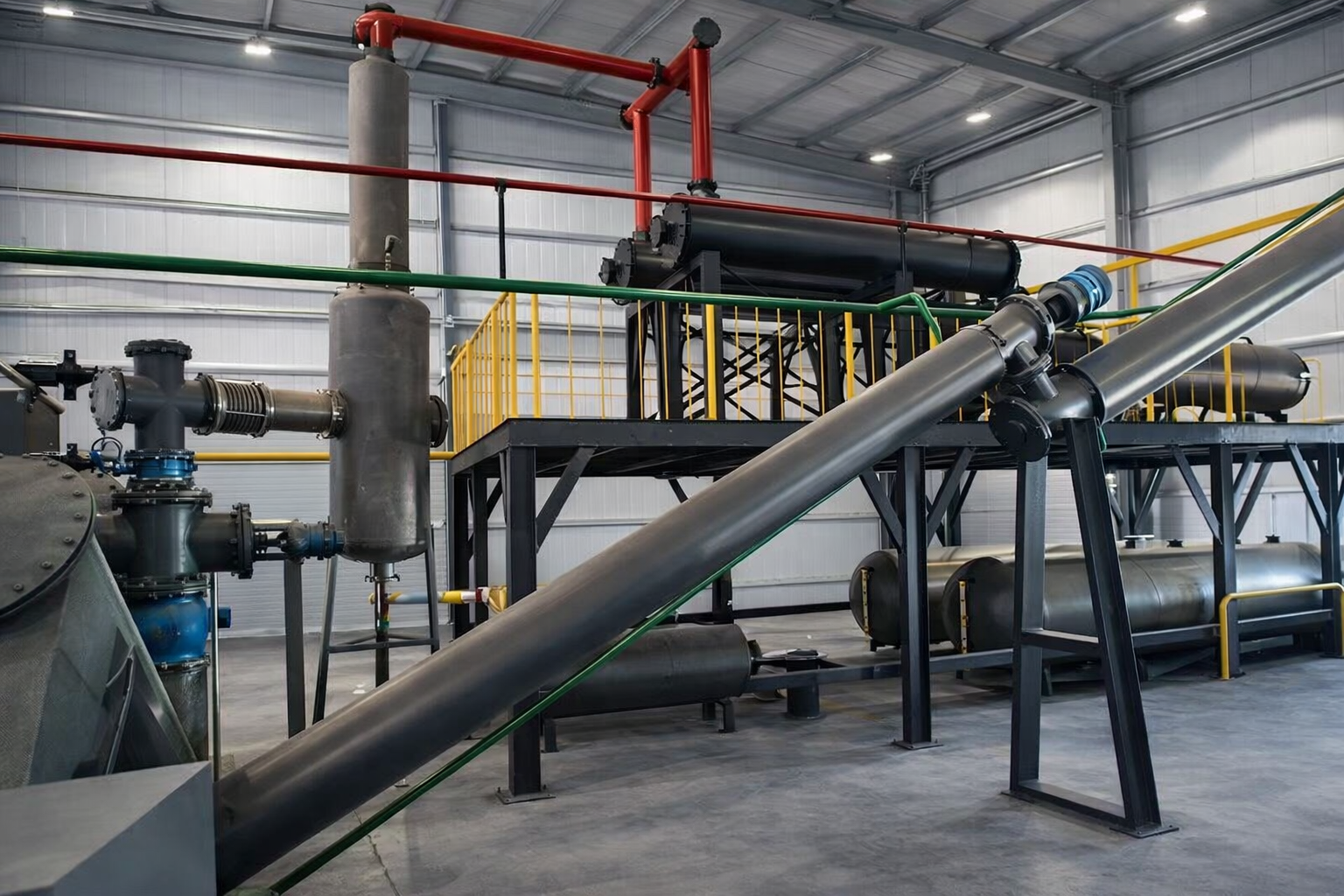
The reactor is optimized and temperature controlled, which guarantees high conversion efficiency and gives high yields of valuable products such as bio-oil, syngas, and carbon black.
The latest automation system using PLC with easy-to-use HMI interfaces that control and monitor all key parameters and hence operate with consistency and minimal human intervention.
Constructed of high-grade stainless steel with special alloys which can resist extreme temperatures, corrosive environment thus long service life and low maintenance needs.
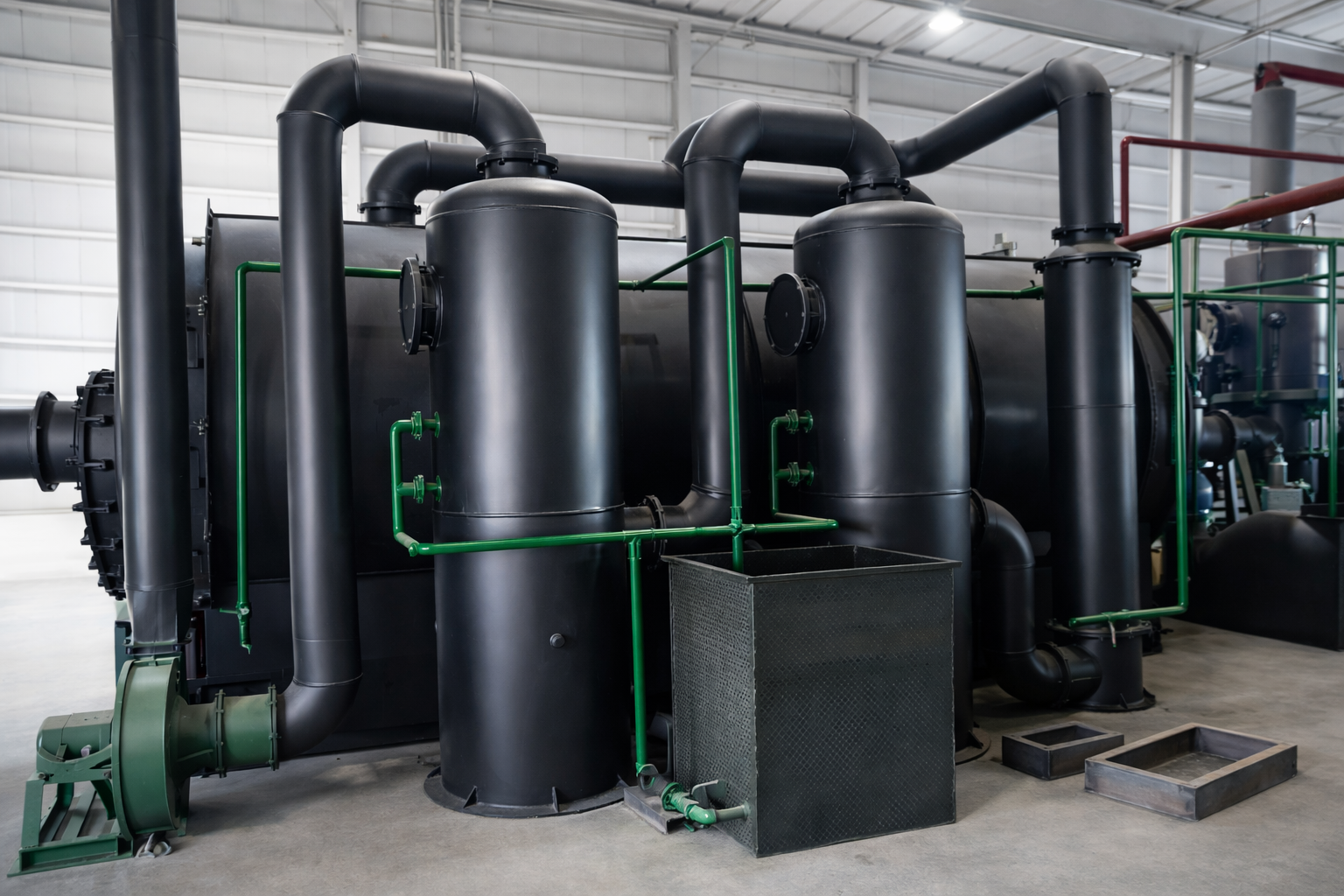
Built-in emission control, which is a combination of scrubbers, filters, condensers, etc. that all gaseous emissions comply with the strict environmental guidelines and regulations.
Scalable architecture with the capability of adding capacity and modifying processes with the minimal downtime and significant structural adjustments to the current installation.
A variety of redundant safety measures such as over-temperature, pressure, emergency cooling system, and automatic shutdown that make sure that it functions safely under any circumstances.
Our advanced AI, ML, and IoT technologies, this solution delivers smarter automation, real-time insights, and predictive intelligence to enhance efficiency and drive future-ready growth.
Continuous tracking of process parameters with instant adjustments.
Intelligent fault detection to prevent failures before they occur.
Dynamic tuning of operations for maximum output and efficiency.
Unified access to real-time insights and performance trends.
Smarter utilization of energy to cut costs and reduce waste.
Encrypted data flow with seamless integration across plant systems.
 Peru
Peru Chile
Chile Argentina
 Mexico
 Colombia
 Brazil
 USA
USA Canada
 United Kingdom
 France
 Germany
 Spain
Spain Italy
Italy Netherlands
 Sweden
 Switzerland
 Poland
 Portugal
 Ireland
 Czechia
 Romania
 Hungary
 Austria
 Greece
 Kazakhstan
 Uzbekistan
 Turkmenistan
 Algeria
 Egypt
Egypt Nigeria
 Kenya
Kenya South Africa
 Saudi Arabia
 UAE
UAE Israel
 Russia
 India
India China
China Japan
Japan South Korea
 Thailand
 Vietnam
 Malaysia
 Singapore
 Indonesia
 Philippines
 Australia
 New Zealand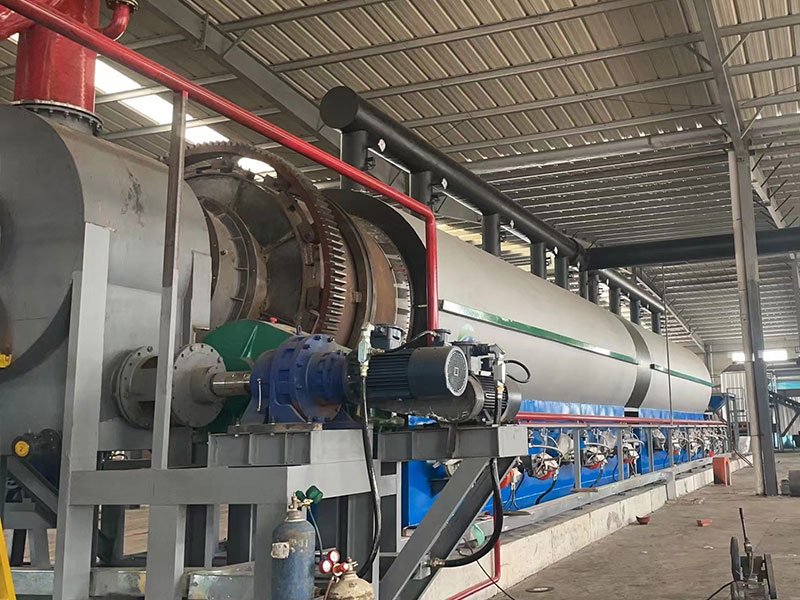


✓ Thank you! We will get back to you shortly.
Biochar Processing / Production Plant
Kerone’s custom-designed heating and processing solutions are built to meet the demands of your growing operations. Whether you’re upgrading equipment, expanding production, or need a tailor-made solution

Thank you for reaching out. Our team will contact you within 24 hours.