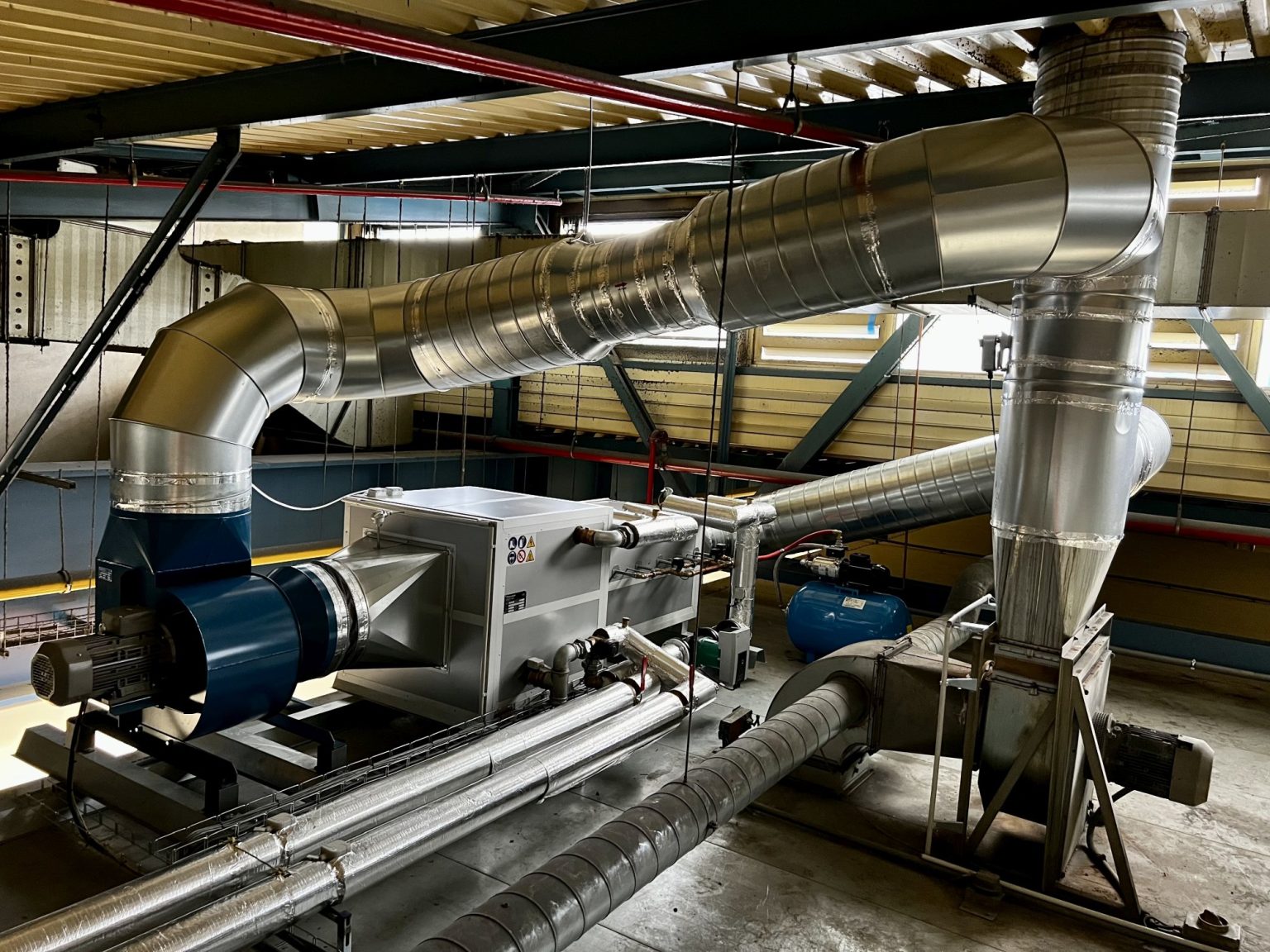
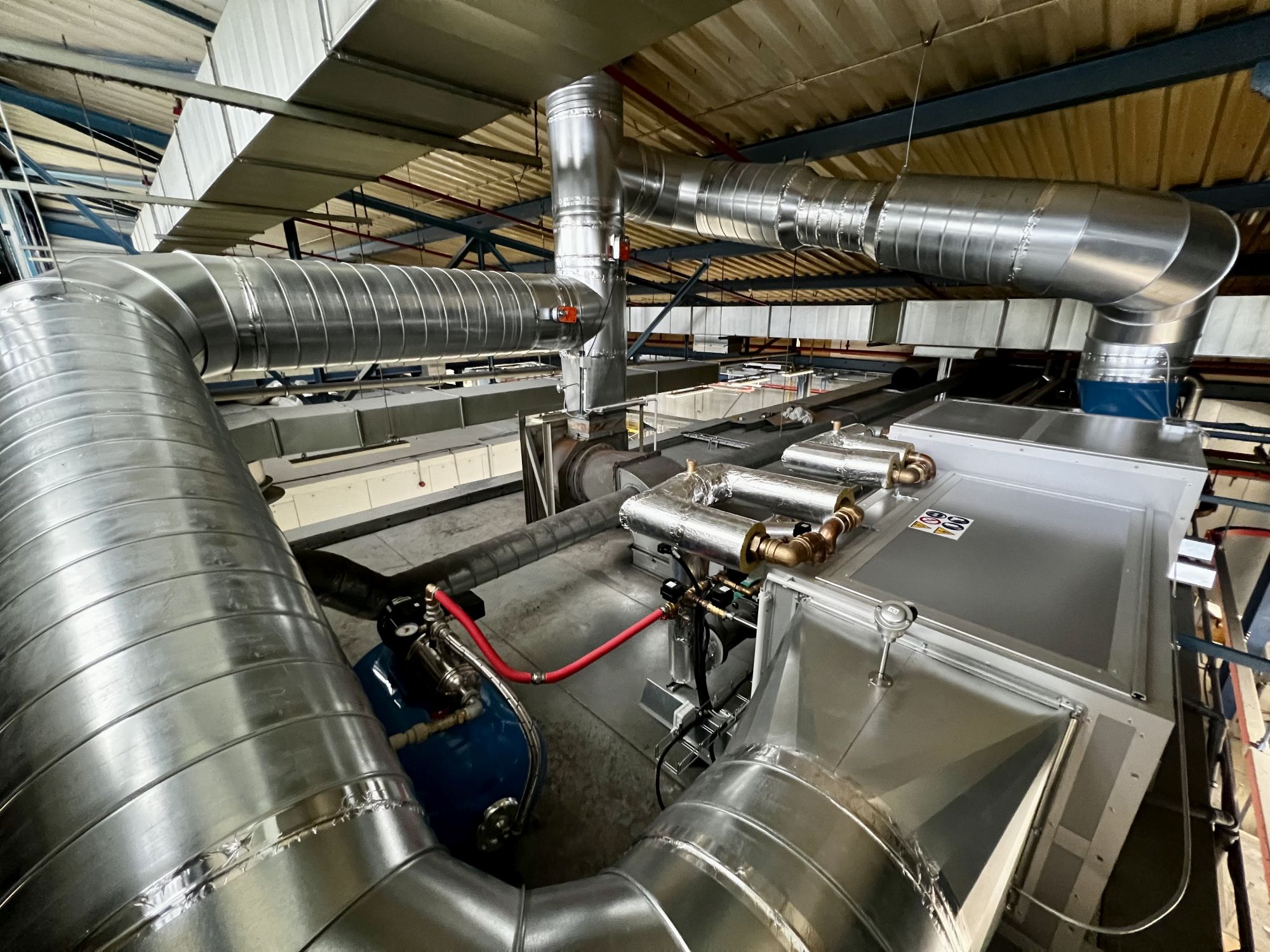
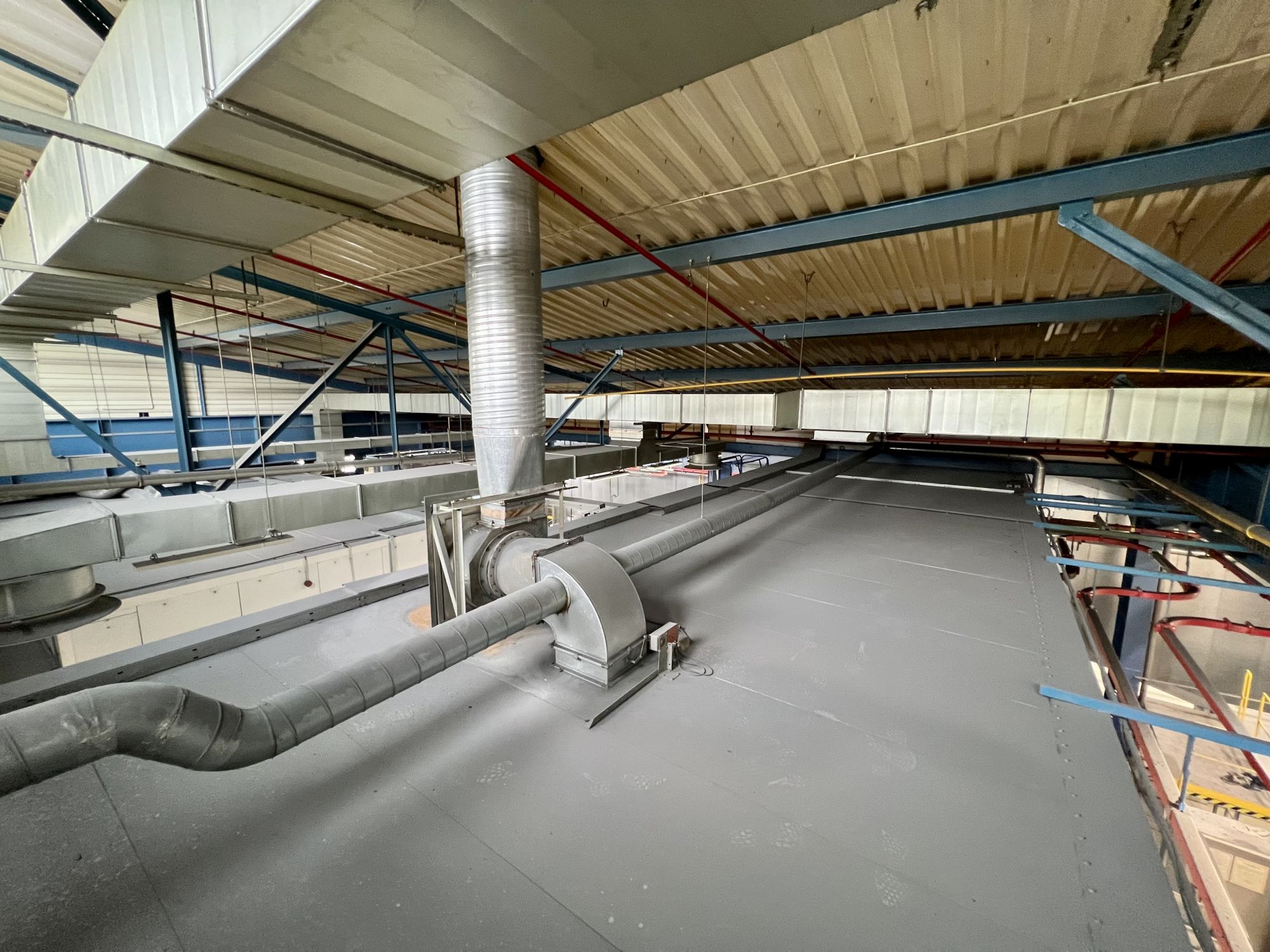
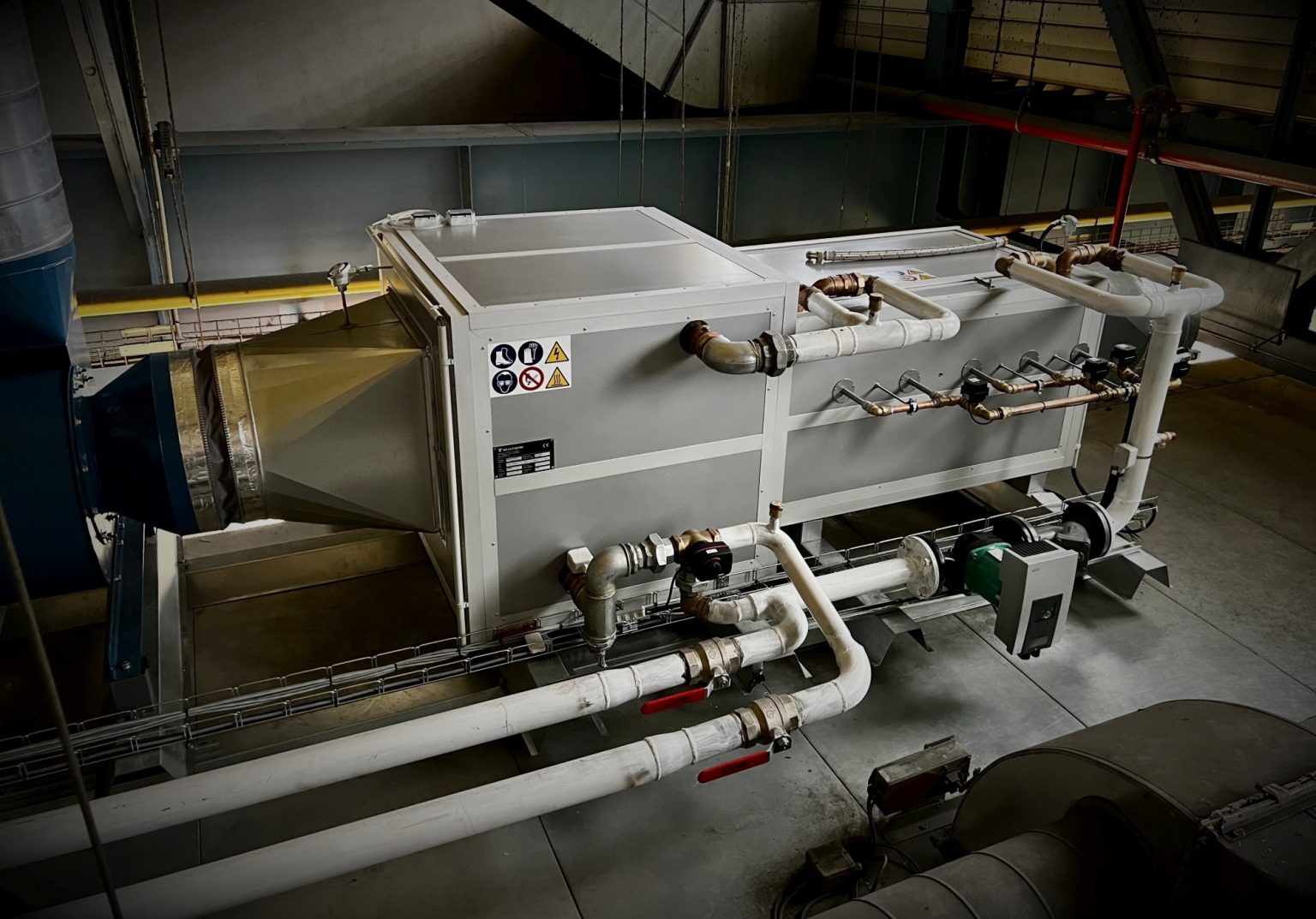
Waste Heat Recovery and Valorization Systems (WHRV) are engineered installations that capture thermal energy from industrial exhaust streams – flue gases, cooling water, steam condensate, and hot solids that would otherwise be discharged to the environment without economic return. Industrial processes routinely reject 20–50% of their input energy as waste heat through exhaust gases, surface radiation, and cooling systems. Kerone’s WHRV systems convert this energy into usable form preheated combustion air, process steam, hot water, chilled water through absorption cooling, or electricity through organic Rankine cycle generators creating measurable fuel savings, reduced carbon emissions, and improved process energy efficiency.
Why Choose Kerone Waste Heat Recovery and Valorization Systems
The engineering challenge in waste heat recovery is matching the quality (temperature), quantity (flow), and timing of the waste heat stream to the requirements of the intended heat sink or conversion system. A poorly matched WHRV system recovers less energy than designed, corrodes prematurely due to acid condensation, or creates process bottlenecks. Kerone’s WHRV engineering begins with a detailed characterisation of the waste heat stream – temperature, flow rate, composition, and availability schedule, before designing the recovery system. This characterisation-first approach ensures that heat exchangers, economisers, steam generators, and downstream utilisation systems are dimensioned and specified for the actual waste heat available, not theoretical values.
Types and Features of Waste Heat Recovery and Valorization Systems
Kerone offers several WHRV system types matched to different waste heat temperatures and utilisation objectives. For high-temperature flue gases (above 400°C), waste heat boilers or steam generators produce process steam or drive steam turbines for power generation. For medium-temperature streams (150–400°C), air preheaters, economisers, and organic Rankine cycle (ORC) generators are the preferred recovery equipment. For low-temperature streams below 150°C, absorption chilling systems, hot water generation, or direct process fluid heating represent the most practical valorization routes. Kerone also offers heat pipe-based recovery systems for highly fouling or corrosive exhaust gas applications where conventional heat exchangers would suffer rapid degradation.
High-temperature waste heat boiler and steam generator design for process steam production or turbine power generation
Air preheater and combustion air heating systems delivering 5–20% fuel savings in burner-based thermal processes
Economiser design for boiler flue gas heat recovery improving overall boiler efficiency
Organic Rankine Cycle (ORC) integration converting medium-temperature waste heat into electrical power
Absorption chilling system coupling for waste heat-driven cooling in process and building applications
Heat pipe technology for waste heat recovery from heavily fouling or corrosive gas streams
System monitoring and energy accounting module tracking recovered energy volume for ESG and utility reporting
Powered by AI, ML & IoT
Future-Ready Engineering Driven by AI & IoT
Our advanced AI, ML, and IoT technologies, this solution delivers smarter automation, real-time insights, and predictive intelligence to enhance efficiency and drive future-ready growth.
Real-Time Monitoring & Control
Continuous tracking of process parameters with instant adjustments.
Predictive Maintenance
Intelligent fault detection to prevent failures before they occur.
Adaptive Process Optimization
Dynamic tuning of operations for maximum output and efficiency.
Cloud Dashboards & Analytics
Unified access to real-time insights and performance trends.
Energy & Resource Savings
Smarter utilization of energy to cut costs and reduce waste.
Secure IoT Connectivity
Encrypted data flow with seamless integration across plant systems.
Applications of Waste Heat Recovery and Valorization Systems
Kerone’s Waste Heat Recovery and Valorization Systems are installed across energy-intensive manufacturing sectors where exhaust heat represents a significant and recoverable energy resource.
Typical applications include:
Cement and lime kilns recovering high-temperature exhaust gas heat for feedstock pre-heating and power generation via waste heat boilers
Steel and non-ferrous metal furnaces capturing flue gas enthalpy through recuperative air preheaters to reduce fuel consumption
Food and pharmaceutical dryers recovering exhaust air heat through heat wheels, run-around coils, or economisers to reduce steam demand
Glass melting furnaces integrating regenerative or recuperative heat recovery to maintain high combustion air temperatures
Chemical and petrochemical reactors recovering cooling water and vapour condensation heat for preheating, process steam, or absorption cooling
Power plants and cogeneration systems integrating ORC generators on medium-temperature waste heat streams from turbine cooling or process off-gases
In most industrial facilities, waste heat is the largest single untapped energy resource — already generated by the process, already paid for in fuel costs, and continuously discharged to the environment. Kerone’s Waste Heat Recovery and Valorization Systems give industrial operators a structured, engineered pathway to capture and use that resource productively. Whether the recovered energy serves as combustion air pre-heat, process steam, absorption cooling, or electrical power, every unit of recovered energy directly reduces the facility’s fuel consumption, operating cost, and carbon emissions. With precise stream characterisation, application-matched system design, and field-proven equipment across a range of recovery temperatures and utilisation pathways, Kerone makes waste heat an asset rather than a loss.
Seamless Export Connections Global & Local
Our Global Footprint in Industrial Excellence
Delivering world-class industrial and process solutions across countries with precision, innovation, and reliability.
Peru
Chile
Argentina
Mexico
Colombia
Brazil
USA
Canada
United Kingdom
France
Germany
Spain
Italy
Netherlands
Sweden
Switzerland
Poland
Portugal
Ireland
Czechia
Romania
Hungary
Austria
Greece
Kazakhstan
Uzbekistan
Turkmenistan
Algeria
Egypt
Nigeria
Kenya
South Africa
Saudi Arabia
UAE
Israel
Russia
India
China
Japan
South Korea
Thailand
Vietnam
Malaysia
Singapore
Indonesia
Philippines
Australia
New Zealand
Pan-India Presence. Local Expertise.
Raipur
Bilaspur
Panaji
Vasco da Gama
Gandhinagar
Ahmedabad
Surat
Chandigarh
Gurgaon
Shimla
Manali
Bengaluru
Mysore
Kochi
Pune
Mumbai
Thane
Navi Mumbai
Hyderabad
Chennai
Coimbatore
Kolkata
Lucknow
Jaipur
Udaipur
Jodhpur
Dehradun
Haridwar
Bhubaneswar
Product Gallery
Frequently Asked Questions (FAQ)
Recoverable energy from industrial exhaust streams typically ranges from 15 to 40% of the primary fuel input, depending on the exhaust gas temperature, flow rate, and the end use to which the recovered heat can be applied. Higher-temperature exhaust streams offer greater recovery potential but require more sophisticated equipment.
An economiser is a heat exchanger installed in the flue gas duct downstream of a boiler or furnace that uses the residual heat in the exhaust gas to pre-heat boiler feedwater. By raising feedwater temperature before it enters the boiler, the economiser reduces the amount of fuel needed to generate steam, typically improving boiler efficiency by 3–8%.
An ORC generator converts medium-temperature waste heat (80–350°C) into electrical power using an organic working fluid with a lower boiling point than water. It is suitable when the recovered heat cannot be used directly for process heating and when electrical output provides better economic return than thermal utilisation.
Practical waste heat recovery is feasible from streams above 80°C using low-temperature ORC systems or heat pump-assisted recovery. For direct heat exchange applications such as process fluid pre-heating, inlet temperatures above 120°C are typically required for economically viable heat exchange.
Combustion gases from fuels containing sulphur or chlorine form acidic vapours that condense on heat exchanger surfaces below the dew point temperature, typically 120–150°C depending on sulphur content. This causes rapid corrosion. Kerone designs WHRV systems with corrosion-resistant materials and temperature management to prevent acid condensation, or uses heat pipe technology that avoids the issue through its operating principle.
A waste heat boiler generates steam from hot exhaust gases rather than from burning additional fuel. The gas stream passes through the boiler tube bundle, transferring heat to water on the shell side to produce steam. It operates as a heat recovery device rather than a combustion appliance, with no burner of its own.
Yes. Absorption chillers use heat rather than electricity to drive a refrigeration cycle, using a refrigerant-absorbent pair such as lithium bromide-water or ammonia-water. Single-effect absorption chillers require heat at 80–100°C; double-effect units require 130–160°C. Waste heat at these temperatures can drive cooling for process or building air conditioning, replacing electrically driven compressor chillers.
A heat wheel is a rotating porous wheel that alternately absorbs heat from the exhaust air stream and transfers it to the incoming fresh air stream in ventilation or drying applications. It is well-suited to drying and HVAC applications where both the exhaust and supply air streams have similar flow rates and no cross-contamination risk exists.
Kerone's Waste Heat Recovery and Valorization Systems (WHRV) characterisation includes temperature measurement across the exhaust stream at representative operating conditions, flow rate determination by pitot traverse or mass balance, gas composition sampling for corrosive species, and review of process scheduling data to determine heat availability over time. This information directly determines the heat exchanger design and utilisation system selection.
Payback periods for WHRV systems vary from 18 months to 5 years depending on the volume of energy recovered, the energy cost avoided, and the capital investment required. High-temperature recovery systems in energy-intensive processes such as cement or glass typically achieve the shortest payback periods due to large energy volumes and high fuel costs avoided.
In many countries, waste heat recovery qualifies for industrial energy efficiency incentives, renewable energy certificate generation, or energy savings certificates under mandatory efficiency schemes. Recovered energy can also contribute to Scope 1 and Scope 2 emission reduction documentation for carbon reporting. Kerone advises on applicable incentive frameworks during system development.
Maintenance requirements depend on the system type. Air preheaters and economisers require periodic tube cleaning for particulate or condensate deposits. ORC generators require working fluid condition monitoring and expander seal inspection. Heat wheels require bearing and seal maintenance. Kerone provides detailed maintenance schedules and service support for all Waste Heat Recovery and Valorization Systems (WHRV) system types.
Many WHRV system installations can be designed for integration during planned maintenance shutdowns, minimising production interruption. Modular heat exchanger sections and bypass duct arrangements allow the recovery system to be connected to the existing exhaust duct without major civil or structural work in most industrial plant configurations.
Recuperative heat recovery uses a static heat exchanger where hot and cold streams flow simultaneously on either side of a separating surface. Regenerative recovery uses a thermal mass that alternately absorbs heat from the hot stream and releases it to the cold stream in a cyclical process. Regenerative systems achieve higher heat recovery effectiveness but are mechanically more complex.
Kerone's Waste Heat Recovery and Valorisation Systems (WHRV) systems include energy metering on both the recovered heat stream and the primary fuel supply, with data logging and reporting through the system monitoring module. Monthly and annual recovered energy reports are generated automatically in formats suitable for internal energy management reporting and external ESG disclosure.
Kerone’s custom-designed heating and processing solutions are built to meet the demands of your growing operations. Whether you’re upgrading equipment, expanding production, or need a tailor-made solution


 Peru
Peru Chile
Chile Argentina
 Mexico
 Colombia
 Brazil
 USA
USA Canada
 United Kingdom
 France
 Germany
 Spain
Spain Italy
Italy Netherlands
 Sweden
 Switzerland
 Poland
 Portugal
 Ireland
 Czechia
 Romania
 Hungary
 Austria
 Greece
 Kazakhstan
 Uzbekistan
 Turkmenistan
 Algeria
 Egypt
Egypt Nigeria
 Kenya
Kenya South Africa
 Saudi Arabia
 UAE
UAE Israel
 Russia
 India
India China
China Japan
Japan South Korea
 Thailand
 Vietnam
 Malaysia
 Singapore
 Indonesia
 Philippines
 Australia
 New Zealand