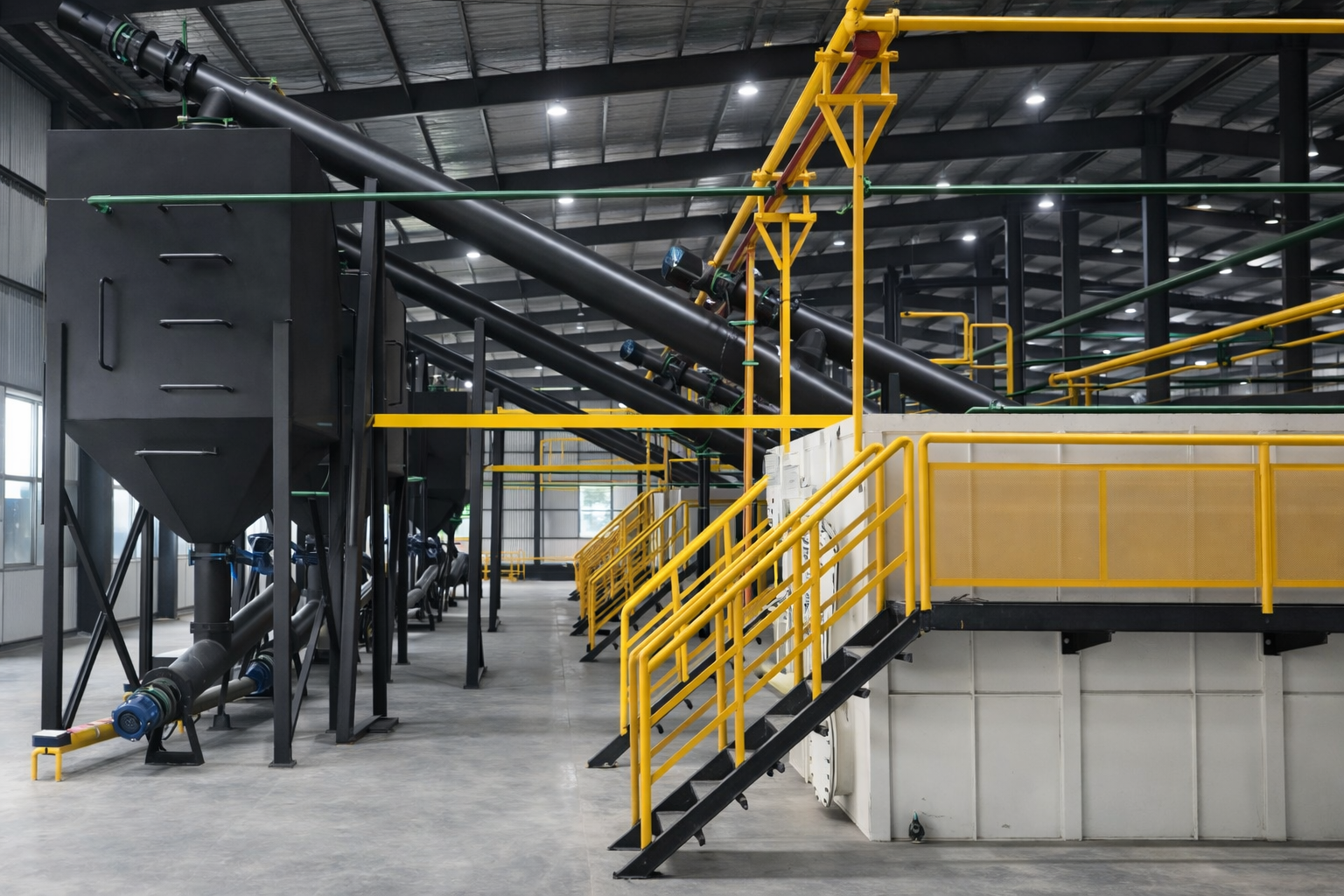
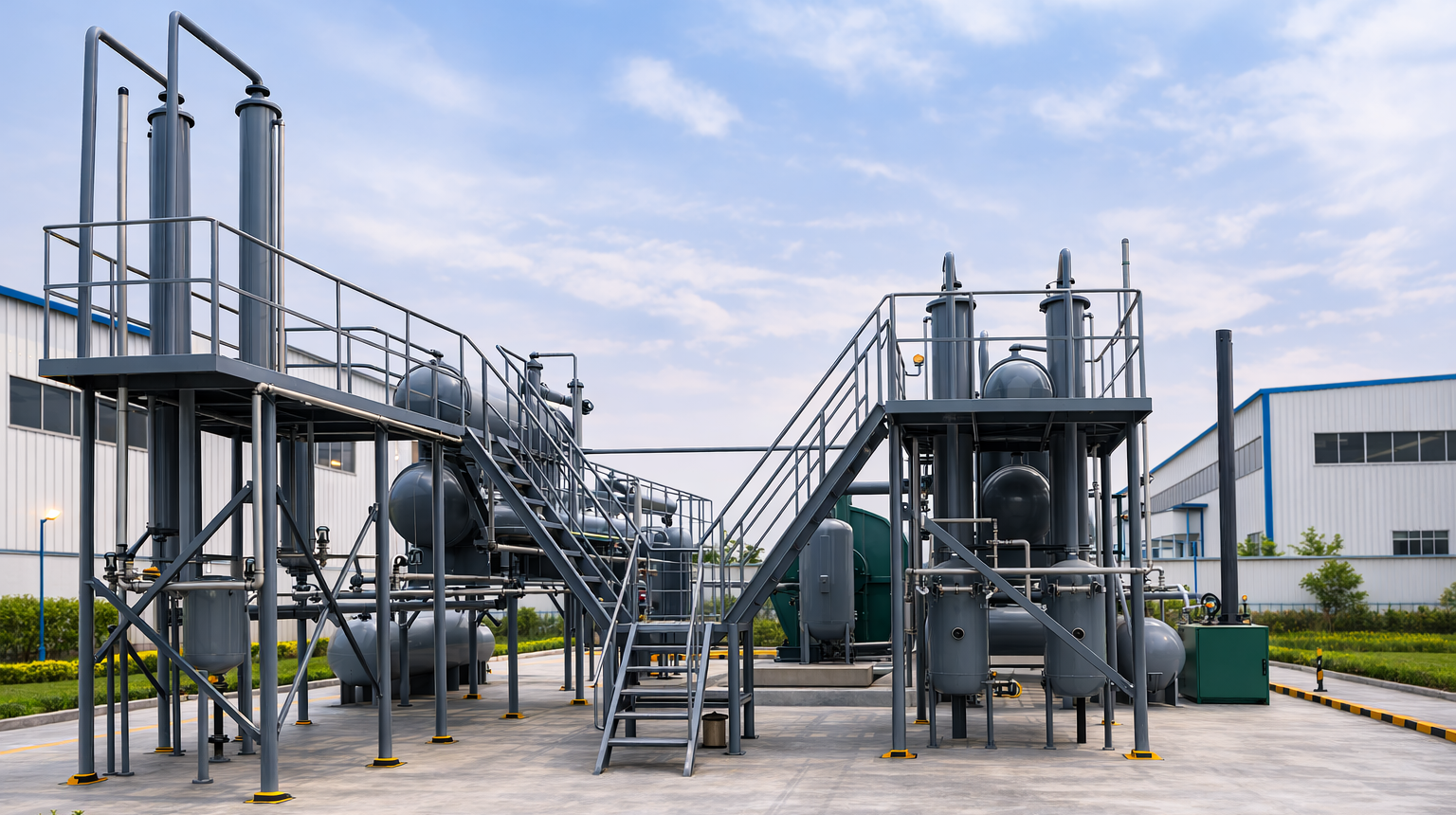
Municipal Solid Waste Processing Systems (MSW) are integrated industrial setups designed to receive, segregate, treat, and convert heterogeneous urban waste into recoverable materials or energy. Unlike single-stream recycling equipment, MSW processing systems must handle the full complexity of household and commercial waste, food organics, dry recyclables, inert materials, hazardous fractions, and combustibles often in a single continuous flow. Kerone’s MSW Processing Systems are engineered to manage this complexity through a combination of mechanical separation, thermal treatment, and resource recovery technologies that convert urban waste streams into fuel, compost, recyclables, and inert fill material.
Why Choose Kerone Municipal Solid Waste Processing Systems
Managing municipal solid waste requires more than equipment — it requires a process understanding that spans waste characterisation, regulatory compliance, and end-product utilisation. Kerone’s MSW systems are built on this foundation. The company works with municipalities and private waste contractors to develop site-specific processing configurations that align with local waste composition data and disposal infrastructure. Kerone’s thermal processing modules are designed to integrate with upstream sorting lines and downstream energy recovery units, creating a cohesive system rather than a collection of standalone machines. With KRDC-backed process validation and on-site commissioning support, Kerone ensures that MSW plants operate to design capacity from startup.
Types and Features of Municipal Solid Waste Processing Systems
Kerone’s MSW Processing Systems are available in modular configurations ranging from small-scale transfer station setups to large centralised processing facilities capable of handling hundreds of tonnes per day. The system typically includes a primary receiving and shredding module, a screening and density separation stage, a manual or automated sorting station, a compostable fraction processing unit, and a refuse-derived fuel (RDF) preparation module. For municipalities with energy recovery mandates, Kerone integrates combustion or pyrolysis-based thermal treatment modules that convert non-recyclable residues into heat or electricity. Each system is designed for minimum operator intervention with automated conveyors, PLC-controlled gates, and real-time throughput monitoring.
Key Features
Modular design adaptable to processing capacities from 20 TPD to 500+ TPD
Integrated shredding, screening, and density separation for heterogeneous waste streams
Organic fraction separation and composting integration for wet waste diversion
PLC-based process automation with SCADA monitoring for remote plant management
Thermal treatment module integration for non-recyclable residue energy recovery
Dust suppression and odour control systems for environmentally compliant operation
Scalable infrastructure that can be expanded in phases as waste volumes grow
Powered by AI, ML & IoT
Future-Ready Engineering Driven by AI & IoT
Our advanced AI, ML, and IoT technologies, this solution delivers smarter automation, real-time insights, and predictive intelligence to enhance efficiency and drive future-ready growth.
Real-Time Monitoring & Control
Continuous tracking of process parameters with instant adjustments.
Predictive Maintenance
Intelligent fault detection to prevent failures before they occur.
Adaptive Process Optimization
Dynamic tuning of operations for maximum output and efficiency.
Cloud Dashboards & Analytics
Unified access to real-time insights and performance trends.
Energy & Resource Savings
Smarter utilization of energy to cut costs and reduce waste.
Secure IoT Connectivity
Encrypted data flow with seamless integration across plant systems.
Applications of Municipal Solid Waste Processing Systems
Kerone’s Municipal Solid Waste Processing Systems are actively used by municipalities, private waste contractors, and industrial zone authorities.
Typical applications include:
Urban municipalities seeking to divert waste from landfill through material recovery and energy conversion
Private waste processing contractors operating tipping floor or transfer station facilities
Special economic zones and industrial parks requiring on-site mixed waste treatment
Cement plants sourcing alternative fuels from refuse-derived fuel produced by MSW processing
Power utilities operating waste-to-energy plants requiring pre-processed and standardised fuel input
Composting and bio-gas projects receiving segregated organic fractions from MSW sorting lines
Urban waste volumes are growing faster than landfill capacity in most developing and middle-income countries, creating an urgent need for structured MSW processing infrastructure. Kerone’s Municipal Solid Waste Processing Systems give municipalities and waste contractors a technically sound, operationally practical pathway to manage this challenge. By combining material recovery, organic processing, and thermal treatment in integrated configurations, Kerone helps clients reduce landfill dependency, recover revenue from recyclables and fuel, and meet evolving environmental compliance requirements.
Seamless Export Connections Global & Local
Our Global Footprint in Industrial Excellence
Delivering world-class industrial and process solutions across countries with precision, innovation, and reliability.
Peru
Chile
Argentina
Mexico
Colombia
Brazil
USA
Canada
United Kingdom
France
Germany
Spain
Italy
Netherlands
Sweden
Switzerland
Poland
Portugal
Ireland
Czechia
Romania
Hungary
Austria
Greece
Kazakhstan
Uzbekistan
Turkmenistan
Algeria
Egypt
Nigeria
Kenya
South Africa
Saudi Arabia
UAE
Israel
Russia
India
China
Japan
South Korea
Thailand
Vietnam
Malaysia
Singapore
Indonesia
Philippines
Australia
New Zealand
Pan-India Presence. Local Expertise.
Raipur
Bilaspur
Panaji
Vasco da Gama
Gandhinagar
Ahmedabad
Surat
Chandigarh
Gurgaon
Shimla
Manali
Bengaluru
Mysore
Kochi
Pune
Mumbai
Thane
Navi Mumbai
Hyderabad
Chennai
Coimbatore
Kolkata
Lucknow
Jaipur
Udaipur
Jodhpur
Dehradun
Haridwar
Bhubaneswar
Product Gallery
Frequently Asked Questions (FAQ)
Kerone's MSW systems are designed to process mixed municipal waste including food and organic waste, dry recyclables such as paper, plastic, glass, and metal, combustible non-recyclables suitable for RDF production, and inert materials like rubble and sand.
RDF is a standardised fuel produced from the combustible fraction of municipal solid waste after removal of metals, glass, and organics. In Kerone's MSW systems, the RDF module shreds, dries, and optionally pelletises this fraction to meet calorific value specifications required by cement kilns and waste-to-energy plants.
Kerone's MSW systems incorporate a screening stage that separates the fine organic fraction from the bulk waste stream. This fraction can be directed to an integrated in-vessel composting unit or a bio-gas digester, depending on the client's end-use preference.
Kerone designs MSW processing systems from 20 TPD for small municipalities to 500+ TPD for large urban processing centres. Systems can be expanded in phases as waste generation volumes increase.
Kerone's MSW systems are designed in line with applicable pollution control norms, emission standards for thermal processing modules, and waste processing guidelines applicable in the installation country. Specific compliance requirements are addressed at the project design stage.
Kerone integrates enclosed receiving halls with negative air pressure systems, bio-filter or chemical scrubber-based odour treatment units, and rapid-cycle tipping floor management protocols to minimise odour emissions from MSW facilities.
Yes. Kerone designs MSW processing modules that can be retrofitted into existing transfer station infrastructure or positioned adjacent to active landfill sites to intercept and process incoming waste streams before disposal.
Land requirements vary with capacity, but a 100 TPD MSW facility typically requires 1.5 to 3 acres including waste receiving, processing, storage, and utility areas. Kerone provides detailed site layout designs as part of the project development process.
By recovering recyclables, producing compost, generating RDF, and treating residuals through thermal processes, MSW systems can divert 60–80% of incoming waste from landfill. This reduces methane emissions from landfilling, extends landfill life, and creates material and energy revenue streams.
Staffing depends on the level of automation. Fully automated facilities require fewer than 10 operators per shift for a 100 TPD plant, while facilities with manual sorting stations may need 20–30 sorters plus supervisory staff.
Yes. Kerone accounts for seasonal and regional moisture variation in waste composition during system design, particularly for tropical and monsoon-affected regions where food waste moisture content can exceed 60%.
Kerone's Research and Development Centre (KRDC) provides pilot-scale process testing for specific waste compositions, allowing process parameters for sorting efficiency, drying performance, and thermal conversion to be validated before full-scale plant construction.
When paired with a thermal treatment or gas recovery module, MSW systems can generate electricity or process heat for self-consumption. Kerone designs energy self-sufficiency configurations for clients with both waste processing and on-site energy demand.
A standard MSW processing plant with 100 TPD capacity typically requires 12–18 months from project kick-off to commissioning, including design, fabrication, civil works, installation, and testing phases.
Kerone provides performance monitoring support during the initial operating period, operator training programs, annual maintenance contracts, and spare parts supply to ensure sustained plant performance over the operational lifespan.
Kerone’s custom-designed heating and processing solutions are built to meet the demands of your growing operations. Whether you’re upgrading equipment, expanding production, or need a tailor-made solution




 Peru
Peru Chile
Chile Argentina
 Mexico
 Colombia
 Brazil
 USA
USA Canada
 United Kingdom
 France
 Germany
 Spain
Spain Italy
Italy Netherlands
 Sweden
 Switzerland
 Poland
 Portugal
 Ireland
 Czechia
 Romania
 Hungary
 Austria
 Greece
 Kazakhstan
 Uzbekistan
 Turkmenistan
 Algeria
 Egypt
Egypt Nigeria
 Kenya
Kenya South Africa
 Saudi Arabia
 UAE
UAE Israel
 Russia
 India
India China
China Japan
Japan South Korea
 Thailand
 Vietnam
 Malaysia
 Singapore
 Indonesia
 Philippines
 Australia
 New Zealand