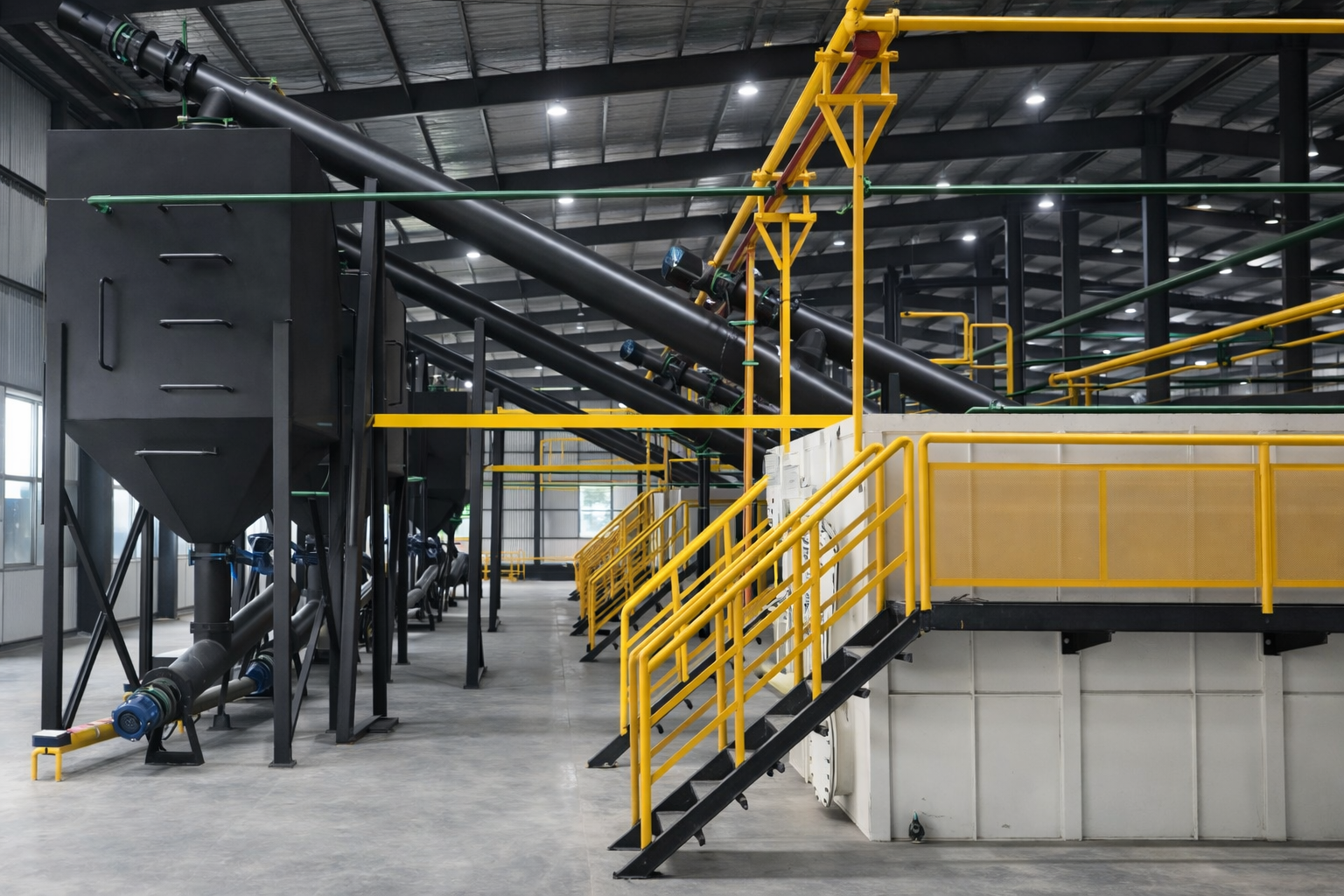
The pyrolysis of Mixed Municipal Solid Waste (MSW) to Oil Plant is a high-tech type of waste-to-energy, which transforms mixed municipal waste into high-quality pyrolysis oil, syngas and char in an oxygen-free environment. Through thermal treatment of plastics, paper, textiles, biomass fractions and other organic particles of MSW, the system has been found to greatly reduce landfill volumes and produce alternative fuels used in different applications as substitutes for traditional fossil fuels. The MSW Pyrolysis to Oil Plant is designed to be worked in constant, stable mode, maximizing energy recovery, reducing the quantity of emissions, and helping cities and industries to meet their sustainability and circular economy objectives. The technology, besides solving the problem that the solid waste is growing by the minute, is converting it into an economical asset and hence is appealing to municipalities, waste management firms, and industrial consumers.
Why Choose Kerone MSW Pyrolysis to Oil Plant
The strengths of Kerone MSW Pyrolysis to Oil Plant include its solid engineering, reliability of processes and high attention to energy efficiency and ecological hygiene. Having many decades of thermal processing and custom equipment manufacturing experience, Kerone provides complete solutions that comprise sorting, feeding, pyrolysis, gas cleaning, condensation and post-treatment systems depending on the feedstock and domestic regulations. All the plants are to provide uniform oil quality, low fuel use, and minimal maintenance downtime with the help of automation and advanced control mechanisms. Kerone as well offers complete engineering services, such as feasibility studies and process design, installation, commissioning, and operator training services to guarantee clients a turnkey waste-to-energy plant that gives reliable performance and payback periods.
Types and Features of MSW Pyrolysis to Oil Plant
Kerone proposes MSW Pyrolysis to Oil Plants in the different forms, such as batch and continuous, modular skid-mounted, and custom-designed large-scale plants to accommodate different types of waste and space requirements. The plants may have either a rotary kiln reactor, auger/screw reactor, or fixed-bed reactor design depending on the project need and may also be fitted with a sophisticated heating system and process control to ensure suitable control of temperature. Among the main features of these types are automated discharge and feeding, inbuilt off-gas treatment, oil condensation and storage equipment and possibilities of energy recovery by the use of syngas as a method of self-heating the plant. The design is flexible enough to accommodate various MSW types and comply with strict environmental requirements of the emissions and handling of the residue.
Key Features
High-efficiency pyrolysis reactors: to convert MSW to oil with optimality.
Constant or batch running to fit project size and budget.
The stable advanced PLC/SCADA-based control systems operate automatically.
Inbuilt gas cleaning and emission control to ensure they are environmentally clean.
Syngas energy recovery in order to minimize the use of external fuels and operating costs.
Strong construction material that is able to cope with abrasive and heterogeneous MSW.
Flexible and railway style plant design, which is easy to install and extend in the future.
Extensive post-sales care, such as maintenance, spares and optimization of the process.
Powered by AI, ML & IoT
Future-Ready Engineering Driven by AI & IoT
Our advanced AI, ML, and IoT technologies, this solution delivers smarter automation, real-time insights, and predictive intelligence to enhance efficiency and drive future-ready growth.
Real-Time Monitoring & Control
Continuous tracking of process parameters with instant adjustments.
Predictive Maintenance
Intelligent fault detection to prevent failures before they occur.
Adaptive Process Optimization
Dynamic tuning of operations for maximum output and efficiency.
Cloud Dashboards & Analytics
Unified access to real-time insights and performance trends.
Energy & Resource Savings
Smarter utilization of energy to cut costs and reduce waste.
Secure IoT Connectivity
Encrypted data flow with seamless integration across plant systems.
Applications of MSW Pyrolysis to Oil Plant
The Kerone MSW Pyrolysis to Oil Plants are widely applied in the industries and municipal waste management projects that have been in need of sustainable and also revenue-generating disposal. Common applications are:
Large-scale MSW treatment and energy recovery for municipal corporations and smart cities.
Integrated waste management plants, which turn mixed waste into alternative fuel oil.
On-site waste-to-energy plants that serve captive power or heat industrial clusters and SEZs.
Cement, brick and industrial boilers that utilize pyrolysis oil as supplemental or as an alternative fuel.
Waste management companies that aim at monetizing waste by producing fuel.
Low-carbon infrastructure and circular economy eco-industrial parks.
MSW Pyrolysis to Oil Plant is a feasible, portable, and sustainable method of controlling the increasing problem of municipal solid waste disposal. Turning heterogeneous MSW streams into useful pyrolysis oil, syngas and char, the plant will not only decrease its reliance on landfills but also generate additional sources of income and energy security. The engineering experience, tailor-made design method and project support of Kerone is such that every installation will be optimized to local waste features, regulatory demands and business goals. In the case of municipalities, industries, and investors who want a sure way of waste-to-energy technology, the Kerone MSW Pyrolysis to Oil Plant is an attractive entry point to the sustainable development of growth and usage of circular resources.
Seamless Export Connections Global & Local
Our Global Footprint in Industrial Excellence
Delivering world-class industrial and process solutions across countries with precision, innovation, and reliability.
Peru
Chile
Argentina
Mexico
Colombia
Brazil
USA
Canada
United Kingdom
France
Germany
Spain
Italy
Netherlands
Sweden
Switzerland
Poland
Portugal
Ireland
Czechia
Romania
Hungary
Austria
Greece
Kazakhstan
Uzbekistan
Turkmenistan
Algeria
Egypt
Nigeria
Kenya
South Africa
Saudi Arabia
UAE
Israel
Russia
India
China
Japan
South Korea
Thailand
Vietnam
Malaysia
Singapore
Indonesia
Philippines
Australia
New Zealand
Pan-India Presence. Local Expertise.
Raipur
Bilaspur
Panaji
Vasco da Gama
Gandhinagar
Ahmedabad
Surat
Chandigarh
Gurgaon
Shimla
Manali
Bengaluru
Mysore
Kochi
Pune
Mumbai
Thane
Navi Mumbai
Hyderabad
Chennai
Coimbatore
Kolkata
Lucknow
Jaipur
Udaipur
Jodhpur
Dehradun
Haridwar
Bhubaneswar
Product Gallery
Frequently Asked Questions (FAQ)
An MSW Pyrolysis to Oil Plant is a waste-to-energy project which breaks down municipal solid waste thermally without the presence of oxygen in an oven-like system to create a pyrolysis oil, syngas and char. Either the oil can be utilized as alternative fuel or further refined, whereas the syngas can be used to supply the power requirements of the plant.
The plant has a broad capacity to process organic and plastic-rich fractions of MSWs, such as plastics, paper, cardboard, textiles, biomass and some organic materials. Adequate pre-sorting and extraction of inert substances such as metals, glass and stones enhance performance and oil production.
Yes, with appropriate design and running, pyrolysis is an eco-friendly process since it is conducted in the absence of oxygen, and thus, a significant part of direct combustion-related emissions is eliminated. To adhere to strict environmental standards, Kerone plants have gas cleaning, emission control and residue management systems.
The products of major value are pyrolysis oil, syngas and solid char. The specific yield would be determined both by the composition of the MSW and the process parameters; however, an optimally tuned plant can generate a large portion of oil that can be used as fuel in some industrial processes or as larger fractions of oil to be refined further.
Yes, the resulting syngas in the pyrolysis process can be used as an internal supply source to heat the reactor or produce power and, therefore, minimizes or completely removes the use of external fuel and decreases the overall operating expenses.
Feedstock composition and the process conditions determine the quality of pyrolysis oil. To enhance the quality of oil, Kerone designs and controls the plant in terms of exact temperature, residence time and condensation productivity. Some extra steps of filtration or upgrading may be added depending on the end-use needs.
Kerone offers plants in a wide capacity range, from smaller modular units suitable for localized waste streams to large, continuous systems designed for city-scale municipal solid waste treatment. Capacity is customized based on project needs, waste availability, and investment plans.
Yes, Kerone offers complete project support, including design, manufacturing, installation, commissioning, and operator training. Dedicated after-sales support, spare parts supply, and process optimization services ensure reliable long-term performance of the MSW Pyrolysis to Oil Plant.
A pre-sorting stage using magnetic separators, trommels, or manual picking lines typically removes metals, glass, and stones before waste reaches the reactor, since these materials do not break down and can affect processing.
High moisture waste reduces thermal efficiency, so a drying or dewatering stage is usually recommended, especially in regions where MSW naturally contains a lot of kitchen and organic waste.
Non-convertible residue, mainly inert solids like grit, glass fragments, or metal, is separated out and sent for standard disposal or recycling rather than being fed into the reactor.
Waste composition can shift with seasons, such as more organic content during harvest periods, which can change oil yield slightly. Kerone designs plants with some flexibility to handle this natural variation.
Yes, the feeding system can be designed to take pre-sorted waste directly from an upstream segregation or material recovery facility, which reduces extra handling and transport steps.
Oil is usually stored in sealed steel tanks away from open flames, with proper venting and containment in case of leaks, following standard fuel storage safety practices.
Negative pressure reactor design, sealed feeding points, and multi-stage gas scrubbing all help contain odorous compounds so they do not spread to surrounding areas.
Kerone’s custom-designed heating and processing solutions are built to meet the demands of your growing operations. Whether you’re upgrading equipment, expanding production, or need a tailor-made solution

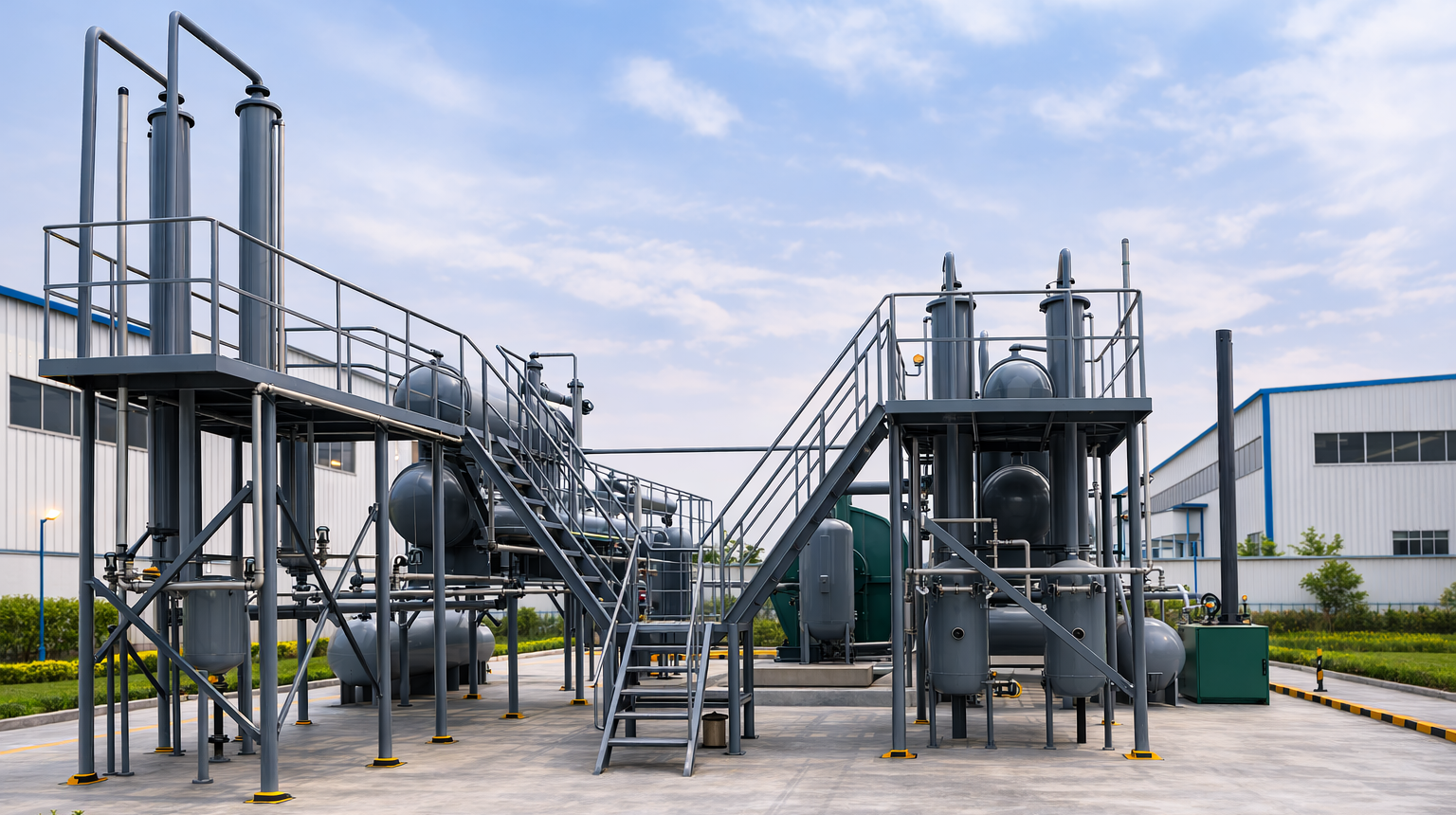



 Peru
Peru Chile
Chile Argentina
 Mexico
 Colombia
 Brazil
 USA
USA Canada
 United Kingdom
 France
 Germany
 Spain
Spain Italy
Italy Netherlands
 Sweden
 Switzerland
 Poland
 Portugal
 Ireland
 Czechia
 Romania
 Hungary
 Austria
 Greece
 Kazakhstan
 Uzbekistan
 Turkmenistan
 Algeria
 Egypt
Egypt Nigeria
 Kenya
Kenya South Africa
 Saudi Arabia
 UAE
UAE Israel
 Russia
 India
India China
China Japan
Japan South Korea
 Thailand
 Vietnam
 Malaysia
 Singapore
 Indonesia
 Philippines
 Australia
 New Zealand