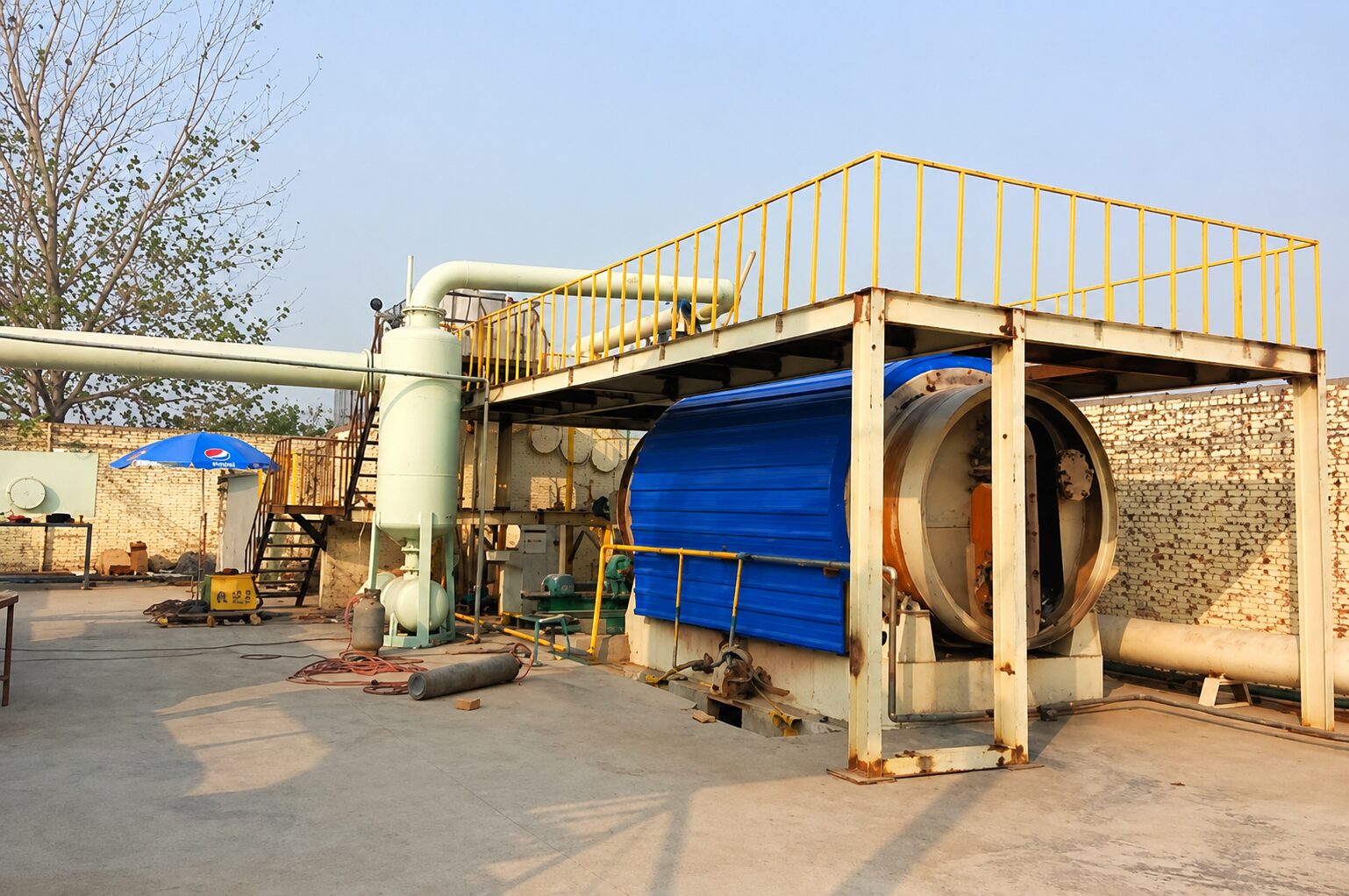
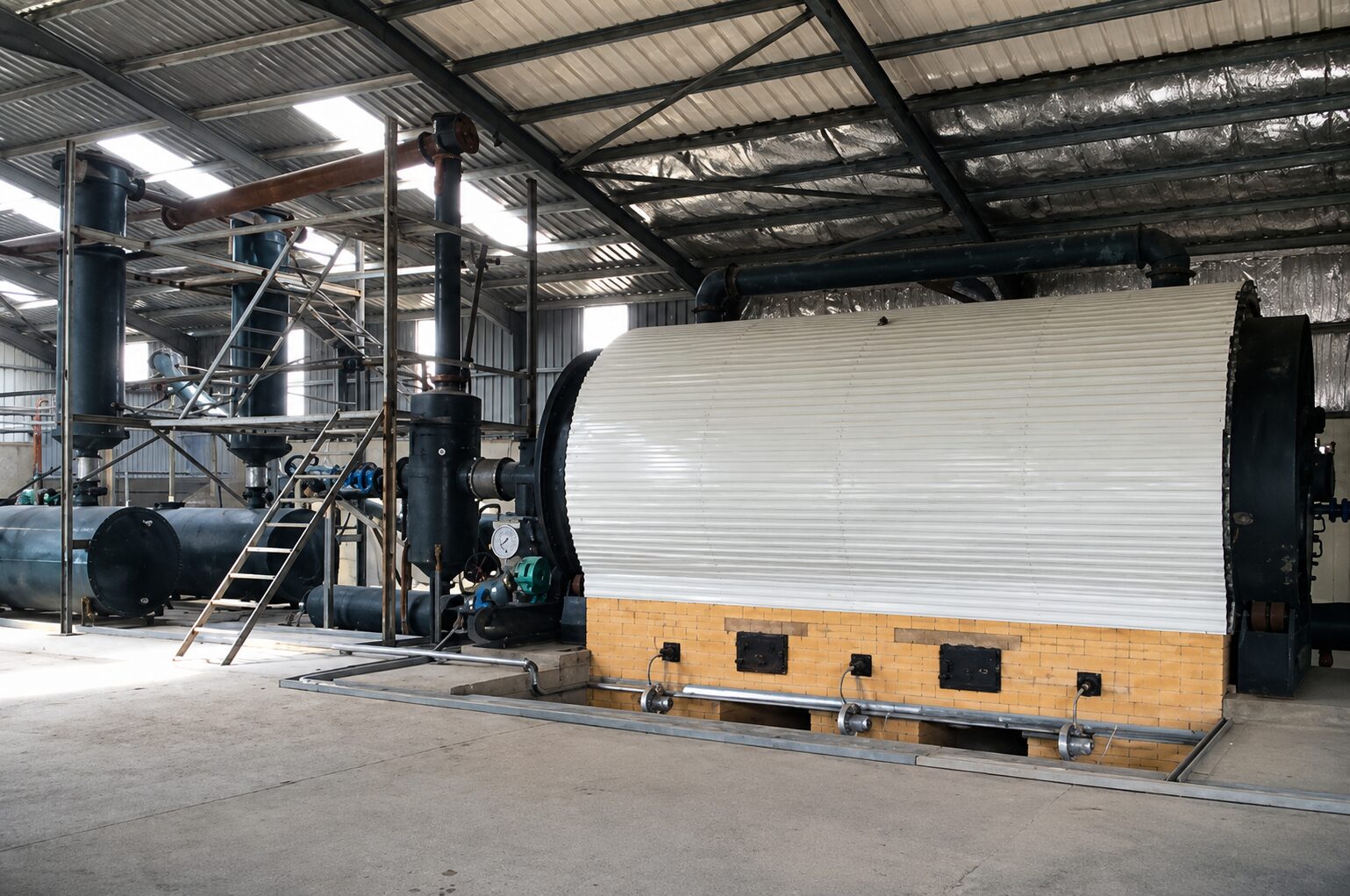
Plastic to Fuel Systems (PTF) are thermal conversion units that break down non-recyclable plastic waste into combustible fuel fractions, primarily diesel-range oil, gasoline-range oil, and combustible gas through a controlled pyrolysis or catalytic cracking process. As plastic pollution intensifies globally, industries and municipalities are under pressure to find alternatives to landfilling. PTF systems answer that demand by turning a liability into an energy resource. Kerone’s PTF technology is engineered around high-throughput batch and continuous pyrolysis reactors that handle mixed plastic waste streams including PE, PP, PS, and ABS, delivering consistent fuel yields with low residue output.
Why Choose Kerone Plastic to Fuel Systems
Kerone brings over four decades of thermal engineering experience to its Plastic to Fuel Systems. Unlike generic pyrolysis equipment available on the market, Kerone designs PTF plants around the specific plastic composition, moisture content, and production throughput of each client. The systems integrate precise temperature zoning, vapor condensation trains, and non-condensable gas recovery, ensuring maximum fuel yield and minimum environmental output. Kerone also provides KRDC-validated process configurations, meaning clients receive pilot-tested parameters before committing to full-scale investment. This reduces commissioning risk considerably and delivers predictable ROI from day one.
Types and Features of Plastic to Fuel Systems
Kerone offers both batch-type and continuous-feed Plastic to Fuel Systems depending on production volume and plastic feed consistency. Batch reactors are well-suited for smaller operations handling 1–5 TPD of plastic waste, while continuous systems are designed for 5–20+ TPD industrial and municipal-scale plants. The condensation system uses multi-stage cooling to separate diesel-range oil, light oil, and wax fractions. Each PTF unit is equipped with gas scrubbing and recycling circuits that route non-condensable gases back to the burner, reducing external fuel consumption. The reactor shell is fabricated from high-grade carbon or stainless steel with controlled-atmosphere sealing to prevent oxidation and unsafe pressure buildup.
Key Features
Handles mixed plastic inputs including PE, PP, PS, and ABS without pre-sorting
Multi-stage condensation system for separate diesel, light oil, and wax fraction collection
Non-condensable gas recycling loop that reduces auxiliary fuel costs by up to 40%
Controlled pyrolysis temperature range of 280°C–450°C for optimized cracking
Continuous and batch configurations available from 1 TPD to 20+ TPD capacity
Automatic temperature and pressure monitoring with PLC-based safety interlocks
Low-emission design with integrated gas scrubber and carbon black recovery
KRDC pilot-scale validation available before full plant commissioning
Powered by AI, ML & IoT
Future-Ready Engineering Driven by AI & IoT
Our advanced AI, ML, and IoT technologies, this solution delivers smarter automation, real-time insights, and predictive intelligence to enhance efficiency and drive future-ready growth.
Real-Time Monitoring & Control
Continuous tracking of process parameters with instant adjustments.
Predictive Maintenance
Intelligent fault detection to prevent failures before they occur.
Adaptive Process Optimization
Dynamic tuning of operations for maximum output and efficiency.
Cloud Dashboards & Analytics
Unified access to real-time insights and performance trends.
Energy & Resource Savings
Smarter utilization of energy to cut costs and reduce waste.
Secure IoT Connectivity
Encrypted data flow with seamless integration across plant systems.
Applications of Plastic to Fuel Systems
Kerone’s Plastic to Fuel Systems are widely deployed across waste management, industrial recycling, and renewable energy sectors.
Typical applications include:
Municipal solid waste facilities seeking diversion of non-recyclable plastics from landfills
Industrial parks and EPZs generating consistent plastic scrap from packaging or manufacturing
Cement kilns and power plants looking for alternative fuel sources to reduce coal dependency
Plastic collection and aggregation centers monetizing sorted or mixed plastic waste
Offshore waste processing units where transport of plastic to recycling is cost-prohibitive
As regulatory pressure on plastic waste intensifies and fuel prices remain volatile, Plastic to Fuel Systems represent a practical, scalable solution at the intersection of waste management and energy production. Kerone’s PTF systems are built for industrial realities, not just laboratory benchmarks. With flexible capacity options, KRDC-validated processes, and robust after-sales technical support, Kerone enables businesses to transform plastic waste from a disposal cost into a measurable energy asset. Whether you are setting up a standalone PTF plant or integrating fuel recovery into an existing waste processing line, Kerone delivers the engineering depth and project experience to make it work.
Seamless Export Connections Global & Local
Our Global Footprint in Industrial Excellence
Delivering world-class industrial and process solutions across countries with precision, innovation, and reliability.
Peru
Chile
Argentina
Mexico
Colombia
Brazil
USA
Canada
United Kingdom
France
Germany
Spain
Italy
Netherlands
Sweden
Switzerland
Poland
Portugal
Ireland
Czechia
Romania
Hungary
Austria
Greece
Kazakhstan
Uzbekistan
Turkmenistan
Algeria
Egypt
Nigeria
Kenya
South Africa
Saudi Arabia
UAE
Israel
Russia
India
China
Japan
South Korea
Thailand
Vietnam
Malaysia
Singapore
Indonesia
Philippines
Australia
New Zealand
Pan-India Presence. Local Expertise.
Raipur
Bilaspur
Panaji
Vasco da Gama
Gandhinagar
Ahmedabad
Surat
Chandigarh
Gurgaon
Shimla
Manali
Bengaluru
Mysore
Kochi
Pune
Mumbai
Thane
Navi Mumbai
Hyderabad
Chennai
Coimbatore
Kolkata
Lucknow
Jaipur
Udaipur
Jodhpur
Dehradun
Haridwar
Bhubaneswar
Product Gallery
Frequently Asked Questions (FAQ)
Kerone's Plastic to Fuel Systems are designed to handle polyethylene (PE), polypropylene (PP), polystyrene (PS), and ABS plastics. PVC and PET are generally excluded due to chlorine and oxygen content, which can damage equipment and affect fuel quality.
Depending on the plastic type, fuel yield typically ranges from 60% to 85% of the input plastic weight. PE and PP tend to yield the highest proportion of diesel-range oil, while PS produces a higher fraction of light oil.
Every Kerone Plastic to Fuel system includes an integrated gas scrubbing unit and a non-condensable gas recycling circuit. These components prevent raw pyrolysis gases from being vented to the atmosphere and minimize particulate and odour emissions.
Kerone offers Plastic to Fuel systems starting from 1 tonne per day (TPD) for small operations, scaling up to 20+ TPD for continuous industrial-grade plants. Custom configurations are available based on client feed volumes.
The diesel-range oil produced by Plastic to Fuel systems can be used in industrial burners, generators, and heavy machinery. For use in automotive engines, additional distillation or blending may be required to meet specific standards.
Typical commissioning timelines range from 3 to 6 months depending on plant capacity and site readiness. Kerone's KRDC validation process allows process parameters to be proven at pilot scale before full-plant construction begins.
Yes. Kerone provides end-to-end project delivery including process design, equipment fabrication, civil engineering coordination, installation, commissioning, and operator training for PTF plants.
Carbon black, or char, is a solid residue produced during pyrolysis. It can be used as a low-grade fuel, blended into road asphalt, or processed further into recovered carbon black (rCB) for rubber and pigment applications.
Yes. Kerone can design PTF systems to interface with upstream shredding, washing, and sorting equipment, creating a fully integrated plastic waste-to-fuel processing line.
All PTF systems include PLC-based automatic pressure monitoring, emergency pressure relief valves, reactor temperature interlocks, and flame arrestors on gas lines to ensure safe operation under all conditions.
Kerone offers co-processing configurations for plastic and tyre waste combinations. Biomass co-feeding is possible in some configurations but must be reviewed case by case due to moisture and ash content variations.
Routine maintenance includes periodic cleaning of the reactor chamber, condenser tube inspection, gas scrubber liquid replacement, and calibration of temperature and pressure sensors. Kerone provides detailed maintenance schedules with each system.
Standard mechanical recycling converts plastics back into raw material pellets, which requires clean, sorted input. PTF systems use thermal or catalytic cracking to convert mixed or contaminated plastic directly into fuel, making them suitable for plastics that are not mechanically recyclable.
Common search queries include 'plastic waste to diesel plant setup', 'pyrolysis oil from plastic waste process', 'plastic to fuel conversion machine price India', and 'non-recyclable plastic fuel conversion system'.
Yes. Kerone offers comprehensive after-sales services including spare parts supply, remote process diagnostics, on-site service visits, and operator retraining programs to ensure sustained plant performance.
Kerone’s custom-designed heating and processing solutions are built to meet the demands of your growing operations. Whether you’re upgrading equipment, expanding production, or need a tailor-made solution




 Peru
Peru Chile
Chile Argentina
 Mexico
 Colombia
 Brazil
 USA
USA Canada
 United Kingdom
 France
 Germany
 Spain
Spain Italy
Italy Netherlands
 Sweden
 Switzerland
 Poland
 Portugal
 Ireland
 Czechia
 Romania
 Hungary
 Austria
 Greece
 Kazakhstan
 Uzbekistan
 Turkmenistan
 Algeria
 Egypt
Egypt Nigeria
 Kenya
Kenya South Africa
 Saudi Arabia
 UAE
UAE Israel
 Russia
 India
India China
China Japan
Japan South Korea
 Thailand
 Vietnam
 Malaysia
 Singapore
 Indonesia
 Philippines
 Australia
 New Zealand