AI-Driven Sustainable Processing Systems (AISP) integrate artificial intelligence, machine learning, and advanced process control technologies into industrial processing lines to continuously optimise energy consumption, material yield, product quality, and emission output in real time. Where conventional process control relies on fixed setpoints and manual operator intervention, AISP systems use sensor data streams, predictive models, and reinforcement learning algorithms to identify and implement operating conditions that simultaneously minimise energy use, maintain product specifications, and reduce environmental impact. Kerone’s AISP capability brings AI-assisted optimisation to thermal processing, drying, waste valorization, and fuel production systems, making sustainable operation the operational default rather than the aspirational target.
Why Choose Kerone AI-Driven Sustainable Processing Systems
Implementing AI in an industrial process environment requires more than software — it requires a deep understanding of the underlying physical process that the AI is optimising. Kerone’s AISP systems are developed in close coordination between the company’s process engineers and data science team, ensuring that the AI models are grounded in thermodynamic and mass transfer reality rather than purely data-driven pattern matching. This process-informed AI approach produces control systems that remain reliable during process disturbances and feedstock variations — conditions where purely data-driven models can fail. KRDC pilot-scale testing of AISP control algorithms ensures that optimisation models are validated against real process data before deployment.
Types and Features of AI-Driven Sustainable Processing Systems
Kerone’s AI-Driven Sustainable Processing Systems are deployed as overlay control layers on top of existing PLC or SCADA systems, or as fully integrated control architectures for new plant installations. The AI layer ingests real-time data from process sensors temperature, pressure, flow rate, moisture, fuel composition, emission levels and uses this data to continuously update predictive process models. These models generate setpoint recommendations or direct control outputs that optimise a defined objective function, typically a combination of energy minimisation, yield maximisation, and emission compliance. The system includes an anomaly detection module that identifies deviating operating conditions before they cause quality failures or equipment damage, and a performance dashboard providing operators with AI-generated process insights.
Key Features
Real-time AI optimisation of process setpoints for energy, yield, and emission objectives simultaneously
Predictive process modelling using thermodynamic and machine learning hybrid models validated at KRDC
Anomaly detection system identifying process deviations before they escalate to quality failures or equipment damage
Compatibility with existing PLC and SCADA systems via standard OPC-UA or Modbus communication protocols
Continuous model updating using incoming process data to maintain optimisation accuracy over time
Operator interface providing AI-generated process insights and decision support in plain operational language
Energy and emission performance tracking with automated reporting for ESG and regulatory documentation
Secure cloud or on-premise deployment options with appropriate industrial cybersecurity architecture
Powered by AI, ML & IoT
Future-Ready Engineering Driven by AI & IoT
Our advanced AI, ML, and IoT technologies, this solution delivers smarter automation, real-time insights, and predictive intelligence to enhance efficiency and drive future-ready growth.
Real-Time Monitoring & Control
Continuous tracking of process parameters with instant adjustments.
Predictive Maintenance
Intelligent fault detection to prevent failures before they occur.
Adaptive Process Optimization
Dynamic tuning of operations for maximum output and efficiency.
Cloud Dashboards & Analytics
Unified access to real-time insights and performance trends.
Energy & Resource Savings
Smarter utilization of energy to cut costs and reduce waste.
Secure IoT Connectivity
Encrypted data flow with seamless integration across plant systems.
Applications of AI-Driven Sustainable Processing Systems
Kerone’s AI-Driven Sustainable Processing Systems are deployed across industrial drying, thermal conversion, waste processing, and fuel production operations.
Typical applications include:
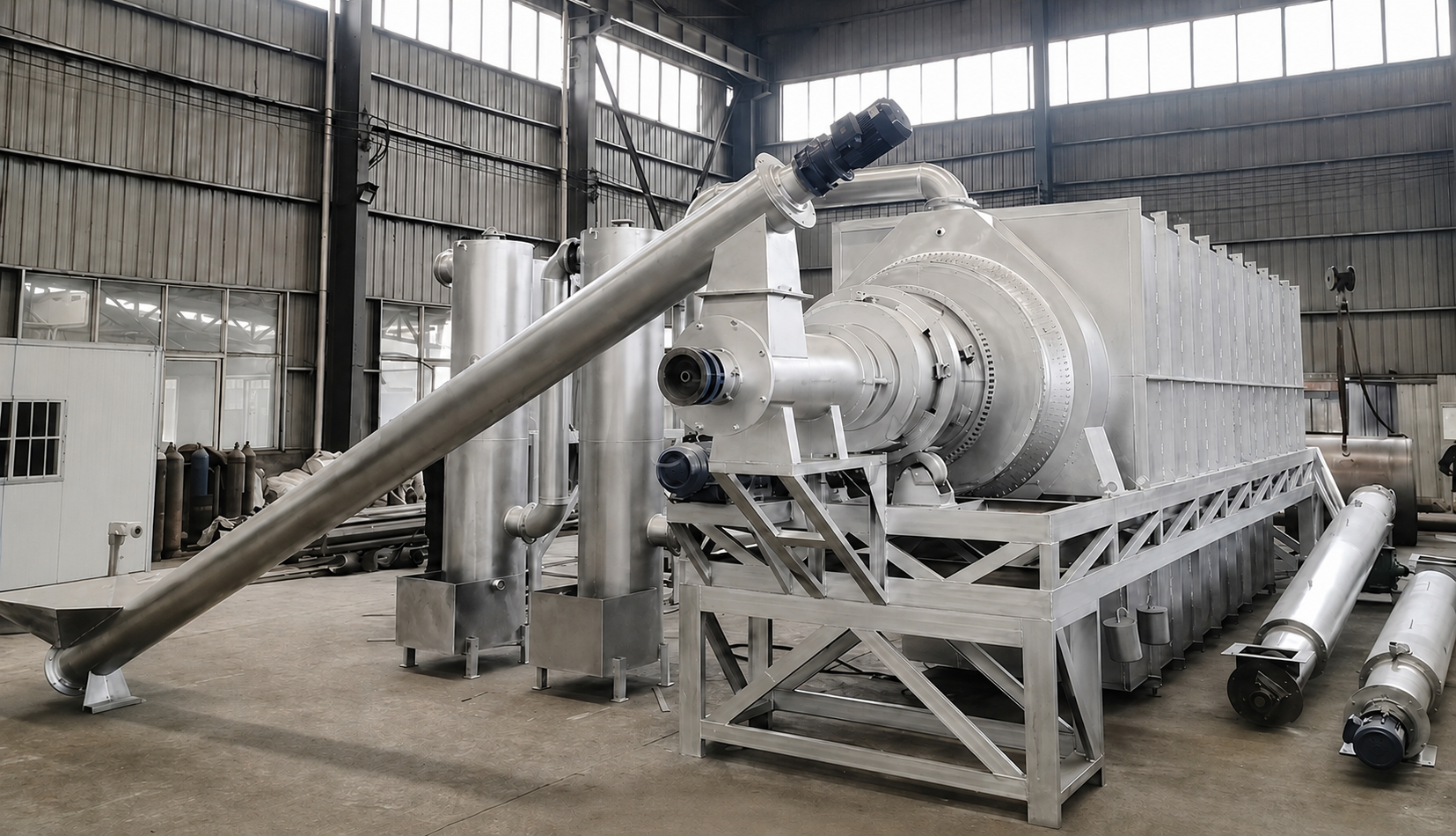
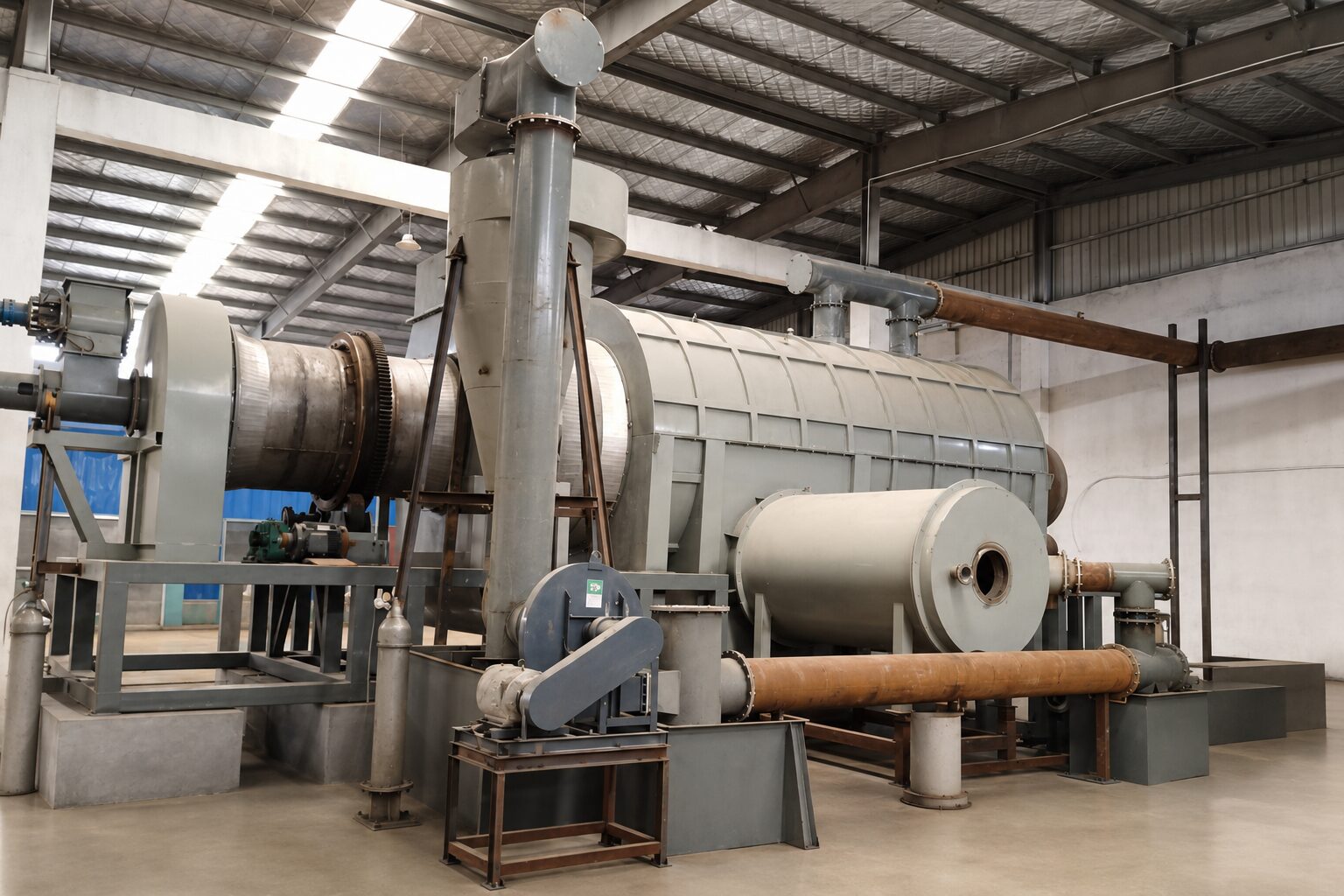
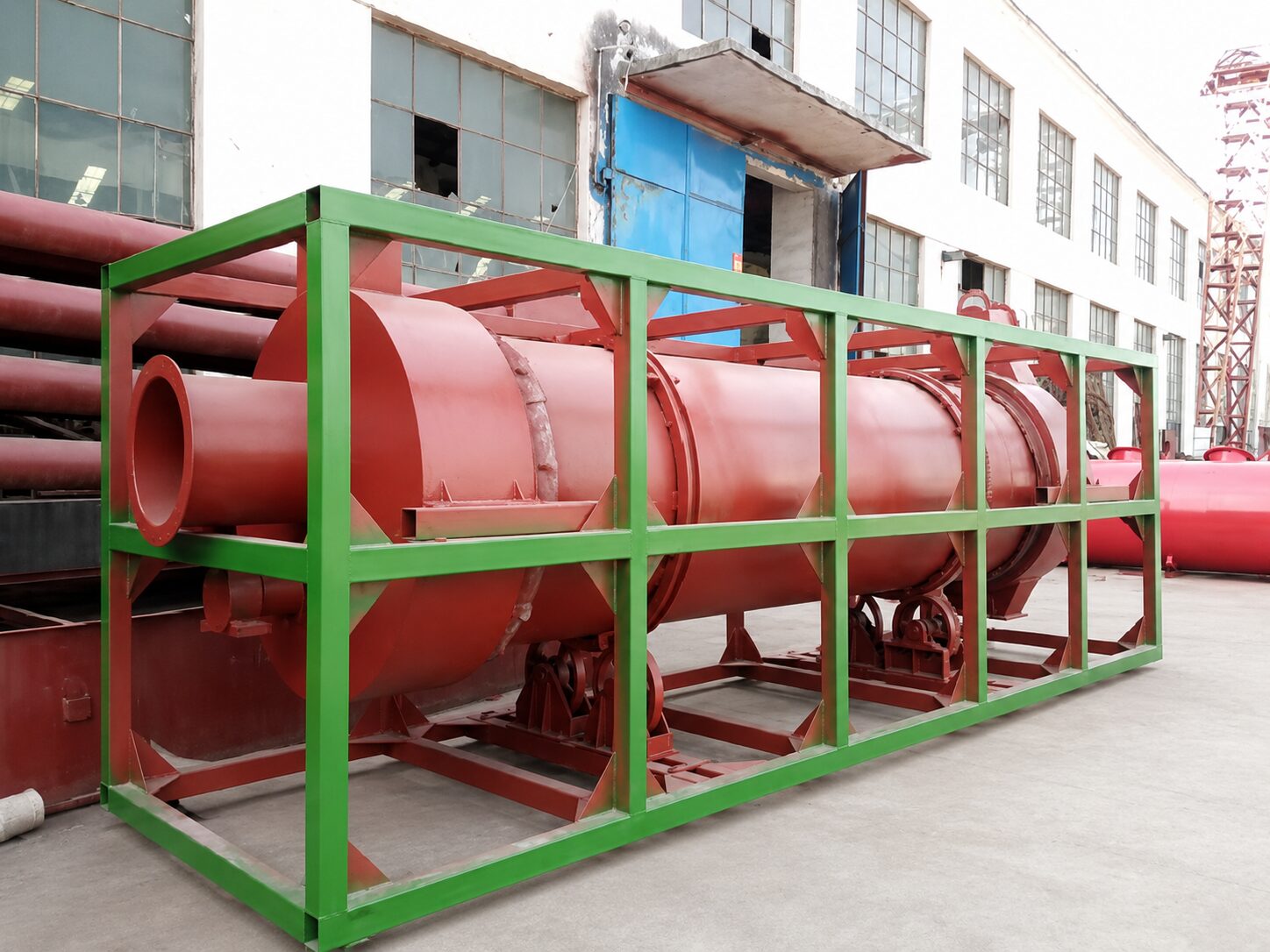
Industrial dryer operations where AI optimisation of temperature, airflow, and residence time reduces specific energy consumption by 15–30%
Pyrolysis and gasification plants using AI to maintain optimal reactor conditions across varying feedstock moisture and composition
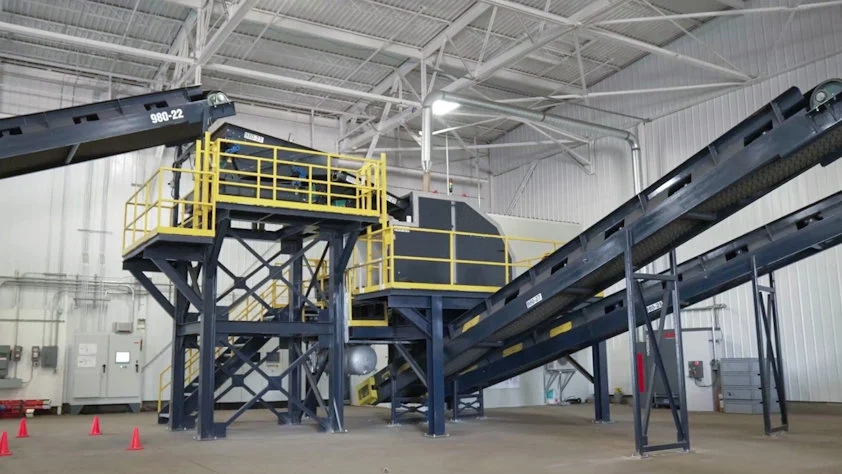
Waste processing facilities applying AI-driven sorting and feeding optimisation to maximise material recovery and RDF quality
Green fuel production lines using AI to match feedstock feeding rate and reactor parameters to real-time fuel quality measurements
Carbon negative processing plants monitoring biochar fixed carbon content and yield through AI-assisted pyrolysis condition management
Bio-refinery operations coordinating multiple interdependent process stages through AI-driven production scheduling and setpoint management
Sustainable industrial processing is not only about the technologies deployed, it is equally about how intelligently those technologies are operated. Kerone’s AI-Driven Sustainable Processing Systems close the gap between the designed performance of industrial equipment and the actual performance achieved in day-to-day operation. By continuously learning from process data and translating insights into real-time control actions, Kerone’s AISP systems ensure that dryers, reactors, and waste processing lines operate at or near their optimal energy and environmental performance, not just when freshly commissioned, but throughout their operational life. For organisations where process efficiency directly impacts carbon performance and operating economics, AISP represents a high-impact, scalable technology investment.
Seamless Export Connections Global & Local
Our Global Footprint in Industrial Excellence
Delivering world-class industrial and process solutions across countries with precision, innovation, and reliability.
Peru
Chile
Argentina
Mexico
Colombia
Brazil
USA
Canada
United Kingdom
France
Germany
Spain
Italy
Netherlands
Sweden
Switzerland
Poland
Portugal
Ireland
Czechia
Romania
Hungary
Austria
Greece
Kazakhstan
Uzbekistan
Turkmenistan
Algeria
Egypt
Nigeria
Kenya
South Africa
Saudi Arabia
UAE
Israel
Russia
India
China
Japan
South Korea
Thailand
Vietnam
Malaysia
Singapore
Indonesia
Philippines
Australia
New Zealand
Pan-India Presence. Local Expertise.
Raipur
Bilaspur
Panaji
Vasco da Gama
Gandhinagar
Ahmedabad
Surat
Chandigarh
Gurgaon
Shimla
Manali
Bengaluru
Mysore
Kochi
Pune
Mumbai
Thane
Navi Mumbai
Hyderabad
Chennai
Coimbatore
Kolkata
Lucknow
Jaipur
Udaipur
Jodhpur
Dehradun
Haridwar
Bhubaneswar
Product Gallery
Frequently Asked Questions (FAQ)
AI-driven optimisation continuously adjusts process parameters to maintain optimal operating conditions as feedstock properties, ambient conditions, and production demands change. This delivers consistent improvements in energy efficiency, product quality, and emission compliance that manual or fixed-setpoint control cannot sustain.
No. Kerone's AI-Driven Sustainable Processing Systems are designed as overlay optimisation layers that communicate with and issue setpoint guidance to existing PLC or SCADA systems through standard industrial protocols such as OPC-UA or Modbus. Existing control infrastructure is retained, and the AI layer adds optimisation capability without replacing the underlying control architecture.
The AI-Driven Sustainable Processing Systems uses real-time data from temperature sensors, pressure transmitters, flow meters, moisture analysers, fuel composition analysers, and emission monitoring equipment. The specific sensor set depends on the process application and the optimisation objectives defined for the system.
Kerone's AI-Driven Sustainable Processing Models use feedstock characterisation data alongside real-time process sensor readings to predict how the process will respond to feedstock changes before those changes impact product quality or energy consumption. The model then adjusts reactor temperature, residence time, or airflow proactively to compensate for the expected variation.
Energy savings from AI-Driven Sustainable Processing Systems deployment in industrial drying and thermal processing applications typically range from 10 to 30%, depending on the baseline process control quality and the variability of feedstock and operating conditions. Larger savings are achieved in processes with high historical variability or suboptimal manual control.
Initial model training requires 4–8 weeks of historical process data collection and model development. Deployment of the AI control layer typically takes 2–4 weeks including integration testing. The system continues to improve through online learning as additional operating data is accumulated after deployment.
Yes. For batch processes, AISP optimises the setpoint trajectory within each batch cycle to minimise cycle time and energy use while achieving product quality targets. For continuous processes, the AI manages steady-state operating setpoints and transitions between product grades or operating modes.
The anomaly detection module continuously compares real-time sensor readings against the AI model's predicted values for the current operating conditions. Deviations beyond defined thresholds trigger alerts to operators and can initiate automatic protective actions. This capability reduces unplanned downtime and prevents quality failures from undetected process drift.
Kerone's AI-Driven Sustainable Processing Systems are deployed with industrial cybersecurity architecture including network segmentation between IT and OT systems, encrypted data transmission, role-based access control for the operator interface, and secure remote access protocols for technical support and model updates.
Yes. Kerone's AI-Driven Sustainable Processing Systems performance dashboard includes automated energy consumption and emission tracking with reporting outputs formatted for ESG reporting frameworks and regulatory compliance documentation. Reports can be generated at user-defined frequencies and exported in standard formats.
No. Kerone offers both cloud-based and on-premise AISP deployment options. On-premise deployment keeps all process data within the client's facility network, which is preferred for operations with strict data security or connectivity limitations. Cloud deployment enables more scalable model computing and multi-site performance benchmarking.
AI-Driven Sustainable Processing Systems ROI timelines typically range from 12 to 36 months depending on the scale of the operation, the magnitude of energy saving achieved, and the cost of energy at the installation site. Operations with high energy intensity and significant process variability achieve the fastest ROI.
AISP can be applied to legacy equipment through a sensor retrofit program that installs the required measurement infrastructure, followed by integration of the AI control layer with the existing control system. Kerone conducts a connectivity assessment before AISP deployment to determine the sensor and integration requirements.
Kerone's process engineers contribute thermodynamic and mass transfer knowledge to the AI model structure, creating hybrid physics-informed machine learning models that behave correctly during extrapolation from training conditions. This prevents the common failure mode of purely data-driven models, which can produce physically nonsensical recommendations in novel operating scenarios.
Industries with energy-intensive continuous or semi-continuous thermal processes and measurable product quality and emission constraints benefit most, including food drying, pharmaceutical manufacturing, chemical processing, waste to energy, pyrolysis, gasification, and bio-refinery operations.
Kerone’s custom-designed heating and processing solutions are built to meet the demands of your growing operations. Whether you’re upgrading equipment, expanding production, or need a tailor-made solution

 Peru
Peru Chile
Chile Argentina
 Mexico
 Colombia
 Brazil
 USA
USA Canada
 United Kingdom
 France
 Germany
 Spain
Spain Italy
Italy Netherlands
 Sweden
 Switzerland
 Poland
 Portugal
 Ireland
 Czechia
 Romania
 Hungary
 Austria
 Greece
 Kazakhstan
 Uzbekistan
 Turkmenistan
 Algeria
 Egypt
Egypt Nigeria
 Kenya
Kenya South Africa
 Saudi Arabia
 UAE
UAE Israel
 Russia
 India
India China
China Japan
Japan South Korea
 Thailand
 Vietnam
 Malaysia
 Singapore
 Indonesia
 Philippines
 Australia
 New Zealand