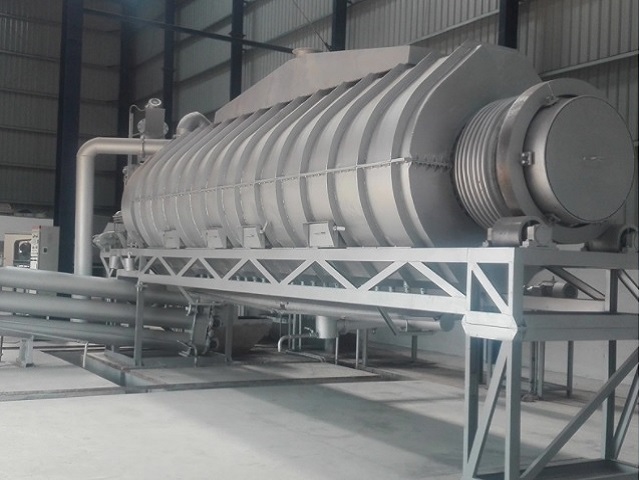
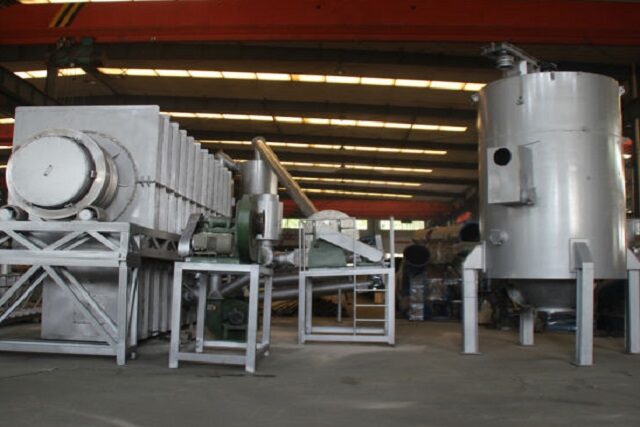
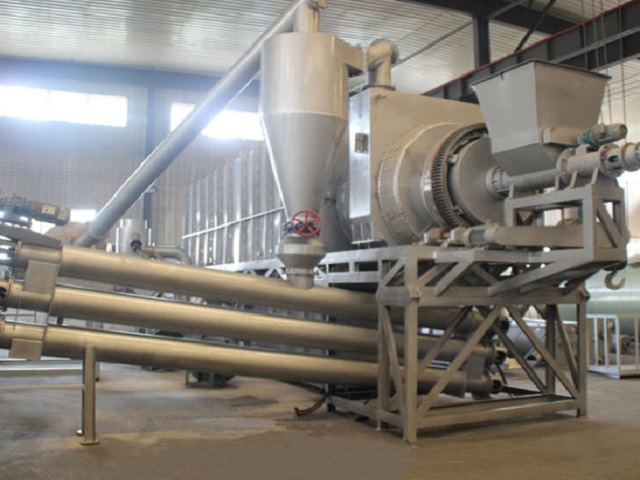
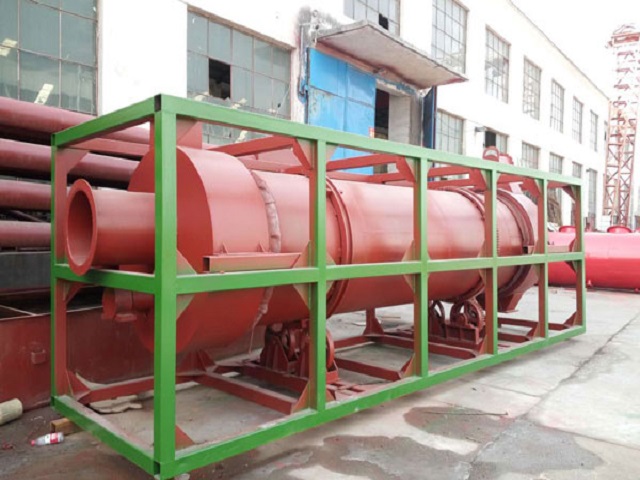
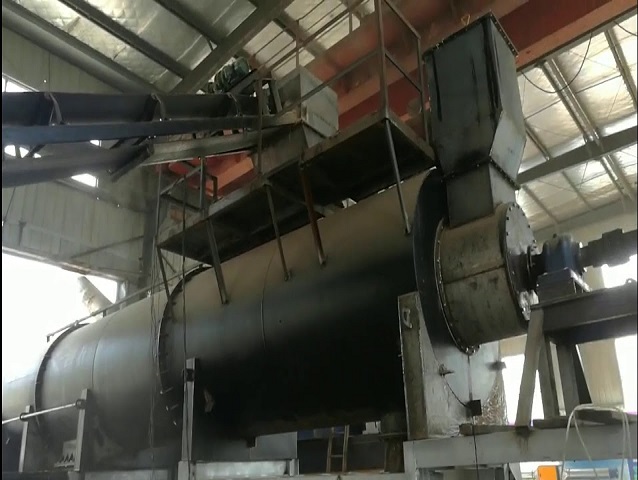
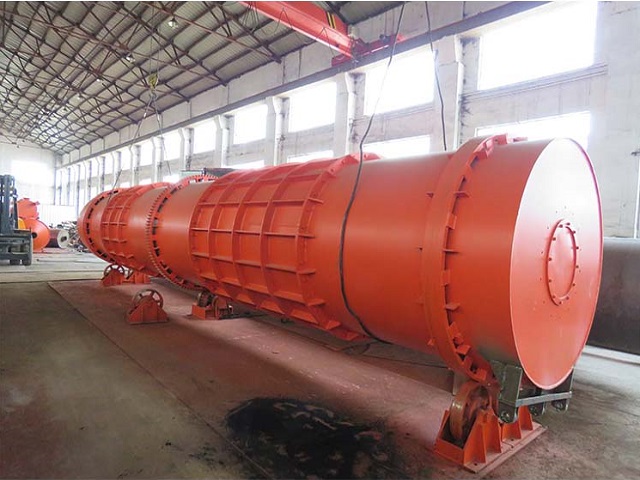
Biochar is manufactured by heating biomass within the total or partial absence of oxygen. Pyrolysis is the most common technology utilized to manufacture biochar, and also happens within the early stages of the combustion and gasification processes. Besides biochar, bio-oil and gas can be collected from modern pyrolysers. These could be refined to a variety of chemicals and used as sources of renewable energy if derived from sustainably manufactured biomass.
Kerone provides advanced biochar processing / production plant engineered to deliver high efficiency, precision, and industrial-grade reliability. With over 50 years of expertise across thermal, infrared, RF, microwave, and mechanical engineering, Kerone develops customized systems tailored to industry-specific requirements, ensuring maximum productivity and operational stability.
Why Choose Kerone Biochar Processing / Production Plant
KERONE is pioneer in application and implementation engineering with its vast experience and team of professionals. KERONE is devoted to serve the industry to optimize their operations both economically and environmentally with its specialized heating, drying and processing solutions. From initial feasibility studies and process design through equipment manufacturing, installation, commissioning, and operator training, Kerone provides seamless project execution that minimizes risk and maximizes plant uptime. Kerone’s in-house design team employs advanced process simulation tools to optimize plant layout and energy integration, while its manufacturing facilities ensure the highest standards of build quality. Clients benefit from Kerone’s extensive portfolio of successful biochar plant installations across diverse industries worldwide.
Types and Features of Biochar Processing / Production Plant
Kerone’s Biochar Processing / Production Plants are available in batch, semi-continuous, and fully continuous configurations depending on client production requirements and feedstock characteristics. Batch plants are ideal for flexible, multi-feedstock operations, while continuous rotary kiln and screw-conveyor-based plants offer uninterrupted high-volume output. Plant features include centralized SCADA control systems for full plant monitoring, integrated feedstock handling and conveying systems, multi-stage gas cleaning and condensation units for bio-oil recovery, automated char packaging and storage systems, heat recovery networks for energy efficiency, and modular plant architecture allowing phased capacity expansion as business grows.
Benefits:
It improves the productivity of soil to achieve higher yield.
It helps in the creation of fossil fuels.
Increases water retention.
Management of waste.
Key Features
High operational efficiency with uniform processing
Adjustable temperature, airflow, or RF/IR power settings
Batch and continuous configurations available
Low maintenance with long service life
Custom material flow and heating patterns
Safety interlocks and advanced control systems
Powered by AI, ML & IoT
Future-Ready Engineering Driven by AI & IoT
Our advanced AI, ML, and IoT technologies, this solution delivers smarter automation, real-time insights, and predictive intelligence to enhance efficiency and drive future-ready growth.
Real-Time Monitoring & Control
Continuous tracking of process parameters with instant adjustments.
Predictive Maintenance
Intelligent fault detection to prevent failures before they occur.
Adaptive Process Optimization
Dynamic tuning of operations for maximum output and efficiency.
Cloud Dashboards & Analytics
Unified access to real-time insights and performance trends.
Energy & Resource Savings
Smarter utilization of energy to cut costs and reduce waste.
Secure IoT Connectivity
Encrypted data flow with seamless integration across plant systems.
Applications of Biochar Processing / Production Plant
Commercial biochar producers supplying agricultural markets with soil amendment and carbon products
Waste management companies building revenue-generating waste-to-biochar processing facilities
Agricultural cooperatives and rural development projects establishing regional biochar production hubs
Industrial facilities integrating biochar production plants to valorize process waste streams
Government and NGO-funded sustainability programs establishing community biochar production facilities
Kerone’s biochar processing / production plant solutions deliver unmatched quality, safety, and operational performance. Each system is tailored to meet production targets while ensuring energy savings, reliability, and long-term industrial value. With end-to-end project execution capabilities, advanced process engineering, and a commitment to quality and sustainability, Kerone ensures that clients achieve their production targets, product quality goals, and environmental objectives. Whether you are building a greenfield biochar plant or expanding an existing facility, Kerone provides the technology, expertise, and ongoing support needed to make your biochar production venture a resounding success in today’s growing market for sustainable carbon products.
Seamless Export Connections Global & Local
Our Global Footprint in Industrial Excellence
Delivering world-class industrial and process solutions across countries with precision, innovation, and reliability.
Peru
Chile
Argentina
Mexico
Colombia
Brazil
USA
Canada
United Kingdom
France
Germany
Spain
Italy
Netherlands
Sweden
Switzerland
Poland
Portugal
Ireland
Czechia
Romania
Hungary
Austria
Greece
Kazakhstan
Uzbekistan
Turkmenistan
Algeria
Egypt
Nigeria
Kenya
South Africa
Saudi Arabia
UAE
Israel
Russia
India
China
Japan
South Korea
Thailand
Vietnam
Malaysia
Singapore
Indonesia
Philippines
Australia
New Zealand
Pan-India Presence. Local Expertise.
Raipur
Bilaspur
Panaji
Vasco da Gama
Gandhinagar
Ahmedabad
Surat
Chandigarh
Gurgaon
Shimla
Manali
Bengaluru
Mysore
Kochi
Pune
Mumbai
Thane
Navi Mumbai
Hyderabad
Chennai
Coimbatore
Kolkata
Lucknow
Jaipur
Udaipur
Jodhpur
Dehradun
Haridwar
Bhubaneswar
Product Gallery
Frequently Asked Questions (FAQ)
Kerone designs biochar production plants ranging from small pilot-scale units producing 100 kg/day to large industrial plants processing hundreds of tonnes of feedstock per day. Custom capacity designs are available based on client requirements.
Yes, Kerone offers fully customized engineering based on capacity, temperature, and industry needs.
PLC, SCADA, IoT, AI/ML predictive systems, and remote monitoring.
Yes, Kerone designs systems that significantly reduce operational energy consumption.
Manufacturing, food, chemicals, biomass, pharma, packaging, and advanced materials.
Yes, from installation to lifetime service support, Kerone provides complete assistance.
Pyrolysis temperature directly determines biochar's porosity, surface area, and carbon stability. Lower pyrolysis temperatures, generally between 350°C and 500°C, retain more volatile compounds and produce biochar with higher cation exchange capacity, which benefits nutrient retention in sandy or degraded soils. Higher temperatures above 600°C produce biochar with greater fixed-carbon content, larger surface area, and superior long-term carbon sequestration potential, but lower nutrient-holding ability. Kerone's biochar plants allow operators to fine-tune pyrolysis temperature profiles to target either soil amendment quality or carbon credit value, depending on the intended market. This flexibility lets producers shift output specifications between agricultural-grade and carbon-sequestration-grade biochar without major mechanical modification, simply by adjusting the thermal program on the control system.
Biochar production through pyrolysis does not yield biochar alone. Volatile gases and condensable vapors are also released, and Kerone's plants are designed to capture and valorize both streams rather than venting or flaring them. Bio-oil is recovered through multi-stage condensation and can be refined into chemical feedstock or used as a combustible fuel. Syngas, the non-condensable fraction, is typically routed back into the system as a heating fuel, offsetting external energy demand. This integrated gas-recovery approach improves the overall energy balance of the plant and converts what would otherwise be waste streams into usable co-products, strengthening the economics of a biochar production facility beyond the biochar itself.
Batch biochar systems load a fixed quantity of feedstock per cycle and are well suited to operations handling variable or seasonal biomass types, such as agricultural residues that change with harvest cycles. Continuous rotary kiln or screw-conveyor systems feed material constantly and are optimized for high, steady throughput of a more consistent feedstock. Batch plants offer easier process adjustment between different materials, since each cycle can be parameterized independently, while continuous plants deliver higher volume efficiency but generally need more uniform feedstock particle size and moisture for stable operation. Kerone evaluates feedstock variability during the design phase to recommend the configuration that matches a client's actual material supply pattern, not just their target capacity.
Most raw biomass feedstocks need some pre-treatment before entering a biochar reactor. This typically includes size reduction through chipping or shredding to achieve a uniform particle dimension, and moisture reduction if the incoming material exceeds the pyrolysis system's design tolerance, since excess moisture consumes energy that should be driving carbonization. Removal of contaminants such as metal fragments, plastics, or soil is also important, particularly for waste-derived feedstocks like municipal green waste. Kerone assesses feedstock characteristics, including moisture content, ash content, and particle size distribution, during the feasibility stage and designs the front-end handling and pre-treatment systems accordingly, since under-prepared feedstock is one of the most common causes of inconsistent biochar quality.
Consistent biochar quality depends on monitoring fixed carbon content, ash content, pH, surface area, and particle size, since these properties determine suitability for different end markets such as soil amendment, carbon credits, or industrial filtration media. Kerone's plants incorporate temperature sensors and process data logging at each carbonization stage, allowing operators to correlate process parameters with output quality and make adjustments before an entire batch falls outside specification. For clients targeting certified carbon removal credits or specific agronomic standards, third-party laboratory testing of fixed carbon and H:C ratio is typically required periodically, and Kerone's process documentation supports this verification by providing a traceable record of operating conditions for each production run.
Biochar plants generally require air emissions permits because pyrolysis generates particulate matter and volatile organic compounds that must be controlled before release, even when much of the gas stream is recycled as fuel. Many jurisdictions also require waste-handling or feedstock-sourcing permits, especially when processing agricultural or municipal organic waste streams. Some regions additionally regulate biochar as a soil amendment product, requiring registration or compliance testing before commercial sale. Requirements vary significantly by country and even by state or municipality, so Kerone works with clients during the feasibility phase to identify the specific local permits required and designs emission control systems to meet the applicable air quality thresholds from the outset rather than retrofitting later.
Yes, integration is one of the more common ways biochar plants are deployed, particularly by waste management companies and agricultural cooperatives looking to valorize residues they already generate. A facility that already handles forestry residue, sewage sludge, or crop waste can add a biochar unit downstream of existing material handling infrastructure, reducing disposal costs while generating a saleable carbon product. Kerone designs interface points for feedstock intake that connect with existing conveying, weighing, or storage systems already on site, minimizing duplicated infrastructure. This approach is typically more capital-efficient than building a standalone greenfield biochar facility, since it leverages logistics and feedstock supply the client already controls.
Scaling decisions are usually based on feedstock supply validation, biochar quality consistency, and market offtake confirmation established during pilot operation. A pilot unit running for several months typically generates enough operational data to validate yield rates and product specifications for a given feedstock. Moving from pilot to a commercial-scale plant generally takes between 12 and 18 months, covering detailed engineering, procurement, construction, and commissioning, though this depends heavily on capacity target and site readiness. Kerone's modular plant architecture is designed to support this progression, allowing capacity to be added in phased increments rather than requiring a full rebuild when a client is ready to move beyond pilot-scale validation.
Biochar sequesters carbon by converting biomass carbon, which would otherwise decompose and release CO2 relatively quickly, into a stable solid form that resists microbial breakdown for decades to centuries when applied to soil. The sequestration value is quantified using the biochar's fixed carbon content and H:C molar ratio, which are accepted proxies for long-term carbon stability under frameworks used by major carbon credit registries. Producers seeking to monetize this through carbon markets need consistent, well-documented production data linking feedstock type, pyrolysis temperature, and resulting carbon stability metrics. Kerone's process control and data logging capabilities support this documentation requirement, which is often the deciding factor in whether a biochar producer can successfully register for carbon credit issuance.
Kerone’s custom-designed heating and processing solutions are built to meet the demands of your growing operations. Whether you’re upgrading equipment, expanding production, or need a tailor-made solution


 Peru
Peru Chile
Chile Argentina
 Mexico
 Colombia
 Brazil
 USA
USA Canada
 United Kingdom
 France
 Germany
 Spain
Spain Italy
Italy Netherlands
 Sweden
 Switzerland
 Poland
 Portugal
 Ireland
 Czechia
 Romania
 Hungary
 Austria
 Greece
 Kazakhstan
 Uzbekistan
 Turkmenistan
 Algeria
 Egypt
Egypt Nigeria
 Kenya
Kenya South Africa
 Saudi Arabia
 UAE
UAE Israel
 Russia
 India
India China
China Japan
Japan South Korea
 Thailand
 Vietnam
 Malaysia
 Singapore
 Indonesia
 Philippines
 Australia
 New Zealand