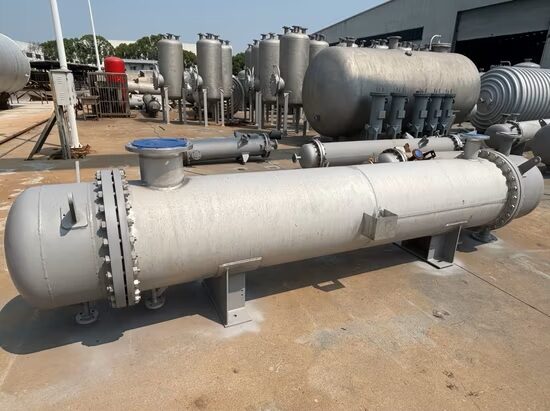
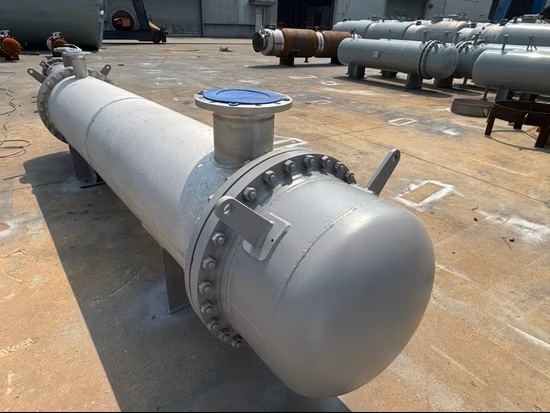
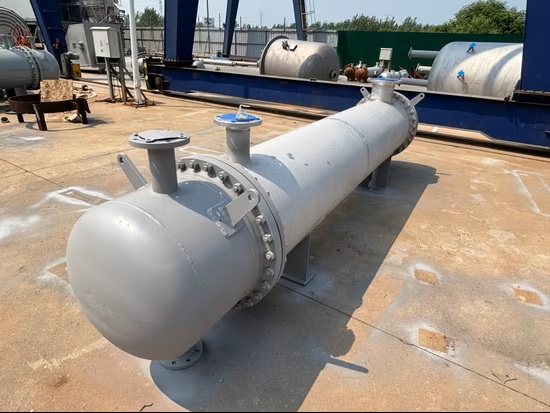
Kerone is a leading flash cooler manufacturer in India, delivering precision-engineered industrial flash cooling systems that are designed to rapidly reduce the temperature of hot powders, granules, bulk solids, and other processed materials immediately after production. A flash cooler also known as a flash cooling system or pneumatic cooler, operates by introducing the hot material into a high-velocity stream of cold or ambient air, enabling instantaneous and uniform heat dissipation across every particle. This rapid cooling process is essential in industries such as chemicals, minerals, fertilizers, food processing, and pharmaceuticals, where elevated exit temperatures from dryers, reactors, or kilns can compromise product quality, cause caking or agglomeration, damage packaging materials, and create unsafe handling conditions. Kerone’s flash cooling equipment is engineered for maximum thermal efficiency, minimal product degradation, and seamless integration into existing production lines, making it the preferred flash cooling system design choice for manufacturers seeking reliable, high-performance temperature-reduction solutions across a wide range of industrial applications.
Why Choose Kerone Flash Cooler
When it comes to sourcing a dependable flash cooler for powder cooling, bulk material cooling, or fast temperature reduction of hot solids, Kerone stands apart as the trusted partner of choice for industries across India and internationally. With decades of expertise in thermal processing and industrial drying and cooling technologies, Kerone brings an unmatched depth of engineering knowledge to every flash cooling system project. Our team of experienced engineers works closely with each client to understand the specific material characteristics — including bulk density, particle size distribution, moisture content, and temperature sensitivity — to design a custom flash cooling equipment solution that delivers consistent, repeatable performance under demanding production conditions. As a certified flash cooler equipment supplier, Kerone adheres to stringent quality standards throughout the design, fabrication, and commissioning process, ensuring that every unit is built to last and operates at peak efficiency with minimal energy consumption. Our after-sales support, spare parts availability, and responsive service network further ensure that your flash cooling system for the chemical industry, mineral processing plant, or bulk material facility maintains optimal uptime, making Kerone the comprehensive industrial flash cooler solution provider you can rely on.
Types and Features of Flash Cooler
Kerone manufactures a comprehensive range of flash coolers tailored to diverse industrial requirements, including vertical flash coolers, horizontal flash cooling systems, rotary flash coolers, and pneumatic conveying flash coolers, each designed to handle specific material flow rates, temperature differentials, and product characteristics with precision. Vertical flash coolers are ideal for gravity-assisted material flow in powder and granule applications, while horizontal flash cooling systems are well-suited for high-capacity continuous operations in chemical and mineral processing plants. Rotary flash coolers offer excellent contact between material and cooling air, making them particularly effective for crystalline solids, fertilizers, and coarse granules, whereas pneumatic conveying flash coolers simultaneously cool and transport the product, eliminating the need for separate conveying equipment and reducing the overall footprint of the plant. All Kerone flash cooling systems are constructed from food-grade or industrial-grade stainless steel or carbon steel (as per application requirements), feature adjustable airflow controls, integrated temperature monitoring sensors, and dust collection outlets to ensure that particulate emissions remain within environmental compliance limits — all within a robust, low-maintenance design engineered for years of reliable, continuous service.
Key Features
Rapid Temperature Reduction
Achieves significant temperature drop within seconds using high-velocity cold air streams, preventing product degradation, caking, or clumping in heat-sensitive materials.
Customizable Design
Flash cooler systems are engineered to specific process parameters including feed temperature, throughput capacity (kg/hr), material type, and desired outlet temperature to ensure exact performance.
Energy Efficient Operation
Optimized airflow design minimizes blower energy consumption while maximizing heat transfer efficiency, resulting in lower operating costs over the system's lifecycle.
Minimal Product Attrition
Gentle pneumatic conveying action within the flash cooler reduces particle breakage, preserving product integrity and minimizing fines generation, critical for pharmaceutical and specialty chemical applications.
Integrated Dust Collection
Built-in cyclone separators or bag filter connections capture fine particles entrained in the cooling air, ensuring clean air discharge and compliance with environmental and workplace safety standards.
Robust Construction
Heavy-duty fabrication using corrosion-resistant alloys and high-grade steels ensures long operational life even in harsh, high-temperature, or chemically aggressive industrial environments.
Easy Maintenance and Cleanability
Hinged access panels, smooth interior surfaces, and tool-free component access reduce scheduled maintenance time and enable rapid cleanout during product changeovers.
Scalable and Modular Architecture
Flash cooling systems are available in modular configurations that can be scaled up to match expanding production capacities, with options for skid-mounted units for easy installation and relocation.
Powered by AI, ML & IoT
Future-Ready Engineering Driven by AI & IoT
Our advanced AI, ML, and IoT technologies, this solution delivers smarter automation, real-time insights, and predictive intelligence to enhance efficiency and drive future-ready growth.
Real-Time Monitoring & Control
Continuous tracking of process parameters with instant adjustments.
Predictive Maintenance
Intelligent fault detection to prevent failures before they occur.
Adaptive Process Optimization
Dynamic tuning of operations for maximum output and efficiency.
Cloud Dashboards & Analytics
Unified access to real-time insights and performance trends.
Energy & Resource Savings
Smarter utilization of energy to cut costs and reduce waste.
Secure IoT Connectivity
Encrypted data flow with seamless integration across plant systems.
Applications of Flash Cooler
Kerone’s Flash Coolers are extensively used across a wide spectrum of industries where rapid, controlled cooling of hot processed materials is a critical production requirement. Typical applications include:
Chemical Industry: Flash cooling systems are used to rapidly cool reactive chemicals, resins, pigments, and specialty compounds exiting reactors or dryers, preventing thermal degradation, unwanted side reactions, and ensuring safe downstream handling and packaging.
Mineral Processing: Flash coolers for mineral processing efficiently reduce the temperature of calcined minerals, ores, silica, and other inorganic materials, improving product flowability and enabling immediate bagging or further processing without waiting for natural cooling.
Fertilizer Manufacturing: Industrial flash coolers handle hot granulated or prilled fertilizers — such as urea, DAP, and NPK blends — cooling them rapidly to prevent caking, preserve granule strength, and ensure product quality during storage and distribution.
Food and Feed Processing: Flash cooling equipment designed for food-grade applications cools starch, sugar, salt, spices, and animal feed ingredients while maintaining hygienic standards, extending shelf life, and preventing moisture condensation that can lead to microbial growth.
Pharmaceutical Industry: Flash coolers for bulk material cooling of active pharmaceutical ingredients (APIs) and excipients provide precise, contamination-free temperature reduction, preserving molecular stability and meeting stringent GMP compliance requirements.
Polymer and Plastic Industry: Flash cooling systems for hot plastic pellets, masterbatches, and polymer granules immediately after extrusion ensure dimensional stability, prevent pellet fusion, and allow for direct packaging or bulk storage without intermediate cooling time.
In today’s competitive industrial landscape, the ability to rapidly and reliably cool hot processed materials is not merely a convenience, it is a critical production necessity that directly impacts product quality, operational safety, throughput efficiency, and profitability. Kerone’s industrial flash cooling systems are purpose-built to address this challenge with engineering excellence, backed by decades of experience in thermal processing solutions across diverse industries. Whether you require a flash cooler for powder cooling in the chemical sector, a flash cooling system for mineral processing, a high-capacity bulk material cooling solution, or a compact flash cooler for hot solids in pharmaceutical manufacturing, Kerone delivers a customized, energy-efficient, and durable solution that integrates seamlessly into your production environment. As a premier flash cooler manufacturer in India and a globally recognized flash cooling equipment supplier, Kerone is committed to providing not just equipment, but end-to-end process support from initial consultation and system design through installation, commissioning, and ongoing after-sales service. Partner with Kerone today and experience the difference that precision engineering and dedicated technical support can make to your cooling process.
Seamless Export Connections Global & Local
Our Global Footprint in Industrial Excellence
Delivering world-class industrial and process solutions across countries with precision, innovation, and reliability.
Peru
Chile
Argentina
Mexico
Colombia
Brazil
USA
Canada
United Kingdom
France
Germany
Spain
Italy
Netherlands
Sweden
Switzerland
Poland
Portugal
Ireland
Czechia
Romania
Hungary
Austria
Greece
Kazakhstan
Uzbekistan
Turkmenistan
Algeria
Egypt
Nigeria
Kenya
South Africa
Saudi Arabia
UAE
Israel
Russia
India
China
Japan
South Korea
Thailand
Vietnam
Malaysia
Singapore
Indonesia
Philippines
Australia
New Zealand
Pan-India Presence. Local Expertise.
Raipur
Bilaspur
Panaji
Vasco da Gama
Gandhinagar
Ahmedabad
Surat
Chandigarh
Gurgaon
Shimla
Manali
Bengaluru
Mysore
Kochi
Pune
Mumbai
Thane
Navi Mumbai
Hyderabad
Chennai
Coimbatore
Kolkata
Lucknow
Jaipur
Udaipur
Jodhpur
Dehradun
Haridwar
Bhubaneswar
Product Gallery
Frequently Asked Questions (FAQ)
A flash cooler is an industrial thermal processing equipment that rapidly reduces the temperature of hot powders, granules, or bulk solids by suspending the material in a high-velocity stream of cold or ambient air. The process works on the principle of pneumatic conveying combined with direct contact heat exchange as the hot material is introduced into the cooling airstream, heat is instantaneously transferred from the material surface to the surrounding air, achieving a significant temperature reduction in a very short residence time, typically within seconds. The cooled material is then separated from the air using cyclone separators or bag filters and discharged for packaging or further processing.
Flash coolers are versatile and can process a wide range of free-flowing materials including chemical powders and granules, calcined minerals and ores, fertilizer prills, plastic pellets, food ingredients such as starch and sugar, pharmaceutical powders, pigments, and animal feed. The key requirement is that the material must be free-flowing and capable of being entrained and conveyed in an airstream without excessive breakage or agglomeration. Kerone's engineering team evaluates each material's specific characteristics — particle size, bulk density, moisture content, temperature sensitivity, abrasiveness, and stickiness to design the optimal flash cooling system for the application.
The temperature reduction achievable in a flash cooler depends on several process parameters, including the inlet material temperature, the cooling air temperature and volume, the specific heat capacity of the material, the material feed rate, and the system residence time. In typical industrial applications, Kerone's flash cooling systems are designed to achieve temperature reductions ranging from 30°C to over 100°C in a single pass. For example, materials exiting a rotary dryer at 120°C to 150°C can be cooled to below 40°C to 50°C, which is typically required for safe packaging and storage. Multi-stage flash cooling configurations can achieve even greater temperature reductions for extremely heat-sensitive products.
A flash cooler achieves rapid temperature reduction through pneumatic suspension and high-velocity air contact, resulting in very short residence times (typically a few seconds), a compact equipment footprint, and the ability to simultaneously cool and convey material. In contrast, a rotary drum cooler uses a slowly rotating drum to tumble material through a cooling airstream, requiring longer residence times (minutes), occupying significantly more floor space, and functioning only as a cooler without conveying capability. Flash coolers are preferred for fine powders and granules requiring fast cooling, while rotary drum coolers are better suited for coarser, heavier materials that are difficult to entrain in an airstream or where very large throughput capacities are required.
Flash cooling systems are widely used across numerous industries wherever hot processed materials need rapid temperature reduction. The most common industrial applications are in the chemical industry (powders, resins, pigments), mineral processing (calcined minerals, silica, lime), fertilizer manufacturing (urea, DAP, NPK granules), food and feed processing (starch, sugar, spices, animal feed), pharmaceutical manufacturing (API powders, excipients), and polymer and plastics processing (pellets, masterbatches). Kerone's flash cooling equipment has been successfully deployed in all of these sectors, with customized designs developed to meet each industry's specific process requirements, material properties, and regulatory compliance standards.
Yes, absolutely. Kerone specializes in designing and manufacturing custom flash cooling systems tailored to each client's specific process parameters. Customization options include the selection of construction materials (stainless steel grades, carbon steel, or specialty alloys based on the material's corrosiveness and temperature), system capacity (kg/hr throughput), inlet and outlet temperature specifications, cooling air source (ambient air, chilled air, or dehumidified air), dust collection integration (cyclone, bag filter, or combination), control system sophistication (manual, semi-automatic, or fully automated PLC-based control with SCADA integration), and compliance with specific industry standards such as ATEX for explosive dust environments, GMP for pharmaceutical applications, or FDA-compliant materials of construction for food-grade processing.
It works best when placed immediately after the hot process step, since that keeps the material temperature high and the pneumatic conveying action efficient. Placing it further downstream means the material may partly cool on its own first, which changes the airflow and cooling calculations needed for the unit.
Kerone designs the conveying velocity and duct geometry around the fragility of your specific material. For delicate granules, lower air velocities and smoother internal bends are used to limit particle to particle collisions, so breakage stays minimal even though the material is moving fast through the system.
The dust laden air passes through a cyclone separator or bag filter before it is released, so fine particles are captured and can be recovered rather than lost. This also keeps the discharged air within acceptable dust levels for the plant environment.
Ambient air is enough for most applications where a moderate temperature drop is required. Chilled or dehumidified air is only added when the material is very heat sensitive or when ambient conditions are already warm and humid, which would otherwise limit how much cooling the airstream can absorb.
Since the material is cooled while suspended and conveyed through a duct rather than spread across a bed or drum, the footprint is generally much smaller than a rotary or fluid bed system of similar capacity. This makes it a practical choice where plant floor space is limited.
Sticky materials can cause buildup on duct walls and reduce airflow efficiency over time, so they are not ideal candidates unless the material dries further as it cools. Kerone reviews the moisture content and stickiness of the material during the design stage to confirm whether a flash cooler or an alternative cooling method is the better fit.
Yes, operators can adjust the airflow rate or air temperature within the design range to fine tune the outlet temperature as feed conditions vary. This flexibility is built into the control system so the unit does not need to be reconfigured for small shifts in throughput or inlet temperature.
Noise mainly comes from the blower and the high velocity airflow through the ducting. Kerone can include silencers, acoustic enclosures, or duct lagging where the unit is installed close to occupied work areas, so noise stays within typical industrial safety limits.
Not usually. Since the material is already suspended and moving through the airstream, the flash cooler itself acts as the conveying line, delivering cooled material directly to the next stage such as bagging or storage without needing an additional conveyor.
Kerone’s custom-designed heating and processing solutions are built to meet the demands of your growing operations. Whether you’re upgrading equipment, expanding production, or need a tailor-made solution


 Peru
Peru Chile
Chile Argentina
 Mexico
 Colombia
 Brazil
 USA
USA Canada
 United Kingdom
 France
 Germany
 Spain
Spain Italy
Italy Netherlands
 Sweden
 Switzerland
 Poland
 Portugal
 Ireland
 Czechia
 Romania
 Hungary
 Austria
 Greece
 Kazakhstan
 Uzbekistan
 Turkmenistan
 Algeria
 Egypt
Egypt Nigeria
 Kenya
Kenya South Africa
 Saudi Arabia
 UAE
UAE Israel
 Russia
 India
India China
China Japan
Japan South Korea
 Thailand
 Vietnam
 Malaysia
 Singapore
 Indonesia
 Philippines
 Australia
 New Zealand